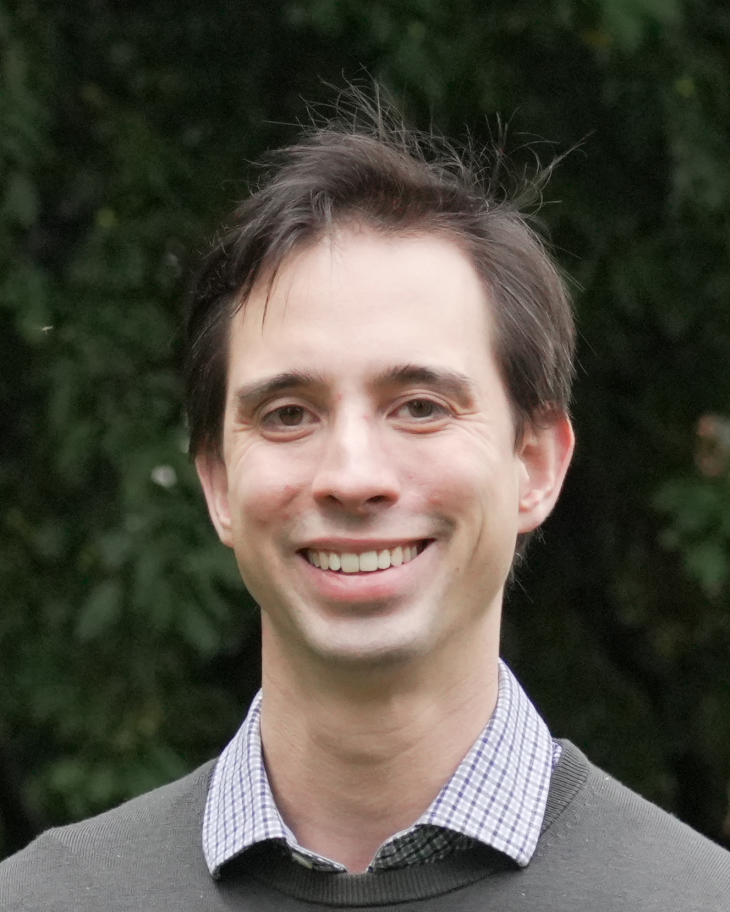
Dylan Campbell is a Lecturer in Computing at the Australian National University (ANU), affiliated with the ANU College of Systems & Society. His research focuses on computer vision, optimization, and robotics, particularly in 3D vision and deep learning applications. He has held prior roles as a Research Fellow at the University of Oxford’s Visual Geometry Group and ANU’s Australian Centre for Robotic Vision. Campbell holds a PhD from ANU (2018) and a BE in Mechatronic Engineering from UNSW (2012). Research interests include geometric sensor alignment, neural radiance fields, and differentiable optimization layers. He actively supervises students (7 PhD/DPhil, 3 MEng, 9 honours) and teaches advanced courses in computer vision and robotics. Notable awards include the Marr Prize Honourable Mention (2017) and the IEEE Australia Council Postgraduate Student Paper Competition (2018). He has organized workshops at ECCV and CVPR, served as a reviewer for top conferences like CVPR/ICCV/ECCV, and contributed to datasets like SEED4D and RefRef. His work emphasizes efficient training of neural networks and leveraging symmetries in data for long-range connections.
Dr. Stewart Worrall is a Senior Research Fellow at the Australian Centre for Field Robotics (ACFR) within the University of Sydney. His research focuses on autonomous systems, robotics, and intelligent transportation systems, particularly in the areas of autonomous vehicle perception, human-robot interaction, and sensor fusion. He has contributed to numerous high-impact publications on topics such as edge case testing for autonomous vehicles, collaborative perception frameworks, and context-aware human-robot interaction design. His work integrates robotics hardware, computer vision, and machine learning to address challenges in autonomous driving, crowd dynamics, and urban mobility scenarios. Current research students under his supervision explore topics ranging from light field imaging for autonomous driving to human-machine interfaces for vehicles. Worrall has pioneered datasets like the University of Sydney Campus Dataset and the ACFR Five Roundabouts Dataset, which are critical for evaluating autonomous systems. His contributions span academic conferences (e.g., IEEE IV, ICRA) and journals, emphasizing both technical innovation and societal impacts of autonomous technologies. Key labs/teams: Core member of the ACFR, collaborating across disciplines including robotics, computer science, and urban design.
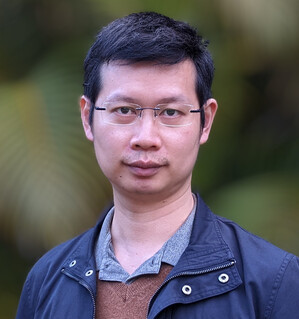
Tao Zou is an Associate Professor at the Research School of Finance, Actuarial Studies and Statistics, Australian National University. His research spans covariance regression modeling, network data analysis, and applications in financial and environmental statistics. He earned a Ph.D. in Statistics in 2016. Ph.D. in Statistics, 2016 Dr. Zou’s work pioneers covariance regression, where covariances are modeled as functions of covariiates. Key contributions include robust estimation techniques, spatio-temporal modeling, missing data imputation via semi-supervised learning, and distributed data aggregation. His methods address challenges in high-dimensional and non-Euclidean data analysis. Recent publications (2025–2023) explore quasi-score matching for spatial autoregressive models, regularization in network regression, functional principal component analysis for complex data, and environmental applications like PM2.5 pollution studies. These works emphasize robustness, scalability, and interdisciplinary relevance in economics, finance, and environmental science. Dr. Zou collaborates on projects like the 2023 Data Analysis App to Empower Assessment of Immunogenicity of Biologics (Co-Investigator). While his student supervision list isn’t explicitly provided, his methodological advancements influence big data and spatial statistics. He contributes to open-access software and continues expanding covariance regression for non-normal and functional data.
Professor Javen Qinfeng Shi is a faculty member at the University of Adelaide, holding the position of Professor in the School of Computer and Mathematical Sciences under the Faculty of Sciences, Engineering and Technology. He serves as Founding Director of the Causal AI Group and as one of the directors at the Australian Institute for Machine Learning (AIML), based at the North Terrace campus location. His research centers on causation, artificial intelligence, mind and metaphysics, with Google Scholar rankings placing him 4th globally in causation and 7th in probabilistic graphical models. Shi develops causal AI methods to identify root causes, discover latent variables, eliminate spurious correlations, enhance cross-domain generalization, model intervention consequences, and solve counterfactual queries. His work focuses on optimizing intervention sequences for desired outcomes under resource constraints, applied to material discovery, agriculture, mining, sports, manufacturing, bushfire prediction, healthcare, and education. Professor Shi's industry impact includes the NOBURN bushfire prediction app (released 2023 with 50+ media coverages), energy material discovery via AI catalysts, and smart manufacturing logistics solutions. His work with the Responsible AI Think Tank (2022-2024) and current AI Industry Forum panellist role (2024 onward) demonstrates active contribution to national and state AI ecosystem development. His scientific awards include: 1st place at Open Catalyst Challenge (NeurIPS AI for Science 2023) Winner of AUS/NZ Bushfire Data Quest 2020 Citizen Science Grant 2021 Finalist in SA Department of Energy and Mining Gawler Challenge 2020 (2k+ participants from 100+ countries), recognized for "The most innovative modelling" 2nd place in Explorer Challenge 2019 (1k+ entries from 62 countries) 1st place at SAIC Volkswagen Logistics Innovation Day 2019 Shi is eligible to supervise Masters and PhD students and has secured research funding including the Citizen Science Grant 2021. His industry collaborations span energy, agriculture, mining, and emergency management, translating theoretical causal AI into practical tools like NOBURN. He leads the Causal AI Group at the University of Adelaide and directs research teams at AIML, focusing on causal inference frameworks for distribution shift resilience and intervention optimization. Current projects emphasize bushfire prediction, material science applications, and AI ethics implementation through the AI Industry Forum.
Professor Scott Anthony Sisson is a leading academic at the University of New South Wales (UNSW) , holding the position of Professor of Statistics and Data Science in the School of Mathematics and Statistics . He serves as Director of the UNSW Data Science Hub (uDASH) and Deputy Director of the UNSW AI Institute (UNSW.ai) . Previously, he was Deputy Director of the Australian Centre of Excellence for Mathematical and Statistical Frontiers (ACEMS) and held leadership roles in the Australasian Society of Bayesian Analysis and Statistical Society of Australia . PhD in Statistics (Bristol University, 2002) MSc in Environmental Statistics and Systems (Lancaster University, 1997) BSc in Mathematics and Statistics (Lancaster University, 1996) His research focuses on computational statistics and Bayesian inference , with expertise in machine learning , extreme value theory , and high-dimensional data analysis . He develops simulation-based algorithms for complex statistical problems and applies these to diverse scientific challenges like seagrass decline, urban flood modeling, and drug delivery systems. His recent work spans quantum computing for statistics, graphon modeling, and synthetic likelihood methods. Scientific awards include: 2024 Fellow of the International Society of Bayesian Analysis 2023 Fellow of the Institute of Mathematical Statistics 2017 ARC Future Fellowship 2010 Queen Elizabeth II Research Fellowship 2006 John Yu Fellowship His advising team has mentored students in statistical modeling, Bayesian computation, and applied data science. Grants from the Australian Research Council and industry collaborations support his research in government and scientific applications. He contributes as Associate Editor for Journal of Computational and Graphical Statistics and Statistics and Computing .
Commonwealth Scientific and Industrial Research OrganisationAustralia
Dan Steinberg is a senior research scientist and team leader of the Decisions & Statistical Learning team at CSIRO Data61 in Canberra, Australia. His expertise lies in probabilistic machine learning, variational inference, Bayesian deep learning, causal inference, and their application to domains spanning synthetic biology, geospatial analytics, and algorithmic fairness. Education PhD in Computer Vision / Machine Learning (2013) – University of Sydney, Australian Centre for Field Robotics Bachelor of Engineering (Mechatronics, First-Class Honours) – University of Sydney (2008) Bachelor of Commerce (Finance) – University of Sydney (2008) Research Interests Steinberg’s core research agenda revolves around building scalable probabilistic models that can learn efficiently from limited or noisy data and provide principled uncertainty estimates. Key themes include: Variational Inference & Bayesian Deep Learning: developing lightweight yet powerful algorithms for approximate posterior inference in complex models (e.g., Aboleth, Revrand). Active Learning & Experimental Design: creating methods that decide which experiments or measurements will maximise information gain, with recent focus on in-silico protein engineering via Variational Search Distributions (VSD). Causal Inference: leveraging machine-learning tools to perform robust observational causal studies for evidence-based policy, including work on youth well-being and academic outcomes. Algorithmic Fairness: translating normative notions of equity into quantifiable objectives for regression-based decision systems. Large-scale Spatial Analytics: Landshark—an open-source TensorFlow toolkit for supervised learning on massive geospatial raster datasets. Notable Software & Tools Aboleth: A minimal-overhead TensorFlow framework for Bayesian deep learning. Landshark: Command-line tools for large-scale spatial inference. Revrand: Scalable Bayesian generalised linear models with non-conjugate likelihoods. libcluster: Extensible C++ library for hierarchical Bayesian clustering. Scientific Awards Oral Presentation Award – ICML 2025 Workshop on Scaling up Intervention Models (SIMS) Oral Presentation Award – NeurIPS 2024 Workshop on Bayesian Decision-making and Uncertainty (BDU) Oral Presentation Award – NeurIPS 2023 Workshop on Adaptive Experimental Design and Active Learning Spotlight Paper Award – NeurIPS 2014 (Extended and Unscented Gaussian Processes) Research Team & Collaborations As Team Leader – Decisions & Statistical Learning at CSIRO Data61, Steinberg directs a multi-disciplinary group that partners with government agencies (e.g., Jobs and Skills Australia, Australian Institute of Health and Welfare) and industry to deploy machine-learning solutions at scale. He has previously held roles as Principal Researcher at Gradient Institute (2019-2023), Senior Research Engineer at CSIRO Data61 (2016-2019), Researcher at NICTA (2013-2016), and Research Associate at the University of Sydney (2012-2013).
Professor Raymond Chambers is a distinguished statistician currently serving as an Honorary Fellow at the School of Mathematics and Applied Statistics, Faculty of Engineering and Information Sciences, University of Wollongong (2022–present). His career spans leadership roles at the University of Southampton (2003–2006 as Director, Southampton Statistical Sciences Research Institute; 1995–2000 as Professor and Head of Department of Social Statistics; 1999–2000 as Leverhulme Professor) and the Australian National University (1989–1995 as Senior Lecturer in Statistics). He completed his PhD in Biostatistics at Johns Hopkins University (1979–1983) and has supervised 9 PhD students in areas like Small Area Estimation , Robust Inference , and Survey Methodology . His research focuses on Sample Survey Design and Analysis , Robust Statistical Methods , Statistical Modelling and Inference , and Analysis of Computer-Linked Data . Recent publications emphasize Small Area Estimation , Probabilistic Data Linkage , and Non-Linear Spatial Models , reflecting his expertise in integrating survey data with advanced statistical techniques. Professor Chambers has received multiple accolades, including Elected Member of the International Statistical Institute Elected Fellow of the American Statistical Association Elected Fellow of the Academy of Social Sciences in Australia Leadership roles as President of the International Association of Survey Statisticians (2011–2013) He has secured significant funding from Australian and international agencies, including Discovery Projects and Linkage International grants, supporting research in Small Group Analysis , Missing Data Handling , and Longitudinal Survey Methodology . His professional contributions include editorial roles at the Journal of the Royal Statistical Society and The Annals of Statistics .
Dr. Catarina Pinto Moreira is an Adjunct Associate Professor in the School of Computer Science at Queensland University of Technology (QUT). She holds a PhD in Information Systems and Computer Engineering from the University of Lisbon and specializes in quantum probabilistic models, machine learning, and explainable AI. Her research focuses on developing non-classical probabilistic graphical models for decision-making, particularly in medical and cognitive contexts. She has been recognized with awards such as the Dean's Award for Excellence in Teaching (2018) and the Centre for Data Science 2020 Excellence Award. Dr. Moreira is an Associate Editor for BMC Bioinformatics' 'Artificial Intelligence in Bioinformatics' section, emphasizing applications of machine learning in biological data. She actively supervises PhD students in areas like interpretable AI and predictive process analytics. Her academic roles include teaching at QUT and the University of Leicester, where she contributed to courses in information systems, finance, and artificial intelligence. Her work bridges quantum cognition, medical decision support, and human-centered AI, with publications spanning journals like Behavioral and Brain Sciences and Entropy . She has secured grants totaling $20,000 for research in Explainable AI and causality. Dr. Moreira's contributions to AI ethics, multimodal learning, and adversarial attacks reflect her commitment to advancing trustworthy AI systems.
Musa Mammadov is a Senior Lecturer in Data Science at Deakin University's School of Information Technology, part of the Faculty of Science Engineering and Built Environment. His research focuses on data science, machine learning, and computational mathematics with applications in environmental modeling, healthcare analytics, and financial systems. Education: Doctor of Philosophy from University of Ballarat Research Interests: Specializing in numerical and computational mathematics, Mammadov develops advanced machine learning techniques for complex classification problems while exploring optimization methods in mathematical economics. His work spans environmental modeling applications in Sri Lanka's Kalu River Basin, healthcare fraud detection algorithms, and financial market analysis. Scientific Contributions: The recent publications highlight his work in hydrological forecasting using deep learning architectures, anomaly detection in medical billing systems, and probabilistic modeling of financial indices. His methodological contributions include improving Bayesian network classifiers and developing novel dependency estimation techniques. Academic Roles: Mammadov serves as editorial board member for Optimization Letters and Annals of Data Science . He supervises doctoral students in data science projects including health provider billing analysis and satellite downlink scheduling optimization.
Dr Bing Wang is a Research Associate at UNSW Canberra under the School of Engineering and Technology . His work focuses on developing advanced optimization algorithms for computationally expensive problems, particularly in multi-objective bilevel optimization and evolutionary computation . He has published extensively on hypervolume-based infill criteria, surrogate modeling, and solution transfer strategies. Current research emphasizes Creating resource-efficient algorithms for bilevel optimization problems Exploiting variable associations to enhance evolutionary algorithm performance Integrating kriging-based methods with classical optimization criteria His publication record spans high-impact venues like Soft Robotics , IEEE Access , and Complex and Intelligent Systems , with a strong focus on applying computational intelligence to real-world engineering and data science challenges. Collaboration networks include researchers like Himanshu Kumar Singh and Tapabrata Ray .
Jack Jewson is a Senior Lecturer in the Department of Econometrics and Business Statistics at Monash University’s Faculty of Business and Economics, a position he has held since April 2024. He previously conducted postdoctoral research and held a Juan de la Cierva Research Fellowship at Universitat Pompeu Fabra, Barcelona. He is actively accepting PhD students and supervising research in advanced statistical methodologies. Education: PhD in Statistics, University of Warwick (awarded June 2020), in collaboration with the University of Oxford via the Oxford-Warwick Statistics Programme (OxWaSP). Integrated Master’s in Mathematics, Operational Research, Statistics, and Economics, University of Warwick (awarded July 2015). His research focuses on Bayesian inference under model misspecification, particularly in the M-open world, where no true model is assumed to exist. He develops robust computational methods for variable and model selection, and investigates statistical inference under differential privacy constraints. His work integrates loss functions into Bayesian updating and explores graphical and structural modeling applications in economics and biology. These interests are driven by the need for reliable inference in complex, real-world scenarios where models are inherently imperfect. His recent publications span high-impact journals such as The Annals of Applied Statistics , Biometrics , and Bayesian Analysis , as well as top machine learning venues like NeurIPS. The research demonstrates a strong trend toward robust, privacy-aware Bayesian methods with applications in biostatistics, signal processing, and network modeling. His work bridges theoretical statistics with practical computational solutions for modern data challenges. Scientific Awards: No specific awards or fellowships mentioned in the provided text. Jack Jewson has not received explicit mention of grants or funding in the text, but his prior Juan de la Cierva Fellowship indicates competitive research support. He is actively mentoring PhD students and expanding his research group at Monash. His work involves collaboration with leading statisticians such as David Rossell, Piotr Zwiernik, Jim Q. Smith, and Chris Holmes. While no formal lab name is provided, his research group focuses on robust Bayesian computation and privacy-preserving inference.
Dr. Michael Bain is a Senior Lecturer at the School of Computer Science and Engineering, University of New South Wales (UNSW). His research focuses on integrating machine learning with declarative programming to create explainable AI systems, particularly for complex domains like bioinformatics, social networks, and medical informatics. He has taught courses including Machine Learning and Data Mining and Computational Bioinformatics . Key Research Areas: Explainable AI through logic programming Bioinformatics applications in systems biology Medical claim fraud detection using graphical models Swarm robotics and epigenetic learning Recent Publications highlight his work on fairness-aware AI, knowledge acquisition for event extraction, and hybrid models combining temporal features with collaborative filtering. He actively mentors students, with 8 current advisees and over 30 graduates, and has contributed to projects in online dating recommendation systems and dynamic systems control. Education: PhD in Statistics and Modelling Science from University of Strathclyde; BSc (Hons) from University of Edinburgh. He is affiliated with the Smart Services Cooperative Research Centre for industry grants.
Dr. Nan Ye is a Senior Lecturer in Statistics and Data Science at the University of Queensland's School of Mathematics and Physics. His research focuses on machine learning, statistics, and optimization, with contributions to sequential decision making, weakly supervised learning, and probabilistic graphical models. He holds a PhD in Computer Science from the National University of Singapore (NUS) and double first-class honors in Computer Science and Applied Mathematics from NUS. Previously, he held postdoctoral positions at QUT, UC Berkeley, and NUS. Dr. Ye teaches advanced courses such as STAT3007/7007 Deep Learning, covering topics from foundational machine learning to state-of-the-art deep learning architectures and applications. His work has been published in top venues like NeurIPS, ICML, and UAI, earning awards including the IJCAI-JAIR Best Paper Prize (2022) and UAI Best Student Paper Award (2014). His research interests span theoretical and applied machine learning, including reinforcement learning, optimization algorithms, and their applications in fields like healthcare and environmental science. He actively supervises students in these areas and collaborates on interdisciplinary projects. Dr. Ye's academic profile includes extensive contributions to open-source tools and educational materials, reflecting his commitment to advancing both research and pedagogy in data science.
Professor Michael Bruenig is the Head of School for the School of Electrical Engineering and Computer Science (EECS) at The University of Queensland (UQ), a position he has held since 2016, with an interim role as Head of UQ’s Business School from 2019–2021. He previously led the CSIRO’s $140m National Research Flagship on Digital Productivity and co-founded Data61. With a PhD from RWTH Aachen University, his career spans automotive R&D in Germany, Silicon Valley, and Australia. He holds a Master’s and PhD in Science from RWTH Aachen University, Germany. His research focuses on strategic innovation, entrepreneurship, and translating research into industry impact through ventures like UQ Cyber, the National Industry 4.0 Energy Testlab, and the QLD Government AI Hub. He pioneered UQ’s Bachelor of Computer Science, Master of Cyber Security (based on US NICE Framework), and online Master of Business Analytics. His work spans robotics, sensor networks, and terahertz technology, with recent articles addressing lidar-based navigation, terahertz imaging, and cybersecurity. He advises startups and sits on boards, driving commercialization and spin-offs. Key initiatives include UQ Innovate and UQ Ventures, fostering student and faculty entrepreneurship. Labs and teams include collaborations on AI, Industry 4.0, and energy systems. His leadership emphasizes cross-disciplinary projects and curriculum innovation in tech and data fields.
Atif Mansoor is a Lecturer in Computer Science and Software Engineering at the University of Western Australia, affiliated with the School of Physics, Maths and Computing. He is also part of the Planning and Transport Research Centre within the School of Social Sciences. His research spans interdisciplinary areas including computer vision, machine learning, IoT systems, and probabilistic graphical models. Mansoor has supervised numerous graduate students, contributing to advancements in automated inference, infrastructure monitoring, and image quality assessment. Recent research focuses on parallel Bayesian network inference, IoT-based structural health monitoring, and remote sensing applications for agriculture. His work integrates machine learning with domain-specific challenges in healthcare, urban planning, and environmental science. Mansoor has collaborated on projects funded by initiatives like the iMove CRC, emphasizing practical solutions for infrastructure and transportation systems. His academic contributions include over 50 peer-reviewed publications and active participation in international conferences. Mansoor’s teaching and research reflect a commitment to innovation in computational methods and their societal applications.