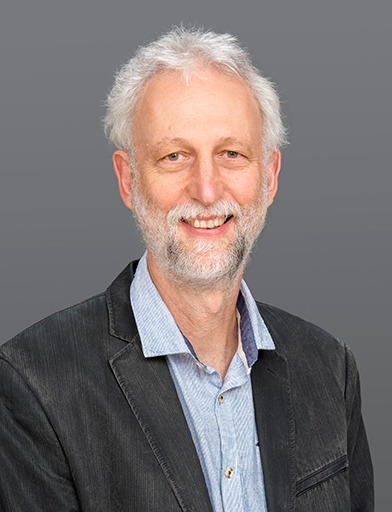
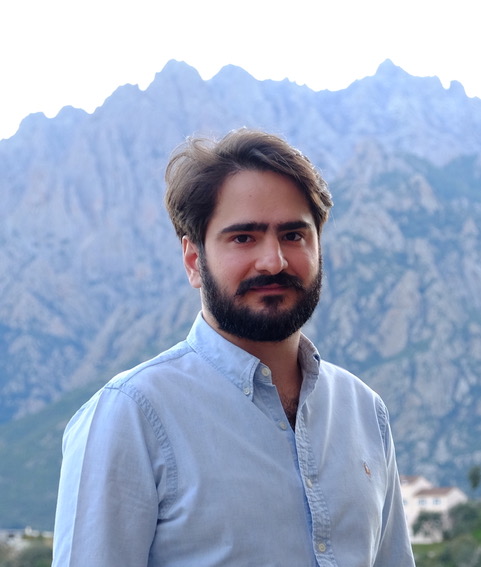
Professor Christopher Nemeth of Lancaster University's School Of Mathematical Sciences is a leading researcher in computational statistics and probabilistic machine learning. His work focuses on Markov chain Monte Carlo (MCMC), sequential Monte Carlo (SMC), Gaussian processes, and approximate Bayesian computation, with applications in environmental science, target tracking, and econometrics. He currently holds a UKRI Turing AI Acceleration Fellowship and leads the ProbAI research hub. Research Interests: Development of probabilistic AI algorithms for large-scale learning, state-space modeling, and intersections between sampling and optimization algorithms. Grants: £9M UKRI-EPSRC ProbAI hub (2024-2029), £1.1M Turing AI Acceleration Fellowship (2021-2026), and multiple NERC grants. Academic Roles: Turing University Academic Liaison (2023-present), Associate Editor for ACM Transactions on Probabilistic Machine Learning (2023-present), and leadership roles in the Royal Statistical Society. Supervision: Completed supervision of 7 PhD students with projects on scalable Gaussian processes, Monte Carlo methods, and network modeling.
Nicholas Wormald is a Professor in the Department of Mathematical Sciences at Monash University, Australia. He joined the university in 2013 as an Australian Laureate Fellow, following a decade as a Canada Research Chair in Combinatorics and Optimization at the University of Waterloo, Canada. His primary research focuses on combinatorics, probabilistic methods, and random structures, with notable contributions to random graph theory, enumeration, and applications in optimization. Wormald holds a PhD from the University of Newcastle. His work spans topics including Hamilton cycles in random regular graphs, k-core emergence, probabilistic combinatorics, and algorithms for graph generation. He has contributed to foundational results such as the sudden emergence of giant components in random graphs and the contiguity of random graph models. He serves on editorial boards of journals like the Electronic Journal of Combinatorics and Random Structures and Algorithms . His research interests also include underground mine optimization and the study of Steiner trees. Notable projects include enumeration and random generation of contingency tables, properties of large discrete structures, and the analysis of random structures' applications. Wormald has authored or co-authored over 250 publications, with recent work focusing on asymptotic enumeration, hypergraphs, and the probabilistic analysis of combinatorial structures.
Lisa Lee is a Research Scientist at Google DeepMind, focusing on creating AI agents that emulate biological learning and adaptability. She previously taught at Princeton University and received TA awards for Deep Reinforcement Learning and Probabilistic Graphical Models. Education: PhD in Machine Learning from Carnegie Mellon University (advised by Ruslan Salakhutdinov and Eric Xing); A.B. in Mathematics from Princeton University (advised by Sanjeev Arora). Her research centers on AI embodiment, intrinsic motivation, and hierarchical planning. She explores how evolutionary-inspired inductive biases and memory mechanisms can enable agents to generalize across physical and conceptual domains, as demonstrated in her work on robotic agility benchmarks and multimodal transformers. Notable scientific contributions include the Barkour quadruped robot benchmark, Gemini multimodal models, and theoretical work on causal language models. She co-organized key AI workshops at NeurIPS and ICML, and her awards include Princeton's TA of the Year for technical courses. Leadership: ICML Workflow Chair (2019), NeurIPS workshop co-organizer (2019, 2021), peer reviewer for top AI conferences.
Dr. Lea Frermann is an active researcher in computational linguistics and natural language processing, with a focus on media framing analysis, fairness in AI, and Bayesian modeling of semantic categories. Her work bridges machine learning with social science applications, particularly in political discourse and climate communication contexts. PhD in Bayesian models of category acquisition (University of Edinburgh, 2017) Key collaborations with University of Melbourne, ACL, EMNLP, and CoNLL communities Research emphasizes: Media framing analysis across cultures Explainable AI for bias detection Bayesian approaches to language understanding Word association modeling for value systems Computational methods for political discourse analysis Applications in mental health support forums Recent publications focus on large language models' limitations in hierarchical reasoning, multimodal categorization, and systematic fairness evaluation frameworks. Collaborations show strong connections with researchers like Timothy Baldwin, Trevor Cohn, and Omri Abend.
Dr. Thomas Sutter is a Researcher affiliated with the Department of Computer Science at ETH Zurich , specifically part of the Professorship for Medical Data Science. His work focuses on advanced machine learning techniques applied to medical data, including anomaly detection, generative AI, and multimodal learning. He contributes to healthcare innovation through projects like improving radiology diagnostics via Vision-Language Models (RadVLM) and developing denoising techniques for physiological signals in cardiology. Research Interests: Medical Data Science, Anomaly Detection in Healthcare, Generative AI for Biomedical Signals, Multimodal Representation Learning, and Cardiac Function Prediction using Echocardiograms. His methods often combine deep learning with domain-specific medical challenges. Key Publications Trends: Recent work emphasizes medical imaging analysis (e.g., MIMIC-CXR studies), generative models for signal denoising, and contrastive learning for anomaly detection. His research bridges computer science theory with clinical applications, particularly in cardiology and radiology. Awards & Grants: No specific awards or grants mentioned in the provided texts. Advising & Teams: While no advisees are listed, he collaborates within the Medical Data Science research group at ETH Zurich, contributing to interdisciplinary projects in healthcare AI.
Dr. Shuolin (Shawn) Li is a Postdoctoral Research Scientist at Columbia University's Data Science Institute, collaborating with Professors Pierre Gentine, Upmanu Lall, and Tian Zheng. He holds a Ph.D. in Fluid Dynamics and Hydrology and an M.S. in Computer Science from Duke University. His research focuses on developing machine learning algorithms for Earth observations, particularly in climate model parameterization using Bayesian inference, neural networks, and physical parameterizations. He collaborates with the Learning the Earth with Artificial Intelligence and Physics (LEAP) initiative and scientists at the National Center for Atmospheric Research (NCAR). Research interests include data assimilation, environmental fluid mechanics, and interdisciplinary applications of machine learning in hydrology, turbulence, and climate science. His work bridges computational methods with physical processes, addressing challenges in sediment transport, vegetation dynamics, and turbulent flow modeling. Recent publications highlight advancements in generative data assimilation, sediment flux parameterization, and turbulence modeling. His contributions span environmental engineering, climate science, and mathematical modeling, emphasizing scalable solutions for complex Earth systems. Collaboration with LEAP and NCAR underscores his commitment to advancing AI-driven Earth science. No formal awards are listed, but his work reflects significant contributions to interdisciplinary environmental research.
David M. Blei is the William B. Ransford Professor of Statistics and Computer Science at Columbia University. He is a leading researcher in machine learning, with a focus on probabilistic modeling and Bayesian statistics. His work bridges theoretical foundations with practical applications across various domains. Professor Blei's research spans several key areas in modern machine learning: Development and analysis of probabilistic models for complex data Bayesian inference methods, particularly variational inference Topic modeling and mixed-membership models Causal inference and model criticism Deep generative models and representation learning Applications in natural language processing and recommendation systems His recent publications demonstrate continued advancement in variational inference theory while exploring applications in deep learning and causality. Blei's work on posterior collapse in variational autoencoders, black box variational inference, and scalable recommendation systems has been particularly influential in the machine learning community. Professor Blei mentors PhD students and postdoctoral researchers, fostering the next generation of machine learning researchers. He actively teaches graduate courses on probabilistic models, machine learning, and causal inference at Columbia University, including STCS 6701: Probabilistic Models and Machine Learning (scheduled for Fall 2025). He leads a research group focused on probabilistic modeling, contributing significantly to both theoretical advancements and practical applications of statistical methods in artificial intelligence. The group is part of Columbia's thriving machine learning community, which spans multiple departments and research centers.
Alvaro Torralba is an Associate Professor in the Department of Computer Science at Aalborg University, Denmark, affiliated with the Technical Faculty of IT and Design. His research focuses on symbolic search, heuristic functions, and planning algorithms within artificial intelligence and machine learning. Notable projects include the ConAn initiative exploring contrastive analysis for state-space exploration. He has contributed extensively to classical planning, probabilistic planning, and automated planning competitions, earning awards such as the First Prize in the Agile Track of the 10th International Planning Competition (IPC’23). His work often bridges theoretical advancements with practical applications, including game-based network update synthesis and believable non-player character development. Research outputs include over 60 publications since 2011, with a focus on optimizing search algorithms and enhancing planning efficiency through techniques like operator-potential heuristics and bidirectional search strategies. His scientific contributions span algorithmic innovation, verification methodologies, and large-scale abstraction evaluation. Collaborations and datasets include foundational work on PDDL generators and pattern databases, with open-access resources available via Zenodo. As a program committee member and award-winning researcher, Torralba actively contributes to advancing the frontiers of AI planning and decision-making systems.
Prof. Liam Barry is a Professor in the School of Electronic Engineering at Dublin City University (DCU), where he also serves as Director of the Radio and Optical Communications Laboratory. He holds a PhD from the University of Rennes, France, and has held research and academic roles at institutions including France Telecom’s Orange Labs and Auckland University, New Zealand. His expertise spans optical communications, signal processing, and optoelectronics. Key roles include ECOC 2019 Co-Chair and SFI Principal Investigator. He has published over 600 articles, holds 10 patents, and supervised 37 graduate students. Education: BE (Electronic Engineering) – University College Dublin (1991) MEngSc (Optical Communications) – University College Dublin (1993) PhD – University of Rennes, France (1996) Research Interests: All-optical signal processing Optical pulse generation and characterization Hybrid radio/fibre communication systems Wavelength-tunable lasers for reconfigurable networks Optical performance monitoring Optical frequency combs Funding & Awards: €20M Irish Photonic Integration Centre (IPIC) SFI Programme (2013–2025) Member of Royal Irish Academy (2019) Irish Research Council Board Member (2019) Over €70M in research grants secured across 60+ projects Labs & Teams: Director of the Radio and Optical Communications Laboratory, part of The Rince Institute (2006–2010). Collaborates with industry partners like Tyndall Institute, Eblana Photonics, and ESA. Grants & Contributions: Lead on projects like OPTICOMB, BIGPIPES, and TOPCAT Co-Chair of ECOC 2019
Anastasios Vassilopoulos serves as Head of the Composite Mechanics Group (GR-MeC) and Adjunct Professor at École Polytechnique Fédérale de Lausanne (EPFL), within the School of Architecture, Civil and Environmental Engineering. He directs the Doctoral Program in Civil and Environmental Engineering while maintaining active roles in the Structural Engineering Group and School Council. His research focuses on composite materials for renewable energy infrastructure , particularly wind turbine rotor blades. Key areas include fatigue analysis of adhesively bonded joints, experimental methods for FRP composites under complex loading, and design methodologies for composite structures. His work bridges fundamental mechanics with industrial applications through extensive collaboration with wind energy stakeholders. Analysis of his 15 most recent publications reveals dominant themes in thick adhesive joint mechanics (73% of articles), fatigue/fracture characterization (67%), and machine learning applications (40%). The research consistently targets wind turbine blade challenges, with 87% of articles addressing specific aspects of renewable energy infrastructure. Methodological trends show increasing integration of computational-experimental approaches and AI-driven predictive modeling. Dr. Vassilopoulos has secured 18 major research projects since 2000, primarily funded by Swiss National Science Foundation and international collaborations. Current projects include NSF-funded work on wind turbine blade adhesive joints (2020-2024) and fire-resistant composite bridge decks. His teaching portfolio includes advanced courses on composites design, structural mechanics, and floating offshore renewables. As Doctoral Program Director, he oversees PhD training while personally supervising 17 doctoral students to completion.
O. Deniz Akyildiz is an Assistant Professor in Statistics at the Department of Mathematics, Imperial College London. His research focuses on computational statistics, machine learning, and generative modelling, with applications to sampling, optimization, and inverse problems. He holds affiliations with the Artificial Intelligence Network and Mathematics research groups. Previously, he obtained degrees in Electronics and Communications Engineering from İTÜ, followed by a PhD in Signal Processing at Universidad Carlos III de Madrid. Before joining Imperial, he worked as a postdoctoral researcher at Warwick CS and The Alan Turing Institute. His research interests span diffusion-based parameter estimation, score-based generative models, Langevin dynamics for optimization, and adaptive importance samplers. Recent work includes contributions to latent diffusion models, Sinkhorn semigroups, and stochastic filtering techniques. Notable publications include works on statistical finite elements, interacting particle Langevin algorithms, and physics-informed deep generative models. His technical blog almost stochastic and GitHub repository provide further insights into his research.
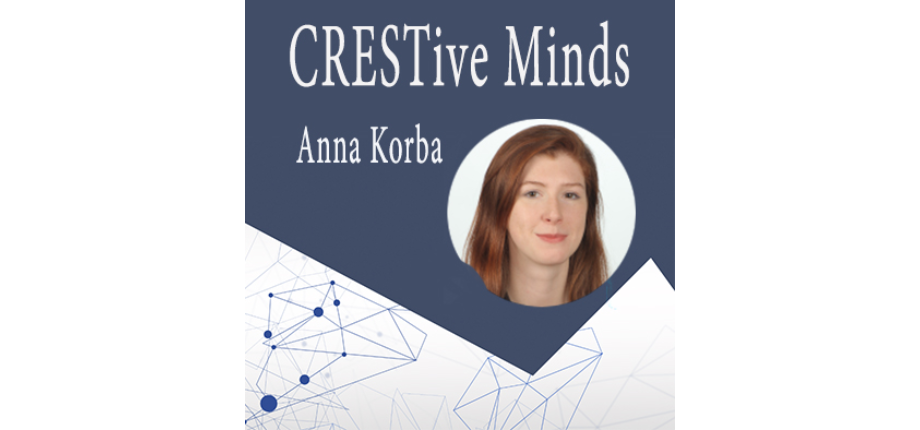
Anna Korba is an Assistant Professor at CREST-ENSAE Paris within the Statistics Department. She holds an ENSAE Engineering degree in Data Science and a Master's in Mathematics, Vision & Learning (MVA) from ENSAE Paris. Her career includes a Ph.D. in Machine Learning at Télécom ParisTech, followed by a postdoctoral position at UCL's Gatsby Unit. Her research focuses on sampling techniques, Bayesian inference, optimal transport, and generative modeling, with recent work on constrained sampling and fairness integration. She contributes to collaborative efforts at the intersection of machine learning, dynamical systems, and PDEs. Notably, she co-presented tutorials on Wasserstein gradient flows at ICML 2022. Her work addresses unsolved challenges in sampling efficiency and fairness constraints. She is actively involved in CREST research initiatives and academic mentorship.
Simon Lacoste-Julien is an Associate Professor at Université de Montréal, affiliated with the Department of Computer Science and Operations Research (DIRO). He also serves as the Associate Scientific Director of Mila – Quebec Institute of Artificial Intelligence and holds the position of Vice President Lab Director at Samsung SAIT AI Lab Montreal (SAIL). His research focuses on machine learning, optimization, and their applications in areas like deep learning, generative models, causality, and computer vision. Lacoste-Julien has held academic positions at INRIA in Paris and has a PhD from UC Berkeley, with postdoctoral work at the University of Cambridge. He teaches advanced graduate courses on probabilistic graphical models and structured prediction. His work includes contributions to optimization algorithms (e.g., Frank-Wolfe methods), causal discovery, and generative models. Lacoste-Julien has supervised numerous students and postdocs, and his awards include being a CIFAR Fellow and Canada CIFAR AI Chair. His research spans theoretical foundations and practical applications, with a strong emphasis on scalable and efficient machine learning techniques.
Richard M. Dansereau is a Professor in the Department of Systems and Computer Engineering at Carleton University's Faculty of Engineering and Design. He holds a Ph.D. from the University of Manitoba and is a Professional Engineer (P.Eng.) and Senior Member of IEEE. He currently serves as Associate Dean (Graduate Studies) and Clerk of Senate, reflecting his leadership roles within the university. His research interests include: Multimodal and audio-visual signal processing Biomedical and biometric signal processing Image and speech signal processing Compressive sensing and deep learning for reconstruction Fractal and multifractal complexity measures, including Rényi dimensions Applications in medical imaging, speech enhancement, and radar systems Recent publications highlight his lab's focus on advanced deep learning techniques for image reconstruction (e.g., deep equilibrium models for compressive sensing), medical image analysis (e.g., PET reconstruction and cervical cell segmentation), and Riemannian geometry in radar signal processing for drone detection. His work integrates theoretical signal processing with practical applications in healthcare and defense. Scientific awards associated with his research group include: Ontario Graduate Scholarship Alexander Graham Bell Canada Graduate Scholarship (CGS D) John Ruptash Memorial Fellowship NSERC Best Project Award 1st prize in poster competition at hSITE 2012 Finalist for World Congress Award at WSCTS’2006 Dansereau actively supervises graduate students, with a long list of Ph.D. and M.A.Sc. alumni who have worked on topics such as speech separation, ECG analysis, image registration, and radar signal processing. He collaborates with researchers at institutions like the University of Ottawa Heart Institute and Defence Research and Development Canada (DRDC). His lab, the Signal Processing and Machine Learning Lab, continues to publish in top journals and conferences, securing research opportunities for Canadian, American, and British citizens in speech intelligibility research.
Pierre-Alexandre Mattei is a research scientist at Inria, affiliated with the Maasai team in Sophia Antipolis and the J.A. Dieudonné Laboratory at Université Côte d'Azur. He holds a chair at the 3IA Côte d'Azur institute and has a strong academic background in applied mathematics, having earned his Ph.D. from Université Paris Descartes (now Université Paris Cité) under Charles Bouveyron and Pierre Latouche, followed by a postdoc at the IT University of Copenhagen with Jes Frellsen. Ph.D. in Applied Mathematics, Université Paris Descartes (2017) Postdoctoral Researcher, IT University of Copenhagen His research lies at the intersection of statistical machine learning, generative modeling, and uncertainty quantification, with a focus on hidden variables, missing data, and model interpretability. He has co-organized major workshops such as Artemiss, GenU, SophI.A Summit, and Statlearn, and teaches at the Generative Modeling Summer School (GeMSS). His recent work spans energy-based models, clustering, semi-supervised learning, and medical AI applications. The 15 most recent publications reflect a consistent trend in developing statistically principled methods for generative modeling, with emphasis on likelihood-based inference, missing data, and information-theoretic approaches to clustering and representation learning. His work frequently appears in top venues like NeurIPS, ICML, ICLR, and AISTATS, as well as in journals such as Statistics and Computing and JACC: Advances. Co-organizer, Generative Modeling Summer School (GeMSS) Co-organizer, Workshop on Generative Models and Uncertainty Quantification (GenU) Co-organizer, SophI.A Summit Co-organizer, Statlearn Mattei has advised several PhD students and postdocs, including Raphaël Razafindralambo, Hugo Senetaire, Louis Ohl, Federico Bergamin, and Hugo Schmutz, many of whom have gone on to research positions in Copenhagen, Grenoble, Linköping, and Marseille. He collaborates extensively with researchers across France and Denmark, particularly with Jes Frellsen, Frédéric Precioso, and Charles Bouveyron. He is actively involved in the development of open-source tools and libraries such as the GemClus Python library for discriminative clustering. He is a key member of the Maasai team at Inria Sophia Antipolis, which focuses on models and algorithms for artificial intelligence, and contributes to the broader 3IA Côte d'Azur initiative aimed at advancing AI research through interdisciplinary collaboration.