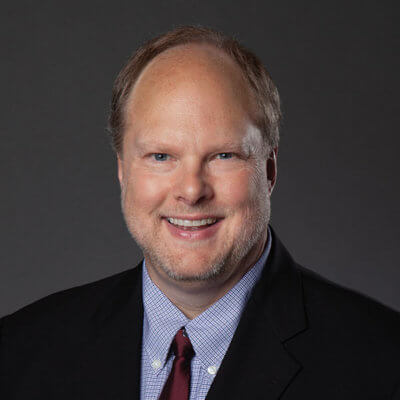
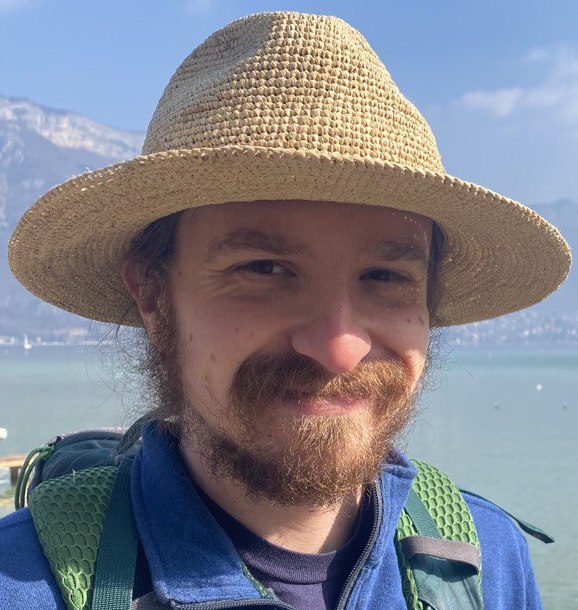
Oliver G. Ernst is a Professor of Numerical Analysis at Technische Universität Chemnitz . His research focuses on Numerical Analysis , Uncertainty Quantification , and Inverse Problems , with applications in Thermo-Hydro-Mechanical (THM) processes , Electromagnetics , and Stochastic Partial Differential Equations . He is associated with the Numerical Analysis group at TU Chemnitz. Key Research Areas : Efficient numerical methods for PDEs Krylov subspace techniques Stochastic finite element methods Multi-physics modeling Geoscientific applications Recent Publications (2025-2010): THM simulations under uncertainty Neural network PDE solvers Bayesian inversion frameworks Rational Krylov algorithms Deflated restarting strategies Collaborations : TU Bergakademie Freiberg University of Manchester Technical University of Munich University of Maryland University of Geneva Software Development : Contributor to OpenGeoSys platform Developer of FEMALY MATLAB library Academic Recognition : h-index 32, i10-index 66, with over 4423 citations since 2020.
Arnulf Jentzen is a distinguished mathematician holding dual positions as Presidential Chair Professor at the School of Data Science and Shenzhen Research Institute of Big Data at The Chinese University of Hong Kong, Shenzhen, and as Full Professor at the Faculty of Mathematics and Computer Science at the University of Münster, Germany. His research spans multiple institutions with significant contributions across mathematical disciplines. His primary research interests include dynamical systems and gradient flows (particularly geometric properties, domains of attractions, blow-up phenomena), analysis of partial differential equations, stochastic analysis (including stochastic calculus and well-posedness analysis), machine learning (with focus on mathematics for deep learning and stochastic gradient descent methods), and numerical analysis (particularly computational stochastics and computational finance). His work demonstrates a strong interdisciplinary approach bridging pure mathematics with practical computational applications. Jentzen's publication record shows a clear trend toward machine learning applications in solving complex mathematical problems, particularly in overcoming the curse of dimensionality in high-dimensional PDEs through deep neural networks. His research group actively publishes on optimization methods like Adam, convergence analysis, and applications of deep learning to partial differential equations and optimal control problems. ICBS Frontier of Science Award in Mathematics (2024) Fellow, Lamarr Institute (2023) ERC Consolidator Grant (2022) Joseph F. Traub Prize for Achievement in Information-Based Complexity (2022) Felix Klein Prize, European Mathematical Society (EMS) (2020) Professor Jentzen advises numerous PhD students across both institutions and serves on multiple editorial boards including SIAM Journal on Numerical Analysis, Journal of Complexity, and Communications in Computational Physics. His research group at Münster and CUHK-Shenzhen focuses on developing mathematical foundations for machine learning with applications to scientific computing problems. He has received significant research funding including an ERC Consolidator Grant, supporting his interdisciplinary work at the intersection of mathematics and artificial intelligence.
Professor Christopher Crabtree is a faculty member in the Department of Engineering at Durham University , specializing in offshore wind energy systems and electrical machine reliability. His work bridges engineering practices with renewable energy innovation, focusing on condition monitoring and operational optimization for wind turbines. Durham Energy Institute (DEI) Centre for Renewable Energy Institute of Advanced Study (IAS) Research interests include offshore wind farm infrastructure planning , non-contact torque measurement , and power converter reliability under variable wind conditions . His recent work explores data-driven models for wind turbine diagnostics and probabilistic forecasting techniques. Key collaborations appear with researchers like Dr. Behzad Kazemtabrizi, Dr. Xiang Li, and Dr. Carlos David Pina-Gongora. Projects often intersect with renewable energy policy and industrial automation frameworks.
Anis Matoussi is a Professor of Applied Mathematics at Le Mans University and serves as the Director of the Institut du Risque et de l'Assurance du Mans. He coordinates the master's program in Actuarial Science and leads multiple research initiatives, including ANR DREAMeS (2021-2025) and ITCA (Groupama, Fondation du Risque). Role: Professor, Applied Mathematics Institution: Le Mans University Research Leadership: Director of Institut du Risque et de l'Assurance, Head of Master Actuarial Science His research focuses on stochastic control, backward stochastic differential equations (BSDEs), and their applications in finance, insurance, and energy systems. He has developed numerical methods for second-order BSDEs and studied stochastic nonlinear PDEs, maximum principles for SPDEs, and extended mean field control models. Recent projects include the application of deep learning to forward utilities via ergodic BSDEs and multivariate risk measures. Matoussi has supervised numerous PhD students, including current advisees Zakaria Bensa (industrial thesis with Natixis) and Lucas Da Silva (co-supervised with Caroline Hillairet). Former students like Achraf Tamtalini (Bank of America) and Jing Zhang (Fudan University) hold prominent positions globally. His work includes collaborations on smart grids, control of electrical systems, and robust utility maximization under uncertainty. Publications span journals in applied mathematics, optimization, probability, and financial mathematics, with recent emphasis on numerical schemes and probabilistic representations.
Erik Johnson is a Professor of Civil Engineering at an unspecified university, affiliated with the Sonny Astani Department of Civil and Environmental Engineering. He has held leadership roles such as Associate Chair, Interim Chair, and currently serves as Vice Dean for Academic Programs. His research focuses on smart structures, structural vibration control, and computationally-efficient simulation algorithms for dynamical systems, with applications in controllable damping devices and seismic mitigation. Education: B.S., M.S., Ph.D. in Aeronautical and Astronautical Engineering (University of Illinois at Urbana-Champaign), Graduate Certificate in Biblical Studies (Trinity Evangelical Divinity School) Professional Affiliations: Senior Member of AIAA; Member of ASCE and ASME; Chair of ASCE technical committees; Associate Editor, ASCE Journal of Engineering Mechanics His work spans disciplines including control theory, structural engineering, and computational methods. Articles highlight Bayesian approaches, inverse problems, and sensor placement optimization under uncertainty. Erik contributes to advancing seismic resilience and mechatronic systems for civil infrastructure. Scientific Awards: 2001 NSF CAREER Award, 2005 International Association for Structural Safety and Reliability Medal, 2016 University of Illinois Distinguished AE Alumnus Award
Dr Cuong Nguyen is a Lecturer in the Department of Mathematical Sciences at Durham University, specializing in Machine Learning, Artificial Intelligence, and Statistics. His research bridges theoretical foundations with practical applications, with particular expertise in Bayesian methods, transfer learning, and multimodal systems. His educational background includes a PhD in Computer Science or a related field (specific institution not mentioned in provided data), with research focusing on machine learning theory and applications. Nguyen has established himself as a researcher with publications spanning top conferences including NeurIPS, UAI, and ACM Web Conference. Research Interests: Nguyen's work centers on lifelong learning systems that overcome catastrophic forgetting, transferability estimation between tasks, and multimodal learning applications. His research integrates Bayesian principles with deep learning to create more robust and adaptable AI systems. Recent Trends: Analysis of his 15 most recent publications reveals a strong focus on practical applications of theoretical machine learning concepts, particularly in security (CAPTCHA systems), real-world problem solving (fake advertisement detection), and fundamental learning theory (transferability metrics). Dr Nguyen has made significant contributions to understanding the theoretical underpinnings of transfer learning and continual learning, with his work on LEEP providing a practical metric for transferability estimation. His research on CAPTCHA systems demonstrates both theoretical rigor and practical security implications. Advising: While specific students aren't listed in the provided data, his publications show collaborations with researchers across institutions, suggesting active supervision of PhD and Master's students. Research Groups: He is affiliated with the Statistics research center within Durham's Department of Mathematical Sciences, contributing to the university's strength in mathematical and computational research.
Archer Yang is an Associate Professor in the Department of Mathematics and Statistics at McGill University, with additional affiliations as an Associate Academic Member of Mila - Quebec AI Institute, Associate Member of the School of Computer Science, and Member of the Quantitative Life Science Program. His academic journey began with a PhD from the University of Minnesota under the supervision of Hui Zou, establishing his foundation in statistical methodology and machine learning. Dr. Yang's research spans three interconnected themes: statistical machine learning, applications in drug discovery, and computational genomics and healthcare. In statistical machine learning, he focuses on developing dimensionality reduction, probabilistic models, and causality-inspired methods to address complex high-dimensional data challenges. His work in drug discovery involves creating machine learning models to accelerate drug candidate identification and enhance understanding of drug efficacy and safety. In computational genomics and healthcare, he develops techniques to analyze genomic data, identify biomarkers, and explore the genetic basis of diseases, with the goal of improving precision medicine and predicting patient outcomes. His overarching objective is to bridge advanced data-driven methodologies with impactful applications in pharmacology, genomics, and healthcare. His recent publications reveal a strong trend toward applying machine learning to healthcare challenges, particularly in congenital heart disease analysis, mortality prediction, and drug discovery. His work demonstrates expertise in developing interpretable models that can handle complex, high-dimensional biomedical data while maintaining statistical rigor. The integration of causal inference methods with machine learning appears to be a growing focus in his research trajectory. ICML Spotlight Paper (top 2.6%, 313/12,107) Dr. Yang actively supervises a large research group including multiple postdoctoral fellows, PhD students, and Master's students. His lab has developed several notable software tools, including ml-mr for machine learning in Mendelian randomization. His supervision extends across statistics, computer science, and biomedical applications, reflecting the interdisciplinary nature of his work. He appears to maintain strong collaborative relationships with researchers in healthcare and genomics fields. His laboratory, the Archer Yang Lab, maintains active GitHub repositories focused on machine learning applications in healthcare and drug discovery, with particular emphasis on interpretable models and statistical methodology development. The lab appears to work at the intersection of theoretical statistics and practical biomedical applications, with projects spanning from algorithm development to clinical implementation.
Dr Jennifer Badham is an Assistant Professor in the Department of Sociology at Durham University, with the following key roles: Director of the MA Social Research Methods Programme Lead for MDS (Health Data Science) in the Faculty of Social Sciences and Health Fellow of the Wolfson Research Institute for Health and Wellbeing Her research interests span computational methods for complex systems, network diffusion, public engagement, and social network structure. She specializes in agent-based modelling and network analysis to investigate how social structure shapes the transmission of ideas, disease, and behaviour. Additionally, she examines the role of models in policy processes and public engagement with data. Analysis of her recent publications reveals a strong focus on agent-based modelling and network analysis applied to health and social systems. Key trends include the development of synthetic network generation methods, simulation of network interventions for behaviour change, and the integration of participatory approaches in model building. Her work addresses pressing issues such as epidemic planning and health behaviour. Dr Badham is Principal Investigator on the MRC-funded project "Generating Socially Realistic Synthetic Networks" (2023-2026, £528,850). She supervises postgraduate students, including Tengpeng Zhang, and draws on her prior experience as a senior health policy advisor in Australia to inform her research and teaching. As a Fellow of the Wolfson Research Institute for Health and Wellbeing, she contributes to interdisciplinary health research. She also leads the Health Data Science strand within the Durham Research Methods Centre.
Professor Keith Worden is a Professor of Mechanical Engineering at the University of Sheffield's School of Mechanical, Aerospace and Civil Engineering. His research focuses on applications of advanced signal processing and machine learning to structural dynamics, particularly in aerospace systems. He has held this position since 1995 and has contributed significantly to the field of structural health monitoring (SHM), including work on nonlinear system analysis and damage detection. His work emphasizes pragmatic engineering solutions and collaboration with industries like aerospace and offshore sectors. Education: Holds a degree from York University and a PhD in Mechanical Engineering from Heriot-Watt University. Career highlights include research at Manchester University before joining Sheffield. Research Interests: Specializes in structural dynamics, SHM using machine learning, nonlinear systems, and vibration analysis. Key themes include population-based SHM frameworks, damage prognosis, and environmental adaptation in monitoring systems. His group develops algorithms for automated inspection and diagnosis, leveraging neural networks, genetic algorithms, and other biological-inspired methods. Articles Trends: Recent publications focus on population-based SHM methodologies, transfer learning applications, and algorithm development for novelty detection, damage localization, and risk-informed decision frameworks. His work bridges theoretical advancements with practical engineering challenges. Grants & Advising: Extensive grants and collaborations in SHM, wind turbine monitoring, and aerospace structures. Advises on projects involving machine learning in structural dynamics and probabilistic modeling. Labs & Teams: Leads research groups exploring computational tools for SHM, including the application of Gaussian processes, Bayesian methods, and data-driven models. Collaborates internationally on projects such as the RAPTOR telescope system and offshore wind farm monitoring.
Professor Nikolaos Dervilis is a faculty member in the Department of Mechanical Engineering at the University of Sheffield, serving as Director of Research and Innovation for the School of Mechanical, Aerospace and Civil Engineering. He holds a BSc from the National and Kapodistrian University of Athens, an MSc in Sustainable and Renewable Energy Systems from the University of Edinburgh, and a PhD from the University of Sheffield in Mechanical Engineering with a focus on machine learning for Structural Health Monitoring (SHM). His research emphasizes SHM, renewable energy systems (particularly wind turbines), data analysis, nonlinear dynamics, and advanced signal processing. His work spans population-based SHM (PBSHM), machine learning applications in structural dynamics, and probabilistic modeling. Recent publications focus on active learning frameworks, Bayesian methods, and generative models for damage prognosis. He collaborates with industry on wind energy and has contributed to datasets for experimental bridges and aerospace components. Notably, he leads efforts in transfer learning and domain adaptation for heterogeneous structural populations. Research highlights include developing frameworks for risk-informed decision support, model selection via approximate Bayesian computation, and digital twin tools for engineering systems. His lab, part of the Dynamics Research Group, addresses challenges in energy systems, composite materials, and condition monitoring of critical infrastructure.
Professor Eduardo Alonso is Director of the Artificial Intelligence Research Centre (CitAI) and Department Research Director at City St George's, University of London. His research bridges novel AI techniques with Explainable AI and Artificial General Intelligence, with significant focus on legal and ethical implications. Research spans: Computational neuroscience and evolutionary biology modeling Deep learning architectures for reinforcement learning Mathematical models of emergence in complex systems Industrial AI applications with societal impact Professor Alonso has secured over £1M in funding from Innovate UK, EU EIT-Digital, and US NSF grants. He currently supervises 13 PhD students working on ethical AI, reinforcement learning, and cybersecurity. Recent publications focus on transformer architectures for multi-agent systems, power grid optimization via GNNs, and adversarial robustness in security systems. Awarded the IEEE Computational Intelligence Society Spotlight Paper Award in 2013.
Professor Serge Guillas is a faculty member at the University College London (UCL) Department of Statistical Science. His research focuses on functional data analysis, uncertainty quantification, environmental statistics, and emulation of complex computer models. He leads the NERC consortium on Uncertainty Quantification of Natural Hazards and has held roles such as Work Package Leader for quantifying uncertainties in natural hazard models. His work integrates statistical methods with geophysical and climate modeling, emphasizing tsunami risk analysis, climate dynamics, and ozone exposure studies. Education: PhD in Statistics from Paris 6 University (2001), followed by roles at the University of Chicago, Georgia Institute of Technology, and UCL. Current roles include teaching STAT1006 and STAT7001 courses. Research interests span functional regression, spatial data analysis, and probabilistic hazard modeling. Recent work explores machine learning-driven climate models, ozone exposure health impacts, and real-time data assimilation software (ParticleDA.jl). He collaborates globally, including with institutions in Georgia, Italy, and Indonesia, to advance tsunami modeling and disaster risk reduction. Key awards include ESRC-DFID-NERC funding, MAPS Faculty Postgraduate Research Prize (for student Ah Yeon Park), and leadership roles in SIAM’s Uncertainty Quantification group. Active in mentoring PhD students and securing interdisciplinary grants. Labs/Teams: Involved with the UCL Institute for Risk & Disaster Reduction and leads statistical emulation efforts in climate and geophysical modeling. Collaborates on fusion reactor design (ExCALIBUR project) and global temperature uncertainty quantification (GETQUOCS initiative).
Dr. Ken Kitson is a Visiting Professor at Queen Mary University of London's School of Electronic Engineering and Computer Science. His research focuses on causal discovery, Bayesian networks, and machine learning methodologies. He specializes in developing algorithms that infer causal relationships from data, particularly through active learning frameworks that integrate human expert knowledge. Kitson's work emphasizes probabilistic graphical models and their applications in diverse fields such as healthcare, sports analytics, and epidemiology. He has contributed to improving the stability and accuracy of Bayesian network structure learning algorithms, addressing challenges like variable ordering instability and noisy data. His recent research trends highlight advancements in causal machine learning, including the use of large language models like GPT-4 to enhance causal discovery processes. His studies on sepsis and COVID-19 demonstrate practical applications of causal modeling in health informatics. Kitson's publications span algorithmic improvements, surveys of Bayesian network learning techniques, and empirical validations of methods in real-world scenarios. He holds a focus on bridging theoretical advancements with practical implementations in data-driven decision-making contexts.
Aaron Anderson is a Research Fellow in the Department of Mathematics at the University of Pennsylvania. His work bridges model theory with combinatorics , particularly focusing on distal structures and their applications to logic and continuous logic. He collaborates with prominent researchers like Henry Towsner at UPenn and Michael Benedikt in logic and machine learning contexts. Anderson's research explores the intersection of mathematical logic , combinatorics , and machine learning . His publications on arXiv highlight advancements in understanding distal metric structures , NIP theories , and the logical foundations of learnable objects. Recent work extends distal regularity to continuous logic and random objects , demonstrating theoretical and practical implications across disciplines. His academic journey includes a Ph.D. at UCLA under Artem Chernikov, where he laid the groundwork for his current research. While no formal awards are listed, his contributions to combinatorial bounds and generic stability underscore his growing influence in the field. Anderson's work is supported by institutional frameworks like the Simons Foundation, and he actively engages in presenting his findings through talks and publications.
Malcolm Sambridge is a Professor of Seismology and Mathematical Geophysics at the Research School of Earth Sciences (RSES), Australian National University (ANU). He holds roles including former Head of Seismology and Mathematical Geophysics (2006–2016) and has been a Fellow and Research Fellow at ANU since 1992. His research focuses on inverse problems, computational geophysics, seismic wave propagation, and statistical inference applied to Earth Sciences. He has led projects such as the Australian Passive Seismic Server and the Australian Seismometers in Schools Network (AuSIS). Education includes a B.Sc. in Physics (1983, Loughborough University), a Certificate in Advanced Mathematics (1984, University of Cambridge), and a Ph.D. in Geophysics (1988, ANU). His career includes visiting roles at Caltech and the Carnegie Institution of Washington. Research interests emphasize developing algorithms for geophysical inference, including the Neighbourhood Algorithm for nonlinear inversion. Key contributions include studies on Earth's inner core structure, seismic tomography, and Bayesian methods. He advises students across physics, mathematics, and Earth Sciences, focusing on computational and theoretical geophysics. Publications span over 150 articles, with recent work on optimal transport for inversion, trans-dimensional Bayesian tomography, and seismic imaging techniques. His software tools, like pyprop8 and TerraWulf, support geophysical modeling and high-performance computing.