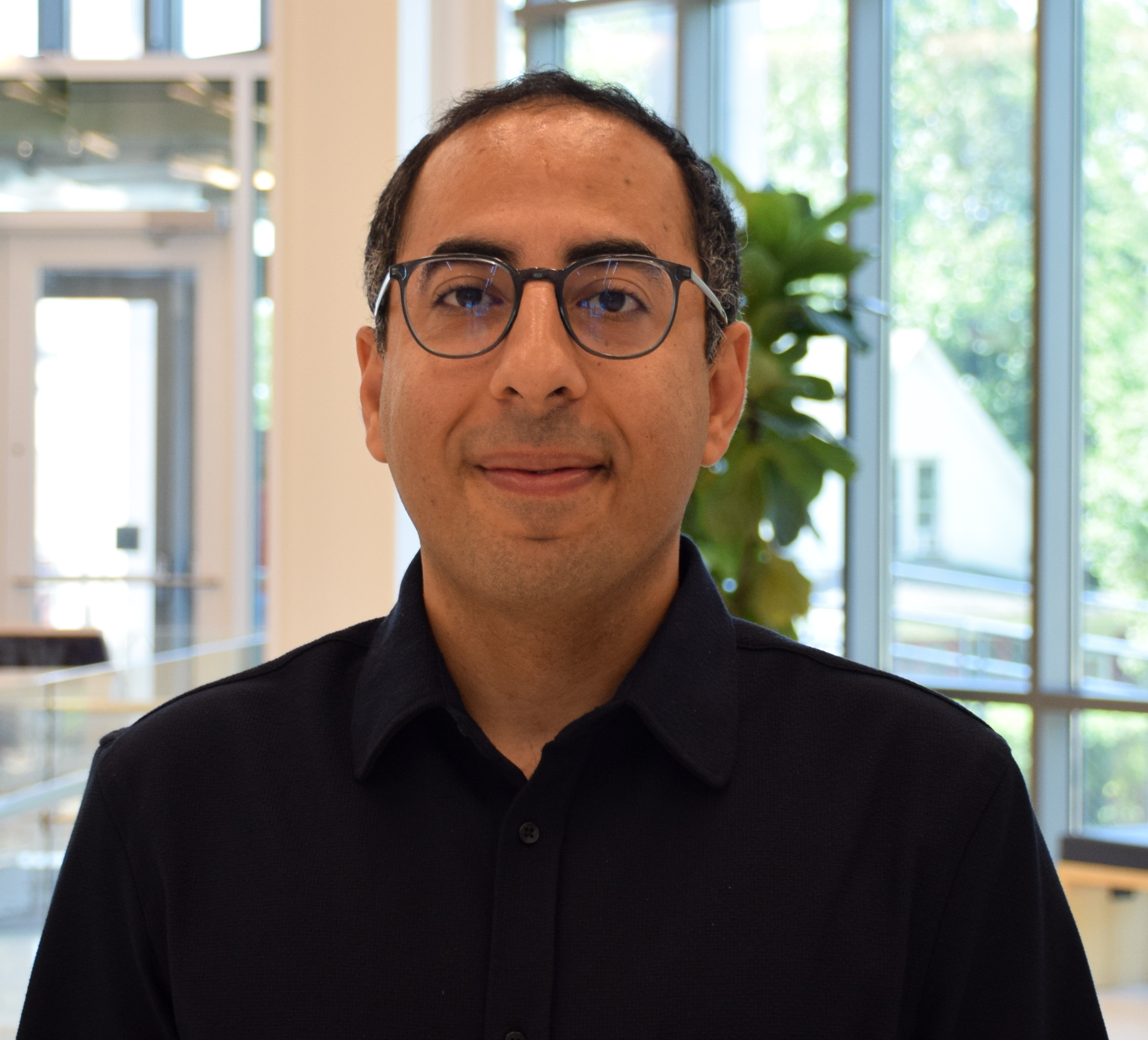
Naren Ramakrishnan is the Thomas L. Phillips Professor of Engineering in the Department of Computer Science at Virginia Tech, where he directs the Sanghani Center for AI and Data Analytics. He also serves as AI and Machine Learning Lead for the Virginia Tech Innovation Campus. His research spans data science, machine learning, urban analytics, forecasting, and computational epidemiology. Recent publications (2024-2025) focus on language model optimization, AI applications in government and environmental conservation, and spatiotemporal data analysis. Work demonstrates strong emphasis on real-world AI deployments in regulatory compliance, supply chain verification, and network optimization. Methodological innovations include prompt engineering techniques, world models for reinforcement learning, and specialized embedding methods. Dr. Ramakrishnan has received prestigious fellowships from ACM, AAAS, and IEEE. His research has been supported by numerous agencies including DARPA, NSF, NIH, and industry partners like Amazon and Boeing, with 36 PhD students mentored to completion.
Dr. Tarek Alskaif is an Associate Professor of Energy Informatics at Wageningen University & Research, specializing in the intersection of information technology and energy systems. He leads research on smart energy systems, focusing on electricity markets, distributed energy resources, and AI-driven solutions. His work integrates modeling, optimization, and big data analytics to advance the sustainable energy transition. Education: PhD in Energy Informatics (2012–2016, Cum Laude) from Universitat Politècnica de Catalunya, Spain. Postdoc at Utrecht University’s Copernicus Institute (2016–2020). Current roles include coordinating the BSc Data Science Minor and teaching Python and Big Data courses. Research interests emphasize leveraging digitalization for energy systems, including smart grids, electric mobility, and battery storage. Notable projects include HighLO Energy Markets (EU-funded, using particle physics and AI for market transparency) and MESSM (coordinated via TKI Urban Energy). He also leads the AI ELSA Lab (NWO-funded). Editorial roles include Associate Editor for IEEE Transactions on Smart Grid and IEEE Power Engineering Letters . Member of IEEE, the Netherlands Institute for Research on ICT (4TU.NIRICT), and the Technical Program Committee for IEEE SmartGridComm and PSCC 2026. Has supervised over 50 students (MSc/BSc) and 7 PhDs. Projects address challenges like grid congestion, EV charging optimization, and decentralized energy trading. His work bridges academic research with industry collaborations, including partnerships with CERN and ACER.
Patrick T. Brandt is a Professor of Political Science, Public Policy, and Political Economy at the University of Texas at Dallas , affiliated with the School of Economic, Political and Policy Sciences . His work integrates advanced statistical methods with political science, focusing on time series analysis, machine learning, and Bayesian modeling to study political dynamics. His research spans international relations , political economy , terrorist targeting , and conflict forecasting . He specializes in developing novel models for event count time series, including the Bayesian Poisson Vector Autoregression and MS-BVAR packages for R. His NSF-funded projects focus on event data generation and real-time conflict forecasting. Recent publications emphasize domain-specific language models (ConfliBERT variants), graph neural networks for conflict prediction, and machine translation challenges in political text analysis. He maintains the OpenEvent Data Repository and develops software like MSBVAR and PESTS for academic use. Scientific Awards : Robert H. Durr Award for Best Methodology Paper, Midwest Political Science Association (2006)
Mohsen Heidari is an Assistant Professor in the Department of Computer Science at Indiana University, Bloomington. He is affiliated with the IU Quantum Science and Engineering Center (QSEc) and the NSF Center for Science of Information (CSoI). He previously held positions as a Visiting Assistant Professor at Purdue University and as a Postdoctoral Research Associate at CSoI. Ph.D. in Electrical Engineering (2019) and M.Sc. in Applied Mathematics (2017) from the University of Michigan His research focuses span quantum computing, theoretical machine learning, and information theory. Key themes include: Quantum algorithm design and sample complexity Fourier-based learning frameworks Quantum-classical duality in learning problems Information-theoretic approaches to biological systems Article trends show a strong emphasis on quantum-classical learning intersections (6/15 papers), Fourier analysis applications (5/15), and information-theoretic foundations (12/15). Notable venues include NeurIPS, IEEE Transactions, and ISIT. He directs research involving: Quantum Neural Network development Quantum measurement simulation Quantum data compression techniques Quantum algorithm implementation constraints
Hongkai Wen is a Professor (Chair in Machine Learning Systems) in the Department of Computer Science at the University of Warwick, UK. He holds dual appointments as a Fellow of the Alan Turing Institute (serving as Independent Scientific Advisor for BridgeAI and member of Turing Research Ethics team) and previously worked as Senior Research Scientist at Samsung AI Centre Cambridge and postdoctoral researcher at Oxford University. Education: Computer Science, Keble College, University of Oxford Research Focus: Develops intelligent multi-modal perception systems for real-world deployment with extreme computational efficiency. Core expertise spans ML systems optimization, neural architecture search, and cross-disciplinary applications in robotics, urban mobility, and wearable/IoT security. Pioneered event-based vision techniques and training-free NAS frameworks. Publication Trends: Recent work (2023-2025) demonstrates accelerating innovation in diffusion model efficiency, on-device AI deployment, and sensor fusion techniques. Dominant themes include computational resource optimization for edge devices, multi-modal temporal modeling, and privacy-preserving spatial analytics, with significant contributions to NeurIPS, ICML, and CVPR venues. Scientific Recognition: Best Paper Award, AutoML Conf 2023 (T-CET) Best Paper Runner-up, SenSys 2024 (AdaFlow) Best Paper Awards: IPSN 2014 & EWSN 2013 1st/2nd Place, Zero Cost NAS Competition (AutoML'22) Mentorship & Funding: Actively supervises PhD candidates through thesis committees at Warwick, Ulster, and Queensland universities. Secured National AI Strategy Fund for Macro Neural Architecture Search research. Recruits annually for PhD positions with scholarships from UKRI, Turing Institute, and industry partnerships. Research Leadership: Heads the AI/ML Systems (AMS) Division at Warwick, directing a 15+ member team developing deployable ML frameworks for mobile/robotic platforms. Maintains active collaborations with Samsung AI Centre and Turing Institute's BridgeAI programme on ethical AI deployment.
Fotios Petropoulos is a Professor at the University of Bath, holding the Management Chair in Management Science within the School of Management's Information, Decisions & Operations department. He also served as the Spyros Makridakis Chair in Forecasting at the University of Nicosia (2023–2023). His research focuses on time series forecasting, judgmental approaches, and integrating statistical and human judgment in decision-making processes. He has contributed to improving forecasting accuracy through temporal aggregation and hierarchical methods. Petropoulos holds a Doctor of Engineering (2012) and Bachelor of Engineering (2007) from the National Technical University of Athens. Editor of the International Journal of Forecasting (2020–present) Associate Editor of Foresight: The International Journal of Applied Forecasting (2015–2022) Director of the International Institute of Forecasters (2016–2018) His research interests emphasize forecasting processes, model selection, and the role of judgment in statistical models. Key areas include temporal aggregation, forecast reconciliation, and behavioral operations analytics. He has published over 100 peer-reviewed articles, focusing on topics like computational cost optimization, probabilistic forecasting, and scalable reconciliation methods. His work contributes to Sustainable Development Goals related to education and innovation. Recent articles highlight advancements in univariate forecasting efficiency, forecast selection criteria, and dynamic reconciliation. Petropoulos is a member of the Smart Warehousing and Logistics Systems group and actively participates in editorial boards of leading forecasting journals. His academic and professional roles bridge theoretical research and practical applications in operational decision-making.
Professor Aris Syntetos is a Distinguished Research Professor and DSV Chair of Logistics and Manufacturing at Cardiff Business School, Cardiff University. He is the founder and Director of the PARC Institute of Manufacturing, Logistics and Inventory, which includes the RemakerSpace, and leads the university’s strategic partnership with DSV. Previously, he held faculty positions at the University of Salford and Copenhagen Business School. His research focuses on the integration of forecasting and inventory optimization, particularly in the context of intermittent demand, spare parts, closed-loop supply chains, and additive manufacturing. He is renowned for the Syntetos-Boylan Approximation and the Syntetos-Boylan-Croston classification method. His work is driven by sustainability and social impact, aiming to reduce inventory obsolescence and support circular economies. The 15 most recent publications highlight a strong trend toward integrating forecasting with inventory and maintenance decisions, with increasing emphasis on sustainability, social good, and advanced analytics. His work spans healthcare, automotive, retail, and humanitarian logistics, often employing machine learning and empirical validation. 2024 Goodeve Medal (Operational Research Society) 2016 Cardiff University Outstanding Doctoral Supervisor Award 2016 & 2019 Cardiff University Innovation and Impact Awards He has secured over £5 million in research funding as Principal Investigator from EPSRC, Innovate UK, and the Welsh Government, leading projects on remanufacturing, 3D printing, and sustainable supply chains. He advises major firms like Ocado, BT, and DSV, and his methods are used in commercial software. He supervises PhD students and actively promotes knowledge transfer. He is Editor-in-Chief of the IMA Journal of Management Mathematics and serves as Vice-President of the International Society for Inventory Research (ISIR). He has taught in the UK, China, Colombia, Denmark, France, Greece, Italy, and Latvia, primarily in Operations Management and Applied Statistics.
Bahman Rostami-Tabar is Professor of Analytics and Decision Sciences at Cardiff Business School, Cardiff University, UK. He is the founder and director of the Data Lab for Social Good and the founder and chair of the Forecasting for Social Good (F4SG) initiative sponsored by the International Institute of Forecasters. He also leads the 'Uncertainty & the Future' theme at the Digital Transformation Innovation Institute. His research spans probabilistic forecasting, operational research, and data science with applications in healthcare, humanitarian logistics, and sustainable development. Research Interests: His work emphasizes transforming data into insights for decision-making under uncertainty. His research is structured into three pillars: (1) Conceptual work on forecasting for social good and the UN Sustainable Development Goals; (2) Methodological innovations in temporal aggregation, hierarchical forecasting, and machine learning for time series; and (3) Applications in healthcare operations, global health, and humanitarian supply chains. He has collaborated with organizations such as the NHS, USAID, ICRC, and JSI. Publication Trends: His recent publications (2023–2025) focus on probabilistic forecasting in healthcare (e.g., emergency department arrivals, trauma networks), hybrid machine learning models for humanitarian demand, and the societal role of forecasting. There is a strong emphasis on real-world impact, with applications in public health, supply chain resilience, and data-driven policy. Scientific Awards: Goodeve Medal, Operational Research Society, UK (2024) Fellowship, Institute of Advanced Studies, Montpellier, France (2024) Public Value Fellow, Cardiff Business School (2021) Associate Fellow, NHS-R community (2021) MIM best paper award (IFAC, 2013) Best Track Paper Award, International Symposium on Industrial Engineering and Operations Management (2017) Supervision and Grants: He actively supervises PhD students in forecasting, healthcare systems, and supply chains. He leads the 'Democratising Forecasting' project, delivering free R-based forecasting training in developing countries. He also chairs the F4SG Research Grant program, awarding $5,000 to researchers in low- and lower-middle-income countries for socially impactful forecasting research. Labs and Teams: He founded and directs the Data Lab for Social Good at Cardiff Business School and leads the international Forecasting for Social Good network, which includes learning labs, hackathons, and a forecasting book club to foster global collaboration.
Jeff Sadler is an Assistant Professor in the Department of Biosystems & Agricultural Engineering at Oklahoma State University, where he also serves as an Extension Specialist for Water Resources with OSU Extension. He leads the WaDE (Water Data and Education) Lab, focusing on data science and machine learning applications in water resources. Education: PhD in Civil and Environmental Engineering, University of Virginia (2019) MS in Civil Engineering, Brigham Young University (2015) BS in Civil Engineering, Brigham Young University (2013) Research Interests: Jeff’s research lies at the intersection of data science and water resources. He specializes in machine learning, particularly physics-guided and process-aware deep learning, for modeling stream temperature, water quality, flood dynamics, and hydrological forecasting. His work emphasizes real-time decision support, reproducible modeling, and integrating domain knowledge into data-driven systems. Recent Research Trends: His recent publications demonstrate a strong focus on advanced deep learning architectures (e.g., graph neural networks, recurrent models), data assimilation, multi-task learning, and surrogate modeling for environmental systems. Applications center on the Delaware River Basin and coastal Virginia, with implications for climate change adaptation and infrastructure resilience. Scientific Awards: No awards explicitly listed in the provided text. Advising and Grants: Jeff mentors graduate students and supervises master's and doctoral research. He is actively funded through multiple grants from the USDA, NOAA, and USGS, supporting projects in water quality monitoring, rural health, evapotranspiration forecasting, and integrated hydrological modeling. Labs and Teams: He leads the WaDE Lab, which develops data-driven tools for water resource education and management. He has collaborated extensively with researchers from the U.S. Geological Survey, University of Virginia, and other institutions on cyberinfrastructure, reproducible modeling, and environmental machine learning.
Maxime CORDY is a Research Scientist at the Interdisciplinary Centre for Security, Reliability and Trust (SnT) , University of Luxembourg, within the Security, Design and Validation group (SerVal) . He holds a PhD from the University of Namur (Belgium, 2014) and specializes in software engineering, applied artificial intelligence, and cybersecurity. His work focuses on adversarial machine learning, deep learning robustness, and model checking for critical systems. Research interests include adversarial attacks on tabular data , energy system optimization , code understanding models , and software quality assurance . Recent projects address challenges in secure AI deployment, automated test generation, and fault detection in large language models. Publications emphasize empirical studies on adversarial defenses, data augmentation for code models, and energy consumption forecasting. He contributes to tools like Daedalux (variability-aware model checking) and benchmarks like Tabularbench for adversarial robustness evaluation. Current affiliations include leadership within the SerVal group and collaborations on interdisciplinary projects such as MALETSQUE (Machine Learning Techniques for Software Quality Evaluation). His work bridges theoretical computer science with practical applications in energy systems, medical imaging, and space program design.
James B. Orlin is the E. Pennell Brooks (1917) Professor in Management and a Professor of Operations Research at the MIT Sloan School of Management. He specializes in network and combinatorial optimization with applications spanning transportation, computer science, operations, and marketing. BA in Mathematics, University of Pennsylvania MA in Mathematics, California Institute of Technology MMath, University of Waterloo PhD in Operations Research, Stanford University His research focuses on designing efficient algorithms for network optimization problems, including shortest path, max flow, and min cost flow. He has contributed to algorithmic theory in logistics, telecommunications, and inventory management, with work on stochastic demand models and data-driven inventory policies. Recent publications include advancements in directed shortest path algorithms, robust submodular function maximization, and energy storage problem complexity. His seminal textbook Network Flows: Theory, Algorithms, and Applications (1993) remains a foundational reference. Leonard G. Abraham Prize Khachiyan Prize Test of Time Award As a mentor, he has advised numerous researchers through collaborative publications and teaching. His work addresses both theoretical algorithm development and practical implementation across diverse domains including airline scheduling, logistics, and network design.
Junjie Qin is an Assistant Professor of Electrical and Computer Engineering at Purdue University’s Elmore Family School of Electrical and Computer Engineering. His research focuses on control systems, optimization, market design, and data analytics applied to power systems and the energy-transportation nexus. He explores challenges in distributed energy resource management, smart grid technologies, and the integration of renewable energy sources. His work addresses issues such as scheduling under limited observability, neural risk-limiting dispatch, and joint optimization of transportation-energy systems through electric vehicle charging strategies. Key research areas include power system stability, inverter-dominated grid dynamics, and machine learning applications in energy systems. He investigates topics like real-time charging control for electric roadways, loss function selection in learning-based optimal power flow, and pricing mechanisms for workplace EV charging. His contributions span theoretical frameworks and practical algorithms, emphasizing data-driven solutions and system-level optimization. While no awards or grants are explicitly listed, his publications reflect a strong focus on advancing smart grid technologies and sustainable energy systems. His advising activities are not detailed here, but his research group likely engages in cutting-edge projects at the intersection of control theory and energy infrastructure.
Chris Rogers is a Professor of Statistical Science within the Department of Pure Mathematics and Mathematical Statistics (DPMMS) at the University of Cambridge, actively contributing to research at the intersection of probability theory, stochastic analysis, and financial applications. His academic profile reflects deep engagement with mathematical finance and theoretical probability through publications and departmental affiliations. His research spans financial mathematics, probability theory, stochastic analysis, statistics, and mathematical economics, with emphasis on rigorous mathematical frameworks for financial markets. Key themes include option pricing mechanisms, stochastic process modeling, and geometric probability applications, often addressing real-world financial instruments like Asian options and S&P500 index behaviors through advanced probabilistic techniques. Analysis of his 15 most recent publications (2016-2018) reveals consistent focus on stochastic calculus applications in finance, particularly Lévy processes, diffusion models, and optimal stopping problems. His work bridges theoretical probability with quantitative finance, demonstrating expertise in translating complex stochastic phenomena into financial modeling solutions across asset pricing, risk assessment, and market analysis domains. No scientific awards were documented in the provided source material. Information regarding PhD/Master's student supervision, research grants, or collaborative teams was not specified in the available texts, indicating absence of such details in the source documentation.
Seongjin Choi is an Assistant Professor in the Department of Civil, Environmental, and Geo-Engineering at the University of Minnesota, Twin Cities , where he began his role in January 2024. His research bridges Urban Mobility Data Analytics , Spatiotemporal Modeling , and Deep Learning to advance transportation systems. Affiliated with the Center for Transportation Studies , Minnesota Robotics Institute , and Data Science Initiative , he leads the Choi Research Group . Education: Ph.D., Civil and Environmental Engineering, Korea Advanced Institute of Science and Technology (KAIST), 2021 M.S., Civil and Environmental Engineering, KAIST, 2017 B.S., Civil and Environmental Engineering, KAIST, 2015 His research focuses on Urban Mobility Data Analytics and Deep Learning to optimize transportation systems. Key areas include: Spatiotemporal Data Modeling for forecasting and imputation Generative AI applications in transportation data Reinforcement Learning for Connected Automated Vehicles (CAV) Cooperative Intelligent Transport Systems (C-ITS) Recent publications in Transportation Science and Transportation Research Part C highlight his work on probabilistic traffic forecasting , deep generative models , and vision-language-action frameworks for autonomous systems. His methodologies often combine AI-driven analytics with real-time mobility optimization . Dr. Choi serves as: Associate Editor of The Journal of the Korean Society of Transportation (JKST) , 2023–Present Guest Editor for Journal of Advanced Transportation special issue on "Advanced Data Intelligence Theory and Practice in Transport 2023", 2023–2024 He actively seeks PhD students/postdocs for 2025 cohorts focused on machine learning for transportation challenges. Current projects include AI-enhanced traffic forecasting, CAV control, and urban air mobility (UAM) integration studies.
Dr. Shuangshuang Jin is an Associate Professor in the School of Computing with a joint appointment in the Department of Electrical and Computer Engineering at Clemson University's College of Engineering, Computing and Applied Sciences. Previously, she served as a Senior Research Scientist at Pacific Northwest National Laboratory. Her educational background includes a Ph.D. in Computer Science (2007), M.S. in Computer Science (2003) from Washington State University, and a B.S. in Computer Science (2001) from Wuhan University. Ph.D., 2007 - Washington State University, Computer Science M.S., 2003 - Washington State University, Computer Science B.S., 2001 - Wuhan University, Computer Science Dr. Jin specializes in high-performance computing (HPC), distributed and parallel computing, general-purpose computation on graphical processing units (GPGPU), and HPC-based big data analysis, machine learning, scientific computation, and visualization. Her research focuses on applying these technologies to electrical engineering (power and energy systems, power electronics), automotive engineering, systems biology, and computer graphics. She leads the High-Performance Computing Enabled Science and Engineering (HPCeSE) Lab, where she supervises six PhD students working on HPC implementations for power system dynamic simulation, GridPACK application development, data-driven model-based smart control of power electronics converters, and other cutting-edge projects. Her recent publications demonstrate expertise in accelerating power system simulations, PV inverter reliability assessment, edge computing for power systems, and virtual prototyping of vehicle powertrain systems. The research trends show increasing focus on GPU acceleration, real-time simulation capabilities, and integration of HPC with emerging power system challenges. Junior Faculty Excellence in Teaching award (2021) Churchill Carter Fellowship (2022-2023) Zucker Graduate Education Center PhD Grant (2023) Doctoral Dissertation Completion Award (2023-2024) Outstanding Masters Student in Computer Science award (2022) Dr. Jin has successfully secured multiple grants from DOE, DOD, and other agencies for projects including 'Vehicle Propulsion Digital Twins', 'GridPACK-Wind', and 'Tool for Reliability Assessment of Critical Electronics in PV (TRACE-PV)'. She has advised numerous PhD and Master's students who have gone on to positions at national laboratories and industry. Her HPCeSE Lab maintains strong connections with Pacific Northwest National Laboratory, Fermi National Accelerator Laboratory, and other research institutions, providing students with valuable internship opportunities. Dr. Jin leads the High-Performance Computing Enabled Science and Engineering (HPCeSE) Lab at Clemson University, which focuses on developing optimized HPC-based parallel programming algorithms and architectures to solve complex scientific and engineering domain problems. The lab works on smart grid modeling and simulation, power electronics reliability assessment, ground vehicle systems prototyping, and advanced grid analytics, utilizing OpenMP, MPI, Pthreads, and CUDA/OpenCL on various computing platforms.