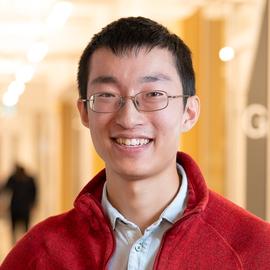
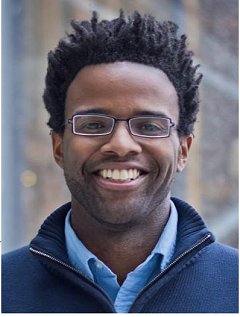
Alex Tong is an incoming Assistant Professor at Duke University (as of 2025) and will join Aithyra in Vienna as a Principal Investigator. Previously, he completed postdoctoral research at Mila under Yoshua Bengio and a visiting postdoc at Oxford with Michael Bronstein. Education : PhD (2021) and MPhil (2020) in Computer Science from Yale University; BS/MS (2017) from Tufts University Research Interests span generative modeling , deep learning , optimal transport , and graph signal processing applied to protein design and single-cell biology . His work bridges mathematical formalism (e.g., SE(3) flows, Wasserstein manifolds) with biological discovery. Publication Trends (2023-2025) focus on diffusion models for protein structure prediction , optimal transport in single-cell analysis , and geometric machine learning for molecular dynamics . Collaborations include labs like Mila, Oxford, and Yale. Awards : Best Paper (Gen Bio @ ICML 2025), Outstanding Paper (DELTA @ ICLR 2025), Best Student Paper (IEEE MLSP 2020)
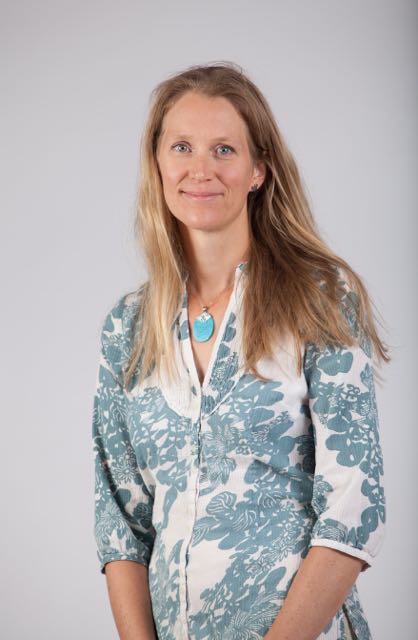
Norbert Pirk is an Associate Professor at the University of Oslo, affiliated with the Department of Physical Geography and Hydrology. His research focuses on ecohydrology in cold environments, land-atmosphere energy and trace gas exchange, and snow-vegetation interactions. He teaches courses including Geophysical Data Science and Fluvial Hydrology, and contributes to arctic climate studies through field campaigns and modeling. His research spans tundra carbon cycling, permafrost dynamics, and machine learning applications in climate modeling. Recent publications highlight advancements in snow data assimilation techniques, greenhouse gas flux monitoring using drones, and deep learning methods for Arctic methane analysis. He actively collaborates within international research networks. Current projects include SvalGaSess (methane monitoring in Svalbard), SnowSub (snow sublimation impacts on hydropower), and EMERALD (terrestrial climate interactions). He contributes to initiatives like FLUXNET2015 and the Land Sites Platform, advancing Arctic observation systems and climate modeling frameworks.
Professor Ahmed H. Elsheikh is a faculty member at Heriot-Watt University's School of Energy, Geoscience, Infrastructure and Society, within the Institute for GeoEnergy Engineering. He holds a Professor title since 2021, previously serving as Associate (2017-2021) and Assistant Professor (2013-2017). His educational background includes a Ph.D. (2010) and MASc (2002) from McMaster University, and a BASc from Al-Azhar University (1999). Research Interests: Fluid control via AI, predictive machine learning, generative modeling, data assimilation, Bayesian uncertainty quantification, and subsurface engineering. His work addresses challenges in reservoir modeling, CO2 sequestration, seismic inversion, and geophysical data analysis. Publications span 2004-2025 with a focus on machine learning applications in energy systems, stochastic field generation, and subsurface flow modeling. Notable contributions include AI-driven seismic inversion, deep learning for reactive transport, and ensemble-based history matching. Key Achievements: Developed novel methodologies for uncertainty quantification, GAN applications in geological modeling, and real-time reservoir monitoring systems. His work contributes to UN Sustainable Development Goals related to climate action (SDG 13) and affordable clean energy (SDG 7).
Karen Eilbeck is Professor of Biomedical Informatics and Adjunct Associate Professor of Human Genetics at the University of Utah , where she directs a bioinformatics research lab focused on precision medicine and genomic data management. Education B.S., University of Salford, United Kingdom Ph.D., University of Manchester, United Kingdom Research Interests The Eilbeck lab leverages computer science and ontology engineering to address contemporary questions in genomics and molecular biology. Central themes include: Development of ontologies such as the Sequence Ontology (SO) and Non-Coding RNA Ontology (NCRO) to standardize and structure biological data. Design of ontology-enabled software tools that enhance data sharing, variant interpretation, and precision medicine workflows. Metagenomic pathogen detection, clinical genome interpretation, and integration of multi-omics datasets to advance personalized healthcare. Publication Trends Recent publications (2023-2025) emphasize AI-driven clinical decision support, standardized genomic terminology, and large-scale infectious-disease risk modeling. Earlier works (2005-2018) established foundational ontologies and data formats (GVF, VCF) now widely adopted by the genomics community. Contact & Resources Email: keilbeck@genetics.utah.edu Lab website: available via University of Utah Department of Biomedical Informatics Full publication list: PubMed search | Google Scholar
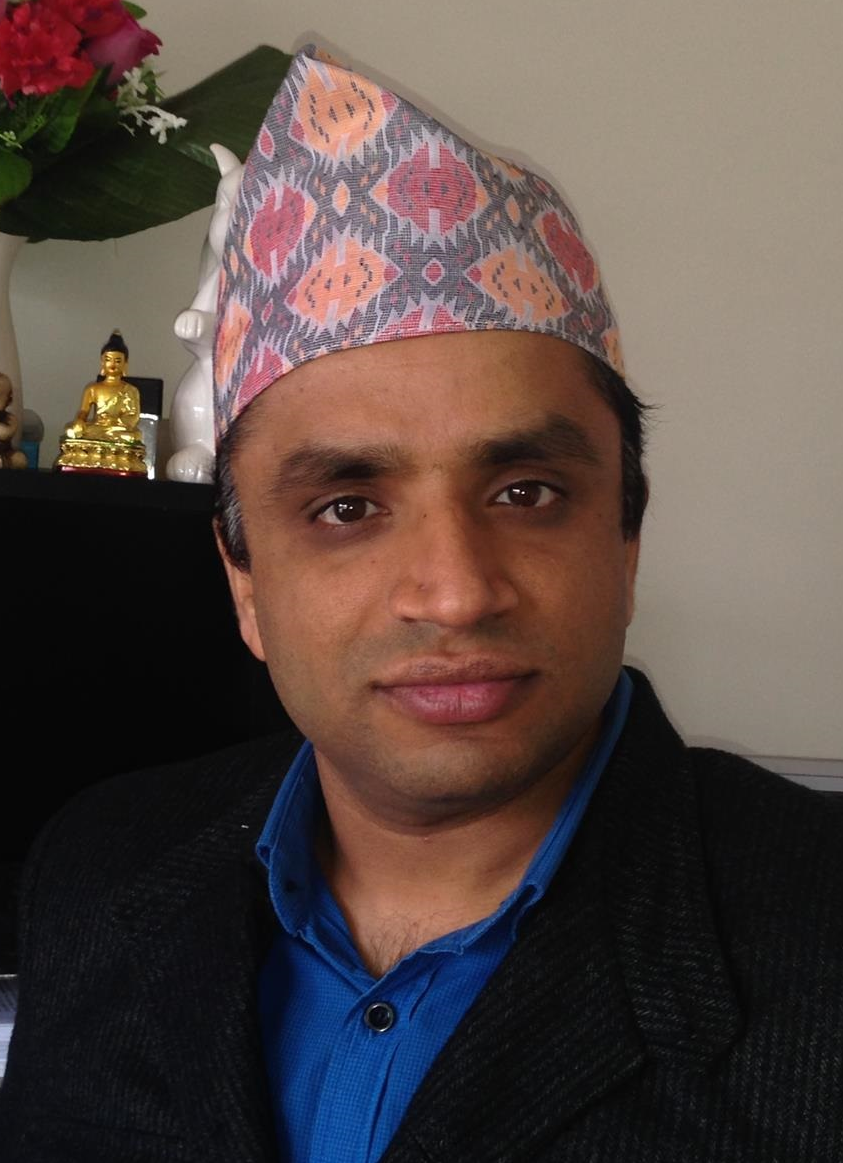
Sunil Aryal is an Associate Professor of Data Science at the School of Information Technology, Faculty of Science Engineering and Built Environment, Deakin University, Australia. He received his PhD and Master by Research degrees from Monash University Australia and has published over 70 papers in top-tier international venues in Artificial Intelligence, Machine Learning and Data Mining. Dr. Aryal's educational background includes: Graduate Certificate of Higher Education Learning and Teaching, Deakin University (2020) PhD in Computer Science, Monash University (2017) Master of Information Technology (Research), Monash University (2012) Master of Information Technology (Coursework), University of Southern Queensland (2008) Bachelor of Information Technology, Purbanchal University, Nepal (2005) His primary research interests focus on making Machine Learning and Data Mining algorithms robust and flexible to handle heterogeneous, noisy and uncertain data in real-world problems. His work spans across several specific areas including anomaly detection, clustering, kernel/similarity-based learning, ensemble methods, learning from limited data, reinforcement learning, natural language processing, and computer vision. Dr. Aryal is particularly interested in applying these techniques to solve challenges in Defence, National Intelligence, Engineering, Manufacturing, Healthcare and Education. Dr. Aryal co-leads the Machine Learning for Decision Support (MLDS) Research Group at Deakin University and has secured over AUD 4.5 million in external research funding. His research is supported by diverse organizations including US and Australia Defence Agencies, the Australian Office of National Intelligence, Worksafe Victoria, the Victorian State Department of Education and Training, the Technology Innovation Institute (TII) UAE, and Table Tennis Australia (TTA). His notable awards include multiple Deakin University research and teaching awards, the Australian Postgraduate Award for his PhD studies, and several student travel awards during his doctoral candidature. Dr. Aryal actively supervises numerous PhD and Master's students and has contributed significantly to teaching in various courses at Deakin University and previously at Federation University. He serves on several university committees and contributes to the research community as a reviewer, program committee member, and editor for various journals and conferences.
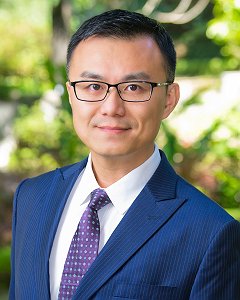
Jacky Wai Keung is an Associate Professor in the Department of Computer Science at City University of Hong Kong with extensive industry connections across the Asia Pacific region. He leads the Artificial Intelligence and Software Engineering Research Group (AiSE) and serves as Chairman of IEEE Computer Society Hong Kong Chapter and Vice-President of Hong Kong STEM Education Alliance. Prof. Keung received his B.Sc.(Hons) in Computer Science from the University of Sydney and Ph.D. in Software Engineering from the University of New South Wales, Australia, before working as a Research Scientist at NICTA (now DATA61, CSIRO) in Sydney. His research spans software engineering, data science, AI, FinTech, machine learning, blockchain systems, and large language models for code generation and analysis. His recent work focuses on applying large language models to software engineering challenges, with publications examining code translation, anomaly detection, and autonomous driving system testing. The research shows a strong trend toward practical applications of AI in software development processes, particularly in FinTech and autonomous systems domains. Among his numerous accolades, Prof. Keung has been named in Stanford's top 2% most highly cited scientists for both 2022 and 2023, received the President's Teaching Excellence Award in 2020, and earned multiple IEEE best paper awards. His editorial service includes roles as Area Editor for Journal of Systems and Software since 2017 and Associate Editor for Information and Software Technology since 2020. Prof. Keung has successfully secured over HK$20 million in research funding through GRF, ITF, and TDG grants, including major projects like 'Smart Intelligent Process Automation for the Mortgage Lending Industry' (HK$2.62 million) and 'Software Data Analytics and Blockchain Technological Advancements' (HK$6 million). His industry collaborations have significantly enhanced student opportunities, with CS student starting salaries increasing by over 15% year-on-year for the past three years. He currently leads multiple research initiatives including RealisticCodeBench for evaluating LLMs in code generation and FedLAD for federated log anomaly detection, with several active projects focused on AI-enhanced InsurTech systems and deep probabilistic reasoning using deep learning.
Michael Carbin is an Associate Professor at MIT in the Department of Electrical Engineering and Computer Science (EECS), where he leads the Programming Systems Group at the Computer Science and Artificial Intelligence Laboratory (CSAIL). His research centers on developing programming systems that handle uncertainty through probabilistic programming, quantum computing, and neural networks. Carbin's work spans programming languages, systems, and machine learning, with themes including uncertainty management, efficiency optimization, and formal verification. His publications demonstrate a strong focus on probabilistic inference methods, neural network optimization, and quantum programming frameworks. Awards and Honors: Sloan Research Fellowship (2020) Multiple Best Paper Awards (OOPSLA 2013, 2014; ICLR 2019) NSF CAREER Award (2018) Google Faculty Research Award (2018) As the head of the Programming Systems Group, he advises 10+ graduate students and postdocs, focusing on cutting-edge systems research. He has secured grants including Facebook Research Awards and NSF funding.
Nikolas Nüsken is a Lecturer in Mathematical Data Science and Computational Mathematics at King’s College London’s Department of Mathematics, part of the Faculty of Natural, Mathematical & Engineering Sciences. He holds a PhD from Imperial College London (2018) and previously worked at the Alan Turing Institute and the University of Potsdam’s Collaborative Research Centre 'Scaling Cascades in Complex Systems'. His research focuses on computational Bayesian inference, stochastic analysis, optimal control, and kernel methods. Key interests include interacting particle systems, optimal transport, and partial differential equations (PDEs). His work bridges theoretical mathematics with applications in machine learning and data science. Recent research trends involve advancing Monte Carlo methods, Stein variational gradient descent, and tensor-based discretization schemes for solving complex PDEs and stochastic systems. His studies often intersect with robust filtering, deep learning for boundary value problems, and geometric analysis of optimization algorithms. Nüsken’s contributions include 39 cited publications, with notable work on low-rank maximum likelihood estimation, robust regression for BSDEs, and controlled Monte Carlo diffusions. He collaborates extensively on topics like rough dynamics, ensemble Kalman filtering, and neural Schrödinger–Föllmer flows. He is affiliated with King’s Probability and Statistics research groups, contributing to experimental design, MCMC methods, and probabilistic modeling. His work emphasizes interdisciplinary applications, blending mathematical rigor with computational innovation.
Florian Doster is a Professor at Heriot-Watt University, affiliated with the School of Energy, Geoscience, Infrastructure and Society and the Institute for GeoEnergy Engineering. He leads the MuPhi Research Group, focusing on multi-scale modeling of subsurface flow phenomena, particularly in porous media and fractured reservoirs. His work addresses challenges in CO2 storage, hydrocarbon production, and groundwater management. He actively supervises PhD students, including Amanzhol Kubeyev, and collaborates with industry and research councils. Research interests include multi-scale simulation, reactive transport, and AI-driven uncertainty quantification, with applications to geological carbon sequestration and reservoir engineering. His group develops open-source tools, such as the Carbonate Reservoir Group HWU code. Notable projects include regional screening of saline aquifers in Malaysia and fracture mechanics studies. Publications highlight advancements in AI for subsurface modeling, CO2 leakage risk assessment, and pore-scale interactions. Funding sources include industry partnerships and research councils. The MuPhi Group’s activities span geomechanics, fracture network analysis, and environmental sustainability.
Aya Khalaf is an Associate Research Scientist at the Yale School of Medicine, affiliated with the Blumenfeld Lab and the Janeway Society. Her research focuses on understanding neural mechanisms of consciousness, brain-computer interfaces, and machine learning applications in healthcare. She collaborates with leading institutions and researchers globally on studies involving EEG, fTCD, and neuroimaging techniques. Key research interests include auditory and visual perception networks, impaired consciousness in epilepsy, and hybrid BCI systems. Her work bridges cognitive neuroscience with engineering, aiming to translate findings into clinical tools. Notable collaborations include projects with Hal Blumenfeld, Dennis Spencer, and international teams testing consciousness theories. Publications highlight advancements in neural activity analysis, BCI calibration optimization, and multimodal signal processing. Her contributions span theoretical neuroscience frameworks and applied biomedical engineering solutions.
Yuexi Wang is an Assistant Professor in the Department of Statistics at the University of Illinois. Their research focuses on Bayesian methodology, approximate Bayesian computation, and deep learning applications in statistical inference. Key areas include uncertainty quantification, sparse deep learning, and statistical modeling for count data. Education: Not explicitly stated in text. Research interests span Bayesian analysis, with emphasis on developing scalable methods for posterior approximation, adversarial simulation, and generative models. They have contributed to variable selection via Bayesian forests and uncertainty quantification in sparse neural networks. Recent work explores optimal transport-based methods for posterior sampling and Pochhammer priors in count models. Publications emphasize methodological advances in Bayesian deep learning, including data augmentation techniques and adversarial approaches. Articles often bridge theory and application in machine learning and computational statistics. No scientific awards explicitly mentioned. Advising and grants information unavailable in provided text.
Professor Francesca Toni is a Professor in Computational Logic at the Department of Computing, Faculty of Engineering at Imperial College London. She leads research in Artificial Intelligence, focusing on explainable AI (XAI), argumentation theory, and neuro-symbolic systems. Her affiliations include the Centre for eXplainable AI (XAI), Argumentation-based Deep Interactive eXplanations (ADIX), and the Human-Like Computing initiative. Her work integrates computational logic with machine learning to develop interpretable models for healthcare, robotics, and decision support systems. Recent research emphasizes conflict analysis in neural networks, argumentative ensembling, and object-centric learning frameworks. Her research interests span AI ethics, formal argumentation, and the integration of symbolic reasoning with deep learning. Key contributions include neuro-argumentative learning architectures, benchmarking explainability methods (XAI-Units), and frameworks for robust recourse in model multiplicity scenarios. She actively explores applications in biomedical fraud detection (Pub-Guard-LLM) and personalized decision support via gradual bipolar argumentation. Her publications highlight trends in explainable AI, with a focus on visual debates, counterfactual explanations, and causal structure learning. She has pioneered systems like ProtoArgNet for interpretable image classification and DR-HAI for dialectical reconciliation in human-AI interactions. Her work bridges theoretical foundations (e.g., ABA semantics) with real-world applications in healthcare and legal reasoning. Notable projects include ROAD2H—an open-source XAI approach for managing comorbidities—and Cafe for conflict-aware feature explanations. She has contributed to legal AI systems (LawGIBA) and causal discovery methods. Current efforts focus on neuro-argumentative machine learning and object-centric representation learning.
Prof. Florian Wellmann is a University Professor at RWTH Aachen University's Chair of Numerical Geosciences, Geothermal Energy and Reservoir Geophysics within the Faculty of Georesources and Materials Engineering. His research focuses on integrating machine learning with geoscience applications, particularly in geothermal energy, structural modeling, and uncertainty quantification. He leads the CG³ research group, developing open-source tools like GemPy and GemGIS for 3D geological modeling. Notably, he received a KI-Campus fellowship for advancing AI in geoscience education. His work includes projects such as the Horizon Europe GeoHEAT initiative, exploring geothermal systems and repurposing idle wells for energy. Education details are not explicitly provided, but his academic roles indicate expertise in numerical geosciences and geothermal engineering. Research interests span physics-based machine learning, subsurface characterization, and probabilistic modeling. His fellowship highlights contributions to digital education, blending AI with geological curricula. Recent publications emphasize sensitivity analysis, fault modeling, and geothermal reservoir optimization. Prof. Wellmann's awards include the KI-Campus fellowship (2021). His grants and advising efforts are reflected in collaborative projects like GeoHEAT and software development. Labs/teams include the CG³ group at RWTH Aachen, equipped with advanced geophysical instruments for field and lab analysis.
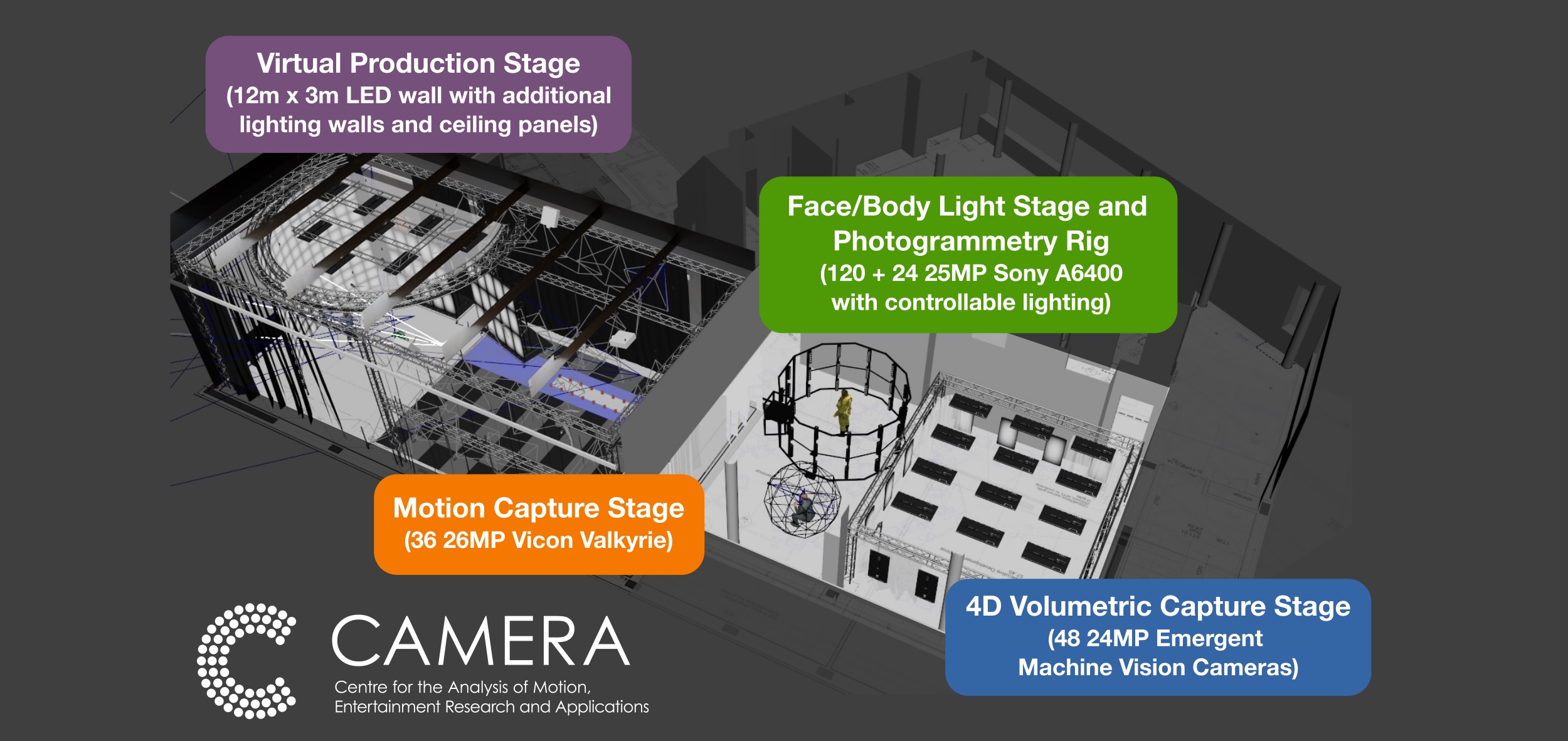
Neill Campbell is a Professor of Visual Computing and Machine Learning in the Department of Computer Science at the University of Bath . He is the Director of the Centre for the Analysis of Motion, Entertainment Research and Applications (CAMERA) and co-director of the Centre for Mathematics and Algorithms for Data (MAD) . He holds an external position as Honorary Associate Professor at University College London and is a Royal Society Industry Fellow. His research spans visual computing, machine learning, and their applications in graphics, vision, and healthcare. His educational background includes a Master of Engineering and a Doctor of Philosophy in Engineering from the University of Cambridge, with his PhD focusing on Automatic 3D Model Acquisition from Uncalibrated Images. Neill Campbell’s research interests lie at the intersection of shape modeling , machine learning , and computer vision . He develops probabilistic and deep learning models to understand and generate visual content, with applications in digital humans, virtual production, biomechanics, and medical imaging. His work emphasizes uncertainty quantification, generative modeling, and alignment learning using Gaussian processes and Bayesian nonparametrics. He leads interdisciplinary projects that bridge computer science and mathematical sciences. The recent publications reflect a strong trend in probabilistic modeling , geometric deep learning , and medical applications . Topics include Gaussian process-based shape modeling, anomaly detection in safety-critical systems, and sparse approximations for geometric representations. His work increasingly integrates theoretical machine learning with real-world applications in health, engineering, and creative industries. Royal Society Industry Fellow Neill Campbell actively supervises PhD students across multiple Centres for Doctoral Training (ART-AI, SAMBa, CDE) and leads significant research grants such as MyWorld (UKRI Strength in Places Fund) and REMODEL (EPSRC). His group collaborates with industry leaders like Rolls-Royce, NVIDIA, Adobe, and DNEG, and he supports student internships and industrial placements. He is also involved in spin-out activities, including contributions to Forceteck Ltd. He leads the Visual Computing Group and is deeply embedded in research centers including CAMERA , MAD , and MyWorld . His team includes postdoctoral researchers and PhD students working on 3D reconstruction, biomechanics, inverse problems, and generative models, fostering a collaborative and interdisciplinary research environment.
Jing Jiang is a prominent researcher at Singapore Management University, specializing in Natural Language Processing (NLP), Computational Linguistics, and Artificial Intelligence. His work spans diverse areas including Vision-Language Models, Machine Translation, Knowledge Graph Reasoning, Sentiment Analysis, and Social Media Discourse Modeling. Key contributions include frameworks for consistent client simulation in mental health counseling and counterfactual contrastive prefix-tuning for many-class classification. He has pioneered methods in zero-shot VQA with interpretable reasoning graphs , cross-lingual understanding with universal syntax , and modularized zero-shot architectures . His research often combines theoretical insights with practical implementations, as seen in works on stereotypical bias in vision-language models (VLStereoSet), tensorized self-attention for dependency modeling, and collaborative relation-augmented attention for knowledge graph completion. Jing Jiang's collaborations span global experts in NLP and AI, with co-authors from institutions like SMU, Waseda University, and Microsoft Research.