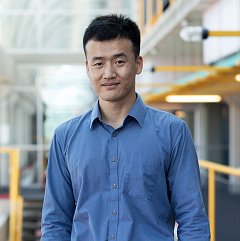
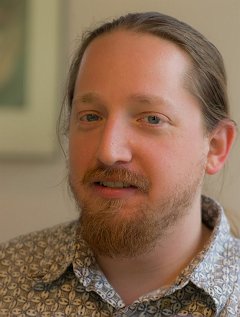
Chengnian Sun is an Associate Professor at the Cheriton School of Computer Science , University of Waterloo, Canada. His research focuses on software engineering and programming languages with an emphasis on software reliability and programming productivity. Education : Ph.D. in Computer Science from National University of Singapore (2013) His work spans compiler testing (EMI, Dfusor, Kitten), program reduction (Perses, Vulcan, PPR), Android testing, and DNN testing. He has received multiple grants including Google Research Scholar Program (2025) and NSERC Discovery Grants (2024-2029). His recent publications focus on LLM-based compiler testing, weighted delta debugging, and ransomware resilience. Scientific Awards : Most Influential Paper Award at SANER (2022) NUS Research Scholarship (2008-2012) ACM SIGSOFT Distinguished Paper Award at ASE (2012) IBM Cup Campus Innovation Contest First Prize (2005) He advises Ph.D. and MMath students in software engineering, compiler testing, and program analysis, including several who have contributed to top-tier conferences like ICSE, ISSTA, and ASPLOS. His service includes program committee roles in ICSE, OOPSLA, and ISSTA.
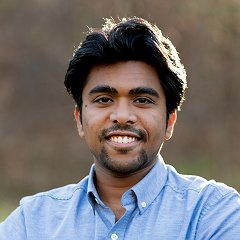
V. Arvind is a Professor in the Theoretical Computer Science faculty at the Institute of Mathematical Sciences (IMSc) , Chennai. His research is centered on computational complexity theory, with a focus on structural complexity, randomized and algebraic computation, and quantum information and computation. He explores the deep connections between theoretical computer science and mathematics. Institution: Institute of Mathematical Sciences (IMSc), Chennai School: Theoretical Computer Science Academic Rank: Professor Arvind's research interests include computational complexity, structural complexity theory, algebraic computation, derandomization, and quantum computing. He is particularly interested in the interplay between mathematical structures and computation. His work often bridges theoretical computer science with algebra, combinatorics, and logic. His recent publications, primarily expository articles in the EATCS Bulletin’s Computational Complexity Column, cover a wide range of topics such as robust oracle machines, the Alon-Roichman theorem, noncommutative arithmetic circuits, graph isomorphism, and quantum computation. These works reflect trends in foundational complexity theory, algebraic methods in computation, and the exploration of quantum models. The articles emphasize structural insights, lower bounds, and connections to mathematical disciplines. Professional Service and Editorial Roles: Associate Editor, ACM Transactions on Computation Theory Editor, EATCS Computational Complexity Column (since June 2011) Editorial Board Member, International Journal of Computer Mathematics (2009–2013) Co-organizer, ICM Satellite Conference on Algebraic and Probabilistic Aspects of Combinatorics and Computing Program Committee Member for WALCOM 2014, STACS 2012, COCOON 2009, FSTTCS (multiple years, including chair roles), CCC 2006, INDOCRYPT (2002, 2005), and others Teaching: Arvind has taught advanced courses including Computational Complexity, Algorithms, Algebra and Computation, and Discrete Mathematics, often based on foundational texts and notes from leading experts. Lecture notes from his courses have been compiled by students and collaborators. Collaborations: He has an extensive list of co-authors, including prominent researchers such as Manindra Agrawal, Eric Allender, Johannes Köbler, Meena Mahajan, Jacobo Torán, and Ramprasad Saptharishi, indicating strong collaborative research networks in complexity theory and algorithms.
Professor André Niemann at the University of Duisburg-Essen's Institute of Hydraulic Engineering and Water Management is a leading expert in water resources management, focusing on flood protection, dam control systems, and AI-driven hydrological forecasting. His work bridges practical engineering challenges with advanced data science applications. Academic Leadership: Coordinated projects like interSim (interactive simulation for vocational training) and PROWAVE (forecast-based dam control) Research Impact: Pioneered ensemble optimization methods for reservoirs and LSTM models for inflow forecasting Technological Innovation: Developed AI frameworks for sensor data quality control in water management His research addresses critical intersections between hydraulic engineering and climate resilience, with recent projects analyzing flood forecasting systems ( HÜProS ), urban drainage optimization, and sustainable hydropower solutions using legacy mining infrastructure. Collaborations span institutions like Harz Waterworks, Deltares, and international conferences (IAHR, ICOLD, EGU). Publications since 2012 cover topics from underground pumped storage feasibility to real-time control of urban reservoirs, with a growing emphasis on machine learning applications since 2023. He actively engages in fieldwork, including excursions to dams and control centers, and teaches modules ranging from hydromechanics to environmental monitoring.
Mareike Schmidt is a Scientific Associate and Researcher at the Institute for Software Systems (VSIS) within the Department of Computer Science at the University of Hamburg, MIN Faculty. She actively contributes to heterogeneous database systems research and participates in both teaching and thesis supervision. University: University of Hamburg Department: Computer Science Email: mschmidt@informatik.uni-hamburg.de Office: Room F522 Phone: +49-40-42883-2343 Research Focus : Mareike's work centers on Heterogeneous and Adaptive Database Systems (HADeS) , exploring: Polyglot persistence architectures Dynamic data placement strategies Spatio-temporal task execution Topology description formalisms Publication Trends : Her recent publications reveal a trajectory in database systems research, particularly addressing challenges in polyglot persistence, adaptive data management, and distributed storage solutions. The work spans theoretical foundations and practical implementations, with a focus on multi-model data handling and system optimization. Thesis Supervision : Mareike has supervised multiple student works including: Lili Hauke's Bachelor thesis (2024): Database administration tool for polyglot systems Felix Pusch's Master thesis (2024): PolyStore blueprint model and API Heiko Eckmann's Master thesis (2022): Common data model for polyglot persistence Jan Synwoldt's Bachelor thesis (2019): Probabilistic data generation with Tesseract OCR Michael Hirsch's Bachelor thesis (2019): Question-answering systems for sensor network data Collaborative Projects : Actively involved in the HADeS (Heterogeneous and Adaptive Database Systems) research group and contributes to broader initiatives like Baqend, SmartOpenHamburg, and MIDAS.
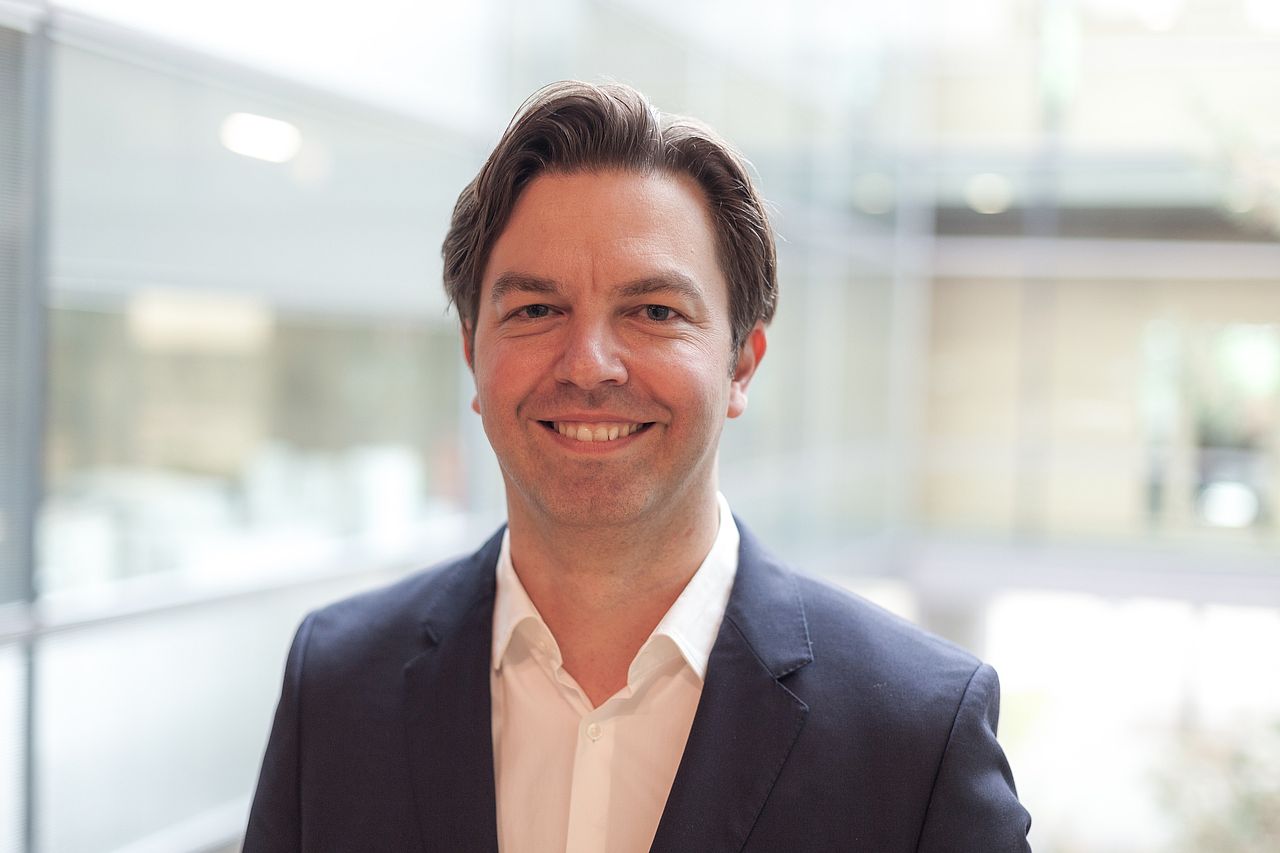
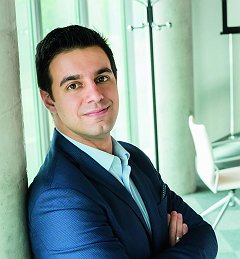
Prof. Mathias Klier holds the Péter Horváth Endowed Professorship for Business Administration with a Focus on Business Information Management at the University of Ulm's Department of Business Analytics. His research focuses on big data analytics, data quality, AI explainability, and social impact of information systems. Klier has held previous academic roles at the Universities of Augsburg, Innsbruck, and Regensburg, where he contributed to data quality metrics and enterprise systems research. He has authored over 100 peer-reviewed articles in journals like MIS Quarterly and Decision Support Systems, and serves as a track chair for ICIS and ECIS conferences. Education: PhD in Business Administration (2008), University of Augsburg (Dissertation: 'Designing Customer-Centric Information Systems') MSc in Business Mathematics (2005), University of Augsburg Research Interests: Klier’s work bridges technical data quality challenges with societal impacts. Key themes include probabilistic metrics for data currency/consistency, ethical AI design, and leveraging peer networks for unemployment support. His recent projects apply explainable AI to public services and workforce development. Key Achievements: Recipient of Research Prize of the Swabian Economy (2008) Winner of Vodafone Foundation Award (2005) Awarded Ciborra Award (2018) for innovative research on event-driven duplicate detection Advising & Grants: Klier’s team has secured funding for projects on future skills forecasting and refugee integration via digital peer groups. He advises on AI literacy initiatives in K-12 education and collaborates with industry partners like German car manufacturers. Labs/Teams: Leads the Business Analytics Institute at Ulm, focusing on data-driven decision making and AI ethics. Active in interdisciplinary research networks including the German Information Quality Management Initiative.
Marlon Dumas is a leading researcher in business process management and process mining at the University of Tartu, Estonia. With over 467 publications spanning from 1997 to 2025, his work has significantly advanced methodologies in business process analysis, simulation, and optimization. His research bridges theoretical foundations with practical applications, developing tools and frameworks that enable organizations to analyze and optimize operational processes. Dumas's primary research interests include business process management, process mining, business process simulation, prescriptive process monitoring, and data-aware business processes. He has pioneered methods for modeling resource availability, activity delays, and waiting times in business processes. His work on prescriptive process monitoring addresses critical challenges such as resource constraints, uncertainty in predictions, and causal effect estimation for interventions. Recent publications reveal a strong trend toward integrating artificial intelligence with business process management, particularly exploring the application of large language models to process optimization, monitoring, and redesign tasks. His research demonstrates consistent innovation, with publications appearing in top venues including Information Systems, Data & Knowledge Engineering, and the International Conference on Business Process Management. Dumas has developed several influential tools including SIMOD for automated discovery of business process simulation models, Optimos for simulation-driven process optimization, and Kairos for prescriptive monitoring. His collaborative network is extensive, featuring frequent co-authorship with prominent researchers including Marcello La Rosa, Luciano García-Bañuelos, Fabrizio Maria Maggi, and Wil M. P. van der Aalst. His work on privacy-preserving process mining, particularly regarding differentially private release of event logs, addresses critical challenges in applying process mining techniques while maintaining data privacy and compliance with regulations like GDPR. Dumas's research continues to push boundaries, with recent work exploring the integration of large language models with business process management systems, suggesting an ongoing commitment to advancing the field through innovative applications of emerging technologies.
L. Oostwegel is a Researcher at GFZ German Research Centre for Geosciences, working within the Seismic Hazard and Risk Dynamics department. The researcher specializes in earthquake exposure modeling, building stock characterization, and multi-hazard risk assessment using geospatial data and open-source information. Oostwegel's research focuses on seismic hazard and risk assessment, with particular emphasis on building exposure modeling using OpenStreetMap and remote sensing data. Key research areas include earthquake risk modeling, flood risk assessment, landslide risk management, and the development of tools for multi-hazard risk assessment. The researcher has made significant contributions to understanding building stock characteristics at various scales, from individual buildings to global assessments. Analysis of recent publications reveals a strong focus on utilizing volunteered geographic information and Earth observation datasets for risk assessment. Oostwegel has developed methods for assessing the completeness of OpenStreetMap building data globally and has created tools like 'risk-calculator' for multi-hazard risk assessments. The research shows an interdisciplinary approach combining geophysics, geospatial analysis, and disaster risk reduction. Top-down or bottom-up in earthquake exposure modeling (2025) Safe Haven – Landslides: A Serious Game for Enhancing Risk Awareness (2025) A model of European buildings (2024) From Shelters to Skyscrapers: Worldwide Building Exploration (2024) Seismic loss assessment sensitivity study (2023) Oostwegel has collaborated extensively with researchers including Evaz Zadeh, T., Schorlemmer, D., and others across multiple projects focused on natural disaster risk assessment. The research has practical applications in urban planning, disaster risk reduction, and climate adaptation strategies, particularly for coastal megacities and areas prone to seismic activity.
Cameron Freer is a Research Scientist in the MIT Probabilistic Computing Project , with prior roles including Instructor in Pure Mathematics at MIT, Postdoctoral Fellow at CSAIL, and Project Associate Professor at Keio University. His work bridges probabilistic computing, logic, and theoretical computer science. Education PhD in Mathematics, Harvard University, 2008 (Thesis: Models with High Scott Rank ) Research Interests Freer's research explores the deep interplay between randomness and computation , focusing on: Foundations of probabilistic programming languages and systems Efficient samplers for discrete and continuous distributions Mathematics of random structures like graphons and exchangeable processes Computability in measure theory and probabilistic inference Publications Overview His recent work (2020–2024) advances probabilistic programming systems (e.g., GenSQL), theoretical frameworks for random graphs via Markov categories, and computable approaches to PAC learning. Earlier contributions include exact sampling algorithms, computable exchangeability, and algorithmic barriers in conditional probability. Academic Service Steering Committee Member, LAFI (formerly PPS) workshop series (2017–2025) Program Committee Chair/Co-chair, PPS 2017–2018 Session Chair, POPL 2017 (PPS track) Industry & Visiting Roles Chief Scientist, Remine (2017–2018) Research Scientist, Gamalon Labs (2013–2016) Lyric Labs Visiting Fellow, Analog Devices (2013–2014) Project Associate Professor, Keio University (2021–2024) Labs & Collaborations Freer collaborates extensively with the MIT Probabilistic Computing Project, Harvard Logic Group, and international partners in Oxford, CMU, and Keio University. His work integrates theoretical insights with practical systems in AI and probabilistic inference.
Saikat Dutta is an Assistant Professor in the Department of Computer Science at Cornell University, where he joined in August 2024. His research sits at the intersection of Software Engineering and Machine Learning, with a focus on improving the reliability of machine learning systems and leveraging machine learning techniques to solve challenging software engineering problems. His research interests span several key areas including automated test generation and debugging of ML/DL libraries , using AI/ML for automated software engineering , improving performance and effectiveness of regression tests in ML libraries , and static and dynamic analyses for probabilistic programming . His work bridges theoretical foundations with practical applications in real-world systems. Dutta has developed multiple influential frameworks and tools including BugsInDLLs (a database of reproducible bugs in deep learning libraries), FLEX (for fixing flaky tests in ML projects), and TERA (for optimizing stochastic regression tests). His research has been published in top-tier venues including ICSE, FSE, ISSTA, PLDI, and ICLR. Amazon Research Award 2025 Meta AI LLM Evaluation Research Grant 2025 Mavis Future Faculty Fellowship 2022-23 Facebook PhD Fellowship 2020-22 3M Foundation Fellowship 2019-2020 Dutta actively mentors PhD students including Yingao (Elaine) Yao, Shinhae (Joseph) Kim, and Junkai Huang. He has served on program committees for major conferences including ASE, ISSTA, and ICSE. His teaching includes courses on Software Engineering in the Era of ML/AI.
David N. Jansen is an Associate Professor at the Institute of Software , Chinese Academy of Sciences , Beijing, China. Previously, he held an Assistant Professor position at Radboud University Nijmegen (2007–2016) and a Postdoc role at RWTH Aachen University (2007). His work bridges academic research, software development, and international collaboration. Education : PhD in Computer Science from University of Twente (1998–2003); Diploma in Mathematics (with minors in Computer Science and Comparative Linguistics) from University of Bern (1990–1997); Certificate of Proficiency in English from University of Cambridge (2000). Research interests include stochastic model checking , UML extensions for probabilistic systems , Markov reward models , and formal verification of embedded systems . He has contributed to tools like MRMC and TCM , focusing on efficient data structures and lumping techniques for system validation. Publication trends show expertise in formal methods , probabilistic verification , and equivalence relations . His work spans automated analysis of probabilistic programs , stuttering equivalence algorithms , and applications to real-world systems like the European Train Control System. Leadership and Service : He has served on doctoral advisory boards (SIKS), supervised student projects (e.g., XML/XMI interface for TCM), and volunteered in Christian organizations. His technical skills include C, C++, UML, model checking, and database systems like MySQL.
Felix Gessert is a Researcher at the University of Hamburg's Department of Computer Science, affiliated with the Visual and Semantic Information Systems (VSIS) group. He is the CEO and co-founder of Baqend, a company developing web acceleration technology based on his PhD research on caching for cloud computing. His work focuses on cloud systems, NoSQL databases, and scalable data architectures. Research Interests: Cloud Computing, Polyglot Persistence, Scalable Database Systems, Distributed Systems, Web Protocols, Microservices, Probabilistic Data Structures, Stream Processing. Key Projects: Baqend (co-founder), InvaliDB (push-based real-time queries), Orestes (low-latency caching middleware), and Speed Kit (GDPR-compliant caching solution). Publications: Author of 31+ papers on web performance, cloud data management, and NoSQL systems. Notable works include cross-entity delta encoding in web compression, polyglot persistence architectures, and real-time query frameworks. Honors: Junior Fellow of the German Informatics Society (GI); winner of Heureka 2018 (10,000 Euro) and Startups@Reeperbahn 2017 (100,000 Euro). Academic Service: Organizer of workshops and symposia on scalable cloud data management; member of program committees for IEEE Big Data, VLDB, and BTW conferences.
Marco Guarnieri is an Associate Professor at IMDEA Software Institute in Madrid, Spain. His research focuses on the design, analysis, and implementation of practical systems for securely storing and processing sensitive data, with particular emphasis on security at the hardware-software boundary and microarchitectural attacks and defenses. Guarnieri received his PhD in Computer Science in 2017 from ETH Zurich's Institute of Information Security, following an MSc (2012) and BSc (2010) in Computer Engineering from Università degli Studi di Bergamo. His research spans security and privacy, program verification, programming languages, and formal methods. Guarnieri's work has particularly focused on addressing vulnerabilities related to speculative execution (Spectre attacks), side-channel analysis, hardware-software security interfaces, and leakage contracts. His approach often combines formal verification techniques with practical system implementation to develop robust security solutions. Guarnieri's publications reveal a strong focus on microarchitectural security, with recent work addressing secure speculation countermeasures, compiler security guarantees against Spectre attacks, side-channel security of cryptographic implementations, and hardware-software leakage contracts. His research shows a progression from database security early in his career to the hardware-software security boundary that characterizes his current work. Among his notable achievements are a Best Paper Award at CCS 2024 and Distinguished Paper Awards at CCS 2023 and CCS 2022. His paper 'Hardware-Software Contracts for Secure Speculation' also received a Best Paper Award. Guarnieri actively contributes to the academic community through program committee roles, including the PriSC Steering Committee, and has organized events such as PLMW@PLDI 2023. He is seeking talented researchers (interns, PhD students, and postdocs) to join his group at IMDEA Software Institute to work on security at the hardware-software interface.
Irina Nikishina is a postdoctoral researcher at the University of Hamburg's Department of Informatics, working in the Language Technology Group under Prof. Chris Biemann. As a researcher in computational linguistics and natural language processing, she contributes to projects like ACQuA-2.0, focusing on semantics, argument mining, taxonomies, and knowledge graphs. PhD in Computational and Data Science and Engineering (2022), Skolkovo Institute of Science and Technology Bachelor's and Master's degrees from National Research University Higher School of Economics (NRU HSE) Her research spans taxonomy enrichment, comparative question answering systems, and biomedical concept representation. She organizes shared tasks like RUSSE’2020 and RuArg-2022, and co-founded the RusNLP semantic search engine for Russian NLP conferences. She chairs the Network Analysis track at the International Conference on Analysis of Images, Social Networks and Texts (AIST) and has served as secretary for AIST 2020 and 2021. Recent publications focus on large language models' performance in lexical semantics, multilingual comparative argumentation systems, and knowledge graph integration for QA tasks. Her work includes developing tools like TaxFree for candidate-free taxonomy enrichment and exploring cross-modal approaches for taxonomic graph expansion.
Francesco Kriegel is a Postdoctoral Research and Teaching Associate at the Institute of Theoretical Computer Science within the Faculty of Computer Science at Dresden University of Technology. He is a key member of the International Center for Computational Logic (ICCL), working under Professor Franz Baader's research group. His academic journey began with Mathematics as his major (focusing on Algebra and Analysis) and Computer Science as his minor, culminating in a doctoral degree in 2019 with a dissertation on constructing and extending Description Logic ontologies using Formal Concept Analysis. Dr. Kriegel's research is deeply rooted in Knowledge Representation and Reasoning, with a particular focus on Description Logics (especially the EL family), ontology repair, and the integration of Formal Concept Analysis with Description Logics. His work has significantly advanced the field of ontology engineering through the development of optimal repair frameworks that preserve maximal consequences while removing errors. He has explored theoretical foundations such as the EL subsumption hierarchy's structure and navigational properties, while also developing practical applications for ontology construction and maintenance. His publication record from 2016-2025 reveals a consistent research trajectory focused on ontology repair mechanisms, with increasing sophistication in handling quantified ABoxes, hierarchical concrete domains, and interactive repair systems. The research demonstrates a clear progression from theoretical foundations to practical implementations, with recent work emphasizing user-centered approaches to ontology repair that balance theoretical optimality with practical usability. Best Paper Award at CLA 2015 Principal Investigator for DFG-funded project 'Construction and Repair of Description-logic Knowledge Bases' Research Associate at ScaDS.AI (Center for Scalable Data Analysis and Artificial Intelligence) Former Research Associate in DFG project 'Repairing Description Logic Ontologies' and CPEC (Center for Perspicuous Computing) Dr. Kriegel has been actively involved in teaching since his third semester and throughout his doctoral studies, primarily conducting tutorials for foundational and advanced computer science courses. In summer semester 2024, he delivered his first full lecture series 'Building and Maintaining Ontologies in the Description Logic EL', reflecting his expertise in the field. He serves on program committees for major AI conferences including IJCAI, AAAI, and KR, and reviews for prestigious journals such as Artificial Intelligence Journal and Journal of Artificial Intelligence Research.
Mary Stevens is a Research Fellow at the Institute of Phonetics and Speech Processing (IPS) at Ludwig Maximilian University of Munich. Her work focuses on sound change, the phonetics-phonology interface, and experimental phonetics. She holds a PhD from the University of Melbourne (2007), following degrees from the Australian National University (B.A., 2000) and the University of Melbourne (B.A. (Hons), 2001). Stevens has been affiliated with the IPS since 2010, initially as a Humboldt Foundation-funded postdoctoral researcher and later as a full research fellow. Her research investigates how phonetic variation leads to permanent sound changes, particularly focusing on /s/-to-/sh/ retraction in languages like English and Italian. Current projects include a DFG-funded study (2018–2025) modeling the actuation of sound change through agent-based simulations. Key interests include computational modeling, sociophonetics, and linguistic typology. Publications span experimental phonetics, sound change dynamics, and computational linguistics. She collaborates internationally, notably with John Harrington and Frank Kleber, on projects exploring agent-based modeling and phonetic variation. Stevens also engages in interdisciplinary work, such as applying phonetic analysis to clinical communication training in medicine. Grants and Funding: DFG project (2018–2025) on modeling sound change actuation. Labs/Teams: Active member of the IPS research group, contributing to the Bavarian Archive for Speech Signals (BAS) and the MAMPF database for speech processing.