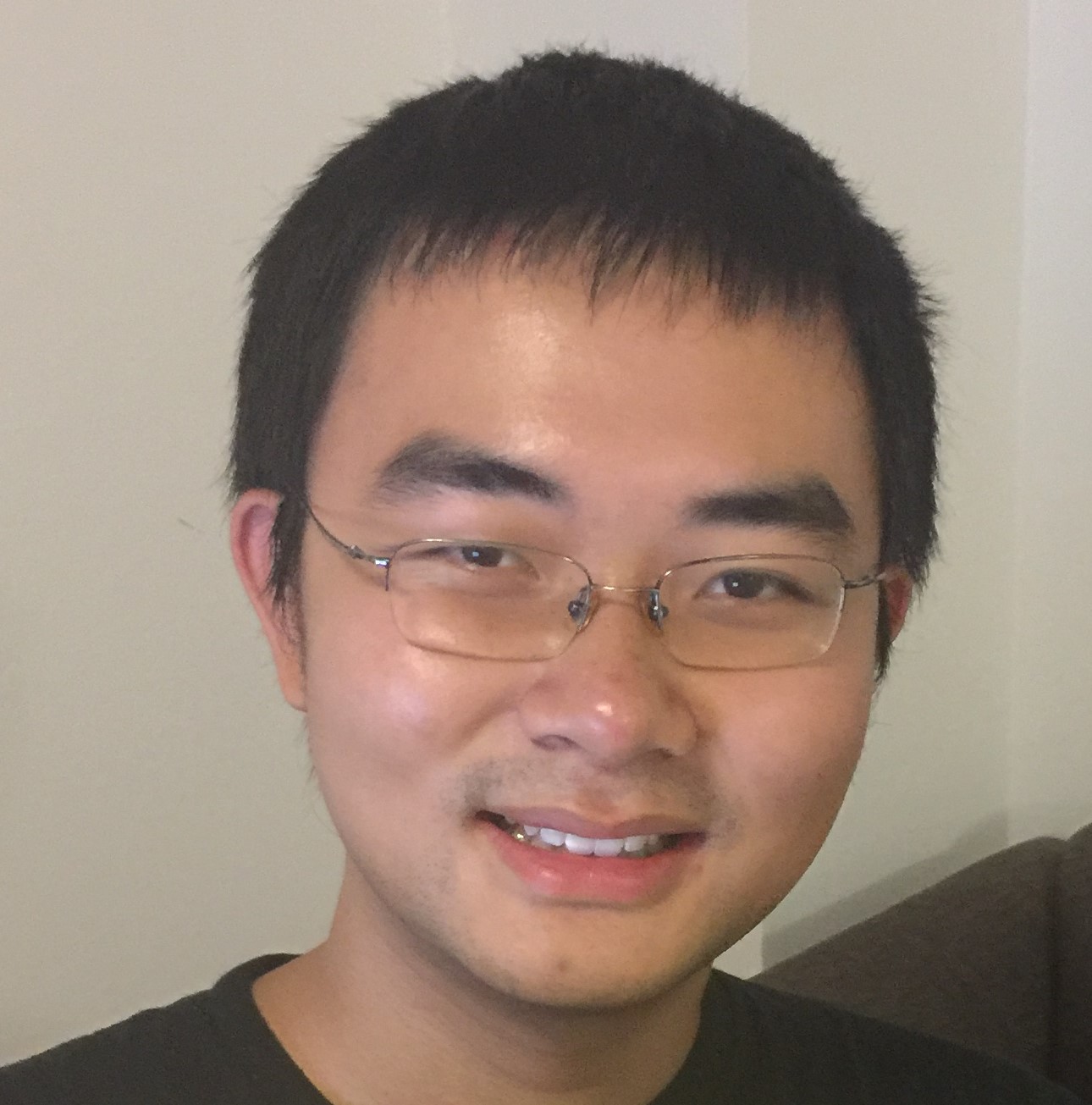
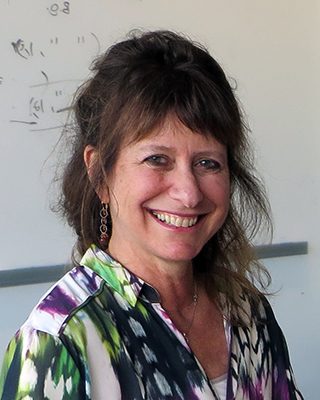
Xiaoyu He is a tenure-track Assistant Professor at the School of Mathematics, Georgia Institute of Technology. Starting Fall 2025, he will teach Math 8803, a graduate-level topics course on Ramsey and Turán problems for graphs and hypergraphs. His research spans extremal, probabilistic, and algebraic combinatorics , focusing on Ramsey theory, graph coloring, additive combinatorics, discrete geometry, and coding theory with applications to computer science. Education: PhD in Mathematics from Stanford University (2021), advised by Jacob Fox. Prior Roles: NSF Postdoctoral Research Fellow at Princeton University (mentored by Noga Alon). Current Group: Collaborates with Visiting Assistant Professor Jiaxi Nie and PhD students Ruben Ascoli, Winston Stucki, and Logan Post. Awards: NSF Postdoctoral Research Fellowship. Contact: xhe399@gatech.edu , Office: Skiles 260.
Matthew Jenssen is a Reader in Probability at King's College London and a UKRI Future Leaders Fellow. He holds a BA and MMath from the University of Cambridge (2012–2013) and a PhD from the London School of Economics (supervised by Jozef Skokan and Julia Boettcher). His research focuses on the intersection of combinatorics, statistical physics, and theoretical computer science, particularly on large-scale structure formation in systems with local interactions. Notable contributions include advancements in sphere packing, Ramsey numbers, and random matrix theory. Jenssen has held postdoctoral positions at the University of Oxford and the University of Birmingham before joining King’s in 2023. His research group at King’s explores discrete probability, extremal combinatorics, and algorithms, with applications to statistical physics and high-dimensional geometry. Key achievements include a groundbreaking improvement on sphere packing lower bounds and resolving extremal questions in graph theory. Jenssen’s work often bridges combinatorial theory with computational methods, yielding impactful results in probabilistic combinatorics. Scientific awards include the UKRI Future Leaders Fellowship (2020). His grants include a 2023–2026 project on statistical physics methods in combinatorics and geometry. Jenssen collaborates widely, with notable co-authors including Will Perkins, Jozef Skokan, and Felix Joos. He is actively involved in the Probability Group at King’s and contributes to international conferences and arXiv publications.
Shuangping Li is an Assistant Professor in the Department of Statistics and Data Science at Yale University. She was previously a Stein Fellow in the Department of Statistics at Stanford University (2022–2025). Her research lies at the intersection of probability theory, high-dimensional statistics, theoretical machine learning, and the theory of algorithms. Ph.D. in Applied and Computational Mathematics, Princeton University (2022) B.Sc. in Mathematics, University of Hong Kong Her research interests include probability theory , high-dimensional statistics , theoretical machine learning , and theory of algorithms . She investigates foundational aspects of random constraint satisfaction problems, neural networks, spectral methods, and phase transitions in high-dimensional models. Her work often draws from statistical physics and combinatorics to explain algorithmic behavior. The recent articles highlight a strong focus on binary perceptrons , clustering in network models , and algorithmic phase transitions . Keywords across publications include probability, theoretical computer science, machine learning, and statistical inference. Subfields reveal deep engagement with spin glass theory, discrepancy minimization, spectral embedding, and information-computation gaps. Scientific awards include: Stein Fellow, Department of Statistics, Stanford University (2022–2025) She has advised and taught at both Stanford and Yale, including courses such as Advanced Probability , Theory of Probability , and Stochastic Processes . She has organized seminars at Stanford and has delivered invited talks at institutions including Cornell, Duke, UC Berkeley, and Princeton. Her collaborative research involves prominent scholars such as Allan Sly, Emmanuel Abbe, and Tselil Schramm. There is no mention of external grants, but her postdoctoral fellowship suggests research funding support. She is involved in academic service through organizing the Stanford Statistics and Probability Seminars. She maintains an active research presence with publications in top venues like STOC, FOCS, COLT, ICLR, and journals such as Annals of Probability and Annals of Statistics .
Anna R. Karlin is a Professor and the Bill & Melinda Gates Chair in Computer Science & Engineering at the University of Washington's Paul G. Allen School of Computer Science & Engineering. She serves as Associate Director of Graduate Studies and leads research in theoretical computer science within the Theory & Models of Computation focus area. Ph.D. from Stanford University (1987) Former researcher at Digital Equipment Corporation's Systems Research Center (5 years) Professor Karlin's research centers on theoretical computer science, with specific expertise in algorithm design and analysis, particularly probabilistic and online algorithms. Her work spans multiple interdisciplinary domains including algorithmic game theory, economics and computation, data mining, operating systems, networks, and distributed systems. Her research has evolved from foundational algorithmic work to impactful applications in market design, auction theory, and pricing mechanisms. Karlin's publication record demonstrates a consistent trajectory from classical theoretical computer science toward algorithmic game theory and mechanism design. Her recent work focuses on approximation algorithms for NP-hard problems, auction design, revenue maximization, and stable matching problems, with applications in online advertising, network economics, and resource allocation. She has developed influential algorithms for the Traveling Salesman Problem and made significant contributions to understanding interdependent valuations in combinatorial auctions. Bill & Melinda Gates Chair in Computer Science & Engineering Professor Karlin has advised numerous doctoral students throughout her career, with former students including prominent researchers like Jason Hartline, Frank McSherry, and Kira Goldner. Her collaborative research has been supported by various grants, including NSF funding (CCF-1813135 mentioned in her publications). She co-authored the influential textbook Game Theory, Alive with Yuval Peres, which serves as a rigorous introduction to game theory with applications across multiple disciplines. As a leader in theoretical computer science, Professor Karlin maintains active involvement in the Theory of Computation research group at the Allen School, fostering collaboration between theoretical foundations and practical applications in computer science.
Anthony Quas is a Professor in the Department of Mathematics and Statistics at the University of Victoria, Canada. He holds a PhD from the University of Warwick and has held academic positions at institutions including the University of Memphis and King's College, Cambridge. His research focuses on ergodic theory and dynamical systems, with contributions to multiplicative ergodic theory, Lyapunov exponents, and symbolic dynamics. Education: B.A. in Mathematics (First Class), Cambridge University (1986–1989) Certificate of Advanced Study in Mathematics (Distinction), Cambridge University (1989–1990) PhD in Mathematics, University of Warwick (1990–1994) Research Interests: Ergodic theory and its connections to stochastic processes Lyapunov exponents and operator cocycles Symbolic dynamics and shift spaces Applications to percolation theory and information theory Publications and Grants: Over 70 peer-reviewed articles, including work on multiplicative ergodic theorems and metastable systems Recipient of NSERC and NSF grants, and former Canada Research Chair (2005–2014) Editor for Dynamical Systems: An International Journal Awards and Recognition: Tyson Medal (1990) Cambridge Smith Prize (1992) Organizer of international workshops and conferences (e.g., Banff International Research Station) Teaching and Service: Supervised multiple PhD and Master’s students Contributed to outreach initiatives like Pi in the Sky magazine Served on NSERC Grant Selection Committees and editorial boards
Jonathan Pakianathan is a Professor of Mathematics at the University of Rochester's School of Arts & Sciences, Department of Mathematics. He holds a PhD from Princeton University (1997) and a BS in Mathematics and Physics from Caltech (1992). His research focuses on algebraic topology, cohomology of groups and Lie algebras, geometric combinatorics, and finite fields. He has held leadership roles, including Director of Graduate Studies (2014–2020) and Director of Undergraduate Studies (2003–2010). Notable awards include the Goergen Award for Excellence in Teaching (2014) and the Sloan Foundation Doctoral Dissertation Fellowship (1996). His research explores applications of topology and algebra in discrete geometry, often collaborating with Alex Iosevich and students. Recent work addresses topics like Fuglede's conjecture over finite fields, geometric configurations, and probabilistic methods in combinatorics. His articles frequently intersect harmonic analysis, group theory, and number theory, reflecting interdisciplinary strengths. Education : PhD, Princeton University, 1997 BS in Mathematics and Physics, Caltech, 1992 Awards : Goergen Award for Excellence in Undergraduate Teaching, 2014 Sloan Foundation Doctoral Dissertation Fellowship, 1996 H. J. Ryser Scholarship, 1991 Grants include an NSA Mathematical Sciences Grant (2016–2017, $110,000 total) with A. Iosevich. He advises numerous PhD students, many of whom now hold academic or research positions. His teaching spans undergraduate to graduate courses, including algebra, topology, and financial mathematics. Research groups and collaborations extend to geometric combinatorics, algebraic topology, and applications in physics and data science. Ongoing projects explore topological methods in discrete geometry and probabilistic structures over finite fields.
Rocco Servedio is a Professor in the Department of Computer Science at Columbia University, where he leads research in theoretical computer science with a focus on computational complexity theory, learning theory, and the role of randomness in computation. He previously served as Chair of the Computer Science Department from 2018 to 2021. He holds a Ph.D., MS, and AB in Mathematics from Harvard University. His research interests include property testing, computational learning theory, and algorithmic lower bounds. He has contributed to foundational work in areas like junta testing, trace reconstruction, and convexity testing. Servedio has held leadership roles in major conferences such as STOC, CCC, and COLT, and has mentored students through courses like Unconditional Lower Bounds and Derandomization . Education: Ph.D. in Computer Science, Harvard University MS in Computer Science, Harvard University AB in Mathematics, Harvard University His research bridges theoretical computer science and applied mathematics, with recent work exploring the intersection of Gaussian processes, convex geometry, and algorithmic efficiency. Servedio's contributions to the field are exemplified through his involvement in high-impact conferences and his leadership in advancing fundamental computational theories.
James B. Orlin is the E. Pennell Brooks (1917) Professor in Management and a Professor of Operations Research at the MIT Sloan School of Management. He specializes in network and combinatorial optimization with applications spanning transportation, computer science, operations, and marketing. BA in Mathematics, University of Pennsylvania MA in Mathematics, California Institute of Technology MMath, University of Waterloo PhD in Operations Research, Stanford University His research focuses on designing efficient algorithms for network optimization problems, including shortest path, max flow, and min cost flow. He has contributed to algorithmic theory in logistics, telecommunications, and inventory management, with work on stochastic demand models and data-driven inventory policies. Recent publications include advancements in directed shortest path algorithms, robust submodular function maximization, and energy storage problem complexity. His seminal textbook Network Flows: Theory, Algorithms, and Applications (1993) remains a foundational reference. Leonard G. Abraham Prize Khachiyan Prize Test of Time Award As a mentor, he has advised numerous researchers through collaborative publications and teaching. His work addresses both theoretical algorithm development and practical implementation across diverse domains including airline scheduling, logistics, and network design.
Hugo Paquet is a Researcher at INRIA Paris and a member of the ANTIQUE team at École Normale Supérieure , PSL University. He completed a PhD in Computer Science (2015–2019) at the University of Cambridge under Glynn Winskel , focusing on concurrent game semantics for probabilistic programming. His postdoctoral work includes positions at LIPN, Paris (2022–2024, funded by a Marie Skłodowska-Curie Award) and University of Oxford (2020–2022). He has contributed to conferences including LICS , ESOP , FSCD , and POPL . Education : PhD in Computer Science (University of Cambridge, 2019) Research Interests : Probabilistic programming (semantics, inference algorithms, nonparametric models), categorical semantics (game semantics, concurrency models, adjunctions), combinatorial species, and 2-dimensional categories. Teaching : Category Theory (2023–2024), Bayesian Statistical Probabilistic Programming (2021–2022), Lambda-calculus and Types (2020–2021), and small-group teaching at Cambridge (Logic, Discrete Mathematics, Semantics). Awards : Marie Skłodowska-Curie Award under the Paris Region Fellowship Programme Labs : INRIA Paris, ANTIQUE team (2024–present)
Professor Oliver Johnson is a faculty member at the School of Mathematics, University of Bristol, UK, where he serves as Head of School and holds the Professor of Information Theory position. His research bridges information theory, probability, and statistics, focusing on entropy convergence, group testing, and fundamental limits in data analysis. Current PhD students: Kieran Morris, Conor Crilly Ex-PhD students: Matt Aldridge, Leonardo Baldassini, Dan Cowley, Vaia Kalokidou, Tom Kealy, Jennifer Chakravarty, Zichen Gui, Chrys Paschou Ex-postdoc: Erwan Hillion His work includes ORCiD profile and collaborations across information theory, cybersecurity, and ecological modeling.
James Martin is a Lecturer at the Department of Statistics, University of Oxford . He is affiliated with St Hugh's College and has been actively involved in organizing probability seminars since 2018. Research Interests Probability theory Random graphs and percolation Interacting particle systems Models of random growth and coagulation-fragmentation Queueing networks Combinatorial games Teaching Courses: Prelims Probability , Part A Probability , Part B Statistical Lifetime Models , Part C Probabilistic Combinatorics His publications focus on probability theory , statistical physics , and combinatorial structures . Recent work includes studies on last-passage percolation, multispecies exclusion processes, and integrable probability models. James Martin collaborates with researchers from institutions such as Uppsala University, University of Cambridge, Imperial College London, and Kyoto University. He has been a key organizer for the Oxford Probability Seminar since 2018.
Noela Müller is an Assistant Professor in the Mathematics and Computer Science school at Eindhoven University of Technology . Her research focuses on Probability Theory , Random Matrices , and Random Graphs , with significant contributions to understanding the rank of sparse matrices and clique factors in probabilistic settings. Research Outputs : Published 22 works including journal articles and preprints. Collaborations : Active in international networks, particularly in sparse matrix analysis and probabilistic combinatorics. Her recent work explores sparse pooled data algorithms , random 2-SAT models , and sharp thresholds in random graphs , showcasing interdisciplinary applications in computer science, mathematics, and theoretical physics.
Dr. Julian Sahasrabudhe is a researcher at the Department of Pure Mathematics and Mathematical Statistics (DPMMS) , University of Cambridge, affiliated with the School of Mathematics . His work focuses on combinatorics, number theory, and graph theory, with a emphasis on extremal problems and probabilistic methods. His recent research explores Erdős covering systems, Littlewood polynomials, and monochromatic subgraphs. Publications from 2018–2024 highlight applications of probability generating functions, arithmetic progressions, and density analysis in combinatorial structures. Contact details: jdrs2@cam.ac.uk , Room C2.08, Tel: 01223 337974. Personal homepage .
Partha Sarathi Dey serves as Associate Professor in both Mathematics and Statistics at the University of Illinois at Urbana-Champaign, joining the faculty in 2014 after postdoctoral appointments at NYU's Courant Institute and the University of Warwick. His academic credentials include: Ph.D. in Statistics from UC Berkeley (2010) Undergraduate and Masters degrees from Indian Statistical Institute, Kolkata, specializing in Mathematical Statistics and Probability Dr. Dey's research bridges Probability Theory and Statistical Physics, with expertise in First/Last Passage Percolation, Random Growth Models, Stein's Method, Concentration Inequalities, Spin Glasses, Random Graphs, and Random Matrices. His work develops rigorous probabilistic frameworks for physical systems. Recent publications (2023-2025) demonstrate consistent focus on disordered systems and phase transitions, examining random walks on discrete tori, nonlinear Schrödinger equations in higher dimensions, critical-strip path structures, monomer-dimer models, and spin glasses under external fields. These studies reveal deep connections between probabilistic fluctuations and thermodynamic behavior. His distinguished recognitions include: Simons Fellowship Harrison Early-Career Fellowship Though specific advising records and grants are unreported, his extensive co-authorship network reflects active collaboration across international research communities in mathematical physics.
Jop Briët is a Researcher at the Department of Algorithms and Complexity at Centrum Wiskunde & Informatica (CWI) in the Netherlands. His work focuses on theoretical computer science, quantum information theory, combinatorics, and tensor analysis. He has held grants including the Veni Innovational Research Grant from NWO and a Rubicon fellowship. He has authored over 50 publications in leading venues, exploring topics such as Grothendieck inequalities, quantum computing, and additive combinatorics. His research interests span the interplay between combinatorics and computational complexity, with particular emphasis on tensor analysis, probabilistic methods, and algorithm design. Recent work includes studies on Szemerédi’s theorem with random differences and the application of quantum query algorithms to entanglement-based problems. Awards: Outstanding paper award TQC (2020), Andreas Bonn medal (2013), Stieltjesprijs (2011). Professional Activities: Editor for ERCIM News, Board Member of Koninklijk Wiskundig Genootschap, and frequent invited speaker at workshops on quantum computing and combinatorics. Grants: Veni Grant (2014), Rubicon Fellowship (2012). Current teaching includes courses on Additive Combinatorics and Quantum Information Processing, reflecting his commitment to bridging foundational theory with advanced applications in computing and mathematics.