Cliff Zou is a Professor in the Department of Computer Science at the University of Central Florida (UCF), where he coordinates master’s programs in cybersecurity, privacy, and digital forensics. He directs the UCF Alliance for Cybersecurity and contributes to the university’s Cyber Security and Privacy Cluster. Education: Ph.D. in Electrical and Computer Engineering from University of Massachusetts-Amherst His research focuses on computer and network security , network modeling , and performance evaluation . Key areas include malware analysis, botnet defense, and adaptive cybersecurity protocols. His publications address threats like email worms, peer-to-peer botnets, and internet worms, reflecting his work in proactive threat mitigation and network resilience. Scientific recognition includes: Senior Member of IEEE Best Student Paper Award (ACSAC 2007) UCF Teaching Incentive Program (TIP) award (2013) Best Paper runner-up (PADS 2005, ICCCN 2004) First-place award for undergraduate project 'Personal Medication Monitor' His research has been featured in New Scientist Magazine , EurekAlert! , PCWorld , and The Register . Zou actively contributes to academic conferences as an organizer and program committee member.
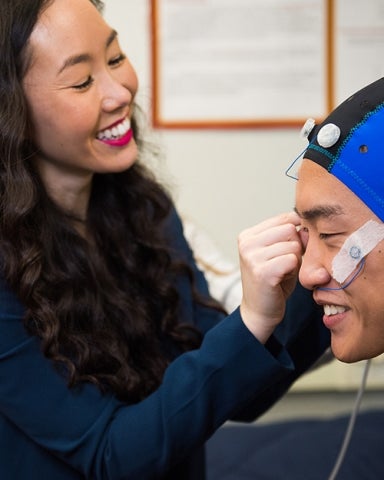
Kelly Bennion serves as an Associate Professor in the Psychology and Child Development Department at California Polytechnic State University. Her research examines how real-life variables—such as emotion, stress, physiological arousal, and sleep—affect memory encoding and consolidation using behavioral experiments, eye tracking, polysomnography, and neuroimaging. She investigates how sleep selectively enhances memories for emotionally salient or future-relevant information in ecologically valid contexts. (78 words) Her educational background includes: Ph.D. and M.A. in Psychology (Cognitive Neuroscience concentration) from Boston College Ed.M. in Mind, Brain, and Education from Harvard Graduate School of Education B.A. in Psychology and Spanish (summa cum laude, Phi Beta Kappa) from Middlebury College Dr. Bennion's work focuses on memory prioritization mechanisms during sleep-wake cycles, particularly how emotional arousal and physiological stress modulate consolidation. She explores real-world applications including educational strategies and mental health interventions, emphasizing the interaction between cortisol levels and sleep-dependent memory processing. Her multi-method approach bridges laboratory findings with naturalistic memory phenomena. (92 words) Analysis of her 2020-2025 publications reveals three dominant research streams: (1) sleep's role in enhancing emotional and future-relevant memories through selective consolidation, (2) cross-episode memory integration via semantic relatedness and surprise mechanisms, and (3) interdisciplinary extensions into public health (postpartum interventions) and environmental toxicology (bisphenol A effects). Her methodology increasingly combines behavioral metrics with physiological monitoring to capture memory dynamics in complex scenarios. (68 words) Dr. Bennion actively mentors undergraduate researchers, evidenced by student co-authorships on publications including Jackson (2019) on school shooter perceptions. While specific grant details aren't provided, her sophisticated research infrastructure implies substantial external funding. She teaches core psychology courses including Research Methods, Biopsychology, and Memory, emphasizing hands-on methodology training. Her laboratory maintains advanced capabilities for sleep monitoring, eye tracking, and neuroimaging to investigate memory consolidation across physiological states. (76 words)
Angelina Wang is an incoming Assistant Professor at Cornell Tech and the Department of Information Science at Cornell University, starting Fall 2025. Her research focuses on responsible AI, particularly machine learning fairness and algorithmic bias. She holds a Ph.D. in Computer Science from Princeton University and a B.S. in Electrical Engineering and Computer Science from UC Berkeley. Current postdoctoral work at Stanford’s HAI and RegLab explores sociotechnical challenges in AI deployment. Her research addresses fairness evaluation in generative AI, societal impacts of AI systems, and ethical trade-offs in algorithm design. Notable awards include the NSF GRFP, Siebel Scholarship, and Microsoft AI & Society Fellowship. Her work bridges technical and social dimensions of AI, emphasizing human-centered evaluation and interdisciplinary collaboration. Recent publications span medical AI applications (e.g., Alzheimer’s subphenotypes, corticosteroid treatment efficacy) and foundational fairness research. She advocates for proactive ethical considerations in technical work, citing examples like surveillance risks in facial recognition and dataset biases in computer vision. Angelina advises prospective PhD students in Cornell’s Information Science program and collaborates on projects like SciDaSynth for scientific knowledge synthesis. Her advocacy includes challenging fairness impossibility theorems and promoting algorithmic pluralism in auditing practices.
Dr Jonathan Baker is a Senior Lecturer in Strategy at the Adelaide Business School , part of the Faculty of Arts, Business, Law and Economics at the University of Adelaide. He previously served as Director of the Yunus Centre for Business, Sustainability & Social Impact (2022-2023) and has held academic positions at Auckland University of Technology, University of Auckland, and guest professorship at University of Bayreuth. His research focuses on Interdisciplinary intersections of markets, strategy, and social impact Market-shaping strategies Sustainability and circularity transitions UN Sustainable Development Goals (9, 11, 12) Systemic business model perspectives Dr Baker's work appears in top journals including Industrial Marketing Management , Journal of Business Research , and Marketing Theory . He serves on the Editorial Review Board of Industrial Marketing Management (ABDC A*). Scientific Awards Excellence Early Career Researcher Award (ANZAM-European Management Journal, 2023) Emerging Career Researcher Award (Adelaide Business School, 2023) As a principal supervisor, he welcomes PhD/MPhil candidates interested in market shaping, sustainability transitions, or social entrepreneurship. His methodology emphasizes qualitative research and ecosystem-level analysis.
Dr. Beatrice Piccoli is a Lecturer in Human Resource Management at the University of Essex's Essex Business School since September 2017. She holds a joint PhD in Work and Organizational Psychology from the Universities of Verona (Italy) and Leuven (Belgium). Her research focuses on job insecurity, employee well-being, leadership, and organizational behavior. She has been affiliated with KU Leuven's Research Group on Work, Organizational and Personnel Psychology since her postdoctoral role funded by the EU's Horizon 2020 Marie Skłodowska-Curie Grant (2015–2017). Additional affiliations include a visiting scholar position at St. John’s University (New York, 2016) through the COOPERINT grant and a researcher role at the University of Verona (2016). Educational Background: PhD in Work and Organizational Psychology (2015): Joint program between University of Verona and KU Leuven MSc in Management of Training Services (2011): University of Verona Postdoctoral Researcher at KU Leuven (2015–2017): Funded by EU Horizon 2020 Research Interests: Beatrice explores the impact of job insecurity on organizational outcomes (e.g., performance, discretionary behaviors), employee well-being, and household dynamics. She also investigates mindfulness in high-stress professions, proactive personality traits among older workers, and the role of leadership in change management. Her work integrates social exchange theory, psychological contract theory, and cross-cultural perspectives. Grants & Awards: Marie Skłodowska-Curie Individual Fellowship (EU Horizon 2020, 2015–2017) COOPERINT Internationalization Grant (University of Verona, 2016) Banco Popolare Funding for Aging & Well-being Research (2015) Teaching & Supervision: Dr. Piccoli teaches Human Resource Management modules at Essex Business School, focusing on organizational behavior and employee relations. She supports postgraduate research students in areas aligned with her expertise, such as job insecurity and workplace psychology. Labs & Collaborations: She collaborates with KU Leuven's Work and Organizational Psychology group and maintains ties with institutions in Italy and the U.S., emphasizing interdisciplinary research on workplace well-being and policy interventions.
Yuko Munakata is a Professor in the Department of Psychology at the University of California, Davis, and Director of the Cognition in Context Lab. She holds affiliations with the Center for Mind and Brain. Her education includes a PhD in Psychology from Carnegie Mellon University and dual BS/BA degrees in Symbolic Systems and Psychology from Stanford University. Her research integrates behavioral experiments, computational modeling, neuroimaging (ERP/fMRI), and cross-cultural studies to investigate how thinking varies across developmental stages and environmental/social contexts. Core interests include executive functions, developmental trajectories, cognitive control mechanisms, and interventions to enhance adaptive thinking. Her work highlights the role of cultural habits, social influences, and proactive control in shaping decision-making and self-regulation. Recent work explores the impact of environmental predictability on cognitive control development, the link between procrastination in adults/children, and the efficacy of executive function training programs. She advocates for contextual frameworks in understanding individual differences and educational inequality. Awards: American Psychological Association Boyd McCandless Early Career Award Outstanding Mentor Award (UC Boulder) Fellowships in Association for Psychological Science and APA Grants: NIH funding since 1998, supporting studies on child development and executive functions. Labs: Cognition in Context Lab (UC Davis), Center for Mind and Brain collaborations.
Zhiqing Zhou is an Associate Professor in the Department of Mental Health at Johns Hopkins Bloomberg School of Public Health. He holds affiliations with the Hopkins Business of Health Initiative and the Johns Hopkins P.O.E. Total Worker Health® Center. His research examines organizational impacts on employee mental health, workplace mistreatment, work-nonwork balance, and health behaviors. Education: PhD, University of South Florida (2014) MA, University of South Florida (2012) BA, Peking University Health Science Center (2009) Research Interests: Dr. Zhou investigates how workplace practices influence employee well-being, focusing on: Workplace violence/bullying prevention Cross-domain spillover between work and family life Behavioral interventions for health/safety promotion Impact of illegitimate tasks and incivility on mental health Publication Trends: Recent articles (2021-2025) emphasize remote work challenges, cyber incivility, moral identity in organizations, and dyadic family-work dynamics, using longitudinal and diary methodologies. Awards: Summer Faculty Research Fellowship, Office of Naval Research (2021, 2022) Academy of Management OB Division Best Reviewer Award (2015) SIOP LGBT Research Award (2012) Leadership: Associate Editor for Journal of Occupational Health Psychology , Group & Organization Management , and Stress & Health . Collaborates with global researchers and graduate students.
Lisa Yan serves as a Teaching Professor in the Department of Electrical Engineering and Computer Sciences at the University of California, Berkeley, appointed in Spring 2022. She teaches core computer science education courses including CS 195 (Social Implications of Computer Technology), CS H195 (Honors variant), CS 294-189 (Teaching Process Design), and CS 375 (Teaching Techniques), holding regular office hours in Soda Hall for student engagement. Her academic credentials include: PhD in Electrical Engineering from Stanford University (2019) MS in Electrical Engineering from Stanford University (2015) BS in Electrical Engineering and Computer Science from UC Berkeley (2013) Dr. Yan's research centers on data-driven analysis of student learning in large-scale computer science courses, with significant contributions to computing ethics pedagogy and teaching assistant development programs. Her work develops innovative methodologies for assessing student earnestness in interactive lectures, creating flexible learning extensions, and designing integrity-focused assessments. Earlier research focused on software-defined networking and network switch performance optimization, demonstrating technical depth before her pivot to educational innovation. Current projects emphasize scalable teaching techniques and mastery learning frameworks that address challenges in modern CS education. Analysis of her 14 publications (2013-2024) reveals a strategic shift from computer networking (pre-2018) to computer science education research (2018-present). Recent work (2020-2024) dominates in venues like SIGCSE, featuring tools such as Otter-Grader for Jupyter notebook grading and the Earnest Insight Toolkit for lecture participation analysis. This evolution highlights her commitment to solving practical educational challenges through data analysis and tool development, particularly for large undergraduate courses. She received recognition through: The Faculty Award for Outstanding Mentorship of GSIs (2024) Lisa actively mentors Graduate Student Instructors and collaborates with educational technology initiatives. Her research team includes dedicated support staff like Taylor Kaserman (taylor.kase@berkeley.edu), reflecting structured collaboration in developing teaching innovations. She contributes to curriculum design committees within EECS, focusing on assessment integrity and scalable pedagogical methods for growing student populations. Her work operates through the EECS department's educational infrastructure, utilizing Soda Hall resources for both teaching coordination and research development, with strong connections to Berkeley's broader computing education ecosystem.
Prof. Maria Tims is a Full Professor at the Department of Management and Organization, Vrije Universiteit Amsterdam, holding a Chair in the Future of Work. She previously served as an Assistant Professor at Erasmus University Rotterdam, where she earned her cum laude PhD in Work and Organizational Psychology (2013). Her research focuses on employee proactivity (e.g., job crafting in teams) and workforce analytics, particularly unobtrusive measurement of well-being. She leads a team with over 30+ peer-reviewed articles in top journals and holds an NWO VENI Grant for studying individual job crafting in teams. Her work emphasizes proactive behaviors' impact on team and organizational outcomes, with grants and awards recognizing her contributions. She has supervised five PhD theses and is an editorial board member for journals like the Journal of Vocational Behavior . Key areas include self-organizing teams, work design, and cross-cultural validity of job crafting scales.
Vahe Permzadian is an Assistant Professor in the Department of Psychological Science at Missouri University of Science and Technology, where he has been employed since 2020. Prior to this position, he served as a Lecturer of Management in the School of Business and Economics at the State University of New York at Plattsburgh for one year. His academic background includes a Ph.D. in Industrial-Organizational Psychology from the University at Albany, State University of New York. Education Ph.D. in Industrial-Organizational Psychology from University at Albany, State University of New York M.A. in Experimental Psychology from Brooklyn College, City University of New York B.A. in Psychology from Queens College, City University of New York Research Interests Dr. Permzadian's research focuses on three key domains: adjustment and socialization of organizational newcomers, goal setting and motivation in work and achievement settings, and scholarship of teaching and learning. His work bridges industrial-organizational psychology with educational psychology, examining how psychological principles apply to both workplace and academic settings. He has conducted extensive research on assessment formats, open educational resources, and the relationship between personality traits and performance outcomes, with particular attention to motivational processes and their impact on individual achievement. Publication Trends Dr. Permzadian's recent publications show a strong methodological emphasis on meta-analyses and systematic reviews examining educational interventions and psychological processes. His work spans both organizational psychology (focusing on workplace motivation, social efficacy, and personality) and educational psychology (focusing on student learning, assessment formats, and educational resources). A notable trend is his investigation of how test formats (closed-book vs. open-book) affect learning outcomes, as well as the impact of open educational resources on student achievement, reflecting his commitment to evidence-based educational practices. Teaching Dr. Permzadian has taught a comprehensive range of courses at both undergraduate and graduate levels since 2013, including Industrial-Organizational Psychology, Organizational Psychology, Principles of Statistics, Psychology of Personality, Introduction to Psychology, Principles of Management and Organizational Behavior, Human Resource Management, and Training and Development. His teaching portfolio demonstrates expertise across core psychology domains and business applications, with many courses taught repeatedly over multiple years, indicating established curriculum development and instructional expertise.
Nikos Aletras is a Professor of Natural Language Processing at the University of Sheffield's School of Computer Science, where he serves as Head of the Natural Language Processing research group and is co-affiliated with the Machine Learning group. His academic journey began with a Bachelor's degree in Computer Science from the University of Crete, followed by a PhD in Natural Language Processing at the University of Sheffield. Prior to his current position, he worked as a research scientist at Amazon (Core ML and Alexa) and as a research associate at UCL's Department of Computer Science. Aletras' research spans multiple domains within AI, with particular emphasis on Natural Language Processing applications across social science, legal contexts, and data science. His work demonstrates a consistent focus on practical implementations of NLP techniques to solve real-world problems, especially in computational social science and legal technology. He has developed innovative text analysis methods that bridge traditional disciplinary boundaries, creating tools applicable across multiple scientific domains. His recent publications reveal a strong trend toward efficient and responsible AI, with significant work on model compression, hallucination mitigation in language models, and ethical considerations in computational social science research. The publications also show deep engagement with multilingual NLP challenges, explainable AI, and applications of NLP to social media analysis and legal contexts. Area Chair Award: Society and NLP (2023) Aletras has secured substantial research funding as both Principal Investigator and Co-Principal Investigator, including grants from EPSRC, ESRC, Leverhulme, EC Horizon 2020, and industrial partners like Amazon. His current projects focus on efficient deployment of large language models, addressing socio-technical limitations of LLMs for medical and social computing, and developing speech and language technologies. He actively supervises PhD students and collaborates with researchers across multiple disciplines. He leads the Natural Language Processing research group at Sheffield, which focuses on advancing NLP methodologies while applying them to diverse domains including computational social science, legal informatics, and healthcare technologies. The group maintains strong industry connections, particularly with technology companies working on language technologies, and collaborates with legal scholars and social scientists on interdisciplinary projects.
Mikael Johansson is a Professor in the Department of Psychology at Lund University, where he leads research on the cognitive and neural bases of memory and cognitive control. His academic appointments include membership in eSSENCE: The e-Science Collaboration, LAMiNATE (Language Acquisition, Multilingualism, and Teaching), LU Profile Area: Proactive Ageing, and LU Profile Area: Natural and Artificial Cognition. With 159 research outputs and leadership in 18 projects (8 active), he maintains a prominent position in cognitive neuroscience research. His research focuses on the neural mechanisms of memory using behavioral, electrophysiological (EEG/ERP), and functional magnetic resonance imaging (fMRI) methods. Key interests include interactions between memory systems, formation and retrieval of episodic memories, emotion regulation and emotional memory, mechanisms underlying incidental and intentional forgetting, and the relationship between eye-movements, mental imagery and memory. His work has significant implications for understanding memory functions in psychiatric conditions such as depression and post-traumatic stress disorder. Analyzing his extensive publication record spanning from 2012-2025 reveals a consistent focus on memory mechanisms with increasing integration of eye-tracking methodologies and clinical applications. His research demonstrates an evolving trajectory from basic memory processes toward understanding memory in real-world contexts and clinical populations, with recent work emphasizing the role of eye movements in memory construction and the neural dynamics of memory integration. Mikael Johansson serves as a member of The Swedish National Committee for Psychological Sciences at the Royal Swedish Academy of Sciences since 2011 and has received significant research funding including from The Bank of Sweden Tercentenary Foundation, Swedish Research Council, and Stiftelsen Marcus och Amalia Wallenbergs Minnesfond. His current major projects include TEAM: Transdisciplinary Approaches to Learning, Acquisition, Multilingualism (2024-2029), Tracking cognitive change as a function of normal ageing and different types of degenerative disease, and How the brain constructs the present and reconstructs the past via sequences of eye movements. He leads the Lund Memory Lab where his team investigates how the brain constructs and maintains coherent episodic memories through eye movements. His research group actively collaborates with international partners across multiple disciplines, bridging cognitive psychology, neuroscience, and clinical applications. The lab's work has gained significant attention, with several publications being highlighted in news outlets and academic discussions.
Assoc. Prof. PhD Daniela Lyubomirova Yordanova is an Associate Professor in the Department of Economic Management at the Faculty of Economics, St. Cyril and St. Methodius University of Veliko Turnovo. With numerous publications spanning over a decade, she has established herself as a prominent researcher in public sector management and risk management within Bulgarian academic circles. Her research interests primarily focus on public sector management, risk management, organizational crisis management, and public administration. She has extensively examined the dynamics of organizational resilience, ethical governance in public administration, and the integration of risk management frameworks in both public and private sector organizations. Her work particularly emphasizes the Bulgarian context while incorporating international best practices and theoretical frameworks. Analysis of her recent publications reveals a consistent thematic focus on organizational resilience during crises, ethical dimensions of public administration, and innovative approaches to risk management. Her research demonstrates an evolution from foundational studies on risk management toward more integrated approaches that combine governance, risk, and compliance frameworks. The publications also show increasing attention to practical implementation of theoretical concepts in the Bulgarian public sector context. Daniela Yordanova actively participates in research projects aimed at building partnerships and encouraging research activity among students and young scientists in the field of Administration and Management. She has contributed to projects focused on science communication in digital environments and strengthening the capacity of academic journals. Her scholarly contributions include numerous conference papers, journal articles, and textbooks that have significantly enriched the academic discourse on management practices in Bulgaria. She maintains an active research agenda with publications appearing consistently through 2025, demonstrating her ongoing scholarly engagement and contribution to her field.
Lianne Lefsrud serves as Associate Professor and Risk, Innovation, and Sustainability Chair (RISC) in the Department of Chemical and Materials Engineering at the University of Alberta's Faculty of Engineering. Her interdisciplinary research bridges engineering, social sciences, and policy to transform risk management practices across energy, mining, construction, and railroading industries, directly influencing regulations, building codes, and industry operations for sustainable development. Her academic credentials include: BSc in Civil Engineering (Cooperative Program), University of Alberta (1994) MSc in Interdisciplinary Civil & Environmental Engineering and Sociology, University of Alberta (1996) PhD in Strategic Management and Organization, Alberta School of Business (2014) Dr. Lefsrud's research centers on risk management frameworks for sustainability challenges. She examines hazard identification, social license to operate, and technology adoption drivers in high-hazard industries, with emphasis on prospective risk assessment (e.g., hydrogen infrastructure design) and retrospective analysis (e.g., microplastic pollution impacts). Her work integrates circular economy principles into energy systems while addressing unintended consequences across UN Sustainable Development Goals. Recent publications (2024-2025) demonstrate heavy focus on machine learning applications for rail and construction safety, hydrogen infrastructure risk analysis, and science denial mitigation. Key patterns show cross-industry adaptation of AI for incident prediction, regulatory gap analysis for emerging energy systems, and socio-technical approaches to reconcile sustainability goals with operational realities. Scientific recognition includes: Erb Post-Doctoral Fellowship (University of Michigan) Dow Sustainability Research Fellowship (Ross School of Business) Dr. Lefsrud mentors graduate students through industry-integrated projects like her Sustainable Design course where teams generated patents and city solutions. Her research secures Alberta Innovates funding with 1:4 industrial-to-federal matching, collaborating with Suncor, Transport Canada, and Canadian Standards Association. Grants target practical implementations including railcar inspection systems and hydrogen safety protocols. She co-founded Insight Risk Systems and leads the Lefsrud Lab, prioritizing inclusive teams with under-represented groups (women, Indigenous, LGBTQ2S+, neurodiverse) to tackle 'wicked problems' in sustainability. The lab leverages interdisciplinary partnerships across engineering, computer science, psychology, and environmental sociology for real-world risk management solutions.
Evangelia Demerouti is a Full Professor at Eindhoven University of Technology (TU/e) and Distinguished Visiting Professor at the University of Johannesburg. Her research focuses on work characteristics, job crafting, occupational wellbeing, and work-life balance. She holds a PhD in Work and Organizational Psychology from Carl von Ossietzky Universität Oldenburg. Prior roles include assistant/associate professorships at Utrecht University and postdoctoral positions at Erasmus University Rotterdam and Radboud University Nijmegen. She has published over 200 papers and serves as associate editor for Journal of Occupational Health Psychology and European Journal of Work and Organizational Psychology . Key projects include LLEAD (logistics innovation), SHAREHOUSE (robotics impact), and supplier sustainability initiatives. Her work aligns with UN SDGs for sustainable development and health. Research interests span burnout prevention, job demands-resources theory, proactive behavior in diverse workplaces, and interventions for employee well-being. Recent studies address hybrid work dynamics, burnout in healthcare, and the impact of automation on employee experience. Notable achievements include the 2017 IAMC Article-of-the-Year Award and 2016 Best Paper Award. She has advised 79 students and contributed to 5 active/recent projects. Her labs focus on human performance management and EAISI Health initiatives.