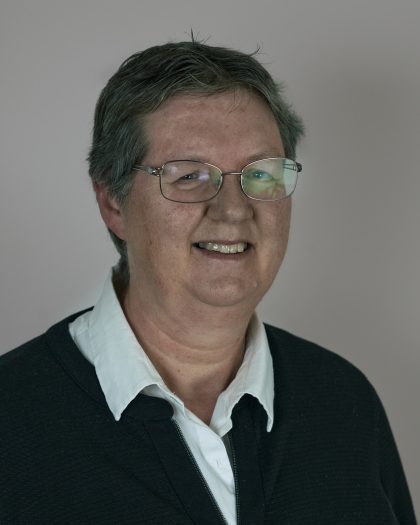
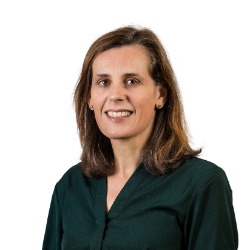
Grete Rusten is a Professor of Economic Geography at the University of Bergen's Department of Geography, specializing in industrial and regional development, circular economy, and sustainable development. Her research focuses on corporate geography, location strategies, and green economic transitions, with emphasis on Norway and Western economies. She supervises master’s theses on topics like industrial symbiosis, coworking spaces, and plastics in the circular economy. Her work integrates interdisciplinary approaches, addressing challenges such as industrial symbiosis in Årdal, greenwashing strategies, and the role of municipalities in eco-innovation. She collaborates with organizations like Årdal Utvikling and the Plastics Network at UiB. Her teaching includes supervision of over 30 master’s theses, emphasizing practical industry partnerships and policy analysis. She has published extensively on green taxation, regional development, and service economies, with contributions to books like *Design Economies and the Changing World Economy* (2011) and *Services and the Green Economy* (2016). Rusten’s research bridges theory and practice, addressing contemporary issues such as energy policy dissonance at Mongstad and the socio-economic impacts of green transitions. Her projects often involve cross-sector collaboration and regional innovation strategies, reflecting her commitment to applied sustainability research.
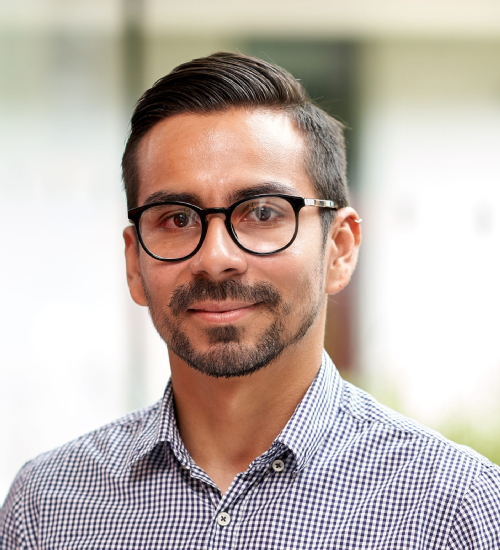
Dr. Tom Aben is a Researcher at Tilburg University's Tilburg School of Economics and Management (TiSEM), specifically within the Department of Information Systems and Operations Management. His work focuses on the intersection of digital transformation, supply chain management, and data governance in complex organizational settings, with particular emphasis on collaborative networks and critical infrastructure management. Dr. Aben's research interests center around purchasing and supply management (PSM) in multi-party networks, data sharing solutions, and collaborative governance approaches. He investigates how organizations can effectively manage digital transformation in critical infrastructure contexts, with particular attention to contract design, trust-building mechanisms, and network governance structures. His work often addresses societal challenges through collaborative approaches across public and private sectors, contributing to United Nations Sustainable Development Goals related to sustainable infrastructure and innovation. His recent publications reveal a consistent focus on how digitalization transforms traditional buyer-supplier relationships and necessitates new governance approaches. Aben's research shows particular expertise in data sharing within critical infrastructure networks, examining how organizations jointly develop data clauses and navigate the challenges of information asymmetry in digital environments. His work has significant implications for both academic theory and practical implementation of collaborative governance models. Dr. Aben has received recognition for his contributions to the field, including: Nomination for the 2021 Tilburg University Impact Award for the NWO/NGinfra LONGA VIA project Nominee for the Best PhD Dissertation Award in 2023 Currently, Dr. Aben is actively involved in the VIA AUGUSTA research project (2022-2026), which focuses on leveraging System-of-Systems approaches to infrastructure management. Previously, he contributed to the Longavia project (2018-2022) examining legal and organizational aspects of data-driven innovations in infrastructure management. He has also organized academic events such as the workshop 'Moving Towards Cross-Sectoral Collaboration: Challenges and Opportunities of 'Joint' Action' in December 2024, demonstrating his leadership in advancing knowledge in his field. His research spans multiple sectors including critical infrastructure management, healthcare, and public administration, with a particular focus on Dutch contexts but with implications that extend internationally. Dr. Aben frequently collaborates with researchers including Wendy van der Valk, Luc van de Sande, and David Wodak, indicating strong research networks both within Tilburg University and with external partners.
Dr. Catherine Gilbert is a Lecturer at the University of Sydney's School of Architecture, Design and Planning. Her research focuses on statutory planning systems, regulatory reforms impacting housing affordability, and challenges faced by essential workers. She holds a PhD and MURP from the University of Sydney, an MA from King's College London, and a BA from Queen's University. Affiliated with the Sydney Environment Institute, her work explores housing policy, urban planning, and social equity in Australian cities. Key research areas include planning systems' role in housing diversity, policy design for affordable housing, and the interplay between urban development and workforce distribution. She has led multiple projects funded by AHURI and the ARC, addressing topics like key worker housing affordability and pandemic-era housing stimulus strategies. Her recent work highlights the spatial mismatch between essential workers' housing and workplaces, advocating for policy interventions to ensure equitable urban growth. Gilbert has contributed to influential reports such as 'Options to Improve Key Worker Access to Home Ownership' (2018) and 'Tracking the Housing Situation of Essential Workers' (2023). She collaborates with governments, industry, and community partners, emphasizing practical policy solutions. Grants include studies on private-sector involvement in social housing (AHURI, 2021) and urban recovery strategies post-pandemic. No scientific awards are explicitly listed, though her work has significant societal impact. Her teaching and supervision focus on urban planning and housing policy, with notable contributions to interdisciplinary research teams. She is part of the University's efforts to address urban challenges through collaborative, evidence-based approaches. Media engagements include analyses in The Conversation and domain.com.au on housing affordability and urban policy.
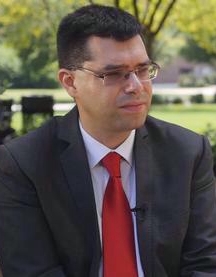
David Orrego-Carmona is an Associate Professor in Translation Studies at the University of Warwick, where he also serves as Deputy Director of Graduate Studies. He is affiliated with the School of Modern Languages and Cultures, specifically within the Translation and Transcultural Studies team. Prior to joining Warwick in 2022, he held academic positions at Aston University and was a visiting lecturer at the University of Warsaw. He maintains a research associate position at the University of the Free State in South Africa. His academic background includes a PhD and MA in Translation and Intercultural Studies from Universitat Rovira i Virgili, Spain, and a BA in English-French-Spanish Translation from Universidad de Antioquia, Colombia. David Orrego-Carmona’s research centers on the intersection of translation, technology, and users. He investigates how translation technologies empower both professional and non-professional translators, and how the democratization of these tools transforms users into active participants in translation processes. His work employs mixed-methods approaches, including eye-tracking experiments, to study subtitle reception, machine translation adoption, and the societal implications of AI in media localization. He is particularly interested in how translation fosters social equity and inclusion in multilingual societies. His recent publications reflect a strong trend in empirical and technological aspects of audiovisual translation. Key themes include AI-powered media localization, viewer comprehension under various subtitling conditions, the quality of machine-translated subtitles, and the methodologies for studying subtitle reading through eye-tracking. His research bridges academic inquiry with real-world applications, often involving collaboration with industry and public sectors. He is actively involved in the academic community, serving as treasurer of the European Association for Studies in Screen Translation (ESIST), associate editor of Translation Spaces , and deputy editor of JoSTrans, the Journal of Specialised Translation . He also contributes to organizing academic events such as IPCITI 2025 at the University of Warwick. David teaches modules on digital translation, audiovisual translation, translation technologies, and professional aspects of translation. He welcomes PhD proposals aligned with his research interests. He supervises students in areas related to subtitling, machine translation, and translation technology, though specific student names are not listed in the provided texts. He has led interdisciplinary initiatives to connect academic research with private and public sector challenges in translation and communication. He leads research projects focused on media localization, translation reception, and the impact of AI, often involving collaboration with international scholars. His lab and team activities emphasize experimental methods like eye-tracking and mixed-methods research in audiovisual translation contexts.
Professor Daniel Chicksand is a faculty member in the Department of Management at Birmingham Business School, University of Birmingham , where he holds the rank of Professor of Operations and Supply Management . He also serves as the Director of the Distance Learning MBA programme. Daniel has held academic positions at Warwick Business School and Aston Business School prior to joining Birmingham in 2016 as a Reader, being promoted to full Professor in 2021. Education: PhD in Commerce, University of Birmingham (2009) MBA in Business Strategy & Procurement, University of Birmingham (2003) MSc in Industrial Logistics, University of Central England (1996) BSc in Industrial Information Technology (2:1 hons), University of Central England (1995) Postgraduate Certificate in Academic and Professional Practice, University of Warwick (2011–2013) Daniel’s research is centered on Operations and Supply Chain Management , with a strong theoretical foundation in Resource Dependency Theory (RDT) . His work explores power dynamics , value appropriation , and relationship management in buyer-supplier interactions across sectors such as food, construction, and sustainable supply chains. He has a growing interest in servitization and its impact on value creation. His methodological approach is primarily qualitative, using case-based research. The recent publications reflect a consistent focus on power and negotiation in procurement , resilience and disruption in supply chains (including simulation modeling), and sustainability reporting . His research spans both private and public sectors and often involves international collaboration with institutions in the UK, Europe, and the US. Scientific Engagement and Awards: Visiting Lecturer at Audencia Nantes School of Management (France) Visiting Lecturer at Ecole des Ponts ParisTech and Solvay Business School (France/Belgium) Educator for Duke Corporate Education Collaborator with leading researchers from Aston, Cardiff, Cranfield, Loughborough, Linkoping, and Fox Business School Daniel supervises multiple doctoral students and is involved in pilot research projects funded by the British Academy and the Chartered Institute of Logistics and Supply. He also leads two consultancy firms— DDC Solutions Ltd and Opsworks Ltd —delivering bespoke training and education programmes to corporate clients like UBS, KPMG, and Adams Foods. His prior experience as a business owner in African arts and crafts importation provides practical insights into supply chain and operations management, enriching his teaching and research. Laboratories and Research Teams: Member of the Aston Centre for Seritization Research and Practice (2015–present) Collaborative research network across UK, European, and US universities Lead on projects involving discrete-event simulation and gamification in SCM
Prof. Dr. Andrea Walter is a Professor of Political Science and Sociology at the Hochschule der Polizei und Verwaltung Nordrhein-Westfalen (HSPV NRW), based at the Dortmund campus. She is affiliated with the Department of General Administration / Pension Insurance and specializes in Social Sciences, particularly civil society, local governance, and civic engagement. University: Hochschule der Polizei und Verwaltung Nordrhein-Westfalen School: Faculty of Public Administration Department: Department of General Administration / Pension Insurance Academic Rank: Professor Email: andrea.walter@hspv.nrw.de Location: Hiltropwall 4-12, 44137 Dortmund, Room A.1.14 She earned her PhD in Political Science from the University of Münster in 2014 with scholarships from the Friedrich-Ebert-Stiftung and FAZIT-Stiftung. Prior to her professorship, she worked as a project manager at Bertelsmann Stiftung and as a research associate at WWU Münster, contributing to third-party funded projects. She has held visiting researcher positions at WU Wien, Stockholm School of Economics, and Georgetown University. Her research centers on civil society, local democracy, civic engagement, volunteerism, gender in nonprofit organizations, and social innovation. She investigates how civil society actors interact with public administration, the governance of local services, and the sustainability of volunteer-based institutions. Her work emphasizes participatory governance, informal decision-making, and gender equity in nonprofit leadership. Her recent publications span topics such as volunteer firefighters, civic engagement during the pandemic, local integration, and the value of civil society. These works reflect a strong focus on empirical social research applied to public administration and policy, often in collaboration with practitioners and policymakers. Her research combines qualitative and policy analysis methods, contributing to both academic discourse and practical governance improvements. Scientific awards and recognitions include the Carl Goerdeler Prize for her municipal science dissertation (2016). She has also been actively involved in academic and public service, including: Co-Editor of Voluntaris - Zeitschrift für Freiwilligendienste und zivilgesellschaftliches Engagement (since 2023) Member of the Research Commission at HSPV NRW (since 2019) Deputy Program Director of the Master of Public Management (MPM) at HSPV NRW (2020–2024) Reviewer for BMBF, BMEL, Stiftung Mercator, and journals such as Voluntas and Bristol University Press She supervises research projects and advises on policy, including serving on the advisory board of the Kompetenzzentrum Bürgerbeteiligung, the jury for Friedrich Ebert Stiftung, and the Forum Zivilgesellschaftsdaten. She is also active in networks such as DVPW, ISTR, and the BBE Berlin working group on civil society research. Prof. Walter leads the BMBF-funded project SROI – Stärkung des Ehrenamts für die Sicherung lokaler Daseinsvorsorge (2021–2024) in collaboration with Kreis Lippe and WWU Münster. She has coordinated and contributed to numerous EU and national research projects on civil society, social innovation, and public administration. Her work bridges academic research and practical policy application, fostering collaboration between municipalities, citizens, and civil society organizations.
Aliosha Alexandrov is a Professor of Marketing in the Department of Marketing at the College of Business, University of Wisconsin Oshkosh. He maintains an active role in institutional governance through committees including the Technology Steering Committee (2011-present), Globalization Committee (2015-2023), and COB Council (2017-2023), while advising the Marketing Club since 2013. His educational foundation includes a BS from the Technical University of Sofia, Bulgaria, and both an MS and Ph.D. from the University of Memphis (2007). Professor Alexandrov's research spans consumer behavior , brand management , and word-of-mouth dynamics , with notable investigations into brand interestingness, humor in environmental advertising, and retail adaptation to online competition. His work frequently employs contingency frameworks to examine how contextual factors like employment status or environmental uncertainty moderate marketing outcomes. Recent publications reveal a strong focus on digital transformation (QR code adoption, network analysis of WOM) and service management (CRM success, frontline employee concerns), while maintaining consistent exploration of brand-customer relationships across diverse contexts from city branding to event management curricula. As an academic contributor, he serves as a journal article reviewer for major publications and evaluates faculty development grant proposals for UW Oshkosh. His committee work demonstrates sustained engagement with technology integration, globalization initiatives, and business school strategic planning. Professor Alexandrov actively bridges theory and practice through consulting with the Business Success Center since 2015 and shaping curriculum development through his research on value co-creation in event management education.
Dr. Ivan Dinev Ivanov is an Associate Professor at the School of Public and International Affairs (SPIA), University of Cincinnati. His research focuses on international security, NATO and EU politics, alliance dynamics, and global governance. He is the author of Transforming NATO: New Allies, Missions and Capabilities (2011) and has published extensively in peer-reviewed journals. Ivanov has received multiple awards, including the 2012 Sarah Grant Barber Faculty Advisor Award and the 2017 e-Learning Champion Award for his innovative use of technology in teaching. Education & Roles: Ivanov has served as Director of Undergraduate Studies (2015–2019) and oversees SPIA’s Internship for Academic Credit program. He leads a study abroad program on International Institutions and Global Governance, offered annually in Brussels and The Hague. Research & Teaching: His work examines NATO-EU cooperation, cyber threats, and organizational response to emerging security challenges. He teaches courses on international relations, U.S. foreign policy, and Russian politics, emphasizing interactive learning methods. Awards & Grants: He has secured grants totaling $60k+ for study abroad initiatives and curriculum development. Awards include recognition for advising, teaching, and contributions to student success. Advising & Mentorship: Ivanov has advised two master’s students and chairs thesis committees. He is actively involved in SPIA’s academic advising and program development. Labs/Teams: His research interests have led to collaborations with international institutions and participation in global conferences on security studies and international relations.
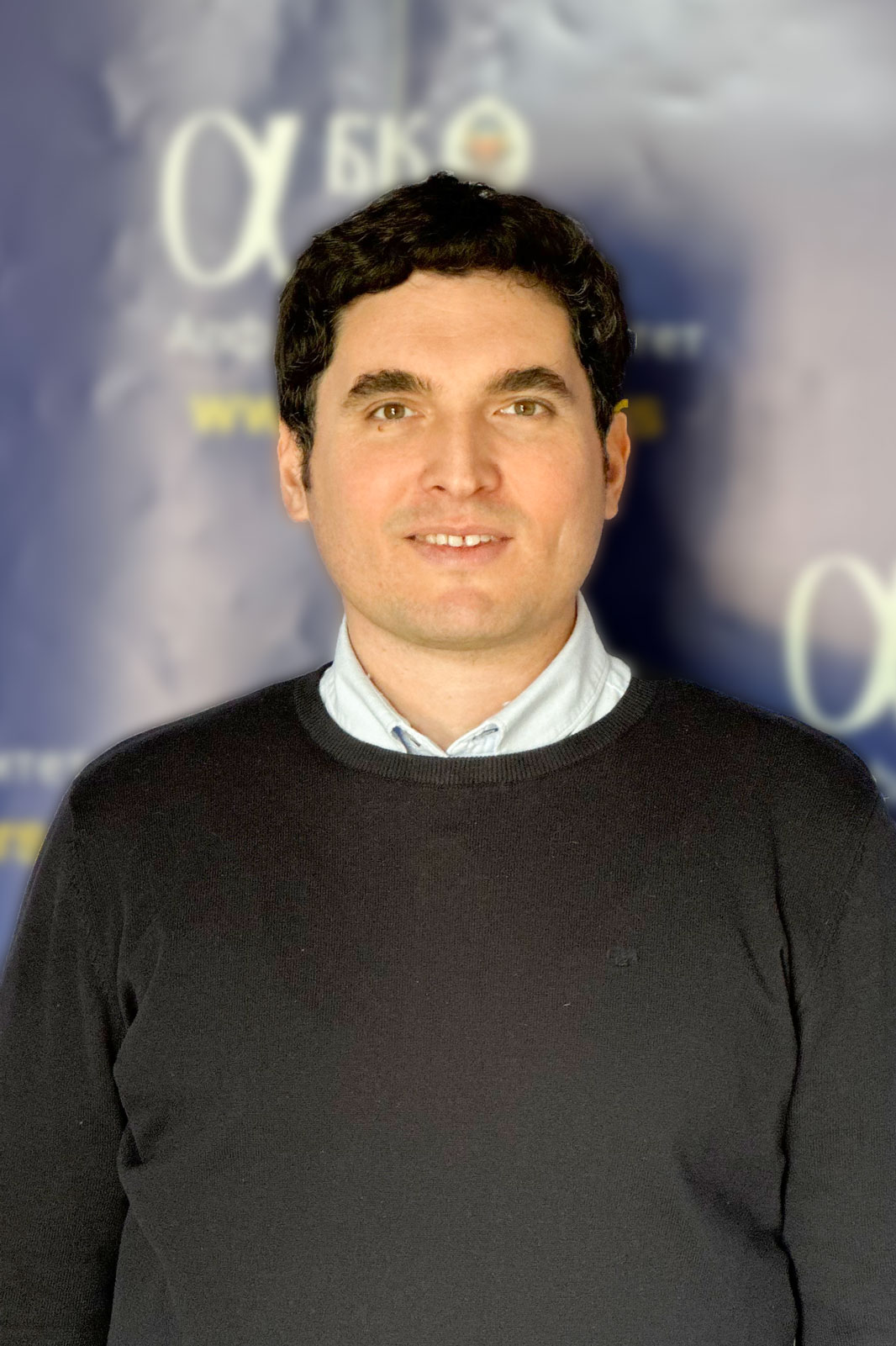
Milan Brkljač is an Assistant Professor at Alfa BK University, affiliated with the Faculty of Finance, Banking and Auditing. He holds a PhD from the University of Novi Sad (2021), with research focused on marketing, consumer behavior, and sharing economy dynamics. His professional journey includes roles at NIS GAZPROM NEFT, Digipuls d.o.o., and the University of Modern Business in Belgrade. Education: BSc/MSc from University of Novi Sad (Faculty of Economics in Subotica), PhD (2021) on 'Determinants of Intentions to Use Sharing Economy Services among the Millennial Generation'. Research Interests: Marketing strategies in digital age, consumer decision-making, sharing economy, blockchain applications in agriculture, and CSR in banking. He has conducted study visits to TU Munich and DAAAM International Vienna, and holds certifications in Digital Marketing (Google Ads) and ECDL. Awards: Ministry of Education Scholarship (2008-2010), FESTO Scholarship (2018), and first prize for promotional video (2010). Active in professional communities like Serbian Marketing Association (SeMa). Grants/Advising: Multiple academic publications, involvement in employer branding and talent recruitment studies. Fluent in English and German, with piano skills from Isidor Bajić Music High School.
Joanna O’Riordan is a Researcher at the Institute of Public Administration (IPA), Ireland, affiliated with the Whitaker School of Government and Management. Since joining IPA in 2000, she has specialized in public management reform, particularly in human resource management (HRM) within the public sector. Her work bridges academic research and practical policy implementation, focusing on organizational culture, workforce planning, and institutional restructuring. Education: Joanna holds an MA in Public Policy from University College Dublin (UCD) and an MBS in Human Resource Management from Dublin City University (DCU). Research Interests: Her studies emphasize public sector reform, HRM challenges, organizational culture transformation, and governance models. She explores how public institutions adapt to evolving demands, with a focus on merging theoretical frameworks with real-world policy outcomes. Publications: Her work spans case studies on agency mergers (e.g., Tusla), workforce strategies, and public service motivation. She also analyzes disability equity in civil service careers and Irish business involvement in international development aid. Labs/Teams: As editor of Administration (IPA’s journal), she curates scholarly discourse on public administration. Her consultancy role involves advising on HR strategies and public service restructuring.
Dr. Miguel Ángel Sánchez Fornié is a Collaborating Researcher at the Instituto de Investigación Tecnológica (IIT), affiliated with the School of Engineering at Universidad Pontificia Comillas (ICAI). He has been actively involved with IIT since 1980, contributing to European research projects and teaching Smart Grids in Master's programs since 2002. His work bridges industry leadership and academic research, particularly in the digitalization and modernization of electricity systems. Electromechanical Engineering, ICAI (1974) Diploma in Nuclear Safety, MIT, Boston (1977) Postgraduate coursework in Electricity Sector Regulation, 2008 His research focuses on smart grids, electricity system regulation, power system planning and operation, asset management, telecommunications for power systems, cybersecurity, and the application of big data and artificial intelligence in energy systems . He has led and contributed to major European projects such as H2020 and Horizon Europe, focusing on grid resilience, digitalization, and workforce skills development. The recent publications reflect a strong trend toward the digital transformation of electricity distribution networks , with emphasis on metrics, investment analysis, and the integration of distributed energy resources. His work spans from foundational reliability modeling in the 1980s to contemporary policy and technical frameworks for smart grids, showing a lifelong commitment to evolving energy infrastructure. Dr. Sánchez Fornié has been involved in several funded research projects and educational initiatives, including EDDIE, CoordiNet, and Digital Twin for Europe. He has also contributed to workforce development through sectoral skills alliances in the energy domain. He holds leadership roles in external organizations such as FUTURED and the European Technology and Innovation Platform on Smart Energy Networks (ETIP SNET), where he serves as Honorary Co-Chair of WG4. He has organized and participated in numerous scientific conferences and seminars, particularly on digitalization and education in the energy sector. Member, Education for the Digitalisation of the Energy System (EDDIE ASBL), Brussels (2024–Present) Board Member, FUTURED, Zaragoza (2017–Present) Co-Chair (Honorary), WG4, ETIP SNET, Brussels (2017–Present)
Steffen Dalsgaard is a Professor at the Technologies in Practice group at IT University of Copenhagen. As Head of Center for Climate IT, he leads initiatives exploring how digital technologies interact with climate change mitigation. He also contributes to the Center for Information Security and Trust. PhD in Anthropology and Ethnography (Aarhus University, 2010) Recipient of DFF Sapere Aude grant, ERC Consolidator Grant, and Carlsbergfondet funding Key research areas: climate data valuation, sociopolitical implications of IT, and comparative ethnography Research Focus: Investigates intersections between digital technologies, climate change, and sociocultural values through ethnographic studies in Denmark, Papua New Guinea, and Brazil. Examines carbon markets, environmental technoscience, and digital governance systems. Scientific Awards: ERC Consolidator Grant (DecouplingIT) DFF Sapere Aude grant Carlsbergfondet grant Key Collaborations: Works with Independent Research Fund Denmark, European Commission, and external bodies like the Academy for Technical Sciences (ATV). Leads multidisciplinary projects involving climate data analysis and sustainable technology implementation.
Professor Ian Cunningham is a faculty member at the University of Strathclyde, holding the position of Professor of Employment Relations in the Department of Human Resource Management. His work focuses on employment relations in voluntary and public sectors, with a particular emphasis on austerity, social care, and disability management. Academic Fellow of the Chartered Institute of Personnel and Development (CIPD) Professor Cunningham’s research explores voluntary sector employment dynamics, employee involvement, sickness absence, and public service delivery under austerity. He collaborates internationally with scholars from Canada, Australia, and the United States, including Professor Donna Baines on precarious work studies and Dr. Colin Lindsay on public service HRM modules. His recent publications address strategic HRM in social care, benchmarking non-profit work conditions, and multi-actor engagement. These works align with keywords like Human Resource Management, Employment Relations, and Social Care, with subfields spanning Strategic HRM, Austerity, and Policy Analysis. Academic Fellow of the Chartered Institute of Personnel and Development (CIPD) He supervises four PhD students and has been involved in 31 projects, including 7 funded research initiatives with international comparative aspects. His ongoing work examines employment conditions in voluntary and private care providers in Scotland. Professor Cunningham contributes to the United Nations Sustainable Development Goals through research on fair work and social contracts. His collaborations with the Coalition of Care and Support Providers in Scotland (CCPS) and Scottish Government-funded studies highlight his practical and policy-oriented impact.
David L. Flynn, PhD, serves as Program Coordinator for Educational Leadership and Senior Lecturer at Cambridge College, where he has been a core faculty member since 1998. A Massachusetts educator with extensive public and private sector experience, his career spans classroom teaching, school administration, and international accreditation work. His educational credentials include: PhD in Educational Leadership MA in School Administration (Framingham State University) MEd in Guidance and Counseling (Boston State College) BS in Education (English) (Salem State University) Dr. Flynn specializes in practical preparation for PK-12 school principals, emphasizing mission-driven self-evaluation frameworks. His global work with the New England Association of Schools and Colleges involved evaluating over 300 schools across six U.S. states and 26 countries, focusing on accreditation standards and educational reform methodologies. Notable recognitions include the Massachusetts Superintendent of the Year award and the Jacob Ludes Leadership Award, with a scholarship program bearing his name. As Program Coordinator, he oversees curriculum development for aspiring administrators while teaching courses spanning financial management, contemporary educational issues, and change leadership. His practitioner background in school superintendency and principalship directly informs his instructional approach to developing school leaders.
Emanuela Ghignoni is an Associate Professor at Sapienza University of Rome's Department of Economics and Law. She teaches Labor Economics and Policies and a STATA Lab. Her research focuses on Labor Economics, Education Economics, and Public Economics, addressing topics like over-education, gender wage gaps, and healthcare disparities. Her work examines social norms influencing childbirth decisions, the impact of international programs (e.g., ERASMUS), and economic disparities in Italy and globally. Research Interests: Over-education and labor market mismatches Gender and immigration-related labor discrimination Healthcare systems efficiency Public policy evaluation Educational expenditure dynamics Her articles analyze labor market transitions, wage gaps, and the interplay between family background and education access. She explores how social norms and economic policies shape labor participation, fertility choices, and STEM/non-STEM wage disparities. Advising & Grants: No formal advisees listed. Grants details not provided. Labs/Teams: Not explicitly mentioned, but her STATA Lab suggests involvement in quantitative research methods.