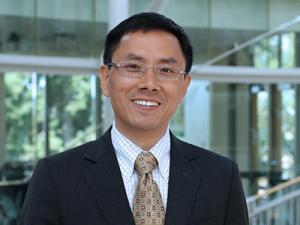
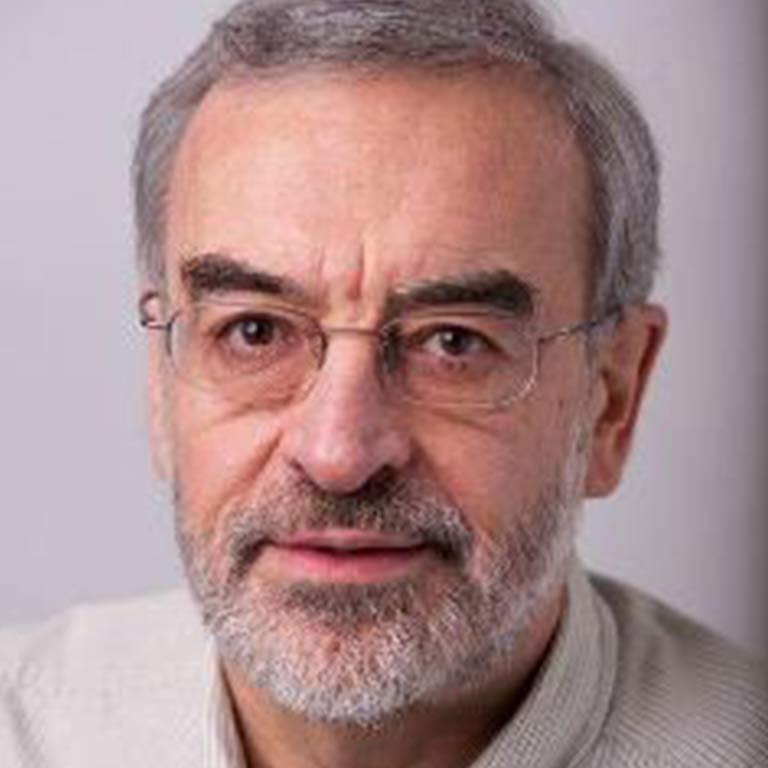
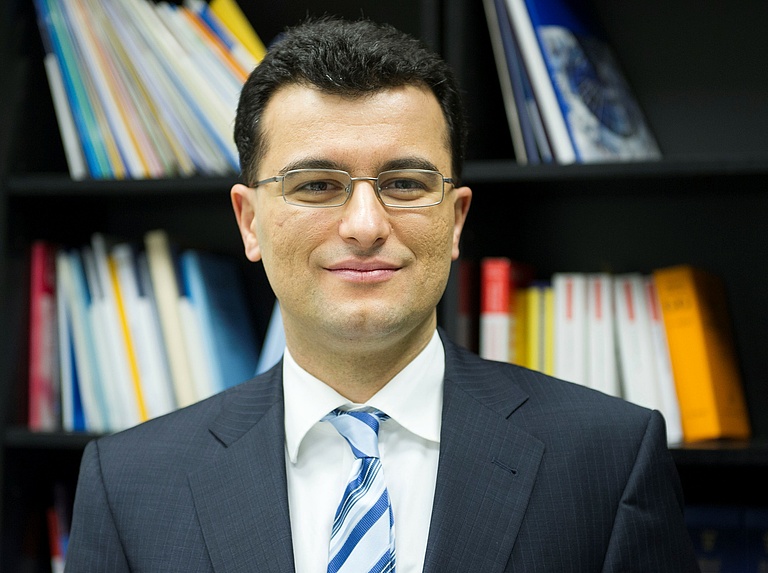
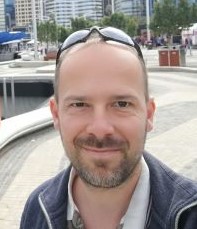
Youchang Wu is an Associate Professor of Finance and John B. Rogers Research Scholar at the Department of Finance, Lundquist College of Business, University of Oregon. His affiliations include the Cameron Center for Finance and Securities Analysis and the Master of Science in Finance program. Research Interests: Institutional Investors, Corporate Finance, Production Networks, Monetary Policy, and Macro Uncertainty Previous Positions: IPA Financial Economist at SEC, Assistant Professor at University of Wisconsin-Madison, University Assistant at University of Vienna, Junior Faculty Member at Peking University Education: PhD in Finance (University of Vienna), Master’s and Bachelor’s in Economics (Peking University) His research explores institutional investor behavior, production network dynamics, and corporate finance mechanisms. Recent projects examine private equity's environmental impact, pension plan investment performance, and trade credit implications in production networks. Scientific Awards: Engelbert Dockner Fellowship (2023) Consumer Protection Research Grant (University of Oregon, 2023) Dave Petrone Financial Literacy and Wellness Research Award (2022) Dean's College Service Award (2022) Wu has served as Associate Editor for China Finance Review International and Guest Editor for Pacific Basin Finance Journal . He has taught courses in derivatives, asset management, corporate finance, and international financial management.
Michael V. Alexeev is a Professor in the Department of Economics at Indiana University Bloomington under the College of Arts & Sciences. He serves as the Director of the Masters (MS) Program and has taught courses such as Intermediate Microeconomics , Law and Economics , Russian Economy , and Institutions and Governance . His academic career spans decades, including a Ph.D. from Duke University (1984) .
Prof. Dr. Foroud Shirvani is a distinguished Professor at the Chair of Public Law within the School of Law at the University of Bonn. Their research focuses on property law , state liability law , environmental law , constitutional law (including fundamental rights, party, and parliamentary law), and social law with a constitutional foundation. Additional expertise spans municipal law , police law , and energy law . Department of Law, University of Bonn Chair of Public Law Research trends include the socialization of property , compensation for pandemic-related expropriation-like interventions , and procedural limits to property rights under administrative law . Shirvani’s work bridges historical legal developments (e.g., expropriation law from the 19th century to the Weimar Constitution) with contemporary challenges like housing shortages and energy policy. Key publications include: Property without owners? (2024, co-edited with Judith Froese) Commentary on State Liability Law (2024, co-authored with Hans-Jürgen Papier) Compensation for expropriation-like interventions (2022) Commentary on Article 34 of the Basic Law (2020, co-authored with Hans-Jürgen Papier) Shirvani actively contributes to constitutional and administrative law , with a focus on the intersection of property rights and public policy.
Professor Gary Dymski is a faculty member at the Leeds University Business School , University of Leeds, where he holds the position of Professor of Applied Economics . He joined the institution in 2012 and is affiliated with the Applied Institute for Research in Economics . His academic journey includes prior positions at the University of Southern California and the University of California, Riverside, where he was promoted to full professor in 2000. PhD in Economics, University of Massachusetts, Amherst (1987) MPA in Public Budgeting, Maxwell School, Syracuse University (1977) BA in Urban Studies, University of Pennsylvania (1975) His research spans monetary economics, macroeconomic policy, banking, urban economics, inequality, and political economy . He integrates macroeconomic and financial theory with economic geography, focusing on spatial aspects of financial instability and inclusive urban development. His interdisciplinary work has led to collaborations across engineering, medicine, and social sciences. The 15 most recent articles reflect a strong focus on financial power, urban economic resilience, inequality in credit markets, and global financial crises . His work combines Post-Keynesian macroeconomic theory with real-world policy challenges, particularly in the UK, South Africa, and Latin America. Themes include the productivity paradox, financial exclusion, and the governance of financial institutions. His scientific recognition includes: Leo Model Research Fellow, Brookings Institution (1985–1986) He has supervised PhD students such as Alexandra Veronica Gonzalez-Navarro and Nabeel Sharif , and has secured major research grants through ESRC and EPSRC, including roles as co-investigator in the Self-Repairing Cities , Productivity Insights Network , and Rebuilding Macroeconomics projects. He has also contributed to policy through advisory roles at UNCTAD and local initiatives like Leeds ACTS. He co-led the University of Leeds' Cities research theme (2016–2019) and is involved in cross-campus initiatives including VIrtuocity , fostering interdisciplinary research on urban systems and smart cities.
Prof. Dr. Michael Voigtländer serves as Honorary Professor of Economics at Bonn-Rhein-Sieg University of Applied Sciences since 2011, while simultaneously leading the Competence Field for Finance and Real Estate Markets at the Cologne Institute of Economic Research (IW Köln) since 2015. He also holds teaching positions at ebs Business School Oestrich-Winkel, irebs Immobilienakademie, Bergische Universität Wuppertal, and Akademie deutscher Genossenschaften. PhD in Economics from University of Cologne Studies in Economics at University of Münster and University of Cologne Scientific Assistant at Economic Policy Seminar, University of Cologne (2000-2005) Voigtländer's research centers on the complex interrelationships between economic conditions, financial markets, and real estate markets, with particular focus on how demographic changes impact property markets and the formulation of effective housing policies. His work bridges theoretical economic principles with practical real estate market applications, examining how macroeconomic trends translate into specific housing market dynamics across German regions. His recent publications demonstrate consistent focus on German real estate market stability, with particular attention to rent control policies, commercial property valuation methodologies, and sustainability integration in real estate practices. The research shows evolving emphasis from pure market analysis toward policy impact assessment and sustainability considerations, reflecting broader industry trends toward environmental and social responsibility in property markets. Voigtländer actively contributes to industry knowledge through his leadership of the CSR in real estate industry research project with Dr. Rosemarie Stibbe at Bonn-Rhein-Sieg University. His advisory work extends across multiple academic institutions and industry organizations, where he provides expert guidance on real estate economics, financial markets, and housing policy matters. His institutional affiliations include the Cologne Institute of Economic Research (IW Köln) where he has worked since 2005, progressing to lead the Finance and Real Estate Markets competence field. He maintains strong connections with multiple academic institutions through his teaching roles, creating a bridge between academic research and industry practice in the German real estate sector.
Matthew Hannon is a Professor of Sustainable Energy Business and Policy at the Hunter Centre for Entrepreneurship, Strathclyde Business School, University of Strathclyde. His research focuses on the business models, policies, and technologies critical to achieving a socially equitable, net-zero economy. He leads and co-leads major research initiatives including the UKRI-funded EnergyREV consortium, the UK Energy Research Centre’s Community Energy Finance and 'Whole Person - Whole Place' retrofit projects, and the Scottish Universities Insight Institute’s Carbon Offsetting for Communities project. His educational background includes a PhD in Co-evolution of Innovative Business Models and Sustainability Transitions from the University of Leeds and a Postgraduate Certificate in University Learning and Teaching from Imperial College London. He has held visiting positions at Imperial College London and is actively engaged in knowledge exchange and policy outreach. Hannon's research interests span sustainable energy, energy policy, business model innovation, community energy, energy justice, and smart local energy systems. His work emphasizes the socio-technical dimensions of energy transitions, particularly how community engagement, financial mechanisms, and policy design can enable equitable decarbonization. He has published in top-tier journals such as Nature Energy , Energy Research and Social Science , and Technological Forecasting and Social Change , and has co-authored books on energy innovation. The 15 most recent publications reflect a strong focus on community energy finance, smart local energy systems, energy retrofitting, and policy innovation. Key themes include the role of business models in sustainability transitions, the financing of grassroots innovation, and the social and relational aspects of energy efficiency. His work increasingly integrates justice and equity into the design of energy systems and policies. Place on the Royal Society of Edinburgh's Scottish Crucible (2018) World Energy Congress Recognition (2016) Hannon has supervised multiple PhD students and is actively involved in advising on research projects. His work has attracted significant funding from UKRI, ESRC, EPSRC, and other bodies. He provides expert testimony to parliamentary committees and contributes to government consultations. He is a council member of the British Institute of Energy Economics, chair and trustee of the community energy charity South Seeds, and a member of advisory panels for BSI/Defra and USwitch. He is also the co-founder and host of the Local Zero podcast, which highlights local climate action and has been recognized as the Times Pod of the Week. Hannon leads or co-leads several active research projects, including 'Systems Approaches for Accelerating a Just Transition (JUST-Systems)' and 'The Role of Smart Energy Homes in Accelerating a Just Transition to Net-Zero'. His team includes co-investigators from across Strathclyde and partner organizations, reflecting a collaborative, interdisciplinary approach to tackling complex energy challenges.
Prof. José Garcia Montalvo is a Full Professor at the Department of Economics and Business, Universitat Pompeu Fabra (UPF), Barcelona. He holds a PhD from Harvard University. His research focuses on housing policy, macroeconomics, political economy, and public policy, with recent emphasis on urban housing crises, inequality measurement, and fiscal responses to inflation. He has published widely in journals like the Review of Economic and Statistics and the Journal of Comparative Economics. Education: PhD in Economics, Harvard University. Key research areas include housing economics, public-private partnerships, and the socioeconomic impact of disasters. He has authored a handbook on housing economics and co-authored studies on rent controls and university competitiveness. Recent activities include organizing workshops on economic research using bank transactions data (June 2025), publishing in CEPR Discussion Papers (March 2025), and contributing to policy debates via op-eds in La Vanguardia and El Periódico. He frequently engages with media and policymakers on housing, inflation, and labor market dynamics. His work spans academic contributions, public policy analysis, and media commentary, emphasizing data-driven solutions to socioeconomic challenges.
Dr. Alice Welsh is a Lecturer in Law at York Law School, University of York, and currently serves as a Research Fellow on the EU Legal Action Research Clinic, an Economic and Social Research Council (ESRC) Governance After Brexit project. She previously held roles as a Research Fellow at the Public Law Project analyzing the EU Settlement Scheme and as a caseworker at the Refugee Council. Her work focuses on EU social rights, post-Brexit legal frameworks, and access to justice for marginalized groups. Dr. Welsh completed her LLB and LLM at York Law School, followed by a PhD in Law at the University of York, funded by an ESRC PhD studentship. Her research explores EU workers’ social rights in the UK and the implications of digital status systems on citizens’ rights. Her research interests span International Human Rights Law, EU Law, Social Rights, Immigration Law, and Public Law. Recent publications highlight her engagement with post-Brexit legal challenges, including the EU Settlement Scheme and rights of atypical workers. She has undertaken placements at the AIRE Centre and Glendon College (York University, Toronto), enriching her interdisciplinary perspectives. Dr. Welsh’s professional narrative includes grants from the ESRC for her PhD and current research. She advises on legal action through her role in the EU Legal Action Research Clinic, aiming to support vulnerable populations impacted by Brexit-related legal changes. She collaborates with the AIRE Centre and other institutions, contributing to impactful legal research and advocacy.
Matthias Bernt is Deputy Director and head of the research focus 'Politics and Planning' at the Leibniz Institute for Research on Society and Space (IRS), and an adjunct lecturer at the Institute for Social Sciences, Humboldt University of Berlin. He has held academic and research positions since the early 2000s and has led numerous national and international research projects on urban development, housing, and governance. Studied political science at Freie Universität Berlin Doctorate (2001) on Berlin’s urban renewal policy Habilitation (2021) on gentrification and public policies Research associate at Helmholtz Centre for Environmental Research (2001–2008) Research associate at IRS since 2008 Held teaching positions since 1998 Visiting positions at Columbia University, UCL, European University of St. Petersburg Matthias Bernt's research centers on urban governance, particularly in the context of post-socialist transformation. His work critically examines gentrification, housing financialization, shrinking cities, and migration in urban planning. He has a strong focus on East German large housing estates, exploring their transformation under marketization, state restructuring, and immigration. His concept of the 'commodification gap' offers an institutionalist critique of traditional gentrification theories. His recent work highlights segregation dynamics, the role of institutional investors, and the governance challenges in peripheral urban areas. The 15 most recent publications reflect a consistent focus on urban inequality, governance, and post-socialist urban development. Key themes include gentrification in Berlin, London, and St. Petersburg; financialization of housing; migration and integration in shrinking cities; and comparative analyses of large housing estates. His work increasingly engages with policy implications, as seen in studies on rent control, housing socialization, and urban regeneration. Feodor Lynen Stipendium für erfahrene WissenschaftlerInnen Book Review Editor, International Journal of Urban and Regional Research (2014–2021) Board Member, Research Committee 21 (Urban and Regional Development), International Sociological Association Deputy Speaker, Urban and Regional Sociology Section, German Sociological Association Member, Berlin Tenants’ Association, Fachbeirat Wohnraumversorgung Berlin, and other policy-relevant bodies Matthias Bernt has advised or collaborated on multiple research projects, including StadtumMig, HoPoFin, and Estates After Transition. He has not received major external grants listed in the text, but leads significant publicly funded research. He is actively involved in academic discourse through editorial roles and professional associations. His work bridges academic research and urban policy, particularly in Berlin and East Germany. He is involved in several research teams and projects at IRS, including lead and bridge projects on 'Conflicts in Planning' and 'Disruption and Spatial Development.' He coordinates interdisciplinary teams focusing on governance, migration, and housing. His work is highly collaborative, involving researchers from Germany, the UK, Poland, Russia, and beyond.
Camron Aref-Adib is a researcher and policy analyst specializing in economic and public policy , currently affiliated with the Resolution Foundation . His work spans labour market dynamics , regional inequalities , housing affordability , and fiscal policy . Prior to this, he served as Head of Office and Senior Parliamentary Researcher for Rushanara Ali MP and was an Overseas Development Institute (ODI) Fellow in Nigeria’s Ministry of Industry, Trade and Investment, focusing on trade policy and economic diversification. Education: BSc in Government and Economics, London School of Economics (LSE) Master’s in International and Development Economics, Yale University His research emphasizes the geographic disparities within the UK , particularly the North-South divide , and the impact of housing and employment policies on living standards . He has contributed to analyses of public spending reviews , regional pay gaps , and the evolving challenges of home ownership beyond London. Scientific Awards: Overseas Development Institute Fellow (ODI) His notable publications address regional economic imbalances , the housing crisis , labour market recovery , and policy responses to inequality . These works frequently inform debates on public service distribution , tax reforms , and devolution in UK cities.
Rory Hearne is an Associate Professor in Social Policy at Maynooth University's Department of Applied Social Studies within the Faculty of Social Sciences. He holds a PhD in political and economic geography from Trinity College Dublin (2009). His work focuses on housing policy, economic inequality, human rights, and climate justice. He teaches courses on social policy, housing rights, and the welfare state at both undergraduate and postgraduate levels. Education: PhD in Political and Economic Geography, Trinity College Dublin, 2009 Research Interests: Housing crises, financialisation of housing, homelessness, human rights-based approaches, neoliberalism, spatial justice, public policy reform, and social movements. His landmark books Housing Shock (2020) and Gaffs (2022) address Ireland’s housing crisis and advocate for constitutional rights to housing. His work has influenced national policy debates and been recognized by the Irish presidency and international scholars. Articles Trends: Recent publications analyze housing financialisation, participatory policy approaches (e.g., PAHRCA methodology), and post-neoliberal social policy. His research bridges academic and activist spheres, emphasizing community engagement and systemic change. Awards: His book Housing Shock was honored by the President of Ireland for its policy contributions. Peer reviews acclaim his work for its interdisciplinary rigor and practical impact. Grants & Projects: Co-developed the Participatory Action Human Rights and Capabilities Approach (PAHRCA) during the EU-funded Re-InVEST project (2017–2018). Lead author of influential TASC reports on inequality and housing. Labs/Teams: Active in Maynooth University’s Social Sciences Institute and collaborates with NGOs like the Irish Human Rights and Equality Commission. Engages in public advocacy through media, podcasts, and conferences.
Avis Devine is an Associate Professor of Real Estate Finance and Sustainability at the Schulich School of Business, York University, affiliated with the Brookfield Centre in Real Estate & Infrastructure. She holds a B.S. from Westminster College, an M.B.A. from Duquesne University, and a Ph.D. in Finance from the University of Cincinnati. Her research focuses on the intersection of sustainability, ESG factors, and commercial real estate finance, with emphasis on environmental certifications, energy efficiency, and emerging markets. Dr. Devine’s work explores how sustainability impacts real estate valuation, risk management, and investment decisions. Notably, her studies investigate gender diversity in REIT leadership, green bond performance, and the role of foreign direct investment in promoting sustainable construction in emerging economies. She has received multiple grants and awards, including the 2017 Nick Tyrrell Research Prize and RERI grants (2018–2021). Her teaching portfolio includes courses on sustainable cities, commercial real estate asset management, and development prototypes at the Schulich School of Business. She actively engages with industry, contributing insights to publications like The Globe and Mail and Commercial Property Executive .
Gregory E. Louis is an Associate Professor of Law at The City University of New York School of Law, specializing in business, nonprofit, and municipal corporate law, as well as contracts. He previously co-founded and served as the initial general counsel of Communities Resist, a civil legal services organization supporting low-income households and community-based organizations in Brooklyn and Queens through community lawyering and organizing. His work has included litigation and transactional support for tenant associations, housing cooperatives, and coalitions, alongside advising on nonprofit governance and compliance. His research focuses on corporate and social power dynamics, particularly in relation to marginalized communities of color and immigrant populations. Notable publications include analyses of housing law, corporate governance equity, and regulatory enforcement. Prior to academia, he practiced corporate law at Morgan Lewis & Bockius LLP and later transitioned to public interest legal work. Professor Louis’s scholarly contributions span legal theory, urban policy critiques, and transactional poverty law. His recent articles explore intersections between law and social justice, including critiques of corporate influence on urban development and equitable legal frameworks for housing. He holds no listed scientific awards but has authored numerous essays and editorials addressing pressing legal and social issues, such as Amazon’s impact on NYC’s working class and racial disparities in urban planning. His professional affiliations include the CUNY School of Law faculty and prior roles at Morgan Lewis and Communities Resist.
Dr. Ansgar Wohlschlegel is an Associate Professor of Economics at Swansea University, affiliated with the Faculty of Humanities and Social Sciences and the School of Social Sciences. His expertise lies in Applied Microeconomics, Law & Economics, and Industrial Organization. Prior to Swansea, he held academic positions at the Universities of Portsmouth, Bonn, and Aachen, and worked in the private sector at PricewaterhouseCoopers. His research focuses on the economic analysis of legal systems, including enforcement agency incentives, legal procedure design, and tort law impacts. He employs applied game theory, empirical methods, and laboratory experiments. Notable real-world applications include policy projects for the Food Standards Agency and contributions cited in Westminster debates. His teaching spans Microeconomics specializations like industrial organization, contract theory, and the economics of crime, alongside introductory economics courses. His recent publications address topics ranging from bank regulation to litigation incentives, reflecting a blend of theoretical rigor and policy relevance. Dr. Wohlschlegel is actively involved in postgraduate supervision and maintains research links via ORCID and Google Scholar.
Amedeo Piolatto is an Associate Professor (with tenure) in the Department of Economics and Economic History at the Autonomous University of Barcelona (UAB), where he also serves as Co-director of Graduate Studies (IDEA) and Chair of the Hiring Committee. He is an Affiliated Professor at the Barcelona School of Economics (BSE) and a Research Affiliate at the Barcelona Institute of Economics (IEB), maintaining a strong presence in the European economics research community. Research Interests: Industrial Organisation Microeconomic Theory Political Economy Public Economics Federalism and Fiscal Federalism Media, Information, and Piracy Taxation and Tax Evasion Political Centralization and Accountability Education Economics His research employs applied theoretical models to study interactions between firms, governments, and citizens. The 15 most recent publications reflect a consistent focus on institutional design, regulatory policy, and strategic behavior in political and market environments. Key themes include the economics of digital platforms, political business cycles in federations, partisan bias in disaster relief, and the role of information in media and electoral systems. His work frequently appears in top journals such as the Quarterly Journal of Economics , Journal of Public Economics , and Regional Science and Urban Economics . Scientific Awards and Recognition: Ramón y Cajal Fellowship (2018–2023) BBVA Foundation Grant for Researchers and Cultural Creators (2016–2018) Advising and Grants: Piolatto has advised PhD students, including Francisco de Lima Cavalcanti. He has secured significant competitive funding as Principal Investigator, including grants from the Spanish Government (Generación de conocimiento, Consolidación investigadora), the Ramón y Cajal program, and BSE Seeds. He has also been a team member on multiple national and regional research projects. He actively organizes academic events, serves on editorial boards (including as Co-editor of Economics ), and participates in PhD juries and institutional governance at UAB, BSE, and other universities. Labs and Teams: He is affiliated with the Barcelona Institute of Economics (IEB) and the Barcelona School of Economics (BSE), where he contributes to research workshops and collaborative initiatives in public economics and political economy.