Hassan Khan is an Associate Professor at the University of Guelph's School of Computer Science, with research spanning security, systems, and human-computer interaction (HCI). He is a member of the Centre for Advancing Responsible and Ethical Artificial Intelligence (CARE-AI). Research Interests: His work focuses on improving AI-driven mobile security systems through human-in-the-loop evaluations, addressing vulnerabilities in continuous authentication, shoulder surfing, and privacy in enterprise/repair settings. He explores how users interact with security mechanisms and designs interfaces to enhance usability. Scientific Recognition: He has received the NSERC Early Career Researcher Award and a NSERC Discovery Grant, with media coverage in outlets like Time Magazine, The Globe and Mail, and New Scientist. Teaching: Khan teaches courses such as Computer Security Foundations and Advanced Penetration Testing, emphasizing practical cybersecurity and AI systems architecture.
Xiaowen Zhang is a Professor of Computer Science at the College of Staten Island (CSI), City University of New York (CUNY), and a Doctoral Faculty Member at the CUNY Graduate Center. His academic work bridges theoretical and applied research in cybersecurity, information systems, and network technologies. Dr. Zhang holds a Ph.D. in Computer Science from the CUNY Graduate Center (2007) and a Ph.D. in Electrical Engineering from Northern Jiaotong University (1999), along with an M.A. from CUNY Queens College, an M.S. from Northern Jiaotong University, and a B.S. from Shanxi University. His research focuses on Cryptography, Information Security, Cybersecurity, Secure Biometrics, RFID Security & Privacy, Information Retrieval, and Wireless Sensor Networks . He explores both foundational cryptographic methods—such as secret sharing schemes and hash functions—and their practical implementations in secure systems, including RFID authentication protocols and data visualization platforms for sensor networks. The analysis of his recent publications reveals a consistent focus on security mechanisms in distributed and wireless environments . His work frequently combines cryptographic theory with system-level implementations, particularly in RFID and sensor networks. There is a strong trend toward privacy-preserving protocols, efficient data retrieval, and secure information sharing , often leveraging mathematical structures like Latin squares and Bloom filters. Dr. Zhang has been actively involved in mentoring students, as evidenced by numerous co-authored publications with graduate and undergraduate researchers. His contributions span journals such as Security and Communication Networks , Journal of Applied Security Research , and International Journal of Security and Networks , as well as major conferences including IEEE LISAT, ACM CODASPY, and IEEE Sarnoff Symposium.
Juan Carlos De Martin is a Full Professor of Computer Engineering at the Polytechnic of Turin, where he is also co-founder and co-director of the Nexa Center for Internet & Society. He holds a Faculty Associate position at the Berkman Klein Center for Internet & Society at Harvard University and is a member of the Scientific Council of the Treccani Institute and the Steering Committee of Biennale Democracy. He previously served as Vice Rector for Culture and Communication at the Polytechnic of Turin (2018–2023) and as president of its libraries (2007–2015). His research centers on the societal implications of digital technologies, with a strong emphasis on algorithmic and data justice, digital power, and the democratic challenges posed by modern technology. He advocates for a more democratic and ethical technological future, particularly critiquing the dominance of smartphones and promoting digital sovereignty. His recent publications reflect a clear trend toward ethical AI, data protection, and the social impact of algorithms. He has published on gender bias in language models, GDPR compliance tools, and non-discrimination audits in software, demonstrating a sustained commitment to fairness, transparency, and accountability in digital systems. Best Student Paper Award IEEE ISCC 2011 Best Student Paper Award IEEE ICME 2005 Fellow at Harvard University (Berkman Klein Center) (2011–2015, 2016–2024) Faculty Associate at Collège d'études mondos, France (2016) De Martin has advised PhD students like Marco Rondina on Responsible AI and has led numerous EU-funded research projects such as COMMUNIA and DECODE. He has also played a key role in public policy, serving on ministerial working groups on AI and online hate. He is the founder of the Biennale Tecnologia and has authored influential books on the future of universities and technology, all published under Creative Commons licenses. He leads the Nexa Center for Internet & Society, a multidisciplinary research group focused on the legal, economic, and social aspects of the Internet. The center fosters collaboration between computer scientists, legal scholars, and social scientists to address pressing digital challenges.
Dina El-Zanfaly serves as an Assistant Professor in the School of Design at Carnegie Mellon University (CMU), where she directs the hyperSENSE: Embodied Computations Lab. Her work bridges computational design and human-centered interaction, focusing on how physicality shapes sensory experiences and cognitive processes through intelligent systems. Education: PhD in Design and Computation, Massachusetts Institute of Technology (MIT) Master of Science in Design and Computation, MIT (Fulbright scholar) Her research critically examines computational methods for augmenting sensory perception, with emphasis on embodied sense-making in hybrid environments. She investigates co-creative interactions between humans and intelligent systems, exploring how computational tools empower designers and non-designers to shape products, social spaces, and interconnected technologies. Key questions address mutual learning between humans and machines through improvisation and creative production. Analysis of her 2022-2025 publications reveals dominant themes in mixed reality interfaces, AI-augmented skill acquisition (particularly in crafts and welding), and tangible co-creation with generative AI. Her work consistently integrates physical computing with mindfulness applications and privacy-aware smart environments, demonstrating interdisciplinary reach across education, manufacturing, and therapeutic contexts. Scientific Awards: Fulbright Scholarship As lab director, El-Zanfaly mentors students in computational making and embodied interaction projects. Her research is supported through initiatives like Fab Lab Egypt and collaborations with MIT, where she co-founded the Computational Making Group. She chairs major conferences including Fab15 in Egypt and serves on the DESFORUM program committee, indicating significant leadership in maker education and design research communities. She founded and leads the hyperSENSE Lab at CMU, which investigates computational embodiment through projects like Origami Sensei and Sand-in-the-loop. Previously, she co-established the Computational Making Group at MIT and co-founded Fab Lab Egypt (the first community maker space in North Africa/Arab world), demonstrating sustained commitment to global maker ecosystems and interdisciplinary team building.
Ningyuan Cao is an Assistant Professor in the Department of Electrical Engineering at the University of Notre Dame, College of Engineering. He leads the Circuit and System Intelligence Research Lab , focusing on the intersection of advanced hardware design and real-time/low-power machine learning applications. Education : Ph.D., Electrical and Electronics Engineering, Georgia Institute of Technology (2020) M.S., Electrical Engineering, Columbia University (2015) B.S., Electrical and Electronics Engineering, Shanghai Jiao Tong University (2013) His research investigates custom analog/mixed-signal circuits , digital architecture , and micro-system design for machine learning acceleration, distributed intelligence, and data-driven IC design automation. Key application domains include Internet-of-Everything, tactile internet, and mixed reality systems. Recent publications highlight work on Bayesian neural networks , privacy-preserving bio-signal encoders , transformer-based surrogate models , and compute-in-memory architectures . Technical themes span neuromorphic computing, uncertainty quantification, and hardware security.
Abderrahim Benslimane is a Full Professor of Computer Science at the University of Avignon, France, where he serves as Vice Dean of International Relations at the UFR STS (Unité de Formation et de Recherche en Sciences et Technologies). He is also Head of the master degree SICOM (Systèmes Informatiques Communicants: réseaux, services et sécurité) program at the university. His extensive academic career spans several decades with significant contributions to computer science, particularly in networking and security domains. Professor Benslimane holds a HDR (Title to supervise researches) from the University of Cergy-Pontoise, a Ph.D. from the University of Franche-Comté, along with M.S. and B.S. degrees in Computer Science from the same institution and the University of Nancy respectively. His research interests primarily focus on distributed computing, networking and communication protocols, with particular emphasis on modeling, describing and implementing secure communication protocols and multimedia applications in heterogeneous network architectures. He combines engineering and theoretical approaches using graphs, distributed algorithms, transition systems, and performance evaluation models. Benslimane's scholarly work demonstrates a strong trend toward addressing security and privacy challenges in emerging technologies. His recent publications focus on cybersecurity applications for wireless sensor networks, Internet of Things, blockchain implementations, UAV communications, and vehicular networks. He has pioneered research in energy attack mitigation, trust management systems, and secure group communications, often employing game theory and novel cryptographic approaches. His work bridges theoretical foundations with practical implementations in next-generation networking technologies. IEEE VTS Distinguished Lecturer (2020-2022) Best Paper award at IEEE ICC 2019 Multiple Prime d'Encadrement et de Recherche Doctorale awards (1998-2021) Prime d'Excellence Scientifique (2011-2015) IEEE Senior Member As an academic leader, Benslimane has served as Editor in Chief of Multimedia Intelligence and Security Inderscience Journal, Area Editor of IEEE Internet of Things Journal, and Associate Editor for multiple prestigious publications including IEEE Transactions on Multimedia and IEEE Wireless Communication Magazine. He has founded and led research centers including the Informatics Research center (CRI) at the French University in Egypt and the Multimedia and networking team (RAM) at the Laboratoire d'Informatique d'Avignon (LIA). His laboratory research focuses on security, communication protocols, graphs and distributed algorithms, with applications in ad hoc networks, sensor networks, vehicular networks, and IoT.
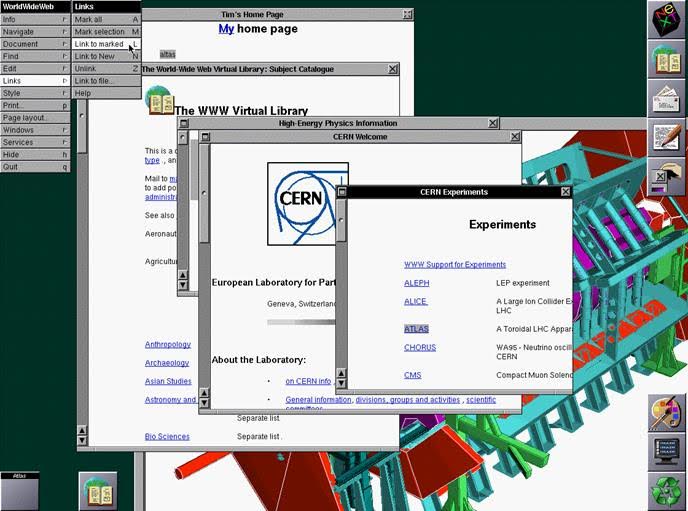
Tim Berners-Lee is a British computer scientist and inventor of the World Wide Web. He holds the 3Com Founders Chair at the Massachusetts Institute of Technology (MIT) Computer Science and Artificial Intelligence Laboratory since 1994 and is a Professor at the University of Southampton (2004-present) and the University of Oxford (2016-present) in Computer Science. His work revolutionized global information sharing through the creation of HTML, HTTP, URLs, and the first web browser/server, enabling the Web's scalability via existing Internet protocols. Key research areas include networked hypertext systems, semantic web technologies, Internet architecture, and societal impacts of digital infrastructure. He founded the World Wide Web Consortium (W3C) in 1994 to standardize web technologies and the World Wide Web Foundation in 2008 to advocate for digital equality. His technical minimalism prioritized immediate utility over theoretical perfection, leveraging Unix and TCP/IP foundations. ACM A.M. Turing Award (2016) Knighted as KBE (2004) Order of Merit (2007) Fellow of Royal Society, IEEE, and American Academy of Arts and Sciences Berners-Lee's advocacy spans data privacy, open standards, and resistance to centralization. He criticized proprietary social media dominance and promoted decentralized systems like Solid for personal data control. His career bridges technical innovation with profound societal reflection, emphasizing harmonious global digital cooperation and ethical governance.
Cleotilde (Coty) Gonzalez is a Research Professor of Decision Sciences at Carnegie Mellon University, with primary affiliation in the Department of Social and Decision Sciences (SDS). She serves as the Founding Director of the Dynamic Decision Making Laboratory (DDMLab) and Research Co-Director of the NSF National Institute for AI for Societal Decision Making (AI-SDM). Her extensive academic affiliations include the Security and Privacy Institute (CyLab), the Societal Computing program in the Software and Societal Systems Department (S3D), the Human-Computer Interaction Institute (HCII) in the School of Computer Science, and the Center for Behavioral Decision Research (CBDR) and Center for Neural Basis of Cognition (CNBC). Dr. Gonzalez holds a Ph.D. in Management Information Systems and has developed Instance-Based Learning Theory (IBLT), a significant contribution to cognitive science that explains how people make decisions based on past experiences. Her research spans experimental studies and computational modeling of cognitive processes in dynamic decision environments, with applications in cybersecurity, human-machine teaming, and societal decision making. Her recent publications reveal a strong focus on human-AI collaboration, collective intelligence, cybersecurity, and cognitive modeling. The research trends show increasing integration of AI systems with human decision processes, particularly examining how humans and AI can complement each other in complex decision environments. Her work increasingly addresses cybersecurity challenges through behavioral science perspectives, exploring how cognitive models can improve defense mechanisms against social engineering attacks. Lifetime Fellow of the Cognitive Science Society Lifetime Fellow of the Human Factors and Ergonomics Society Member of the Governing Board of the Cognitive Science Society Member at Large of the Policy Council of the System Dynamics Society Committee member of the National Academies Division Committee for the Behavioral and Social Sciences and Education Dr. Gonzalez has mentored over 50 post-doctoral fellows and doctoral students, with many going on to successful careers in academia, government, and industry. Her research has been supported by major collaborative efforts including Collaborative Research Alliances (CRA) and Multi-University Research Initiative grants from the Army Research Laboratories (ARL) and Army Research Office (ARO), as well as projects with the Defense Advanced Research Projects Agency (DARPA). She directs the Dynamic Decision Making Laboratory, which conducts research involving laboratory experiments and cognitive computational models to derive theoretical conclusions about dynamic decision making and develop applications for societal problems.
Professor Louise Amoore holds a faculty position at Durham University's Department of Geography, where she serves as Professor of Political Geography and Deputy Head of Department. Her work explores intersections of geopolitics, technology, and security, with a focus on algorithmic governance and data-driven practices. Co-editor of Progress in Human Geography Appointed to UK ethics body on biometric technologies Recipient of RCUK Global Uncertainties leadership fellowship Her research examines how data and algorithms reshape security paradigms, democracy, and societal norms. Recent projects analyze generative AI, cloud computing, and machine learning's political implications. She has secured funding from Leverhulme Trust, ESRC, EPSRC, AHRC, and NWO. Key article trends reveal expertise in algorithmic sovereignty (2024), border governance (2024), predictive security models (2023), data reuse ethics (2022), and post-9/11 surveillance practices (2021). Her work critically interrogates machine learning's epistemological foundations (2019) and data sovereignty implications (2018). RCUK Global Uncertainties leadership fellowship (2012-2015) Leverhulme Trust funding ESRC, EPSRC, AHRC, NWO grants Current PhD supervisees include Anna Okada and Charlotte Lock. She co-developed the Algorithmic Life book (2015) and serves as editor for Progress in Human Geography , maintaining active research collaborations in Europe.
Staal A. Vinterbo is a Professor at the Department of Information Security and Communication Technology within the Faculty of Information Technology and Electrical Engineering at the Norwegian University of Science and Technology (NTNU). His research focuses on privacy-preserving technologies, cryptography, and their intersections with machine learning, bioinformatics, and medical informatics. He has contributed to advancements in differential privacy, data anonymization, and secure computational methods.
Dr. Krishnendu Guha is an Assistant Professor and CONNECT Funded Investigator at the School of Computer Science and Information Technology, University College Cork. His research bridges embedded systems, cybersecurity, and quantum-safe hardware design with AI and bio-inspired strategies. PhD: University of Calcutta (Department of Science and Technology, Government of India) Postdoctoral: University of Florida Past Roles: Research Fellow at Intel India, Visiting Scientist at Indian Statistical Institute, Temporary Assistant Professor at NIT Jamshedpur His research focuses on embedded systems security , real-time security mechanisms , and quantum-safe hardware . He integrates AI (e.g., neural networks) and bio-inspired strategies (e.g., gecko crypsis behavior) into security frameworks for FPGAs and edge platforms. Recent publications highlight trends in blockchain for supply chains , quantum machine learning , secure FPGA architectures , and distributed AI systems . His work addresses energy efficiency, fault detection, and decentralized security in hardware. As a CONNECT Centre member, Dr. Guha contributes to advanced research in reconfigurable systems and cybersecurity. Grants and collaborations span quantum-safe design, cloud FPGA security, and hardware trojan mitigation.
Charles-Henry Bertrand Van Ouytsel is a Research Assistant and Visiting Lecturer at Université catholique de Louvain , affiliated with the Louvain Polytechnic School (EPL) and the Computer Engineering Center (INGI) . His work focuses on malware analysis , symbolic execution , and machine learning for cybersecurity applications. Research Areas : Packing detection, intrusion detection systems, side-channel security, and adversarial machine learning. Teaching : Involved in courses like Secured systems engineering (LINFO2144) and Software engineering and programming systems seminar (LINFO2359) . His recent publications emphasize malware obfuscation techniques and security evaluation frameworks . Collaborations with Axel Legay and others highlight his contributions to tool development (e.g., Packing-Box , SEMA ). No scientific awards are explicitly mentioned.
Prof. Dr. Michael Bosnjak leads the Department for Psychological Research Methods at the University of Trier, Germany, focusing on research synthesis methods, theory-driven machine learning, survey methodology, and experimental designs applied to personality psychology (HEXACO model), consumer behavior, and public health. His team includes Dr. Henning Silber (GESIS), Dr. Bernd Weiß (GESIS), and international collaborators at Utrecht University. Affiliation: University of Trier (Department of Psychology) Editorial Roles: Zeitschrift für Psychologie (Editorial Board), Social Science Computer Review (Associate Editor), Frontiers in Psychology (Review Editorial Board) Grants: DFG SFB 884 (co-applicant), DFG Project PaCO (2019-2024, principle investigator), BMBF-funded GESIS Panel Campus His recent publications analyze panel conditioning effects in longitudinal studies, e-commerce privacy dynamics, personality-trait interactions, and psychosis proneness measurement. Scientific awards include the 2016 BMBF infrastructure grant, 2011 Isaac Manasseh Meyer Fellowship, and 2003 Karin Islinger Award. Current projects address data quality in probability-based and opt-in panels, with experimental designs across eight groups testing measurement error mechanisms. He serves as a co-editor for multiple special issues on survey methodology and tourism psychology.
Dr. Andreas Baur is a research associate at the Institute of Ethics and Technology (IZEW) , University of Tübingen, and a PhD candidate at the Amsterdam Institute for Social Science Research (AISSR) , University of Amsterdam. He serves as fellow at the Critical Infrastructure Lab Amsterdam and contributes to the DoingIPS communication team. Education: M.A. in Peace Research and International Politics, University of Tübingen B.A. in Political Science and Economics, University of Tübingen/Universidad de Guadalajara Research Focus: Interdisciplinary analysis of IT infrastructures' political implications, particularly cloud computing's role in power dynamics, digital sovereignty (including EU's Gaia-X initiative), technology ethics, and governance of socio-technical systems. His work bridges International Relations , Science and Technology Studies , and ICT Policy . Recent Research Trends: Examines cloud infrastructure politics through lenses of sovereignty claims, hybrid cloud architectures, and material manifestations of power in digital ecosystems. Publications explore European digital governance attempts, cloud imaginaries, and multi-cloud regulatory challenges. Academic Contributions: Co-editor of Feminist Data Protection special issue ( Internet Policy Review , 2021) Participant in EU Horizon 2020 HEIMDALL project Contributor to EU FP7 SECTOR initiative Member of BMBF-funded Privacy-Arena and digilog@bw projects Teaching & Outreach: Conducts seminars on security in modern information technologies and participates in public workshops regarding AI ethics, digital sovereignty, and cyber security challenges. Regularly contributes to public debates through media appearances and policy discussions.
Prof. Dr. Oliver Nachtwey is a Professor at the Department of Social Sciences , University of Basel, specializing in processes of social modernization, individualization, and the transformation of digital capitalism. His research spans political sociology, social conflict, authoritarianism, and the societal impacts of digitalization. University: University of Basel Department: Department of Social Sciences Academic Rank: Professor Nachtwey’s work focuses on the social effects of digitalization , including labor alienation, platform economies, and the political sociology of Corona protests . He explores how libertarian authoritarianism and regressive modernity shape contemporary social crises. His recent publications analyze digital labor alienation , gift exchange on platforms , and the spirit of digital capitalism . Articles emphasize keywords like algorithmic labor, surveillance capitalism, and techno-religion. Scientific Awards: Shortlisted for Leipzig Book Fair Prize (non-fiction) for Gekränkte Freiheit Recipient of multiple academic awards for Die Abstiegsgesellschaft Oliver Nachtwey’s research has been featured in The New York Times , The Guardian , and El Pais , with collaborations at institutions like the Hamburg Institute for Social Research and Institute for Social Research Frankfurt.