Daniele Riboni is an Associate Professor at the Department of Mathematics and Computer Science , University of Cagliari , where he has held this position since 2015. Previously, he was a postdoctoral fellow and assistant professor at the University of Milano , where he earned his Ph.D. in Computer Science in 2007. His research focuses on pervasive healthcare , context-awareness , activity recognition , and privacy in pervasive computing . His recent publications emphasize machine learning and sensor networks for cognitive assessment in smart homes, explainable AI in healthcare, and biomedical data mining . Key areas include graph neural networks , large language models , and ontology generation . Notably, he has contributed to datasets like AnnoMI for counseling dialogues and systems like FootApp for sports analytics. He has organized workshops such as CoMoRea 2024 and CoMoRea 2015 , focusing on context modeling and activity recognition. No specific scientific awards, students, or grants are detailed in the provided texts.
Ludovico Boratto is an Associate Professor of Computer Science at the University of Cagliari, Italy. His research focuses on recommender systems , particularly fairness, bias mitigation, and beyond-accuracy evaluation metrics. He has published over 60 papers in top-tier venues and contributed to book editing and journal editorial boards. Education: Ph.D. in Computer Science (2012, University of Cagliari) Prior Affiliation: Senior Research Scientist at Eurecat (2016–2021) His recent work explores fairness in graph neural networks (GNNs), privacy-preserving recommendation, and knowledge graph integration for explainability. He has co-organized workshops like RecSoGood 2024 and IRonGraphs 2024, emphasizing algorithmic accountability and robustness. Highlights of recent publications include fairness-aware GNNs, federated learning for privacy, and explainable educational recommendation frameworks. His 15 most recent articles span 2024–2025, reflecting trends in ethical AI and graph-based approaches. Eight outstanding contribution awards from ACM conferences Editorial roles at Information Processing & Management (Elsevier) and Journal of Intelligent Information Systems (Springer)
Ombretta Gaggi is an Associate Professor at the Department of Mathematics, University of Padua, where she has been conducting research and teaching since April 2006. Her academic journey began with a Laurea degree cum laude in Computer Science from Ca' Foscari University of Venice in 1998, followed by a PhD in Computer Science from the Consortium of Universities of Bologna, Padova and Venice in 2003. Her research spans mobile computing and networking, web technologies, social networks, and semantic web, with a strong emphasis on accessibility technologies and serious games for educational and medical applications. She has made significant contributions to developing solutions for visually impaired users, early identification of developmental dyslexia, and safety mechanisms for mobile communications. Professor Gaggi's recent publications demonstrate a consistent track record of high-impact research in top venues including ACM Transactions on the Web, IEEE Transactions on Mobile Computing, and IEEE Access. Her work increasingly focuses on leveraging technology for social good, addressing challenges in accessibility, education, and online safety. Best Paper Award at IEEE International Conference on Multimedia and Expo (ICME 2013) As an educator, Professor Gaggi teaches Web Technologies and Mobile Programming and Multimedia courses at the University of Padua. Her research group offers opportunities for students to work on cutting-edge projects at the intersection of mobile computing, web technologies, and accessibility solutions. She has established international collaborations and regularly publishes in top-tier conferences and journals, demonstrating sustained research productivity across multiple domains. Her laboratory work focuses on practical implementations of theoretical frameworks, particularly in accessibility technologies and serious games applications, with strong connections to real-world challenges in education and healthcare.
Diletta Cacciagrano is an Associate Professor at Università di Camerino, specializing in interdisciplinary research that bridges Artificial Intelligence with Blockchain Technology and Internet of Things . Her work focuses on enhancing security, privacy, and efficiency in emerging technologies, particularly in healthcare systems , financial services , and edge computing environments . Research Interests : Explainability in AI systems Quantum-enhanced federated learning Blockchain applications for transparency Energy-efficient network protocols Adversarial attack detection Neuroscience-informed monitoring systems Publication Trends : Recent work highlights privacy-preserving edge AI through federated learning frameworks, quantum computing integration , and blockchain-enabled security across healthcare and financial domains. Her research emphasizes robustness against adversarial threats and optimization of resource-constrained IoT environments.
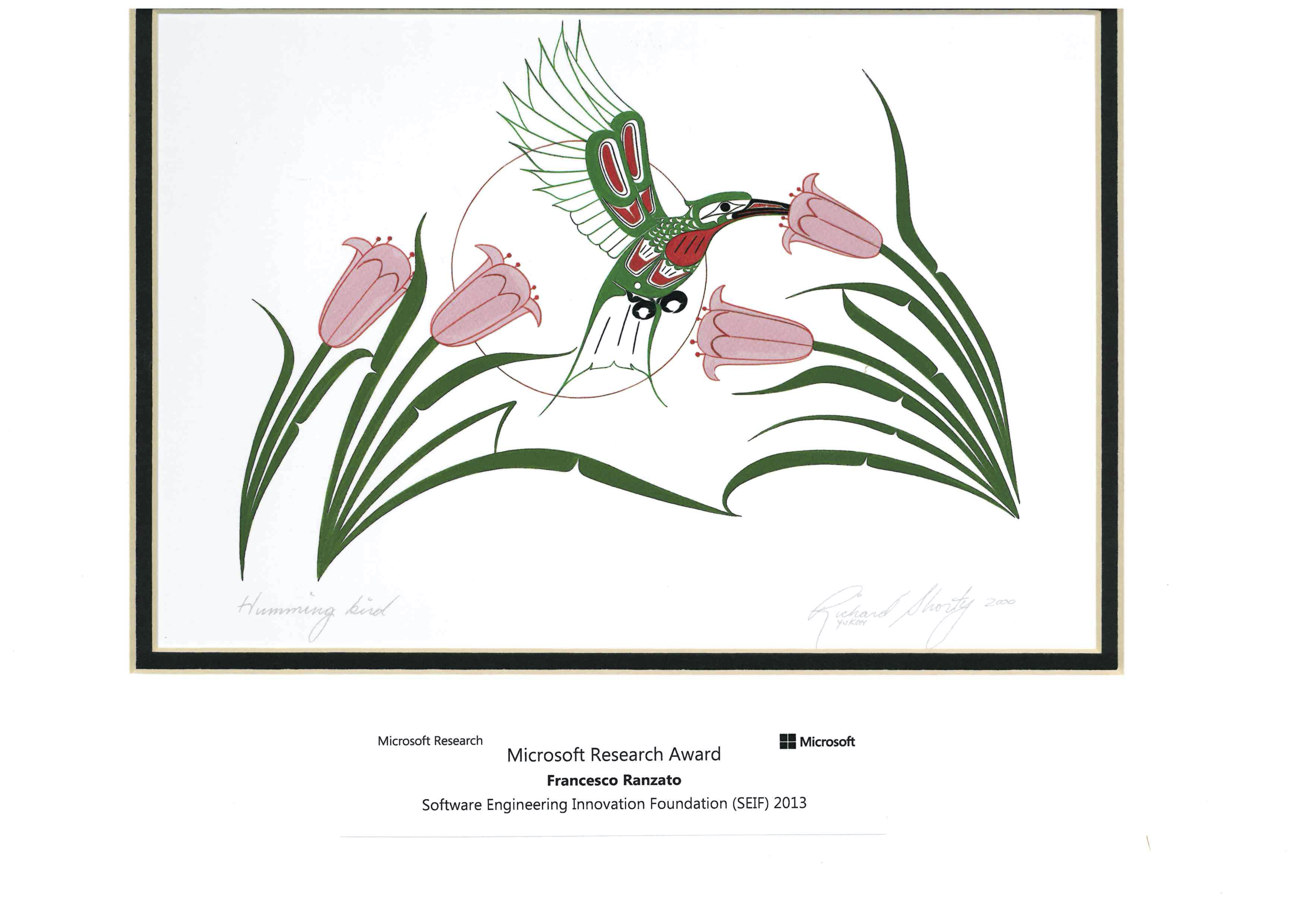
Francesco Ranzato is a Full Professor in the Department of Mathematics at the University of Padova, Italy, where he conducts research in theoretical computer science with a focus on abstract interpretation, programming languages, and formal methods. His academic career spans over three decades with continuous contributions to the field, as evidenced by his extensive publication record from 1994 through 2025. Professor Ranzato's research interests center on abstract interpretation theory and its applications to program analysis and verification. In recent years, he has expanded his work to include machine learning verification, particularly focusing on robustness certification of classifiers using abstract interpretation techniques. His work bridges theoretical foundations with practical applications, as demonstrated by multiple open-source software artifacts available on GitHub. His publication record shows a clear evolution from foundational work in abstract domains and completeness properties to practical algorithms for simulation and model checking, and most recently to applications in machine learning security. The 15 most recent publications reveal a strong focus on verifying properties of machine learning models, with particular attention to decision trees, support vector machines, and k-Nearest Neighbors classifiers. Among his notable recognitions are the POPL Distinguished Paper Award, LICS 2021 Best Paper Award, Microsoft Research SEIF award, Amazon Research Award, and the WhatsApp Privacy Aware Program Analysis Award. These awards highlight the significance and impact of his contributions to programming languages and formal methods research. Professor Ranzato maintains active research collaborations, as evidenced by his co-authored publications, and has successfully secured research funding from both academic and industry sources. His work with students and junior researchers is reflected in the numerous joint publications and the development of practical tools for abstract interpretation and machine learning verification. His research group operates through the Department of Mathematics at the University of Padova, with a strong presence in international research communities as shown by his editorial roles (e.g., editing SAS 2017 proceedings) and regular participation in top-tier conferences in programming languages and formal methods.
Elena Ferrari is Professor of Computer Science at the University of Insubria and research leader at STRICT SociaLab, recognized for significant contributions to data security and privacy. She received the 2021 SIGSAC Outstanding Contributions Award for her pioneering work in security technologies. Her research develops privacy-preserving frameworks for emerging technologies including blockchain systems, edge computing environments, human digital twins, and IoT networks. Current projects address malware detection, metadata leakage prevention, decentralized learning security, and privacy-aware access control. Publications demonstrate consistent innovation in security mechanisms for complex systems. Recent work features blockchain-based malware containment, context-aware privacy enforcement, and edge computing security solutions. Ferrari has chaired major security conferences and contributes to advancing privacy-preserving computation. No student advising details or laboratory affiliations are documented in available sources.
Letterio Galletta is an Assistant Professor of Computer Science at IMT School for Advanced Studies Lucca, within the SySMA research unit. Previously, he held a postdoctoral researcher position at the University of Pisa's Department of Computer Science and earned his Ph.D. in Computer Science from the University of Pisa in 2014. His research focuses on language-based security, leveraging programming languages, compilers, and formal verification to address security challenges in adaptive software, IoT, firewalls, and blockchain technologies. Key research areas include secure compilation, access control policy analysis, smart contract formal models, and static analysis techniques. His work bridges theoretical foundations with practical applications, such as securing satellite communication systems (IRIS2) and enhancing firewall policy enforcement. Publications highlight contributions to blockchain transaction parallelism, IoT security metrics, and formal methods for SELinux configurations. He actively contributes to tools like FWS (Firewall Synthesizer) and VeriOSS for bug bounty protocols. His research emphasizes interdisciplinary approaches, combining cybersecurity with distributed systems and embedded computing.
Markus Zanker is a full professor at the Faculty of Computer Science , Free University of Bozen-Bolzano (Italy), where he previously served as vice dean for studies and director for study programmes. He held associate professorship at Alpen-Adria-Universitaet Klagenfurt, Austria (2011-2016). Research Focus : Knowledge-based decision support systems, personalized information filtering/retrieval, product recommendation, conversational sales advisor systems, and product configurators Current Projects : Causal discovery in recommender systems, medical recommendation systems (insulin dosing, drug combinations), explainable AI for tourism and news recommendation The 15 most recent publications (2016-2025) cover topics including: Deep reinforcement learning for medical applications Causal modeling in tourism and online decision-making Explainable recommendation frameworks Session-based news and video recommendations Evaluation of open-source recommendation libraries His work also explores user interaction patterns through studies on bimodal rating statistics, collaborative explanations, and proactive recommendation engagement.
G. Fortino is a Professor at the University of Calabria, Italy, with 643 publications, an h-index of 74, and over 21,592 citations. His research spans critical domains including: Internet of Things Body Sensor Networks Edge and Fog Computing Healthcare Applications Machine Learning and Deep Learning Security and Trust Frameworks His work establishes foundational architectures for healthcare industry 4.0 and IoT security, particularly through multi-sensor fusion techniques and edge-based processing. Recent publications demonstrate a pronounced shift toward medical applications, with deep learning models for blood pressure monitoring, brain tumor classification, and emotion recognition integrated with real-time sensor networks. Analysis of his 2017-2021 publications reveals dominant trends in human activity recognition (50% of recent work), security for distributed systems (30%), and medical diagnostics (20%), consistently leveraging machine learning for real-time processing in resource-constrained environments. His most influential papers address IoT security taxonomies and body sensor network fusion, with citation counts exceeding 500. No information regarding scientific awards, student advising, grants, or dedicated research laboratories was found in the provided materials.
Alessandro Checco is an Assistant Professor in the Computer Science Department at University of Rome La Sapienza. His research focuses on crowdsourcing, distributed systems, and privacy-preserving technologies, bridging theoretical computer science with practical applications that consider human factors in technological systems. He has established himself as a significant contributor to the field of human computation and privacy-aware systems. His educational background includes: 2020: Fellowship of Higher Education from The University of Sheffield, Higher Education Academy 2015: Ph.D. in Mathematics from Hamilton Institute (Design of decentralised algorithms applied to channel/code selection and convex optimisation for throughput fairness of 802.11 networks) 2010: M.Sc. in Mathematical Engineering from University of Roma "Tor Vergata" (110/110 with great distinction) 2009: Erasmus Scholarship at Universiteit Gent, Department of Telecommunications 2007: B.Sc. in Mathematical Engineering from University of Roma "Tor Vergata" (110/110 with great distinction) Checco's research spans multiple areas at the intersection of computer science and social implications of technology. He is particularly interested in Crowdsourcing for Human Computation, Distributed Private Recommender Systems, Information Retrieval, Data Privacy, Distributed Systems, User Data Obfuscation in Web Systems, Societal and Economic Analysis of Online Work, Crowd Workers Unionisation, and Algorithmic Bias. His work often examines how technological systems can be designed to respect user privacy while maintaining functionality, and how crowd work can be structured to be more equitable for workers. His recent publications demonstrate a clear evolution in research focus, beginning with foundational work in wireless networks and distributed algorithms, then shifting toward human computation and privacy-preserving systems. His most recent work increasingly addresses the societal implications of crowd work, including investigations into crowd worker unionization and cooperative models. Several publications examine gender bias in algorithmic systems, reflecting growing attention to fairness and ethical considerations in his field. Among his notable achievements: All That Glitters is Gold-An Attack Scheme on Gold Questions in Crowdsourcing (Best Paper Award) Checco has secured significant research funding and led important projects including the H2020-funded FashionBrain project as Research Director and the EPSRC-funded BetterCrowd project as Research Associate. His work on the FashionBrain project demonstrates his ability to lead large-scale, interdisciplinary research initiatives. He has also received the Technology Innovation Development Award (TIDA) from Science Foundation Ireland. His research has practical applications across multiple domains including recommendation systems (BLC: Private Matrix Factorization Recommenders), peer review assistance using AI, smart farming technologies, and cooperative models for crowd workers (CrowdCO-OP). He has developed frameworks for understanding worker behavior in crowdsourcing platforms and created methods for improving quality control in human computation systems.
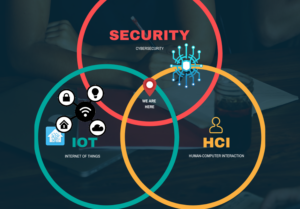
Luca Mannella is a Research Fellow at the Department of Control and Computer Engineering (DAUIN) , Politecnico di Torino. His work spans Cybersecurity , Internet of Things (IoT) , Software Engineering , and Human-Computer Interaction (HCI) . PhD in Computer and Control Engineering from Politecnico di Torino (2024) M.Sc. and B.Sc. in Computer Engineering from Politecnico di Torino (110/110 final score) His research focuses on IoT security , particularly in smart home gateways and automotive systems , with recent work on SOCMATI (Social Media Automotive Threat Intelligence) and COLTRANE-V projects. He has contributed to frameworks for CAN attack simulation , cryptomining detection , and privacy-preserving vulnerability scanning . Publications since 2018 reflect expertise in malware optimization , Cloud-IoT security , and edge computing for constrained devices. His teaching roles since 2020 include Web Applications and Algorithms and Programming courses. He is also a member of the SMILIES research group and co-founded the Mu Nu Chapter of IEEE-HKN .