Felix Epp is a Researcher at Aalto University in Finland, with collaborative ties to the University of Helsinki. His work investigates interactive technologies, wearable systems, and socio-cultural practices through methods like research through design and participatory approaches . He holds a doctoral degree focused on how wearable technologies reshape clothing practices and social norms, with recent expansions into critical futures studies to anticipate societal impacts of emerging technologies. Research Focus Epp's interdisciplinary interests bridge technology design, human behavior, and speculative futures. Key themes include: Embodied Interaction : How wearables alter social identities and cultural rituals (e.g., dress practices). Anticipatory Design : Integrating futures methodologies to navigate technological uncertainty and ethical dilemmas. Co-design & Values : Examining ideological underpinnings of digital systems through community-centered approaches. Publication Trends His recent articles emphasize speculative futures (e.g., more-than-human scenarios, policy foresight) and wearable technology (e.g., smart clothing ethics, social adoption). Methodologically, he prioritizes qualitative fieldwork and generative design , often exploring tensions between innovation and societal risks like surveillance or digital divides. Awards Honorable mention, Department of Design (Muotoilun laitos), Aalto University (Apr 2025) Honourable Mention Award MUM 2020, Department of Computer Science (Tietotekniikan laitos), Aalto University (Nov 2020) Research Groups Epp contributes to the Inuse research group at Aalto, focusing on human-centered technology in everyday contexts.
Jonathan White serves as a Senior Lecturer in Cyber Security within the College of Arts, Technology and Environment at the University of the West of England (UWE). With over 23 years of prior industry experience in telecommunications critical infrastructure systems, he joined UWE in January 2020 after transitioning from roles as software developer, product specialist, and management leader in real-time embedded systems. His educational background includes an M.Sc. in Cyber Security (with Distinction) and B.Sc. in Computing for Real-time Systems, both from UWE, where he is currently pursuing a PhD focused on Federated Learning security tradeoffs. White's research centers on Federated Learning applications for IoT security, container security analysis, and machine learning-driven threat detection in home networks. Analysis of his publication record reveals a strong focus on practical security implementations, particularly in containerized environments (Docker security analysis, cyber ranges) and Federated Learning security frameworks. His work consistently bridges theoretical machine learning concepts with tangible security applications for IoT and edge devices, emphasizing privacy-performance tradeoffs in distributed systems. Scientific Recognition: Fellow of the Higher Education Academy (FHEA) White actively contributes to cyber security education through innovative teaching methods including the 'Cyber Funfair' immersive learning platform and Scalextric-based physical system hacking demonstrations. His industry background in telecommunications critical infrastructure informs his practical approach to security education and research, particularly regarding real-time system vulnerabilities and high-availability network security requirements. His technical expertise spans C and Python programming, network security protocols, and specialized knowledge in securing containerized environments and IoT ecosystems. Current research includes longitudinal analysis of container image vulnerabilities and development of modular cyber range infrastructure for security training.
Abhishek 'Abbey' Dwivedi is an Associate Professor in Marketing at the School of Business, Charles Sturt University (CSU). He holds a PhD in Marketing from Griffith University, a Master's in Marketing Management (First Class Honours), and a PGDM in Marketing. His teaching experience spans over seven years across Griffith University, University of Queensland, and Central Queensland University, covering courses like Marketing Strategy, Global Marketing, and Services Marketing. PhD in Marketing, Griffith University (2006-2010) Masters in Marketing Management (First Class Honours), Griffith University (2004-2005) PGDM (Marketing), Central Queensland University (Brisbane) Abbey's research focuses on brand extensions , customer equity , celebrity endorsements , and marketing capabilities , with publications in journals like the Journal of Brand Management and European Journal of Marketing . His recent work explores social entrepreneurship and mental health impacts on frontline workers , aligning with his involvement in the Aspro Workforce Wellness Research Unit and Marketing Research Group . His 15 most recent publications (2005-2025) span brand management , social media engagement , cybersecurity in agriculture , and mental health during crises . Key trends include interdisciplinary work on industrial buyers , consumer-brand relationships , and marketing innovation in SMEs . Scientific Awards & Grants: Best Paper Award (2015) Best Reviewer in Track Award (2015) Better Mental Health Program Evaluation Project (2020) Certificate of Appreciation, Society for Marketing Advances (USA) (2014) Abbey supervises higher-degree research students and serves as a peer reviewer for journals like the Journal of Retailing and Consumer Services . He is also part of the Regional Entrepreneurship Research Group and Regional Work and Organisational Resilience Sturt Group .
Dr. Marie Vasek is a Lecturer in Information Security at the Department of Computer Science, University College London (UCL) . She joined UCL in August 2019 after serving as an Assistant Professor at the University of New Mexico (UNM) from 2017-2019. PhD in Computer Science (2017) - University of Tulsa, advised by Dr. Tyler Moore MSc in Computer Science (2015) - SMU BA in Computer Science & Mathematics (2012) - Wellesley College Her research spans computer security, focusing on security economics and cybercrime measurement . Key areas include cryptocurrency fraud (pump-and-dumps, Ponzi schemes), SMS scams, decentralized finance (DeFi) deception, and ethical challenges in security research. Recent work examines physical cryptocurrency attacks ("wrench attacks"), regulatory frameworks for CBDCs, and social media's role in illicit drug advertising. Dr. Vasek has received notable recognition, including the 2016 Google Anita Borg Scholarship . She co-directed StopBadware (2011-2020) and contributes to UCL's teaching through courses like COMP0141 Security and COMP0057 Research in Information Security . Her publications appear in venues like USENIX Security , IEEE Blockchain Conference , and Workshop on the Economics of Information Security .
Margot Kaminski is a Professor of Law and Director of the Privacy Initiative at Silicon Flatirons Center for Law, Technology and Entrepreneurship at the University of Colorado Law School. Her work focuses on AI law, privacy, and First Amendment issues in technology contexts. Current affiliations: University of Colorado Law School, European University Institute (Fernand Braudel Senior Fellow), Berkman Klein Center at Harvard (Faculty Associate) Past roles: Assistant Professor at Ohio State University Moritz College of Law, Executive Director of Yale's Information Society Project Research Interests: AI and algorithmic accountability Data privacy and GDPR analysis First Amendment in digital contexts Copyright law and technological authorship Surveillance law and civil liberties Scientific Awards: 2022 Jules Milstein Scholarship Award 2020 Future of Privacy Forum Privacy Papers for Policymakers Award 2019 University of Colorado Provost's Faculty Achievement Award 2016 Junior Scholar Award (Privacy Law Scholars Conference) Grants & Fellowships: Fulbright-Schuman Innovation Grant (2018) Fulbright-Schuman Grant and Fernand Braudel Senior Fellowship (2024, European University Institute) Key contributor to legal scholarship in Yale Law Journal , Columbia Law Review , and Harvard Law Review , with a focus on the interplay between technology and constitutional rights. Director of the Privacy Initiative at Silicon Flatirons, a research center addressing law and technology intersections. Regularly publishes on AI governance and privacy law in leading journals.
Sadie Creese is Professor of Cybersecurity in the Department of Computer Science at the University of Oxford. She serves as Director of the Global Cyber Security Capacity Centre at the Oxford Martin School and Director of the Oxford Martin Programme on AI Threat Detection. Additionally, she is a Governing Body Fellow at Worcester College and Chair of Examiners for the MSc in Computer Science. Professor of Cybersecurity, Department of Computer Science, University of Oxford Director, Global Cyber Security Capacity Centre, Oxford Martin School Director, Oxford Martin Programme on AI Threat Detection Governing Body Fellow, Worcester College Chair of Examiners for MSc in Computer Science Sadie Creese holds a DPhil in Computer Science from the University of Oxford, an MSc in Computation, and a BSc (Hons) in Mathematics and Philosophy. Her academic background bridges theoretical computer science with practical applications in security. Her research spans multiple domains of cybersecurity including cyber situational awareness, visual analytics for cybersecurity, predicting organizational cyber-value-at-risk, agent-based simulations for malware propagation, threat modeling and detection, network defense, and cyber-resilience strategies. She also studies national cybersecurity capacity, working with countries and international organizations worldwide. Her interdisciplinary approach integrates insights from computer science, social sciences, and policy studies to address complex security challenges in an interconnected digital world. Analysis of her recent publications reveals a consistent focus on practical cybersecurity applications with strong emphasis on human factors in security systems. Her work bridges technical security mechanisms with organizational and human elements, particularly in areas like insider threat detection, risk communication, and security operations. The research demonstrates a trajectory toward more integrated security frameworks that consider both technical vulnerabilities and human behaviors within complex systems. Sadie Creese has been recognized as one of The 50 most influential women in cyber-security UK . Her work with the Global Cyber Security Capacity Centre has influenced national cybersecurity strategies worldwide, and she actively contributes to policy discussions through platforms like the World Economic Forum's AI Governance Alliance. The 50 most influential women in cyber-security UK Professor Creese has supervised numerous PhD and Master's students including Mary Bispham, Rodrigo Carvalho, Elizabeth Phillips, Marcel Stolz, and Meredydd Williams. Her research has been supported by significant grants including AXIS-sponsored projects on cyber-risk modeling, World Economic Forum collaborations on cybersecurity futures, and Lloyds Register Foundation funding for cyber security research related to the Industrial Internet of Things. She leads major interdisciplinary projects that bridge technical security research with policy implications. Principal Investigator on AXIS-sponsored project 'Analysing Cyber-Value-at-Risk, Residual Risk and models for Systemic Cyber-Risk' Collaboration with World Economic Forum's Shaping the Future of Cybersecurity Platform Co-Chair of Lloyds Register Foundation sponsored Foresight review of cyber security for the Industrial Internet of Things Professor Creese founded and directs the Global Cyber Security Capacity Centre (GCSCC) at the Oxford Martin School, which conducts research into national cybersecurity capacity. She was also the founding Director of Oxford's Cybersecurity Network (now CyberSecurity@Oxford), established in 2008. Her team includes senior researchers like Ioannis Agrafiotis, Louise Axon, and Michael Goldsmith, who collaborate on projects spanning cyber analytics, security protocols, and identity management. The GCSCC works with governments and international organizations to build cybersecurity capacity globally, while the Oxford Martin Programme on AI Threat Detection focuses on emerging security challenges posed by artificial intelligence technologies.
Fabian Monrose is a Professor at the Georgia Institute of Technology, holding the Julian T. Hightower Chair in Cybersecurity. His career spans leadership roles at the University of North Carolina at Chapel Hill (UNC), Johns Hopkins University, and Bell Labs. He earned his Ph.D. in Computer Science from New York University's Courant Institute in 1999. Dr. Monrose specializes in cybersecurity, with research focusing on malware analysis, network security, and hardware threats. His work has earned Best Paper Awards at IEEE and USENIX conferences, along with the AT&T Best Applied Security Paper Award . He has published over 100 papers and led collaborative efforts at institutions like RENCI. Dr. Monrose's recent publications include studies on TLS certificate risks, hardware trojans, and AI-aided malware evasion. Best Paper Award at IEEE Symposium on Security & Privacy Best Paper Award at USENIX Security Symposium Outstanding Research in Privacy Enhancing Technologies Award AT&T Best Applied Security Paper Award Best Student Paper Award (2013) His research trends emphasize practical security solutions , including defensive registration strategies, automated bug analysis, and IoT threat mitigation. Dr. Monrose has also contributed to cybersecurity education through gamified platforms and secure autograding systems.
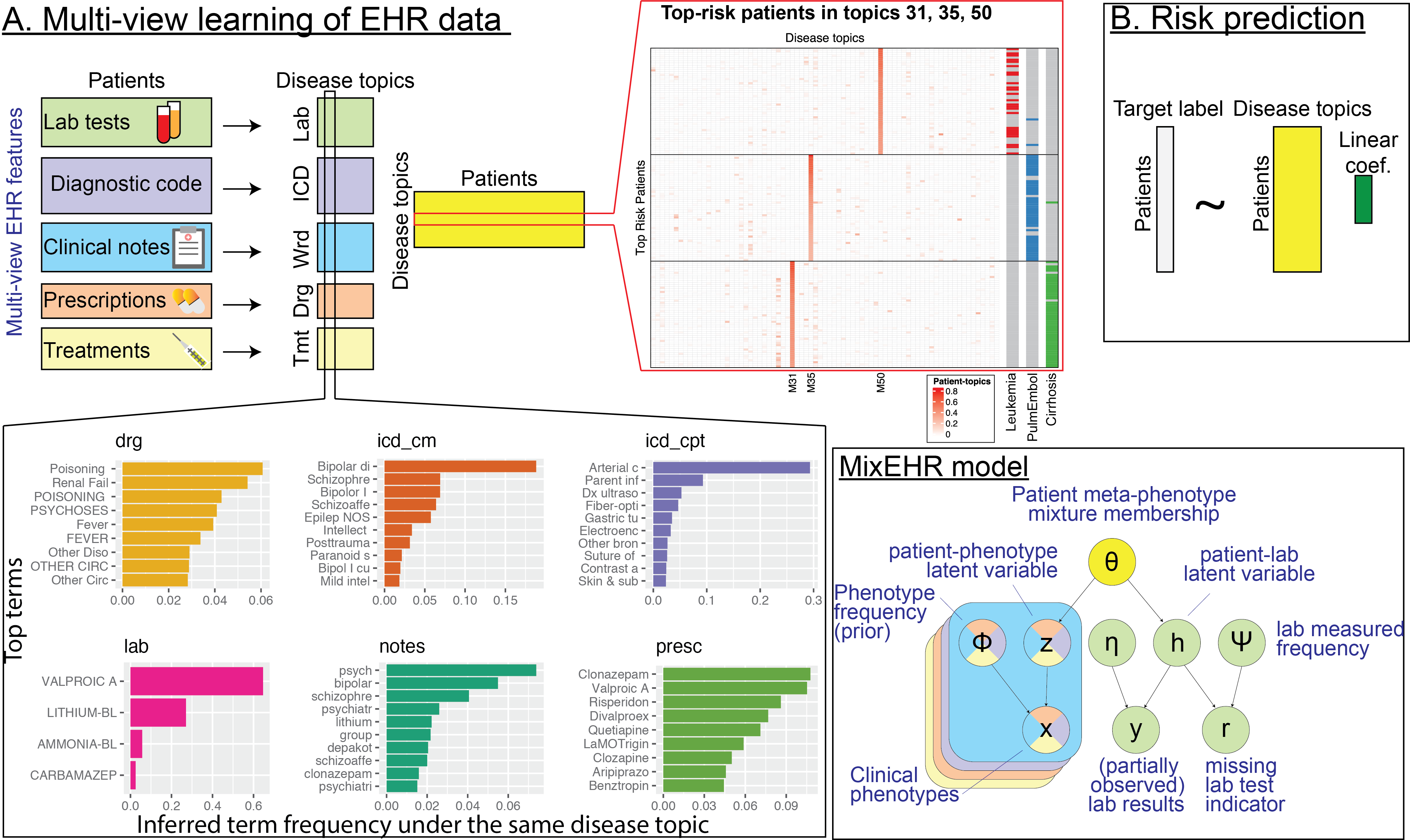
Yuè Li is a Professor in the Department of Computer Science at McGill University, where he leads the Li Lab focused on machine learning applications in genomics and healthcare. His research develops computational methods for analyzing electronic health records (EHR), single-cell multi-omics data, and population genetics. Dr. Li teaches core courses including Applied Machine Learning (COMP 551), Machine Learning in Genomics and Healthcare (COMP 565), and Computer Programming for Life Sciences (COMP 204). His research interests span: AI methods for computational biology and translational healthcare Multi-modal EHR integration and clinical topic modeling Time-series health forecasting and trajectory analysis Single-cell transcriptomics and epigenomics Polygenic risk modeling and causal variant inference Regulatory genomics and functional annotation integration Publications demonstrate strong focus on transformer architectures for healthcare forecasting, Bayesian methods for genomic inference, and neural topic models for clinical phenotyping. Recent work emphasizes foundation models for single-cell data and federated learning for EHR analysis. Scientific Awards: KDD HealthDay2022 Best Paper Award for seed-guided topic modeling Dr. Li mentors graduate students and postdoctoral researchers working on machine learning applications in biomedical domains. Current lab members include Master's students Bo-Hong Wang, Claris Gu, Neda Esfehani, and Ruilin Wang, along with postdoctoral researcher Dr. Jun Bai. The Li Lab operates within McGill's School of Computer Science, developing computational frameworks to integrate heterogeneous biomedical data for improved disease understanding and clinical decision support.
William Schpero is an Assistant Professor of Population Health Sciences at the Weill Cornell Medical College of Cornell University. He is also Associate Director at the Cornell Health Policy Center and Cornell Center for Health Equity , focusing on Medicaid policy, healthcare safety nets, and equity in health outcomes. PhD in Health Policy and Economics, Yale University (2019) M.Phil in Health Policy and Economics, Yale University (2017) MPH in Health Policy, Dartmouth College (2012) AB in Economics, Dartmouth College (2010) His research examines Medicaid's role in reducing racial, ethnic, and socioeconomic health disparities , with particular interest in ACA provisions , ACO performance , and Medicaid managed care networks . He co-founded the Medicaid Data Learning Network and Medicaid Insights Colloquium to bridge policy research and practice. Recent publications in JAMA , Health Affairs , and New England Journal of Medicine focus on Medicaid access , telemedicine during pandemics , ACO spending patterns , and racial disparities in clinical trial participation . His work has received funding from Commonwealth Fund , National Institute on Minority Health , and Robert Wood Johnson Foundation . 2021: Arnold Ventures - Safety-Net Hospital Closures 2024: United Hospital Fund - Medicaid Unwinding Study 2022: RWJF - Medicaid Transportation Benefit Analysis He teaches in Cornell's Executive MBA/MS Healthcare Leadership program and Weill Cornell's MS in Health Policy and Economics , advising students on Medicaid-related topics. Current research explores post-pandemic Medicaid disenrollment , value-based care equity , and Medicaid's role in clinical trial access .
Sanmi (Oluwasanmi) Koyejo is an Assistant Professor in the Department of Computer Science at Stanford University and an adjunct Associate Professor at the University of Illinois at Urbana-Champaign. He leads Stanford Trustworthy AI Research (STAIR), working to develop the principles and practice of trustworthy machine learning with applications to neuroscience and healthcare. Koyejo holds affiliations with multiple Stanford institutes including SAIL, HAI, CRFM, AIMI, AI Safety, Machine Learning Group, and Bio-X. Koyejo completed his Ph.D. at the University of Texas at Austin followed by postdoctoral research at Stanford University. His research bridges theoretical machine learning with practical healthcare applications, focusing on developing robust and fair AI systems that can be trusted in critical domains. His work spans algorithmic fairness, robust distributed learning, metric elicitation, and applications to medical imaging and neuroscience. His recent publications demonstrate a strong focus on emerging challenges in AI including emergent abilities in large language models, fairness in medical AI, federated learning, and robustness against adversarial attacks. His work has increasingly addressed real-world healthcare challenges through deep learning applications to medical imaging, particularly chest radiographs for disease detection. Scientific Awards: NSF CAREER Award 2021 Skip Ellis Early Career Award Sloan Research Fellowship Frederick E. Terman Faculty Fellow (2022) Best Paper Award from UAI Kavli Fellowship IJCAI Early Career Spotlight Koyejo actively mentors a large research group with numerous PhD students and postdocs. His research has been supported by significant grants including NSF funding for projects like 'Fair Federated Representation Learning for Breast Cancer Risk Scoring.' He serves in leadership roles including as General Co-chair for NeurIPS 2022 and President of the Black in AI organization. His STAIR research group focuses on developing trustworthy AI principles and practices, with applications to healthcare and neuroimaging. The group collaborates extensively with healthcare institutions including OSF Healthcare and participates in major initiatives like the NIH-funded MIDRC and the NSF AI research institute AIFARMS.
Steven Ruggles is a Regents Professor in History at the University of Minnesota Twin Cities and serves as Director of the Minnesota Population Center , which includes the Institute for Social Research & Data Innovation and the Life Course Center. He specializes in Population censuses Microdata analysis IPUMS infrastructure Educational disparities Longitudinal demographic studies His research contributes to UN Sustainable Development Goals (SDGs) related to educational equity and population health. He has secured significant funding from: National Science Foundation NIH National Institute on Aging NIH National Institute of Child Health/Human Development Key collaborative projects include: Multigenerational Longitudinal Panel for Aging Research (2024-2029) Prospective Microdata for Aging (2023-2026) Current Population Survey Integration (2022-2026) Ruggles' recent publications focus on: Data privacy in decennial censuses Synthetic data limitations Multigenerational panel construction Contextual approaches to demographic research He actively collaborates with scholars such as: Steven Manson (Geography, UMN) Matthew Sobek (UMN) Kiran Muralidhar (Texas A&M)
Nicole L. Beebe is a Professor at the Alvarez College of Business, The University of Texas at San Antonio , specializing in cybersecurity, cyber analytics, and digital forensics. With over two decades of experience spanning academia, government, and industry, she has contributed extensively to research on insider threats, IoT security, and threat hunting. Ph.D. in Business Administration (Information Technology), UTSA MS in Criminal Justice, Georgia State University BS in Electrical Engineering, Michigan Technological University Her research explores cybersecurity challenges in emerging technologies, including quantum computing, IoT, and large language models. She has pioneered studies on cyberbullying dynamics, forensic automation, and AI-driven threat detection. Recent publications focus on adversarial image obfuscation , VR for security operations , IoT forensic methodologies , and deepfake detection frameworks , reflecting interdisciplinary work at the intersection of security, AI, and digital evidence. 2022 Best Paper Award, Journal of Network & Computer Applications Senior Member, IEEE and ACM Senior Fellow, Information Systems Security Association As an Associate Editor for Computers & Security , she shapes the field through peer review. Her $14M+ in funding from NSF, DHS, and DoD underscores her impact on advancing cybersecurity research and education.
Haining Wang is a Professor in the Bradley Department of Electrical and Computer Engineering at Virginia Tech. His research focuses on cybersecurity, networking systems, cloud computing, and cyber-physical systems. He holds a Ph.D. from the University of Michigan (2003). His work addresses critical challenges in network security, IoT device fingerprinting, drone navigation security, and 5G/6G infrastructure vulnerabilities. Notable contributions include developing frameworks for detecting deceptive reviews, securing industrial IoT devices, and enhancing geofencing systems with 6G technologies. Wang's IEEE Fellow award (2020) recognizes his contributions to network and cloud security. His research also explores cloud gaming security, data center thermal vulnerabilities, and DNS privacy risks. He actively publishes on topics like container registry typosquatting, acoustic indoor localization, and encrypted DNS censorship analysis. Education: Ph.D., University of Michigan, 2003 Awards: IEEE Fellow (2020) Key Research Areas: Cybersecurity, Network Measurement, IoT Security, 5G/6G Systems Wang's recent work emphasizes securing emerging technologies like drone navigation systems and optimizing sensor placements in indoor environments. His projects often bridge theoretical frameworks with practical implementations in real-world networks and cloud infrastructures.
Ben Livshits is a Reader in Computing at Imperial College London's Department of Computing, part of the Faculty of Engineering. His research focuses on computation theory, computer software, and privacy-preserving technologies in blockchain systems. He holds a Ph.D. from Stanford University. Education: Ph.D. in Computer Science, Stanford University, 2007 Research Interests: Livshits specializes in cryptographic protocols for decentralized systems, ZK-Rollups optimization, MEV analysis, and privacy-enhancing technologies. His work bridges theoretical computer science with practical applications in blockchain scalability and security. Recent Research Trends: His 2024-2025 work emphasizes ZK-proof systems (e.g., zk-bench), MEV mitigation strategies, and formal foundations for rollups. He also explores community-driven verification (CrowdProve) and governance mechanisms for DeFi. Affiliations: He is affiliated with the Centre for Cryptocurrency Research and Engineering, contributing to interdisciplinary blockchain research. Grants & Labs: While specific grants are not listed, his work suggests involvement in Imperial's distributed systems and blockchain initiatives.
Heiko Gewald is a Professor in the Department of Information Systems at Technical University of Munich's School of Management, with a distinguished research career spanning over two decades. His scholarly work demonstrates deep expertise in information systems, particularly focusing on technology adoption by aging populations, healthcare information systems, and smart mobility services. Dr. Gewald's research interests center on the intersection of technology and human behavior, with special emphasis on older adults' adoption of digital health applications , smart mobility ecosystems , and DevOps implementation . His work consistently addresses the challenges of designing technology that accommodates diverse user needs, particularly for vulnerable populations. Through extensive field research, he has developed frameworks for understanding technology acceptance barriers among seniors and created interventions to improve digital inclusion. Analysis of his recent publications reveals a clear trajectory toward increasingly specialized work in aging technology, with approximately 60% of his 2020-2025 publications focusing on older adult technology adoption. His research employs diverse methodologies including qualitative case studies, cross-cultural surveys, and experimental designs, often with international collaborations spanning Germany, Australia, and Thailand. Principal investigator for multiple German research projects on digital health for elderly populations Co-organizer of the annual HICSS minitrack on 'Seniors' Use of Digital Resources' since 2018 Active contributor to the Association for Information Systems (AIS) special interest groups Dr. Gewald has mentored numerous doctoral students who have become active researchers in information systems, with several now holding faculty positions. His research has been supported by German research funding agencies and industry partnerships with healthcare technology companies. He maintains strong collaborative relationships with researchers across Europe and Australia, particularly in the healthcare IT domain.