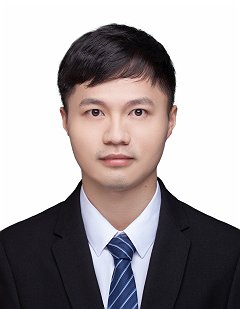
Dr. Eric Blake Jackson is a Lecturer at Tallinn University of Technology's School of Information Technologies, Department of Software Science, where he has been employed since 2020. His academic trajectory includes: Current Position: Lecturer (full-time, 1.00 FTE) since November 2024 Previous Role: Junior Research Fellow (November 2020 - October 2024) His educational background includes: Doctor's Degree (2024) in Cross-Border Data Exchange Master's Degree (2020) in Requirements Engineering Jackson's research focuses on several interconnected domains: Digital governance infrastructures and policy implementation Cross-border data exchange frameworks in the EU and Nordic-Baltic regions Cybersecurity for government-to-citizen services AI and machine learning applications in public sector contexts Smart living solutions for aging populations His publication record shows strong emphasis on: International digital governance solutions Pandemic-era digital health systems Historical analyses of e-government evolution Technical implementations across Estonia, Finland, Djibouti and EU institutions No research laboratories, student advisements, or scientific awards are currently documented in his profile.
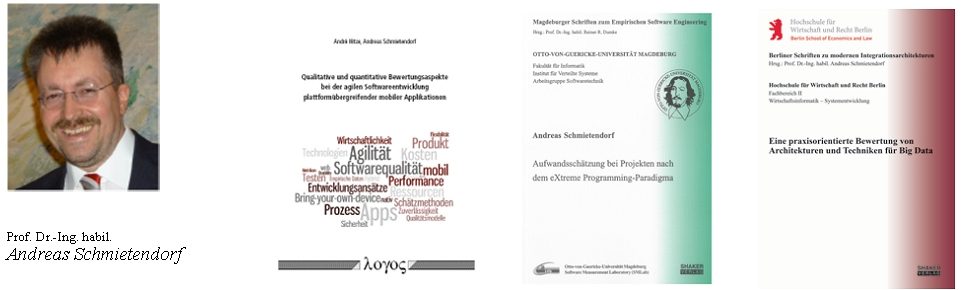
Prof. Dr. Andreas Schmietendorf is a Professor of Business Informatics – System Development at the Berlin School of Economics and Law (HWR Berlin) and holds a private lectureship in Software Engineering at the Otto von Guericke University Magdeburg. He leads the Business Informatics – System Development research group and is actively involved in the HWR doctoral college and Competence Center Digitization. His research focuses on the intersection of software engineering, business informatics, and artificial intelligence, with particular emphasis on: AI-driven changes in software engineering practices Trustworthy AI implementations in domain-specific contexts Web API security and management Digital transformation through low-code development approaches Requirements engineering for trustworthy digital services Prof. Schmietendorf's recent work has centered on the TAHAI (TrustAdHocAI) research project, which investigates trustworthy ad-hoc AI solutions across multiple domains including railway infrastructure, mediation research, and forestry. His research group regularly publishes on software engineering, AI applications, and digital transformation, with a strong focus on practical industry collaborations. The group has produced numerous workshops (ESAPI, KI4SE), conference proceedings, and practical implementations that bridge academic research and industry needs. He has successfully supervised multiple PhD students to completion and maintains an active doctoral supervision portfolio. His research group collaborates extensively with industry partners, particularly Deutsche Bahn, and regularly organizes events that foster academic-industry dialogue. Prof. Schmietendorf is also active in teaching, offering courses on Service Engineering at the University of Magdeburg and various business informatics topics at HWR Berlin. His teaching emphasizes practical applications of software engineering principles and the integration of emerging AI technologies through hands-on exercises and industry-relevant case studies.
Bartosz Zieliński is a Lecturer in the Department of Computer Science within the Faculty of Physics and Applied Computer Science at the University of Lodz. His academic work spans multiple disciplines including quantum computing, database systems, concurrency programming, and formal methods. He maintains an active research profile with numerous publications in prestigious journals and conferences. His research interests focus on the intersection of theoretical computer science and practical applications. Zieliński has made significant contributions to quantum geometry, particularly in noncommutative geometry and quantum spheres, while also exploring database theory through allegories and formal concept analysis. His work on concurrency programming, especially in Python, demonstrates practical applications of theoretical concepts in modern software development. Analysis of his publications reveals a strong pattern of interdisciplinary research connecting mathematics with computer science. His early work focused on quantum computing and noncommutative geometry, while more recent publications emphasize database systems, access control mechanisms, and programming language theory. This evolution shows a trajectory from pure mathematical research toward more applied computer science topics with practical security and database implications. Zieliński actively contributes to the academic community through publications in journals such as Journal of Noncommutative Geometry, Axioms, and various conference proceedings. His blog demonstrates engagement with practical programming topics, particularly concurrency in Python and Windows systems programming. As a faculty member, Zieliński teaches in the Department of Computer Science, with documented office hours on Tuesdays from 12:00-14:00. His technical blog showcases expertise in Python concurrency, Windows systems programming, and PowerShell scripting, indicating a strong practical component to his teaching approach alongside his theoretical research.
Benoît MACQ is a Full Professor at the Catholic University of Louvain (UCLouvain), specializing in image processing and related technologies. Born in Louvain on August 6, 1961, he was elected as a member of the Royal Academy of Belgium on May 29, 2009, recognizing his significant contributions to electrical engineering and applied sciences. Professor Macq's research interests span multiple domains within visual communications technology, with particular expertise in video compression algorithms, visual content security mechanisms, medical imaging applications, and multimodal interaction systems. His work bridges theoretical algorithmic research with practical industrial implementations, demonstrating strong translational capabilities from laboratory to marketplace. His recent presentations reveal a growing focus on the societal implications of technology, particularly in areas of artificial intelligence applications in medicine, the future of internet infrastructure for industry, telemedicine systems for equitable healthcare access, and privacy protection in an era of pervasive surveillance. This demonstrates his commitment to addressing both technical challenges and ethical considerations in modern technology development. Elected member of the Royal Academy of Belgium (2009) Professor Macq actively participates in interdisciplinary discussions about technology's role in society, frequently collaborating with experts from diverse fields including medicine, law, and social sciences to develop comprehensive approaches to complex technological challenges. His work on privacy protection demonstrates particular attention to the multidisciplinary nature of modern technological problems, recognizing that solutions require integration of technical, legal, and social perspectives.
Dr. Artur Poliński serves as an Assistant Professor within the Department of Biomedical Engineering at the Faculty of Electronics, Telecommunications and Informatics, Gdańsk University of Technology. His academic role involves research and teaching in biomedical engineering, with a strong emphasis on developing innovative healthcare technologies that enhance patient safety and monitoring. His primary research interests include: Non-invasive blood pressure monitoring using photoplethysmography (PPG) and pulse transit time (PTT) Cardiovascular signal processing and analysis of fiducial points Fall detection systems for elderly care, particularly in privacy-sensitive environments like bathrooms ECG-derived respiration (EDR) techniques based on QRS morphology Preprocessing requirements for physiological signals to ensure accuracy in clinical applications Analysis of his recent publications (2021-2024) reveals a consistent focus on improving the accuracy and practicality of continuous health monitoring systems. His work addresses critical challenges in signal preprocessing, fiducial point detection, and the development of unobtrusive devices that respect patient privacy. Notably, his research on shower fall detection systems demonstrates a commitment to real-world applications that support independent living for the elderly. No scientific awards or honors were specified in the available information. Details about student advising, research grants, laboratory facilities, or collaborative teams were not provided in the source text.
Dr. Vicente Alarcon-Aquino is a Professor in the Department of Computing, Electronics, and Mechatronics at Universidad de las Americas Puebla (UDLAP), Mexico. He received his Ph.D. and D.I.C. degrees in Electrical and Electronic Engineering from Imperial College London in 2003. He previously served as department head from October 2012 to June 2018 and spent a research stay at King's College London in 2017. Dr. Alarcon-Aquino is a Senior Member of IEEE, a Level I member of the Mexican National System of Researchers (SNI), and a Fellow of the Mexican Academy of Sciences. His educational background includes: Ph.D. and D.I.C. in Electrical and Electronic Engineering, Imperial College London, UK (2003) Dr. Alarcon-Aquino's research focuses on cybersecurity, network monitoring, anomaly detection, wavelet analysis, and machine learning. His work spans theoretical foundations to practical applications in network security, with significant contributions to intrusion detection systems, cryptographic techniques, and machine learning approaches for security applications. He has developed innovative methods combining wavelet transforms with neural networks for various security and signal processing applications. His scholarly contributions include over 180 research articles in refereed journals and conference proceedings, a book on MPLS networks, and numerous citations. As an editor, he serves as Associate Editor for IEEE Access Journal and as Academic & Section Editor for PeerJ Computer Science, focusing on Security & Privacy. Notable professional recognitions include: Senior Member of IEEE Mexican National System of Researchers (SNI Level I) Member of the Mexican Academy of Sciences Dr. Alarcon-Aquino has supervised over 70 theses, including 8 Ph.D. dissertations, 15 Master's theses, and more than 37 Bachelor's theses. His supervision spans topics including network intrusion detection, information security, encryption algorithms, wavelet-based signal processing, neural networks, EEG signal processing, and biometric cryptosystems. He has hosted international research students from institutions including the Polytechnic University of Madrid and Kiel University of Applied Sciences. His research group at UDLAP focuses on developing advanced security solutions for modern network environments, with particular emphasis on applying machine learning techniques to cybersecurity challenges. Current projects include blockchain-based security solutions, federated learning approaches for intrusion detection, and advanced anomaly detection systems for IoT environments.
Nicola Zannone serves as Associate Professor and Chair of the Data Protection research group within the Department of Mathematics and Computer Science at Eindhoven University of Technology (TU/e). He holds a PhD in Computer Science from the University of Trento (2007), where his dissertation focused on security requirements engineering during a research visit to the Center for ... Research Focus: His work centers on cybersecurity with emphasis on data protection, phishing defense mechanisms, and access control systems. Recent investigations explore emerging threats like quishing and LLM-generated phishing attacks, autonomous navigation security, and industrial control system vulnerabilities. His research uniquely bridges technical security solutions with human behavioral factors in organizational contexts. Publication Trends: Between 2024-2025, Zannone's output demonstrates growing attention to AI-powered threats and automated vulnerability mitigation. His systematic reviews and empirical studies consistently address practical security challenges in critical infrastructure and software supply chains, reflecting industry relevance through collaborations with security practitioners. Leadership Roles: As Chief Editor for Computer Security (Frontiers in Computer Science) and Associate Editor for Cybersecurity and Privacy (Frontiers in Big Data), he shapes discourse in security research. His editorial work on topics like "Generative AI for Cybersecurity" highlights forward-looking engagement with evolving threat landscapes.
Xiao Yu is a Research Fellow (Assistant Research Professor) at the State Key Laboratory of Blockchain and Data Security, Zhejiang University, Hangzhou, China. Previously, they were a Postdoctoral Researcher at Huawei under Prof. Xin Xia. They hold dual PhD degrees: from Wuhan University's School of Computer Science (December 2020) supervised by Prof. Jin Liu, and from City University of Hong Kong's Department of Computer Science (March 2021) supervised by Prof. Qing Li and Prof. Jacky Wai Keung. Research focuses on three interconnected domains: LLMs Data Governance and Evaluation addressing hallucination phenomena and task-specific LLM evaluation in software engineering; Intelligent Software Engineering leveraging deep learning for code generation, annotation, and maintenance; and Software Security and Reliability investigating vulnerability detection, log anomaly identification, and security bug classification. Their work bridges theoretical advancements with industrial applications, particularly in blockchain and data security contexts. Recent publications demonstrate strong trends in realistic LLM evaluation (RealisticCodeBench), vulnerability detection using semi-supervised learning, and industrial anomaly detection. Key thematic areas include effort-aware defect prediction, code smell detection, and the practical application of large language models in software engineering tasks, with increasing emphasis on data quality and privacy considerations. Xiao Yu actively contributes to the academic community through extensive service roles including journal reviewing for ACM Transactions on Software Engineering and Methodology, IEEE Transactions on Dependable and Secure Computing, and serving on program committees for major conferences like APSEC 2025 and ASE 2025. They have supervised numerous graduate students as evidenced by authorship patterns in publications. Based at Zhejiang University's State Key Laboratory of Blockchain and Data Security, their research operates at the intersection of academic rigor and industrial relevance, with strong collaborations spanning multiple institutions including Huawei, Wuhan University, and City University of Hong Kong.
Dr. Sallam Abualhaija serves as a Researcher at the Interdisciplinary Centre for Security, Reliability, and Trust (SnT) at the University of Luxembourg, where she applies cutting-edge AI technologies to software engineering challenges with emphasis on requirements engineering and regulatory compliance. Her work bridges academic research and industry applications through extensive collaboration with corporate partners. She earned her PhD in Computer Science from Hamburg University of Technology (Germany) in 2016, establishing her expertise in computational approaches to software requirements. Her research centers on leveraging natural language processing and large language models for regulatory compliance, particularly GDPR implementation in software systems. Key focus areas include automated compliance checking of privacy policies, data processing agreements, and financial regulations through techniques like question-answering systems and ambiguity resolution. This work directly addresses the critical need for trustworthy AI systems that adhere to legal frameworks while improving software development efficiency. Analysis of her recent publications reveals a strong trend toward practical tool development (e.g., CompAi) and multi-solution studies for GDPR compliance across mobile applications, financial services, and general software systems. Her research consistently integrates industry collaboration, with growing emphasis on LLM-driven approaches since 2023. Dr. Abualhaija actively contributes to the academic community through program committee roles at ASE, ICSE, and RE conferences, and as co-organizer of workshops including MO2RE (Multi-Disciplinary Requirements Engineering) and FinanSE. She has chaired tutorials on replication in NLP for requirements engineering and AI applications in regulatory compliance, demonstrating commitment to knowledge transfer and community building. As a core member of SnT, she contributes to Luxembourg's leading research hub for security, reliability, and trust in ICT systems. Her work aligns with SnT's mission through projects that develop verifiable, privacy-preserving technologies with real-world regulatory impact, particularly in European data protection contexts.