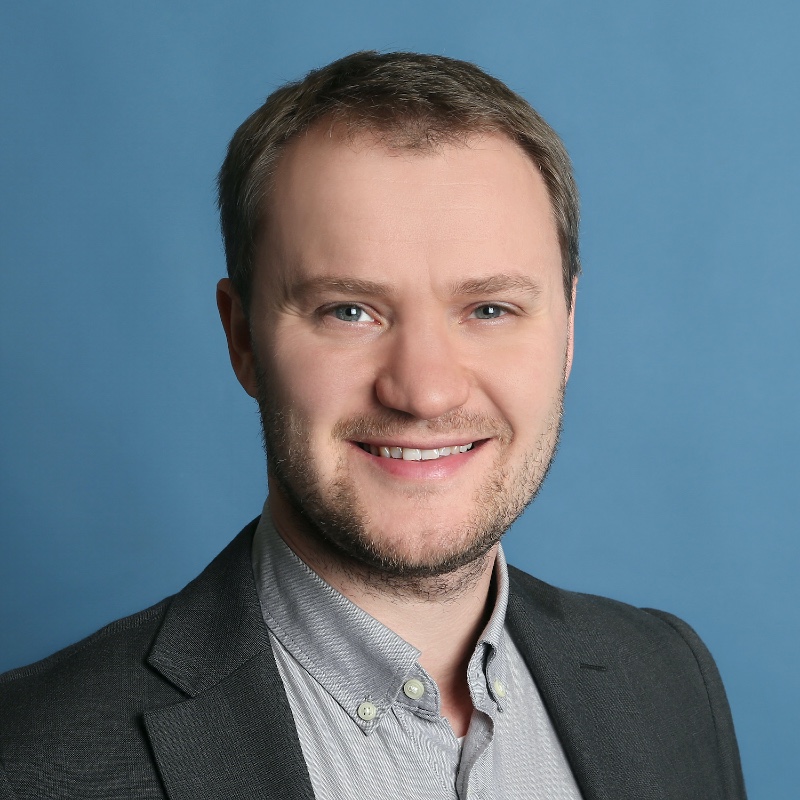
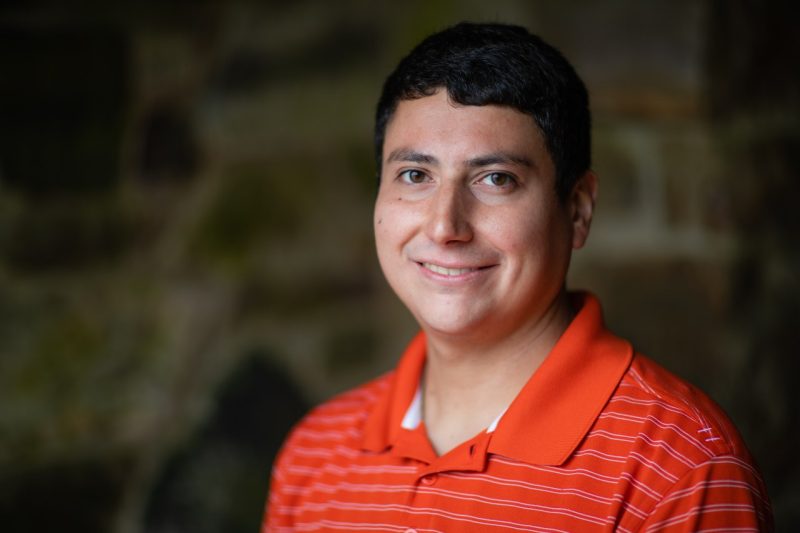
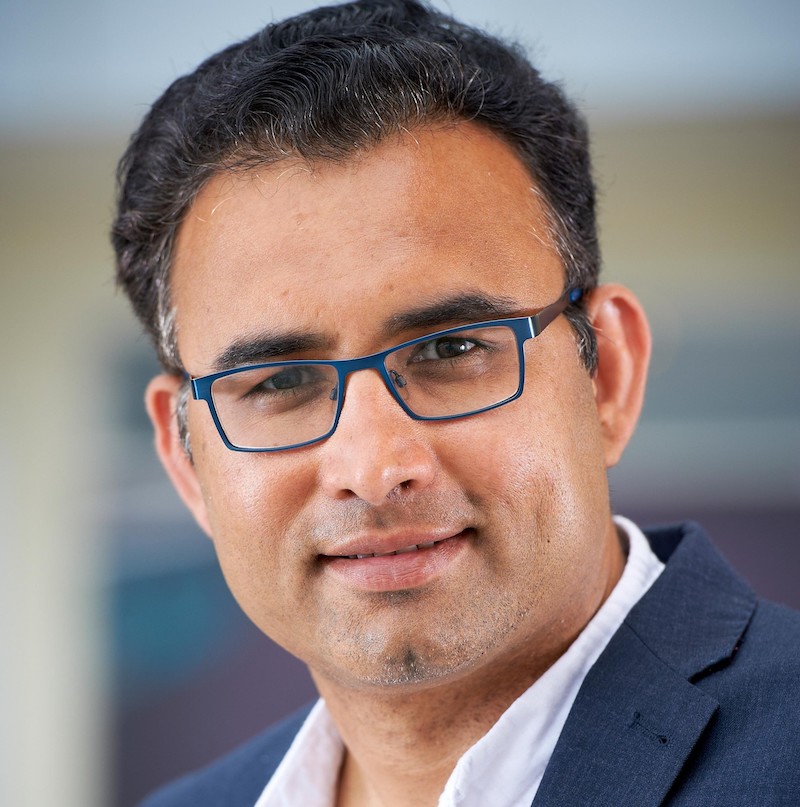
Janos Kertesz is a Visiting Professor in the Department of Computer Science and collaborates with the Kaski Kimmo group . His research spans computational social science, network theory, and interdisciplinary applications. Research Focus Explored homophily in egocentric networks and online social polarization Developed Wikipedia edit activity models and universal communication patterns Studied geometric principles in natural systems and financial network structures Key Contributions His work reveals how social networks evolve through tie strength and attribute homophily, while geometric studies connect ancient philosophy to modern material science. In finance , he analyzes decentralized derivative markets using regulatory data.
Dr. İlknur KILINÇ is a Lecturer at the Department of Journalism, Faculty of Communication, Kastamonu University, Turkey. She has served as a full-time academic since 2019 and currently holds the position of Vice Department Head (2022-present) while also serving on the Faculty Council (2021-present). Her career bridges journalism practice, visual communication, and critical media studies within the Turkish academic context. Her educational foundation includes: PhD in Public Relations and Publicity from Gazi University (2009-2017) Master's in Public Administration from Hacettepe University (2000-2004) BA in Public Relations and Publicity from Selçuk University (1993-1997) Dr. KILINÇ's research critically examines Communication Research , New Communication Technologies , and Journalism through lenses of digital transformation, pandemic communication, and visual culture. Her work interrogates power dynamics in news representation, particularly regarding migration and protests, while exploring photography's evolving role in memory construction. She connects theoretical frameworks like Panopticon theory to contemporary digital surveillance debates, emphasizing privacy concerns in Turkey's media landscape. Analysis of her 15 most recent publications (2004-2024) reveals three dominant trajectories: (1) Pandemic-era media transformations (6 publications), focusing on crisis reporting and digital platform evolution; (2) Critical visual studies (4 publications), examining photography's societal role and political imagery; (3) Social responsibility frameworks (3 publications), analyzing NGO-university partnerships and corporate ethics. Her methodology favors discourse analysis of Turkish media outputs while maintaining comparative international perspectives. Dr. KILINÇ actively mentors graduate students, currently supervising two master's theses on health journalism during COVID-19 and local media digitalization. Her teaching portfolio spans New Media Research , Photography , Introduction to Journalism , and Social Responsibility Campaigns across undergraduate and graduate levels. She integrates practical media production with critical theory in her pedagogy. Beyond academia, she maintains strong ties to media practice through photography exhibitions (9 documented events since 2007) and film festival jury duties. Her workshops on pinhole photography and documentary production demonstrate commitment to preserving analog media techniques amid digital disruption, while her volunteerism courses bridge academic theory with community engagement.
Wenbo He is a Professor in the Department of Computing and Software at McMaster University 's Faculty of Engineering. His research bridges Machine Learning , Privacy-Preserving Technologies , and Networked Systems , with a focus on secure federated learning , data anonymization , and wireless network optimization . Contact: hew11@mcmaster.ca Research Interests include: Machine Learning : Robustness under label noise, ensemble models, and 2D/3D classification. Privacy : Differentially private feature operations, encrypted classification, and location privacy. Networking : Software Defined Networking (SDN), wireless ad hoc networks, and crowdsensing. Recent Publications span IEEE Transactions on Mobile Computing , IEEE Infocom , and NeurIPS , with themes in: Security : Data poisoning, web shell obfuscation, and correlation attacks. AI/ML : Noise-robust models, face anonymization, and video action recognition. Systems : RFID optimization, cloud storage, and energy-efficient data centers. Teaching highlights include courses like Real-Time Systems , Computer Networks and Security , and Big Data Systems since 2017.
Anton Fedosov is a professor of digital experience design at the University of Applied Sciences and Arts Northwestern Switzerland , where he focuses on the intersection of ubiquitous computing , collaborative economy , and user experience design . His research spans designing for privacy, trust, and socio-technical systems in sharing contexts. Ph.D. in Informatics (Human-Computer Interaction) from USI Lugano Swiss Management Committee Member for COST Action 21118 Platform Work Inclusion Living Lab Research interests include: Design for privacy and trust in collaborative platforms Platform cooperatives and socio-technical systems Augmented reality applications in outdoor sports Community-driven sharing economies Recent publications analyze privacy-preserving technologies, culturally sensitive design, and trust mechanisms in local sharing systems. Notable awards include the Best Paper Award at DIS '18 and Best Paper Honorable Mention at MUM '16 . His work is supported by the Swiss National Science Foundation .
Simone Fischer-Hübner is a Professor of Computer Science at Karlstad University, Sweden, serving since June 2000, and holds a Guest Professorship at Chalmers University of Technology since 2022. Her work bridges technical privacy solutions with regulatory frameworks like GDPR, focusing on human-centered approaches to security and identity management. Her academic credentials include a Habilitation degree (1999) and Doctorate (1992) in Computer Science from Hamburg University, plus a Diploma in Computer Science with Law minor (1988) from the same institution. Prior appointments include Assistant Professor at Hamburg University (1992-2000) and Guest Professorships at Stockholm University/KTH and Copenhagen Business School. Her research centers on making privacy controls usable across diverse contexts. Key themes include developing transparency tools for Privacy Impact Assessments, designing intuitive interfaces for identity management, and analyzing cross-cultural privacy preferences in intelligent transportation systems. She emphasizes practical GDPR compliance through user-centered design and investigates how metaphors can explain complex concepts like differential privacy to non-experts. Recent publications reveal a strong trend toward human-AI collaboration in privacy decisions. Her work increasingly addresses VANETs, cloud security, and automated privacy tools while maintaining user agency. There's notable focus on visualizing data risks and adapting privacy frameworks to cultural differences in driver behavior studies. Her scientific recognition includes: Honorary Doctorate from Chalmers University (2020) William Winsborough Award (IFIP WG 11.11, 2016) Multiple Best Paper Awards (ACM SAC 2018, ISD 2017) Google Research Awards (2010, 2012) IFIP Silver Core Award (2001) She leads major EU and national projects including Horizon Europe's TRUMAN (trustworthy AI) and KKS's SIGS-CyberSec graduate school. As scientific coordinator of the EU Marie Skłodowska-Curie ITN Privacy & Us, she shaped pan-European PhD training. Her advisory roles span Sweden's MSB Cyber Security Board, Norway's COINS PhD school, and the PET Symposium board. Through SWITS (Swedish IT Security Network) and Cybernode.se, she drives national cybersecurity education initiatives, including MOOC certification frameworks and GDPR training platforms used across Scandinavia.
Kay Hamacher is a Professor of Computational Biology & Simulation at the Department of Biology , with co-appointments in the Department of Computer Science and Department of Physics at Technische Universität Darmstadt . His research bridges mathematical modeling , biostatistics , and privacy-enhancing technologies for biomedical data. Develops advanced algorithms for stochastic global optimization in molecular systems Co-investigator in HiGHmed , CORD , and Athene consortia for secure medical data analysis Principal investigator of the Biotite project for computational biology tools His work focuses on: Computational biophysics of ion channels (e.g., HCN4) and protein complexes Secure data science for personalized medicine and genome-wide studies Algorithm development in metaheuristics and dynamic graph analysis Publications span 2024–2022 with breakthroughs in: HCN channel structural modeling Privacy-preserving epistasis analysis Hydrogen atom placement in molecular simulations Secure multi-party computation frameworks Statistical complexity measures Scientific awards include: Best Paper Award (GECCO2021) for genetic algorithm niching DeGBS Best-Paper-of-the-Year (2021) for DNA damage response research As an advisor, he mentors Magnus Behringer and Jan Krumbach , while leading a lab that integrates privacy, algorithms, and structural biology . Collaborations include CompuGene , iNAPO , and CORD-MI initiatives.
Chad Wellmon is an Associate Professor in the Department of German Languages and Literatures at the University of Virginia. His work bridges European intellectual history , media theory , and history of knowledge , with a focus on the intersection of technology and academia. University: University of Virginia Department: German Languages and Literatures Academic Rank: Associate Professor Key research areas include digital humanities , crisis in higher education , and history of information systems . Recent publications like Permanent Crisis: The Humanities in a Disenchanted Age (2023) and Text, Data, and the Infrastructure of Knowledge (2020) analyze institutional adaptation to technological change. Earlier works such as In Defense of Specialization (2015) and Knowledge Machines (2016) explore the philosophical roots of modern data-driven scholarship. While no scientific awards are listed, Wellmon's work has been featured in dialogues with institutions like the Chronicle Review of Higher Education and platforms including The Point Magazine . His teaching includes graduate seminars on digital textual preservation and infrastructure.
Murray Patterson is an Assistant Professor in the Department of Computer Science at Georgia State University. His academic journey includes a Ph.D. from the University of British Columbia (2012), followed by postdoctoral research at Inria (France), CWI (Netherlands), Lyon's Evolutionary Biology Lab, and Milan's Experimental Algorithmics Lab. He previously held a visiting position at Fairfield University before joining Georgia State in 2020. Education: B.C.S., Acadia University, 2003 M.S., Computing Science, Simon Fraser University, 2006 Ph.D., Computer Science, University of British Columbia, 2012 Research Interests: Focuses on algorithmic approaches to bioinformatics challenges, particularly evolutionary biology and cancer genomics. Key areas include: - Evolutionary tree construction and dynamics analysis - Haplotype assembly and cancer cell progression modeling - Machine learning for molecular sequence classification - Privacy-preserving federated learning methods - Interdisciplinary applications of computational geometry and kernel methods. Research Trends: Recent work emphasizes scalable tools for analyzing long-read sequencing data, developing novel embeddings for biological sequences (e.g., Hist2Vec, Spike2Vec), and integrating geometric approaches (Bezier curves, Poincaré distances) into bioinformatics workflows. The 2025 publications highlight advancements in privacy-enhanced federated learning frameworks and kernel-based sequence analysis techniques. Awards & Grants: No explicitly listed awards. His work has been supported by grants for tumor phylogeny pipelines and pandemic response initiatives. Labs & Collaborations: Active in the Experimental Algorithmics Lab (algolab.eu) and affiliated with Georgia State's bioinformatics research community. Develops open-source tools like Plastic for tumor phylogeny benchmarking and PDB2Vec for 3D protein structure analysis.
Dr. Flora Lysen is an Assistant Professor at the Faculty of Arts & Social Sciences , Maastricht University , and a member of the Maastricht University Science, Technology and Society (MUSTS) research group. Her work bridges historical and STS methodologies to examine the impact of new media technologies on cognitive science, behavioral science, and medicine since the mid-20th century. She holds a PhD from the University of Amsterdam (2020), awarded the ASCA Best Dissertation Prize. Research Interests: Her current projects include the NWO-funded RAIDIO (2020–2024) on AI in clinical decision-making and the EU-funded STRONG-AYA (2022–2027) addressing data ethics in healthcare. She also explores art-science collaborations, notably co-initiating the Neurocultures research group and the Worlding the Brain project. Her monograph Brainmedia (2022) analyzes media representations of the brain in science and art. Publications & Awards: Recent works include studies on synthetic data ethics and interdisciplinary collaborations. She has published in Journal of Responsible Innovation , British Journal for the History of Science , and co-edited Worlding the Brain (2023). Awards include the ASCA Best Dissertation Award (2020). Professional Activities: She coordinates the MERIAN network (Experimental Research In And through the Arts) and previously led the Amsterdam Research Institute of the Arts and Sciences (ARIAS). She has collaborated with institutions like Harvard University, TU Berlin, and the Haus der Kulturen der Welt.
John Black is an Associate Professor of Computer Science at the University of Colorado, specializing in applied cryptography, network security, and system security. He holds a B.S. in computer science and mathematics from California State University (summa cum laude, 1988), and an M.S. (1997) and Ph.D. (2000) in computer science from the University of California, Davis. Previously, he served as an Assistant Professor at the University of Nevada, Reno, and worked as a Senior Developer at Ingres Corp. His research focuses on cryptographic protocols, authenticated encryption, and cybersecurity education. He co-founded SecureSet, a cybersecurity education company. Awards include the NSF CAREER Award and multiple teaching awards. His work spans theoretical cryptography (e.g., OCB mode, UMAC) and practical applications like blockchain-based certificates and secure social networks. Research Interests : Cryptographic protocols, privacy-preserving systems, authenticated encryption, blockchain applications, and cybersecurity education. Key Contributions : Developed OCB authenticated encryption mode and UMAC message authentication code. Authored the Encyclopedia of Cryptography and Security . Awards: NSF CAREER Award (2002), Teaching Awards (multiple institutions). Advising/Grants: NSF CAREER grant-funded research. Active in mentoring through SecureSet’s cybersecurity training programs.
Patrick Keilty is an Associate Professor in the Faculty of Information and Cinema Studies Institute at the University of Toronto. He holds affiliations with University College, the Women and Gender Studies Institute, and the Technoscience Research Unit. His research examines digital infrastructures in sex industries, adult film, and the materiality of sexual media, intersecting science/technology studies, information studies, and media studies. Keilty has authored works such as Queer Data Studies and contributed to journals like Feminist Media Studies and Catalyst . Education: PhD in Information Studies, University of California, Los Angeles (UCLA), with a concentration in Gender Studies MLIS from UCLA Research Focus: Explores payment processing, streaming, web design, and AI in sex industries, alongside histories of French stag films. Current projects include monographs on tech-driven sex industries and 1920s French films. He critiques 'white infrastructure' in pornography and advocates for queer data ethics. Awards: 2020 4S Infrastructure Award (co-recipient) for Catalyst editorial work 2017 J. Franklin Jameson Archival Advocacy Award (co-recipient) for 'Guerilla Archiving' Teaching & Leadership: Courses include Technology Studies, Queer GLAM, and Critical Infrastructures. Previously co-chaired SCMS Adult Film SIG and directed the Sexual Representation Collection. Current roles include GLAM Incubator directorship and SSHRC grant leadership. Labs/Initiatives: Member of the Critical Digital Humanities Initiative and Data Sciences Institute. Engages in projects like the Technoscience Research Unit's environmental data justice work.
Brendan David-John is an Assistant Professor in the Department of Computer Science at Virginia Tech's College of Engineering. He is affiliated with the Private Eye Lab, focusing on interdisciplinary research at the intersection of eye tracking, virtual/augmented reality, and privacy. His work emphasizes securing user data in immersive technologies while maintaining functional utility. Education: Ph.D., Computer Science, University of Florida (2022) B.S. and M.S., Computational Mathematics and Computer Science, Rochester Institute of Technology (2017) Research Interests: Brendan's research spans privacy challenges in XR (extended reality), eye-tracking security, and human-computer interaction. He investigates methods to safeguard sensitive gaze data and enhance user awareness of privacy risks in virtual and augmented environments. His work also explores authentication techniques and perceptual risks in immersive systems. His recent publications address topics like securing bystander privacy in AR, detecting shoulder-surfing attacks through multimodal sensing, and optimizing testing frameworks for AR applications. He actively develops datasets and benchmarks for privacy-preserving eye-tracking technologies. Awards: No specific awards mentioned in the provided texts. Advising & Grants: No explicit student advisees or grant details provided. His lab, the Private Eye Lab, likely supports experimental projects in eye tracking and XR security. Labs/Teams: Directly associated with the Private Eye Lab at Virginia Tech, dedicated to advancing privacy-conscious eye-tracking technologies in immersive computing.
Tamara Babaian is a Professor of Computer Information Systems at Bentley University. She holds a Ph.D. from Tufts University and an MS from Yerevan State University. Her teaching focuses on Computer Programming, Machine Learning, Database Design, and Algorithm Analysis. Research interests include Human-Computer Collaborative Problem Solving, AI Ethics, and Business applications of Machine Learning, particularly in healthcare and enterprise systems. She actively explores interactive visualization interfaces and usability improvements in ERP systems. Education Background: Ph.D. in Computer Science, Tufts University MS in Computer Science, Yerevan State University Research Interests: Dr. Babaian investigates how collaborative AI systems can enhance human decision-making in business contexts. Her work emphasizes ethical considerations in AI deployment and designing intuitive interfaces for complex data interactions. Recent projects include speech-based health data collection systems and enterprise visualization tools that improve user navigation in ERP systems. Publications Trends: Over 30 publications since 2000, with recent focus on: Healthcare AI applications (speech-to-data interfaces) Enterprise system usability improvements Pedagogical approaches to teaching AI in business curricula Early work concentrated on open-world planning algorithms and knowledge representation in ERP systems. Advising & Grants: While specific grants aren't detailed, her extensive publication record indicates sustained research activity. No formal advisee list provided in current data. Labs & Teams: Works within Bentley's CIS department developing innovative interfaces and collaborative tools for business systems. Maintains a research website at cis.bentley.edu/tbabaian .
Prof. Dr. Matthias Templ is a Professor at the School of Business, University of Applied Sciences and Arts Northwestern Switzerland. His research focuses on statistical methodologies including robust statistics, data anonymization, compositional data analysis, and missing data imputation. Templ develops computational tools for complex data challenges and contributes to environmental science, data privacy, and statistical education. Research interests include statistical methods for zero-inflated data, synthetic data generation, geochemical balance analysis, and educational curriculum design. His work integrates advanced machine learning techniques with statistical theory to address real-world data challenges. He has published extensively on data visualization and imputation techniques, contributing to open-source statistical software. Templ's research emphasizes practical applications in environmental monitoring, privacy preservation, and data quality assessment.
Professor Dhaval Thakker is a Professor of Artificial Intelligence (AI) and Internet of Things (IoT) at the University of Hull, within the School of Computer Science, Faculty of Science and Engineering. With over 15 years of experience in EU and industrial projects, his research focuses on applying AI and IoT to societal challenges such as Smart Cities, Digital Health, and Circular Economy. Education: MSc in Data Communication Systems (Brunel University London, 2003–2004) PhD in Computer Science (Nottingham Trent University, 2008) Research Interests: Professor Thakker’s interdisciplinary work spans AI, IoT, Smart Cities, Digital Health, and Circular Economy. He explores applications in healthcare decision support, disaster management, and ethical AI frameworks. His research emphasizes societal impact, leveraging technologies like knowledge graphs and explainable AI for responsible innovation. Awards: Best Paper Award at 10th IEEE IoT/Big Data/AI Conference (2019) Best Paper Award at European Semantic Web Conference (2015) Grants & Projects: Lead investigator in projects totaling over £4 million, funded by Innovate UK, EPSRC, and others. Notable projects include IoT-driven air quality solutions, predictive manufacturing systems, and AI frameworks for legal institutional memory. Labs & Collaborations: Previously led the IoT Innovation Lab at the University of Bradford and contributed to research strategy in the University’s Research Practice Innovation Group. Collaborates internationally, including with IIT Madras on air quality projects.