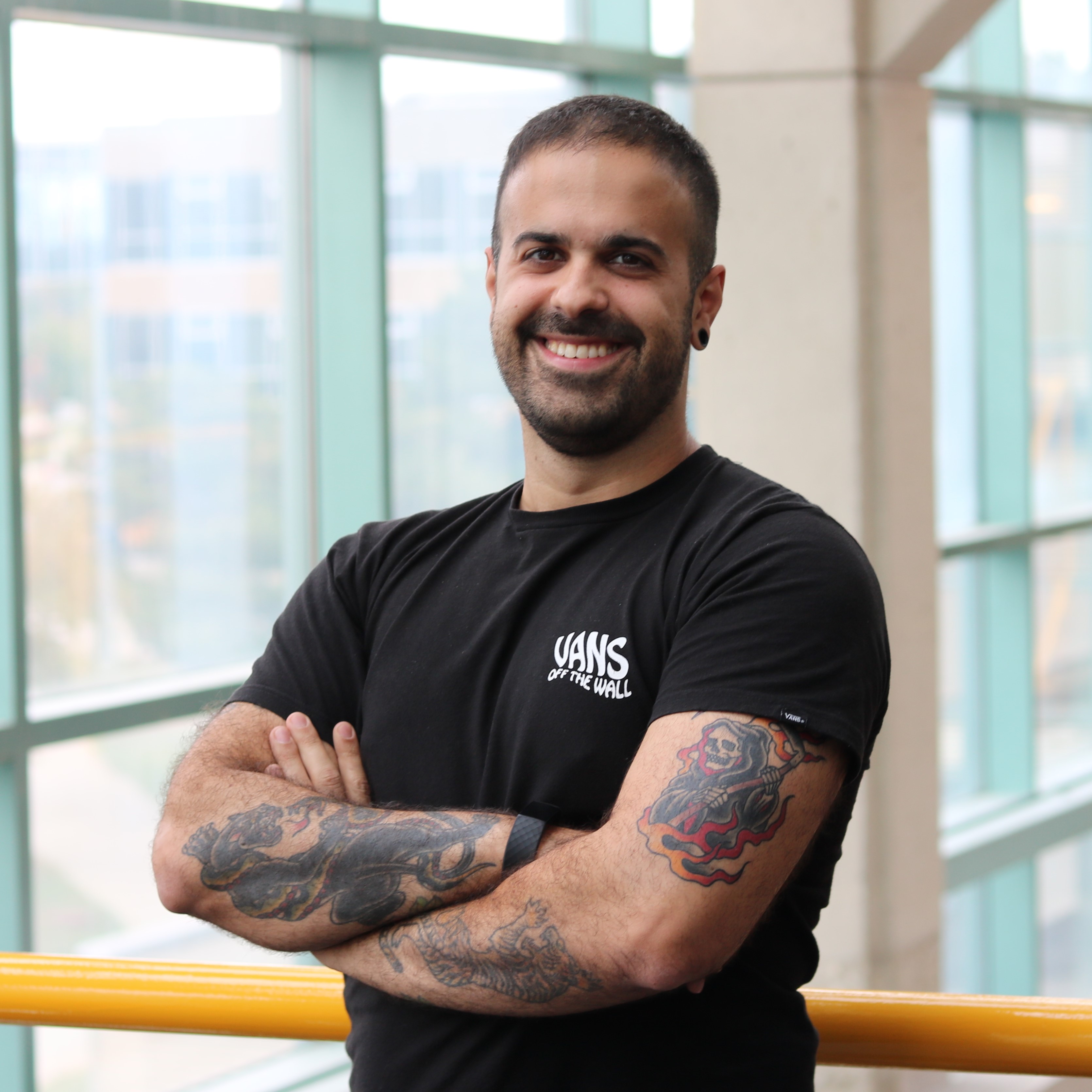
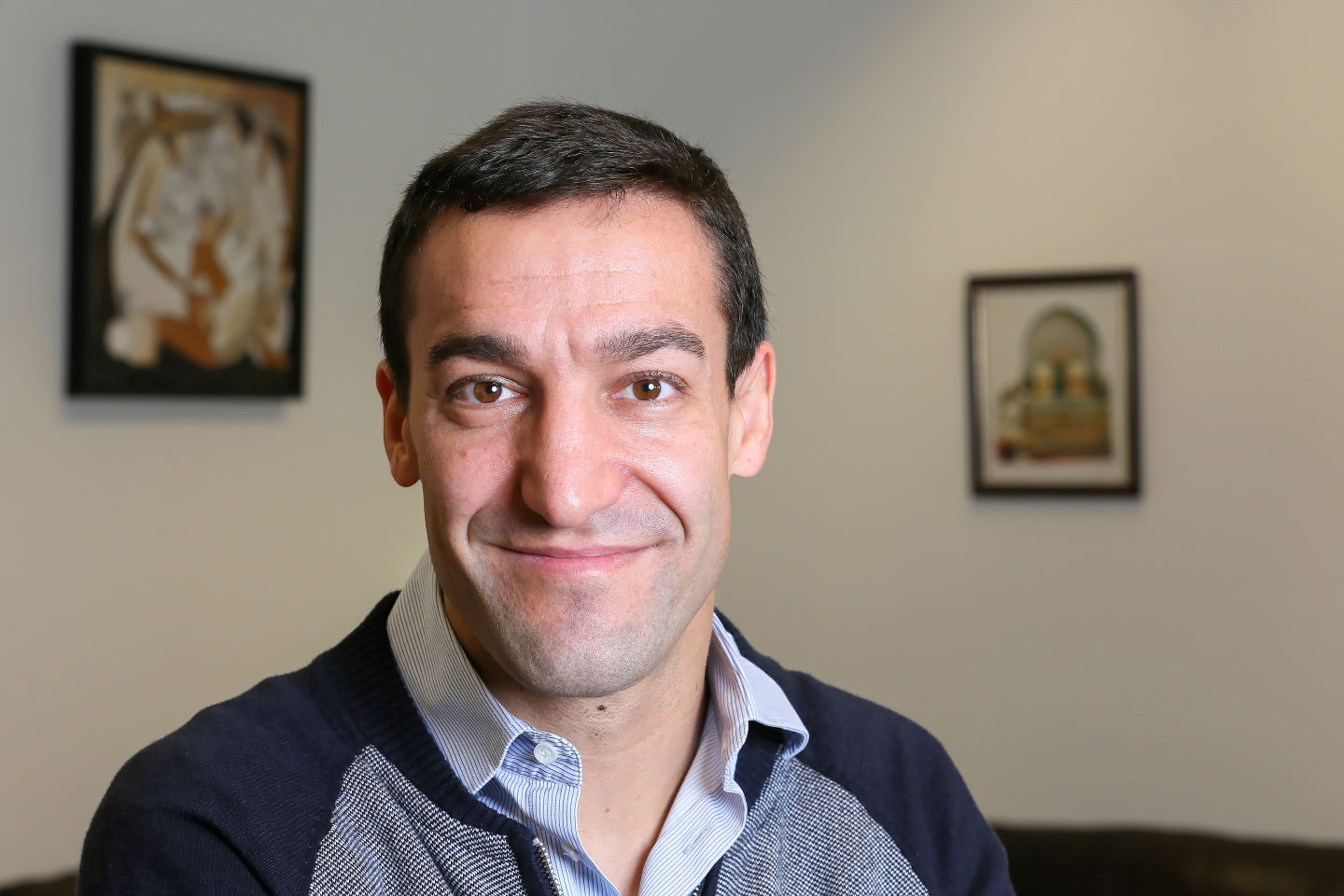
Sergiu Nisioi is an Associate Professor at the Faculty of Mathematics and Computer Science, University of Bucharest, with expertise in computational linguistics, machine translation, and text simplification. He bridges cognitive science with NLP through eye-tracking and EEG research, while also exploring sound art and digital autonomy via initiatives like HYPHA.ro. Current projects include PN-IV-P2-2.1-TE-2023-2007 (text complexity/readability), Legal Document Processing , and Europarl Dialectal Corpora Research spans computational psycholinguistics , LSTM-based translation models , and algorithmic composition for sound art His work integrates interdisciplinary methodologies, combining EEG signal processing for architecture data with the University of Architecture, and DSP for ecological projects at chlorophylla.live.
Simon Oya is an Assistant Professor in the Department of Electrical and Computer Engineering at the University of British Columbia (UBC), Faculty of Applied Science. He holds a PhD in Information Technologies and Communications from the University of Vigo (Spain) and was previously a postdoctoral fellow at the Cryptography, Security and Privacy (CrySP) group at the University of Waterloo. His educational background includes: BSc, MSc, PhD from University of Vigo (Spain) Simon Oya's research focuses on designing and evaluating privacy-enhancing technologies with strong privacy and utility guarantees. He approaches privacy problems from a statistical perspective, using theoretical tools from signal processing and information theory to quantify privacy leakage and develop effective defenses. His primary research areas include: Privacy-preserving searchable encryption Machine learning privacy (particularly membership inference attacks) Anonymous communication systems Location privacy Differential privacy His publication record demonstrates a consistent focus on analyzing and improving privacy mechanisms across various domains. His recent work has particularly emphasized the intersection of machine learning and privacy, as well as advancing techniques for searchable encryption. His research methodology typically involves developing statistical models to understand privacy leakage and designing optimization-based approaches to improve privacy-utility tradeoffs. His notable scientific contributions include developing attacks against searchable encryption schemes to better understand their privacy limitations, and designing improved privacy mechanisms for location-based services. His work on statistical disclosure attacks against anonymous communication systems has also been influential in the field. As an educator, he teaches CPEN 442: Introduction to Cybersecurity at UBC. He actively seeks motivated graduate students interested in privacy research, particularly those with strong backgrounds in statistics, machine learning, or optimization.
Daniel Livingstone is a researcher at The Glasgow School of Art (GSA) specializing in the application of games and 3D technologies to enhance learning and public engagement. His work spans medical visualization, heritage interpretation, and broader educational technology domains. Current PGR supervisee: Shaojie Ni (AR & Gamification in Museums) Email: D.Livingstone@gsa.ac.uk Research Themes : Serious games, virtual reality, 3D anatomical modeling, disease education, digital heritage preservation, and AI-driven simulations. Highlights include AR tools for rheumatology engagement, VR applications in diabetes management, and digital reconstructions of historical surgical instruments. Article Trends : Focus on merging immersive technologies with healthcare education, heritage storytelling, and interdisciplinary applications of game engines. Recurring keywords: Augmented Reality , 3D Visualization , Medical Education , Public Health , Virtual Environments .
Edith C. H. Ngai is an Associate Professor in the Department of Information Technology at Uppsala University, Sweden. She leads the Smart City Arena initiative and serves as project leader for the national GreenIoT project on energy-efficient IoT for sustainable city development funded by Vinnova. Her academic career spans multiple prestigious institutions including Chinese University of Hong Kong, Imperial College London, Simon Fraser University, UCLA, and Tsinghua University. Dr. Ngai's research focuses on Internet-of-Things, mobile crowdsensing, network security and privacy, cloud computing, and data analytics, with particular applications in smart cities and healthcare. Her work bridges theoretical foundations with practical implementations for sustainable development. She has pioneered research in energy-efficient IoT systems, data privacy in participatory sensing, and mobile health monitoring applications. Her recent publications demonstrate strong trends in IoT for smart cities, privacy-preserving techniques in social sensing, and energy-efficient data collection systems. The research spans both theoretical contributions and practical implementations, with applications ranging from urban environmental monitoring to healthcare solutions. Her work consistently addresses the tension between functionality and privacy in connected systems. Professional recognition includes: ACM Senior Member (2016) IEEE Senior Member (2015) ACM/IEEE IPSN Best Paper Runner-Up (2013) IEEE IWQoS Best Paper Runner-Up (2010) VINNMER Fellow from Swedish government agency (2009) Dr. Ngai actively mentors PhD and Master's students, with numerous graduates working at leading technology companies including Google. She serves as Associate Editor for IEEE Access, IEEE Transactions on Industrial Informatics, and IEEE Internet-of-Things Journal. Her current research projects include EU SimpliCITY, EU CRUNCH, and the GreenIoT platform for sustainable development, with funding from European Commission, Swedish Research Council, and Vinnova. She leads the Uppsala Urban Computing Lab, which focuses on IoT and mobile crowdsensing for smart cities, network security and data privacy, and smart sensing for healthcare applications. The lab develops integrated decision support tools for smart cities and citizen engagement platforms.
Timothy Menzies is a full Professor in the Department of Computer Science at North Carolina State University's College of Engineering. He serves as the director of the Irrational Research lab (mad scientists r'us) and holds editorial positions as editor-in-chief of the Automated Software Engineering journal and associate editor for IEEE Transactions on Software Engineering. With over 300 publications and more than 24,000 citations, Menzies is a globally recognized leader in software engineering research. Menzies' research focuses on developing computer systems that make optimal decisions with minimal data, specializing in artificial intelligence, intelligent agents, data sciences, analytics, and software engineering. His pioneering work in data-driven, explainable, and minimal AI for software systems has redefined defect prediction, effort estimation, and multi-objective optimization. He is particularly known for his contributions to empirical software engineering, emphasizing transparency and reproducibility. As the co-creator of the PROMISE repository, he helped establish modern empirical software engineering by demonstrating that small, interpretable AI models can outperform larger, more complex ones. Menzies' recent publications reveal several key trends in his research: a growing emphasis on ethical considerations in AI deployment, particularly in sensitive domains like legal systems; continued innovation in software analytics with a focus on hyperparameter optimization tailored specifically for software engineering tasks; exploration of causal relationships in software analytics; and development of techniques that work effectively with limited data, including landscape analysis, surrogate learning, and active learning approaches. Mining Software Repositories Foundational Contribution Award (2017) Carol Miller Graduate Lecturer Award (2016) IBM Faculty Award (2016, 2017) ACM Fellow (2025) ASE Fellow (2024) IEEE Fellow Professor Menzies has advised 24 Ph.D. students throughout his career, with recent completions including Andre Motta (April 2025) and Xueqi Yang (October 2024). His research has secured over $19 million in funding from prestigious agencies including NSF, DARPA, and NASA, as well as industry partners like Meta, Microsoft, and IBM. Current grants focus on improving machine learning model efficiency, adapting empirical software engineering methods to computational science, vulnerability detection, and software analytics at scale using transfer learning across 10,000+ GitHub projects. Menzies has developed innovative approaches to help developers navigate the challenges of AI implementation while maintaining ethical standards and practical effectiveness. As director of the Irrational Research lab, Menzies leads a team focused on creating AI tools that are not only intelligent but also fair, transparent, and trustworthy. The lab's work emphasizes practical applications of AI in software engineering while addressing the human factors involved in developer-AI collaboration. Current projects include developing methods for better fuzzing with L3harris, improving vulnerability detection through smart pruning techniques, and creating AI platforms for workforce empowerment through credential gap diagnostics.
Fengqing Maggie Zhu is an Associate Professor at the Elmore Family School of Electrical and Computer Engineering within Purdue University , West Lafayette campus. Her research spans image processing , video compression , computer vision , and smart health , with notable contributions to learned image compression , 3D reconstruction , and nutrition analysis via computer vision . Educational background: BS in Electrical Engineering, Purdue University (2004) MS in Electrical and Computer Engineering, Purdue University (2006) PhD in Electrical and Computer Engineering, Purdue University (2011) Her work focuses on developing machine learning-based compression techniques for 2D/3D images and videos, with applications in food portion estimation , wearable dietary monitoring , and virtual reality facial expression tracking . She explores structured pruning , mixed precision quantization , and continual learning to create efficient, robust systems for edge-cloud collaboration. The 2025-2024 article collection reveals concentrated efforts in learned image compression (with 8 papers on quantization, pruning, hierarchical VAEs), food-related computer vision (12+ papers on portion estimation, databases, classification), and 3D reconstruction (MetaFood3D dataset, ICP-3DGS algorithm). Emerging themes include privacy-preserving AI for wearable cameras and class-incremental learning frameworks. Contact: zhu0@purdue.edu
David Atienza is a Professor in the Department of Electrical Engineering at the School of Engineering, Swiss Federal Institute of Technology in Lausanne (EPFL), renowned for pioneering embedded systems education and research in ultra-low power computing. His innovative teaching methods, including using Nintendo DS consoles and smartphones to teach embedded systems, earned him the 2015 EPFL Teaching Award in Electrical Engineering. His research focuses on Embedded Systems , Edge AI , and Wearable Healthcare , with breakthroughs in energy-efficient hardware-software co-design for biomedical applications. Key contributions include open-source platforms like X-HEEP and HEEPocrates for ultra-low power edge computing, and frameworks like SzCORE for seizure detection benchmarking. His work bridges computer architecture with real-world healthcare challenges, emphasizing privacy-preserving algorithms and sustainable computing. Recent publications (2023-2025) reveal a dominant trend toward biomedical edge AI and sustainable computing , with 70% of articles targeting healthcare wearables (seizure detection, cough monitoring) and 30% addressing energy efficiency in data centers and edge devices. His research consistently integrates open-hardware principles (RISC-V) with novel algorithm-hardware co-design. Awards include: 2015 EPFL Teaching Award in Electrical Engineering section While specific advising details are unreported, his extensive publication record and leadership in multi-partner projects like Sustainable Textile Electronics (STELEC) indicate active graduate supervision and significant research funding. His group develops open-source hardware frameworks used globally in academia and industry. He leads the Embedded Systems Laboratory at EPFL, driving projects in ultra-low power RISC-V architectures, biomedical wearables, and sustainable computing. Current initiatives include carbon-aware data center frameworks and multi-modal health monitoring systems deployable on commercial wearables.
Sadegh Talebi is a Tenure Track Assistant Professor in the Machine Learning Section at the Department of Computer Science, University of Copenhagen . His research focuses on theoretical aspects of reinforcement learning, Markov decision processes, online learning, stochastic multi-armed bandit problems, and resource allocation in networks. Education BSc in Electrical Engineering (minor: Electronics) from Iran University of Science and Technology (IUST) (2004) MSc in Electrical Engineering (minor: Communication Systems) from Sharif University of Technology (2006) PhD in Electrical Engineering from the Department of Automatic Control at KTH Royal Institute of Technology (supervised by Alexandre Proutiere and Mikael Johansson) Research Specializes in theoretical foundations of reinforcement learning and online learning Key contributions in stochastic optimization, MDPs, and bandit algorithms Collaborates on applications in resource allocation and quantum computing Publications include high-impact work on offline RL, differentially private exploration, and scalable MDP solutions in journals like Neural Processing Letters and conferences such as NeurIPS and UAI.
Hye-Chung Kum is a Professor in the Department of Health Policy & Management at Texas A&M University, where she pioneers Population Informatics to transform digital data into evidence-based health policy solutions. Her work bridges computer science, public health, and social work to address critical data challenges in healthcare systems. Education: PhD, University of North Carolina at Chapel Hill (UNC-CH), 2004 MSW (Master of Social Work), UNC-CH, School of Social Work, 1998 MS, UNC-CH, Department of Computer Science, 1997 BS, Yonsei University, Seoul, Korea, Department of Computer Science, 1995 Research Vision: Dr. Kum develops privacy-preserving human-computer hybrid systems for cleaning and integrating chaotic real-world data (e.g., EHRs, administrative records). Her Population Informatics framework enables ethical large-scale analysis while addressing data genocide in marginalized communities through innovations like the Secure Decoupled Linkage (SDLink) system. Publication Trends: Recent work (2024-2025) reveals three dominant threads: (1) Mental health service utilization dynamics during/post-pandemic, (2) Racial/ethnic disparities in emergency department use and cancer outcomes, and (3) Ethical data sharing frameworks for vulnerable populations. Her Texas-focused studies on Medicaid payment models and AI-driven record linkage demonstrate practical policy applications. Research Infrastructure: As director of the Population Informatics Lab, she leads cross-disciplinary teams developing Privacy-by-Design tools that balance public health needs with data sovereignty—particularly for American Indian and Alaska Native communities. Her grant-funded work consistently addresses Medicaid transformation and healthcare cost drivers through secondary data analytics.
A. Lynn Abbott is a Professor in the Bradley Department of Electrical and Computer Engineering at Virginia Tech , specializing in computer vision, biometrics, and AI-driven sensing systems. His work bridges theoretical and applied domains, including autonomous vehicle perception, physiological signal analysis, and secure healthcare monitoring. Education: Ph.D., University of Illinois, 1990 M.S., Stanford University, 1981 B.S., Rutgers University, 1980 Research Interests focus on computer vision for autonomous systems, biometrics using physiological signals, and deep learning applications in transportation safety and healthcare. Recent projects include neural networks for intersection safety modeling and vision-based cardiovascular signal recovery. Publications highlight advancements in graph neural networks for traffic analysis, spatiotemporal filtering for 3D object detection, and privacy-preserving biometric authentication. His work spans disciplines like transportation safety, biomedical signal processing, and computer architecture. Labs & Teams: Affiliated with the Center for Embedded Systems for Critical Applications , contributing to real-time vision systems and hardware-software co-design for safety-critical domains.
Ming Jin is an Assistant Professor in the Bradley Department of Electrical and Computer Engineering at Virginia Tech. He holds a PhD from UC Berkeley and a B.Eng. from Hong Kong University of Science and Technology. His research focuses on trustworthy AI, CPS security, and energy systems, with affiliations to the Power and Energy Center and Autonomy and Robotics @ VT. Education: PhD in Electrical Engineering and Computer Science (UC Berkeley, 2017), B.Eng. (Honors) in Electronic and Computer Engineering (HKUST, 2012). Postdoc in Industrial Engineering and Operations Research at UC Berkeley. Research interests include safe reinforcement learning, foundation models, cybersecurity, and power systems. Awards include the Siebel Scholarship (2018) and first place in the 2021 CityLearn Challenge. Active in conference organization (e.g., ICML, AAAI) and tutorial development on topics like Safe RL and CPS security. Grants include NSF support for embodied optimization (2025), Amazon-VT Initiative (2023), and Commonwealth Cyber Initiative projects. Involved in labs focused on AI, robotics, and energy systems. Publications span AI safety, RL frameworks, and CPS resilience, with over 50 peer-reviewed articles since 2015.
Hao Zhang is an Associate Professor in the Department of Computer Science at the Manning College of Information and Computer Sciences (CICS), University of Massachusetts Amherst. He directs the Human-Centered Robotics Laboratory (HCRLab), focusing on lifelong collaborative autonomy, robot adaptation, and human-robot teaming. His research integrates robotics, AI, and machine learning to develop algorithms for real-world applications like manufacturing, autonomous driving, and environmental monitoring. He holds an NSF CAREER Award and DARPA Young Faculty Award, among other recognitions. Dr. Zhang earned a PhD from the University of Tennessee, Knoxville (2014) and an MS from the Chinese Academy of Sciences (2009). His work addresses challenges in unstructured environments through innovations like self-reflective terrain adaptation and graph-based perception systems. He actively promotes equity in robotics through his PROGRESS outreach program. His research sponsors include NSF, DARPA, and industry partners such as Toyota. Publications span conferences like RSS, ICRA, and IROS, with best paper awards. He serves on editorial and program committees for top-tier journals/conferences including RA-L, NeurIPS, and AAAI.
Dr. Ronald Maria Siebes serves as Assistant Professor at the Faculty of Science, Vrije Universiteit Amsterdam, with affiliations to the Network Institute and Business Web and Media department. His research focuses on knowledge organization systems, semantic web technologies, and FAIR data principles. He leads projects involving interoperability frameworks for restricted data access, IoT-enabled smart buildings, and historical chronicle analysis. Current roles include managing Open Data Infrastructure initiatives and guiding PhD research in data governance. Education details are not explicitly provided in the text. Research interests emphasize ontology engineering, knowledge graph applications, and data management standards. Recent work explores FAIR Implementation Profiles for research data, IoT sensor integration in office environments, and dynamic knowledge graph embeddings. Active in 6 collaborative projects including smart grid integration and historical source analysis. Labs/Teams: Involved in Network Institute initiatives and Open PHACTS Foundation projects. Supervised 2 PhD theses (names not specified in text). Grant activities span €2.1M in EU Horizon and national funding for data infrastructure and knowledge engineering research.
Carmela Troncoso is an Associate Professor at EPFL heading the SPRING Lab focused on Security and Privacy Engineering. Her work addresses technology's societal impact through machine learning security, privacy-enhancing technologies, and privacy engineering frameworks. She leads significant research in decentralized privacy systems, including contributions to the DP-3T contact tracing protocol adopted by Google/Apple during COVID-19. Her lab develops tools for privacy evaluation including Synthetic Data Evaluation frameworks and anonymous authentication libraries. Awards include the ERCIM Best Ph.D. Thesis Award, CNIL Privacy Protection Award, and IEEE Distinguished Paper Award. She was recognized as a Fortune 40 Under 40 Technology Leader in 2020.
Dr. Wei Bao is an Associate Professor in the School of Computer Science at the University of Sydney, part of the Faculty of Engineering. He leads the I-Net (Intelligent Networking) Group and holds a B.Eng. from Beijing University of Posts and Telecommunications (2009), M.A.Sc. from the University of British Columbia (2011), and Ph.D. from the University of Toronto (2015). His research focuses on distributed machine learning, AI-driven network systems, and intelligent network optimization, with industrial collaborations at companies like Link Group. Education: Bachelor of Engineering, Beijing University of Posts and Telecommunications (2009) Master of Applied Science, University of British Columbia (2011) Ph.D., University of Toronto (2015) Research Interests: Dr. Bao's work addresses challenges in distributed machine learning, AI integration into network systems, and optimizing network performance. He emphasizes practical applications through industry partnerships, aiming to bridge academic research with real-world impact. His current projects include federated learning frameworks, IoT communication sharing architectures (e.g., sTube+), and edge computing optimizations. Publications Trends: His recent work focuses on federated learning algorithms (e.g., Federated Learning with Nesterov Accelerated Gradient ), edge computing optimizations ( SOAR: Smart Online Aggregated Reservation ), and partial label learning techniques. These reflect a blend of theoretical advancements and applied systems research. Awards: Multiple Distinguished TPC Member awards (INFOCOM 2020-2024) Best Paper Awards at ACM MSWiM (2019), IEEE NCA (2016), and others Advising & Grants: Dr. Bao supervises PhD candidates in distributed systems and machine learning. His grants include projects like Pioneering Federated Real-Time Video Analytics (ARC DP 2025) and industry collaborations via the University of Sydney's Industry Program. He also leads the Master of Computer Science program at the University of Sydney. Labs & Teams: He directs the I-Net Group, focusing on intelligent networking and distributed systems. Collaborations span institutions like The Hong Kong Polytechnic University (Dr. Dan Wang) and York University (Dr. Uyen Trang Nguyen).