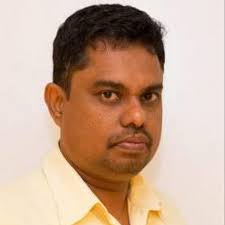
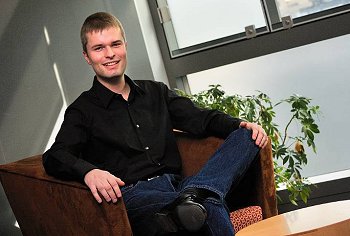
John Collomosse is a Professor of Computer Vision and AI at the University of Surrey, leading DECaDE (UKRI/EPSRC Centre for the Decentralised Digital Economy) and the Centre for Vision, Speech and Signal Processing (CVSSP). He also serves as a Principal Scientist at Adobe Research, managing the Cross-Modal Representation Learning (XRL) group. His research focuses on AI, Distributed Ledger Technology (DLT), media provenance, and blockchain applications to combat misinformation and enhance data integrity. Collaborations include the Content Authenticity Initiative (CAI) and the ARCHANGEL project, which pioneered AI and blockchain for tamper-proof archives. He holds a PhD, is a Fellow of the IET, and has advised UK/EU bodies on digital economy policies. His work bridges academia and industry, with contributions to generative AI, watermarking, and decentralized systems. Publications span content authenticity, style transfer, and generative models. Awards include a 2024 prestigious fellowship. His labs include Surrey Institute for People-Centred AI (PAI) and DECaDE, fostering interdisciplinary research in AI ethics, provenance, and digital economy frameworks.
Azer Bestavros is a Professor and Associate Provost for Computing & Data Sciences at Boston University, affiliated with the Department of Computer Science within the Arts & Sciences School. He joined BU in 1991 after earning his PhD from Harvard. His research focuses on networking, distributed systems, cloud computing, and cybersecurity, with notable contributions to web content distribution models, cloud resource management, and privacy-preserving analytics. He led the establishment of the BU Hariri Institute for Computing and the Open Cloud Exchange initiative to advance cloud marketplaces. Education: PhD in Computer Science from Harvard University. Research Interests: His work integrates technical and policy dimensions, addressing challenges in secure multiparty computation, formal methods for network verification, and interdisciplinary applications of computing. Recent projects include frameworks for privacy-preserving analytics and mechanisms for efficient cloud resource allocation. Grants & Advising: Advised 16 PhD students, contributed to 6 patents, and spun off 3 startups. His research has yielded over 13,000 citations and informs policy through initiatives like the Cloud Computing Caucus. Labs & Teams: Spearheaded the Hariri Institute’s cloud computing, big data, and cybersecurity programs. Currently oversees the Faculty of Computing & Data Sciences, fostering interdisciplinary collaboration across BU.
Da Chen is a Lecturer in the Department of Computer Science at the University of Bath, affiliated with the Bath Institute for the Augmented Human and the Centre for Sustainable Energy Systems. He focuses on advanced computer vision and machine learning techniques, particularly in few-shot learning, incremental learning, video understanding, and their applications to urban planning and sustainability. His work bridges AI with real-world challenges like solar energy prediction, urban mobility optimization, and environmental monitoring. Education: He holds a PhD titled 'The Visual Analysis of Complex Natural Phenomena' (2017), supervised by Prof. P. Hall and Prof. M. Brown. Research Interests: Chen’s research spans generative AI, video object detection, solar radiation modeling, and urban scene analysis. He explores how machine learning can address sustainability goals, such as optimizing bike-sharing systems and predicting energy demands through satellite imagery. His methods often involve GANs, convolutional neural networks, and hybrid sequence encoders. Grants & Collaborations: He co-leads a Royal Society-funded project (2024–2026) on improving transient heat transfer experiments using Bayesian statistics and neural networks. His collaborations span institutions globally, focusing on urban-scale AI applications and environmental science. Labs/Teams: Active in the Bath Institute for the Augmented Human, advancing human-centric AI, and the Centre for Sustainable Energy Systems, integrating computational methods for energy efficiency.
Rajan Shankaran is a Senior Lecturer at Macquarie University's School of Computing, part of the Faculty of Science and Engineering. He serves as Course Director for postgraduate programs in Networking and IoT, and chairs the IEEE VTS NSW Chapter. His roles include membership in the University Academic Senate Curriculum Subcommittee and representation on the FSE Faculty Board. Education: MBA (MIS) from Maastricht School of Management; M.Sc. (Hons.) and Ph.D. in Network Communications and Security from University of Western Sydney. Research focuses on Network Security, Mobile Communication Protocols, IoT, Network-on-Chip, and Medical Implant Security. He has led projects like 'Digital Health Records Storage and Analysis for Global Patients' and organized IEEE events such as NOMS 2017. Notable awards include IEEE Senior Member status. Recent work includes publications on wireless network security, optimization algorithms, and IoT-enabled healthcare systems. He advises on over 70 research outputs and has contributed to 4 major projects addressing cybersecurity and network efficiency. Labs/Teams: Active in the Future Communications Research Centre, collaborating on 5G/IoT security and edge computing applications.
Dr. Zhang Wei is a Grant-Funded Researcher (C) at the University of Adelaide's School of Economics and Public Policy, affiliated with the Future of Employment and Skills Research Centre. He holds a PhD in economics and has held roles including Associate Lecturer at the University of Adelaide and Senior Research Fellow at Flinders University's National Institute of Labour Studies. His research focuses on labour economics, health economics, education economics, international trade, and applied game theory. Current projects include evaluations of the National Disability Insurance Scheme, impacts of ageing populations on productivity, job mismatches, and education's role in labour markets. Education: PhD in economics (thesis on multilateral vs. bilateral trade liberalisation) Research interests span policy-relevant areas such as workforce dynamics, healthcare economics, and trade agreements. He has contributed to projects funded by ARC/NHMRC, NCVER, and government departments, addressing topics like retirement policy, VET completers' job mobility, and economic security. Supervision eligibility includes co-supervision for Masters/PhD candidates.
Dr. Kasun De Zoysa is a Senior Lecturer at the University of Colombo School of Computing (UCSC), specializing in Computer Security and Cryptography. He holds a B.Sc. (First Class Honours) in Computer Science from the University of Colombo (1993–1997) and a Ph.D. in Computer Security from Stockholm University (1999–2004). His academic roles include coordinating the M.Sc. in Information Security program and advising the Center for Digital Forensic. Research Focus: Secure multi-party transactions, public key cryptography, web security, sensor networks, digital forensics, and ICT4D. Teaching: Undergraduate courses like Programming, Information System Security; postgraduate courses including Network Security, Digital Forensics, and Mobile Application Security. Notable projects include the TikiriDB sensor network framework, mobile ATM systems for developing countries, and wildlife monitoring via infrasound. He has published extensively on sensor networks, cybersecurity, and digital forensics in venues like IEEE MASS, REALWSN, and ICTer.
Marina Gavrilova is a Professor and Associate Head (Research and Strategic Planning) in the Department of Computer Science at the University of Calgary. Her research focuses on biometric security, machine learning, pattern recognition, and interdisciplinary computational sciences. She is a co-founder of the Biometric Technologies Laboratory and the SPARCS laboratory, and serves as Founding Editor-in-Chief of Springer's Transactions on Computational Sciences. Her work spans ethical AI frameworks, multimodal biometric systems, and healthcare applications. Dr. Gavrilova holds Senior ACM and IEEE membership statuses and has received prestigious awards including the Canada Foundation for Innovation Grant and the University of Calgary’s U Make a Difference Award. Her editorial roles include positions with IEEE Transactions on Computational Social Sciences, IEEE Access, and multiple biometrics journals. Her research explores emotion-aware de-identification systems, trustworthy AI, and bias mitigation in healthcare machine learning. Key contributions include advancements in generative adversarial networks, fusion strategies for multimodal data, and computational methods for medical imaging. She advocates for ethical AI practices and interdisciplinary collaboration to address societal challenges in security and privacy. Lab affiliations include the Biometric Technologies Lab and SPARCS Lab, which focus on computational security and interdisciplinary research. Ongoing work emphasizes social behavioral biometrics, autonomous systems, and AI-driven healthcare solutions.
Benjamin Uwe Kille is an Associate Professor in the Department of Computer Science at NTNU, affiliated with the Faculty of Information Technology and Electrical Engineering. His research focuses on artificial intelligence, particularly in recommender systems, natural language processing, fairness in AI, and political text analysis. He leads initiatives involving large language models (e.g., SP-BERT for Scandinavian languages) and explores ethical challenges in AI applications like healthcare and education. Kille is actively involved in organizing workshops (e.g., INRA) and contributes to public outreach through lectures and media engagements. Research Interests: His work spans algorithmic fairness, news personalization, political discourse analysis, and generative AI applications in healthcare and public services. Recent studies include detecting political viewpoints in Norwegian texts and ensuring fairness in recommendation systems for previously unseen users. Publications: His recent work addresses topics like transparent fairness mechanisms, news image-text alignment, and Scandinavian language models. He co-authored reports on AI in healthcare (AIFAL project) and presented at venues like ACM RecSys and NorwAI events. Outreach & Teaching: Teaches TDT4215 - Recommender Systems at NTNU. Engages in public discourse via talks at companies (e.g., Nordea, Statsbygg) and media interviews (e.g., Gemini.no, Digi.no). Collaborates with institutions like SINTEF and the Norwegian Directorate of Health on AI applications. Labs & Teams: Active in the NAIL (Norwegian Artificial Intelligence Lab) and NorwAI initiatives, driving advanced AI research and development in Norway.
Gabriel E. Hine is a Postdoc researcher at the Biometric Systems and Multimedia Forensics Lab within the Department of Engineering at Roma Tre University, Italy. He is actively engaged in research at the intersection of signal processing, biometrics, and information security, and contributes to teaching in advanced signal processing and biometric systems. Bachelor’s Degree in Electronic Engineering, Roma Tre University (2013, cum laude) Master’s Degree in Information and Communication Technology Engineering, Roma Tre University (2015, cum laude) PhD in Applied Electronics, Roma Tre University (2018) Research collaboration at Telefonica I+D, Barcelona (2016) Research involvement in EU H2020 ENCASE and PRIN 2011/2012 projects His research focuses on biometric cryptosystems, template protection, and privacy-preserving biometric recognition, with significant contributions to fingerprint, palmprint, EEG, and signature-based systems. He has also conducted influential work on online social media dynamics, particularly analyzing 4chan’s /pol/ forum. The analysis of his recent publications reveals a strong trend in developing secure and unlinkable biometric templates using deep learning, sparse signal representations, and zero-leakage frameworks. His work spans both theoretical formulation and experimental validation on real-world data, particularly in finger-vein and palm-vein recognition. He also explores novel biometric modalities such as in-air 3D signatures and resting-state EEG. Best Paper Runner-Up, ICWSM-17 (2017) Selected as 'Best of Arxiv' paper Widely covered in Nature , MIT Technology Review , The Independent , Vice , and Italian media Hine has served as a lecturer and teaching assistant for courses including 'Biometric Systems' and 'Signal Theory' at Roma Tre University. He has led a didactic laboratory on biometric systems, guiding students in implementing and analyzing biometric recognition solutions. His research is supported by major grants such as EU H2020 ENCASE and PRIN 2011/2012. He collaborates extensively with Prof. Patrizio Campisi and other researchers in the BioMedia4n6 lab. He is a core member of the BioMedia4n6 research group, which specializes in biometrics, data hiding, and blind deconvolution, applying advanced signal processing techniques to multimedia forensics and security challenges.
Niki Trigoni is a Professor of Computing Science at the University of Oxford, Department of Computer Science, and a Governing Body Fellow at Kellogg College. She leads the Cyber Physical Systems Group and is Director of the EPSRC Centre for Doctoral Training in Autonomous Intelligent Machines and Systems (AIMS), a major interdisciplinary program combining robotics, machine learning, sensor systems, and verification/control. Her research focuses on intelligent and autonomous sensor systems, with applications in indoor positioning, healthcare monitoring, environmental sensing, and smart cities. Key interests include data fusion, inference and learning from sensor data, human-robot interaction, communication protocols for sensor networks, and innovative mobile sensing architectures such as participatory and social sensing. Her recent publications (2020–2023) highlight a strong trend in deep learning-based sensor fusion, particularly using mmWave radar, LiDAR, inertial, and visual data. Work spans human sensing (e.g., mmPoint), localization (e.g., PointLoc, RadarLoc), SLAM (e.g., iMag+), and domain adaptation (e.g., illumination-aware thermal detection). The research demonstrates a consistent focus on robustness in GPS-denied environments and real-world deployment. She has secured external funding, including a 3-year NIST grant for indoor positioning systems for emergency responders. She actively supervises a large cohort of PhD students and research associates, many of whom have gone on to notable careers. Her leadership roles in major conferences such as IPSN and Sensys further underscore her impact in the field. Labs and Teams: Cyber Physical Systems Group EPSRC Centre for Doctoral Training in Autonomous Intelligent Machines and Systems (AIMS)
Andreas Haeberlen is a Professor in the Department of Computer and Information Science at the University of Pennsylvania, where he is a member of the Distributed Systems Lab (DSL) and co-director of the NETS program. He is currently on a leave of absence from Penn to lead the new systems group at Roblox Research, focusing on large-scale distributed systems in cloud and metaverse environments. University: University of Pennsylvania School: School of Engineering and Applied Science Department: Department of Computer and Information Science Academic Rank: Professor Email: ahae@cis.upenn.edu His research centers on distributed systems, networking, security, and privacy, with key interests in differential privacy, fault tolerance, secure network provenance, accountability in federated systems, and synchronous data center architectures. He aims to build practical systems that provide strong, provable privacy and security guarantees for real-world applications. The recent publications reflect a strong trend toward privacy-preserving distributed analytics, resilient cyber-physical systems, and secure, accountable federated infrastructures. His work combines techniques from programming languages, operating systems, and distributed computing to address fundamental challenges in scalability, security, and timing predictability. Key themes include bounded-time recovery, differential privacy in federated settings, and secure provenance for network diagnostics. Scientific Awards: Recipient of the Otto Hahn Medal from the Max Planck Society Recipient of the Ford Motor Company Award for Faculty Advising Recipient of the Lindback Award for Distinguished Teaching He has advised graduate students such as Karan Newatia and Robert Gifford, often in collaboration with Linh Thi Xuan Phan. His research is supported by active projects in differential privacy, synchronous data centers, resilient cyber-physical systems, secure network provenance, and accountability. He leads or co-leads major research initiatives that bridge academic innovation with industrial-scale deployment, particularly in cloud and metaverse platforms.
Bart Hengeveld is an Assistant Professor at Eindhoven University of Technology's Department of Industrial Design, specializing in the 'body language' of the Internet of Things and the role of sound in computational technologies. His research focuses on how embedded systems present themselves appropriately in human environments, with particular attention to tangible user interfaces (TUIs), social interaction design, and data embodiment. Academic Background: BSc/MSc in Industrial Design Engineering from Delft University of Technology (2003), PhD at TU/e (2011) Key Roles: Member of the ACM TEI Steering Committee, Program Chair of TEI’16 in Eindhoven Teaching: Awarded two Teacher of the Year titles, oversees courses like 'The Sound of Smart Things' and 'From Idea to Design' Research Interests emphasize sound as a communication medium for ubiquitous technologies, including projects on public displays for nursing homes (R2S system), pedestrian trajectory sonification, and embodied passwords. His work bridges design, computer science, and social sciences, with over 50 publications in venues like TEI, CHI, and Creativity & Cognition. Notable Projects: LOOP (physical data artifact), Slots-Memento (intergenerational storytelling), and LinguaBytes (language learning for toddlers) Awards: Multiple teaching accolades for innovative pedagogy Current affiliations include the Future Everyday research cluster and the Making With… group, exploring speculative design and embodied interaction paradigms.
Boris Škorić is an Associate Professor in the Security of Embedded Systems (SEC) group at the Department of Mathematics and Computer Science, Technische Universiteit Eindhoven. His research focuses on quantum cryptography, security with noisy data, and collusion-resistant watermarking. He is affiliated with the CREST project and has contributed to advancements in quantum-secure authentication and quantum key distribution protocols. Education : Ph.D. in Physics (Quantum Hall Effect), M.Sc. in Physics His research interests span three core areas: (1) Security with noisy data, addressing challenges in cryptographic primitives using physical measurements; (2) Quantum physics for security, including quantum readout of Physical Unclonable Functions (PUFs) and quantum key recycling; and (3) Collusion-resistant watermarking codes for digital content protection. He has pioneered techniques such as quantum-secure authentication via laser speckle and error correction methods for secure key storage. His publications reflect a strong emphasis on quantum security, including developments in continuous-variable quantum key distribution, entropically secure encryption, and quantum position verification. Recent work explores applications in healthcare data protection and secure communication over turbulent optical channels. Grants & Labs : Active in the CREST project (Collusion-Resistant Embedding and Secure Tracing) and collaborates with industry on quantum-secure technologies. Leads research in the SEC group, mentoring projects on cryptographic protocols and embedded system security.
Xiaoning (Maggie) Liu is a Lecturer (equivalent to US Assistant Professor) at the School of Computing Technologies, RMIT University, where she earned her Ph.D. in Computer Science. Her research focuses on secure systems to address data privacy and security challenges in machine learning, particularly through secure multi-party computation (MPC) and privacy-preserving machine learning (PPML). She applies these techniques to practical domains like medical diagnostics and mobile image classification. Her design philosophy emphasizes lightweight, fundamental protocols leveraging advanced cryptographic methods, such as function secret sharing and zero-knowledge proofs. Research Interests: Secure multi-party computation and its applications in PPML Privacy-preserving medical diagnostics (e.g., MediSC , CryptMed , OblivGNN ) Secure cloud and edge computing systems ( Sonic , EncSIM , Leia ) Cross-domain encryption and collaborative computation Advising & Supervision: Xiaoning supervises Masters and PhD students in research projects such as intrusion detection systems for healthcare IoT devices, defenses against backdoor attacks in neural networks, and privacy-preserving fairness verification. She emphasizes recruiting self-motivated researchers passionate about impactful security work. Interdisciplinary Contributions: Her work bridges computer systems, cryptography, and machine learning to address real-world challenges in areas like MLaaS, medical data collaboration, and mobile-edge inference. Collaborative frameworks like MediSC and Leia
Rocío Sánchez Montero is an Associate Professor in the Department of Signal Theory and Communications at the University of Alcalá. She holds a PhD from the same institution (2011), focusing on computational intelligence techniques for robust design of radiant devices. Her work is centered in the Radiation and Sensing Group (RSG), addressing challenges in antenna engineering, electromagnetic field optimization, and biomedical applications. Her research interests include antenna design, wireless systems, and bioengineering applications of electromagnetic fields. Notably, she has pioneered methods for exposure mapping using evolutionary algorithms and developed miniaturized antennas for medical and industrial use. Her work integrates computational intelligence with hardware design, emphasizing practical applications in telecommunications and healthcare. Recent publications highlight advancements in wearable antennas, cryogenic radio telescope front-ends, and wireless power transfer for implantable devices. She also contributes to data protection policies, particularly pseudonymization techniques for public administration. Though no formal awards are listed, her prolific output (over 50 publications since 2003) reflects sustained contributions to electromagnetic engineering and interdisciplinary research. She advises through her teaching roles and collaborates on innovative projects at the Yebes Observatory and biomedical engineering interfaces.