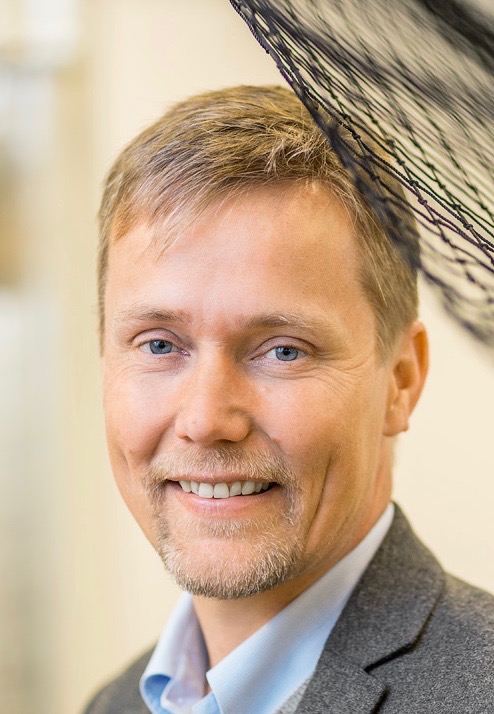
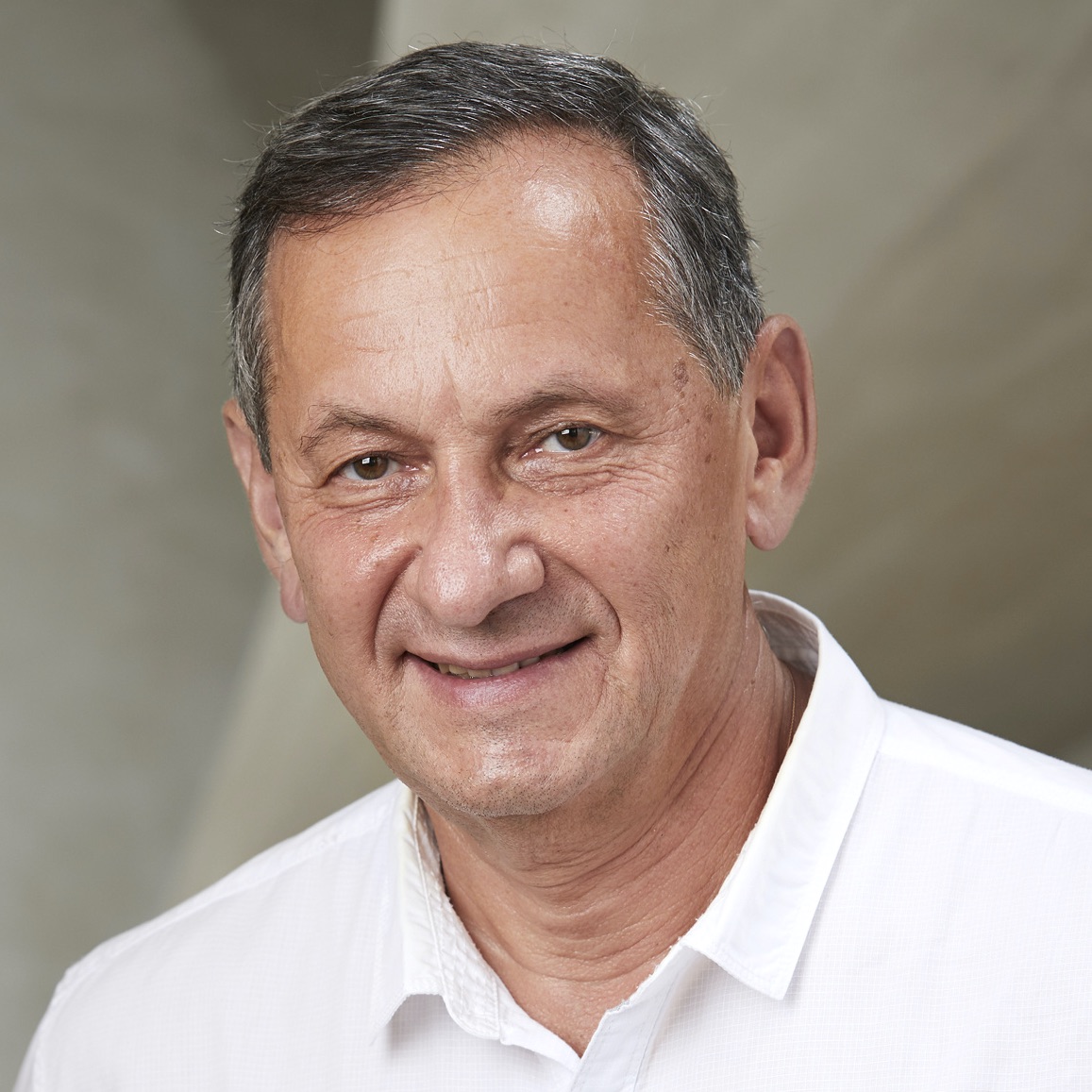
Henrik Sandberg is a Professor at the Division of Decision and Control Systems , KTH Royal Institute of Technology , Stockholm, Sweden. He holds the title of Deputy Head of Division and is affiliated with the School of Electrical Engineering and Computer Science . Education: MSc in Engineering Physics (1999) PhD in Automatic Control (2004) from Lund University Postdoctoral position at Caltech (pre-2007) Research Interests: Focus on cyber-physical systems security , power systems , model reduction , and fundamental limitations of control systems . Key sub-areas include attack detection , networked control , privacy-preserving estimation , and resilient control architectures . Publications: Over 150 papers across IEEE Transactions and Automatica , covering topics like stealthy attacks , distributed control , LQG optimization , and thermodynamic costs in filtering . Recent work includes LWE-based encrypted control and Bayesian deception mechanisms . Scientific Awards: Best Student Paper Award Finalist at IEEE CASE 2014; Best Student-Paper Award at IEEE CDC 2004. Grants & Projects: Leads the DYNACON project (WASP Cybersec cluster) and collaborates on CERCES (critical infrastructure resilience). Serves as examiner for multiple advanced courses in cybersecurity and control systems. Contact: Email: hsan@kth.se Phone: +46 (0)8 790 7294 Room: A:607, Malvinas Väg 10, Stockholm
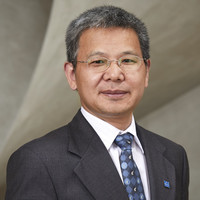
Zhonghai Lu is a Professor of Electronic Systems Design (specializing in Dependable and Autonomous Systems) at KTH Royal Institute of Technology, part of the Department of Electrical Engineering in the School of Electrical Engineering and Computer Science (EECS). He serves as Program Director for KTH's Embedded Systems master's program and Director of Studies at the Division of Electronics and Embedded Systems. His research focuses on Network-on-Chip (NoC), computer architecture, embedded systems, and Prognostics and Health Management (PHM) of power electronics. He leads a research group exploring in-network processing and embedded intelligence, transforming passive networks into active computational frameworks. Lu holds a BSc from Beijing Normal University (1989), MSc and PhD from KTH (2002, 2007), and an MBA in Innovation and Growth from the University of Turku (2012). He has authored over 240 scientific papers, including journal articles and peer-reviewed conferences, with notable recognitions such as Best Paper Awards at NOCS’2015 and EU HiPEAC, and a Featured Paper in IEEE Transactions on Computers (2020). He serves as Associate Editor for ACM Transactions on Architecture and Code Optimization (TACO) and has chaired major conferences like HiPEAC’2017 and NOCS’2018. His research group’s recent work includes integrating AI into hardware acceleration, fault-tolerant neural networks, and RUL estimation for power electronics using recurrent neural networks. Lu has secured grants from the Swedish Research Council and Intel Corporation and developed courses like IL2230 (Hardware Architectures for Deep Learning) and IL2233 (Embedded Intelligence), pioneering embedded AI education at KTH. Education: BSc (Beijing Normal University), MSc/PhD (KTH), MBA (University of Turku) Awards: Best Paper Awards (NOCS, EU HiPEAC), Swedish Research Council Grants, Intel Research Gifts Labs/Teams: Research Group on In-Network Processing and Embedded Intelligence
Karl Henrik Johansson is a Professor at the School of Electrical Engineering and Computer Science, KTH Royal Institute of Technology in Stockholm, Sweden, where he also serves as the Founding Director of Digital Futures. He is a Fellow of both IEEE and the Royal Swedish Academy of Engineering Sciences, and has held leadership positions including Immediate Past President of the European Control Association and IEEE Control Systems Society Vice President Diversity, Outreach & Development. Dr. Johansson earned his MSc in Electrical Engineering and PhD in Automatic Control from Lund University. His academic journey includes visiting positions at prestigious institutions such as UC Berkeley, Caltech, and NTU. His research focuses on networked control systems and cyber-physical systems with applications in transportation, energy, and automation networks. His work investigates fundamental challenges in connecting physical world systems through communication networks, exploring how wireless communication and sensor technology can enhance system robustness, reliability, energy efficiency, and safety. Current research directions include security of cyber-physical systems, distributed optimization, multi-agent systems, and applications to intelligent transportation and energy networks. Analysis of his recent publications reveals a strong focus on distributed optimization algorithms, secure networked control, multi-agent systems, and applications to transportation and energy networks. His work increasingly integrates machine learning techniques with traditional control theory, addressing challenges in privacy-preserving distributed computation, resilient state estimation, and resource allocation in complex networked systems. IEEE Control Systems Society Hendrik W. Bode Lecture Prize (2024) Swedish Research Council Distinguished Professor (2018-2027) Wallenberg Scholar (2009-2026) IFAC Young Author Prize IEEE CSS Distinguished Lecturer (2017-2019) IFAC Outstanding Service Award IEEE Fellow Dr. Johansson has supervised over 100 postdocs and PhD students, with many now holding prominent positions at institutions worldwide. His research has been supported by significant grants including the Swedish Research Council Distinguished Professor Grant (2018-2027), multiple Wallenberg Foundation grants, and numerous EU and national research projects. He has directed major research centers including ACCESS Linnaeus Centre (2009-2016) and Strategic Research Area ICT TNG (2013-2020). His research group operates within the Digital Futures initiative and maintains strong connections with industry partners through projects like the Integrated Transport Research Lab (supported by Scania and Ericsson) and Smart Mobility Lab. The group actively collaborates with international institutions and participates in major EU-funded projects addressing challenges in cyber-physical systems, transportation, and energy networks.
Mikael Johansson is a Professor at Kungliga Tekniska Högskolan (KTH), specializing in Control Technology . He teaches and coordinates courses such as Distributed Optimization (FEL3311) and various advanced-level degree projects in computer science, electrical engineering, and systems engineering. His research spans Control Systems , Machine Learning , and Optimization , with a focus on asynchronous algorithms, federated learning, and applications in energy systems and construction. His work includes 15 recent publications on topics like neural networks, distributed optimization, and battery technology. Notable areas of contribution are in asynchronous learning, federated learning with privacy constraints, and quasi-Newton methods for optimization. His research bridges theoretical advancements with practical applications in urban design, healthcare, and autonomous systems.
Gurjot Singh is a Research Fellow at the Department of Computer and Information Science (IDA) at Linköping University, Sweden. His research focuses on cybersecurity in aviation systems, next-generation communication networks, and industrial IoT security. He collaborates with prominent researchers like Andrei Gurtov and Suleman Khan, contributing to projects such as SEC-AIRSPACE and Post Quantum Secure Handover Mechanisms. His work spans vulnerability assessments, secure protocol design, and post-quantum cryptography applications. Education details are not explicitly stated, but his research aligns with advanced cybersecurity and network engineering domains. Key research interests include aviation cyber risk assessment, secure data link communications, and privacy-preserving authentication mechanisms for IoT and industrial environments. Publications emphasize cybersecurity challenges in aviation, industrial networks, and IoT, with recent work addressing quantum-resistant protocols and drone remote identification security. Collaborations include contributions to conferences like NordSec and AIAA DATC. He is affiliated with the cybersecurity lab at LiU, supporting educational programs like Digital4Business, which integrates AI and cybersecurity expertise. His role in the Database and Information Techniques (ADIT) division highlights involvement in interdisciplinary research groups.
Tobias Oechtering is a Professor at the Division of Information Science and Engineering within the School of Electrical Engineering and Computer Science at KTH Royal Institute of Technology. His research focuses on information theory, privacy-preserving technologies, statistical signal processing, machine learning, and smart grid systems. He has held academic positions at KTH since 2008, advancing from Post-Doctoral Researcher to Assistant Professor (2010–2013), Associate Professor (2013–2018), and Professor (2018-present). He has supervised over 20 PhD students and contributed to numerous postdoctoral programs. Research Interests: - Network information theory and physical-layer security - Privacy mechanisms with provable guarantees - Distributed statistical inference and sensor calibration - Reinforcement learning and privacy-aware machine learning - Smart grid privacy and energy management - Wireless communication algorithms and signal processing - Networked control systems and stability analysis He currently supervises 7 PhD students and hosts 3 postdocs. His work has led to over 150 peer-reviewed publications, with recent contributions in privacy-preserving smart grid strategies, adversarial inference control, and information-theoretic security. He has served as editor for IEEE Transactions on Information Forensics and Security and held leadership roles in KTH's Digitalisation Research Platform.
Liane Colonna is an Assistant Professor in Law and Information Technology at the Department of Law, Stockholm University , where she investigates ethical and legal challenges arising from AI-driven practices in higher education. She also engages in methodologically oriented research at the intersection of AI and Law, contributing to the Wallenberg AI, Autonomous Systems and Software Program – Humanities and Society. Additionally, Liane serves as the director of the Swedish Law and Informatics Research Institute (IRI) and is a member of the New York Bar since 2008. Primary Affiliation: Department of Law, Stockholm University Institute Leadership: Director, Swedish Law and Informatics Research Institute (IRI) Professional Status: Member of the New York Bar Research Interests: Ethical and legal challenges of AI in higher education Methodological approaches in AI and Law Data protection and privacy by design Regulatory frameworks for AI and emerging technologies Privacy implications of lifelogging and health IoT International data governance and surveillance law Publications demonstrate expertise in AI regulation, GDPR compliance, and privacy-preserving technologies, particularly for assisted living and educational contexts. Her work bridges technical implementation with legal accountability, emphasizing human oversight and ethical design.
Panagiotis Papapetrou is a Professor of Data Science and Deputy Head of Department at the Department of Computer and Systems Science , Stockholm University (since 2017). He also serves as Head of the Data Science Research Group and holds an Adjunct Professor position at Aalto University (Finland). As a Board Member of the Swedish Association for Artificial Intelligence (SAIS) , he contributes to shaping AI research directions in Sweden. Research Pillars: Algorithmic data mining, interpretable machine learning, time series classification, and health informatics Key Projects: AI for societal fairness, digital twins for smart buildings, EXTREMUM for explainable medical AI, and e-learning personalization Teaching Legacy: Developed courses in Data Mining (HT2013-2022), Machine Learning (VT2022-2024), and Health Informatics (VT2018-2021) His work focuses on interpretable AI for healthcare applications, particularly through counterfactual explanations for time series classification and forecasting. This includes developing methods like Glacier for constrained counterfactuals and Ijuice for k-justified explanations. His research also explores multimodal clustering of sepsis patient records and federated learning approaches for ICU mortality prediction. Recent scientific contributions include: CounterFair (2024): Group fairness analysis via counterfactual burden metrics M-ClustEHR (2024): Multimodal clustering for electronic health records COMET (2024): Constraint-based glucose forecasting explanations Temporal pattern mining (2024-2025): Enhanced forecasting models through decomposition Z-Time (2024): Interpretable multivariate time series classification His editorial leadership includes: Action Editor at Machine Learning Journal (since 2024) Action Editor at Data Mining and Knowledge Discovery (since 2018) Guest Editorial Board for ECML/PKDD Journal Track (2014-2019)
Edith C. H. Ngai is an Associate Professor in the Department of Information Technology at Uppsala University, Sweden. She leads the Smart City Arena initiative and serves as project leader for the national GreenIoT project on energy-efficient IoT for sustainable city development funded by Vinnova. Her academic career spans multiple prestigious institutions including Chinese University of Hong Kong, Imperial College London, Simon Fraser University, UCLA, and Tsinghua University. Dr. Ngai's research focuses on Internet-of-Things, mobile crowdsensing, network security and privacy, cloud computing, and data analytics, with particular applications in smart cities and healthcare. Her work bridges theoretical foundations with practical implementations for sustainable development. She has pioneered research in energy-efficient IoT systems, data privacy in participatory sensing, and mobile health monitoring applications. Her recent publications demonstrate strong trends in IoT for smart cities, privacy-preserving techniques in social sensing, and energy-efficient data collection systems. The research spans both theoretical contributions and practical implementations, with applications ranging from urban environmental monitoring to healthcare solutions. Her work consistently addresses the tension between functionality and privacy in connected systems. Professional recognition includes: ACM Senior Member (2016) IEEE Senior Member (2015) ACM/IEEE IPSN Best Paper Runner-Up (2013) IEEE IWQoS Best Paper Runner-Up (2010) VINNMER Fellow from Swedish government agency (2009) Dr. Ngai actively mentors PhD and Master's students, with numerous graduates working at leading technology companies including Google. She serves as Associate Editor for IEEE Access, IEEE Transactions on Industrial Informatics, and IEEE Internet-of-Things Journal. Her current research projects include EU SimpliCITY, EU CRUNCH, and the GreenIoT platform for sustainable development, with funding from European Commission, Swedish Research Council, and Vinnova. She leads the Uppsala Urban Computing Lab, which focuses on IoT and mobile crowdsensing for smart cities, network security and data privacy, and smart sensing for healthcare applications. The lab develops integrated decision support tools for smart cities and citizen engagement platforms.
Feras M. Awaysheh is an Associate Professor at the Department of Computing Science , Umeå University , Sweden. He leads the Autonomous Distributed Systems Lab (ADSLab) and focuses on research areas including Edge AI , Federated Learning , Distributed Data Privacy , Cloud Computing , and Big Data (BD). Affiliation : Department of Computing Science, Umeå University Research Leadership : ADSLab His research explores: Edge AI for decentralized intelligence Federated Learning architectures Distributed Data Privacy mechanisms Cloud Computing scalability Big Data resource allocation Recent publications focus on: Metaheuristic optimization for cloud systems Secure client selection in federated learning Multi-objective scheduling in IoT environments Elastic resource allocation frameworks He works in the MIT House (room MIT.B.225), Umeå, Sweden (901 87).
Fredrik Sandin is a Professor in the Department of Computer Science, Electrical and Space Engineering at Luleå University of Technology, where he leads the Machine Learning research group with approximately thirty members. His work focuses on neuromorphic technologies and the intersection of machine learning with computational physics to solve challenging real-world interaction problems. He coordinates the 'Teknisk fysik och elektroteknik' program at LTU and has been instrumental in establishing neuromorphic research activities at the university. Luleå University of Technology, Department of Computer Science, Electrical and Space Engineering Member of WASP (Wallenberg AI, Autonomous Systems and Software Program) and ELLIS (European Laboratory for Learning and Intelligent Systems) Coordinator of Neuromorphic Innovation Platform Sweden with KTH, Lund University, Uppsala University, FOI, ABB, Ericsson, and SAAB Fredrik earned his PhD in Physics from Luleå University of Technology in 2007, with thesis work focusing on dense states of matter in neutron stars. His academic journey began with an MSc diploma work in ATLAS at CERN in 2001, followed by postdoctoral research in computational physics at IFPA in Belgium (2008-2009) and brain-like computing at EISLAB with Prof. Jerker Delsing (2010-2011). Professor Sandin's research interests center around neuromorphic technologies, particularly neuromorphic computing and spiking neural networks. He investigates sensor/detector and intelligent systems co-design where constraints like energy, power, latency, and dynamic range challenge conventional digital approaches. His work spans mixed-signal neuromorphic circuits, algorithms, and systems, as well as machine learning projects involving industrial data and collaboration. He has been a key figure in establishing neuromorphic research at LTU, supported by The Kempe Foundations, particularly through the 2014 Gunnar Öquist Fellowship. His recent publications demonstrate a strong interdisciplinary focus spanning quantum phase transitions, particle physics detector optimization, renewable energy materials, and the integration of large language models into control systems. This diverse portfolio reflects his approach connecting machine learning with fundamental physics and practical engineering applications, particularly in neuromorphic computing and intelligent systems design, with emphasis on solving real-world problems through co-design of hardware and algorithms. Gunnar Öquist Fellowship Award and 3 MSEK grant from The Kempe Foundations ISSP award for an Original Work in Theoretical Physics (signed by Prof. 't Hooft and Prof. Zichichi) New-Talents award for original work in theoretical physics at the International School of Subnuclear Physics in Erice Professor Sandin has supervised numerous PhD students working on topics ranging from neuromorphic TinyML to materials for neuromorphic computing, privacy-preserving machine learning at the edge, and intelligent fault diagnosis. He has secured substantial research funding from various sources including Vinnova, ÅForsk, Kempe Foundations, WASP-WISE, and EU programs like ECSEL JU Arrowhead Tools and ITEA3 AutoDC. His current major projects include the Neuromorphic Innovation Platform Sweden and several initiatives focused on neuromorphic condition monitoring and computing, with total funding exceeding 30 MSEK in the past five years. He leads the Machine Learning group at LTU, which collaborates extensively with industry partners including ABB, Ericsson, SAAB, SKF, and RISE. The group is active in developing neuromorphic technologies for wireless sensor networks, condition monitoring systems, and next-generation intelligent systems that address energy, power, and latency constraints that challenge conventional digital approaches.
Dr. Vladimir Vlassov is a full Professor in Computer Systems at the Division of Software and Computer Systems (SCS) , Department of Computer Science (CS) , School of Electrical Engineering and Computer Science (EECS) , KTH Royal Institute of Technology , Stockholm, Sweden. He leads the AVA project in ALEC2, an AI-powered system for mental health care. He is a member of the Distributed Computing research group (DC@KTH) . Education & Roles: Holds a PhD and is a member of ACM and IEEE. Previously visited MIT (1998) and UMass Amherst (2004). Teaches courses on Data Mining , Distributed Systems , and Concurrent Programming . Research Interests: Focus on scalable AI, Cloud computing, distributed systems, and NLP for mental health. Projects include ExtremeEarth (Copernicus data analytics) and EMJD-DC (distributed computing PhD program). Grants & Projects: Principal Investigator in ALEC2 (adaptive mental health care) and ExtremeEarth (EU H2020). Led EU projects like ENCORE (manycore systems) and PaPP (embedded systems). Labs & Teams: Directs the Distributed Computing group, contributing to Hopsworks (machine learning feature store) and Maggy (hyperparameter optimization).
Marina Papatriantafilou is an Associate Professor in the Department of Computer Science and Engineering at Chalmers University of Technology and University of Gothenburg. Her research focuses on distributed computing, fault-tolerance, parallel algorithms, and concurrency control. She has contributed to methods for fault-tolerant distributed systems, visualization tools for distributed algorithms, and scalable overlay networks. Her academic roles include teaching advanced courses on distributed systems, computer communication, and operating systems. She advises graduate students in areas like distributed algorithms and parallel computing. Key research interests include lock-free synchronization, memory reclamation, and self-stabilizing systems. She has authored over 100 publications in top-tier conferences and journals, with recent work on data streaming frameworks, energy-sharing optimization, and vehicular network processing. Professional involvement includes roles in program committees for conferences like OPODIS, SWAT, and SSS, plus membership in research evaluation boards for Swedish and European funding agencies. She pioneered educational tools like the Lydian environment for distributed algorithm visualization.
Tanja Wiehn is an Assistant Professor in Digital Cultures at the Department of Arts and Cultural Sciences, Lund University. Her research bridges critical algorithm studies , digital culture , and platform studies , with a focus on gendered, racial, and class-based dimensions of algorithmic systems. She teaches in the bachelor’s program in Digital Cultures and the ALM master’s program. Education : PhD in Digital Cultures (2021) from the University of Copenhagen. Her work interrogates the synthetic turn in AI data production , addressing socio-political challenges and aesthetic expressions. Current projects include studying synthetic data’s role in privacy preservation and its cultural implications. Recent publications explore themes like datafication of homes , privacy politics , and machine vision aesthetics . She collaborates internationally on initiatives like the Follow Me project (Danish Independent Research Fund) and Digital Culture Research Cluster .
Sonakshi Garg is a Research Fellow (Postdoctoral fellow) at the Department of Computing Science, Umeå University, affiliated with the NAUSICA research group (PrivAcy-AWare traNSparent deCIsions). Her office is located at MIT House, MIT.A.420 in Umeå. Dr. Garg's research focuses on the intersection of artificial intelligence and data privacy, with specific expertise in: Privacy-preserving techniques for high-dimensional data and foundation models Synthetic data generation and distribution learning Differential privacy implementations in machine learning Federated learning security and adversarial robustness Geometric and manifold-based privacy methods Her publication portfolio demonstrates significant contributions to privacy-enhancing technologies, particularly through innovative combinations of k-anonymity with differential privacy, federated learning security frameworks, and manifold-based data protection methods. Recent works explore applications in autonomous driving security, COVID-19 forecasting, and Large Language Model privacy preservation. She collaborates with international researchers across Europe and contributes to major conferences including ESORICS, SEC, and SECRYPT. Dr. Garg is an active member of the NAUSICA research group, advancing privacy-aware decision systems through theoretical and applied research.