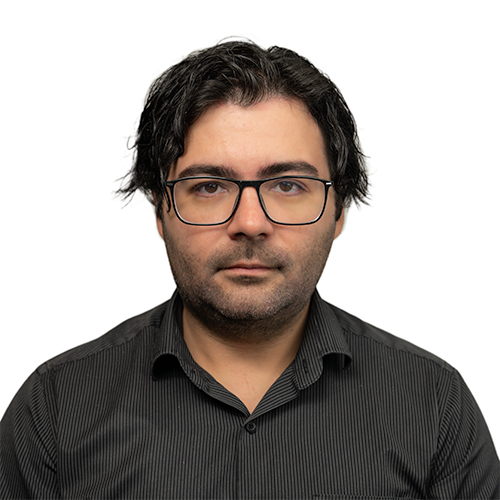
Aydin Aysu is an Associate Professor at the Department of Electrical and Computer Engineering, College of Engineering, North Carolina State University. His research focuses on hardware-based security , applied cryptography , and computer architecture , with an emphasis on secure systems to counter advanced cyber threats. Ph.D. in Computer Engineering, Virginia Tech (2016) M.S. in Electrical Engineering, Sabanci University, Turkey (2010) B.S. in Microelectronics Engineering, Sabanci University, Turkey (2008) Aysu’s work addresses hardware vulnerabilities through secure design automation, side-channel attack mitigation, and next-generation cryptographic systems. His research extends to AI/ML security , FPGA security , and quantum-resistant cryptography . Notable scientific awards include: NSF CAREER Award (2020) University Faculty Scholars (2024) Bennett Faculty Fellow Award (2020) Best Paper Awards at DATE Conference (2020), ACM GLSVLSI (2019), and others Aysu leads the Hardware Cybersecurity Research Lab (HECTOR) , focusing on pre-silicon security analysis, secure accelerator sharing, and societal impacts of cybersecurity. He actively mentors Ph.D. students and collaborates on funded research projects like the SATC: CORE: SMALL grant.
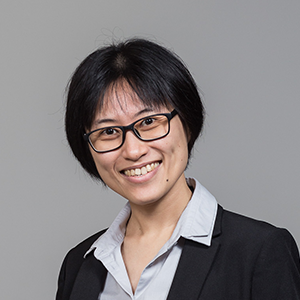
Vivy Suhendra serves as Associate Professor of Practice and Programme Director for Master Programmes at the National University of Singapore's School of Computing, while also holding the position of Assistant Dean for Graduate Studies. Previously, she led the Singapore Cybersecurity Consortium (SGCSC) as Executive Director from 2016 to 2022, driving collaborative cybersecurity research between academia, industry, and government agencies. Her career at NUS spans over two decades, beginning as a Research Assistant before advancing to her current leadership roles. Her academic credentials include: Ph.D. in Computer Science, National University of Singapore (2009). Thesis: "Memory Optimizations for Time-predictable Embedded Software". Advisors: Abhik Roychoudhury and Tulika Mitra. B.Comp. (Honors) in Computer Science, National University of Singapore (2004). Dr. Suhendra's research integrates Software Assurance, Cybersecurity, Security and Privacy, and Embedded Systems domains. Her work bridges theoretical foundations with practical applications, particularly in national cybersecurity ecosystem development, smart grid security protocols, denial-of-service mitigation techniques, and real-time embedded system optimization. This interdisciplinary approach enables innovative solutions for critical infrastructure protection and time-predictable software execution in multi-core environments. Her 14 selected publications (2004-2020) demonstrate an evolving research trajectory from foundational embedded systems timing analysis to applied cybersecurity solutions. Early work focused on memory optimization for predictable execution in multi-core embedded systems, which naturally transitioned into cybersecurity applications for smart grids, cloud environments, and national infrastructure. This progression highlights her ability to translate low-level system expertise into high-impact security frameworks for complex real-world systems. Scientific recognition includes: Microsoft Research Asia Fellowship (2006) Valedictorian at NUS School of Computing Ph.D. Commencement (2010) While specific graduate student advising details aren't provided, her leadership as SGCSC Executive Director involved extensive mentorship across academic-industry partnerships. She has also contributed significantly to the research community through roles including Conference Chair for ESEC/FSE 2022 and Workshops Committee Member for ICSE 2024. Dr. Suhendra established the Singapore Cybersecurity Consortium as a national platform for collaborative R&D during her directorship (2016-2022). Though no personal laboratory is specified, her research leadership manifests through cross-institutional teams focused on cybersecurity innovation, particularly in critical infrastructure protection and embedded systems security where she maintains active publication records.
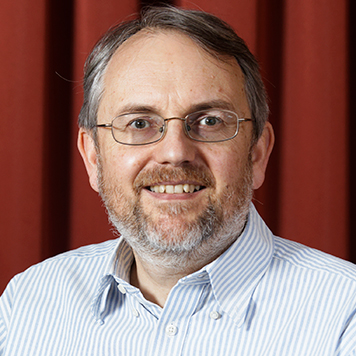
Simon Moore is a Professor of Computer Engineering at the University of Cambridge's Department of Computer Science and Technology. He leads the Computer Architecture research group, focusing on secure processors and subsystems, particularly the CHERI project. His work emphasizes formal verification, hardware-software co-design, and scalable security solutions. He is a Fellow and Director of Studies at Trinity Hall, overseeing undergraduate admissions and mentoring in Computer Science. Research Interests: Moore's primary focus is the CHERI secure processor architecture, integrating RISC-V cores with formal verification. His work spans secure hardware design, memory safety, and embedded systems. Notable contributions include the CHERI-RISC-V microarchitecture, CheriABI, and formal verification frameworks. Key Projects: CHERI, CheriBSD, Morello (ARM collaboration) Recent Achievements: Test of Time Award (IEEE Security & Privacy 2025), finalist for Bhattacharyya Award (2022) Grants: Innovate UK Digital Security by Design, DARPA Mission Oriented Resilient Clouds Publications: Over 200 papers on secure architectures, including influential work on CHERI's capability model, formal verification, and hardware security. Recent focus areas include temporal memory safety, embedded system security, and GPU-based capability systems. Labs/Teams: Directs the Computer Architecture Group and collaborates with industry partners like ARM and Microsoft on CHERI implementations.
Frank Stajano is a Full Professor of Security and Privacy at the University of Cambridge, leading the Academic Centre of Excellence in Cyber Security Research. He is a Fellow of Trinity College, where he collaborates with Nobel laureates. His research focuses on security, privacy, and usability in ubiquitous computing, IoT, and digital finance. He holds a PhD from Cambridge and a Laurea in Electronic Engineering from La Sapienza University. Frank's work includes the Pico project (ERC-funded), aiming to replace passwords with secure, usable alternatives. He co-founded Cambridge Cyber, offering cybersecurity consulting. Notable achievements include the Resurrecting Duckling authentication protocol and contributions to location privacy (Mix Zones). He has authored over 50 refereed publications and a research monograph on ubiquitous computing security. His awards include the Toshiba Fellowship (2000) and an ERC Starting Grant (2017). Frank teaches cybersecurity and lectures globally via his YouTube channel. Beyond academia, he is a 5th-dan kendo practitioner and a scholar of Disney comics.
Professor Xue Li is a faculty member in the School of Electrical Engineering and Computer Science at the University of Queensland. His research focuses on machine learning, data mining, and their applications in healthcare, materials science, and computer vision. He has authored over 300 publications, including seminal works on knowledge graph completion, video quality enhancement, and alloy design using machine learning. His work bridges theoretical advancements with real-world applications, such as clinical diagnosis andTinyML systems. Key research interests include graph representation learning, medical informatics, and efficient algorithms for multimedia data. Notable contributions include developing commonsense-enhanced relation extraction models and frameworks for compressed video reconstruction. His research also addresses challenges in federated learning and privacy-preserving genomics. Prof. Li has collaborated extensively with industry and academia, contributing to projects in RFID systems, electronic nose pattern recognition, and cybersecurity. His work is published in top-tier venues like IEEE Transactions and ACM conferences. Despite no listed awards, his prolific output underscores academic impact.
Professor Marius Portmann is the UQ-Cisco Chair of Network Security at the School of Electrical Engineering and Computer Science (EECS), University of Queensland. His expertise spans Cybersecurity, IoT, and Applied AI. He holds a PhD from ETH Zurich (2003) and has led research in Software Defined Networking (SDN), blockchain, and energy-harvesting IoT systems. Education: PhD in Electrical Engineering from Swiss Federal Institute of Technology (ETH Zurich), 2003. Research focuses on securing IoT networks, AI-driven intrusion detection, and sustainable sensor systems. He has pioneered self-powered IoT systems using energy harvesters and developed frameworks like FlowTransformer for network analysis. His work bridges theoretical advancements with practical applications in smart tourism, energy efficiency, and edge computing. Recent publications highlight innovations in DDoS detection (P4-Secure), sensor-based environmental monitoring (EcoShower), and graph-based anomaly detection (XG-BoT). His datasets (e.g., NF-ToN-IoT-v3) are widely used in ML-based cybersecurity research. Collaborations include industry partners like Cisco and institutions like RMIT. Grants and leadership roles in interdisciplinary projects underscore his impact. He advises on IoT security standards and contributes to open-source tools for network research. Current projects explore edge-AI integration and sustainable sensor networks.
Annie Antón is a Professor in the School of Interactive Computing at Georgia Institute of Technology. Former Chair of her school, she specializes in privacy, security, software engineering, and public policy. Dr. Antón advises national defense and intelligence entities, including roles in the IDA/DARPA Defense Science Study Group (2005-2006) and the Obama-appointed 2016 Commission on Enhancing Cybersecurity for the Nation. She serves on numerous boards, including NIST Information Security & Privacy Advisory Board, Future of Privacy Forum, and former roles in U.S. DHS Data Privacy Committee and NSF Advisory Council. Her research focuses on aligning software systems with federal privacy/security regulations, emphasizing legal compliance, secure development practices, and IoT privacy challenges. Notable projects include UCON_LEGAL for HIPAA compliance and frameworks for analyzing regulatory requirements. She has contributed to policy implementations via empirical studies on user privacy perceptions and legal text mining. Dr. Antón's work bridges technical and policy domains, addressing ethical AI education, cross-border data governance, and cybersecurity preparedness. Her leadership spans academia, government, and industry through advisory roles at Intel, Microsoft Research, and the Georgia Tech Alumni Board.
Shujun Li is a Professor of Cyber Security and Head of the Cyber Security Research Group at the School of Computing, University of Kent. He also holds a Visiting Professorship at the Department of Computer Science, University of Surrey. His research focuses on cyber security, privacy, AI applications, and human-centric computing. He leads the Institute of Cyber Security for Society (iCSS), a university-wide interdisciplinary research centre. Education: PhD in Information and Communication Engineering (Xi'an Jiaotong University, 2003), followed by postdoctoral research at City University of Hong Kong, Humboldt Research Fellowship at FernUniversität in Hagen, and a 5-year Zukunftskolleg Research Fellowship at Universität Konstanz. Research interests include cyber security (usable security, digital forensics, misinformation), AI safety, human factors, and socio-technical systems. He has published over 100 papers, with awards including the IEEE Guillemin-Cauer Best Paper Award and EPSRC recognition. Awards: Includes IEEE Transactions Best Paper Awards, EPSRC peer review recognition, and multiple conference best paper awards. Active in interdisciplinary projects like MACRO (cyber risks in mobility systems) and ACCEPT (reducing human-related cyber risks). Labs/Teams: Directs iCSS, co-founded Kent & Medway Cyber Cluster, and leads the Kent Interdisciplinary Research Centre in Cyber Security (KirCCS). Collaborates with industry and government agencies on cyber resilience and AI ethics.
Amiya Nayak is a Professor at the School of Electrical Engineering and Computer Science of the University of Ottawa. His research focuses on Fault-Tolerant Computing , Distributed Systems , and Ad hoc and Sensor Networks . He specializes in cybersecurity, IoT security, blockchain integration, and machine learning applications in healthcare and vehicular networks. His work addresses challenges in secure communication protocols, distributed learning frameworks, and energy-efficient network designs. Notable research areas include: IoT Security : Developing frameworks for threat detection, privacy-preserving systems, and blockchain-empowered IoT defenses. Federated Learning : Enhancing healthcare predictions and IoT management through decentralized, privacy-aware machine learning. Vehicular Networks : Securing Vehicle-to-Everything (V2X) communication and optimizing QoS in cooperative internet of vehicles (IoV). Network Optimization : Leveraging deep reinforcement learning and graph neural networks for WDM network restoration and edge computing. His publications (2020–2025) highlight contributions to: Secure authentication protocols in medical sensor networks. AI-driven metaverse security solutions. Decentralized energy trading using NFTs. Energy-efficient sleep scheduling in wireless body area networks (WBANs). Nayak holds a Ph.D. and is a P.Eng. (Professional Engineer). His work bridges theoretical computer science with practical applications in telecommunications and healthcare systems.
Nima Monshizadeh Naini is a Professor in the Faculty of Science and Engineering at the University of Groningen. He holds the position of Chair of the IEM Program Committee and serves on the boards of ENTEG and YSEN. His academic journey includes a PhD in Control Systems from the University of Groningen (2013, Cum Laude), followed by postdoctoral research at the University of Cambridge (2016-2017) and the University of Groningen (2014). He has been an Assistant Professor since 2018 and was awarded the NWO Open Competition Grant in 2021. His research focuses on Cyber-Physical Human Systems (CPHS) , addressing two core areas: (1) Coordination of self-interested users in power systems and traffic networks using dynamic information design and game-theoretic mechanisms; and (2) Privacy-aware control and optimization with tailored encryption methods for dynamic systems. Applications include energy markets, microgrids, and smart grids. He has published extensively in top venues like IEEE CDC and Automatica, with key topics including privacy-preserving algorithms, distributed control, and optimal intervention design. His work contributes to UN Sustainable Development Goals related to affordable energy and responsible consumption. Education: PhD in Control Systems, University of Groningen (2013) Research Associate, University of Cambridge (2016-2017) Postdoctoral Researcher, University of Groningen (2014) Awards: Cum Laude distinction for PhD thesis (2013) NWO Open Competition Grant (2021) Advising & Grants: Supervised 5 PhD students Editorial roles in IEEE journals and conference proceedings Labs/Teams: Leading the Cyber-physical systems group within the Smart Manufacturing Systems institute.
Professor Glen Tian is a Professor at the School of Computer Science , Queensland University of Technology . He holds two PhDs: one in computer and software engineering from the University of Sydney (2009) and another in industrial automation from Zhejiang University (1993) . His academic career spans institutions including Hong Kong University of Science and Technology, Curtin University, and the University of Maryland at College Park. Editor-in-Chief of the Handbook of Real-Time Computing (Springer) Associate Editor for Information Sciences (Elsevier) and Asia-Pacific Journal of Chemical Engineering (Wiley) His research focuses on big data computing , cloud computing , computer networks , smart grid communication and control , networked control systems , and cyber-physical system security . Applications include power systems , medical big data , vehicular networks , and transport systems . Recent publications highlight advancements in smart grid communications , distributed optimization , secure multi-agent systems , and medical imaging analysis . He has led QUT's Big Data Lab and served as Leader of QUT's Networks and Communications Discipline . Scientific achievements include Over 20 research grants totaling >$6M 6 Australian Research Council (ARC) grants 1 MRFF-TTRA grant ($745,623) 1 ATN-DAAD Australia-Germany Collaborative Grant 1 DEST International Science Linkage grant He supervises PhD students in big data bioinformatics , smart grid optimization , and cyber-physical security , while mentoring 30+ postdocs and research fellows. Current projects include mitigating cyberattacks on power systems and developing AI-based atheroma diagnostic tools .
Siddharth Garg is the Institute Associate Professor of Electrical and Computer Engineering at NYU Tandon School of Engineering, leading the EnSuRe Research Group. He holds a Ph.D. from Carnegie Mellon University (2009) and a B.Tech. from IIT Madras. His research focuses on secure and energy-efficient computing systems, integrating machine learning, cybersecurity, and hardware design. He previously held roles as Assistant Professor at NYU Tandon (2014-2020) and the University of Waterloo (2010-2014). Key affiliations include NYU Center for Cybersecurity (CCS), NYU Wireless, and the Center for Advanced Technology in Telecommunications. His work has been recognized with prestigious awards like the NSF CAREER Award (2015) and inclusion in Popular Science’s 'Brilliant 10' (2016). Notable research includes private inference optimization, secure hardware IP protection, and adversarial machine learning defenses. Publications highlight advancements in zero-knowledge proofs, AI-driven chip design, and mitigating backdoor attacks in neural networks. His grants include funding from NYU Wireless and NSF initiatives like the Chips4All project. The EnSuRe group emphasizes bridging software and hardware design gaps using AI and fostering cybersecurity education.
Rajeev Sahay is an Assistant Teaching Professor in the Department of Electrical and Computer Engineering at the University of California San Diego (UCSD), affiliated with the Jacobs School of Engineering. He holds a Ph.D. and M.S. from Purdue University (2022 and 2021) and a B.S. from the University of Utah (2018). Prior to UCSD, he worked as a Senior Machine Learning Software Engineer at Saab, Inc., and taught courses at Purdue, earning the Purdue Engineering Dean’s Teaching Fellow award in 2021. His research bridges machine learning and networking, focusing on social learning networks (SLNs) for personalized education and robust wireless communications in adversarial environments. Key areas include federated learning for privacy preservation, adversarial attack mitigation, and next-generation 6G wireless systems. His work emphasizes data-driven methodologies to enhance learning outcomes and secure communication networks against vulnerabilities. Dr. Sahay’s teaching spans undergraduate and graduate courses in machine learning, data science, and programming languages (C/C++/Python), with a passion for tailoring curricula to student needs. His publications reflect expertise in federated learning, adversarial defense mechanisms, and signal processing, with recent contributions to AI-assisted education and robust wireless systems. Scientific Awards: Purdue Engineering Dean’s Teaching Fellow (2021) Teaching and Research Interests: Machine Learning Pedagogy Adversarial Robustness in ML Systems Federated Learning Applications Social Learning Network Analysis 6G Wireless Communication Security
Dr. Kenneth Edwin Barker is a Professor in the Department of Computer Science within the Faculty of Science at the University of Calgary, where he also serves as Director of the Institute for Security, Privacy and Information Assurance (ISPIA). His academic career spans several decades with significant contributions to database systems and privacy research. Dr. Barker earned his B.S. and M.S. in Computer Science from the University of Calgary in 1982 and 1984 respectively, followed by a Ph.D. in Computer Science from the University of Alberta in 1990. His educational background established the foundation for his extensive research career in database systems and information security. His primary research interests focus on Privacy Preserving Data Repositories , with specific attention to protecting privacy in mobile applications, understanding privacy's impact on data analytics, and architecting database management systems that inherently respect user privacy. His work also extends to distributed database environments, integration of legacy systems, and multidatabase environments. Dr. Barker's research bridges theoretical foundations with practical applications, making significant contributions to how privacy is implemented in real-world systems. An analysis of his recent publications reveals a strong trend toward practical privacy-preserving techniques for cloud data, social networks, and location-based services. His work consistently addresses the tension between data utility and privacy protection, developing innovative methods to maintain data value while safeguarding personal information. The publications span multiple subfields including encrypted search, graph privacy, high-dimensional data privacy, and privacy metrics. Best Paper Award at DBSec 2012 Best Paper Award at CODASPY 2012 Best Paper at BNCOD 2009 Dr. Barker has been instrumental in establishing privacy research infrastructure at the University of Calgary through his leadership of ISPIA. His research has attracted significant funding from various sources supporting privacy and security initiatives. While specific grant details aren't provided in the text, his extensive publication record indicates sustained research funding throughout his career. He has collaborated extensively with researchers both within and outside the University of Calgary, particularly with R. Alhajj and other colleagues on numerous projects. As Director of ISPIA, Dr. Barker oversees a research environment focused on advancing security and privacy technologies. The institute serves as a hub for interdisciplinary research, bringing together computer scientists, social scientists, and legal experts to address complex privacy challenges. His leadership has positioned the University of Calgary as a significant player in privacy research within Canada.
Kari M. Koskinen is a University Lecturer at Aalto University's Department of Information and Service Management. His research focuses on cybersecurity, digital ecosystems, and technology management with applications in healthcare, agriculture, and smart cities. He frequently collaborates with scholars like Hadi Ghanbari and Sonja Hyrynsalmi on topics ranging from ransomware mitigation to sustainable mobility solutions. His work emphasizes real-world case studies, such as analyzing the Vastaamo psychotherapy clinic data breach and examining supply chain attacks in manufacturing. Key contributions include frameworks for cloud-based integration platforms, risk management in digital ecosystems, and the socio-technical implications of autonomous vehicles. Koskinen also explores visibility labor in NFT markets and how digital platforms address development challenges in the Global South. His teaching cases, published in the Journal of Information Technology Teaching Cases, bridge theoretical concepts with practical cybersecurity scenarios.