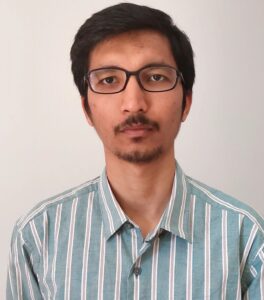
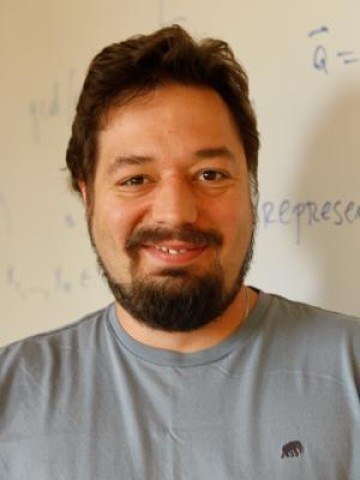
NATH Kunjakanan is a Research Fellow at the Institut Élie Cartan de Lorraine (IECL) within the University of Lorraine's Faculty of Science and Technology, specializing in the Analysis and Number Theory research team. His educational background includes: Ph.D. from Université de Montréal under Prof. Dimitris Koukoulopoulos M.Sc. in Mathematics from Chennai Mathematical Institute Undergraduate studies at Ramjas College, University of Delhi His research focuses on Analytic Number Theory, particularly sieve methods, prime number distribution, character sums, smooth numbers, and digital restrictions in integers. Previously, he was a postdoctoral researcher at the University of Illinois Urbana-Champaign with Prof. Kevin Ford. He actively contributes to the number theory group at IECL, advancing research in foundational number theory.
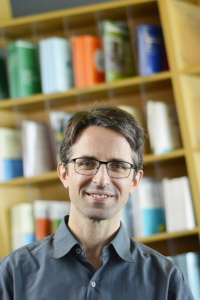
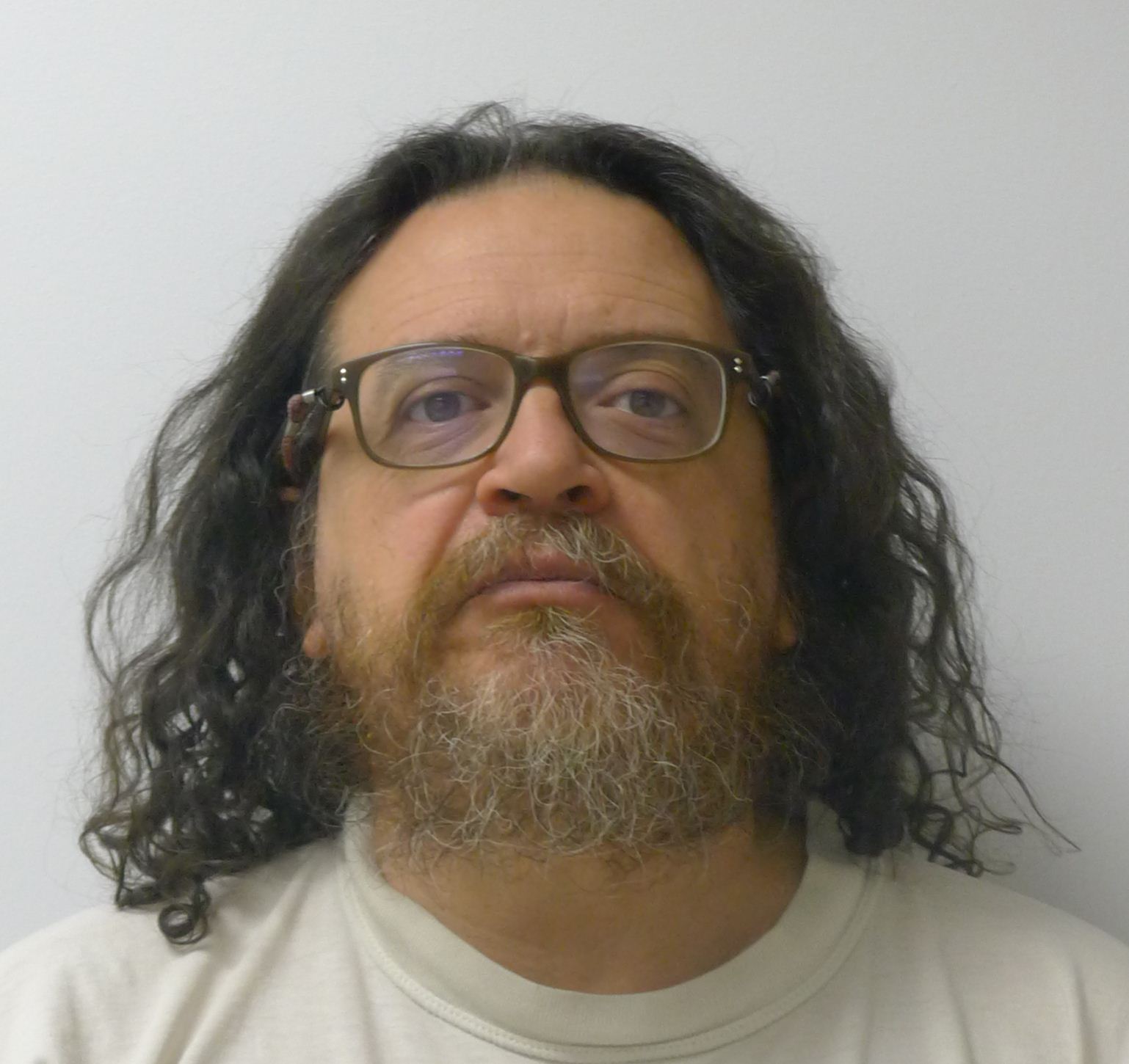
Thomas Stoll is a tenured Professor at the Faculty of Science and Technology , University of Lorraine, Nancy, France. He leads research in Analytic and Combinatorial Number Theory , focusing on Diophantine equations , digital expansions , and sum-of-digits functions . He is affiliated with the IECL (Institut Élie Cartan de Lorraine) and has coordinated ANR-FWF research projects like MuDeRa and ArithRand .
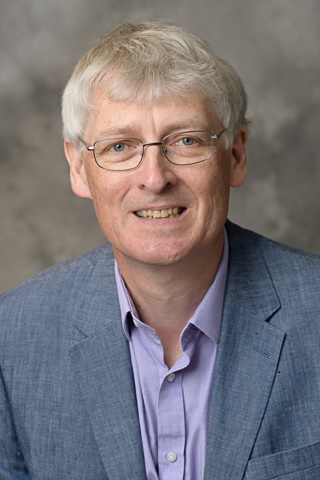
Trevor Wooley is the Andris A. Zoltners Distinguished Professor of Mathematics at Purdue University's Department of Mathematics, part of the College of Science. His research focuses on Analytic Number Theory, Harmonic Analysis, Automorphic Forms, Lie Groups, Number Theory, and Representation Theory. He has contributed significantly to areas like Waring's problem, Vinogradov systems, and Diophantine equations through advanced analytic methods. Wooley's work bridges classical number theory with modern harmonic analysis, addressing questions in additive number theory, exponential sums, and rational solutions to algebraic equations. His recent publications explore topics such as polynomial irreducibility over finite fields, paucity problems in Diophantine systems, and subconvexity bounds via the circle method. His research has implications for cryptography, algebraic geometry, and theoretical computer science. Despite his extensive contributions, no specific academic awards are mentioned in the provided text. He advises no students listed here, and no grants or labs are explicitly noted.
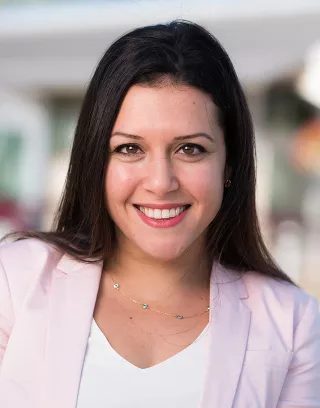
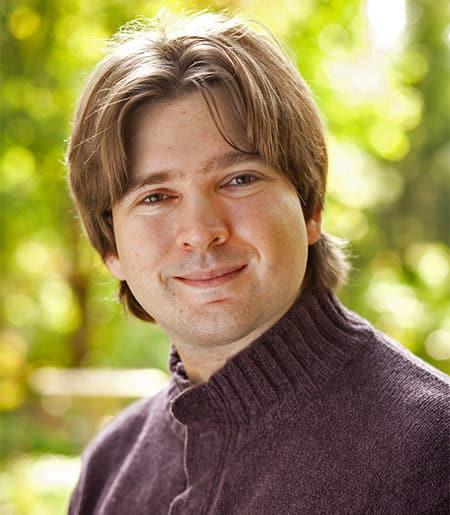
Dr. Alia Hamieh is an Associate Professor in the Department of Mathematics and Statistics at the University of Northern British Columbia. Her research focuses on number theory, modular forms, and special values of L-functions. She holds a PhD from the University of British Columbia (2013) and an MSc from the American University of Beirut (2007). Education: PhD in Mathematics, University of British Columbia (2013) MSc in Mathematics, American University of Beirut (2007) BSc in Mathematics, American University of Beirut Research Expertise: Analytic and algebraic number theory, automorphic forms (including Hilbert modular forms and half-integral weight modular forms), special values of L-functions, non-vanishing theorems, and value-distribution theory. Her current projects explore non-vanishing of L-functions associated with Hilbert modular forms, logarithmic distributions of L-functions, and mean value theorems for Dirichlet polynomials. Grants & Collaborations: NSERC Discovery Grant (2025–2030): 'Moments and Value-Distribution of Automorphic L-functions.' PIMS Collaborative Research Group (2022–2025): 'L-functions in Analytic Number Theory.' Organized major events: BIRS Summer School (2023), Moments of L-functions Workshop (2022), and the Comparative Prime Number Theory Symposium (2024). Media Expertise: Available for consultation on number theory, automorphic forms, and L-functions.
Professor Daniel Panario is a faculty member at Carleton University's School of Mathematics and Statistics. He holds the rank of Professor and specializes in areas such as Finite Fields, Combinatorics, and Cryptography. His research focuses on the analysis of algorithms, computational number theory, and applications in cryptography and coding theory. Education: PhD in Computer Science from the University of Toronto, postdoctoral research at the University of Waterloo, and further academic roles at institutions in Brazil and Uruguay. His expertise spans theoretical and applied mathematics, with contributions to discrete mathematics and algorithmic research. Research Interests: Finite Fields and their applications, combinatorics, cryptography, coding theory, and computational algebra. He has supervised numerous students and postdoctoral researchers, contributing to over 200 publications and holding editorial roles in top journals. Grants and Editorial Work: Editor for journals like Applicable Algebra in Engineering and Cryptography and Communications. He has organized international conferences and workshops, advancing the field of finite fields and discrete mathematics. Labs/Teams: Active member of the Ottawa-Carleton Discrete Mathematics Group, collaborating on combinatorial and algebraic research projects.
Ewa Ciszek-Kiliszewska is an Associate Professor at Adam Mickiewicz University in Poznań, affiliated with the Faculty of English and the Department of the History of English. She holds the academic title of Dr. hab. (D.Litt.) in English, awarded in 2019, and maintains an active research profile in historical linguistics with particular focus on Old and Middle English language structures. Her institutional contact is via Collegium Heliodori Święcicki, room 160, with the university email evac@amu.edu.pl and phone number (+48) 61 829 1030. Ewa Ciszek-Kiliszewska earned her academic credentials at Poznań institutions: MA in English (2002), Ph.D. in English (2005), and D.Litt. in English (2019). Her professional development includes specialized training such as the 'Effective Assessment of Learning Achievement' project led by Prof. Kristin Stang at California State University, Fullerton (2016), and multiple AMU Teaching Workshops on presentation techniques and institutional visits (2017-2018). Her research interests center on historical aspects of the English language, particularly Old and Middle English word formation, semantics, morphology, morphosyntax, lexis, and dialectology. She has made significant contributions to understanding grammaticalization processes, suffixal development, and prepositional systems in medieval English. Her scholarly work demonstrates deep engagement with corpus linguistics methodologies and historical textual analysis. Analysis of her publication record reveals consistent focus on Middle English linguistic structures, particularly prepositions, adverbs, and derivational morphology. Her research demonstrates methodological rigor through corpus-based analysis of Middle English texts, with particular attention to dialectal variation, semantic development, and grammaticalization processes. The temporal pattern shows sustained scholarly output from 2002 through 2018 across multiple prestigious journals in historical linguistics. Prime Minister's Award for Doctoral Dissertations (2006) Professor Ciszek-Kiliszewska has served as a peer reviewer for multiple academic journals including Medieval English Mirror, Token: A Journal of English Linguistics, Poznań Working Papers in Linguistics, Studia Anglica Posnaniensia, and Research in Language. She has held editorial positions as Guest Editor of Studia Anglica Posnaniensia (2014) and Assistant to the Editor for Medieval English Mirror (2004-). Her professional service includes membership on organizing committees for international conferences such as SELIM, Young Linguists' Meetings, and Medieval English Studies Symposia. Her scholarly activities extend to active participation in professional organizations including Societas Linguistica Europea and the Polish Association for the Study of English (PASE). She has presented research at numerous international conferences worldwide and delivered guest lectures at institutions including the University of La Coruña, University of Warsaw, and University Jaume I. Her research collaborations and academic engagements demonstrate strong international connections within the historical linguistics community.
Alice Niemeyer is a Professor at the Algebra Teaching and Research Area of RWTH Aachen University , specializing in computational algebra, finite group theory, and interdisciplinary applications in civil engineering. She has co-authored over 30 publications in journals like PNAS Nexus , Linear Algebra and Its Applications , and International Journal of Solids and Structures , with recent work bridging abstract algebra and topological interlocking concrete systems. Research Interests : Finite groups, matrix decomposition algorithms, combinatorial design, and applications to sustainable construction. Key Collaborators : Cheryl Praeger, Tomasz Popiel, Wilhelm Plesken, Daniel Robertz, Reymond Akpanya. Notable Grants : Funding from the Simons Foundation for computational algebra research. Awards : No explicit awards mentioned in the provided text.
Professor Igor Shparlinski is a faculty member at the University of New South Wales (UNSW) within the School of Mathematics & Statistics, holding the rank of Professor with an active research profile as evidenced by publications dated 2025. His work bridges pure number theory and cryptographic applications, maintaining international collaborations with institutions like the University of Sydney and Max Planck Institute. Research interests include: Analytic number theory (exponential/character sums) Cryptographic security (Diffie-Hellman, RSA, and pseudorandom generators) Finite field arithmetic and polynomial dynamics Arithmetic combinatorics and additive number theory Distribution of primes/smooth numbers modulo p Elliptic curve structures over finite fields His publications consistently address foundational problems with computational implications, particularly focusing on sum bounds and modular arithmetic. Recent trends (2023-2025) show intensified work on multilinear character sums, matrix statistics over finite fields, and dynamical system orbits. Key journals include Journal of Number Theory and Finite Fields and their Applications , with frequent co-authorship on exponential sum bounds and cryptographic vulnerabilities. Scientific awards: No awards, prizes, or fellowships are documented in the provided text. Advising and grants: No student listings or grant information appears in the source material. Research output suggests sustained funding but lacks explicit details.
Morten S. Risager is a Professor in the Department of Mathematical Sciences at the University of Copenhagen. His research focuses on intersections of analytic number theory , automorphic forms , and mathematical physics , particularly in quantum chaos and hyperbolic geometry . He has held positions at Aarhus University and the Institute for Advanced Study, Princeton. Education: Ph.D. in Mathematics (2003, University of Aarhus), M.Sc. in Mathematics (2001, University of Aarhus). Research interests include modular symbols , Eisenstein series , lattice counting problems , and Selberg's conjecture . His recent work analyzes equidistribution in hyperbolic groups and spectral deformations. Publications (2014–2025) cover topics like shifted convolution sums , iterated integrals of modular forms , and hyperbolic circle problems . Collaborations with Petridis and Nordentoft highlight trends in spectral theory and number theory. Scientific awards : Steno Research Fellow (2005–2008) at Aarhus University. Teaching areas encompass linear algebra , analysis , elliptic curves , and analytic number theory .
Lenny Fukshansky is a Professor of Mathematics at Claremont McKenna College’s Department of Mathematical Sciences. His research focuses on Number Theory, Discrete and Convex Geometry, and Arithmetic Geometry. He holds a B.S. from UCLA and a Ph.D. from the University of Texas at Austin. Dr. Fukshansky has received significant grants including National Security Agency Young Investigator Grants (2012–2017) and multiple Simons Foundation Collaboration Grants (2011–2022). He has been an invited researcher at prestigious institutions like the Institut Mittag-Leffler (2013), Erwin Schrödinger Institute (2014), and Oberwolfach Research Institute (2017). His work bridges algebraic structures with geometric and analytic techniques, emphasizing lattice theory and Diophantine approximation. Recent publications explore sparse geometry of numbers, Frobenius problems in number fields, and applications of lattice theory in coding and signal processing. Key research themes include lattice-based constructions, minimal solutions to polynomial equations, and geometric interpretations of algebraic number theory. His grants have supported collaborations on topics ranging from cryptographic lattices to historical conjectures like Bateman-Horn.
Koutsogiannis Andreas is a Professor in the Department of Mathematics at Aristotle University of Thessaloniki, Greece. He previously held academic positions at The Ohio State University (Lecturer, 2017-2021; Ross Assistant Professor, 2014-2017) and the University of Houston (Short-Term Research Scholar, 2011). His research focuses on Ergodic Theory, Topological Dynamical Systems, and their applications to Ramsey Theory, Infinitary Combinatorics, and Number Theory. Ph.D. in Mathematics, National and Kapodistrian University of Athens, 2011 M.Sc. in Pure Mathematics, National and Kapodistrian University of Athens, 2008 B.Sc. in Mathematics, National and Kapodistrian University of Athens, 2006 His research explores polynomial recurrence phenomena, integer part sequences, and their connections to combinatorial number theory. Recent work includes studies on multicorrelation sequences, skew product systems, and applications to prime number distributions. Koutsogiannis has published in top-tier journals such as Ergodic Theory and Dynamical Systems and Proceedings of the American Mathematical Society , with a focus on polynomial correlation structures and ergodic Ramsey theory. He has taught advanced courses on Ergodic Theory, Topological Dynamical Systems, Real Analysis, and Ramsey Theory at both Aristotle University of Thessaloniki and The Ohio State University.
Dan Fretwell is a Lecturer in Security and Protection Science within the School Of Mathematical Sciences at Lancaster University. His academic journey includes a PhD from the University of Sheffield (2015) under Prof. Neil Dummigan, a Heilbronn Research Fellowship at the University of Bristol (until 2022), and a Lecturer position at the University of South Wales (2022-2023). His research spans Algebraic Number Theory with extensive work on: Quadratic forms, lattices, and error correcting codes Modular forms, elliptic curves, and number fields Automorphic forms, Galois representations, and L-functions Interacting particle systems with applications in Statistical Mechanics Fretwell's work is significantly motivated by the Langlands program, focusing on computational evidence for conjectures and practical applications. His recent publications show a clear trajectory toward cybersecurity applications, particularly in cryptography and quantum computation. His 2025 publication on 2-superirreducible polynomials over finite fields demonstrates this applied direction. The publications collectively reveal expertise across pure number theory, computational mathematics, and increasingly relevant cryptographic applications. He teaches MATH320: Mathematical Cryptography and supervises PhD students in Algebraic Number Theory with emphasis on Modular Forms and Galois Representations. His professional activities include public engagement through the STEM Lecturer Series, "The Magic of Maths" public lecture, Pint of Science events, and school outreach programs at Winstanley College and Rochdale Sixth Form College.
David Zywina is an Associate Professor in the Department of Mathematics at Cornell University, part of the College of Arts and Sciences. He holds a Ph.D. from the University of California, Berkeley (2008). His research focuses on number theory and arithmetic geometry, particularly studying compatible Galois representations associated with arithmetic objects like elliptic curves and Drinfeld modules. His work explores the arithmetic properties of these objects and their connections to the Inverse Galois Problem. Teaching includes advanced courses such as MATH 6370 (Algebraic Number Theory) and MATH 7370 (Topics in Number Theory) in Spring and Fall 2025. He also supervises research and reading projects (MATH 4900/4901). Publications span topics including class field theory, elliptic curves, and Galois representations. Key works include studies on splitting fields of characteristic polynomials and maximal Galois actions. Zywina’s research bridges abstract algebraic structures with concrete problems in number theory.
Kevin J. McGown serves as Professor and Department Chair in the Department of Mathematics and Statistics at California State University, Chico. His leadership spans academic administration and active research in number theory, with a Ph.D. from the University of California, San Diego providing the foundation for his scholarly work. Education: Ph.D., University of California, San Diego Professor McGown's research spans algebraic, analytic, and computational number theory, with specialized focus on Euclidean number fields, arithmetic statistics, character sums, and primitive roots. His work bridges theoretical depth and practical computation, addressing fundamental questions about prime distributions, field extensions, and algorithmic efficiency. This interdisciplinary approach connects pure mathematics with applications in cryptography and computational science. Analysis of his 15 most recent publications reveals consistent thematic evolution: early works established foundations in quadratic and cubic fields, while recent research expands into quintic fields, graph theory connections, and explicit computational bounds. Collaborative patterns show sustained partnerships with number theory specialists, yielding methodological innovations in arithmetic statistics and prime number theory. There are no documented scientific awards in the provided materials. Professor McGown actively mentors undergraduate researchers through honor's theses and Master's programs, emphasizing preparation via courses like Math 337 (Number Theory) and Math 420 (Advanced Calculus). His teaching portfolio includes advanced courses such as Complex Analysis and Cryptography, alongside foundational instruction in Calculus and Linear Algebra. While no specific grants are listed, his extensive publication record indicates sustained research productivity. No dedicated research laboratories or formal teams are referenced in the available documentation.
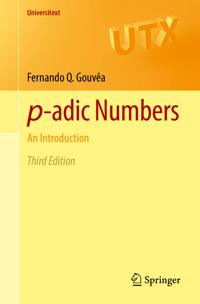
Fernando Q. Gouvêa is the Carter Professor of Mathematics at Colby College, where he has taught since 1987. He holds a Ph.D. in Mathematics from Harvard University (1987) and has published extensively in number theory, arithmetic geometry, and the history of mathematics. Education: M.A., 1981, Universidade de São Paulo M.A., 1986, Harvard University Ph.D., 1987, Harvard University Research Interests include number theory, arithmetic algebraic geometry, modular forms, Galois representations, and the history of mathematics (particularly algebra and number theory). He has authored influential books such as p-adic Numbers: An Introduction and Math Through the Ages , co-authored with William Berlinghoff. His computational work on p-adic modular forms and the U operator’s slopes has advanced the field. Scientific Roles include editor for the Carus Mathematical Monographs and MAA Reviews , and membership on editorial boards for the Revista Brasileira de História da Matemática and the American Institute of Mathematics . He has also contributed to educational materials like Pathways from the Past , designed to integrate historical perspectives into mathematics teaching.