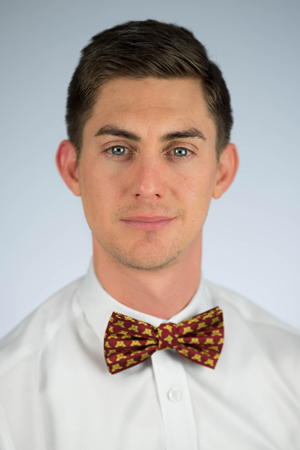
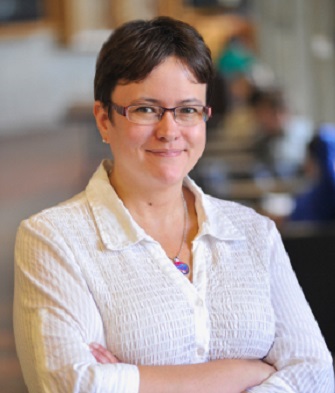
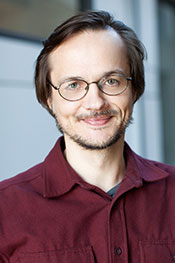
Dr. Jonathan B. Clayton is an Assistant Professor in the Department of Biology at the University of Nebraska Omaha and holds cross-appointments at the University of Nebraska-Lincoln (Department of Food Science and Technology) and the University of Nebraska Medical Center (Department of Pathology and Microbiology). He holds a D.V.M. and Ph.D. in Comparative and Molecular Biosciences from the University of Minnesota. His work focuses on host-microbiome interactions in humans and nonhuman primates, particularly exploring how dietary fiber, lifestyle, and environmental factors influence gut microbiome composition and metabolic health. He founded the Primate Microbiome Project (PMP) to map microbiome variation across all primates, linking it to health, evolution, and conservation. Research Interests include microbiome modulations of metabolic diseases (diabetes, obesity) and neurological disorders (stress), using in vitro/in vivo models like germ-free mice and marmosets. His methodologies involve next-generation sequencing, anaerobic culture, and marmoset models. Clayton is affiliated with the Callitrichid Research Center and GreenViet Biodiversity Conservation Center, emphasizing translational research and conservation applications. Teaching focuses on Microbiology and Microbial Ecology. His lab (Clayton Lab) investigates causal mechanisms of microbiome-related diseases and has published extensively on gut microbiome dynamics in captive and wild primates. Recent work highlights antibiotic impacts on gut-brain axis interactions and conservation implications of microbiome diversity.
Markus Riessland is an Assistant Professor at Stony Brook University’s Renaissance School of Medicine, part of the Empire Innovation Program focused on the Aging Brain. He holds a PhD from the University of Cologne, Germany, specializing in molecular biology, neuroscience, and neurodegenerative diseases. His research centers on cellular senescence in neurons, particularly post-mitotic dopaminergic neurons linked to Parkinson’s disease. He discovered that these neurons can undergo senescence, a process typically absent in non-dividing cells, which has implications for aging and neurodegeneration. Dr. Riessland’s lab employs stem cell models, mouse studies, and advanced sequencing techniques (TRAP-seq, RNA-seq) to investigate senescence mechanisms, identify genetic modifiers influencing neuronal vulnerability, and explore therapies to counteract senescence-driven pathology. His work bridges molecular biology and clinical implications, emphasizing translational approaches for age-related diseases. Notable achievements include an F1000 Exceptional Rating for his 2017 Cell Stem Cell paper and an AJHG Editor’s Corner Highlight for his ribosome profiling study. His research has led to insights on SATB1’s role in senescence, lipid-driven senescence in dopaminergic neurons, and midbrain inflammation in Parkinson’s. Collaborative efforts span international projects on SMA and neuroprotective modifiers like Neurocalcin Delta. While no students are listed here, his work impacts therapeutic development in neurodegenerative diseases through senolytic strategies and genetic interventions. Education: PhD in Molecular Biology from University of Cologne, Germany. Awards: F1000 Exceptional Rating (2017), AJHG Editor’s Corner Highlight (2017). Labs/Teams: Leads research on neuronal senescence mechanisms and therapeutic targets, integrating stem cell biology and systems biology approaches.
Dr. Catherine Crockford is Research Professor and Director of the Ape Social Mind Lab at the Max Planck Institute for Evolutionary Anthropology, affiliated with the Department of Human Behavior, Ecology and Culture. She co-directs the Tai Chimpanzee Project in Ivory Coast, studying habituated chimpanzee groups and sooty mangabeys. Her research examines primate social cognition, communication evolution, and neuroethology through behavioral observations, hormone sampling, and neuroimaging. Key interests include: Evolution of social bonding and cooperation mechanisms Maternal effects on offspring development Vocal communication and combinatorial signaling Neurobiological bases of social behavior Her publications demonstrate consistent focus on chimpanzee vocal combinatorics, stress physiology, social learning, and comparative neuroanatomy, often integrating field data with endocrine and imaging methodologies. She leads an ERC project investigating early-life influences on social skills and supervises 8 PhD students researching primate communication, social dynamics, and energetics. Laboratory infrastructure supports field endocrinology and collaborative neuroimaging studies.
Marco Ghislieri is an Assistant Professor at the Department of Electronics and Telecommunications (DET) of Politecnico di Torino, Italy. He is a member of the Interdepartmental Center PolitoBIOMed Lab and teaches in the Biomedical Engineering program, including courses like Neuroengineering and Design of Programmable Biomedical Devices . His research spans Artificial Intelligence, Biomedical Signal Processing, Neuroscience, and Rehabilitation Engineering . PhD in Bioengineering and Medical-Surgical Sciences (2017-2021) at Politecnico di Torino Thesis: Muscle Synergy Assessment during Cyclic and Non-Cyclic Movements His research focuses on muscle synergy analysis in Parkinson’s Disease (PD) patients post- Deep Brain Stimulation (DBS) , AI-driven gait analysis for fall prevention, and wearable sensor applications for stress-cognitive decline monitoring. He leads the S-CoDe and OMNIA-PARK projects, and contributes to PRIN as a team member. Recent publications highlight advancements in machine learning for intraoperative DBS targeting , statistical gait analysis , and neurorehabilitation tools . He serves as Associate Editor for Scientific Reports and Applied Bionics and Biomechanics , and Guest Editor for Frontiers in Neural Circuits . Awards include the Carlo J. De Luca Award (2022) , GNB Doctoral Award (2022) , and the Best Poster Award at M. Grattarola Summer School (2022) . He supervises Fabrizio Sciscenti (PhD candidate) and collaborates on neuroengineering and biomedical device design courses. His work addresses Goal 3 (Good Health) and Goal 4 (Quality Education) of the UN SDGs.
James Curley is an Associate Professor in the Department of Psychology at the University of Texas at Austin, part of the College of Liberal Arts. He is Co-Director of the Behavioral and Social Data Science Major and Principal Investigator of the Social Dynamics Lab. His research focuses on the neurobiological basis of social behavior, social hierarchies, and long-term physiological changes linked to social status. He earned his B.A. from the University of Oxford and a Ph.D. from the University of Cambridge, followed by postdoctoral work at Cambridge before joining Columbia University in 2012. At UT Austin since 2017, he has received awards including the Affordable Education Champion (2021), Dr. Wendy Domjan Excellence in Teaching Award (2021), and President’s Associates Teaching Excellence Award (2022). His teaching includes courses on statistics, R programming, and social behavior analysis. Curley’s lab investigates social dynamics through interdisciplinary approaches, combining behavioral studies with genomic, transcriptomic, and neuroendocrine analyses. He emphasizes open educational resources, co-authoring an open-access textbook for statistics and developing interactive learning tools. His work spans animal and human social systems, exploring how early life experiences shape behavior and how social hierarchy impacts neural and physiological processes. He has published extensively on topics like social dominance, gene expression, and the application of network models to understand social interactions. Teaching highlights include PSY 317L (statistics for behavioral sciences), PSY 120R (R programming), and UGS 302 (Being Social). His commitment to affordable education and innovative pedagogy has been recognized nationally. Research collaborations include studies on primate microbiota, stress vulnerability in depression models, and transgenerational epigenetic effects. He maintains affiliations with platforms like GitHub and Google Scholar, reflecting his embrace of open science principles.
Guillaume Bourque is a Professor in the Department of Human Genetics at McGill University's Faculty of Medicine. He serves as an Investigator at the Victor Phillip Dahdaleh Institute of Genomic Medicine and as the Scientific Director of the Canadian Centre for Computational Genomics (C3G). His laboratory is based at 740 Dr Penfield Ave, Room 6103, Montréal, Québec, Canada, H3A 1A4, where he leads research in computational genomics and bioinformatics. Professor Bourque's research focuses on understanding mammalian genomes using comparative genomic and epigenomic analyses. His lab investigates the evolution of regulatory sequences , the role of transposable elements in gene regulation , and the impact of genome rearrangements in evolution and cancer . His team develops computational methods and resources for the functional annotation of genomes with special emphasis on sequencing-based assays including ChIP-seq, RNA-Seq, exome- and whole-genome sequencing, and single-cell analysis. The lab's work involves examining billions of DNA base pairs to interpret how variation impacts basic biology and disease. Recent publications (2024-2025) demonstrate Bourque's leadership in pangenome graph construction , transposable element analysis , epigenomic profiling , and cancer genomics . His work spans multiple disciplines from basic genome evolution to clinical applications in cancer and infectious disease. Notable projects include the development of tools like DeepPolisher for genome assembly polishing and contributions to understanding the genomic basis of long COVID. Bourque's laboratory is actively recruiting postdocs and graduate students with backgrounds in programming or statistics. The lab emphasizes quantitative approaches to biology, requiring applicants to have experience in quantitative biology as a plus. His collaborative work extends across multiple institutions and international consortia, reflecting the interdisciplinary nature of modern genomic research.
Mario Dipoppa is an Assistant Professor in the Department of Neurobiology at the University of California, Los Angeles. His research focuses on computational neuroscience, cortical adaptation, and neural circuit dynamics. Position: Assistant Professor, Neurobiology Email: mdipoppa@g.ucla.edu Research Interests: Mario's work explores how neural populations in the visual cortex adapt to sensory input, with a particular emphasis on the interplay between neural oscillations, synchrony, and cognitive functions like working memory. His recent studies investigate optimal coding strategies in visual adaptation, contextual modulation mechanisms, and the role of transcriptomic diversity in cortical interneuron function. Publications Trends: His research spans computational modeling of cortical networks, visual neuroscience, and neurogenetic analyses of brain circuits. Early work (2013-2016) focused on working memory mechanisms and neural oscillations, while recent studies (2022-2025) emphasize visual cortex adaptation, population coding, and cross-species circuit comparisons.
Fausto Caruana is Senior Researcher at the Italian National Research Council's Institute of Neuroscience and Adjunct Professor at the University of Parma's Department of Medical and Surgical Sciences (DIMEC). His career bridges neurophysiology , cognitive neuroscience , and neurophilosophy , focusing on mirror neuron systems , emotional contagion , and embodied cognition . Research Pillars : System neuroscience, laughter studies, social cognition, and 4E cognitive science Methodological Expertise : Intracranial EEG, brain stimulation, tractography, and cross-species comparisons His publications (over 100) demonstrate temporal progression from primate electrophysiology to human clinical neuroscience. Key themes include: Laughter's neurochemical and network basis Insula-cingulate pathways in emotional processing Sensorimotor abductive mechanisms in social cognition Pragmatist approaches to emotion theories Scientific recognition includes the prestigious Sante de Sanctis Prize for his volume "Come Funzionano Le Emozioni". He serves editorial boards for Frontiers in Theoretical Psychology and Mind & Society , while organizing international conferences like the 2024 Erice workshop on Emotional Expressions.
Dr. Mary Silcox is a Professor at the University of Toronto Scarborough (UTSC) and Undergraduate Associate Chair in the Department of Anthropology. She is a vertebrate paleontologist specializing in fossil mammals, particularly focusing on the early evolution of primates through the study of Plesiadapiformes. Her fieldwork in Wyoming and Montana explores the fossil record of Paleocene and Eocene mammalian groups, with recent emphasis on brain evolution in early primates and their phylogenetic relationships within Mammalia. Ph.D. in Anatomy from Johns Hopkins University (2001) Her research spans evolutionary anthropology, paleobiology, and mammalian evolution, utilizing high-resolution X-ray computed tomography for endocast reconstructions. The Silcox Lab investigates primate origins, fossil records, and comparative brain morphology across mammals and squamates. The most recent trends in her publications highlight advancements in virtual endocasts, cladistics, and the evolutionary significance of Plesiadapiformes. Her work often involves interdisciplinary collaborations and field discoveries in North America. Dr. Silcox advises graduate students including Keegan Selig and Devin Ward, supported by grants from the Natural Sciences and Engineering Research Council (NSERC) of Canada. She previously served as Vice-Dean, Graduate, at UTSC from 2016 to 2021. The Silcox Lab for Paleoprimatology, Paleobiology, and Mammalian Evolution is located at SW223 on the UTSC campus. Her offices are in HL 314 (UTSC) and AP 242 (St. George).
Paul Cisek is a Full Professor in the Department of Neuroscience at the Faculty of Medicine, University of Montreal. His research laboratory focuses on understanding how the brain controls behavior through the integration of decision-making and motor planning processes in the cerebral cortex. His work challenges traditional models that treat perception, decision-making, and action as separate serial processes. Dr. Cisek received his Baccalauréat in Computer Science from Rochester Institute of Technology (1991), followed by a Doctorat in Neurosciences and Physiologie from Boston University (1997). He completed postdoctoral training at both Université de Montréal and Queen's University (1996-2001). His research program centers on developing a theoretical framework describing how the brain interacts with the external world, with specific focus on how decision-making and motor planning processes are integrated in the primate cerebral cortex. Through his 'affordance competition hypothesis,' Cisek proposes that the brain operates through parallel processes where potential actions compete for selection rather than following a serial perception-decision-action model. His lab conducts behavioral, neurophysiological, and computational research, often using primate models to study neural mechanisms of real-time decision-making. The analysis of Dr. Cisek's recent publications reveals a strong focus on evolutionary perspectives in neuroscience, neural mechanisms of decision-making under time pressure, and the integration of biomechanical constraints in action selection. His work bridges cognitive neuroscience, motor control, and computational modeling to develop a more comprehensive understanding of how the brain selects and executes actions in dynamic environments. Dr. Cisek has been continuously funded by major Canadian research agencies including CIHR, NSERC, and FRQS since at least 2002 for his interdisciplinary studies of decision-making and motor planning. His current projects include 'Neural mechanisms of decision-making during natural interactive behavior' (2025-2031) and 'EthoLab: A platform for neurophysiological studies of natural behavior' (2025-2028). As an educator, Dr. Cisek has supervised numerous graduate students to completion of their degrees and currently teaches courses including NSC-3003 (Perception, action et neurocomputation), NSC-3084 (Neurosciences computationnelles), and NSC-6084 (Neurosciences computationnelles). His lab currently includes doctoral students, master's students, and postdoctoral fellows working on various aspects of decision neuroscience. Dr. Cisek is affiliated with several research groups including SNC (Groupe de recherche sur la signalisation neurale et la circuiterie), GRSV (Groupe de recherche en sciences de la vision), and CIRCA (Centre interdisciplinaire de recherche sur le cerveau et l'apprentissage). His laboratory develops sophisticated experimental platforms for studying neural mechanisms of decision-making, including virtual reality environments for neurophysiological studies of natural behavior.
Roelof Hut is a Professor of Chronobiology at the University of Groningen, affiliated with the Faculty of Science and Engineering and the Groningen Institute for Evolutionary Life Sciences (GIELS). He leads the Hut Lab - Chronobiology, focusing on circadian rhythms, photoperiodism, and evolutionary adaptations to environmental timing cues. His roles include Chair of the International Hibernation Society and editorial board memberships for Journal of Biological Rhythms , Journal of Circadian Rhythms , and Frontiers in Ecology & Evolution . Research interests span chronobiology, evolutionary biology, and neurophysiology, with a focus on circadian entrainment mechanisms, seasonal timing in animals, and the impacts of light on physiology and behavior. He has contributed to projects like the NWA-funded BioClock initiative, investigating circadian clocks in modern society and light’s role in human health. Key collaborations include studies on light entrainment in insects, stress effects on circadian clocks, and the genomic basis of climate adaptation in species like the winter moth. His work intersects with UN Sustainable Development Goals, emphasizing health and environmental sustainability. Roelof Hut has held postdoctoral fellowships at the University of Virginia and Inserm (France), and his research outputs include over 115 peer-reviewed articles. He is actively involved in public outreach, addressing topics like daylight exposure’s cognitive effects and the societal implications of circadian misalignment.
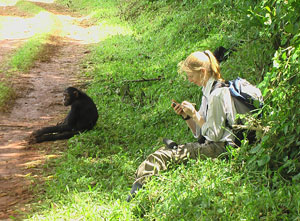
Dr. Kevin Langergraber is an Associate Professor at Arizona State University's School of Human Evolution and Social Change. His research focuses on primate behavior, conservation biology, and evolutionary anthropology, particularly through his leadership in the Ngogo Chimpanzee Project in Uganda's Kibale National Park. This long-term study examines chimpanzee social structures, health dynamics, and ecological interactions, with a strong emphasis on conservation strategies against poaching and disease transmission. Key research interests include genetic adaptation in primates, the impact of human activities on wildlife communities, and behavioral ecology across varying environmental conditions. He has pioneered methods combining genomic analysis, field observations, and machine learning to study ape behavior and biodiversity monitoring. His work integrates socioecological data with physiological measurements to understand aging patterns, reproductive strategies, and disease epidemiology in wild populations. Recent publications highlight advancements in wildlife conservation protocols, primate menopause studies, and innovative datasets for behavior recognition. Collaborations span global institutions to address challenges in primate conservation and evolutionary biology. Dr. Langergraber also engages in public outreach through documentaries and crowdfunding initiatives to fund anti-poaching patrols and support chimpanzee research.
Dr. Caroline Schuppli is a Max Planck Research Group Leader at the Max Planck Institute of Animal Behavior in Konstanz and a Freigeist Fellow by the Volkswagen Foundation. She serves as IMPRS QBEE faculty , Adjunct Researcher at the University of Zürich, and Director of the SUAQ Orangutan Research Project in Indonesia since 2017. Her work bridges evolutionary biology and cognitive ecology through longitudinal studies of Sumatran orangutans. Education: PhD in Evolutionary Biology (2012-2016), University of Zürich MSc in Anthropology (2010-2012), University of Zürich BSc in Biology (2007-2010), University of Zürich Her research investigates how social learning , environmental complexity , and maternal behavior shape cognitive evolution in great apes. Key themes include: Comparative analyses of wild vs. captive orangutan cognition Development of ecological skills and cultural repertoires Role of curiosity and innovation in cognitive evolution Interplay between life history and brain size trade-offs Recent publications emphasize nested skill acquisition , maternal behavior plasticity , and cross-taxa comparisons of social learning mechanisms. She has mentored PhD candidates like Nora Slania , Adriana Luna , and Emma Lokuciejewski . Scientific Awards: Freigeist Fellowship (2021) Swiss National Science Foundation Postdoc Funding (2019-2020) As President of the SUAQ Foundation and collaborator with institutions across Switzerland and Germany, she integrates fieldwork at Suaq Balimbing with global comparative frameworks.
Kirstin N. Sterner is an Associate Professor in the Department of Anthropology at the University of Oregon, where she also serves as Associated Faculty in the Institute of Ecology and Evolution. She co-directs the Molecular Anthropology Lab and is a key member of the University of Oregon Molecular Anthropology Group, which serves as an intellectual home for research, training, and outreach in ecological, evolutionary, and functional genetics/genomics in humans and non-human primates. Dr. Sterner's educational background includes: B.A. from New York University (2001) M.A. from New York University (2005) Ph.D. in Anthropology from New York University (2009) Postdoctoral Fellowship at Wayne State University School of Medicine (2009-2011) As a molecular anthropologist, Dr. Sterner's research focuses on understanding the genetic basis of distinctive human and non-human primate traits. She employs both within and between species perspectives, using a combination of genomics (broadly defined to include transcriptomics and epigenomics) and molecular cell biology to connect primate genotypes and phenotypes to address larger questions about primate evolution, biology, health and disease. Her work spans several key areas: the evolution of primate immune responses, epigenetics of aging and age-related diseases, muscle fiber type and the evolution of bipedalism, and human brain development and evolution. She is particularly interested in the role regulatory variation plays in human traits and diseases and how evolution has shaped these regions of the genome. Dr. Sterner's recent publications demonstrate a strong focus on aging research using primate models, particularly examining epigenetic changes associated with aging. Her work also investigates the genetic basis of skeletal muscle adaptations related to human bipedal locomotion, immune responses to viral infections in primates, and the molecular underpinnings of human brain evolution. These studies often combine genomic approaches with experimental validation to connect genetic variants to phenotypic outcomes. Dr. Sterner's research has been supported by prestigious funding sources including the National Institutes of Health, National Science Foundation, Leakey Foundation, Wenner-Gren Foundation for Anthropological Research, and the American Association of University Women. In terms of advising, Dr. Sterner has mentored numerous graduate and undergraduate students. Her current PhD candidates include Samantha Queeno, who researches the genetic mechanisms underlying myofiber development and hominin endurance locomotion, and Tanner Anderson, who studies molecular signatures of aging in the primate brain. Former students include Elisabeth A. Goldman (PhD 2022), Noah D. Simons (PhD 2018), and several others who have gone on to successful careers in academia, healthcare, and industry. Dr. Sterner co-directs the Molecular Anthropology Lab located in Pacific Hall 10A. The lab is part of the University of Oregon Molecular Anthropology Group, which provides an intellectual home for research, training, and outreach in ecological, evolutionary, and functional genetics/genomics in humans and non-human primates. The lab actively pursues research in primate immunity, adaptation to viral infection, aging, and human brain evolution.
Sten Linnarsson is a Professor of Molecular Systems Biology at Karolinska Institutet, leading the Sten Linnarsson group within the Department of Medical Biochemistry and Biophysics. His research focuses on single-cell analysis of the human brain and brain cancer, leveraging molecular atlases to identify therapeutic targets. He holds a PhD from Karolinska Institutet (2001) and has served as Head of Department (2021-2023) and current Dean of KI Solna. Notable awards include the Erik K. Fernström Prize (2015) and Methusalem Lecture (2023). Education: PhD in Medical Biochemistry and Biophysics (Karolinska Institutet, 2001) Affiliations: Director of the Sten Linnarsson Lab; member of the Human Cell Atlas initiative Research interests span single-cell genomics, neurodevelopment, and cancer biology. Key projects include mapping the first-trimester human brain and identifying cell states in gliomas. Over 200+ publications span high-impact journals like Nature , Science , and Cell . Grants: Over SEK 200M for EU-funded projects (2024) Advising: Supervises PhD students (e.g., Jokubas Janusauskas, Ivana Kapustová) and postdocs Lab activities include developing EEL FISH (in situ profiling) and synthetic biology tools for cell targeting. Future goals involve programmable therapies for brain cancer and advancing spatial transcriptomics.