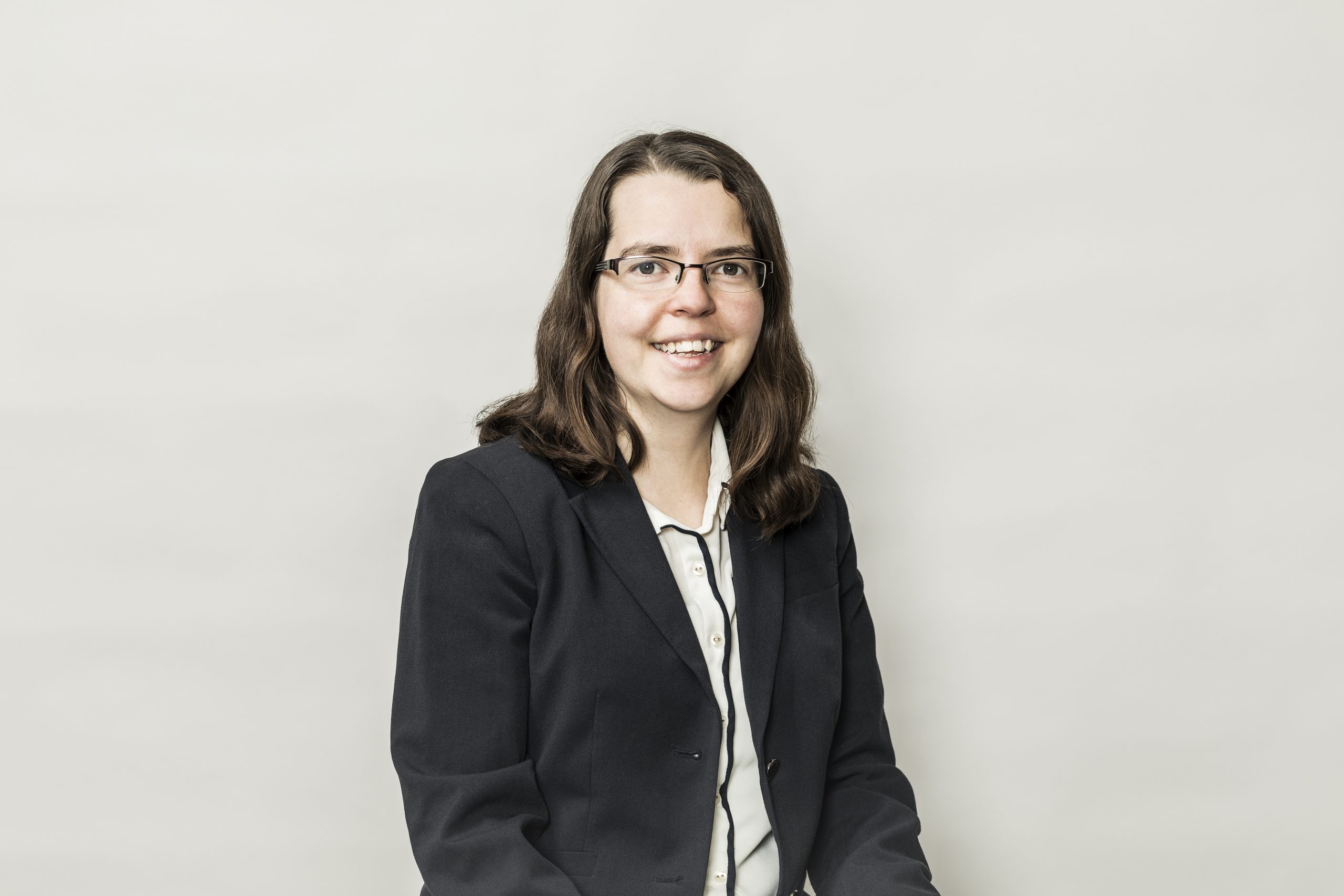
Edwin H.F. van Asseldonk is an Associate Professor at the TechMed Centre , University of Twente. His work bridges Biomechatronics and Rehabilitation Technology , focusing on integrating robotics and artificial intelligence to enhance mobility and autonomy in neurological patients. Key Research Areas: Exoskeleton development, motion control algorithms, gait analysis, neuromuscular modeling, and AI applications in rehabilitation. Recent Article Trends: Research emphasizes AI-driven exoskeletons for gait stability, biofeedback systems, and open data initiatives in biomechanics. Scientific Awards Best Paper Award at BioRob 2024 Best Poster at Dutch Biomedical Engineering Conference (2017) Best Student Paper Finalist (2018) Labs & Collaborations: Active in the TechMed Centre and 4TU.ResearchData, with international collaborations in Spain and beyond. Regular invited speaker on exoskeletons and rehabilitation robotics.
Dr. András Vadas is a habilitated Associate Professor at the Department of Medieval History , Institute of Historical Studies, Eötvös Loránd University (ELTE). He is also an alumnus of Central European University's Medieval Studies program. His career bridges medieval history with environmental history, focusing on the interplay between warfare, climate change, and ecological systems in premodern Hungary.
Dr. Bei Bei is an Associate Professor at the School of Psychological Sciences, Monash University, and an NHMRC Emerging Leadership (EL2) Fellow. She leads the Behavioural Sleep Medicine service, research, and training at Monash University Healthy Sleep Clinic, focusing on individual differences in sleep-wake behaviors, sleep-mental health relationships, and community dissemination of evidence-based sleep interventions. Doctor of Psychology (Clinical), University of Melbourne PhD, University of Melbourne Her research spans six major areas: Sleep-wake circadian rhythm disorders Cognitive Behavioral Therapy for Insomnia (CBT-I) Psychological/behavioral aspects of sleep Sleep-mental health interactions (mood, anxiety) Adolescent sleep patterns and wellbeing Perinatal/postpartum sleep interventions for women Recent publications (2024-2025) address: Insomnia treatment mechanisms in depression comorbidity Neurodevelopmental impacts of circadian factors Pregnancy-related insomnia risk identification Adolescent sleep facilitators/barriers Integrated models for youth depression and sleep across continents She also contributes to: Antifungal drug tolerance mechanisms RNA polyadenylation dynamics Mitochondrial RNA stability in cancer 3' UTR splice variants in rare diseases Awarded the NHMRC Emerging Leadership (EL2) Fellowship and Early Career Research Grant , Dr. Bei serves on editorial boards for Sleep Medicine Reviews, Sleep, and Behavioral Sleep Medicine journals.
Dr. Jennifer Cheavens is a Professor in Clinical Psychology at The Ohio State University's College of Arts and Sciences, Department of Psychology. She specializes in the treatment of mood and personality disorders, with a focus on adapting therapies like Dialectical Behavior Therapy (DBT) for diverse populations, including older adults. Her research integrates emotion regulation, hope-based interventions, and positive clinical psychology to enhance therapeutic outcomes. Dr. Cheavens has held positions such as the Joan N. Huber Faculty Fellow and received accolades like the Spotlighted Mentor Award for her teaching and mentorship. Her work bridges clinical practice with research, addressing challenges in mental health treatment and promoting resilience through evidence-based approaches. Education: PhD, Clinical Psychology, University of Kansas (2002) MS, Clinical Psychology, Old Dominion University (1996) BS, Psychology, James Madison University (1994) Research Interests: Dr. Cheavens explores how emotion regulation impacts treatment efficacy, particularly in borderline personality disorder and depression. She develops interventions focused on hope, flourishing, and strengths-based approaches, including the "Pathways" program for lung cancer patients. Her work emphasizes translating lessons from high-functioning individuals into clinical settings. Awards and Recognition: 2024 Joan N. Huber Faculty Fellow 2023 Sister Accord Leadership Award 2019 George Vaillant Award 2017 Distinguished Teaching Award Advising and Grants: Dr. Cheavens has mentored numerous students and led initiatives funded by NIMH and other agencies, focusing on diabetes prevention, pain management, and culturally tailored mental health interventions. Labs/Teams: Collaborates with interdisciplinary teams in behavioral medicine, positive psychology, and clinical trials, advancing research in emotion regulation and health disparities.
David A. Gallo is a Professor at the University of Chicago, affiliated with the Department of Psychology. He joined the faculty in 2005 after completing a B.A. at Wesleyan University (1997), a Ph.D. at Washington University in St. Louis (2002), and an NIH-sponsored postdoctoral fellowship at Harvard University. His research focuses on neurocognitive processes of human memory, particularly memory accuracy, distortion, aging effects, and Alzheimer’s disease. He explores how memory is actively reconstructed and influenced by contextual and pharmacological factors. Key research interests include metacognitive and nonconscious processes, cognitive neuroscience, and evolutionary psychology. He investigates how stereotypes, psychoactive drugs, and contextual cues affect memory accuracy and monitoring. His lab, the Memory Research Lab, employs neuroimaging, behavioral experiments, and pharmacological interventions to study these phenomena. His recent articles highlight studies on transcranial direct current stimulation (tDCS), contextual reinstatement effects, and drug-induced memory modulation. He emphasizes the role of distinctiveness in reducing memory errors and examines the neural mechanisms underlying retrieval monitoring. His work spans developmental, clinical, and applied domains, with implications for aging populations and cognitive health. Gallo teaches courses such as Cognitive Neuroscience of Aging and Evolutionary Psychology, integrating empirical research with theoretical frameworks. His contributions bridge basic science and clinical applications, addressing challenges in memory disorders and cognitive enhancement strategies.
Ghaffar Ali Hurtado Choque is an Associate Professor in the School of Public Health and Extension Specialist at the College of Agriculture and Natural Resources, University of Maryland. His work focuses on family and community health interventions for marginalized populations. Dr. Hurtado leads research projects including 'Familias Activas' addressing Latinx youth mental health through family-skills building and sports engagement. As co-investigator for Maryland Rural Opioid Technical Assistance, he addresses substance abuse challenges. His education includes a Ph.D. in Work, Community, and Family Education from the University of Minnesota.
Nate Apathy is an Assistant Professor of Health Policy & Management at the University of Maryland School of Public Health and an Affiliated Research Scientist at the Regenstrief Institute. He holds a PhD in Health Policy & Management from Indiana University (2020) and completed a postdoctoral fellowship in health services research at the University of Pennsylvania (2022). His research focuses on health information technology's role in healthcare delivery reform, regulatory impacts on health IT innovation, and the use of EHR metadata to assess care quality. He examines organizational strategies to reduce IT-based burdens, particularly in primary care and specialty settings. His work bridges health policy, services research, and informatics, with emphasis on EHR documentation dynamics, clinician workflows, and interoperability challenges. Notable studies include analyses of physician EHR time allocation, telemedicine integration, and the impact of team-based documentation tools. He has contributed to national discussions on electronic health record legal settlements, opioid prescribing guidelines, and nursing home post-acute care specialization. Nate’s research has been published in journals such as Health Affairs , Annals of Internal Medicine , and Journal of the American Medical Informatics Association . He collaborates with institutions like the Leonard Davis Institute of Health Economics and focuses on translating informatics insights into actionable policy recommendations.
Barry Rosenfeld is a Professor of Psychology at Fordham University, specializing in forensic psychology, clinical psychology, and neuropsychological assessment. He leads the Psychology-Law Research Lab and focuses on topics such as risk assessment in criminal justice, mental health in incarcerated populations, and the psychological aspects of terminal illness. His work bridges clinical practice, legal systems, and oncology care, emphasizing culturally adapted interventions and evidence-based practices. His research interests include violence risk assessment, psychometric validation of clinical tools, and the interplay between mental health and terminal illnesses like cancer. Notable projects involve multinational studies on attitudes toward hastened death and qualitative inquiries into patient prognosis understanding. Key Areas: Forensic Psychology, Clinical Psychology, Oncology Psychology, Neuropsychology Labs/Teams: Psychology-Law Research Lab Publications: Over 150 peer-reviewed articles, with recent focuses on correctional settings, sexual offender risk, and advanced cancer care. Dr. Rosenfeld has contributed to international consensus definitions in forensic mental health and served as President of the International Association of Forensic Mental Health Services (IAFMHS) in 2018.
David Mosse is Professor of Social Anthropology at SOAS University of London and Director of the Centre for Anthropology and Mental Health Research in Action (CAMHRA). He holds a DPhil from Oxford University and is a Fellow of the British Academy and Academy of Social Sciences. His career integrates academic research with development practice, including roles as Oxfam's South India Representative and advisor to international agencies. Research spans: Anthropology of mental health and cultural psychiatry Caste, Dalit rights, and development activism Environmental history and water resource management Christianity in South Asian society Current work focuses on ethnographic approaches to psychiatric crisis care and suicide prevention. Publications since 2020 predominantly address mental healthcare innovation (particularly Open Dialogue), caste in modern economies, and suicide prevention methodologies, reflecting interdisciplinary engagement across anthropology, psychiatry, and development studies. Awards and honors: Fellow of the British Academy Fellow of the Academy of Social Sciences 2021 Jack Goody Award recipient Supervises doctoral candidates researching caste histories, democratic movements, and mental healthcare innovation. Leads the ESRC-funded 'Anthropology of Peer-Supported Open Dialogue' study and collaborates with NHS Trusts on mental health service design. Directs CAMHRA, coordinating research on culturally responsive mental healthcare models across UK and South Asian contexts.
Reuben P. Keller is a Professor and Graduate Program Director at Loyola University Chicago’s School of Environmental Sustainability, where he has served since 2011. He was awarded Faculty Member of the Year (2024) by the Loyola Faculty Council. Before Loyola, he held postdoctoral positions at the University of Chicago, University of Notre Dame, and Cambridge University. His research focuses on ecological, economic, and social aspects of invasive species, particularly in aquatic ecosystems like the Great Lakes and Chicago River. He actively collaborates with policymakers to translate research into actionable strategies. Education includes a BA/BSc(Hons) from Monash University (Australia) and a PhD in Ecology from the University of Notre Dame. His current projects include SCUBA-based sampling of invasive crayfish in Lake Michigan and experimental control of red swamp crayfish in the Chicago River. He also investigates technologies to prevent invasive species spread, such as electric barriers for invertebrates. Professional roles include Associate Editor of Biological Invasions and Co-Chair of the Illinois Invasive Species Council’s Aquatic Life Committee. Courses taught span environmental statistics, freshwater ecosystems, and invasive species management. His work bridges academia and policy, emphasizing real-world applications of ecological research. Awards: 2024 Faculty Member of the Year Publications: Includes edited volumes on invasive species and peer-reviewed articles on ecological invasions and management strategies.
Professor Carla Ferstman serves as Director of the Human Rights Centre at Essex Law School, University of Essex, holding a full Professorship since October 2021 after previously serving as Senior Lecturer from January 2018 to September 2021. She is an internationally recognized expert in human rights law with extensive practical experience in international human rights institutions. Education: DPhil in Public International Law from University of Oxford (2015) LLM in International Law from New York University (1998) Barrister and Solicitor from British Columbia Bar Association (1994) LL.B in Law from University of British Columbia (1993) BA in Philosophy from University of Western Ontario (1990) Professor Ferstman's research spans three interconnected domains: Public International Law (focusing on law of international organizations, consular assistance, and application of human rights principles); Human Rights Law (specializing in enforcement mechanisms, remedies and reparation, accountability of state and non-state actors, and terrorism law); and International Criminal Law (particularly victims' rights, reparations, prosecutorial discretion, and complementarity). Her work consistently bridges theoretical frameworks with practical implementation challenges. Analysis of her recent publications reveals a clear trajectory toward increasingly complex human rights implementation issues, with growing emphasis on accountability mechanisms, civil society space protection, and the practical realities of reparation systems. Her scholarship shows particular focus on the tension between state sovereignty and human rights obligations, especially in migration contexts and peacekeeping operations. Scientific Awards: Essex Faculty of Arts and Humanities Supervisor of the Year award (2022) MacArthur Foundation Award for Creative and Effective Institutions (awarded to REDRESS during her tenure as Director) Professor Ferstman actively supervises doctoral candidates in human rights and law, with current students including Matteo Bassetti, Benjamin Khastan, Kani Areef, and Nataly Santana Sanchez. Her recent grant funding includes projects on Conflict Reporting Ethics (2025, University of Essex), Accountability for Online Harm Under International Criminal Law (2023, Modern Law Review), and UK Government Accountability for International Crimes (2020, University of Essex ESRC IAA). She has held prestigious fellowships including the O'Brien Residential Fellowship at McGill University (2023) and Fernand Braudel Fellowship at the European University Institute (2022). As a member of the Council of Europe's Expert Council on NGO Law since 2018, Professor Ferstman contributes to shaping civil society regulation across Europe. She also serves on the Justice Rapid Response SGBV Justice Experts Roster and the Advisory Committee of Lawyers for Justice in Libya, demonstrating her commitment to practical human rights implementation beyond academic work.
Naftali Raz is a Professor of Psychology at Stony Brook University, specializing in Integrative Neuroscience. He holds a Ph.D. from the University of Texas at Austin (1985) and a B.A. from the Hebrew University of Jerusalem (1979). His research focuses on understanding age-related changes in the brain and cognition, particularly exploring metabolic, vascular, and inflammatory risk factors influencing cognitive aging. He employs neuroimaging techniques such as MRI, MRS, and fMRI to study brain structure, function, and metabolism in healthy aging populations. Raz’s research emphasizes the 'FRIENDS' model (Free-Radical Induced Energetic and Neural Decline in Senescence), linking aging to energy production decline. His work includes longitudinal studies on brain atrophy, myelin content, and iron accumulation. He investigates how physiological risk factors like cardiovascular disease and metabolic syndrome impact neurocognitive trajectories. Current grants include NIA funding for neural correlates of cognitive aging and hippocampal glutamate modulation studies. Education: Ph.D. in Psychology, University of Texas at Austin (1985) B.A. in Psychology, Hebrew University, Jerusalem, Israel (1979) Labs/Facilities: Integrative Neuroscience Group, SCAN Center (Stony Brook Advanced Neuroimaging) His publications span over three decades, with recent works on recognition memory strategies, hippocampal subfield analysis, and cerebral blood flow dynamics. Collaborations include multi-institutional projects on neuroimaging protocols and aging mechanisms.
Marina Freire-Gormaly is an Assistant Professor in the Mechanical Engineering Department at York University's Lassonde School of Engineering. Her research focuses on renewable energy-powered water treatment systems, machine learning for smart design, advanced manufacturing, and sustainable engineering solutions for remote communities. She holds a PhD and M.A.Sc. from the University of Toronto, specializing in carbon capture and storage technologies. She has worked on nuclear energy projects at Ontario Power Generation and contributed to World Bank sustainability assessments. She currently chairs the Canadian Society of Mechanical Engineers' Student and Young Professional Affairs committee. Education: PhD in Mechanical Engineering, University of Toronto M.A.Sc. in Mechanical Engineering, University of Toronto Research Interests: She pioneers solar-powered reverse osmosis systems, energy recovery mechanisms, and IoT-driven smart systems. Her lab explores nanotechnology applications in environmental sustainability, including carbon capture and aquatic remediation. She integrates machine learning for optimizing energy-water nexus challenges in off-grid regions. Key Contributions: Developed models for membrane fouling in desalination systems, advanced pore network characterization for geologic CO2 storage, and designed automated renewable energy systems. Her work bridges engineering innovation with global sustainability goals. Grants & Collaborations: Engages with industries like Honda Canada and Trane Canada on sustainability initiatives. Supervises graduate students in emerging areas like nanobubble technology and direct air capture systems. Lab Activities: The Freire-Gormaly Lab focuses on clean energy-water systems, with current projects involving nano-technology for space applications (Canadian Space Agency collaboration) and life cycle assessments of carbon storage technologies.
Laura J. Holt is a Professor of Psychology at Trinity College, where she has been a faculty member since 2008. Her research focuses on addiction, substance use prevention, and community-based interventions. She holds a B.A. in Psychology from Trinity College, an M.S. and Ph.D. in Clinical Psychology from Rutgers University, and completed postdoctoral training at Yale University School of Medicine and the Department of Veterans Affairs. Her work emphasizes the role of family, peers, and societal factors in shaping psychological outcomes and effective treatment strategies. Holt’s research lab engages Trinity undergraduates in projects addressing healthier college relationships, substance use reduction, and community outreach. Students contribute through data collection, analysis, and publication preparation. She strongly advocates for liberal arts education, highlighting its role in fostering critical thinking, student-faculty collaboration, and community engagement. Her research themes include e-cigarette dependence, prescription stimulant misuse, and the intersection of mental health with substance use. She has explored motivational factors in substance use cessation and the impact of faculty-student rapport on academic success. Her lab’s activities emphasize practical skills for students pursuing clinical or counseling psychology careers. No scientific awards are explicitly listed in the provided materials. However, her extensive contributions to addiction research and mentorship are evident through her prolific publication record and collaborative projects. Holt advises students such as Alice Verdier ’22, Angie Delucia ’22, and Maddie Shapiro ’22, reflecting her commitment to undergraduate research. Her work integrates community partnerships and evidence-based interventions to address public health challenges, particularly among emerging adults. The Holt Research Lab serves as a hub for collaborative projects, offering students hands-on experience in qualitative and quantitative research methods (e.g., Atlas.ti, SPSS). This environment prepares students for graduate studies and careers in clinical psychology and related fields.
Joey Tamburo serves as Lecturer and Head Athletic Trainer in the Department of Kinesiology at the University of North Carolina at Pembroke. His role combines teaching responsibilities with athletic program oversight, focusing on injury management, prevention protocols, and rehabilitation strategies for student-athletes. Based in the Jones Health and Physical Education Center (Room 1225), Tamburo applies clinical knowledge to both classroom instruction and UNCP's athletic programs. His professional expertise spans sports emergency care, therapeutic interventions, and athlete conditioning protocols.