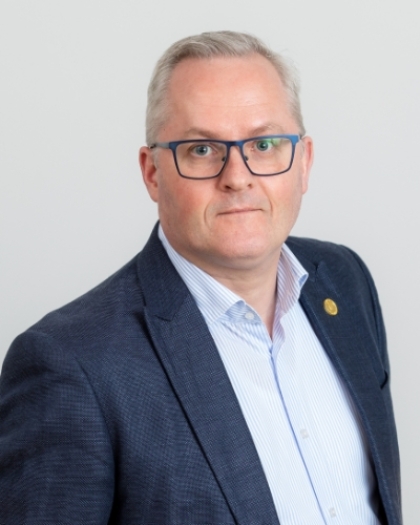
Jeffrey Monaghan is an Associate Professor at the Institute for Criminology and Criminal Justice (ICCJ) at Carleton University. He holds a Ph.D. in Sociology from Queen’s University and serves on the editorial board of Criminological Encounters . His research focuses on the intersections of policing, surveillance, and systemic inequality, with a particular emphasis on settler colonialism, Indigenous movements, and the global expansion of security practices. Monaghan teaches courses on criminological theories, policing, and justice frameworks. His work examines how security and policing practices criminalize marginalized communities, especially Indigenous peoples and social movements resisting extractive development. Key projects include analyses of counterterrorism strategies, disability injustice in criminal systems, and the securitization of Canadian foreign aid. He has authored/co-authored books like Security Aid: Canada and the Development Regime of Security and Policing Indigenous Movements , and edited volumes such as Protests in the Information Age . Monaghan’s research integrates critical criminology, colonial studies, and sociolegal analysis. He is cross-appointed to Carleton’s Department of Sociology and Anthropology and the School of Canadian and Indigenous Studies, amplifying interdisciplinary engagement with security governance and social justice issues.
Professor Mette Eilstrup-Sangiovanni serves as Senior Lecturer in International Studies within the Department of Politics and International Studies (POLIS) at the University of Cambridge and holds a Fellowship in International Relations at Sidney Sussex College. Her teaching portfolio encompasses International Organization, International Relations Theory, International Security, History and Theory of European Integration, and Research Design and Methodology, reflecting her dual institutional commitments. Her research program centers on International Security, International Organizations, and European Integration with specialized expertise in Global Governance and Transnational Networks. She investigates how formal and informal institutions shape security governance frameworks, weapons proliferation regimes, and European defense architectures through rigorous application of network theory. This analytical lens reveals critical insights into cooperation dynamics and institutional evolution within international security contexts. Publication analysis shows consistent thematic development from foundational work on balance-of-power theory (2008-2009) toward contemporary examinations of multipolarity's institutional impacts (2013-2014). Her scholarship demonstrates methodological continuity in applying network analysis to diverse security challenges, from terrorist organizations to EU defense policy, while maintaining focus on institutional interplay in global governance structures.
Dr. Miemie Winn Byrd is an Adjunct Professor at the Daniel K. Inouye Asia-Pacific Center for Security Studies (DKI APCSS), where she researches, teaches, and publishes on security dynamics in Myanmar/Burma & Southeast Asia, economics & security linkages, and organizational development. A retired US Army Lieutenant Colonel with 28 years of distinguished service, she brings extensive experience from military, private sector, and nonprofit organizations to her academic work. Dr. Byrd earned her educational credentials from prestigious institutions: Bachelor of Arts in Economics and Accounting from Claremont McKenna College Master of Business Administration with emphasis in Asia-Pacific Economics and Business from University of Hawaii Doctorate in Education Leadership from the University of Southern California Her research focuses on the complex interplay between security, economics, and social development in Southeast Asia, with particular expertise in Myanmar's political and security landscape. Dr. Byrd examines how civil-military operations, women's roles, and educational approaches impact socioeconomic development and security outcomes in the region. She investigates the strategic implications of Myanmar's internal conflicts for broader Indo-Pacific security dynamics, and analyzes how private sector engagement can contribute to poverty alleviation and stability. Dr. Byrd serves on multiple advisory boards that extend her influence in policy and research: Board of Governors of the Keck Center for International and Strategic Studies at Claremont McKenna College Regional Advisory Committee for Knowledge for Democracy Myanmar Initiative of the Asia Regional Office, International Development Research Centre The Oxford-Thanakha International based in Chiang Mai, Thailand Myanmar Policy Institute based in Washington, D.C. Her military career included significant roles such as Deputy Economic Advisor and Civil-Military Operations Plans Officer at U.S. Pacific Command, where she supported Operations Enduring Freedom. She served as a linguist and cultural advisor for U.S. delegations at the Association of Southeast Asian Nations Regional Forum and during POW/MIA recovery negotiations in Myanmar. Her civilian career spans 16 years in auditing, accounting, and financial management with multinational corporations.
Professor Peter Billings is a Professor at the School of Law, The University of Queensland, and a Fellow of the Higher Education Academy. His expertise spans Administrative Law, Immigration and Refugee Law, Social Welfare Law, and Human Rights Law. He has received numerous awards, including the Australian Award for University Teaching (2016) and the Vice Chancellor's Equity and Diversity Award (2011). His research focuses on crimmigration, refugee protection, and the corrosive effects of immigration detention laws. Professor Billings has published extensively on topics such as refugee law, preventive justice, and the intersection of criminal and immigration law. Education: Bachelor of Law and Doctor of Philosophy from the University of Southampton. Research Interests Immigration and Refugee Law Crimmigration (intersection of criminal and immigration law) Administrative Justice and Law Social Welfare Law Aboriginal and Torres Strait Islander Legal Issues Media Expertise Regular contributor to The Guardian and ABC Radio National, providing expert commentary on immigration detention, refugee policies, and human rights. Grants and Funding Building research capacity for quantitative analysis of Indigenous poverty (2011–2013) Critical evaluation of administrative rules (2011–2013) Aboriginal protection laws study (2008–2009) Supervision Currently supervising PhD projects on refugee employment integration, immigration detention governance, and international law on migrant smuggling. Key Contributions Authored Regulating Refugee Protection through Social Welfare (2023) and contributed to pivotal discussions on immigration detention's societal impacts. His work informs policy reforms and legal frameworks in Australia.
Todd C. Helmus is a Senior Behavioral Scientist at the RAND Corporation and a Professor of Policy Analysis at the RAND School of Public Policy. He specializes in counterterrorism, information operations, security cooperation, and social media analysis with a focus on irregular warfare and violent extremism. Helmus holds a Ph.D. in clinical psychology from Wayne State University (Detroit, MI) and has served as a deployed analyst for U.S. military commands in Iraq and Afghanistan. His research emphasizes countering adversarial tactics such as foreign terrorist recruitment, Chinese gray zone operations, and propaganda campaigns. He teaches graduate courses on information operations and frequently speaks at security conferences. Key findings include studies on veteran susceptibility to extremism and Ukraine's counter-disinformation strategies during the Russia-Ukraine conflict. Helmus advises on national security communication campaigns, drawing insights from public health strategies. His work spans academic publications, expert commentary, and video/podcast media across topics like AI-driven misinformation, election security, and global resource development. He remains actively involved in policy analysis for U.S. national strategies on antisemitism and domestic extremism mitigation.
Edward H. Kaplan is the William N. and Marie A. Beach Professor of Management Sciences at the Yale School of Management, Professor of Public Health at the Yale School of Medicine, and Professor of Engineering at the Yale School of Engineering and Applied Sciences. He holds secondary appointments in Chemical and Environmental Engineering, Health Policy & Management, the Institution for Social and Policy Studies, and Statistics. Education: PhD in Urban Studies, Massachusetts Institute of Technology (1984) SM in Mathematics, Massachusetts Institute of Technology (1982) SM in Operations Research and City Planning, Massachusetts Institute of Technology (1979) BA in Urban/Economic Geography, McGill University (1977) Kaplan is an expert in operations research, mathematical modeling, and statistics, focusing on public policy and management. His research spans counterterrorism, HIV prevention, bioterrorism, and public health modeling. He has developed models for suicide bomber detection, smallpox response logistics, needle exchange program effectiveness, and wastewater-based disease surveillance. His work has been recognized with numerous awards, including the Koopman Prize (2003, 2005), INFORMS President’s Award (2002), Charles C. Shepard Science Award (2009), and INFORMS Fellow (2005). He has also served as President of INFORMS (2016) and co-directs the Daniel Rose Technion-Yale Initiative in Homeland Security.
Sarah Shirazyan is a Lecturer in Law at Stanford Law School , where she designed the Interpol-Stanford Policy Lab. She also serves as Director and Head of Meta's GenAI Product Policy work, overseeing responsible AI development across Meta's platforms. Doctor of Juridical Sciences (J.S.D.) from Stanford Law School LL.M. from SOAS/UCL, University of London Her research focuses on the intersection of national security , public policy , and international law , particularly examining: Effectiveness of UN Security Council responses to WMD terrorism Framework for regional organization collaboration in WMD prevention Platform content policy development and misinformation governance Responsible AI implementation under legal frameworks Key publication themes include: Platform algorithmic accountability Media capture in digital domains Content policy development during crises UN Security Council institutional limitations Regional organization synergies in security Recipient of Gerald J. Lieberman Award for research, teaching, and community service Professional affiliations: Stanford Law School Stanford Center for International Security and Cooperation (CISAC) INTERPOL European Court of Human Rights Council of Europe United Nations
Jan Oskar Engene is an Associate Professor in the Department of Comparative Politics at the University of Bergen, Norway. His academic career spans several decades with significant contributions to both terrorism studies and heraldry research. Engene's research interests have evolved significantly over time, beginning with a strong focus on terrorism, political violence, and European security. His early work centered on the TWEED (Terrorism in Western Europe: Explaining the Trends) dataset, which documented terrorist incidents across Western Europe from 1950 onward. Over the years, his research expanded to include political symbolism, heraldry, and flag history, particularly regarding Norwegian political symbols and their evolution. His work demonstrates a unique interdisciplinary approach, bridging political science with historical and symbolic analysis. Analysis of Engene's publication trends reveals a clear evolution from predominantly terrorism-focused research in the 1990s and early 2000s toward increasing engagement with heraldry, political symbolism, and Norwegian historical identity markers in recent years. The earlier works focus on quantitative terrorism analysis, counterterrorism policy, and European security frameworks, while more recent publications examine municipal heraldry, county coats of arms, and historical political symbols. This shift demonstrates Engene's ability to apply political science methodologies to diverse research areas while maintaining a consistent focus on political symbolism and identity. Engene has supervised numerous Master's theses at the University of Bergen, primarily in the areas of terrorism studies, European politics, and political identity. His supervision record includes students researching topics such as state responses to terrorism in Italy, Nordic political systems, and regional identity in Western Europe. While specific grant information isn't detailed in the available materials, his TWEED project represents a significant research undertaking that likely involved external funding. Engene maintains active engagement with public discourse through media appearances, having participated in numerous television and radio programs discussing terrorism, security policy, and political symbolism. His work with the TWEED project established him as a leading expert on European terrorism patterns, while his more recent heraldry research has positioned him as a specialist in Norwegian political symbolism and historical iconography.
Arnold M. Howitt is an Adjunct Lecturer in Public Policy at Harvard University's Harvard Kennedy School (HKS), where he also serves as Senior Adviser to the Roy and Lila Ash Center for Democratic Governance and Innovation. He co-directs the Program on Crisis Leadership, focusing on emergency preparedness, disaster recovery, and intergovernmental policy implementation. His work spans executive education programs for senior officials in crisis management, including Leadership in Crises and Homeland Security, and he has co-founded initiatives like the National Preparedness Leadership Initiative. Dr. Howitt’s research examines crisis management in the U.S. and globally, with a focus on cross-jurisdictional coordination, emergency response systems, and lessons from disasters like the 2015 Paris attacks, Nepal earthquakes, and Japan’s 2011 triple disaster. He has held visiting faculty roles at Japanese universities and teaches part-time at Tsinghua University’s Schwarzman College in Beijing. His affiliations include the Belfer Center for Science and International Affairs and the Mossavar-Rahmani Center for Business and Government. Dr. Howitt has directed major projects such as the Executive Session on Domestic Preparedness and advised international agencies on disaster recovery. He earned his AB from Columbia University and MA/PhD in political science from Harvard.
Peter Mandaville serves as Professor of Government and Politics at George Mason University's Schar School of Policy and Government, where he directs the AbuSulayman Center for Global Islamic Studies. He concurrently holds senior research fellowships at Georgetown University's Berkley Center and the Atlantic Council's Freedom and Prosperity Center. His prior U.S. government roles include Director of USAID's Center for Faith-Based & Neighborhood Partnerships (2024-2025) and Senior Advisor at the U.S. Institute of Peace (2022-2024). His academic foundation includes degrees from the University of St. Andrews and University of Kent, with additional studies at the American University in Cairo. Mandaville's research centers on religion's geopolitical dimensions, particularly Islam's role in international relations. He examines how states weaponize religious narratives for soft power, analyzes transnational Islamic movements, and investigates U.S. policy frameworks for engaging religious actors. His work bridges theoretical political science with actionable diplomatic strategies, emphasizing religion as both a source of conflict and catalyst for peacebuilding. Recent publications reveal a cohesive trajectory analyzing religious soft power mechanisms across multiple geopolitical contexts. Key patterns include comparative studies of state-sponsored religious export (Russia, India, Saudi Arabia), contestation over religious authority in foreign policy, and the domestic-international nexus in religious diplomacy. His scholarship consistently addresses how religious narratives reshape global power structures beyond traditional civilizational conflict models. Mandaville leads the Strategic Religious Engagement Hub, which operates The Missing Dimension blog analyzing U.S. religious engagement in diplomacy, development, and defense. Through the AbuSulayman Center, he directs research on Muslim societies and global Islamic networks, fostering collaboration between academics, policymakers, and religious actors.
Dr. Reza Montasari is a Senior Lecturer in Cyber Threats at Swansea University's Hillary Rodham Clinton School of Law. He holds a BSc in Multimedia Computing and MSc in Computer Forensics from the University of South Wales, and a PhD in Digital Forensics from the University of Derby. His professional memberships include Fellow of the Higher Education Academy (FHEA) and Chartered Engineer (CEng). Montasari’s research focuses on Digital Forensics, Cyber Security, and Cyber Terrorism, with over 50 publications. He has authored/co-authored books like Cyberspace, Cyberterrorism and International Security (2024) and Countering Cyberterrorism (2023). His work bridges technical and legal aspects of cyber threats, addressing AI’s role in counterterrorism and national security. He has held roles such as External Examiner at the University of South Wales and leadership positions in cybersecurity initiatives. His expertise includes IoT forensics, dark web challenges, and digital policing strategies. Montasari also collaborates with law enforcement agencies like Cheshire Police and advises media on cybersecurity issues. Key contributions include editorial board memberships, conference presentations (e.g., ICGS3), and contributions to cybersecurity policy development. His research emphasizes ethical AI applications, privacy rights, and mitigating cyber threats in modern societies.
Maryellen Fullerton is the Suzanne J. and Norman Miles Professor of Law at Brooklyn Law School. She served as Interim Dean from 2018 to 2019. Her expertise spans asylum/refugee law, immigration, international law, human rights, civil procedure, and federal courts. She holds a J.D. from Antioch School of Law and a B.A. from Duke University. Fullerton’s research examines comparative refugee law, EU asylum systems, and U.S. policies. She has held distinguished visiting roles at institutions like National Taiwan University and the University of Trento (via Fulbright). Her scholarship includes co-authored casebooks on immigration and refugee law, and she founded the multilingual Refugee Law Reader. She has advised Human Rights Watch on missions in Germany, consulted for UNHCR, and supports Refugee Law Clinics in Eastern Europe. Awards include the Fulbright Scholar designation and German Marshall Fund Fellowship. Affiliations: Dennis J. Block Center for International Business Law, Brooklyn Law School International Human Rights Fellowship Program. Grants/Awards: Fulbright Scholar (multiple), German Marshall Fund Fellow, Distinguished Chair at University of Trento. Labs/Teams: Leads Refugee Law Reader project; collaborates with global human rights organizations.
Assoc. Prof. Dr. Volkan İpek serves as a faculty member at Yeditepe University's Faculty of Economics and Administrative Sciences within the Department of Political Science and International Relations. Holding a PhD from Bilkent University, he has been actively teaching courses including African Society and Politics, Turkish Foreign Policy, and Political Ethics since 2017, contributing significantly to international relations scholarship with a focus on Africa-Turkey dynamics. Dr. İpek completed his undergraduate studies in International Relations at Bilkent University (1999-2004) followed by an integrated PhD in Political Science at the same institution (2004-2015), where his doctoral thesis examined Morocco's quest for European Community membership through post-colonial theory. His research centers on African Studies and Turkish Foreign Policy, particularly analyzing Turkey's diplomatic engagement with Sub-Saharan Africa, migration governance, and EU-Africa relations. He employs interdisciplinary and post-colonial frameworks to investigate political identity formation, humanitarian responses, and emerging power dynamics, with notable contributions to understanding Turkey's soft power expansion in Africa. Analysis of his 2018-2024 publications reveals intensifying focus on contemporary African challenges including pandemic response (Ebola), counterterrorism strategies, sports diplomacy (FIFA World Cup), and Sahel region politics. His works demonstrate methodological diversity spanning theoretical analyses, case studies on Somalia and Ethiopia, and multi-volume regional assessments. Dr. İpek has supervised four master's theses on migration patterns, humanitarian aid comparisons, and counterterrorism approaches in Africa. He has contributed as researcher to three externally funded projects: Supporting Capacities of the Presidency of Migration Management (2023), Supporting Development of Return Counselling Capacities in Türkiye (2022), and Türkiye's Migration Management Support Project (2019-2020), all addressing EU-Turkey migration cooperation.
Tony Ingesson is a Senior Lecturer in the Department of Political Science at Lund University, specializing in intelligence analysis, counter-espionage, and military decision-making. With a background in the Swedish Armed Forces where he worked with technical data acquisition for airborne weapons systems and communications, he brings practical military experience to his academic work. His research interests span intelligence analysis methodologies, counterintelligence operations, deception and manipulation at tactical levels, clandestine communications, and industrial espionage. Ingesson has developed a particular expertise in how psychological mechanisms and biases influence intelligence analysis, as well as the historical connections between military conscription and democratization. His work bridges theoretical political science with practical security applications. Analysis of his recent publications reveals a strong focus on contemporary security challenges, particularly the intersection of traditional and emerging technologies in intelligence operations. His work examines how historical communication methods persist in modern conflicts, the evolving nature of espionage in high-trust societies like Sweden, and the application of intelligence analysis techniques to non-traditional fields such as precision oncology. Ingesson demonstrates consistent scholarly output across both academic journals and public-facing platforms like The Conversation, indicating his commitment to making complex security issues accessible to broader audiences. Ingesson actively participates in interdisciplinary research projects, including 'Clandestine Communications: Old Technologies, New Opportunities' and 'Greyzone genomics' at the Pufendorf IAS. His teaching portfolio encompasses political science methods, intelligence analysis techniques, counterterrorism, and deception studies, reflecting the breadth of his expertise. While specific details about student advising aren't provided in the available information, his role as Senior Lecturer indicates involvement in mentoring students through his teaching responsibilities. His research team involvement includes collaboration with researchers like Magnus Andersson on clandestine communications and David Gisselsson Nord on the intersection of genomics and security. These collaborations demonstrate his ability to bridge disciplinary boundaries while maintaining focus on core intelligence and security issues.
Graham T. Allison, Jr. is the Douglas Dillon Professor of Government at Harvard Kennedy School, where he has taught for five decades. He previously served as the Founding Dean of Harvard's John F. Kennedy School of Government and as Director of the Belfer Center for Science and International Affairs until 2017. His career spans academia, government service, and international policy analysis, with significant contributions to national security studies and international relations. Dr. Allison's educational background includes: Davidson College Harvard College (B.A., magna cum laude, in History) Oxford University (B.A. and M.A., First Class Honors in Philosophy, Politics, and Economics) Harvard University (Ph.D. in Political Science) As a leading analyst of national security, Dr. Allison specializes in nuclear weapons policy, US-Russia relations, US-China relations, and decision-making processes in international crises. His research has profoundly influenced how scholars and policymakers understand great power competition and conflict prevention. He is particularly renowned for developing the concept of the "Thucydides Trap" to analyze the historical patterns when a rising power threatens to displace an established power. Dr. Allison's recent scholarly output demonstrates consistent focus on contemporary geopolitical challenges, particularly US-China strategic competition, nuclear weapons policy, and conflicts in the Middle East and Eastern Europe. His publications bridge academic rigor with policy relevance, often providing historical context to current crises while offering concrete recommendations for policymakers. The breadth of his work spans traditional academic journal articles, policy briefs, and commentary in major media outlets, demonstrating his commitment to engaging both scholarly and public audiences. Dr. Allison has received numerous prestigious awards for his contributions to national security: Defense Department's highest civilian award, the Defense Medal for Distinguished Public Service Distinguished Public Service Medal (awarded twice - first by Secretary Cap Weinberger and second by Secretary Bill Perry) Throughout his career, Dr. Allison has advised multiple presidential administrations, serving as Assistant Secretary of Defense in the Clinton Administration and Special Advisor to the Secretary of Defense under President Reagan. He has been a member of the Secretary of Defense's Advisory Board for every Secretary from Weinberger to Mattis. His work has been supported by significant sponsored projects including the "Russia Matters Web Portal" funded by the Carnegie Corporation of New York and programs to help students train for Russia-related jobs funded by the U.S. Russia Foundation. Dr. Allison has maintained strong connections with the Belfer Center for Science and International Affairs, which he directed until 2017 and which remains ranked as the "#1 University Affiliated Think Tank" in the world. Through the Belfer Center, he has fostered relationships with international security experts from around the world, particularly with Israeli security officials and analysts with whom he has collaborated extensively.