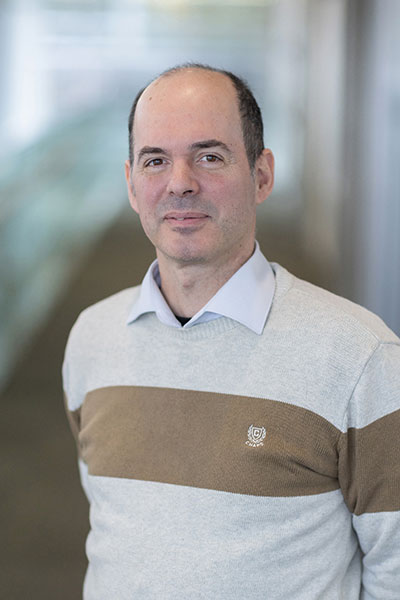
Teresa Hudson is a Professor at the University of Arkansas for Medical Sciences , affiliated with the College of Medicine and Department of Psychiatry . Her work focuses on substance abuse, mental health, and pain management in veterans and high-risk populations, with significant funding from the Substance Abuse & Mental Health Services Administration , NIH , and HRSA . Key roles include: Principal Investigator for the Arkansas Behavioral Health Integration Hub (BHI-Hub) and Improving Emergency Department Management of Pain grants Co-Investigator in studies on medical marijuana, opioid dosing, and chronic pain Recipient of the Junior Faculty Development Award from AGEC Her research explores telemedicine, collaborative care models, and disparities in mental healthcare access, often collaborating with institutions like the VA Health System and NIH . She contributes to policy discussions on opioid safety and Medicaid service utilization. Scientific Awards : Junior Faculty Development Award: Chronic Pain and its Influence on Mental Health in Older Adults (HRSA/AGEC, 2023)
Christoph Gröger holds the academic title Dr.-Ing. and serves as Chief Expert for Data & AI at Bosch, leading enterprise architecture in Bosch's global data strategy team. He is also active as a guest lecturer and researcher at the University of Stuttgart, focusing on industrial analytics, data management, and data platforms. Institution: University of Stuttgart (IPVS - Applications of Parallel and Distributed Systems) Role: Lecturer, Guest Researcher Current Focus: Data platforms, data strategies, enterprise data marketplaces His research centers on industrial analytics, addressing data management and analytics in manufacturing and enterprise systems. He explores data lake architectures, metadata modeling, and the integration of data warehouses with data lakes. His work spans Industry 4.0, mobile manufacturing dashboards, and prescriptive analytics for business process optimization. Recent publications analyze data lakehouses, metadata frameworks, and enterprise data marketplaces. These works emphasize practical implementations, metadata challenges, and democratizing corporate data. His research trends highlight hybrid data architectures, agile manufacturing analytics, and data productization. Scientific Awards: Best Paper Award at ICEIS 2016 Best Student Paper Award at ICEIS 2014 Best Student Paper Award at ICEIS 2014 At the University of Stuttgart, Gröger teaches courses on Industrial Analytics, Data Warehousing & Analytics (with a focus on Data Mining), and Data Platforms for Industry 4.0. He has led doctoral seminars on industrial analytics since 2019 and contributes to the Industrial Data Lab collaboration between Bosch and the university.
Ruth Paterson is an Associate Professor at the School of Health and Social Care at Edinburgh Napier University, specializing in medication adherence, eHealth, and simulation-based medical education. She leads research within the Centre for Cardiovascular Health and collaborates with international institutions. Research focus: Medication management for vulnerable populations Key methods: Mixed methods, participatory action research Technologies: Electronic prescribing systems, virtual reality simulations Her work bridges healthcare service innovation and patient safety, particularly for individuals with intellectual disabilities and cardiovascular conditions.
Yves Lucet is a Professor in the Department of Computer Science, Mathematics, Physics and Statistics at the University of British Columbia Okanagan. He holds a PhD from the University of Toulouse. His research spans computational mathematics, optimization, and convex analysis, with a focus on algorithm development for computer-aided convex analysis and road design optimization. He leads the development of the CCA (Computational Convex Analysis) toolbox under Scilab, emphasizing hybrid symbolic-numerical algorithms. His work includes visualizing set-valued operators using Virtual Reality (VR) and collaborating on large-scale road design projects funded by NSERC, aiming to minimize construction costs while meeting safety and environmental constraints. Lucet advises graduate students and contributes to interdisciplinary teams involving mathematics, statistics, and engineering. His research also explores applications in computational geometry, image processing, and network communication. Education: PhD in Mathematics from the University of Toulouse. Research Interests: Computational Convex Analysis Algorithm Design for Optimization VR Visualization of Mathematical Operators Multi-objective Road Design Optimization Data-Driven Process Monitoring Key Projects: Development of the CCA toolbox, road design optimization funded by NSERC, and reinforcement learning approaches for prescriptive process monitoring. His work bridges mathematics and computer science, with applications in engineering and transportation.
Pernilla Bjerkeli is a Senior Lecturer in Public Health Science at the School of Health Sciences, University of Skövde. She holds roles as Course Coordinator and Subject Coordinator, contributing to master's and bachelor's level education in public health. Her research focuses on work-related stress interventions, medication use patterns, and digital health trends. Current projects include the Healthy Aging in the Digital Society (HeADS) initiative exploring societal impacts of digitization on aging populations. Her work bridges epidemiological studies with practical healthcare interventions, emphasizing longitudinal analysis of stress outcomes, pharmaceutical dispensing data, and preventive strategies in primary care settings. Key research interests span occupational health, pharmaceutical epidemiology, and digital medicine. She has collaborated on randomized controlled trials assessing work-stress interventions and led analyses of medication overuse across diverse populations. Notable expertise includes understanding socioeconomic disparities in medication utilization and developing evidence-based approaches to reduce sick leave through early stress identification. Publications highlight interdisciplinary collaboration, particularly with institutions like Skövde Municipality and Karolinska Institute researchers. She actively contributes to academic conferences and international journals, focusing on translating research into actionable healthcare policies and educational programs.
Giannakou Erasmia is an Assistant Professor at the Biomechanics Division within the Faculty of Physical Education and Sports Sciences at the Democritus University of Thrace . Her expertise lies in Biomechanics of health with a focus on Sports Training Theory & Application . Her research integrates biomechanical analysis, musculoskeletal modeling, and artificial intelligence applications in healthcare. Teaching responsibilities include academic supervision during office hours (Tue 15:00-18:00 & Wed 15:00-17:00). While formal education details are not provided, her work demonstrates advanced training in biomechanics and clinical movement analysis. Research interests span post-stroke gait mechanics , musculoskeletal modeling validation , AI-driven assessment tools , and athletic performance analysis . Her recent publications (2022-2025) emphasize machine learning applications in stroke rehabilitation, gait mechanics quantification, and biomarker development for neurological conditions. No awards or grants are explicitly listed. Her work frequently involves collaborations in stroke recovery mechanisms, wrestling biomechanics, and translational clinical research.
Professor Christopher Edwards is affiliated with the University of Southampton, where he holds the rank of Professor. His research focuses on rheumatology, immunology, and clinical pharmacology, with a particular emphasis on drug efficacy, treatment optimization, and inflammatory disease management. His work spans topics such as biologic agents in rheumatoid arthritis, machine learning applications in tapering therapies, and the impact of pandemics on prescription patterns for immune-mediated disorders. He has contributed to studies on vasculitis-related neurological complications, anti-HMG-CoA reductase antibodies, and the potential role of TNF inhibitors in Alzheimer’s prevention. His research also intersects with bioengineering, such as computational modeling for orthotic interventions in rheumatoid arthritis patients. Notably, he leads investigations into musculoskeletal ultrasound for lupus therapy response prediction and NSAID-associated kidney injury risks. Publications from 2021–2023 highlight his interdisciplinary approach, blending clinical data analysis with predictive modeling. While no formal awards or grants are listed in the provided texts, his extensive publication record underscores active engagement in collaborative, high-impact projects. His work is disseminated through journals like Rheumatology , Alzheimer's and Dementia , and Frontiers in Bioengineering and Biotechnology , reflecting a commitment to both foundational and translational research.
Rachel Elliott is Professor of Health Economics at The University of Manchester, where she serves as Lead for the Manchester Centre for Health Economics (MCHE) within the Division of Population Health, Health Services Research & Primary Care, School of Health Sciences, Faculty of Biology, Medicine and Health. She is also a Visiting Professor at the University of Queensland, Australia, and previously held the position of Lord Trent Professor of Medicines and Health at the University of Nottingham from 2007 to 2016. Her research focuses on health economics with particular emphasis on medicines safety and adherence, digital health technology, diabetes, antibiotics, mental health, and dementia. She has significant expertise in the economic impact of medication error and has led important work on the PINCER intervention for medication safety in primary care. Her research has brought in over £58 million in funding and has influenced health policy both in the UK and internationally, particularly through her work with the National Health Service and patient stakeholders. Professor Elliott's publication record shows a strong focus on health economics evaluation across multiple therapeutic areas including mental health interventions, diabetes care, medication safety, and dementia care. Her recent work demonstrates increasing emphasis on digital health technologies, implementation science, and economic evaluation of complex interventions in real-world settings. She frequently collaborates on large-scale trials and implementation studies with significant policy implications. NIHR Senior Investigator Harkness Fellowship at Harvard Medical School Editorial board member for Pharmacoeconomics Associate editor for International Journal of Pharmacy Practice Member of NICE technology appraisal committee (2006-2023) Lead economist on the specially convened COVID technology NICE appraisals panel (2022) Professor Elliott has supervised 19 PhD students to graduation from diverse professional backgrounds and countries, in addition to multiple MSc students. She has successfully secured over £58 million in research funding across 7 current and past projects, including major studies on Pharmacy First Services, digital medication safety interventions, and diabetes management technologies. She serves as Director of the Manchester Clinical Trials Unit and as chair of the Selection Panel for the NIHR Advanced Clinical and Practitioner Academic Fellowship Awards. She leads the Manchester Centre for Health Economics (MCHE) and works closely with the NIHR Patient Safety Research Collaboration. Her team collaborates extensively with NHS services, patient stakeholders, and international partners to develop and evaluate healthcare interventions with real-world applicability.
Catharine Morgan is a Research Fellow in the Division of Informatics, Imaging & Data Sciences, specializing in epidemiological research with a focus on mental health and rheumatological conditions. Her work integrates large healthcare datasets to address clinical questions, particularly self-harm prevention in vulnerable populations and risk prediction for chronic illnesses like dementia and rheumatoid arthritis. Research Interests: Mental health epidemiology, including self-harm among children, adolescents, and older adults Development of predictive models using primary care records (e.g., DemRisk dementia risk model) Rheumatoid arthritis pharmacology and patient adherence behavior Applications of machine learning in healthcare analytics Key Projects: Co-Investigator on the "Supporting informal carers of people with mental ill health" project (2022–2023) Led studies on psychological factors influencing medication adherence in rheumatoid arthritis (PhD work) Awards & Media: Her research on self-harm trends in teenage girls gained significant media coverage, including features in 12 international outlets. Her work contributes to Sustainable Development Goals related to good health and well-being (SDG 3). Labs & Teams: Active in interdisciplinary collaborations through the Digital Futures and Christabel Pankhurst Institutes, focusing on translational data science in healthcare.
Jeff Beck is an Associate Professor at the School of Hospitality Business, Michigan State University. His expertise spans Event & Meeting Management and Sales & Sales Management within the hospitality industry. He holds leadership roles, including serving as the 73rd president of the International Council on Hotel, Restaurant, and Institutional Education (ICHRIE). Beck actively engages with industry through events like the Hilton Hackathon and has been recognized with the Stevenson W. Fletcher Award for his contributions. His research bridges hospitality management with interdisciplinary work in cognitive neuroscience and machine learning, as evidenced by publications exploring probabilistic inference, neural computation, and decision-making processes. Beck’s work also extends into healthcare quality analysis and food chemistry, showcasing a unique academic profile that integrates business and scientific domains. Education details are not explicitly provided in the text, but his professional trajectory indicates advanced training in both hospitality management and quantitative disciplines. His research interests combine practical hospitality challenges with computational models of human behavior, reflected in collaborations such as the 'How To Build A Brain' white paper and studies on Bayesian predictive coding in neural systems. Beck’s academic service includes mentorship roles and industry partnerships, exemplified by his classroom collaboration with Walt Disney Parks and Resorts executive Gregg Chapman. His scholarly contributions span diverse fields, with recent work focusing on machine learning applications in wine authentication, predictive modeling of sensory systems, and the neurobiological underpinnings of decision-making. These articles collectively highlight methodological innovations in probabilistic modeling and their implications for understanding both natural and artificial intelligence systems. Beck’s leadership in ICHRIE underscores his commitment to advancing academic-practice linkages in hospitality education.
Dr. Manuel Enrique Hernandez is a Teaching Associate Professor in the Department of Biomedical and Translational Sciences at the Carle Illinois College of Medicine, University of Illinois Urbana-Champaign. He holds affiliate faculty positions in Bioengineering, the Beckman Institute, Health & Kinesiology, and Neuroscience Program. He earned his Ph.D. from the University of Michigan in 2012. His research focuses on understanding the behavioral and neural mechanisms underlying postural dysfunction in older adults and neurological disorders like multiple sclerosis and Parkinson's disease, with an emphasis on developing biomarkers for early detection and intervention. Dr. Hernandez has extensive teaching roles, including Course Co-Director for BSE 635: Musculoskeletal and Integumentary (2019-2022) and instructor for courses like KIN 494 on Neuromechanics. His work spans experimental and theoretical models analyzing injury risk during goal-directed movements in aging populations. He leads the Mobility and Fall Prevention Research Laboratory and collaborates across disciplines on projects involving wearable sensors, machine learning, and virtual reality for health monitoring. His recent research explores applications of augmented reality in gait analysis, cupping therapy hemodynamic effects, and anxiety detection via multimodal wearables. He has contributed to over 50 peer-reviewed articles on motor control, neurorehabilitation, and aging neuroscience. His lab actively investigates biomarker development for neurological disorders and technology-driven solutions for mobility challenges in older adults.
Noelia Amador-Fernandez is a Lecturer in the Graduate School of Health at the University of Technology Sydney (UTS), where she leads research and teaching focused on expanding the role of pharmacists in healthcare. Her academic career spans positions at institutions including University of Granada (Spain), University of Zaragoza, and University of Lausanne (Switzerland), where she held roles such as Honorary Lecturer and Postdoctoral Researcher. Her research expertise centers on implementation science, particularly translating evidence-based practices into pharmacist workflows. Key areas include pharmacist prescribing rights, minor ailment services, medication safety, and interprofessional collaboration. She has pioneered protocols for pharmacist-managed minor ailments in Spain, leading to nationally implemented guidelines. In Switzerland, her work addressed barriers to pharmacist prescribing and medication review services. Noelia holds a PhD in Pharmacy from the University of Granada (2021), complemented by a Master in Epidemiology and Clinical Research (2016). Her funded research includes UTS ECR grants and collaborations with institutions like the University of Newcastle. Awards include multiple 'Best Communication' honors for her impactful presentations. Teaching and supervision are integral to her role, with mentorship of over 20 Master's students globally. Courses developed include Professional Pharmacy Services, Medication Use Review, and Implementation Science modules. She actively contributes to pharmacy education through program development and digital tool creation for practice change facilitation. Her recent work in the NSW Pharmacy Trial explores pharmacist provision of prescription medications for conditions like UTIs and skin infections, emphasizing educational programs for practitioners. A dedicated advocate for pharmacy's expanded role in primary care, she bridges research, education, and clinical practice to enhance patient safety and healthcare efficiency.
Thomas Byrne is a University Teacher in Operational Research at the School of Mathematics, University of Edinburgh. He holds a PhD in Optimisation and Operational Research from the University of Edinburgh following an MSc in Statistics and Operational Research (2015). His research focuses on prescriptive analytics for optimal facility location, addressing critical applications in healthcare, supply chains, 5G infrastructure, and pandemic response. Byrne has taught courses including Fundamentals of Operational Research and Topics in Applied OR, incorporating cutting-edge research into his lectures. Education: PhD in Optimisation/OR, University of Edinburgh MSc in Statistics/OR, University of Edinburgh BA/MMath Mathematics, University of Cambridge Research Interests: Byrne's work addresses facility location problems across domains like emergency services, healthcare systems, and logistics. Recent applications include optimizing fire station locations, hospital placement during pandemics, and 5G mast deployment. His approach combines mathematical rigor with real-world impact, emphasizing solutions that improve efficiency and save lives. Teaching Initiatives: Co-created OR Base, a drop-in session for MSc students to discuss academic and personal challenges. This initiative fostered global community-building during lockdowns, supporting isolated students through online interactions. Labs/Teams: Active within the School of Mathematics' Operational Research group, collaborating on interdisciplinary projects at the intersection of mathematics, computer science, and public policy.
Prof. Dr. Othmar Moser serves as Professor of Exercise Physiology and Metabolism at the Institute of Sports Science, University of Bayreuth, within the Faculty of Humanities. He concurrently holds a position as Lead Scientist at the Diabetes, Physical Activity and Sport Specialized Ambulatory Clinic, Division of Endocrinology and Diabetology, University Hospital for Internal Medicine in Graz. His research focuses on sports and exercise in diabetes therapy (types 1 and 2), metabolic syndrome interventions , glucose sensor accuracy , competitive sports support for diabetics , and medication-exercise interactions . His work bridges physiological changes in diabetes, carbohydrate metabolism, and lactate dynamics through rigorous clinical investigations. Analysis of his 15 most recent publications (2023-2025) reveals a strong emphasis on glucose management during physical activity , intermittent fasting interventions , continuous glucose monitoring performance , and cardiometabolic adaptations in diabetic populations. His research increasingly incorporates advanced sensor technology and closed-loop insulin delivery systems evaluation. Scientific Recognition: Langerhanspreis der Österreichischen Diabetes Gesellschaft (2021) ÖDG 1st Place for Best Publication (2020) ADA Presidents' Select Abstract Presentation (2019) EASD Travel Grant (2018) Marie Sklodowska-Curie Individual Fellowship (2016) As an active researcher and clinician-scientist, Moser leads investigations into exercise physiology applications for diabetes management. His collaborative work spans multiple European institutions with significant contributions to international guidelines including ISPAD Clinical Practice Consensus Guidelines. He serves as Editor for PLOS One (Physiology) and various guest editorial roles. His laboratory focuses on real-time physiological monitoring during exercise , glucose dynamics in athletic populations , and translational applications of sensor technology for diabetes management. Current projects examine hybrid closed-loop systems during maximal exertion and intermittent fasting protocols for metabolic health.
Senior Lecturer Harry Banyard at Swinburne University of Technology's School of Health Sciences specializes in exercise and sports science. His research focuses on velocity-based training, sprint and jump biomechanics, and exercise applications for mental health. Formerly the Athlete Development Manager at the West Australian Football Commission, he now leads PhD supervision projects in youth athletic development. PhD in velocity-based training (Edith Cowan University) BSc and MSc in Exercise/Sport Science (Edith Cowan University) Key research areas include: Velocity-based training monitoring and implementation Force-velocity-power profiling in athletes Exercise interventions for depression/anxiety Motivational strategies for physical activity Training adaptation in astronauts Recent publications analyze: Block periodization effects on youth jump profiles Exercise modes for mental health improvement Velocity loss thresholds in resistance training Sprint acceleration mechanics in Australian football Current teaching areas include strength and conditioning, exercise prescription, and rehabilitation. He received research grants from Swinburne University and Kinetic Performance Technology Pty Ltd for studies on training methodology and equipment validation.