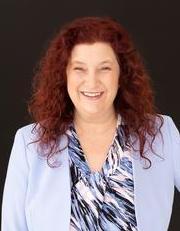
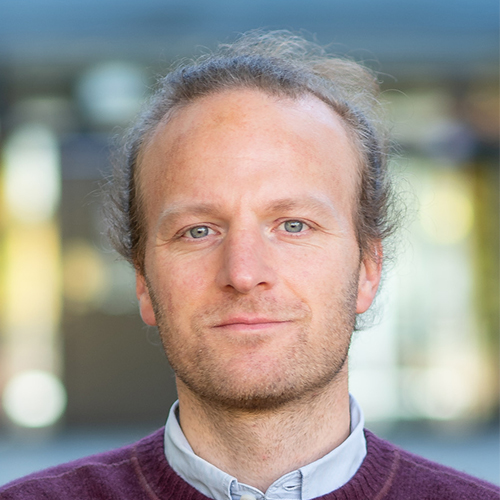
Clara Maria Fiorentini is an Assistant Lecturer in Education (Literacy) at Marino Institute of Education, Dublin. She specializes in literacy education and children’s literature, having transitioned from a 11-year career as a primary school teacher in Co. Dublin. Her current PhD research at Trinity College Dublin (TCD) focuses on early literacy development and transitions to formal learning under supervisors Dr Ann Devitt and Prof. Nóirín Hayes. She holds an MA in Children’s Literature from Dublin City University (DCU) and a B.Ed. in Primary Teaching also from DCU. Affiliations: Literacy Association of Ireland (Incoming President 2023-2024) Key Roles: Module leader for courses like Early Literacies, Language Methods, and Specialism in Reading Culture Research Projects: CoSTaR Project, Aistear & Libraries Collaboration, Tús Maith Transitions Initiative Her research interests include literacy practices, the science of reading, oral language instruction, and playful learning strategies. She frequently presents at national and international conferences, publishes educational resources, and hosts webinars on literacy topics. Clara also co-founded The Literacy Channel , a YouTube resource for educators.
Carolin Demuth is an Associate Professor at Aalborg University's Institute of Communication & Psychology, specializing in Cultural Psychology. She holds a guest professorship at Ritsumeikan University, Japan, and actively collaborates with their College of Comprehensive Psychology. Her work focuses on qualitative research methodologies, cross-cultural developmental psychology, and early childhood pedagogy. She serves as president of the Association of European Qualitative Researchers in Psychology (EQuiP), fostering international networks for qualitative scholars. Demuth has taught and lectured at Kyoto University and Chukyo University, emphasizing cultural comparisons in psychological practices. Her research bridges theory and practice, exploring topics like preschool interactions, therapist experiences with offenders, and discursive practices in multigenerational families. Education details are not explicitly stated in the provided text, but her academic trajectory is evident through her roles and publications. She has organized exchanges between Aalborg and Ritsumeikan University, including hosting Prof. Sato and his students annually. Her fieldwork includes observing Japanese day care centers to study cultural approaches to early childhood education. Demuth's research interests emphasize lived culture, embodied interaction, and qualitative rigor across cultural contexts. Key themes include the analysis of discourse in socialization processes, methodological innovations, and the application of qualitative research to global challenges. She has published extensively on frameworks for cross-cultural qualitative studies and the future of cultural psychology. Her contributions to EQuiP highlight efforts to standardize qualitative research practices while respecting cultural diversity. Collaborations with institutions worldwide underscore her commitment to building interdisciplinary and international academic partnerships.
Stefano Rezzonico is an Associate Professor at the School of Speech-Language Pathology and Audiology, Faculty of Medicine, Université de Montréal. His expertise spans language acquisition, pragmatics, and bilingualism, with a focus on children and adolescents. He holds a joint doctorate in Human Sciences (University of Neuchâtel) and Language Sciences (Paris 3 Sorbonne Nouvelle), and completed a postdoctoral fellowship at the University of Toronto. His research examines social language use, assessment, and intervention strategies for monolingual and bilingual populations with communication disorders. Education: Postdoctoral position, Dept. of Speech-Language Pathology, University of Toronto (Canada) Joint Doctorate in Human Sciences (Logotherapy-Speech Therapy) and Language Sciences, Universities of Neuchâtel (Switzerland) and Paris 3 Sorbonne Nouvelle (France) Certificate in Linguistics, University of Geneva Bachelor of Arts, University of Lausanne Research Interests: His work focuses on typical/atypical language acquisition, pragmatic abilities, discourse skills, social interactions, and bilingualism. He investigates interventions for communication disorders, assessment methodologies, and the impact of educational practices on language development. Grants & Projects: Lead researcher on projects funded by SSHRC and FRQS, including studies on bilingual language exposure in autism and virtual reality applications for communication assessment Co-leads provincial networks (REPAIR) addressing communication impairments in adolescents and young adults Teaching & Supervision: Teaches courses in preschool and school-age language evaluation, and supervises doctoral/master's theses on topics like narrative interventions, bilingualism, and early childhood educator practices. Current programs include the Professional Master's in Speech Therapy and the PhD in Speech-Language Pathology. Affiliations: Member of CRIR (Montreal Interdisciplinary Rehabilitation Research Center) and CIUSSS institutions. Active in clinical and community partnerships to align services with family needs for stuttering children.
Marie-Hélène Pennestri is a Research Professor at the Department of Psychology, Université de Montréal. Her work focuses on child development, sleep patterns in infants and parents, and maternal-infant relationships. She leads and collaborates on projects investigating sleep-related parental expectations, developmental language disorders, and psychosocial adaptation in vulnerable populations. Her research explores how parental mental health and sleep behaviors influence infant developmental outcomes. Recent studies examine sleep variability in postpartum parents and the role of sleep perceptions in diagnostic processes. She has received grants from the Canadian Institutes of Health Research and the Fondation de l'Institut universitaire de gériatrie de Montréal. Key contributions include clarifying risk factors for developmental disorders and refining clinical assessment methodologies. Her work emphasizes interdisciplinary approaches to improve early childhood interventions.
Maria Faściszewska serves as an Assistant Professor at the Institute of Speech Therapy within the Faculty of Philology at the University of Gdańsk. Her professional profile integrates academic instruction, clinical speech-language pathology practice, and active research. She offers specialized tutoring for students seeking to develop academic and research capabilities in speech therapy, fostering scientific exploration through structured intellectual engagement. Her educational foundation includes: Master's degree in Polish and Russian Philology Professional certification as a Speech-Language Pathologist Current pursuit of European Clinical Specialization in Fluency Disorders (ECSF) Prior to her university appointment, she accumulated extensive clinical experience at PPP7 and the Specialized Center for Diagnosis and Rehabilitation of Children and Adolescents with Hearing Impairment. Research focuses on fluency disorders (stuttering and cluttering), hearing impairments, and language development across diverse populations. She investigates bilingual language acquisition, Developmental Language Disorder (DLD), and auditory perception mechanisms through holistic diagnostic frameworks. Her work consistently bridges clinical challenges with academic inquiry to advance evidence-based therapeutic methodologies. Analysis of her 2020-2025 publications reveals dominant trends in digital transformation: telepractice implementation, digital media integration for assessment/therapy, and specialized tools like LogTest 4 for preschool stuttering screening. She pioneers mindfulness applications for adult fluency disorders and auditory perception training for children with DLD, demonstrating technology-driven innovation across multiple research domains. Dr. Faściszewska actively mentors students through structured tutoring sessions that cultivate research skills and scientific independence. Her prolific publication record indicates successful research funding acquisition despite unavailable grant details. She maintains dual professional engagement through university responsibilities, private clinical practice, and specialized therapeutic training sessions. Her career exemplifies seamless integration of clinical expertise and academic contribution. Having previously served in specialized rehabilitation centers, she now applies hands-on experience to educate future speech-language pathologists while continuing direct patient care at the University of Gdańsk.
Sara Michael-Luna is an Associate Professor and Program Coordinator in the School of Teacher Education at the University of Central Florida's College of Community Innovation and Education. She holds a Ph.D. in Early Childhood Development and Education from the University of Wisconsin-Madison (2005). Her research focuses on multilingual literacies, policy-practice intersections in early childhood education, and teacher preparation. Core areas of study include curriculum design for young children, the impact of educational policies on classroom practices, and leveraging parental knowledge in dual language settings. She has published extensively on topics such as authoritarian trends in early curriculum, phonological awareness assessment strategies, and the challenges of implementing child autonomy mandates in universal pre-K programs. Her work often critiques standardized approaches to early education and emphasizes participatory methodologies that center children's voices and teachers' professional agency. While no awards are explicitly listed, her scholarship demonstrates sustained engagement with socio-political dimensions of early childhood education. Dr. Michael-Luna's advising and grant activities remain unspecified in the provided materials. She is affiliated with the School of Teacher Education and maintains an office in ED 122Q.
Chlapana Elissavet is an Assistant Professor in the Department of Preschool Education - Teaching Methodology at the University of the Aegean. Her work focuses on early childhood education, particularly literacy development, language acquisition in diverse classrooms, and the integration of technology in teaching. She holds a PhD (2012), MSc (2005), and BSc (2002) in related fields. Education: PhD, 2012 MSc, 2005 BSc, 2002 Her research explores effective pedagogical practices for enhancing preschoolers' language and literacy skills, including interventions for immigrant children’s second-language vocabulary development, the role of rhythm in phonological awareness, and the application of ICT in early education. She has published extensively on topics like narrative production, comprehension strategies, and teacher training in blended learning environments. Recent studies highlight her focus on digital tools for vocabulary development, motivation for reading in Greek kindergartens, and theoretical frameworks for foreign language instruction. Her work bridges classroom practice with empirical research, emphasizing practical methods to improve early childhood education outcomes. Chlapana collaborates on projects related to curriculum design for preschool education and has presented at international conferences such as the OMEPE European Conference.
Linardakis Michalis is an Associate Professor at the Pedagogical Department of Primary Education of the University of Crete . His research focuses on the application of statistical methodologies in educational contexts, particularly Discrete Choice Models , Item Response Theory (IRT) , Bayesian Statistics , and Multivariate Statistics . He actively engages in quantitative analysis of teaching practices and educational technologies. Education : PhD (2005), MSc (1998), and Diploma (1994) Linardakis employs innovative statistical techniques to assess educational interventions, including the impact of ICT-based teaching , teacher perceptions during the COVID-19 pandemic , and the role of animals in classrooms . His work bridges statistical rigor with practical pedagogical applications. Recent publications highlight his use of Discrete Choice Models to analyze teacher preferences for ICT integration and classroom environments. He also contributes to developing psychometric tools like the Scale of Preschool Graphomotor Skills (SPGS) and Scale to Assess Preschoolers’ Attitudes towards Pets (SPAP) , emphasizing measurement innovation in education. Linardakis teaches at the University of Crete and maintains regular office hours. He is reachable via email at michalis@uoc.gr for academic correspondence and collaborates on interdisciplinary projects involving educational technology, psychology, and statistical modeling.
Mag. Dr. Stefan Pasterk is an Assistant Professor at the Department of Informatics Didactics at Alpen-Adria-Universität Klagenfurt. His research focuses on competency-based education, digital didactics, and neurodidactics, with an emphasis on integrating technology into K-12 computer science curricula. He leads projects such as DigiFit4All and Informatik-Werkstatt, which aim to develop personalized learning platforms and foster computational thinking skills among young learners. Key research areas include curriculum analysis, e-learning strategies, and the application of human-computer interaction (HCI) principles in education. He has contributed to initiatives like the Bebras Challenge and the 'Informatik - Ein Kinderspiel' project, promoting informatics education through hands-on tools like the BBC micro:bit. His work often bridges theory and practice, emphasizing teacher training and cross-curricular learning approaches. Notable awards include the Biber Award 2018, recognizing his contributions to educational innovation. Pasterk collaborates with institutions like the Regional Educational Competence Center (RFDZ) and has published extensively on topics ranging from neurodidactical teaching methods to adaptive learning systems. His research also explores early childhood digital literacy and the design of open educational resources (OER).
Laura Dell serves as an Assistant Professor and Associate Director for eLearning in the School of Education at the University of Cincinnati's College of Education, Criminal Justice, Human Services & IT. With over 15 years of experience at the university, she leads eLearning initiatives that provide instructional design support for faculty and oversees program and advising support for 24 online programs serving more than 1,000 students each term across associate, bachelor's, master's, and graduate certificate programs. Laura Dell's educational background includes: EdD in Curriculum & Instruction from the University of Cincinnati (2018) MEd in Educational Studies from the University of Cincinnati (2001), with thesis on "Local Environmental Belief Systems of Urban Youth in Middle Childhood" BA in Zoology and Theatre from Ohio Wesleyan University (1995) Certificate in distance education from Indiana University Laura Dell's research focuses on children's experiences in and conceptions of nature, with particular emphasis on how young children perceive and interact with natural environments. Her work employs innovative visual methodologies, including photovoice techniques with children and youth, to understand their perspectives on nature-based learning. She has conducted significant research on virtual reality environments and children's perceptions of presence, as well as mobile technologies in early childhood education settings. Her scholarship bridges the gap between technology integration and environmental education, exploring how digital tools can enhance rather than detract from children's connection to the natural world. Her publication record demonstrates a consistent trajectory from practical applications of educational technology to more theoretical explorations of children's cognition and media literacy. Early in her career, Dell focused on implementing technology solutions in educational settings, particularly in international contexts such as her work in Kurdistan, Iraq. More recently, her research has shifted toward understanding children's perspectives through innovative methodological approaches, with a growing emphasis on nature-based education and children's relationships with the environment. Laura Dell has received notable recognition for her work: 2005 Emmy Nomination for Instructional Media at the 41st Annual Midwest Regional EMMY Awards for "Safe Passage," a Multimedia Social Studies and Language Arts Curriculum for Grades 6-9 As an academic leader, Dell has successfully secured multiple grants, including a $600,000 Cooperative Agreement from the Department of State, US Embassy in Baghdad as Co-PI for the Alumni University project, and several NASA-funded OSGC Scholarships as Principal Investigator. She has played a pivotal role in elevating UC's online education programs, contributing to the School of Education's rise to #18 ranking for online graduate education programs by US News & World Report in 2014. Her leadership extends to coordinating relationships with vendors like Pearson Embanet and managing program support for diverse online educational offerings. Dell leads the eLearning team within the School of Education, which provides comprehensive instructional design support and training on both online and classroom-based technologies for faculty. Her team works closely with program faculty to ensure high-quality educational experiences across all modalities, with particular attention to maintaining accreditation standards while innovating in educational delivery.
Manuel Bohn is an Assistant Professor in the Institute for Psychology at Leuphana University Lüneburg since 2023. Previously, he held postdoctoral positions at the Max Planck Institute for Evolutionary Anthropology (2020–2023) and conducted a Marie Skłodowska-Curie Fellowship at Stanford University (2017–2020). His research focuses on developmental psychology, examining how children’s everyday experiences shape their communicative and cognitive development, with comparative studies on great apes to understand human uniqueness in language acquisition. Education: PhD in Developmental and Comparative Psychology (Max Planck Institute for Evolutionary Anthropology, 2013–2016), Memberships: German Society for Psychology (DGP), Languages: German, English, Latin (fluent). His work bridges developmental, comparative, and cultural psychology, emphasizing cross-cultural studies and open science. Key projects include the ManyPrimates collaboration and TANGO-CC gaze assessment tools. Research interests include pragmatics in language, child-rearing practices, and evolutionary foundations of communication. Publications emphasize child development, cross-cultural cognition, and primate cognition, with over 50 peer-reviewed articles in journals like Nature Human Behaviour , Developmental Science , and Proceedings of the National Academy of Sciences . Awards include the ERC Marie Skłodowska-Curie Fellowship (2017–2020) and support from the German Academic Scholarship Foundation (2013–2016). Advising and grants include leadership in collaborative projects and methodological innovations. His lab focuses on experimental and computational approaches to human communication, with ongoing work on receptive vocabulary measures (oREV) and parent-child interaction studies.
Tobia Valentina is an Associate Professor of Developmental Psychology (M-PSI/04) at the Faculty of Psychology, Vita-Salute San Raffaele University in Milan, Italy. She has held this position since March 2022, having previously served as Assistant Professor at the same institution from March 2019. Her academic journey includes a Ph.D. in Experimental Psychology, Linguistics and Cognitive Neuroscience from the University of Milano-Bicocca (2014), a Master's in School and Educational Psychology from the same university (2008), and a high school diploma in foreign languages (2002). Her research focuses on learning processes and prerequisites in typical and atypical development, particularly Specific Learning Disorders, interactions between cognitive and socio-emotional processes in school contexts, and school wellbeing. She has published extensively on developmental psychology topics, with recent work examining early literacy and numeracy development, socio-emotional factors in education, and assessment of learning disorders. Prof. Valentina serves on the editorial boards of the British Journal of Developmental Psychology (2023-present), DIS journal (2023-present), and was Guest Editor for Frontiers in Psychology (2022-2023). She is also a member of AGIAD (Association of Parents, Teachers and Friends of Dyslexia) Scientific Committee (2013-2017). Progetto Professionalità Ivano Becchi from Fondazione Banca del Monte di Lombardia (2018) Progetto Congiunto Fondazione Cariplo - Regione Lombardia - Rafforzamento (2017) PREMIO POSTER SITCC from SITCC Società Italiana di Terapia Comportamentale e Cognitiva (2014) Jacobs Foundation Fellowships (poster award) (2013) She actively participates in doctoral committees for the PhD program in Cognitive and Behavioral Sciences at Vita-Salute San Raffaele University (cycles 38-40, 2022-2024) and engages in numerous public outreach activities focused on stress management, bullying prevention, specific learning disorders, and early childhood development. Her teaching portfolio includes courses on developmental psychology fundamentals and specific learning disorders across multiple degree programs.
Michelle Hurst is an Assistant Professor in the Department of Psychology at Rutgers, The State University of New Jersey, located on the Busch Campus. Her research focuses on systematic variation in human cognition across development, particularly in mathematical and numerical reasoning. She explores how cognitive strategies evolve from infancy through adulthood, with a focus on proportional reasoning challenges in older learners versus intuitive skills in young children. Her lab employs behavioral experiments, computational models, and developmental perspectives to advance cognitive theories and improve educational practices. They emphasize open science principles, including pre-registration and data sharing, supported by funding from the NIH’s Eunice Kennedy Shriver National Institute of Child Health and Human Development. Key research interests include the development of numerical understanding, the transition from informal intuitions to formal math skills, and contextual influences on reasoning strategies. Her work bridges cognitive science and education to address barriers in learning complex mathematical concepts like fractions and decimals. The lab fosters an inclusive environment, prioritizing diversity and accessibility in both research and practice. Recent publications highlight investigations into proportional reasoning strategies, cross-notation knowledge of fractions/decimals, and contextual effects on quantitative judgments. Her interdisciplinary approach integrates developmental psychology, experimental methods, and educational theory to tackle foundational questions in cognitive science and STEM education policy.
Nele De Witte is a Lecturer at the Secondary Teacher Training College of Artesis Plantijn University of Applied Sciences. Her work bridges practical educational research and teacher professionalization, focusing on socially just education, STEM integration, and language development. Key projects include Anti-bias education for preschool teachers (ABC4T) , Exploring Team Teaching Effects (ESTAFETT) , and Language skills in STEM education (SI-STEM-CALP) . Education: Master's in Educational Sciences at Ghent University Expertise Areas: Educational Sciences, Social Justice in Education, STEM Education, Language Learning, Video Coaching, Academic Language Development Current Projects: The Imaginary Friend (2025–2027), ABC4T (2024–2027), B-stronger (2024–2027), Diversiwijs (2023–2026), RELAY (2021–2025), School Language Skills (2020–2024) Labs/Teams: Knowledge Center Educational Innovation at Artesis Plantijn
Beate Lund is an Associate Professor at the Department of Education, ICT and Learning at Østfold University College (HIOF). She specializes in Early Childhood Education , with a focus on multilingualism, multiculturalism, and professional mentoring. Her work emphasizes collaboration between kindergartens and higher education institutions through projects like the Teacher Education Kindergarten Project (LUB). She teaches courses such as Children’s Development, Play, and Learning 1 and Bachelor Thesis , integrating theory with practical experience. Her research addresses topics like resistance in early childhood education, multilingual student challenges, and pedagogical documentation. She co-hosts the Kindergarten Teacher Podcast , exploring professional development, risk assessment in nature play, and intercultural competence. She holds a Master’s in Diversity and Inclusion in Education and has over 20 years of kindergarten experience. Lund’s publications span books, journal articles, and podcasts, emphasizing sustainable practices, mentorship, and equity. She actively contributes to educational projects like simulation-based learning for teachers and interorganizational partnerships.