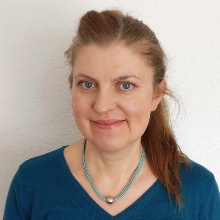
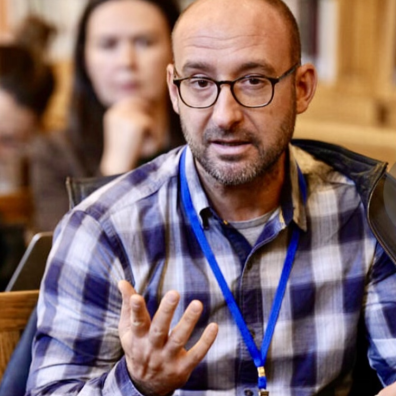
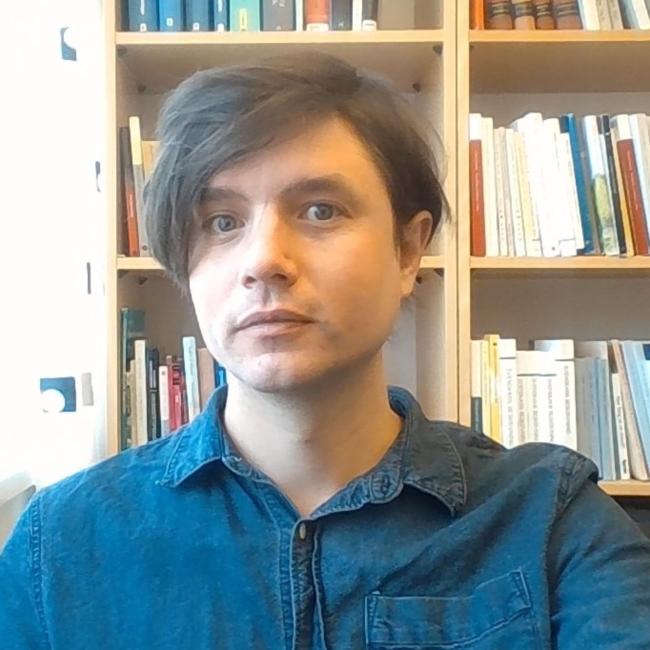
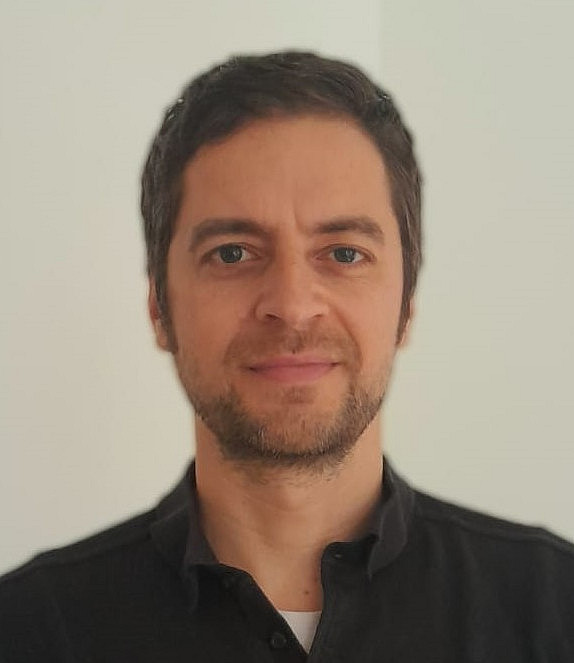
Dr. Timea Kovacs is an Associate Professor at the Faculty of Humanities and Social Sciences , Károli Gáspár Reformed University , specializing in Translation Studies , Bilingualism , and Corpus Linguistics . She previously served at Edutus College and the National Translation Certification Office. PhD in Applied Linguistics (University of Pécs, 2011) MA in English-History (ELTE, 1998) and Translation and Interpreting (Corvinus University, 2012) Her research focuses on intercultural communication , machine translation , and code-switching in bilingual communities. She has led the Intercultural Research Group and contributed to intercultural education frameworks. Recent publications explore neural machine translation in legal contexts, lexical simplification , and code-switching patterns in multilingual literature. She has edited volumes on religious text translation and contrastive linguistics . Member of academic societies MANYE and EULITA , she has held Erasmus and Fulbright fellowships, delivering lectures in Finland, Portugal, Turkey, and Spain on intercultural topics.
Elzbieta Strzelecka serves as a Senior Lecturer in the Department of Humanities and Social Sciences at Mid Sweden University in Sundsvall, specializing in Swedish language didactics and linguistic research. Her academic career spans decades with significant contributions to cognitive linguistics and grammar pedagogy, particularly for Swedish as a second language. Her research centers on cognitive linguistics frameworks applied to Swedish grammar instruction, with emphasis on particle verb semantics, container metaphors, and cross-linguistic comparisons between Swedish and Polish. She pioneered phenomenographic analyses of students' grammar histories, revealing emotional and cognitive dimensions of language learning. Her work bridges theoretical linguistics with practical classroom applications, focusing on spatial language concepts and teacher strategy development. Analysis of her publication trajectory shows consistent evolution from foundational cognitive linguistic studies of particle verbs toward contemporary grammar pedagogy innovation. Recent work emphasizes teacher training methodologies and student-centered approaches, with strong collaboration patterns particularly with Lena Boström. Her publications demonstrate interdisciplinary reach spanning cognitive science, educational psychology, and contrastive linguistics while maintaining focus on practical Swedish language instruction.
Ljudmila Geist serves as a Research Associate and DFG Project Manager at the University of Stuttgart's Institute of Linguistics within the Department of Linguistics and German Studies (ILG). Holding the academic rank of Privatdozent (equivalent to Associate Professor), she leads two major DFG-funded research projects while teaching linguistics and Slavic studies courses at undergraduate and graduate levels. Her institutional affiliation spans formal instruction in Linguistics, German Studies, and Slavic Studies programs including teacher training tracks for German and Russian. Her research expertise centers on the syntax-semantics interface with three core pillars: Semantics/Pragmatics : Nominal reference systems, information structure dynamics, speaker-hearer knowledge interaction in discourse, and copula clause semantics Morphosyntax : Argument linking mechanisms, case assignment for objects/predicatives, and co-argument binding phenomena Language Comparison/Typology : Cross-linguistic analysis of definiteness/indefiniteness in article-less languages, grammatical category comparisons between Russian and German Her work consistently bridges theoretical linguistics with empirical Slavic language data. Analysis of her 15 most recent publications reveals strong methodological continuity in formal linguistic approaches applied to Slavic languages, particularly Russian-German comparisons. Key thematic clusters include noun phrase semantics (mass/count distinctions, definiteness marking), copula constructions, and question-response systems. Her research increasingly incorporates experimental methodologies while maintaining rigorous formal analysis frameworks, demonstrating evolution from theoretical syntax toward integrated psycholinguistic approaches. Geist actively contributes to academic infrastructure through editorial roles including co-editing Advances in Formal Slavic Linguistics 2018 (Language Science Press, 2021) and multiple volumes of Investigations into Formal Slavic Linguistics . She has organized workshops such as Divide and Count at the 2023 DGfS conference in Cologne, demonstrating leadership in advancing research on morphosyntactic-semantic interfaces. Her teaching portfolio demonstrates deep integration of research and pedagogy across morphology, syntax, and Slavic linguistics courses. Recent offerings include Morphology (SS 2024), Syntax, Semantics and Typology of Nouns (WS 2023/24), and specialized seminars on nominal categories and German-Russian comparative linguistics. She completed Baden-Württemberg's 200-hour university teaching certification in 2008, reflecting commitment to pedagogical excellence.
Ilpo Kempas is a Lecturer at Seinäjoki University of Applied Sciences (SeAMK). He holds a Doctor of Philosophy degree and serves as a Docent of Spanish Philology at the University of Helsinki and Spanish Language at the University of Turku. His expertise spans linguistics, Romance languages, and research writing. Research Interests: Spanish verb syntax Spanish prepositional relative clauses Contrastive study of Romance languages Scientific text as a genre Teaching: Spanish French English Research writing
Mardale Alexandru is a University Professor at Inalco , affiliated with the Europe Department and the SeDyL research center. His work focuses on the syntax–semantics–discourse interface, particularly in heritage Romanian contexts, differential object marking, and the grammaticalization of prepositions in Romance languages. Research Interests: His expertise spans heritage language acquisition, linguistic expression of displacement, and modality in Romanian. He examines how language contact and reduced input affect syntactic structures, with a strong emphasis on grammaticalization processes and case-preposition interactions. 2024-2023 publications highlight his work on heritage Romanian in France, differential object marking, and clitic doubling. 2022-2003 contributions explore complex prepositions, animacy effects, and diachronic changes in Romanian syntax. Administrative Roles: He serves as Head of Romanian Studies and Educational Manager of the cross-disciplinary Linguistics course (LGE) at Inalco. He holds key positions in institutional governance, including membership in the Scientific Council and Research Commission.
Gérard Mélis serves as a Lecturer at the School of English Studies at the University of Paris Cité, where he contributes to the CLILLAC-ARP research group. His academic work focuses on English linguistics with particular emphasis on complex utterance structures and speech phenomena. His research interests center on English linguistics, specifically examining complex utterance structures and speech patterns. His scholarly work demonstrates deep engagement with syntactic structures in the English language, particularly analyzing locative inversion, prepositional complements, and concessive constructions. His publications reveal a methodological approach combining lexical semantic analysis with syntactic investigation to understand how meaning is constructed in English. Dr. Mélis's publications from 2015-2016 show a consistent research trajectory focused on English syntax. His work examines how locative inversion functions semantically, how prepositions interact with complements, and how intensity markers operate within concessive constructions. These studies collectively contribute to our understanding of English grammatical structures and their semantic implications. His teaching portfolio includes L1 grammar, Syntax, and Speech Art and Language courses, indicating a comprehensive approach to English language instruction that spans theoretical linguistics and practical language application.
Josette Rebeyrolle is a Lecturer in Language Sciences at the University of Toulouse - Jean Jaurès , affiliated with the Cognition, Languages, Language, Ergonomics (CLLE) research center. Her work spans discourse analysis, semantics, and corpus linguistics, focusing on referential continuity and discourse markers in educational contexts. Research Themes: Referential continuity ties, discourse markers, text world theory, corpus-based studies, and pragmatic markers in French. Collaborations: Frequent collaborator with Lydia-Mai Ho-Dac on annotation methodologies and student narrative analysis. Her recent publications explore the evolution of temporal expressions like "à un moment donné" and the pragmatic functions of discourse markers in both written and oral French. She has developed annotation tools like the RESOLCO and ANNODIS corpora for studying textual cohesion.
Céline Vaguer is a Lecturer at Université Toulouse - Jean Jaurès, affiliated with the Cognition, Languages, Ergonomics (CLLE) school. Her academic work focuses on French syntax, lexical & grammatical semantics, and discourse analysis. Syntactic Constructions Lexical Semantics Discourse Markers Phraseology Translation Studies Her research explores how linguistic forms interface with meaning, particularly through prepositions, adverbial phrases, and discourse markers. She has extensively analyzed expressions like en même temps and genre in spoken French, revealing their enunciative and argumentative roles. Recent publications (2022-2024) highlight her work on synonymy (vélo/bicyclette), discursive categorization (genre), and syntactic constructions. She serves as an editorial manager for journals like Langages and Langue française , contributing to academic discourse through Varia issues.
Claudio Di Meola is a Full Professor at Sapienza University of Rome, affiliated with the Department of European, American and Intercultural Studies. He teaches German linguistics and language courses, including German Language I and German Translation III, and coordinates exam schedules for undergraduate and master's students. His institutional email is claudio.dimeola@uniroma1.it, and he holds office hours by appointment. Di Meola's research centers on German linguistics with interdisciplinary foci in cognitive linguistics, morphosyntax (e.g., connectors, prepositions), semantics (metaphor, polysemy, verb tenses), and contrastive linguistics. His work bridges theoretical frameworks with practical applications in language pedagogy, particularly for Deutsch als Fremdsprache (German as a Foreign Language). Key themes include the simplification of German grammar ( Leichte Sprache ), tense semantics, and cross-linguistic analysis between German and Italian. His recent publications (2020–2024) predominantly explore grammar pedagogy , tense semantics , and contrastive linguistics . Articles analyze the optimization of German teaching materials, structural complexities in German syntax, and pragmatic dimensions of tense usage in discourse. Recurring subfields include morphosyntax, lexical semantics, DaF curriculum design, and cognitive-linguistic approaches to language simplification.
Adrian Sangfelt serves as a Senior Lecturer in the Department of Language, Literature and Interculture at Karlstad University's Faculty of Humanities and Social Sciences, holding an assistant lecturer position in Swedish with didactic focus since February 2023. His office is located in room 12A 517A with contact details 076-853 86 82 and adrian.sangfelt@kau.se. He earned his PhD from Uppsala University in December 2019, focusing on the disappearance of Middle Swedish word sequences through comparative analysis with Nordic and Germanic languages. His dissertation established foundational work in historical syntax variation. Dr. Sangfelt's research integrates generative grammar theory across three core domains: syntactic development in primary/middle school children (examining acquisition of written-language grammatical patterns in speech vs writing), suburban-indexed Swedish varieties in multilingual metropolitan contexts (collaborating with Karin Senter, Uppsala University), and historical evolution of Swedish syntax from medieval to modern periods. His work consistently targets how Swedish linguistic data illuminates innate human grammatical acquisition capacities. Publication analysis (2016-2024) reveals persistent investigation of word order variation, adverbial placement, and written-spoken language interfaces across historical stages. Key trends include applying theoretical syntax frameworks to empirical studies of historical corpora and contemporary urban speech patterns, with increasing focus on computational analysis since 2022. No scientific awards are documented in university sources. He currently leads a syntactic development research project in children while collaborating with Uppsala University on suburban dialect studies, though specific grant details remain unpublicized. His academic trajectory shows continuous progression from historical linguistics toward acquisition-focused and sociolinguistic applications within generative frameworks.
Steffen Heidinger is an Associate Professor at the Institute of Romance Studies, University of Graz. His research focuses on French and Spanish linguistics, with expertise in syntactic evolution and information structure. He completed his dissertation on the diachronic development of French anticausatives through a German-French graduate school (Stuttgart/Paris 8), defended in 2008. His habilitation project investigated information-structural properties of Spanish depictives, earning him teaching qualification in Romance Linguistics in 2017. Current research explores orphaned prepositions and animacy constraints in French/Spanish pronouns as part of the SFB subproject Animacy features and the flexibility of pronouns . His work bridges theoretical linguistics with empirical analysis of language change.
Jerzy Norbert Nykiel serves as Associate Professor in the Department of Foreign Languages within the Faculty of Humanities at University of Bergen. His academic profile centers on rigorous historical linguistic research with particular emphasis on syntactic evolution in English across multiple historical periods. Professor Nykiel's research program systematically investigates grammaticalization pathways and syntactic change through corpus-driven methodologies. Key areas include: Development of progressive constructions and alternative aspectual markers Evolution of prepositional phrases into subordinators Negation patterns and idiomatic expression change Copula systems and adjunct structures in historical English His work bridges Germanic and Romance linguistics through comparative frameworks, as demonstrated in the 2025 edited volume examining progressive aspect across language families. Analysis of his recent publications (2020-2025) reveals consistent output focused on diachronic syntax, with increasing attention to quantitative corpus methods. The research demonstrates strong continuity in examining grammaticalization cycles while expanding into cross-linguistic comparisons, particularly between Germanic and Romance language systems. Professor Nykiel maintains active scholarly engagement through conference presentations and collaborative projects, including co-authored works with international researchers like Kristian A. Rusten and Reijirou Shibasaki. His role as co-editor of the 2025 John Benjamins anthology confirms leadership in the field of historical linguistics.
Baldi Benedetta is a Full Professor in Modern Language Teaching (SSD L-LIN/02) at the University of Florence's Department of Literature and Philosophy, where she has been affiliated since 2004. She advanced from Researcher to Associate Professor (2015) and Full Professor (2020). Her institutional leadership includes: President, Degree Course in Humanities for Communication (2015–present) President, Master's Degree in Communication Theories (2020–present) Coordinator, Master's in Institutional Advertising and Multimedia Communication (2017–present) Her research explores the intersection of language, media, and society, with emphasis on: Political communication : Delegitimization strategies, populist rhetoric, and media framing in Italian politics. Linguistic theory : Morphosyntax, phonology, and dialectology (especially Arbëresh, Aromanian, and Romance varieties). Intercultural studies : Identity formation, mass media influence, and metaphorical discourse. Baldi's publications (15 most recent, 2021–2025) reveal a focus on micro-variation in dialects, clitic systems, and political discourse analysis. She frequently employs comparative frameworks across Italian, Albanian, and Balkan languages. Her editorial roles include directing book series like 'Glottodidattica' and 'Communication and Philosophical Cultures'. She led the University of Florence unit for the national PRIN project on political delegitimization (2013–2016) and has collaborated with institutions like IRRE Liguria and Co.re.com Toscana. No research lab or student advisees are mentioned.
Prof. Dr. Andreas Krafft serves as Professor for German Language and its Didactics at the Pädagogische Hochschule Freiburg since 2017. He is affiliated with the Institute for German Language and Literature, the Department of Language Teacher Training, and the Writing Center. Previously, he held positions at Pädagogische Hochschule Karlsruhe (2002-2016) and served as Visiting Professor at Pädagogische Hochschule Ludwigsburg (2016-2017). He completed his doctorate at Goethe-Universität Frankfurt a.M. in 2014 with a dissertation on the development of metalinguistic abilities in children with monolingual and multilingual backgrounds. Prof. Krafft's research focuses on syntax-based orthographic phenomena in German, particularly compound and separate writing and punctuation. He investigates how children develop metalinguistic awareness and how this knowledge can be effectively integrated into language instruction. His work challenges traditional grammar teaching approaches, advocating for methods that connect language reflection with practical language skill development. He is actively involved in the Di.ge.LL research project, exploring how digital tools can enhance cognitive activation in language learning. His publication record shows consistent output in German language didactics, with recent work emphasizing practical classroom applications for diverse learners. His research demonstrates how intuitive writing and punctuation skills develop in children and how instruction can build on these foundations rather than contradicting them. He particularly examines how multilingual students' stronger initial word concepts can inform teaching approaches for all learners. Prof. Krafft actively supervises bachelor's and master's theses, preferring empirical research projects that contribute to practical language teaching. He encourages students to develop research questions from his courses and provides guidance on methodology while recommending additional support from the Writing Center. His teaching philosophy emphasizes connecting theoretical understanding with practical classroom application, particularly regarding how language awareness development can support actual language competence.
Monika Hornáček Banášová is an Associate Professor at the Faculty of Arts, University of Ss. Cyril and Methodius in Trnava. She earned her habilitation in 2020 in the field of foreign languages and cultures, with her thesis focusing on German phraseology. Her academic journey includes the titles PaedDr. and PhD. Her research specializes in German linguistics, particularly prepositional word combinations and modal particles . This expertise is reflected in her habilitation work analyzing phraseological minimal units in German modal contexts. Notable academic milestones include her habilitation committee chaired by Prof. Peter Ďurčo, with opponents including Prof. Mária Vajičková (Comenius University) and Prof. Iva Zündorf (Masaryk University). The procedure concluded with her formal appointment as associate professor on November 13, 2020.