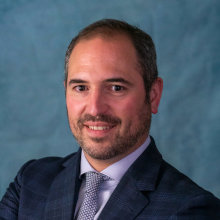
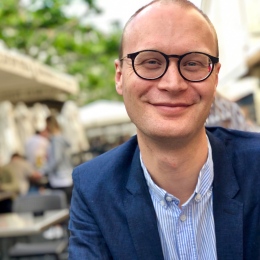
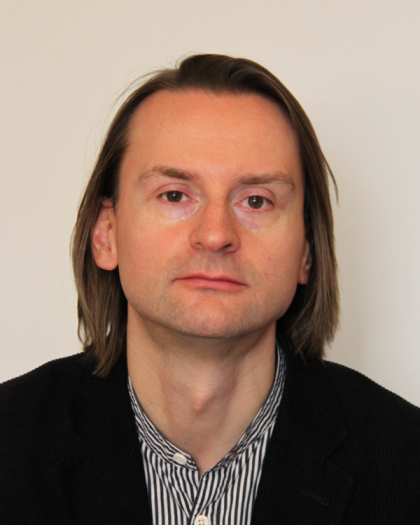
Marc Authier is a Professor of French and Linguistics at The Pennsylvania State University's Department of French and Francophone Studies, part of the College of the Liberal Arts. His research focuses on syntactic theory, semantic theory, and Romance linguistics, with special emphasis on French constructs. He holds a Ph.D. from the University of Southern California. His professional bio highlights expertise in clausal structure, implicit arguments, polarity, quantification, and reference in Romance and Germanic languages. His work bridges theoretical linguistics with formal semantics and mathematical logic. Authier's recent publications (2014–2025) explore French syntax phenomena such as ellipsis, exceptives, mirative focus fronting, and quantification dynamics. He engages with debates on syntactic structures, phonological overt elements, and the syntax-semantics interface. No scientific awards are explicitly mentioned, though his extensive publication record suggests significant scholarly contributions. He has no listed advisees or grants in the provided data.
Maria Rita Manzini is a Full Professor at the Department of Letters and Philosophy, University of Florence (since 2000). She previously held academic positions as Associate Professor (1992-2000) and Lecturer (1984-1990) at University College London's Italian Department and Faculty of Letters, later advancing to Reader and Visiting Professor there (1990-1999). Her affiliations span prestigious institutions including MIT, University of Florence, UCL, and collaborations with international universities like Georgetown, Universidade de Brasilia, and University of Leiden. 1983 Ph.D. in Linguistics and Philosophy from MIT 1979 Diploma from Scuola Normale Superiore, Pisa 1979 Laurea in Lettere (Italian Literature) from Università di Pisa Her research focuses on core areas of theoretical linguistics, particularly syntax, morphosyntax, and parametric variation in Romance and Balkan languages. She investigates grammatical categories, case marking, clitic placement, and syntactic structures across diverse linguistic frameworks. Her recent publications explore topics like DOM datives, middle-passive constructions, and complementizer systems in Romance languages. These works intersect with subfields including generative grammar, linguistic typology, and formal syntax analysis. Research Fellow, Netherlands Institute for Advanced Studies (1990-1991) Postdoctoral Fellow, Center for Cognitive Science, UC Irvine (1983-1984) Manzini has led major Italian PRIN research projects on linguistic categories, recursion, and grammatical features. She served as Editor for Quaderni di Linguistica e Studi Orientali (2015) and held editorial board positions for Rivista di Grammatica Generativa (since 1987) and Language Acquisition (1990-2003). Currently (as of 2012), she directs the Doctoral Programme in Filologie del Medioevo e Rinascimento e Linguistica at the University of Florence.
Ivana N. Antonić serves as a full Professor at the Department of Serbian Language and Linguistics within the Faculty of Philosophy at the University of Novi Sad. With an academic career spanning since 1987, she has progressed through the ranks from Assistant-trainee to her current position achieved in 2006, specializing in syntax and semantics of the standard Serbian language. Her academic foundation includes: PhD in Linguistics (1996) from University of Novi Sad Master's degree in Linguistics (1991) Diploma in South Slavic Languages (1986) Professor Antonić's research program focuses on theoretical syntax, syntactic semantics and pragmatics within Serbian linguistics, with particular expertise in case systems, temporal clauses, and prepositional constructions. Her methodological approach combines descriptive analysis of standard Serbian with theoretical frameworks from general linguistics, contributing significantly to understanding morphosyntactic interfaces and grammatical relations in South Slavic languages. Her publication trajectory reveals consistent specialization in Serbian syntax over three decades, with recent works (2022-2023) expanding her foundational research on case systems and temporal relations. This scholarly continuity demonstrates deep engagement with structural properties of Serbian while addressing theoretical questions relevant to broader linguistic inquiry. Her distinguished contributions have earned significant recognition: "Pavle Ivić" Award (2005) for co-authoring the seminal grammar reference Government of Serbia Special Award (2001) for outstanding early-career research She mentors graduate students through advanced coursework including Case Syntax and Semantics (OAS) and Syntax of Complex Sentences (MAS), while maintaining research collaborations with the Institute of Serbian Language at the Serbian Academy of Sciences and Arts. Her scholarly activities extend to editorial contributions for major linguistic publications and participation in national linguistic societies focused on Slavic language standardization.
Tihomir Rangelov is a postdoctoral researcher at the Department of Linguistic and Cultural Evolution at the Max Planck Institute for Evolutionary Anthropology in Leipzig, Germany. He is a member of the Comparative Oceanic Linguistics (CoOL) group . His work focuses on language documentation, description, and revitalization of endangered Oceanic languages, particularly Ahamb spoken in Vanuatu. His research integrates historical linguistics, phonetics, and typology to explore sound systems and grammatical structures. Education: PhD in Linguistics (2020), University of Waikato, New Zealand (Thesis: A Grammar of Ahamb) MA in Computational Linguistics (2013), University of Iceland/Reykjavík BA in Icelandic Studies (2008), University of Iceland MA in Scandinavian Studies (2007), Sofia University Research Interests Rangelov’s research emphasizes: Documenting endangered languages of Vanuatu, especially Ahamb Phonetic analysis of rare sounds like prenasalized bilabial trills Historical linguistics and Oceanic language phylogeny Community-driven language revitalization strategies Publications Trends His articles explore: Unusual phonetic phenomena (e.g., bilabial trills) Grammatical structures in Austronesian languages Technological tools for language maintenance Comparative methods in Oceanic linguistics Advising & Grants Rangelov has led fieldwork projects in Vanuatu and participated in international conferences. His work is supported by the Max Planck Society and collaborative grants with institutions like the University of Waikato. Lab/Team Active member of the CoOL group , focusing on comparative analyses of Oceanic languages and their typological features.
Inka Wissner is a Lecturer in the DEFLET department at the University of Franche-Comté, France, affiliated with the research pole on Didactics and Education. Her work is centered in the CLA (Centre de Langues et d'Apprentissages) and she holds a CNU section 7° affiliation. She is actively involved in research and academic service, leading pedagogical initiatives and contributing to international scholarly discourse in variational linguistics and lexicography. Her research interests are deeply interdisciplinary, focusing on variational linguistics , sociolinguistics , lexicography , and literary discourse analysis . She investigates diatopic (regional) variation in French across the Francophone world, from the Vendée in France to Quebec, the Caribbean, and the Indian and Pacific Oceans. Her work combines corpus linguistics , fieldwork methodology , and statistical analysis to study prepositional adverbials, regional vocabulary (e.g., viticulture), and the representation of regionalisms in literature. She is a key contributor to projects on the historical development of Romance languages, particularly the 'Third Way' of prepositional adverbials. The trends in her recent publications reveal a sustained and evolving focus on methodological rigor in linguistic field research, especially for understudied phenomena in Romance languages. Her work bridges historical linguistics, descriptive grammar, and sociocultural analysis, with a strong emphasis on data collection, statistical processing of small samples, and the development of standardized tools for pan-Romance studies. Her research consistently addresses the pragmatic and sociolinguistic functions of language variation. Expert reviewer for journals such as Studia linguistica romanica , Corela , and Expanding Romance Linguistics . Member and organizer of scientific committees for international colloquia on linguistic policies, linguistic innovations, and complexity in multilingual contexts. Dr. Wissner has held significant pedagogical responsibilities, serving as the Program Director for the undergraduate program since 2020 and the Pedagogical Director for the first year of the Master's program since 2019. Her research is supported by her expertise in field methodology and data analysis, contributing to major collaborative projects like 'The Second Way' and 'La Troisième Voie'. She has not received any scientific awards listed in the provided text. She is a member of the ELLIADD research team and the 'Contexte, Langages Didactiques' research pole at the University of Franche-Comté. She also collaborates internationally, notably with the University of Graz, Austria, on projects concerning prepositional adverbials in Romance languages.
Jakob Prange is a Researcher (Akademischer Rat auf Zeit) at the Chair for Natural Language Understanding / Digital Humanities within the Faculty of Applied Computer Science at the University of Augsburg. He holds a Ph.D. in Computer Science with a concentration in Cognitive Science from Georgetown University, where his dissertation focused on neuro-symbolic models for syntactic and semantic representations. Education: Ph.D. in Computer Science (Cognitive Science), Georgetown University B.Sc. in Computational Linguistics, Saarland University His research lies at the intersection of computational linguistics and theoretical linguistics, emphasizing formal and distributional semantics, meaning representation, deep learning, and neuro-symbolic integration. He prioritizes model efficiency and explainability, often combining neural models with structured linguistic representations. His recent work includes projects on cross-lingual QA in migration contexts and Bayesian modeling of L2 preposition learning. His publications span top venues such as ACL, NAACL, TACL, and COLING, with a focus on semantic parsing, supersense tagging, UCCA, neuro-symbolic modeling, and robust NLP for German. He has contributed to multilingual annotation frameworks and low-resource language modeling. Scientific Awards: No awards explicitly mentioned. He has supervised M.Sc. student Steffen Kleinle on a QA project and contributes to teaching at the University of Augsburg, including Python for language processing and NLP tutorials. He is part of the HLT@Augsburg research group led by Prof. Annemarie Friedrich, focusing on natural language understanding and digital humanities.
Dr. Agnieszka Latos is a linguist and lecturer at SWPS University of Social Sciences and Humanities in Warsaw, affiliated with the Department of Hispanic and Italian Studies . Her research focuses on theoretical and contrastive linguistics, particularly between Romance and Slavic languages, with a specialization in semantic contrast, grammatical gender coding, and second language acquisition mechanisms. Key Collaborations : University of Genoa (2019), Ca' Foscari University (2015-2016), CNRS Paris (2011-2013), Max Planck Institute (2009) Projects : Co-coordinator of CRAB (Cross-linguistic Research on Analogy in Binomials, 2023-present); VILLA ANR-ORA (2012-2017) Her research interests include: Functional-cognitive linguistics Morphological processing in L2 acquisition Metaphorical expression systems Interaction between grammatical and natural gender Neo-standard Italian language teaching methodologies Polish-Italian cultural-linguistic interfaces Dr. Latos teaches courses in general linguistics, Italian-Polish translation, and practical Italian communication. She has developed pedagogical frameworks integrating cognitive linguistics with language teaching practices, particularly focusing on morphological acquisition in Polish L2 learners.
Antonov Anton is a Lecturer at the Institut national des langues et civilisations orientales , specializing in Japanese studies . His research focuses on historical linguistics , descriptive linguistics , and typology across Asia, Eurasia, and North America . His work with the CRLAO (Centre de Recherche Linguistique sur l'Asie Orientale) emphasizes cross-linguistic analysis of morphosyntactic phenomena, including direct/inverse systems , allocutivity markers , and grammaticalization processes . He has contributed to debates on the Transeurasian language hypothesis and loan verb integration in mixed languages. Antonov's teaching covers Grammar , Classical Language , Japanese Linguistics , Lexicology , and Typology at both undergraduate (L3) and graduate (M1/M2) levels. His methodological expertise spans synchronic and diachronic analysis of linguistic structures.
Florencio Del Barrio de la Rosa is a Full Professor at the Department of Comparative Linguistic and Cultural Studies, Ca' Foscari University of Venice. He holds a national qualification as Full Professor in Spanish and Hispanic-American studies (2019-2028). His primary role includes teaching advanced courses on Spanish language history, linguistics, and translation, as well as supervising doctoral research in language sciences. Research Interests: His work focuses on Spanish historical linguistics, lexical variation, grammaticalization processes, and sociolinguistic aspects of language change. Key areas include the diachronic analysis of syntax, morphological evolution, and language contact phenomena in Spanish and its dialects. He also explores language acquisition patterns among learners. Teaching: He teaches courses such as History of the Spanish Language , Spanish Language 1 , and doctoral seminars in language sciences. His academic positions include roles as Erasmus program coordinator and member of PhD thesis committees across European and Latin American institutions. Publications: His research spans monographs like Disponibilidad léxica de los estudiantes de español en Italia (2018) and Espacio variacional y cambio lingüístico en español (2018). Recent articles address topics like pragmatic markers, verb derivation, and syntactic change in contemporary and historical Spanish. Awards: Recognized by the Italian National Scientific Qualification (ASN) as Full Professor in Spanish Studies (2019–2028). International Collaboration: Leads Erasmus exchanges with universities in Oviedo, Palma de Mallorca, and Valladolid. Actively participates in PhD evaluation committees and international conferences on historical linguistics and language variation.
Virginia Rapún Mombiela is a Research Fellow at the University of Tartu's Institute of Foreign Languages and Cultures (Faculty of Arts and Humanities). Her academic journey includes roles as a Lecturer at Beijing Language and Culture University (2017-2019) and Visiting Lecturer at the University of Tartu (2019–2022). She holds a BA in Hispanic Philology (2008) and Slavic Philology (2005), with advanced degrees in Spanish Language Teaching and Applied Linguistics. Currently, she is pursuing a PhD on cross-linguistic influence in Spanish article acquisition among Estonian learners under supervisors Mari Kruse and Gemma Maria Santiago Alonso. Education: PhD Candidate (2021–): Germanic and Romance Languages and Literatures, University of Tartu MA (2018–2022): Training and Research on Literature/Theatre in European Context, UNED (Spain) MA (2013–2015): Education and ICT, Open University of Catalonia Research Interests: Focus on applied linguistics, multilingualism, and second language acquisition. Specializes in corpus-based studies of Spanish as a foreign/second language, particularly Estonian learners' syntactic transfer patterns and interlanguage development. Her work integrates computational methods for analyzing learner corpora, emphasizing temporal adverbials, prepositional phrases, and cross-linguistic influence. Awards: 2018 BLCU Teacher of the Year Award Grants & Creative Work: Coordinated bilingual exhibitions on Spanish villages, online magazines, and podcasts with Estonian students. Organized theater workshops and exhibitions on Spanish theater in Estonia. Active in the Learner Corpus Association and Association of Spanish Scientists in Estonia. Labs/Teams: Involved in the Võõrkeeltega seotud erialaste digipädevuste arendamine (VEDA) project at the University of Tartu.
Inghild Flaate Høyem is a Full Professor of German Linguistics at the Department of Language and Literature, Faculty of Humanities, Norwegian University of Science and Technology (NTNU). Her research focuses on modern German syntax and semantics, with emphasis on syntactic structures like small clauses, adjunct control, and comparative analyses between German and Norwegian. She holds positions in prestigious academic bodies, including the National Council for German Studies (since 2010, leader 2016–2019), the Academy of the Royal Norwegian Society of Sciences and Letters (DKNVS, since 2019), and the International Scientific Council at IDS Mannheim (since 2019). Education: PhD in German Linguistics from NTNU (2005). Research interests include the syntax-semantics interface, predication, control theory, and second/third language acquisition. She leads research groups AcqVA, the ForEST Society, and eScApeS. Teaching responsibilities span BA/MA German linguistics programs, including thesis supervision in German grammar, acquisition, and translation studies. Recent research highlights include studies on adjunct control mechanisms (2022), German adverbial infinitives (2016–2021), and comparative syntax between German and Norwegian (2011–2023). Her work integrates corpus-based methods and formal syntactic analysis. She actively contributes to academic conferences and workshops, including FLiNC (2025) and GGS (2023). Collaborations include international projects such as the Generative Grammar of the South (GGS) and Comparative Germanic Syntax Workshops. She advises on language policy through public lectures and school outreach programs, emphasizing the importance of foreign language education in secondary schools.
Edward Rubin is an Associate Professor in the Department of Linguistics at the University of Utah, where he has served since 2003. His academic journey includes an Assistant Professorship in Linguistics (1999-2003) and World Languages and Cultures (1996-1999) at the same institution. He holds a BA in Latin & Greek with Italian from the University of Pennsylvania (1988), and an MA (1991) and PhD (1994) in Linguistics from Cornell University. Rubin's research spans Romance languages, focusing on syntax, clitic allomorphy, and code-switching. His work applies Optimality Theory and Minimalism to phenomena in Bolognese, Bulgnais, and Romanian dialects. He has also contributed to understanding functional categories in bilingual children's language development and dative clitic doubling. Recent publications analyze Bolognese clitics, epenthesis, and postverbal subjects through the lens of Pair-Merge and Cyclic Agree frameworks. He received the Distinguished Faculty Service Award (2019) from the College of Humanities at the University of Utah. Teaching Activities : Courses include Intermediate Syntax, Introduction to Language Study, Thesis Research (Master's), and Individual Research projects (2003-present).
Mikael Kalm is a Senior Lecturer at the Department of Swedish and Multilingualism , Stockholm University , where he has worked since 2018. He previously completed his PhD in Nordic Languages at Uppsala University (2016) and has served as subject manager/staffing director of studies at the Unit for Swedish, Nordic Languages and Swedish as a Second Language since 2023. His work integrates linguistic research with educational practice.
Caroline Heycock is a Professor of Syntax at the University of Edinburgh , affiliated with the School of Philosophy, Psychology and Language Sciences and the Department of Linguistics and English Language . She is currently on research leave until January 2025. Her teaching includes courses on syntax at both undergraduate and postgraduate levels. She actively supervises PhD students and has advised numerous scholars in syntactic theory and related fields. Her research focuses on syntactic theory , variation , and change , with particular attention to copular clauses, Faroese syntax, and Scots dialectal features. Key projects include investigations into nominal predication structures, verb movement in Faroese, and sociolinguistic aspects of Scots syntax. She has secured funding from major bodies like the Arts and Humanities Research Council (AHRC) and the European Union. Recent work explores the theoretical and empirical dimensions of copular clauses, including appositional boundaries and cross-linguistic agreement patterns. Her research integrates formal syntax with sociolinguistic methodologies, as seen in studies on Scots dialectal variation and experimental analyses of Icelandic agreement phenomena. Caroline Heycock has supervised over 25 PhD students and has led or co-led 15 research projects, including major initiatives like the Scots Syntactic Atlas and the EU-funded AThEME project. Her contributions span theoretical syntax, language acquisition, and historical change, with a focus on under-researched languages like Faroese and Scots.
Jerzy Norbert Nykiel is an Associate Professor in the Department of Foreign Languages at the University of Bergen. His research specializes in historical English linguistics, particularly grammaticalization processes and morpho-syntactic change in Middle English. Nykiel's publications focus on the evolution of subordinators, prepositions, and pronouns, examining their grammaticalization pathways from Old to Modern English. Recent work analyzes complex prepositions, adverbial subordinators, and pronoun variation in historical corpora. He actively presents research internationally, including conferences on diachronic linguistics and medieval English studies. His investigations employ corpus-based methodologies to trace syntactic and morphological developments across different historical stages of English. Core Research Areas: Grammaticalization phenomena, adverbial subordination, pronoun development Methodology: Historical corpus analysis, diachronic linguistics, manuscript studies