Sinead O'Keeffe is a Research Fellow at the University of Limerick in the Faculty of Science and Engineering , specifically within the Department of Electronic and Computer Engineering . Her research bridges the technical domain of optical fiber sensor development with critical applications in radiation therapy and sports medicine. Primary Research Themes Medical radiation dosimetry using optical fiber sensors Brachytherapy dose monitoring systems Sports injury prevention in Gaelic football and running Mental health literacy in rural farming communities Key Technical Contributions Development of scintillation-based dosimeters Characterization of perfluorinated polymer fibers 3D printed sensor systems for clinical and rehabilitation applications Interdisciplinary Applications Prostate cancer radiotherapy dose measurement Mental health intervention programs for athletes Work-family conflict analysis in Irish farming Email: sinead.okeeffe@ul.ie
Sara J. Knight is a Researcher in the Department of Internal Medicine at the University of Utah School of Medicine, with a focus on genomic medicine, cancer survivorship, and patient-centered decision-making. Her work bridges clinical research with public health, emphasizing health equity, shared decision-making, and quality-of-life outcomes. PhD in Clinical Psychology from Southern Illinois University Carbondale MA in Clinical Psychology from Southern Illinois University Carbondale BA in Psychology from University of Maryland Her research spans genomics and personalized medicine , particularly in underserved populations, and health experiences of veterans with chronic illnesses. She investigates patient preferences , medical decision-making in oncology, and implementation science for genomic sequencing in clinical settings. Recent publications highlight her work on long-term impacts of pandemics , utility of genomic testing , and health disparities in surgical outcomes . She contributes extensively to the CSER Consortium and SouthSeq initiatives, focusing on diverse patient populations. Her methodological expertise includes qualitative analysis , instrument development for measuring genomic utility, and cohort studies assessing interventions like Enhanced Recovery After Surgery (ERAS) pathways.
Prof. Dr. Gerd Bohner is a distinguished faculty member at Bielefeld University, holding a professorship in the Faculty of Psychology and Sport Science, Department of Psychology, specifically within Unit 05 - Social Psychology and Experimental Psychological Gender Research. His academic work focuses on critical issues at the intersection of social psychology and gender studies, with particular expertise in sexual aggression myths, attitude formation and change, and gender-based violence. Dr. Bohner's primary research interests revolve around understanding the psychological mechanisms underlying sexual aggression myths and victim blaming. He is particularly known for his work on the Acceptance of Modern Myths About Sexual Aggression (AMMSA) scale, which has been validated across multiple languages and cultural contexts. His research explores how cultural, legal, and individual factors influence attitudes toward sexual violence, prostitution, and gender roles. He investigates the cognitive processes involved in attitude formation and change, with a special focus on lateral attitude change phenomena and how persuasion operates in different contexts. His recent publication trends demonstrate a strong international collaborative approach, with research conducted across numerous countries including Germany, Norway, Spain, Colombia, and Chile. A significant portion of his work involves cross-cultural validation of psychological instruments, particularly the AMMSA scale, which has now been adapted into multiple languages including French, Spanish, Polish, and German. His research increasingly examines the relationship between music preferences, sexist attitudes, and sexual harassment behaviors, as well as the role of moral foundations in shaping perceptions of sexual violence across different cultural contexts. As an educator, Dr. Bohner is responsible for teaching Social Psychology (27-GF-Soz), Structured Addition courses (27-EG-Str), and supervising Master's theses (27-MM). His expertise in sexism research is formally recognized by the university, listing him as an expert in this field. His methodological approach combines experimental, survey, and cross-cultural research designs to address complex questions about gender-based attitudes and behaviors.
Dr. Stella Zucchetti Schons Do Valle serves as Assistant Professor of International Forest Economics and Management within the Department of Forest Resources and Environmental Conservation at Virginia Tech's College of Natural Resources and Environment. Her work bridges economic theory with on-the-ground conservation challenges, particularly in tropical forest contexts. Educational background: B.S. in Economics, Universidade Estadual de Campinas (UNICAMP, 2005) M.E.M. and M.B.A., Yale School of Forestry & Management (2010) Ph.D. in Forestry, Virginia Tech (2017) Her research centers on natural resource economics with emphases on community-based forest enterprises, forest finance mechanisms, and policy instruments for sustainable development. Key interests include rural credit systems, international conservation frameworks, and community monitoring of forest resources—particularly in Brazilian Amazon and Indian contexts. She employs mixed-method approaches combining econometric modeling with field data collection to analyze landowner behavior and policy effectiveness. Analysis of her 15 most recent publications (2020-2025) reveals consistent focus on economic drivers of forest conservation: 60% examine Brazilian Amazon cases (governance, land conflict, migration), 25% address Indian agroforestry systems, and 15% cover U.S. forestry applications. Methodologically, 70% utilize quantitative economic modeling while 30% incorporate remote sensing or policy analysis. Recurring themes include incentive design for smallholders, carbon program optimization, and post-pandemic urban forestry challenges. No scientific awards were documented in the source materials. Professional activities include advising on forest policy instruments and community enterprise development, though specific grant details or student mentorship records weren't provided. Her work demonstrates strong institutional collaboration with Brazilian environmental agencies and Indian agricultural research bodies.
Spencer Kiesel is a Faculty Lecturer at the University of California, Davis, where he teaches courses on legislative behavior and survey research methodologies. His interdisciplinary research focuses on political polarization dynamics, nonreligious identity politics, and vaccine hesitancy mechanisms through advanced survey techniques. He holds a BA in Political Science from Case Western Reserve University. Research Interests: • Representation of nonreligious populations in electoral contexts • Partisan effects on interpersonal decision-making • Social network analysis of public health communication • Identity-based perceptual framing mechanisms • Experimental methodologies in political behavior analysis Grants & Advising: No specific grants or advisees listed. Active in developing innovative survey instruments for measuring affective polarization. Labs/Teams: Collaborates with UC Davis's Political Behavior Lab on interdisciplinary projects combining experimental methods with network analysis.
Professor Franco Fiordelisi is a leading academic in Banking and Finance at the University of Essex's Essex Business School, where he directs the Financial Technology Centre EsseX (FinteX). He serves as President of the Financial Intermediation Network of European Studies (FINEST) and holds a fellowship at the Wells Fargo Advisors Center for Finance & Accounting Research. With a PhD in Economics from Bangor University, his expertise spans financial risk management, banking regulation, and fintech innovation. His research, ranked in the top 5% globally by IDEAS/RePEc, focuses on bank governance, climate finance, and regulatory frameworks. He has advised institutions like the ECB, World Bank, and Federal Reserve of New York. Prof. Fiordelisi's work has been published in top journals such as Journal of Financial and Quantitative Analysis and presented at major conferences including the NBER Summer Institute and American Finance Association meetings. He currently supervises PhD students in financial intermediation and fintech, having previously guided Merve Demirbas Ozbekler (awarded 2023). His awards include recognition for both research and teaching excellence, alongside his 2023 ranking among the world's top 350 finance scholars. Prof. Fiordelisi's professional roles include associate editorships at Journal of Financial Stability and Economic Modelling , reflecting his influence in academic publishing. His research highlights include analyzing ECB climate stress tests, post-pandemic lending models, and cooperative bank performance. He remains active in policy circles, contributing to debates on banking union structures and crisis management strategies.
Christine Gustafsson is a Professor in Health Care Sciences at Sophiahemmet University's Department of Nursing. With over 25 years of academic experience, her research focuses on health and welfare technology (HWT) from user perspectives, particularly addressing aging populations and individuals with intellectual disabilities. She leads projects like iHACT, PROTECT, IN-AGE, and UPSCALE, emphasizing technology's role in enabling independent living and safe aging. Professional roles include Nordic Welfare Technology Research Network management, Forte Research Council board membership, and advisory roles to Sweden's Minister of the Elderly and Demensfonden. Education: Not explicitly detailed in provided texts Her research explores HWT implementation challenges in sparsely populated Nordic regions, emphasizing governance structures and user-centered design. Key projects like IN-AGE develop evaluation instruments for technology-supported independence. She co-created the robotic cat JustoCat and authored influential books on pedagogical approaches in care and welfare technology. Recent work analyzes cost-consequence studies of digital assistive technologies and explores FLASH radiotherapy dosimetry challenges. She consistently bridges clinical practice, policy, and technology through interdisciplinary collaboration.
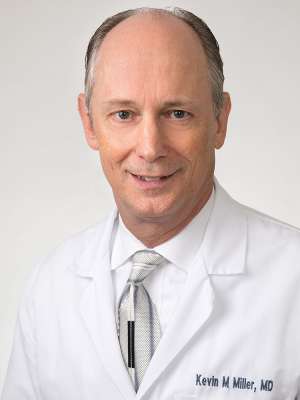
Kevin M. Miller is a Clinical Professor of Ophthalmology and Kolokotrones Endowed Chair at UCLA’s David Geffen School of Medicine. He serves as Chief of the Cataract and Refractive Surgery Division and Director of the Anterior Segment Diagnostic Laboratory, while being a member of the Stein Eye Institute. Education : MD from Johns Hopkins University School of Medicine (1985), Residency at UCLA (1991), Fellowship in Ophthalmic Optics at Johns Hopkins (1988). Leadership : Chair in instrumentation development, editorial board member for multiple journals, and organizer for international ophthalmology congresses. Dr. Miller’s research focuses on cataract surgery innovation , artificial iris devices , and refractive outcomes . He has investigated FDA-approved intraocular lenses, developed surgical systems, and pioneered implantation techniques for complex anterior segment disorders. His work spans clinical trials, device development, and surgical education. Key scientific contributions include advancements in toric IOLs, light-adjustable lenses, and artificial iris technology. He has delivered over 1,000 invited lectures and authored chapters in ophthalmic textbooks, emphasizing surgical precision and patient safety. Awards : Charles D. Kelman Award (2019), Life Achievement Award (2017), multiple ASCRS and AAO accolades. Teaching : Trains undergraduates, medical students, residents, and international fellows. Led development of AAO educational materials and certification programs. Labs : Directs the Anterior Segment Diagnostic Laboratory at Stein Eye Institute, focusing on device testing and surgical optimization.
Erik Lichtenberg is a Professor in the Department of Agricultural and Resource Economics at the University of Maryland, College Park, affiliated with the College of Agriculture and Natural Resources. His research addresses economic aspects of agriculture-environment interactions, including agri-environmental programs, invasive species management, pesticide regulation, and resource conservation. He holds a B.A. in Linguistics from the University of Chicago (1973) and a Ph.D. in Agricultural and Resource Economics from UC Berkeley (1985). Research Focus Lichtenberg's work integrates environmental and agricultural economics with policy analysis. Key domains include: Design of Payment for Ecosystem Services (PES) programs and conservation contracts Economic incentives for pollution control and resource conservation Risk management in agricultural systems (pests, pesticides, climate) Food safety regulation compliance and collective action Impacts of irrigation technology and land use policies Professional Recognition Fellow, Agricultural and Applied Economics Association (AAEA) Awards from AAEA, University of Helsinki, University of Maryland, and academic journals Former co-editor, American Journal of Agricultural Economics National Academy of Sciences panelist: GMO crops, precision agriculture, pesticide policy Active Research Projects PES Program Design : Optimization of penalties/targeting in conservation contracts; stated preference analysis for buffer adoption Invasive Species Economics : Risk-based inspection protocols for international trade; pest introduction cost-benefit analysis Pollination Systems : Economic-ecological modeling of wild/managed pollinators; landscape effects on crop yields
Antti Juvonen is a Lecturer at the School of Applied Educational Science and Teacher Education, University of Eastern Finland. His research focuses on music education, arts education, and pedagogical well-being, with an emphasis on creativity, multiculturalism, and technology integration. He has published extensively on topics such as student motivation, distance learning, and the role of arts in education. Fields of Expertise: Music Education, Arts Education, Educational Sciences, Creativity, Drama Education, School Well-being Email: antti.juvonen@uef.fi Phone: +358 50 593 8120 His recent work explores the paradigm shift in music education, ethnographic studies of community orchestras, and the impact of innovative learning environments on student well-being. He collaborates internationally, with publications in peer-reviewed journals and conferences across Finland, Estonia, Lithuania, and Latvia. Antti’s research includes studies on: Motivation in music and mathematics Distance music learning in primary education Professional competence in teacher training Multicultural reflections in arts education Digital tools in music and teacher education
Dr. Philip Shaw is an Associate Professor of Economics at Fordham University's Department of Economics. His research focuses on computational macroeconomics, nonparametric econometrics, and the economic impacts of corruption. He holds a Ph.D. from the University of Connecticut and specializes in macroeconomic theory, economic growth, and computational methods. Shaw teaches advanced courses such as Macroeconomic Theory II, Monetary Policy, and Nonparametric Econometrics. His work explores topics like educational corruption's effects on economic growth, nonparametric instrumental variable estimation, and stochastic general equilibrium models. He has published extensively in journals like the Journal of Econometric Methods, Contemporary Economic Policy, and Economics Letters. His teaching emphasizes computational tools like R and MATLAB for econometric analysis. Shaw's research bridges theoretical frameworks with practical computational solutions in macroeconomics and finance. Education: Ph.D., University of Connecticut Key Research Themes: Nonparametric econometric methods Computational solutions to DSGE models Educational corruption and its macroeconomic implications Instrumental variable estimation techniques Teaching Responsibilities: Graduate courses: Computational Economics, Econometrics I & II, Monetary Policy Undergraduate courses: Introductory Econometrics Recent Articles: Shaw's recent work includes analyzing corruption's role in educational choices (2023), nonparametric approaches to stochastic growth models (2014), and the determinants of educational corruption in Ukraine (2015). His methods often integrate advanced computational techniques to address econometric challenges.
Dr. Christian Hansmann is a researcher at the Institut für Holztechnologie und Nachwachsende Rohstoffe , part of the Department für Biotechnologie und Lebensmittelwissenschaften at the University of Natural Resources and Life Sciences, Vienna (BOKU) . With a doctorate in wood technology (2004) and graduation in timber industry (2002), he has focused on wood modification, drying processes, and sustainable material applications. Education Doctorate, BOKU Vienna (2004) Graduation in Timber Industry (2002) His research explores wood science through innovations in wood drying , chemical modification , and bio-based composites . Notable projects include supercritical CO2-assisted impregnation, thermal insulation panels from agricultural byproducts, and eco-efficient hardwood utilization. He has supervised 15 university theses, including studies on wood laminates and bark beetle control. Recent publications highlight his work on wood modification techniques , with 15 articles from 2005–2025 covering topics like hydrophobic wood surfaces , dimensional stability , and flame-retardant treatments . Key methods include UV microscopy, siloxane treatments, and adhesive bonding analysis. Scientific Awards: tecnet Call 2009 'Eco-efficient Products' 1st Prize (2010) Dr. Wolfgang Houska Recognition Award (2009) Schweighofer Innovation Prize (2009) He has delivered 57 lectures across 15 countries, including presentations at SWST International Conventions and European Wood Modification Conferences . As a reviewer for journals like Wood Science and Technology and European Journal of Wood Products , he contributes to quality control in his field.
Dr. Cathy Risdon is Professor and Chair of the Department of Family Medicine at McMaster University's Michael G. DeGroote School of Medicine. With over 30 years of experience in the Department of Family Medicine, she aims to reinvigorate a sustainable, inclusive learning and practice environment for current and future family medicine learners and providers. She previously served as the first holder of the David Braley-Nancy Gordon Endowed Chair in Family Medicine and as Associate Chair, Academic within the Department, as well as co-lead for the McMaster Family Health Team. Dr. Risdon completed her medical training at McMaster University (class of '92) and later earned a Doctorate of Management in Organizational Change from the University of Hertfordshire. Her doctoral research explored themes of excellence and improvisation within curriculum design and implementation. Dr. Risdon's research focuses on primary care innovation, interprofessional collaboration, and health system integration. She has co-created the Michael G. DeGroote School of Medicine's Professional Competency Curriculum, teaching professionalism, communication skills, advocacy, ethics and reflective practice. Her expertise includes curriculum development, facilitation, and improving team dynamics in healthcare settings. She has conducted training and consultations across North America for primary care and community-based agencies. Her recent work centers on the Health TAPESTRY program for older adults, polypharmacy management, and transgender healthcare. Fellow of the Academy of Communications in Healthcare (one of only three Canadians) First holder of the David Braley-Nancy Gordon Endowed Chair in Family Medicine Dr. Risdon's clinical practice has focused on serving vulnerable populations in inner-city settings. She has been instrumental in designing and delivering the successful Hamilton Health Team submission and is considered an expert in health system integration and primary care. She has co-developed the Health TAPESTRY program, which focuses on promoting person-focused primary healthcare for older adults through interprofessional teams.
Dr. Suzanne Houwen is an Assistant Professor at the University of Groningen's Faculty of Behavioural and Social Sciences, specifically within the Department of Orthopedagogy & Clinical Educational Science. Her research focuses on child development, motor skills, and behavioral sciences. She has contributed to studies on developmental coordination disorder, motor performance in children, and the interplay between play, motor skills, and executive functioning. Her work often employs innovative observational tools like 'Hands-On!' to assess fine motor skills in young children. She has collaborated on projects such as 'Bewegend leren' (Moving Learning), which emphasizes active learning and motor skill development. Her research has been published in journals like Behavioral Sciences , Frontiers in Psychology , and Children . Key research interests include developmental psychology, educational interventions for motor skill improvement, and understanding how motor abilities relate to broader cognitive and emotional outcomes. She has systematically reviewed motor-executive function interactions and explored handwriting challenges in children with Autism Spectrum Disorder using advanced statistical methods like structural equation modeling. Dr. Houwen has also engaged in public engagement activities, contributing to educational initiatives and disseminating research findings to broader audiences. Her work bridges clinical, educational, and developmental perspectives to promote inclusive and effective interventions for children.
Professor Debbie Jaarsma serves as Dean of the Faculty of Veterinary Medicine at Utrecht University, appointed to this position effective August 1, 2021. She brings extensive experience in veterinary and medical education leadership, having previously held professorships at the University of Groningen and University of Amsterdam. Her academic journey began with veterinary medicine studies in Ghent and Utrecht (1992-2000), followed by a PhD in veterinary education from Utrecht University in 2008. Jaarsma's research focuses on higher education with particular emphasis on veterinary education, assessment methods, self-regulated learning, work engagement of students and teachers, teacher development, curriculum development, workplace-based learning, and administrative leadership. She leads the LEARN (Lifelong Learning Education and Assessment Research Network) research group and has built an impressive publication record spanning over three decades, with numerous contributions to medical and veterinary education literature through 2025. Her most recent publications reveal consistent themes in medical education research, particularly examining resident training, supervision dynamics, student engagement, and innovative teaching methodologies. These works demonstrate her commitment to advancing educational practices through rigorous research methodology including qualitative studies, experimental designs, and systematic reviews. As an academic leader, Jaarsma emphasizes connecting with society and addressing societal challenges through what she describes as 'an open outlook on the world.' She has been instrumental in building organizational structures that foster engagement and innovation within the Faculty of Veterinary Medicine.