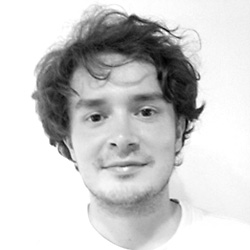
Edouard Oyallon is a CNRS Researcher at Sorbonne University's MLIA team within the Institute of Intelligent Systems and Robotics (ISIR). His research focuses on machine learning foundations, particularly the symmetries of deep neural networks, and large-scale distributed/decentralized training algorithms. He has contributed to frameworks like Kymatio for wavelet scattering transforms and collaborates on projects such as SHARP (Frugal Learning) and ADONIS (ANR-funded). He advises multiple PhD and postdoctoral researchers and teaches advanced deep learning courses at Institut Polytechnique de Paris (IPP). Grants include the ADONIS project (ANR/Sorbonne) and participation in VHS and CoCa4AI initiatives. His work spans theoretical and applied aspects, with recent emphasis on optimizing LLM training at exascale. He maintains active roles in academic service, including organizing workshops on federated learning and graph machine learning.
Nida Latif is a Research Fellow in the Department of Internal Medicine at Yale School of Medicine. Her work focuses on understanding coronary microvascular dysfunction and ischemic heart disease in patients with nonobstructive coronary arteries, particularly in women. She is a key contributor to the DISCOVER INOCA multicenter registry, evaluating invasive coronary function testing protocols and diagnostic strategies. Her research integrates clinical, anatomical, and physiological data to improve diagnostic accuracy and patient outcomes. Key areas of investigation include coronary vasoreactivity testing, risk factor analysis in ischemic syndromes, and the impact of diabetes on angina pathophysiology. Latif's publications highlight advancements in coronary flow reserve measurement, comparison of diagnostic modalities (e.g., PET vs thermodilution), and the clinical utility of vessel-specific analysis. Her work emphasizes translational outcomes, bridging basic science insights with clinical practice improvements. While no specific awards are listed, her contributions to high-impact clinical registries and peer-reviewed publications reflect her active role in advancing cardiovascular medicine.
Professor Marta Zofia Kwiatkowska is Professor of Computing Systems and Fellow of Trinity College at the University of Oxford, where she has held a faculty position since 2007. She previously served as Professor of Computer Science at the University of Birmingham (2001–2007), Reader and Lecturer at the University of Birmingham (1994–2001), and Lecturer at the University of Leicester (1986–1994). Her academic career began as Assistant Professor at the Jagiellonian University in Kraków, Poland (1980–1988). Education: BSc/MSc in Computer Science, Jagiellonian University, Kraków MA, University of Oxford PhD, University of Leicester Research Interests: Professor Kwiatkowska spearheaded the development of probabilistic and quantitative verification methods on the international stage. Her work bridges theory and practice through the PRISM model checker—the leading software tool in probabilistic model checking—used worldwide for research and teaching. Application domains include communication and security protocols , nanotechnology designs , power management , ubiquitous computing and systems biology . She investigates automated verification , temporal logics , semantic models for concurrency , real-time systems , and biological process modelling . Current grant funding exceeds £3.7 million from EPSRC, EU and ERC, including the prestigious ERC Advanced Grant VERIWARE. Scientific Awards & Honours: Fellow of the Royal Society Fellow of the ACM Fellow of the European Association for Theoretical Computer Science (EATCS) Fellow of the British Computer Society (BCS) Fellow of the Polish Society of Arts & Sciences Abroad ERC Advanced Grant VERIWARE (€2.046 M, 2010–2015) Top Cited Article Award, Theoretical Computer Science (2005–2010) Best Paper Award, QEST 2006 Doctoral Supervision & Grants: Professor Kwiatkowska actively supervises doctoral students (D.Phil. at Oxford) and post-doctoral researchers. She welcomes applications in areas aligned with her research interests, detailed here . Current students include Charlie Griffin, Daqian Shao, Matthew Yuan and Minghao Liu; past students and researchers number over twenty, many now in faculty or industry leadership roles. Laboratory & Teams: She leads the Oxford Quantitative Verification group within the Department of Computer Science. Ongoing projects include FUN2MODEL, ELSA, FAIR and the flagship PRISM probabilistic model checker. The group maintains strong collaborations with biological, robotics and engineering teams worldwide.
Scientia Professor Nasser Khalili is the Head of the School of Civil and Environmental Engineering at the University of New South Wales (UNSW). He also serves as the Director of the ARC Research Hub for Resilient and Intelligent Infrastructure Systems (RIIS), President of the Australian Association for Computational Mechanics (AACM), and a core member of the International Technical Committee on Unsaturated Soil (TC106). His research focuses on geotechnical engineering, computational mechanics, porous media behavior, and sustainable infrastructure systems. Key areas of expertise include unsaturated soils, hydraulic fracturing modeling, and advanced material characterization for asphalt mixtures. Professor Khalili's work integrates computational methods with experimental analysis to address challenges in infrastructure resilience and environmental sustainability. He has pioneered studies on pore pressure dynamics, fracture mechanics in porous media, and the application of waste materials in construction. His leadership roles in national and international committees reflect his influence in advancing geotechnical and computational engineering practices. His scientific contributions include over 150 peer-reviewed articles, with recent work emphasizing machine learning applications in civil engineering and innovative solutions for sustainable asphalt mixes. Awards include Fellowship of the Academy, recognizing his significant impact on the field.
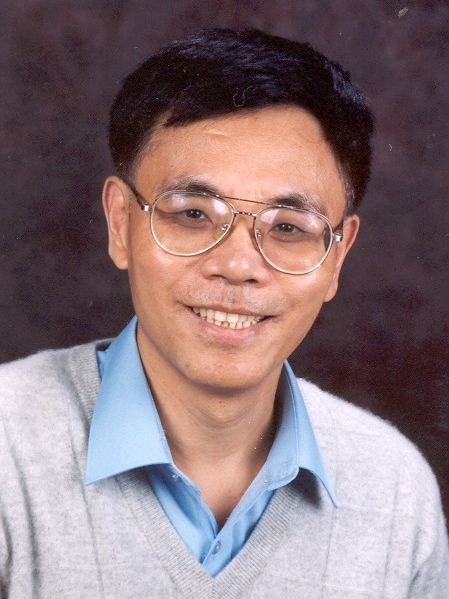
Ke Wang is a Professor in the School of Computing Science at Simon Fraser University . His research focuses on Data Mining , Database Systems , Data Privacy , and Graph and Network Data . He holds a Ph.D. and M.Sc. from the Georgia Institute of Technology (1986 and 1984, respectively). Teaching includes courses like Database Systems II , Introduction to Data Mining , and Special Topics in Databases . He has advised numerous students and alumni, many of whom now work in tech, academia, and industry. Notable awards include the 2013 Faculty of Applied Sciences Research Excellence Award and the ECIR 2019 Best System Paper . His work emphasizes privacy-preserving techniques and has led to contributions like the Introduction to Privacy-Preserving Data Publishing textbook. He has served as a conference chair for major data mining events like SDM 2015/2016 and holds editorial roles in journals like ACM TKDD. His lab, the Database and Data Mining Laboratory , focuses on actionable solutions for real-world data challenges.
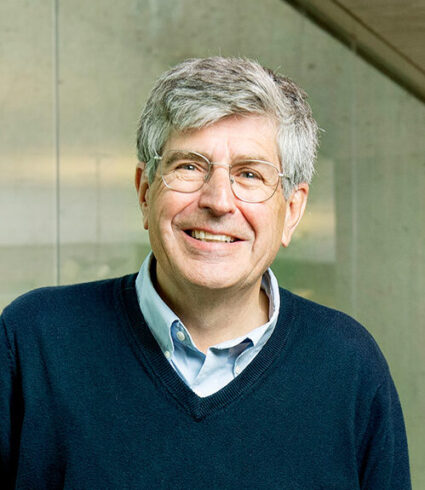
Professor Klavs F. Jensen is the Warren K. Lewis Professor of Chemical Engineering and Professor of Materials Science and Engineering at MIT. His research focuses on integrating automation, machine learning, and robotics to accelerate materials discovery and pharmaceutical synthesis. He leads the Jensen Research Group, pioneering automated reaction systems with online analytics and optimization algorithms. Education: MS in Chemical Engineering (Technical University of Denmark, 1976); PhD in Chemical Engineering (University of Wisconsin, 1980). Research Interests: Thermochemistry, electrochemistry, photochemistry, Bayesian optimization, high-throughput experimentation, and AI-driven synthesis planning. He collaborates with MIT’s Machine Learning for Pharmaceutical Discovery Consortium to develop algorithms for drug development and process chemistry. Awards: Member of National Academy of Sciences (2017), Member of National Academy of Engineering (2002), Fellow of the American Association for the Advancement of Science (2007), and Fellow of the National Academy of Inventors (2022). Grants & Labs: Editor-in-Chief of Reaction Chemistry and Engineering ; holds 63 US patents and over 490 journal articles. His lab’s innovations include ASKCOS (open-source synthesis planning software) and automated platforms for closed-loop molecular discovery.
Aykut Erdem is an Associate Professor of Computer Engineering at Koç University, affiliated with the KUIS AI Center. He earned his PhD, MSc, and BSc in Computer Engineering from Middle East Technical University (METU), with visiting researcher experiences at Virginia Tech (2004) and MIT (2007). His research focuses on learning-based approaches for visual data understanding, including image editing, visual saliency estimation, and vision-language integration. Research Interests: Vision and Graphics, Machine Learning, Artificial Intelligence, Computer Vision, Natural Language Processing, Generative Artificial Intelligence. Recent work includes text-guided image/video editing, diffusion models for object removal, and GAN-based frameworks for domain adaptation. Scientific Awards: Young Scientist Award (BAGEP 2021) by Science Academy in Computer Engineering Best Paper Award at 5th Multimodal Learning and Applications Workshop (2022) Collaborations and Funding: Principal investigator for TUBITAK 1001 project on generative AI for visual data (2021-2024), Adobe Research Gift (2023), and co-investigator for multiple TUBITAK grants. Serves as Associate Editor for IEEE Transactions on Image Processing (2022-present).
Carme Torras Genís is a Research Professor at the Spanish National Research Council (CSIC), affiliated with the Institute of Robotics and Industrial Informatics (IRI) in Barcelona and the Technical University of Catalonia (UPC). Her career spans over three decades, focusing on robotics, neurocomputing, and artificial intelligence with applications in healthcare and deformable object manipulation. M.Sc. in Mathematics (University of Barcelona, 1978) M.Sc. in Computer Science (University of Massachusetts, 11981) Ph.D. in Computer Science (UPC, 1984) Research Interests : Robotic manipulation of deformable objects (especially textiles) Neurocomputing and machine learning for robotic control Human-robot interaction and assistive robotics Computational topology for cloth state representation Ethics in social robotics and AI Medical applications of robotics for neuromuscular disease assessment Scientific Leadership : ERC Advanced Grant recipient (2016) IEEE and EurAI Fellow Coordinator of Horizon Europe project SoftEnable and former ERC project CLOTHILDE Editorial leadership in IEEE Transactions on Robotics and multiple journals Active in ethics committees and AI policy advisory boards Advisory Committee of Ethics in AI (Catalan Government) Vice-President of CSIC Ethics Committee Member of Royal Academy of Engineering (Spain)
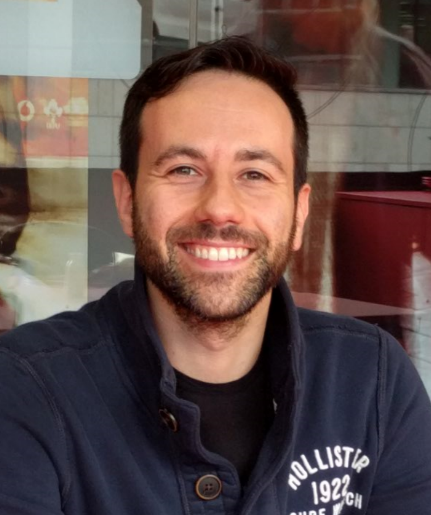
Gian Antonio Susto is an Associate Professor at the Department of Information Engineering , University of Padova . With a Ph.D. in Information Technology and post-doctoral experience at National University of Ireland, Maynooth, he leads research in Machine Learning , Semiconductor Manufacturing , and Industrial IoT . His work bridges Anomaly Detection , Continual Learning , and Algorithmic Fairness with applications in Hydroelectric Power Plants , Particle Accelerators , and Smart Mobility . B.Sc. and M.Sc. in Controls Engineering, University of Padova (cum laude) Ph.D. in Information Technology, University of Padova (2013) Post-Doc at National University of Ireland, Maynooth (2012-2013) Assistant Professor at University of Padova (2013-2021) His research focuses on Explainable AI , Virtual Metrology , and Deep Learning for manufacturing and infrastructure monitoring. Recent projects include the AIMS5.0 (AI for Manufacturing Sustainability) and MICS (Circular Economy in Italy) initiatives. His publications span Engineering Applications of Artificial Intelligence , IEEE Transactions , and Information Processing & Management , with 15+ recent papers on topics like Fault Diagnosis , Continual Learning , and Fair Ranking . Key scientific awards include: IEEE CCTA Best Student Paper Award (2021) IP&M 2020 Ph.D Paper Award Best Industry Paper Award, European Workshop on Advanced Control and Diagnosis (ACD 2019) He has supervised Ph.D. students on projects involving Particle Accelerators , Plant Behavior Modeling , and Explainable AI , with alumni now at institutions like Max Planck Institute , IBM , and Scripps Research . Current teaching includes Reinforcement Learning and Explainable Machine Learning at graduate and Ph.D. levels.
Pedro Ferreira is a Full Professor at Carnegie Mellon University (CMU), holding a joint appointment in the School of Information Systems & Management at the Heinz College and the Department of Engineering and Public Policy within the College of Engineering. His research focuses on how technology influences education, media consumption, and peer effects, leveraging large datasets from randomized experiments. Ferreira has been recognized with the 2018 INFORMS Early Career Award and Top 17th worldwide research scholar ranking (2020–2022). He co-founded CMU's Initiative for Teaching and Education Analytics (iTEA) and advises numerous students in areas like AI/ML in education and media analytics. Education: BSc in Computer Science (IST), MSc in Electrical Engineering and Computer Science & Technology Policy (MIT), PhD in Telecommunications Policy (CMU). He has taught at MIT, IST, and invited roles at Católica-Lisbon and the University of Cambridge. Research Interests: Impact of digital technologies on education outcomes (e.g., smartphones in classrooms, video analytics), peer influence in media industries (e.g., binge-watching, recommender systems), and empirical methods using randomized experiments. Current projects include AI-driven education improvement and policy implications of AI/ML technologies. Notable Achievements: Over 15 peer-reviewed articles in top journals like Management Science and MIS Quarterly. Key grants include Gates Foundation funding for video-based education research and Koch Foundation support for online certification studies. He serves as Associate Editor for Management Science and previously for MIS Quarterly. Advising & Grants: Advised 23 PhD students, many now in academia and industry. Current students research facial recognition in education and hybrid recommender systems. Ferreira has led grants totaling millions, including studies on GDPR's impact on piracy tracking and worldwide VoD availability. Professional Service: Organized conferences like the Symposium on Statistical Challenges in eCommerce Research (SCECR). Served on NSF review panels and CMU’s Portugal PhD program steering committee.曾参与葡萄牙知识社会局(UMIC)的国家级政策制定,推动宽带学校项目。
Thomas Bäck is a Professor at the Leiden Institute of Advanced Computer Science (LIACS) , Leiden University , Netherlands, and a member of the interdisciplinary programme Society, Artificial Intelligence and Life Sciences (SAILS) . His academic career spans roles at Leiden University (1996–present) and leadership positions at the Center for Applied Systems Analysis in Dortmund (1994–2000). Education : Diplom-Informatiker (Computer Science), Technische Universität Dortmund (1990) Dr. rer. nat. (Computer Science), Technische Universität Dortmund (1994) Research Interests : Dr. Bäck specializes in evolutionary computation , machine learning , and their applications in sustainable smart industry and healthcare . Recent work focuses on integrating large language models (LLMs) and quantum computing into optimization frameworks, with projects like CIMPLO (predictive maintenance), ECOLE (experience-based optimization), and SAPPAO (airline operations optimization). Scientific Contributions : His 526+ publications cover evolutionary algorithms, quantum optimization, and LLM-driven design, with recent trends including: Quantum computing (e.g., quantum approximate optimization, quantum advantage challenges) LLM integration (e.g., hyperparameter tuning, mutation control, code evolution graphs) Healthcare and industry (e.g., predictive maintenance, anomaly detection, melt quality prediction) Algorithm benchmarking (e.g., IOHprofiler, MA-BBOB, explainable benchmarking) Scientific Awards : IEEE Fellow (2022) Royal Netherlands Academy of Arts and Sciences (KNAW) member (2021) Academia Europaea member (2022) IEEE Computational Intelligence Society Evolutionary Computation Pioneer Award (2015) Fellow, International Society of Genetic and Evolutionary Computation (2003) Best Ph.D. thesis award, German Society of Computer Science (GI) (1995) Advising and Grants : He supervises Ph.D. candidates in evolutionary computation and machine learning and has secured 7 major grants from organizations like the Dutch Research Council , European Commission , and The Research Council of Norway . His editorial roles include Editor-in-Chief of the Evolutionary Computation Journal and associate editorships in leading AI journals.
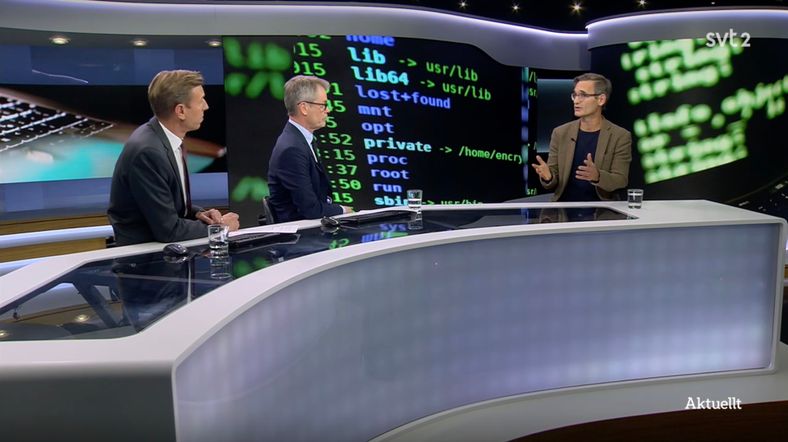
Pontus Johnson is a Professor at the KTH Royal Institute of Technology in Stockholm, Sweden. He leads the Center for Cyber Defense and Information Security (collaborating with Swedish Armed Forces, FRA, MSB, FOI, FHS) and serves as vice director of Cybercampus Sweden since 2024. His research focuses on cybersecurity , enterprise architecture analysis , and probabilistic threat modeling , particularly through his development of the Meta Attack Language (MAL) for simulating cyber attacks on networked systems. Education: MSc in Computer Science, Lund Institute of Technology (1997) PhD in Computer Science, KTH (2002) Docent title, KTH (2007) Leadership Roles: Director, Center for Cyber Defense and Information Security (2013–present) Vice Director, Cybercampus Sweden (2024–present) Board Member, Swedish Research Council (2025–present) Deputy Chair, Swedish Royal Academy of Engineering Sciences (IVA) Board (2024–present) His work spans cybersecurity research , attack simulation methodologies , and enterprise architecture frameworks . He has developed tools like securiCAD (acquired by Google) and pwnPr3d for probabilistic threat modeling. His 15 most recent publications highlight advancements in graph-based attack simulations , automated security assessments , and AI applications in cyber defense . Scientific recognition includes: Listed among Tech Awards Sweden's 50 Most Influential People in Swedish Tech (2022, 2023) Discovery of vulnerability in the Universal Turing Machine (2021) He supervises 16 PhD students and alumni (2005–2024), including Simon Gökstorp , Jakob Nyberg , and Sotirios Katsikeas . His academic service includes over 50 program committee roles and leadership positions in international conferences. He contributes to both academic and public domains through media appearances (SVT, Aftonbladet), courses in ethical hacking , and industry collaboration via his role at Google (20% of his time). His research group Software Systems Architecture and Security (SSAS) focuses on predictive security frameworks and system-of-systems analysis.
Nedim Pervan is a Full Professor at the Faculty of Mechanical Engineering, University of Sarajevo, Bosnia and Herzegovina. His academic position focuses on mechanical engineering with emphasis on product design, structural analysis, and biomechanical applications. He maintains an active research profile with numerous publications and collaborations across various engineering disciplines, with office hours every workday from 09:00 to 10:00 in room 314. Professor Pervan's research interests span multiple domains of mechanical engineering. He has made significant contributions to additive manufacturing, particularly in polymer gear production and analysis. His work explores mechanical properties, failure mechanisms, and service life of polymer gears manufactured through additive processes. Additionally, he has conducted extensive research on external fixation devices used in orthopedic treatments, analyzing their biomechanical characteristics and structural stability under various loading conditions. His expertise extends to finite element analysis, structural optimization, and the application of 3D scanning technologies within Industry 4.0 contexts. His research demonstrates a strong connection between theoretical engineering principles and practical applications across automotive, medical devices, and manufacturing industries. His recent publication record reveals a strong trend toward interdisciplinary research bridging mechanical engineering with biomedical applications and advanced manufacturing technologies. A significant portion of his work focuses on polymer gears and additive manufacturing, examining material properties and performance characteristics. Another substantial research stream involves biomechanical engineering, particularly the analysis of external fixation devices. His publications demonstrate a methodological approach combining experimental testing with finite element analysis. More recently, his research has expanded into 3D scanning applications in manufacturing and the electrification of transportation systems in Bosnia and Herzegovina. Professor Pervan has been involved in numerous research projects that have advanced the capabilities of the Faculty of Mechanical Engineering. These include the "Integrated Intelligent CAD System for Interactive Design, Analysis and Prototyping of Compression and Torsion Springs" (2022), "Opremanje Laboratorije za razvoj i dizajn proizvoda" (2020), and "Modernizacija Laboratorije za ispitivanje mašinskih konstrukcija" (2019-2020). These projects have focused on developing advanced laboratory facilities, intelligent CAD systems, and equipment for mechanical design and analysis, with several specifically targeting 3D scanning technology implementation. His collaborative work extends across multiple research teams within the Department of Mechanical Constructions at the University of Sarajevo. He frequently collaborates with researchers including Adis Muminović, Elmedin Mešić, and Muamer Delić on projects related to additive manufacturing, biomechanical engineering, and structural analysis. His research group appears actively involved in both theoretical and applied engineering research with practical industrial and medical applications, contributing significantly to Bosnia and Herzegovina's engineering research landscape.
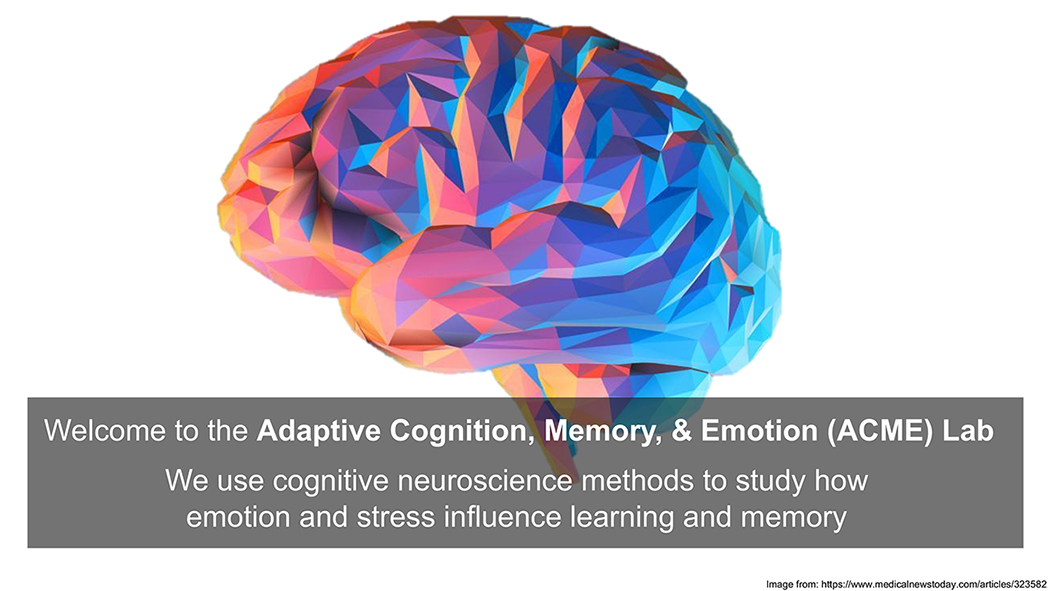
David Clewett, Ph.D. , is an Assistant Professor of Psychology at University of California, Los Angeles (UCLA) , where he leads the Dynamic Arousal and Memory Lab. His research explores how emotional arousal, stress, and neuromodulatory systems like norepinephrine and dopamine shape the way we encode, organize, and retrieve memories. He joined UCLA in July 2020 after completing his Ph.D. in Neuroscience at the University of Southern California and a postdoctoral fellowship at NYU and Columbia University. Education: Ph.D. in Neuroscience, University of Southern California (2016) B.S. in Biopsychology with minor in English, University of California, Santa Barbara Research Focus: Dr. Clewett’s lab investigates how physiological arousal influences attention and memory, using a multimodal approach that includes fMRI, pupillometry, eye-tracking, and pharmacological methods. His work spans four major themes: The role of emotion and arousal in selective memory enhancement or suppression. How contextual shifts and emotional states structure episodic memory into meaningful events. Techniques to weaken or update traumatic or unwanted memories. The dynamic effects of attention and arousal states on neural and memory representations. Publications and Impact: His work has been published in top-tier journals such as Nature Communications , Journal of Neuroscience , Hippocampus , and Trends in Cognitive Sciences . His research has contributed to understanding how neuromodulators like norepinephrine and dopamine interact with memory systems to prioritize salient information, and how these processes can be leveraged for therapeutic intervention in PTSD, depression, and aging-related memory decline. Students and Lab Team: Dr. Clewett mentors a diverse team of graduate students and research assistants. Current graduate students include Jacinda Taggett, Ringo Huang, Erin Morrow, Bailey Harris, and Brandon Katerman. Former lab members have gone on to Ph.D. programs at Harvard, UC Berkeley, and other top institutions. Lab and Facilities: The lab is located in Pritzker Hall at UCLA, and is equipped with tools for fMRI, pupillometry, eye-tracking, and behavioral testing. The lab also collaborates with researchers across UCLA and other institutions, including NYU, Columbia, and USC.
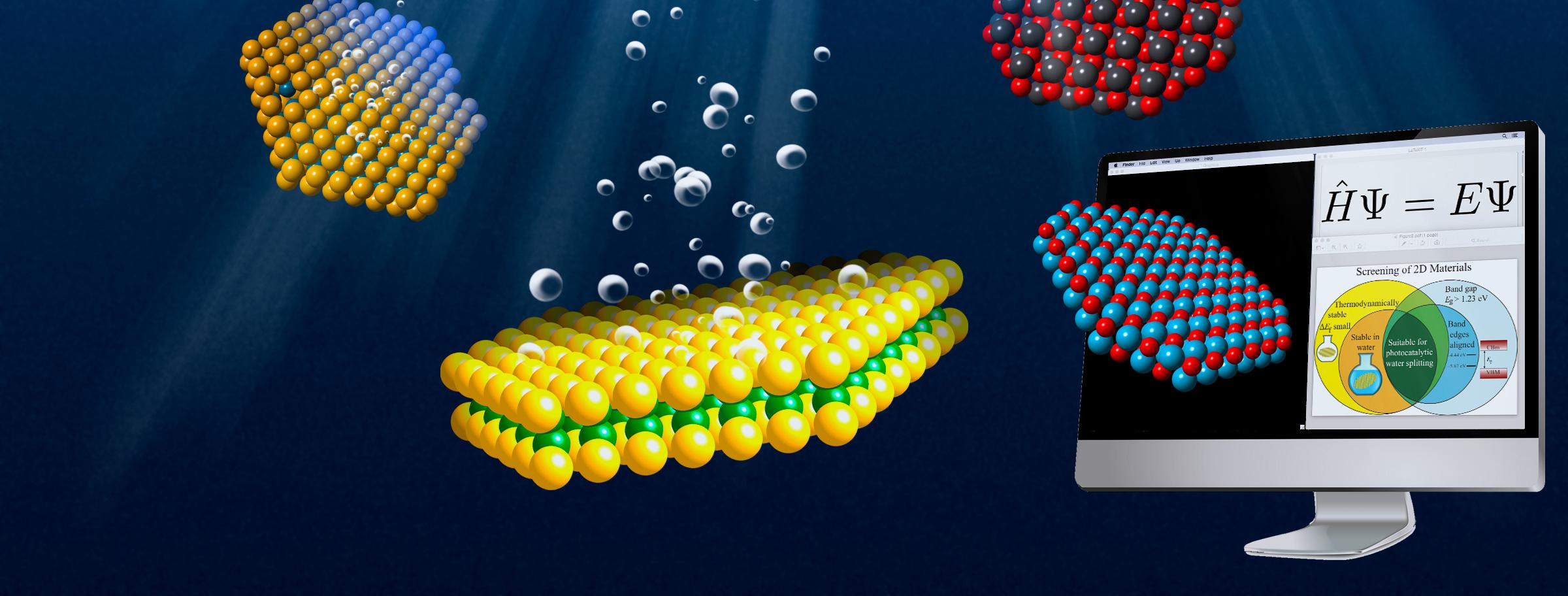
Arunima Singh is an Assistant Professor in the Department of Physics at Arizona State University (ASU), with graduate faculty status in the Materials Science and Engineering Department. Her work focuses on computational materials discovery, leveraging first-principics simulations and data science to accelerate the design of materials for energy applications. She leads research at the Computational Materials Design Lab and co-leads a thrust at ULTRA, a DOE-Energy Frontier Research Center, and has received the 2023 Department of Energy Early Career Research Program Award. Ph.D., Cornell University (2014) B.Tech., Indian Institute of Technology Kharagpur (2009) Her research bridges materials science , surface science , and renewable energy , with a strong emphasis on 2D materials , nanostructures , and machine learning for materials design. She also explores electronic properties at material interfaces and phonon behavior at grain boundaries. The 2025–2023 articles highlight her expertise in heterostructures , wide bandgap materials , and data-driven discovery , with recurring themes in solar energy conversion , nanoengineering , and first-principles simulations . These works often involve machine learning and high-throughput workflows for materials optimization. Scientific Awards 2023 Department of Energy (DOE) Early Career Research Program Award She teaches courses such as Quantum Theory of Solids I , University Physics I: Mechanics , and research/dissertation sections (PHY 792, MSE 792, etc.). Her service includes expertise in computational modeling , solar materials , and nanoscience .