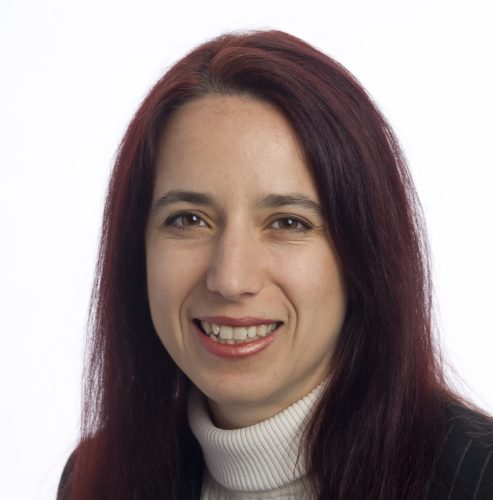
Sophia Natasha Wilson is a Research Fellow in the Department of Computer Science (DIKU) at the University of Copenhagen, specializing in machine learning applications across interdisciplinary domains. She is affiliated with the SCIENCE AI Centre and holds a cross-departmental position at the Niels Bohr Institute . Her research bridges theoretical machine learning with practical implementations in healthcare, quantum computing, and environmental sustainability. University of Copenhagen Department of Computer Science (DIKU) Niels Bohr Institute SCIENCE AI Centre Her research focuses include: Quantum-enhanced machine learning algorithms Explainable AI for healthcare applications Environmental sustainability in computing Emotion-aware language models Quantum computing hardware optimization Public health risk modeling Her recent publications demonstrate cross-disciplinary work in quantum machine learning (hybrid optical processors, qubit stabilization), health informatics (hypothyroidism analysis, nursing values evaluation), and ethical AI (sustainable AI, fairness in recommender systems). Technical work also appears in non-Euclidean generative models and real-time adaptive systems . Current projects include quantum dot array simulation (QDarts platform) and federated learning for personalized medicine . She contributes to the TreeSense center for remote sensing of global tree resources and works on climate-aware AI frameworks.
Søren Rud Kristensen is a Professor at the Department of Public Health, University of Southern Denmark and holds an Honorary Senior Lecturer position at Imperial College London. His research focuses on healthcare organization and performance, particularly incentive design for quality improvement, with expertise in microeconometric analysis of large administrative datasets. He has held roles including Senior Lecturer (2017-2021) at Imperial College London. Key research areas include payment for performance systems, integrated care models, and clinical guideline implementation. He has published extensively on healthcare quality, patient safety, and health policy with 71+ peer-reviewed articles. His work addresses challenges like hospital competition effects, spillover mechanisms of financial incentives, and the impact of adverse events on patient outcomes. He has received multiple research grants including support for Manchester research stays and funding from Sygekassernes Helsefond. Teaching responsibilities include modules on integrated health care, quality management, and data-driven quality development. His current projects focus on regulating knowledge use in healthcare (PINCH project) and evaluating resource constraints in primary care. Labs/teams involvement includes collaborations through the Danish Centre for Health Economics (DaCHE) and international networks analyzing health systems in England, Brazil, Mozambique, and Zimbabwe. His work bridges economic theory with practical healthcare system improvements.
Athanasios Kolios serves as Professor and Head of the Structural Integrity and Loads Assessment section within the Department of Wind and Energy Systems at the Technical University of Denmark (DTU). His work focuses on advancing wind energy technology through structural analysis, materials science, and system optimization for both onshore and offshore applications. His primary research domains include wind turbine structural integrity, offshore wind farm layout optimization, and structural health monitoring systems. He investigates critical challenges in operation and maintenance strategies, techno-economic metrics for wind projects, and materials behavior under dynamic loading conditions. His fingerprint analysis reveals dominant expertise in Wind Turbine Engineering (100%), Offshore Wind Turbines Engineering (45%), and Offshore Wind Farms Engineering (36%). Recent publications demonstrate strong emphasis on data-driven approaches for wind energy systems, including structural optimization algorithms, virtual sensing techniques, and techno-economic assessments of offshore projects. His work consistently bridges theoretical engineering principles with practical industry applications, particularly in Brazilian and European offshore wind contexts. Scientific Awards: No scientific awards were documented in the provided information Professor Kolios actively supervises five PhD candidates across major research initiatives while mentoring Master's students in structural wind energy applications. His research portfolio includes six significant projects addressing critical industry needs: PhD Supervision: Chopard (anomaly interpretation), Piovesan (risk-based technology qualification), Yildirim (floating turbine uncertainty), Rodrigues Faria (autonomous operation), Al-Hagri (offshore structure maintenance) Master's Supervision: Rushil S. Mahajan (monopile buckling analysis) Current Projects: Decision support systems, life cycle cost modeling, floating wind turbine modeling, autonomous operation frameworks, sustainable offshore structure design As section head at DTU Wind and Energy Systems, he leads an internationally collaborative research group focused on structural integrity assessment, load prediction methodologies, and materials innovation for next-generation wind turbines. The team maintains strong industry partnerships and contributes to global wind energy standards development through participation in initiatives like ISSC.
Sune Damgaard is a Clinical Associate Professor at the University of Copenhagen's Faculty of Health and Medical Sciences within the Department of Clinical Medicine. He specializes in Cardiothoracic Surgery at Rigshospitalet (Copenhagen University Hospital), where he maintains active clinical and research roles. His academic profile is associated with the Department of Clinical Medicine and Rigshospitalet's Heart and Lung Surgery division. Dr. Damgaard's research focuses on expanding traditional cardiac surgery risk assessment models beyond physiological parameters. His work investigates how social, emotional, behavioral, and functional factors impact surgical outcomes. Key areas include validating modified EuroSCORE systems, developing multidimensional risk prediction tools, and studying echocardiographic techniques during cardiac procedures. He has pioneered research on tricuspid annular plane systolic excursion measurement and coronary bypass graft patency assessment. His publication trends reveal consistent emphasis on integrating patient-reported outcomes into surgical risk models. Recent work (2018-2022) demonstrates growing focus on psychosocial predictors of cardiac surgery outcomes, with multiple studies examining how non-physiological factors contribute to postoperative complications. Earlier research (2012-2015) centered on technical aspects of graft patency and intraoperative monitoring. Dr. Damgaard maintains active clinical practice at Rigshospitalet's Cardiothoracic Surgery department while conducting translational research through the University of Copenhagen's medical faculty. His work bridges clinical cardiology, surgical innovation, and health services research with particular relevance to improving risk stratification in cardiac surgery.
Marie Dam Lauridsen is a Clinical Instructor at North Denmark Regional Hospital, affiliated with Aalborg University's Faculty of Medicine, Department of Clinical Medicine. Her research focuses on chronic obstructive pulmonary disease (COPD), cardiogenic shock, and patient outcomes in respiratory medicine. She leads the 2025 project 'SEXA-PRO' investigating gender differences in COPD prognosis. Her work integrates telemedicine innovations and cohort analysis to improve diagnostic accuracy and treatment efficacy. Education : Not explicitly stated in provided text. Key research interests include COPD severity stratification, biomarker identification, and healthcare system optimization through telemedicine. Recent studies examine diuretic use impacts, patient mortality patterns, and treatment intensity as prognostic tools. Her 2024 publications highlight telehealth solutions for COPD and epidemiological cohort studies on blood eosinophil levels. Collaborative projects emphasize clinical trial design, healthcare equity, and multidisciplinary care approaches. She has supervised research projects and contributed to national cohort analyses, with findings published in Respiratory Medicine and European Respiratory Journal . Awards : None explicitly listed in text. Advising and grants involvement includes supervision in the 2025 project and contributions to grant-funded COPD research initiatives. Active in lab teams focusing on respiratory disease mechanisms and clinical decision-making tools. Labs/teams: Engaged in Aalborg University's clinical medicine research groups, particularly those addressing COPD heterogeneity and telehealth integration.
Thomas Lykke Andersen is an Associate Professor and Head of the Ocean and Coastal Engineering Research Group at Aalborg University's Department of the Built Environment within the Faculty of Engineering and Science. His work focuses on coastal engineering, wave energy systems, and physical modeling of marine structures. Key projects include the RESCUER initiative enhancing coastal resilience and leadership in the WaveLab facility. Research interests span breakwater design, wave-structure interactions, and hydraulic engineering. Notable contributions include advancements in wave separation algorithms (NL-SORS), stability analysis of rock armor systems, and offshore wind turbine foundation dynamics. His lab conducts large-scale physical experiments addressing coastal protection challenges. Publications emphasize wave dynamics, overtopping prediction, and innovative coastal infrastructure. Supervision includes one documented PhD student. Media engagements highlight contributions to coastal engineering solutions and university teaching methodologies during the pandemic.
Ali Lashgari is a Marie Skłodowska-Curie Postdoctoral Research Fellow at Aalborg University's Department of the Built Environment (Faculty of Engineering and Science). He holds a PhD in Geotechnical Engineering from Semnan University (2019) and serves as a visiting researcher at Hong Kong University of Science and Technology. His research focuses on seismic hazards, offshore energy infrastructure resilience, and probabilistic geotechnical analysis. Education: PhD in Geotechnical Engineering, Semnan University (2019) MSc in Geotechnical Engineering, Semnan University (2013) BSc in Civil Engineering (not specified) Research Interests: Development of predictive models for geohazards (e.g., submarine landslides, liquefaction), offshore foundation resilience, and probabilistic analysis of seismic risks. His work integrates numerical modeling (e.g., DEM-FEM), machine learning, and big data analytics for hazard assessment frameworks. Awards: Marie Skłodowska-Curie Postdoctoral Fellowship (2023) Grants & Projects: PRO-SLIDE: EU-funded project (2023–ongoing) for offshore energy infrastructure resilience against seismic submarine landslides (PI) EU-COST Action CA23155: Pan-European network on ocean tribology (participant) Professional Activities: Founder of Intelligent Environmental Risks Analyzers (2016) Membership in AGU, DFI, GEER, IGS, and IRCEO Lab/Team Affiliation: Risk, Resilience, Safety, and Sustainability of Systems Research Group at Aalborg University.
Stig Borbjerg Laursen is a Clinical Professor at the Department of Clinical Research, University of Southern Denmark, and is affiliated with Odense University Hospital (OUH) through the Research Unit of Medical Gastroenterology in Odense. He is actively involved in clinical research, education, and professional development in gastroenterology. His research interests focus on gastrointestinal bleeding, particularly upper gastrointestinal and peptic ulcer bleeding, endoscopic interventions, hemostasis, and risk scoring systems. His work integrates clinical practice with academic research, aiming to improve patient outcomes through evidence-based guidelines and international collaboration. The recent publications reflect a strong emphasis on timing and management of endoscopy in acute bleeding scenarios, pre-endoscopic care, and validation of risk models. His research spans clinical surveys, editorial commentary, and contributions to medical textbooks, demonstrating leadership in the field. Dr. Laursen actively contributes to the academic community through peer review, conference organization, and educational lectures. He has delivered presentations at national and international conferences, including Digestive Disease Week in San Diego (2019), and regularly participates in masterclasses and workshops on upper GI bleeding. He is affiliated with research networks across Europe and has collaborated with clinicians internationally. His laboratory or team is not explicitly named, but his work is conducted under the Research Unit of Medical Gastroenterology at OUH, indicating a structured research group focused on gastrointestinal diseases and endoscopic therapies.
Henrik Boye Jensen is a Clinical Associate Professor at the Department of Regional Health Research, IRS - Sygehus Lillebælt, Forskningsenhed for Neurologi (Kolding), affiliated with the University of Southern Denmark. His work bridges clinical neurology and research, with a strong focus on multiple sclerosis, stroke, and neurorehabilitation. Institution: University of Southern Denmark Department: Department of Regional Health Research Research Unit: Research Unit for Neurology, Kolding Academic Rank: Clinical Associate Professor His research interests center on multiple sclerosis , particularly disease progression, pharmacological treatments, and the role of exercise in neuroprotection. He also investigates stroke rehabilitation and diagnostic challenges in neurological conditions such as Lyme neuroborreliosis. His work frequently employs advanced methodologies including randomized controlled trials , cohort studies , and neuroimaging (MRI) . The 15 most recent articles reflect a strong trend in clinical neuroscience , with emphasis on MS phenotypes , pharmacological interventions , exercise as therapy , and diagnostic accuracy . His publications span high-impact journals in neurology and rehabilitation, demonstrating consistent scholarly output. Scientific Awards: No specific awards listed in the provided text. Henrik Boye Jensen has been actively involved in advising and research projects. He has contributed to at least three supervised works, including a Ph.D. thesis, and is a working partner in the RoboRehab project on stroke rehabilitation. He has participated in multiple collaborative research initiatives and has delivered presentations in both academic and public settings. He is also involved in public discourse through media contributions on neurological health issues. Labs and Teams: He is associated with the Research Unit for Neurology in Kolding and collaborates extensively within the Region of Southern Denmark and with national and international research groups, particularly in MS and stroke research.
Tom Kirchmaier is Professor of Governance, Risk, Regulation and Compliance at Copenhagen Business School's (CBS) Department of Accounting and Centre for Corporate Governance. He concurrently serves as a Professorial Fellow and Director of Policing and Crime at the London School of Economics' Centre for Economic Performance. He is also a Faculty Affiliate at LSE's Data Science Institute and member of the UK Home Office Scientific Advisory Council. Research Interests: Kirchmaier's work empirically analyzes organizational governance using large datasets. Primary domains include: Law/economics intersections Policing systems and crime patterns Anti-money laundering (AML) and organised crime networks Corporate boards with emphasis on gender dynamics Risk management and compliance frameworks Publication Trends: Recent articles (2021-2025) demonstrate strong focus on empirical crime analysis (e.g., terrorism impacts, domestic abuse recidivism) and corporate governance in banking. Methodologies leverage big data to study spatial crime patterns, behavioral economics, and organizational efficiency across financial and public sectors. Awards: 2024 LSE Innovation Challenge Winner Teaching & Advising: Supervises 1 PhD and 1 Master's student. Teaches graduate/executive courses: Corporate governance and finance MBA compliance/risk management Board training programs
Jamal Jokar Arsanjani is a full professor in Geoinformatics and Earth Observation at Aalborg University (Denmark), leading the Geoinformatics & Earth Observation group. He holds a PhD from the University of Vienna (2011), with postdoctoral research at Heidelberg University supported by an Alexander von Humboldt fellowship (2012–2015). His academic career includes roles as a UN consultant in Vienna and senior scientist at Heidelberg's GIScience group. Research focuses on integrating geospatial data with computational models to address complex environmental challenges, including land use change, climate impacts, and natural hazards. Key methodologies include agent-based modeling, machine learning, and remote sensing. He contributes to UN Sustainable Development Goals, particularly SDGs related to climate action, sustainable cities, and responsible consumption. Recent projects include 'PROMISE' (micro-mobility integration in urban transport) and 'AI4Covid' (AI-driven pandemic monitoring). Awards include the Springer Outstanding PhD Dissertation (2012) and an Earth Observation award (2020). He serves on the European Environment Agency board and edits the journal Land . Research outputs span 105+ publications since 2008, emphasizing urban sustainability, disaster resilience, and geospatial technologies. Active in 7 ongoing projects and 45+ academic activities, he advises on policy and innovation in smart cities and climate adaptation.
Johan Røikjer is an Associate Professor at Aalborg University and affiliated with Aalborg University Hospital's Department of Endocrinology. He holds an MD and PhD, specializing in diabetic complications with a focus on neuropathy, neuropathic pain, and diabetic foot management. His work bridges clinical practice and research, contributing to international collaborations in diabetes care innovation. Education: MD from Aalborg University Hospital (2024–present) PhD in Clinical Medicine (details unspecified) Research Interests: His primary focus is on understanding and mitigating complications of diabetes, particularly neuropathic pain mechanisms, early detection of diabetic peripheral neuropathy, and predictive models for diabetic foot amputations. He develops diagnostic tools like perception threshold tracking and contributes to clinical guidelines for diabetic foot care. Key Contributions: His research emphasizes translating clinical insights into actionable therapies and risk assessment systems. Notable work includes validating the DIAFORA amputation prediction system and advancing perception threshold tracking for neuropathy diagnosis. Awards: NEUROdiab Young Investigator Award (2022) Dansk Endokrinologisk Selskab Best Abstract (2022) International Symposium on Diabetic Foot (Best Young Investigator Poster, 2022) Grants & Projects: Leads initiatives like the Diabetic Peripheral Neuropathy: Early Detection & Grading project (2018–present). Collaborates with teams on clinical trials and diagnostic tool development. Labs & Teams: Works within the Department of Endocrinology at Steno Diabetes Center North Denmark, contributing to multidisciplinary diabetes research networks.
Irena Vodenska is Professor of Finance and Director of Finance Programs at Boston University’s Metropolitan College, Department of Administrative Sciences. She holds a PhD in statistical finance and an MA in economics from Boston University, an MBA from Vanderbilt University, and a BS in computer information systems from the University of Belgrade. She is also a Chartered Financial Analyst (CFA) charter holder. Her research is at the intersection of finance, complexity science, and artificial intelligence, focusing on systemic risk modeling, ESG investments, and financial network dynamics. She has led major interdisciplinary research projects funded by the National Science Foundation, the European Commission, and the U.S. Army Research Office. PhD, Statistical Finance – Boston University MA, Economics – Boston University MBA – Owen Graduate School of Management, Vanderbilt University BS, Computer Information Systems – University of Belgrade Dr. Vodenska’s research interests include network theory in finance, systemic risk propagation, AI-powered ESG analysis, cryptocurrency price forecasting, and financial regulation. She employs big data, machine learning, and natural language processing to analyze financial news, market dynamics, and corporate sustainability. Her work investigates how climate disinformation spreads via social networks and influences public policy and governance. The recent articles highlight a consistent focus on modeling financial and economic systems using network science and AI. Trends include systemic stress testing, sentiment analysis in financial markets, cascading failures, and the interplay between macroeconomic indicators and financial networks. Her work spans econophysics, behavioral finance, public health economics, and ethical AI in fintech. National Science Foundation (NSF) research grant (2023) NSF EAGER Award (2014–2015) European Commission FET Open Grant (2012–2014) U.S. Army Research Office (ARO) Grant (2020–2021) MEXT Post-K Computer Grant, Japan (2016–2019) Alexander Hamilton Fulbright Fellowship (1994) Owen Graduate School Fellowship (1995–1996) Dr. Vodenska teaches core finance courses such as Investment Analysis and Portfolio Management, Derivatives Securities, and Financial Regulation and Ethics. She co-developed the MET AD 678 course with Professor Tamar Frankel from BU Law, emphasizing real-world case studies and ethical decision-making. Her research grants have supported innovative work in systemic risk modeling, AI for ESG, and financial network stability. She is actively involved in mentoring, conference organization, and editorial roles in leading journals. She is a key organizer of the International School and Conference on Network Science (NetSci) and the Big Data in Economics, Science, and Technology (BEST) Conference. Her lab and research team focus on complexity in financial systems, bringing together economists, physicists, computer scientists, and data analysts to study global financial stability and sustainability.
Ole Madsen is a Professor at the Department of Materials and Production within The Faculty of Engineering and Science at Aalborg University . His research focuses on Robotics and Automation , particularly in 5G Smart Production , AI for Manufacturing , and Industry 4.0 applications. He also holds a part-time position at Adding Robotics , applying his expertise in robot integration for industrial and healthcare settings. Research Interests : Robotics, Automation, AI, Sensor Systems, Modular Manufacturing, Welding Technology, Digital Twins, Human-Centered Robotics, Industry 4.0 His work spans 35+ years with over 205 publications , emphasizing smart production systems and robot-assisted processes . Key contributions include Swarm Production Architectures , 5G-Enabled Robotics , and Human-Robot Collaboration frameworks. He has supervised 10 PhD students and led major projects like RAU (Robot-Assisted Ultrasound) and GINP: Robotics & AI Innovation Network . Scientific Awards : SCAP2020 Best Presentation Award (2020) Ole's 31 projects include AP2030: Aseptic Factory 2030 (pharma production), AddSmart (robotics R&D), and 5G-Enabled Autonomous Systems . His 127 press/media mentions highlight advancements in robotic welding , industrial metaverse , and swarm production . He maintains an ORCID: 0000-0003-2133-2541 with extensive publication records across Swarm Robotics , Modular Manufacturing , and AI-Driven Production .
Henrik Madsen is a Professor at the Department of Applied Mathematics and Computer Science, Technical University of Denmark (DTU). His work focuses on energy systems, stochastic processes, and mathematical modeling. He leads research in areas such as demand response in district heating, probabilistic forecasting, and integration of renewable energy sources. Madsen has supervised multiple PhD students and contributes to projects like the IEA DHC Annex TS9 and SEEDS initiative. His expertise includes statistical analysis, time series modeling, and data-driven approaches for energy systems. He actively engages in collaborative research on smart grids, thermal energy storage, and sustainable energy solutions. Education: Academic qualifications from DTU, though specific details are not provided in the text. Research Interests: Mathematical modeling of energy systems Probabilistic forecasting methodologies Integration of wind and solar power Dynamic modeling for district heating Data assimilation in hydrological systems Optimization of energy flexibility Publications & Trends: Recent works emphasize demand response strategies, district heating optimization, and machine learning tools like the nabqr Python package and evalprob4cast R package. His research bridges theoretical stochastic methods with practical applications in energy infrastructure. Grants & Projects: IEA DHC Annex TS9: Digitalization of district heating SEEDS: RES-integrated electrified heating systems Data-Driven Methods for Demand-Side Flexibility Labs/Teams: Collaborates with DTU's Dynamical Systems group and participates in interdisciplinary initiatives like the Frigg 2.0 energy system analysis framework.