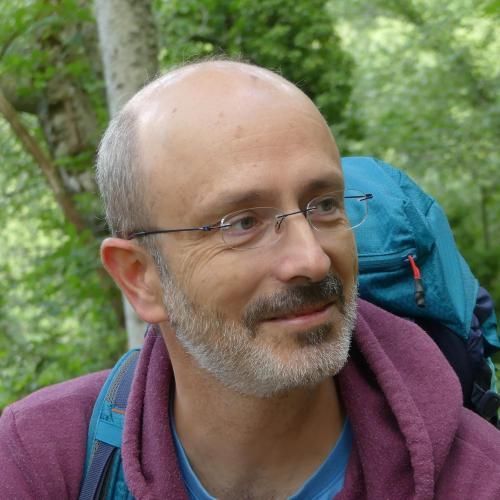
Carme Torras Genís is a Research Professor at the Spanish National Research Council (CSIC), affiliated with the Institute of Robotics and Industrial Informatics (IRI) in Barcelona and the Technical University of Catalonia (UPC). Her career spans over three decades, focusing on robotics, neurocomputing, and artificial intelligence with applications in healthcare and deformable object manipulation. M.Sc. in Mathematics (University of Barcelona, 1978) M.Sc. in Computer Science (University of Massachusetts, 11981) Ph.D. in Computer Science (UPC, 1984) Research Interests : Robotic manipulation of deformable objects (especially textiles) Neurocomputing and machine learning for robotic control Human-robot interaction and assistive robotics Computational topology for cloth state representation Ethics in social robotics and AI Medical applications of robotics for neuromuscular disease assessment Scientific Leadership : ERC Advanced Grant recipient (2016) IEEE and EurAI Fellow Coordinator of Horizon Europe project SoftEnable and former ERC project CLOTHILDE Editorial leadership in IEEE Transactions on Robotics and multiple journals Active in ethics committees and AI policy advisory boards Advisory Committee of Ethics in AI (Catalan Government) Vice-President of CSIC Ethics Committee Member of Royal Academy of Engineering (Spain)
Nicolò Cesa-Bianchi is a Professor of Computer Science at the University of Milan, where he serves as head of the Computer Science programs. He is also associated with the Department of Electronics, Information and Bioengineering (DEIB) at Politecnico di Milano. Cesa-Bianchi holds significant leadership roles including Board member, Fellow and co-director of the Milan unit of the European Laboratory for Learning and Intelligent Systems (ELLIS), and membership in the prestigious Accademia Nazionale dei Lincei. He is also involved with The European Lighthouse on Secure and Safe AI (ELSA), The European Lighthouse of AI for Sustainability (ELIAS), and The FAIR foundation. Professor Cesa-Bianchi's research focuses on the theoretical foundations of machine learning, with special emphasis on sequential decision making and online learning algorithms. His work spans multiple areas including multi-armed bandit problems, regret analysis, prediction with expert advice, and learning on graphs. He has made significant contributions to understanding the theoretical limits of learning algorithms and developing efficient methods for various learning scenarios. His research has important applications in online markets, social networks, and bioinformatics. His monographs 'Prediction, Learning, and Games' and 'Regret Analysis of Stochastic and Nonstochastic Multi-armed Bandit Problems' are considered seminal works in the field. His recent publications demonstrate continued leadership in advancing the theoretical understanding of machine learning, with 2024-2025 papers covering cooperative online learning, multitask learning, fair trade mechanisms, and refined analyses of bandit algorithms. The research shows increasing focus on practical economic applications while maintaining strong theoretical foundations. Google Research Award Xerox Foundation UAC Award Member of the Accademia Nazionale dei Lincei ELLIS Fellow Cesa-Bianchi has been deeply involved in academic service, having served as action editor for the Machine Learning Journal, IEEE Transactions on Information Theory, and the Journal of Machine Learning Research. He currently serves as associate editor for the Journal of Information and Inference and TheoretiCS. He has held leadership positions including President of the Association for Computational Learning and member of the steering committee for the EC-funded Network of Excellence PASCAL2. He was program chair of the 13th Annual Conference on Computational Learning Theory and the 13th International Conference on Algorithmic Learning Theory. He leads the Laboratory for AI and Learning Algorithms (ALGA) at the University of Milan, which focuses on theoretical and applied research in machine learning. His international collaborations are extensive, with visiting positions at UC Santa Cruz, Graz Technical University, Ecole Normale Supérieure in Paris, Google, and Microsoft Research. As an educator, he teaches advanced courses including Reinforcement Learning and Statistical Methods for Machine Learning, and has supervised numerous students through the years.
Prof. Raimon Jané Campos is a leading figure in biomedical signal processing at the Universitat Politècnica de Catalunya (UPC) and Universitat de Barcelona (UB). As co-director of UPC's Biomedical Signal and System Group (CREB) and coordinator of the Biomedical Engineering PhD Programme, he bridges engineering and clinical applications. His work focuses on respiratory and sleep disorder diagnostics, with significant contributions to COPD and sleep apnea monitoring through wearable devices and machine learning. PhD in Biomedical Engineering (UPC, 1989) Visiting researcher at Université de Nice-Sophia Antipolis Vice-president of Spanish Society of Biomedical Engineering Research spans respiratory mechanics , sleep-disordered breathing , acoustic biomarkers , bioimpedance , and machine learning in biomedical contexts . His 2025 work on microcalorimetric pathogen classification and 2024 spiking neural networks for apnea detection demonstrate cutting-edge integration of computational methods with physiological monitoring. Articles from 2017-2024 reveal consistent focus on non-invasive diagnostics , cardiorespiratory synchronization , and smartphone-based health solutions . Awarded the Barcelona City Technology Research Award (2005) and serving on the International Advisory Board for Physiological Measurement since 2010, his career combines academic leadership with real-world clinical translation through IBEC's technology transfer initiatives.
Amir Sufi is the Bruce Lindsay Distinguished Service Professor of Economics and Public Policy at the University of Chicago Booth School of Business, where he has been a faculty member since 2005. He serves as a Research Associate at the National Bureau of Economic Research and co-director of its Corporate Finance Program. Bachelor’s Degree, Walsh School of Foreign Service, Georgetown University (1999) PhD in Economics, Massachusetts Institute of Technology (2005) His research focuses on finance , macroeconomics , and corporate finance . Key areas include household debt dynamics , credit market structure , income inequality , and interest rate impacts on productivity growth . Recent work examines customer capital investment and low-interest rate effects on market concentration . Selected scientific awards include the 2017 Fischer Black Prize, Econometric Society Fellow (2022), and American Academy of Arts and Sciences Fellow (2024). His peer-reviewed publications and working papers span topics from syndicated loans to global household debt cycles , with notable contributions to understanding credit-driven business cycles and government-led consumer credit programs . He teaches courses in leveraged finance , private credit , and corporate restructuring .
Claudia Patricia Ayala Martinez serves as a Lecturer in the Department of Service and Information Systems Engineering at the Barcelona School of Informatics (FIB), Polytechnic University of Catalonia (UPC). She is actively involved in research through the GESSI - Group of Software and Service Engineering and the UPC inSSIDE - integrated Software, Services, Information and Data Engineering research groups. Her career spans over two decades of academic contributions in software engineering with consistent publication output. Dr. Ayala Martinez's research focuses on Empirical Software Engineering, Off-The-Shelf Adoption, Requirements Engineering, and Software and Architectural Quality. Her work demonstrates an evolution from traditional software engineering topics toward increasing integration with machine learning and AI systems. Recent publications show particular emphasis on software quality indicators, ML pipeline design principles, trustworthiness of ML models, and green computing in software systems. Analyzing her publication trends reveals a consistent research trajectory with growing focus on AI/ML integration in software engineering. Her work spans empirical studies, systematic literature reviews, and practical industrial applications. The research shows strong connections between software quality metrics, architectural decisions, and emerging technologies, with increasing attention to ethical considerations in ML systems and sustainability in software development. Most-Influential Paper Award at the 30th IEEE International Requirements Engineering Conference Dr. Ayala Martinez has participated in numerous competitive R&D projects including those funded by the Spanish National Research Plan, Horizon 2020, and the Catalan Innovation Strategy. Her collaborative network includes extensive work with Professor Javier Franch Gutierrez (69 joint publications), Silverio Juan Martinez Fernandez (26 joint publications), and Cristina Gomez Seoane (20 joint publications). Her research has been supported by various national and European funding programs focusing on software engineering, quality assessment, and open source adoption. She is actively involved with the GESSI and inSSIDE research groups at UPC, which focus on integrated software, services, information, and data engineering. These groups maintain strong industry connections and have produced significant research in empirical software engineering, reference architectures, and quality assessment methodologies. Her recent work shows increasing collaboration with researchers working at the intersection of software engineering and artificial intelligence.
Pere-Pau Vázquez is an Assistant Professor in AI for Visual Computing at the Computer Vision Lab, TU Wien, Austria . Previously, he held academic positions at the ViRVIG Group and Facultat d'Informàtica de Barcelona (UPC) , where he taught courses in Programming, Computer Graphics, and Visualization for over 20 years. His research focuses on Information Visualization, Scientific Visualization, Medical Data Visualization, Molecular Visualization, and AI applications to Visual Computing . Current Teaching : Data Visualization, Fast Realistic Rendering, Information Visualization, Medical Images, Scientific Visualization, Virtual Reality, and 3D Medical Visualization. Former PhD Students : Elena Molina, Alexandra Cortez, Jesús Díaz, Pedro Hermosilla, Eva Monclús. His scientific awards include the Best PhD Thesis Award (UPC, 2003), Best Student Paper Award (SPIE, 2012), and Best Paper Award (International Conference on Computer Graphics Theory and Applications, 2013). Recent publications explore AI integration in biomedical visualization, molecular data analysis, and interactive techniques for volume rendering. He serves on the EuroGraphics Executive Board as Secretary and is active in steering committees for EuroVis and Visual Computing for Biology and Medicine . His work bridges Computer Graphics, Artificial Intelligence, and Human-Computer Interaction , with applications in medical and molecular data analysis.
Yolanda Vidal Segui is an Associate Professor in the Department of Mathematics at the Universitat Politècnica de Catalunya (UPC), affiliated with the Escola d'Enginyeria de Barcelona Est (EEBE). Her research focuses on wind energy systems, predictive maintenance, and structural health monitoring of wind turbines. She leads projects in the CoDAlab and WinTurCoM research groups, specializing in data-driven models, condition monitoring, and failure prognosis. Her work integrates machine learning, mathematical modeling, and sensor technology to enhance turbine reliability and energy efficiency. Dr. Vidal holds a PhD in Applied Mathematics and has authored over 350 publications. Her contributions include advancements in SCADA data analysis, vibration-based diagnostics, and AI-driven condition monitoring systems. She has received several accolades, including the WindEurope Technology Workshop recognition and the IFIT Distinction in Mechanism and Machine Science. Her research bridges academia and industry, addressing challenges in offshore wind turbine integrity and maintenance strategies. Active in professional service, she serves on conference committees and editorial boards (e.g., Mechanical Systems and Signal Processing, Wind Energy). Her work emphasizes sustainable energy solutions and has been applied in real-world scenarios like the Alpha Ventus wind farm. She also contributes to educational initiatives, developing innovative teaching materials for engineering students.
Tania Fernández Villa is an Associate Professor in the Department of Biomedical Sciences at the Faculty of Veterinary Medicine, University of León. Her primary academic affiliation centers on preventive medicine and public health research within the GIIGAS (Interactions Gene-Environment-Health) research group. Her research spans nutritional epidemiology, gender studies in food systems, substance use disorders, and chronic disease prevention. Key focus areas include alcohol consumption patterns among university students (via the UniHcos cohort), sarcopenia in metabolic syndrome, breast cancer risk factors, and pandemic impacts on health behaviors. Her work integrates longitudinal cohort analysis, systematic reviews, and psychometric validation studies. Recent publications demonstrate strong trends in gender-disaggregated health research, pandemic-related behavioral shifts, and methodological innovations in dietary assessment. Her 2024-2025 output shows increasing emphasis on environmental sustainability of diets and multi-cancer risk prediction models. She serves on the editorial board of the Spanish Journal of Human Nutrition and Dietetics, contributing to strategic planning (2020-2026) and open science initiatives. Her PhD from Universidad de Granada focused on ICT usage patterns among university students. Current projects include the UniHcos longitudinal study tracking health behaviors in Spanish university students, with particular attention to alcohol use, sleep patterns, and nutritional status. Her research group actively investigates gene-environment interactions in public health contexts.
Andrés Baselga Fraga is a Professor at the University of Santiago de Compostela, affiliated with the Department of Zoology, Genetics and Physical Anthropology within the Faculty of Biology. He leads the BiBiCI research group (Biodiversity, Biogeography and Integrative Conservation) and is associated with the Center for Interdisciplinary Research in Environmental Technologies (CRETUS). His doctoral work (2002) focused on Chrysomelidae beetles in Galicia, supervised by Dr. Francisco Novoa Docet. Education: PhD in Biology, University of Santiago de Compostela (2002) Thesis: 'Study of the Chrysomelidae (Coleoptera) of Galicia' Research Interests: His work centers on biodiversity patterns, biogeographical processes, and community ecology, with a focus on spatial scaling of phylogenetic diversity, climate change impacts, and dispersal limitation effects. He explores these through macroecological approaches, integrating genetic, taxonomic, and environmental data. His studies often address beetle communities, particularly Chrysomelidae, and their responses to environmental changes. Article Trends: Recent publications analyze biodiversity value through phylogenetic uniqueness, climate stability's role in species abundance-genetic diversity congruence, and dispersal mechanisms shaping community turnover. He also examines spatial and temporal shifts in montane ecosystems and develops novel statistical methods for assessing distance-decay relationships. Awards: No specific academic awards noted in the provided texts. Grants & Advising: No grant details or student advisees explicitly listed. His research has been supported through institutional affiliations like CRETUS. Labs/Teams: Leads the BiBiCI group and collaborates with CRETUS, focusing on interdisciplinary environmental research.
Fernando Sánchez-Figueroa is a Full Professor at the University of Extremadura's Department of Computer Systems Engineering and Telematics. He is a co-founder of Homeria Open Solutions, a spin-off engaged in R&D projects under EU frameworks. His research focuses on Software Engineering, Machine Learning, Data Visualization, and Ambient Intelligence. He has authored over 50 scientific articles and led numerous R&D contracts with public and private entities. Key roles include: Academic: Full Professor at University of Extremadura Entrepreneur: Co-founder of Homeria Open Solutions Research: Participation in EU-funded projects and development of AI-driven solutions for healthcare, smart cities, and education Research Interests: Machine Learning applications in healthcare, predictive analytics for education, and sustainable smart city technologies. His work bridges theoretical advancements with practical implementations, such as medical image segmentation using SAM models and cost-efficient UAV systems. Publications: Recent works include decision support systems for employability analysis, zero-shot learning in medical imaging, and recommender systems for education. He emphasizes data-driven approaches and model-driven engineering in software development. Impact: Developed tools like CompareML for preliminary data analysis and LiveSankey for advanced web visualization. His contributions span academia and industry, addressing challenges in healthcare, urban sustainability, and educational technology.
Silvia Jiménez Fernández is an Associate Professor in the Department of Signal Theory and Communications at Universidad Autónoma de Madrid. Her research focuses on optimization algorithms, smart grids, renewable energy systems, telemedicine, and machine learning applications. She holds a Ph.D. from Universidad Politécnica de Madrid (2009), supervised by Dr. Francisco del Pozo Guerrero and Dr. Paula de Toledo Heras. Her work integrates interdisciplinary approaches, such as combining evolutionary algorithms with engineering challenges in energy systems and healthcare. Key contributions include advancements in coral reefs optimization algorithms for energy management, machine learning for battery health estimation, and telemedicine systems for chronic disease monitoring. Recent research trends emphasize hybrid learning models in education, multi-objective optimization in renewable energy systems, and risk analysis in smart grids with electric vehicles. She is affiliated with the GHEODE Research Group (Modern Heuristics and Network Design).
Jose Miguel Espi Huerta is an Associate Professor in the Department of Electronic Engineering at the School of Engineering, University of Valencia. He is an active researcher in power electronics and control systems, contributing significantly to grid-connected converters, renewable energy integration, and digital control techniques. His research interests include: Power Electronics and Inverter Control Predictive and Robust Control Strategies Renewable Energy Systems (Photovoltaic and Wind) Induction Heating Technologies Remote and Web-Based Educational Labs The analysis of his recent publications reveals a strong focus on improving the efficiency and reliability of grid-connected power converters using advanced control methods such as predictive current control and MPPT strategies. His work spans both industrial applications and academic education, particularly in developing remote laboratory platforms for control systems. Scientific awards and honors: No awards listed in the provided text. He has supervised academic theses and is affiliated with the LEII (Laboratory of Industrial Electronics and Instrumentation) research group. While no formal grants are listed, his extensive publication record indicates sustained research activity. He has contributed to the development of educational tools such as air levitation systems accessible via PLC and web interfaces, promoting innovative teaching methods in engineering education. The LEII research group focuses on industrial electronics, instrumentation, and power systems, providing a collaborative environment for applied research in energy conversion and control technologies.
Javier Saez Valero is a Professor in the Department of Biochemistry and Molecular Biology at Miguel Hernandez University of Elche, where he also serves as Deputy Vice Rector for Research - Management of Research and Transfer. His academic roles include teaching Biochemistry I in the Bachelor's in Medicine program and courses in the Master's in Neuroscience and Master's in Translational Neuropsychopharmacology, while coordinating the Doctorate in Neuroscience program. His research focuses on neurochemical mechanisms in neurodegenerative disorders, particularly Alzheimer's disease biomarker discovery in cerebrospinal fluid and blood. Key areas include NMDA receptor dynamics, ACE2 fragments, apolipoprotein E interactions, and reelin signaling pathways. His work bridges molecular biochemistry with clinical neurology to develop diagnostic tools and understand disease pathogenesis. Analysis of his 15 most recent publications (2023-2025) reveals a dominant focus on Alzheimer's disease biomarkers, especially CSF protein alterations (nicastrin, ADAM10, ACE2). Significant themes include synaptic vs extrasynaptic receptor distributions, COVID-19 neurological impacts, and nanocarrier drug delivery limitations. His work consistently targets translational applications for early diagnosis and therapeutic development. No scientific awards were documented in the provided information. Professor Saez Valero provides academic guidance through tutorials and course coordination across undergraduate, master's, and doctoral programs. As Doctorate in Neuroscience coordinator, he oversees research training while managing institutional research transfer activities through the Vice Rectorate. His teaching spans biochemistry, neuropathology, and molecular neuroscience with laboratory components. He operates from Laboratory 241 at the Institute of Neurosciences (Campus de San Juan), a joint research center with CSIC. His work integrates with the university's Vice Rectorate for Research and Transfer, facilitating technology transfer and collaborative neuroscience research within the university's research infrastructure.
Pedro Galeano is an Associate Professor in the Department of Statistics at Universidad Carlos III de Madrid (UC3M) since 2009. He holds a PhD in Statistics (2004) under Prof. Daniel Peña, focusing on multiple time series. Previously, he served as Visiting Assistant Professor of Statistics and Econometrics at the University of Chicago’s Graduate School of Business and as a Postdoctoral Fellow at the Department of Statistics and Operations Research at Universidade de Santiago de Compostela. His research focuses on time series analysis, outlier detection, Bayesian inference in financial models, and functional data analysis with applications to missing data. He is an Associate Editor of the Journal of Time Series Analysis and advises the Heliyon journal. Key contributions include developing methodologies for detecting structural breaks, modeling systemic risk via copula approaches, and advancing robust statistical techniques for high-dimensional data. Active in academic leadership, Galeano co-organized the NICDA Workshop 2025 and has published extensively on topics like dynamic factor models, sequential parameter change detection, and functional data applications in energy markets. His work bridges theoretical statistics with practical applications in finance, economics, and environmental science.
Juan Antonio Añel Cabanelas is a Professor of Earth Physics at the University of Vigo , affiliated with the EPhysLab research group and the Specialized Group on Atmospheric and Ocean Physics of the Royal Spanish Society of Physics . He serves as an Executive Editor for Geoscientific Model Development and an Associate Editor for PLoS Climate . PhD in Physics (2007) from the University of Vigo, thesis: Climatic analysis of the tropopause using radiosonde data Taught courses in Meteorology, Atmospheric Physics, Computational Science, and Renewable Energy at the University of Vigo and international institutions His research focuses on climate change impacts , upper troposphere-lower stratosphere dynamics , renewable energy modeling , and computational reproducibility in climate research . He emphasizes instrumental data recovery and open science , with recent work addressing stratospheric contraction and mercury cycling . Key publications span extreme weather-energy sector interactions , Fortran code quality , and ozone data analysis . He mentors PhD students in Physics and Computer Science, and has collaborated with institutions in Mexico, Portugal, and the private sector. He advocates for free software and has organized workshops on climate intervention and citizen science . His work is funded by public grants from Spain's Government, Xunta de Galicia, and private entities like Naturgy and Acciona, with computing support from Google and Microsoft.