Adrian Vulpe-Grigorasi is a Junior Researcher at the Center for Digital Health and Social Innovation , affiliated with the Institute of Health Sciences at FH Steyr (FHSTP.ac.at). He holds BEng and MEng degrees and specializes in interdisciplinary research at the intersection of machine learning, cognitive science, and biomedical engineering. His research focuses on: Cognitive load assessment using VR systems and biosensors Development of multimodal machine learning frameworks for health monitoring Applications of GANs in ECG analysis and synthetic data generation Energy systems optimization through data-driven approaches Key projects include: Realistic clinical XR training systems Attention performance classification via eye tracking Smart grid forecasting with GAN data augmentation Adrian has published in conferences such as IEEE Informatics, CGI, and ACM MUM. His work bridges theoretical machine learning advancements with practical healthcare and energy applications.
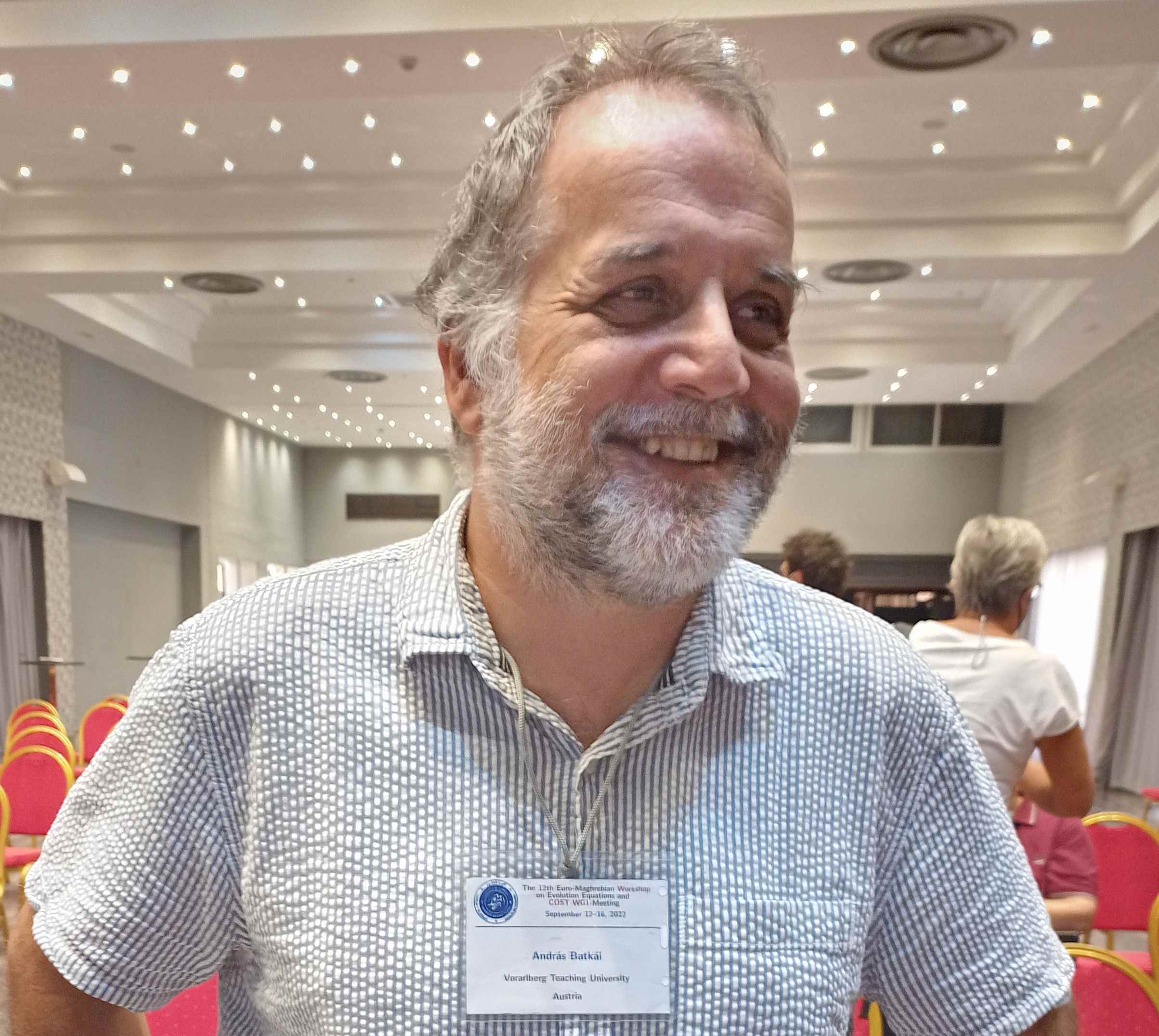
Habilitation in Mathematics at Eötvös Loránd University (ELTE Budapest) in 2007. Full Professor of Mathematics at Vorarlberg University of Education since 2016, leading the Institute for Secondary Education & Subject Didactics. Holds a Dr. rer. nat. from Eberhard-Karls Universität Tübingen (2000). Extensive international experience includes roles as Humboldt Fellow at Universität Siegen (2009-2010), Guest Professor at Bergische Universität Wuppertal (2014-2016), and researcher at institutions across Europe. Research focuses on applied functional analysis, particularly operator semigroups and their applications to delay equations, wave equations, and numerical methods. Engaged in mathematics education research, emphasizing problem-solving, language-sensitive teaching, and intelligent practice strategies. Former spokesperson of the Austrian Mathematics Education Society (GDM) working group (2021–2024). Authored/co-authored over 100 publications, including monographs such as Positive Operator Semigroups (2016) and Semigroups for Delay Equations (2005), cited over 1000 times. Core member of the EU COST Action on network dynamics and former leader of ECMI’s Numerical Weather Prediction Special Interest Group.
Matthias Neumann is an Assistant Professor at the Institute of Statistics, Graz University of Technology . He completed his PhD in 2020 at Ulm University under Prof. Volker Schmidt, earning the PhD prize of Ulm University . His research focuses on stochastic 3D modeling and statistical analysis of micro- and nanostructures for functional materials, including battery electrodes , fuel cells , and paper-based materials . He has received start-up funding from ProTrainU (2020-2022) and served as principal investigator in the POLiS Cluster of Excellence (2022-2023). Research Interests: His work integrates mathematical morphology , machine learning , and spatial statistics to develop methods for microstructure quantification , estimation of geometrical descriptors (e.g., tortuosity, constrictivity), and data-driven models linking morphology to effective physical properties . He utilizes random fields , point processes , and copulas for virtual microstructure generation and parameter estimation. Teaching: He lectures on Applied Statistics , Statistical Modeling , and Mathematical Statistics at Graz University of Technology, with prior teaching experience at Ulm University in Multivariate Stochastic Modeling , Point Processes , and Spatial Statistics . Scientific Achievements: PhD prize of Ulm University (2020) ProTrainU start-up funding (2020-2022) POLiS Cluster of Excellence grant (2022-2023) Publications: His 15 most recent articles (2023-2025) emphasize machine learning techniques for microstructure segmentation , stochastic 3D modeling of nanoporous materials , and data-driven quantification of transport-property relationships . Key topics include random forests , neural networks , and R-vine copulas applied to fuel cells , sodium-ion batteries , and polymer electrolytes .
Arne Nothdurft is a University Professor for Forest Monitoring at the University of Natural Resources and Life Sciences (BOKU) in Vienna, Austria, where he chairs the Institute of Forest Growth within the Department of Forest and Soil Sciences. With a career spanning over two decades in forest research and academic leadership, he has established himself as a leading expert in advanced forest inventory techniques and forest growth modeling. Professor Nothdurft's research focuses on the application of cutting-edge technologies in forest monitoring, particularly LiDAR and personal laser scanning systems for forest inventory. His work bridges the gap between traditional forestry practices and modern digital solutions, with emphasis on mixed species forest management, climate change adaptation, and the development of smart forestry systems. His research interests encompass forest growth modeling, tree species classification using point cloud data, and the development of spatial prediction models for forest inventory parameters. His recent publications demonstrate a strong trend toward integrating artificial intelligence with forestry applications, particularly in the analysis of 3D point cloud data from laser scanning technologies. His work spans both theoretical advancements in spatial statistics and practical applications for forest managers, with a particular focus on improving the accuracy and efficiency of forest inventory systems. Thurn und Taxis Förderpreis für die Forstwissenschaft (2008) Professor Nothdurft has supervised numerous master's and doctoral theses, primarily focused on the application of laser scanning technologies in forestry, forest inventory optimization, and growth modeling. His research is supported by multiple ongoing projects funded by Austrian research agencies and federal ministries, with a strong emphasis on practical applications for forest management. He leads the Institute of Forest Growth, which maintains the Lehrforst Rosalia long-term forest monitoring site, and collaborates extensively with the Institute of Forest Engineering on smart forestry initiatives.
Andreas Tockner is a researcher at the Institute of Forest Growth, part of the Department of Ecosystem Management, Climate and Biodiversity at the University of Natural Resources and Life Sciences, Vienna (BOKU). He holds a Dipl.-Ing. and B.Sc. degree and is currently pursuing PhD studies since 2021 as part of the "Building Like Nature" program at BOKU University. His work focuses on applying advanced laser scanning technologies to forest resource management and inventory. Dr. Tockner's educational background includes a Diplom-Ingenieur (Dipl.-Ing.) and Bachelor of Science (B.Sc.) degrees. His PhD studies at BOKU University began in 2021 as part of the "Building Like Nature" program. He is actively developing expertise in software development for instance segmentation and feature extraction of 3D point clouds. His research interests center around forest resource management with a strong emphasis on ground-based laser scanning technologies, particularly mobile LiDAR systems. He specializes in software development for instance segmentation and feature extraction of 3D point clouds, which has significant applications in modern forest inventory and monitoring. His work bridges the gap between advanced geospatial technologies and practical forestry applications, enabling more precise and efficient forest management practices. He has developed expertise in analyzing forest structures through 3D point cloud data, with particular focus on tree species classification, forest regeneration monitoring, and timber measurement at individual log levels. Dr. Tockner's publication record reveals a clear progression toward increasingly sophisticated applications of laser scanning technology in forestry. His work has evolved from basic measurement techniques to complex analysis of forest ecosystems, including species identification, wood quality prediction, and even long-term forest projections using digital twin technology. His interdisciplinary approach combines forestry, computer science, and data analytics to solve practical challenges in forest management. Advancements in personal laser scanning for forest inventory Methods for tree species classification using intensity patterns Techniques for quantifying forest regeneration Digital twin applications for forest modeling and future projections Dr. Tockner has supervised two Master's theses in 2025: "Evaluierung boden-, luftgestützter und hybrider Methoden zur Forstinventur im Naturpark Sparbach" by Elias Kimmel and "Assessing the Potential of Personal Laser Scanning to Quantify Tropical Tree Structures" by Luca Stephan Seiler. His research is supported by multiple projects including "Lidar based forest monitoring and harvesting planning" (2023-2026) funded by Federal Ministries and "Forest Inventory with Personal Laserscanners" (2022-2025) funded by the Austrian Research Promotion Agency (FFG). He is actively involved in developing practical applications of laser scanning technology for forest management, with a particular focus on making these technologies accessible for field operations. His work on using Apple iPad Pro with integrated LiDAR technology demonstrates his commitment to practical, field-deployable solutions that can transform traditional forest inventory practices.
Paul Griesberger is a Senior Researcher at the Institute of Wildlife Biology and Game Management under the University of Natural Resources and Life Sciences, Vienna , where he has contributed to both basic and applied research since 2017. He completed his Master’s in Wildlife Ecology and Wildlife Management (2014–2017) and Bachelor’s in Biology (Zoology) (2010–2014). Key research areas: Wildlife Management, Wildlife Ecology, Wild Ungulates, Spatio-Temporal Modeling, GPS Telemetry His recent work integrates decision-support tools for sustainable ungulate management, mathematical approaches like Benford’s Law for telemetry data validation, and climate adaptation strategies for forest protection. Collaborations span EU institutions and national parks. His 14 publications (2018–2025) focus on wild ungulate behavior, interspecies competition, telemetry analytics, and canid morphology, with methodologies bridging ecology, statistics, and conservation policy. He has advised 4 Master’s students and contributed to practical guidelines for red deer and chamois management. Scientific awards: Granser-United Global Academy Forschungspreis für eine Nachhaltige Jagd (2022) YO Research Award by CIC (2020) Nationalpark Hohe Tauern stipend (2021)
Michael Lechner is a medical specialist and researcher at the University Clinic for Surgery, affiliated with Paracelsus Medical University in Salzburg, Austria. He holds the academic title of Privatdozent and is actively engaged in clinical and academic surgical research, particularly in hernia surgery, gastrointestinal oncology, and perioperative risk assessment. University: Paracelsus Medical University School: Faculty of Medicine Department: Department of Surgery Email: m.lechner@salk.at His research interests include surgical oncology, hernia repair (especially inguinal and Bochdalek hernias), minimally invasive techniques, postoperative complications, and the use of prognostic models such as the GSU-Pulmonary Score to predict surgical outcomes. He has explored innovative applications of botulinum toxin in managing complex hernias. The recent publication trends show a strong focus on case reports, systematic reviews, and original research in high-impact surgical journals like Hernia and European Surgery . His work often involves international collaborations and contributes to evidence-based surgical guidelines. A prognostic model for postoperative pulmonary complications (2024) Management of giant scrotal hernias using botulinum toxin (2025) Systematic review on adult right-sided Bochdalek hernias (2022) Clip migration after hemicolectomy (2025) Dr. Lechner is actively involved in academic and professional development through organizing and participating in surgical workshops and symposia. He has co-organized multiple Hernia Workshops (2018–2019) and served on the Scientific Advisory Board for the Salzburg Symposium on Thoracic Surgery 2024, demonstrating leadership in continuing medical education and knowledge dissemination within the surgical community.
Isabella Dornauer is an active researcher and surgical clinician affiliated with the University Clinic for Surgery at Salzburger Landeskliniken (SALK), Austria. She holds the title of Assistant Doctor (Ass. Dr), indicating her role as a physician in specialist training with strong engagement in academic research. Her work focuses on surgical oncology, colorectal procedures, and perioperative risk assessment. Her research interests span colorectal surgery , neoadjuvant therapy , total mesorectal excision , hernia management , and postoperative complications . She has contributed to high-impact studies on surgical outcomes during the COVID-19 pandemic, including SARS-CoV-2-related thromboembolic risks and risk modeling for pulmonary complications after elective surgery. The trends in her recent publications show a focus on improving surgical precision in oncological procedures, innovative applications of botulinum toxin in complex hernias, and evidence-based risk stratification tools for safer surgery. Her collaborative work with international consortia like the COVIDSurg Collaborative and GlobalSurg highlights her integration into global surgical research networks. Scientific Awards: No awards explicitly mentioned in the text. Isabella Dornauer actively contributes to clinical research and surgical education through case reports and original studies. While no formal advising or grant information is provided, her participation in multi-center, international cohort studies suggests involvement in large-scale collaborative projects. She has no listed students but collaborates with senior surgical teams and research groups. Labs and Teams: ACO-ASSO CRC Study Group COVIDSurg Collaborative GlobalSurg Collaborative NIHR Global Health Research Unit on Global Surgery
Dr. Thomas Hartmann is a Senior Scientist at the Centre for Cognitive Neuroscience (CCNS), Department of Psychology, Faculty of Natural and Life Sciences, University of Salzburg. His research focuses on cognitive neuroscience, auditory perception, and electrophysiological methods (M/EEG), particularly in the context of tinnitus and cochlear implants. He leads the Salzburg Brain Dynamics Lab and is a key contributor to open-source neuroscience software development. PhD in Psychology, University of Konstanz (2006–2012) Diploma in Psychology, University of Konstanz (2001–2006) His primary research interests include auditory perception, neural oscillations, neurofeedback, cognitive neuroscience, and psychophysics . He investigates how the brain processes sound, especially under conditions of hearing impairment, and develops computational tools to improve experimental rigor and reproducibility. Dr. Hartmann’s recent publications demonstrate a strong trend in multisensory integration, neural speech tracking, attention modulation, and open-source methodological development . His work often combines EEG/MEG with behavioral paradigms to uncover the neural mechanisms of perception and attention. A major contribution is the Objective Psychophysics Toolbox (o_ptb), which enhances experimental design in MATLAB by abstracting hardware complexity. Active contributor to open-source neuroscience tools Focus on reproducible and robust experimental paradigms Collaborative research with leading institutions in Europe He has co-authored numerous peer-reviewed studies in journals such as Frontiers in Psychology , NeuroImage , and Cortex , and has been involved in research on tinnitus, cochlear implants, and neural correlates of attention. Although no direct students are listed, his role as a senior scientist and publication mentor suggests advisory responsibilities. He is affiliated with the Salzburg Brain Dynamics Lab, where his team conducts cutting-edge research on brain dynamics using advanced electrophysiological techniques and computational modeling.
Dr. Ann-Kathrin Arend is a Senior Scientist and Postdoctoral Researcher in the Department of Psychology at the University of Salzburg, affiliated with the Faculty of Natural and Life Sciences. She is a core member of the Eating Behavior Laboratory Salzburg and contributes to both the FWF-funded project 'Cognitive Affective Mechanisms of Food Biases Trainings' and previously the ERC-funded project 'Transdiagnostic view on eating disorders and obesity and new approaches for treatment'. PhD in Psychology, University of Salzburg (2018–2022) Master in Psychology, University of Salzburg (2016–2018) Bachelor in Psychology, University of Salzburg (2013–2016) Her research centers on emotional eating across the spectrum of eating disorders and obesity. She investigates how emotional states interact with food-related cues and behaviors using advanced methodologies such as ecological momentary assessment (EMA), smartphone-based interventions (EMI, JITAI), experimental emotion induction, psychophysiological recordings (EMG, EOG, ECG), and clinical diagnostic interviews (SCID, EDE). Her work bridges clinical psychology, health psychology, and cognitive neuroscience to develop more personalized and effective interventions. The most recent publications highlight a trajectory of research focused on real-time monitoring of eating behaviors, the emotional triggers of binge eating, and behavioral changes during public health crises. Her work increasingly integrates digital tools and real-world data to understand and predict eating pathology. Toward Individualized Prediction of Binge-Eating Episodes Based on Ecological Momentary Assessment Data (JMIR Medical Informatics, 2023) Emotion‐potentiated food‐cue reactivity in binge‐eating disorder (International Journal of Eating Disorders, 2022) Increased screen use during COVID-19 confinements (Frontiers in Public Health, 2021) Dr. Arend has been involved in significant research grants, including an ERC project during her PhD and an ongoing FWF project as a Postdoc. While no formal students are listed, her role as a Senior Scientist suggests mentorship within the research team. She is an active researcher with a growing publication record in high-impact journals. She conducts her research within the Eating Behavior Laboratory Salzburg, a collaborative environment focused on understanding the psychological and physiological mechanisms underlying disordered eating. The lab employs a transdiagnostic approach and leverages digital phenotyping and intervention technologies.
Felix Holzmeister is a Professor in the Department of Economics at the University of Innsbruck, affiliated with the 'Innsbruck Decision Sciences' research center. His work focuses on experimental and behavioral economics, finance, and the philosophy of science. He coordinates interdisciplinary research efforts and collaborates with a team including Markus Walzl, Rudolf Kerschbamer, and others. Research Interests: Holzmeister investigates researcher variability in social science experiments, replicability challenges, and methodological rigor. His work spans lab-, field-, and online-based experiments, emphasizing crowd-sourced science and multi-analyst approaches. Key contributions include studies on risk perception among financial professionals and global societal trends. Notable Publications: He co-authored influential papers in Nature (2020) on neuroimaging dataset variability and Management Science (2020) analyzing risk perception. His research also addresses replication crises in social sciences and methodological transparency. Awards: None explicitly listed, though his work has garnered significant academic attention. Collaborations focus on interdisciplinary work, workshops, and disseminating findings through open science frameworks. Labs/Teams: Active in the Innsbruck Decision Sciences team, emphasizing collaborative research and innovation in experimental methods.
Elias Weiss is a researcher at the University of Vienna's Institute of Political Science within the Faculty of Social Sciences. He holds a BA and MA in Political Science from the University of Vienna, focusing on interpretive qualitative and exploratory research methods. His bachelor's thesis examined the duration of electoral periods, specifically the extension of Austria's legislative period from four to five years. His master's work shifted to solidarity research, particularly in labor market, economic, and health policies, analyzing the GameStop incident's political-solidarity dimensions. Research Interests: Solidarity studies, labor market dynamics, health policy, universal basic income, election period analysis, and policy discourse analysis. His work bridges political theory with empirical policy evaluation, emphasizing interdisciplinary approaches to contemporary societal challenges. Articles Trends: His publications span cognitive science, health policy, and education, reflecting a focus on mental health interventions, workplace environments, and neurocognitive adaptations. Recent work includes studies on pandemic impacts, light therapy efficacy, and stroke rehabilitation. These themes underscore a commitment to applying empirical research to real-world challenges in academia, healthcare, and public policy. Advising & Grants: No specific advising roles or grants are mentioned. His contributions are primarily through research and academic publications. Labs/Teams: Associated with the CESCoS (Contemporary Solidarity Studies) research group at the Institute of Political Science, focusing on socio-political solidarity dynamics in modern contexts.
Professor Anne Hecksteden holds a professorship at the Institute of Sports Science, University of Innsbruck since 2022. A physician with a multidisciplinary background in sports science, her research focuses on exercise physiology, injury prevention, recovery management, and biomarker applications in sports medicine. Her work integrates data analytics, molecular biology, and clinical insights to address performance optimization and athlete health. Before joining Tyrol, Hecksteden spent nearly three decades near Saarbrücken, completing her medical studies and residency while balancing elite sports careers in inline skating (German champion) and horseback riding. Her competitive spirit translates into academic rigor, evident in her over 100 peer-reviewed articles across sports science, physiology, and clinical medicine. Key research themes include: Exercise intensity prescription and training adaptation mechanisms Injury epidemiology and return-to-play protocols in football/badminton Thermoregulation and cross-adaptation strategies Blood-borne biomarker profiling for recovery assessment MiRNA expression patterns in training response Her 2025 publications emphasize data-driven approaches in sports decision-making and personalized training strategies. Recent work on Bayesian networks for injury prediction and heat therapy applications showcases cutting-edge methodological innovation. Awards/recognitions: While specific awards aren't listed, her sustained academic output and leadership in sports medicine research position her as a field authority. Labs/Teams: Leads the Saddle, Skates and Sports Lab, collaborating with international sports federations and clinical institutions on translational research projects.
Margot Ernst is affiliated with the Dr. Max Perutz Labs and the Department of Biochemistry and Cell Biology at the University of Vienna. Her research focuses on receptor pharmacology, with particular emphasis on GABAA receptors and ligand-gated ion channels. Key areas include drug safety profiling, seizure liability assessment, and molecular mechanisms of receptor-ligand interactions. Her recent work contributes to Sustainable Development Goals through advancements in neuropharmacology and toxicology. Collaborations span multiple countries, reflecting interdisciplinary research networks. Notable publications (2022–2023) investigate benzodiazepine/Z-drug safety, GABAA receptor seizure risks, and ligand promiscuity predictions. Over 11 peer-reviewed articles since 2013 highlight sustained research output. Publications demonstrate expertise in drug adverse event analysis, receptor pharmacology, and computational modeling. No awards explicitly noted, though contributions to peer-reviewed journals indicate recognition within academic circles. Advising and grant details are not specified in the provided text.
Thomas Seidel is a Professor in the Department of Pharmaceutical Sciences at the Faculty of Life Sciences. His research focuses on computational methods for drug discovery, including pharmacophore modeling, virtual screening, and ligand-receptor interaction analysis. He has contributed to the development of tools like GRADE/X-GRADE, PharmacoMatch, and QPhAR for enhancing the efficiency and accuracy of drug design processes. His work integrates molecular dynamics simulations, machine learning, and structure-based approaches to address challenges in neuropharmacology and medicinal chemistry. Key areas include GABAA receptor modulation, metabolite prediction, and the optimization of lead compounds for drug targets such as the large neutral amino acid transporter 1 (LAT1). Seidel’s collaborative projects span academic and industrial partnerships, with a focus on advancing predictive toxicology through initiatives like the NeuroDeRisk toolbox. His research consistently bridges computational methodologies with experimental validation, emphasizing translational applications in drug development.