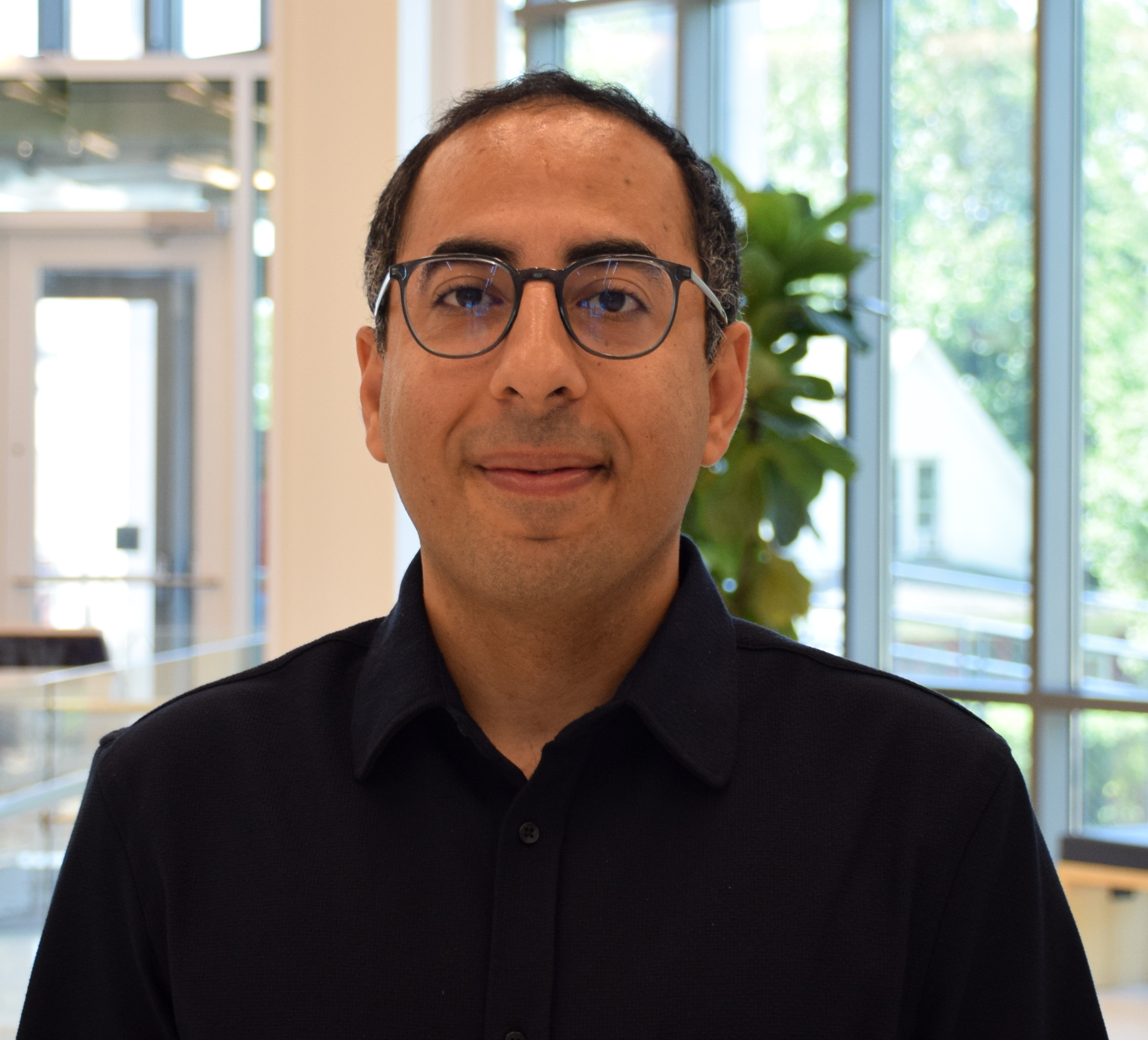
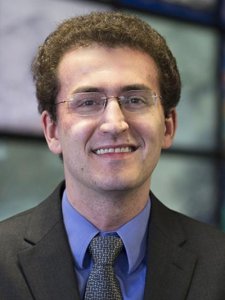
Mohsen Heidari is an Assistant Professor in the Department of Computer Science at Indiana University, Bloomington. He is affiliated with the IU Quantum Science and Engineering Center (QSEc) and the NSF Center for Science of Information (CSoI). He previously held positions as a Visiting Assistant Professor at Purdue University and as a Postdoctoral Research Associate at CSoI. Ph.D. in Electrical Engineering (2019) and M.Sc. in Applied Mathematics (2017) from the University of Michigan His research focuses span quantum computing, theoretical machine learning, and information theory. Key themes include: Quantum algorithm design and sample complexity Fourier-based learning frameworks Quantum-classical duality in learning problems Information-theoretic approaches to biological systems Article trends show a strong emphasis on quantum-classical learning intersections (6/15 papers), Fourier analysis applications (5/15), and information-theoretic foundations (12/15). Notable venues include NeurIPS, IEEE Transactions, and ISIT. He directs research involving: Quantum Neural Network development Quantum measurement simulation Quantum data compression techniques Quantum algorithm implementation constraints
Jim Crutchfield is a Distinguished Professor of Physics at the University of California, Davis, where he also serves as Director of the Complexity Sciences Center. He holds additional affiliations as President and Scientific Director of the Art & Science Laboratory in Santa Fe, External Faculty at the Santa Fe Institute, General Member of the Telluride Science Research Center, and Visiting Scholar at the Redwood Center for Theoretical Neuroscience. His work bridges physics, computation, and complex systems. Education: B.A. summa cum laude in Physics and Mathematics, University of California, Santa Cruz (1979) Ph.D. in Physics, University of California, Santa Cruz (1983) Crutchfield's research centers on computational mechanics , a framework he pioneered to quantify how natural systems store, process, and transmit information. His interests span nonlinear dynamics, evolutionary dynamics, information engines, quantum computation, and pattern discovery. He explores how structure emerges in complex systems, from cellular automata to biological evolution and neural networks. His recent work focuses on thermodynamic computing, causal inference, and the physics of intelligence. His publications reveal a consistent focus on the interplay between information, energy, and computation in physical systems. Themes include the thermodynamics of information engines, causal architecture in time series, emergent organization, and intrinsic computation in quantum and classical domains. These works span disciplines such as physics, computer science, biology, and cognitive science. Scientific Recognition: Postdoctoral Fellow, Miller Institute for Basic Research in Science IBM Postdoctoral Fellow, Condensed Matter Physics Distinguished Visiting Research Professor, Beckman Institute Bernard Osher Fellow, San Francisco Exploratorium NSF Graduate Fellow UCB Chancellor’s Fellow Crutchfield has advised over two dozen PhD students in physics, computer science, and mathematics, contributing significantly to the next generation of complexity scientists. He has led major interdisciplinary initiatives, including NSF-funded museum exhibits and workshops on network dynamics, collective cognition, and evolutionary dynamics. He has also been active in public discourse through talks, films, and publications on the philosophy of complexity. He leads research groups exploring the dynamics of learning, pattern discovery, and distributed intelligence, often in collaboration with institutions like the Santa Fe Institute and Caltech. His work continues to shape the theoretical foundations of complex systems science.
Tommy Löfstedt is an Associate Professor at Umeå University , affiliated with the Department of Computing Science and the Department of Mathematics and Mathematical Statistics. His research focuses on machine learning , computer vision , and medical image analysis , with applications in life sciences, radiation therapy, and biomedical imaging. He leads multiple research projects, including AI-driven delineation in radiation therapy, quantitative MRI for radiotherapy, and machine learning for plant nutrient uptake. Current research emphasizes structured regularization methods to improve model interpretability and robustness. Key applications include medical image segmentation , Alzheimer's classification , and uncertainty estimation in MRI . Recent publications highlight his work on morphological regularization , adversarial attack mitigation , and multi-task learning in medical imaging contexts. His projects span 2022–2026 with funding for pediatric oncology automation and gynecological cancer staging. Affiliated with both computing and mathematical departments, he bridges algorithm development with applied mathematical frameworks in medical and life science domains.
Xuan Zhang is an Associate Professor at the Department of Information and Communication Technology, University of Agder. His research focuses on Tsetlin Machines, learning automata, and their applications in machine learning, computer vision, and hyperspectral imaging. Research Trends: Zhang’s recent work includes developing interpretable machine learning models (e.g., Tsetlin Machines), optimizing convolutional architectures for image processing, and applying automata theory to solve multi-armed bandit problems and channel selection in cognitive networks. His field spans theoretical analysis and practical implementations in AI, remote sensing, and health informatics. Scientific Contributions Co-developed advanced Tsetlin Machine variants for XOR/NOT operator convergence, disease forecasting, and image restoration Published in journals like IEEE Transactions on Pattern Analysis and Machine Intelligence , Information Sciences , and Applied Intelligence Explored Bayesian pursuit algorithms, hierarchical learning automata, and particle swarm optimization techniques Contact: xuan.zhang@uia.no
Dr. Arnab Samanta is an Associate Professor at the Department of Aerospace Engineering , Indian Institute of Technology Kanpur. His research focuses on fundamental and applied aspects of fluid mechanics and aeroacoustics. PhD in Theoretical & Applied Mechanics (2009), University of Illinois at Urbana-Champaign ME in Aerospace Engineering (2004), Indian Institute of Science BE in Mechanical Engineering (2001), Jadavpur University His research interests include: Fluid mechanics of complex flows Aeroacoustics and noise prediction Hydrodynamic stability analysis Wave mechanics in compressible flows Active flow control strategies Recent publications highlight work on vortex ring stability, swirling jet dynamics, supersonic flow acoustics, and jet instability modeling. His laboratory (Low Speed Aerodynamics Lab - A02) serves as a hub for aerospace research and student training.
Dr. Richard Segall is a Professor in the Department of Information Systems and Business Analytics at Arkansas State University , affiliated with the Beck College of Sciences & Mathematics . He is also affiliated faculty in the Master of Engineering Management (MEM) Program , the Environmental Sciences Program , and serves on thesis committees at the University of Arkansas at Little Rock (UALR) . Education: Ph.D. in Operations Research, University of Massachusetts at Amherst (1984) M.S. in Operations Research and Statistics, Rensselaer Polytechnic Institute (1975) M.S. in Mathematics, Rensselaer Polytechnic Institute (1973) B.S. in Mathematics, Rensselaer Polytechnic Institute (1971) Dr. Segall's research spans data mining, text mining, web mining, big data analytics, bioinformatics, supercomputing applications, and mathematical modeling . His work bridges business analytics and computational biology , with a focus on transdisciplinary applications in agriculture, healthcare, and space systems. His recent publications emphasize genomic data analysis , plant disease diagnostics , AI-driven healthcare solutions , and space technology forecasting . The integration of machine learning , data visualization , and open-source tools is a recurring theme across domains. Scientific Awards & Grants: Three research awards from the National Research Council (NRC) Software grants from Oracle Corporation and SAS Institute, Inc. Dr. Segall has served on the editorial boards of the International Journal of Data Science , International Journal of Data Mining, Modelling and Management , and International Journal of Fog Computing . He previously contributed to the Arkansas Center for Plant-Powered Production (P3) and currently participates in the Center for No-Boundary Thinking (CNBT) .
Kentaro Inui is a distinguished researcher at Tohoku University , specializing in Natural Language Processing , Computational Linguistics , and Machine Learning . His work focuses on advancing language model behavior through rigorous empirical analysis, including mechanisms for detokenization , entity identification , and numerical reasoning . Inui has pioneered methods to rectify spurious beliefs in LLMs via unlearning techniques and explored the dynamics of reasoning strategies in neural models. His research addresses chat translation quality through metrics like MQM-Chat and investigates repetition neurons responsible for text generation patterns. Inui also contributes to argumentation analysis with annotation frameworks like LPAttack and develops resources such as COPA-SSE for commonsense reasoning. His work on universal graph-based relation extraction and cross-stitching architectures has established new benchmarks in NLP task performance. Inui's publications span top-tier conferences including ACL , EMNLP , and LREC , often involving collaborations with researchers like Benjamin Heinzerling and Jun Suzuki. His methodological innovations in semi-structured explanation generation , position embedding (e.g., SHAPE), and zero pronoun resolution demonstrate his focus on both theoretical and practical NLP challenges. While no direct awards or student mentorship data appear in the provided corpus, his extensive publication record (over 20 papers between 2021-2025) underscores significant contributions to NLP education tools , knowledge base integration , and dialogue system consistency . Current projects like ReCall mechanisms and numerical property encoding directions highlight his ongoing impact on model interpretability and reasoning accuracy.
Gary Grewal is an Associate Professor at the School of Computer Science , University of Guelph. His research focuses on developing intelligent Computer-Aided Design (CAD) tools for Field Programmable Gate Arrays (FPGAs) , integrating classical optimization techniques with machine learning and deep learning to address challenges in placement and routing for heterogeneous devices. He has received the Michal Servit Award (2017, 2018) for outstanding FPGA research and the University of Guelph Faculty Association Distinguished Professor Award for Excellence in Teaching (2017) . Grewal has held NSERC Discovery Grants annually from 1999 to 2023. Co-founder of the Guelph FPGA CAD Group Key collaborator with institutions like Ryerson University , University of Toronto , and University of British Columbia His work extends to health technology through the IronTracker mobile app , developed with Andrew Hamilton-Wright and students (A. D'Angelo, J. Carter, F. Liu, R. Pattison) to manage Hereditary Hemochromatosis (HHC) . The app, available in four languages and adopted in 100+ countries, was recognized at Parliament Hill and the Ontario Legislature. Scientific Awards : Michal Servit Award (2018) Michal Servit Award (2017) Distinguished Professor Award for Teaching (2017) NSERC Discovery Grants (1999-2023) His recent publications highlight trends in machine learning for FPGA CAD , including reinforcement learning for partitioning, deep learning for congestion estimation, and adaptive algorithms for placement. Grewal remains active in teaching courses like Discrete Optimization (CIS*6070) and Digital Systems I (CIS*3120).
Remco M. Dijkman serves as Full Professor in Information Systems at Eindhoven University of Technology (TU/e), chairing the Information Systems group within the Industrial Engineering and Innovation Sciences school. He additionally holds a Full Professor position at EAISI High Tech Systems and acts as research director for high-tech supply chains at the European Supply Chain Forum—a network of over 50 multinational companies. His research centers on Business Process Management with emphasis on data-driven optimization of business processes. His academic background includes both PhD and Master's degrees in Computer Science from the University of Twente. Publications span Information Systems, Computers in Industry, and Transactions on Software Engineering and Methodology, with over 100 papers and service on the editorial board of Information Systems. He has held visiting positions at New York University, Hasso Plattner Institute, IBM Zurich Research Lab, Humboldt-University Berlin, and Queensland University of Technology. Dijkman's research interests focus on detecting, diagnosing, and predicting optimal execution scenarios in business processes, developing mathematical models for quantitative process analysis , and resource assignment optimization . These are primarily applied in transportation logistics and high-tech supply chains, where he investigates data-driven predictions for transport order assignment and supply chain planning. His work bridges artificial intelligence with practical business applications. Recent publications (2024-2025) reveal concentrated efforts in deep reinforcement learning for resource allocation, process pattern discovery, and software library development (GymPN, SimPN). Key trends include predictive process monitoring for healthcare applications, event data enrichment frameworks, and uncertainty handling in logistics planning—demonstrating strong interdisciplinary integration. Scientific recognition includes: Best Demo Award (2019) Best Reviewer Award (2016) Test of Time Award (2019) He has supervised 150 students, including Lotte Vugs who received the Dow Chemical Best OML Master Thesis Award in 2020. Grant leadership spans eight projects: NXTGEN Smart Industry (2023-2030), CollChain (2023-2029), CERTIF-AI (2020-2025), FENIX (2019-2023), and DynaPlex (2021-2024), focusing on digital twins, federated networks, and AI-driven supply chain solutions. Dijkman directs the Information Systems group at TU/e and leads the European Supply Chain Forum's high-tech supply chain research. His work integrates with semiconductor manufacturing and transportation logistics through collaborations with industry partners, while his 2023 invited talks at Technical University of Munich and Humboldt University Berlin highlight his international engagement.
Henrik Myhre Jensen is a Professor at the College of Engineering , Aarhus University, specializing in Mechanics of Materials , Solid Mechanics , and Mechanical Engineering . His research focuses on fracture mechanics, composite materials, and computational modeling of structural behaviors. Research Focus Fracture mechanics in composites and layered materials Computational modeling of kink band propagation Surface wear and coating technologies Ultrasound imaging applications in mechanical systems Notable Contributions Henrik has contributed to understanding crack propagation in cantilever beams, developed numerical methods for simulating delamination in composites, and explored buckling instabilities in solids. His recent work connects machine learning (holomorphic neural networks) to traditional fracture mechanics problems. Key Projects MAGFLY (2017-2021): Magnets for Flywheel Energy Storage InnoVacc (2009): Pressure Testing of Vacuum Chambers Simulation of composite structures (2011-2020): Micro-mechanical modeling
Steven Greybush is an Associate Professor in the Department of Meteorology and Atmospheric Science at Pennsylvania State University, College of Earth and Mineral Sciences. He is based in University Park, PA, and his research bridges atmospheric science, climate modeling, and interdisciplinary applications. He leads and contributes to major research initiatives involving AI-enhanced weather forecasting, planetary meteorology, and climate impacts on water and health systems. His research interests include Atmospheric Science , Climate Modeling , Data Assimilation , Planetary Meteorology (especially Mars) , Lake-Effect Snowbands , Tropical Cyclones , and Climate-Health Interactions . His work applies advanced techniques such as the Ensemble Kalman Filter (EnKF), Local Ensemble Transform Kalman Filter (LETKF), and AI-driven models to improve predictions of weather and climate phenomena. His recent publications (2021–2025) reveal a strong trend in integrating satellite and radar data into numerical models, enhancing forecasts of convection, hurricanes, and snowstorms. He also explores Martian atmospheric dynamics and the impact of climate variability on public health in Africa. His work is supported by major grants from NASA and NSF, including a $1.23 million NASA grant to improve AI satellite weather forecasting and an NSF grant for AI-powered weather pattern understanding. $1.23 million NASA grant for AI satellite weather forecasting NSF grant for AI-powered weather pattern understanding Penn State part of $6.6M consortium to improve weather forecasting Reducing Uncertainty in River System Forecasts to Maximize Nuclear and Hydro Generation Greybush collaborates with interdisciplinary teams and participates in field campaigns such as IMPACTS (Investigation of Microphysics and Precipitation for Atlantic Coast-Threatening Snowstorms). He advises or co-advises graduate students and researchers, though specific advisees are not listed. His work is published in top journals including Journal of Geophysical Research , Monthly Weather Review , JAMA Network Open , and PNAS .
Cristina Butucea is a Professor of Statistics and Machine Learning at ENSAE-CREST, Institut Polytechnique de Paris . She was nominated an IMS Fellow (2019) for her contributions to nonparametric and high-dimensional statistics. She has co-organized major conferences like Fréjus 2018 , Luminy 2019-2020 , and Oberwolfach 2021 , and serves as Associate Editor for ALEA . Fields of interest: Nonparametric statistics, quantum statistics, differential privacy, inverse problems, machine learning. Awards: IMS Fellowship, conference organization leadership. Research trends: Focuses on optimal estimation under privacy constraints, quantum state reconstruction, high-dimensional inference, and adaptive nonparametric methods. Email: Cristina.Butucea@ensea.fr | Cristina.Butucea@ip-paris.fr
Klaus Wallmann is a Professor and Head of the Research Unit Marine Geosystems at GEOMAR Helmholtz Centre for Ocean Research Kiel and the Christian-Albrechts-University (CAU) Kiel. His research focuses on marine biogeochemistry, particularly gas hydrates, fluid flow, nutrient cycling, and the geochemical evolution of oceans and atmosphere. He leads major research initiatives including the Cluster of Excellence 'The Future Ocean' and coordinates EU projects such as MIGRATE and GEOSTOR. Dipl. Chemistry, Philipps University of Marburg (1986) Dr. Ing., TU Hamburg-Harburg (1990) PD Dr. habil (Geosciences), CAU Kiel (1999) His research interests center on marine biogeochemical processes, including the microbial degradation of organic matter, gas hydrate formation, nutrient recycling, isotopic trends in marine carbonates, and numerical modeling of ocean-atmosphere evolution. He investigates cold seeps, mud volcanoes, and subduction zones to understand volatile cycling and seafloor dynamics. His recent publications reveal a strong focus on carbon cycling and climate mitigation, particularly through sub-seabed CO₂ storage, seafloor alkalinity enhancement, and the impact of anthropogenic activities on marine carbon storage. His work combines field observations, experimental data, and advanced numerical models to explore long-term geochemical trends and modern environmental challenges. Scholarship from the Evangelical Study Foundation, Haus Villigst (1982–1986) Wallmann has supervised numerous students and collaborators, contributing to major discoveries in marine methane dynamics, gas hydrate systems, and ocean deoxygenation. His research is supported by extensive fieldwork, ocean expeditions, and leadership in collaborative programs such as SFB 574 and SFB 754. He has played a central role in assessing the environmental impacts of CO₂ storage and natural gas hydrate exploitation. He leads research in marine geosystems at GEOMAR, focusing on biogeochemical feedbacks, fluid-sediment interactions, and climate-relevant gas cycling. His team integrates geochemical data, isotopic analyses, and modeling to study processes from molecular to global scales.
Thomas Henzinger is a Professor at the Institute of Science and Technology Austria (ISTA), where he leads the Henzinger Thomas Group focused on improving software reliability through mathematical methods. He previously served as ISTA's President (2009–2022) and held academic positions at EPFL, Max Planck Institute, UC Berkeley, and Cornell University. Education: Dipl.-Ing. in Computer Science (Johannes Kepler University, Austria), M.S. in Computer and Information Sciences (University of Delaware), PhD in Computer Science (Stanford University), and Honorary Doctorates from Fourier University (France) and Masaryk University (Czech Republic). The group's research spans concurrent systems , embedded systems , quantitative model checking , runtime monitoring , and trustworthy AI . They develop tools like HyTech and VAMOS, emphasizing predictability, robustness, and fairness in safety-critical software. Recent publications highlight trends in quantitative automata , fairness in AI , quantum algorithms , and automata theory , reflecting interdisciplinary applications from cyber-physical systems to neural networks. Collaborative projects include SPyCoDe (security foundations) and VAMOS (software monitoring). Honors & Awards: 2024 Fellow of the Royal Society 2020 Member, US National Academy of Sciences 2015 Royal Society Milner Award 2012 Wittgenstein Award 2006 ACM and IEEE Fellow 1995 NSF CAREER and ONR Young Investigator Awards Henzinger advises current and former PhD students including Mahyar Karimi, Pavol Kebis, and Mathias Lechner. His grants include ERC Advanced Grants (QUAREM, VAMOS) and FWF funding (Wittgenstein Award, NFN RISE). Labs & Teams: He leads the Henzinger Thomas Group at ISTA, collaborating with FORSYTE (TU Wien) and contributing to EU-funded initiatives. The group integrates postdocs, PhD students, and interns in formal methods and system verification.
Gabriella Casalino is an Assistant Professor at the University of Bari Aldo Moro, Department of Computer Science, and a key researcher at CILAB - Computational Intelligence Lab. Her work focuses on Computational Intelligence methods for interpretable data analysis, particularly in eHealth, Data Stream Mining, and eXplainable Artificial Intelligence (XAI) within medical and educational domains. She has contributed to innovative approaches in smartphone-based health monitoring, fuzzy logic applications, and remote vital sign detection via photoplethysmography. Education : Ph.D. in Computer Science, with advanced training at institutions like Universitat de Girona and Université de Mons. Research Trends : Recent publications highlight applications of evolving granular computing, neuro-fuzzy systems, and explainable AI in hypertension prediction, bipolar disorder monitoring, and educational data analysis. Key subfields include remote health monitoring, medical data streams, and hybrid AI models. Grants : Research funded by AIRC (Italian Cancer Research Foundation), focusing on computational methods for healthcare challenges. Labs & Collaborations : Active in CILAB, collaborating on projects involving mHealth solutions, cardiovascular risk assessment, and intelligent educational systems.