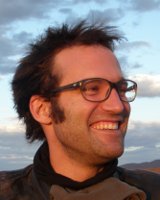
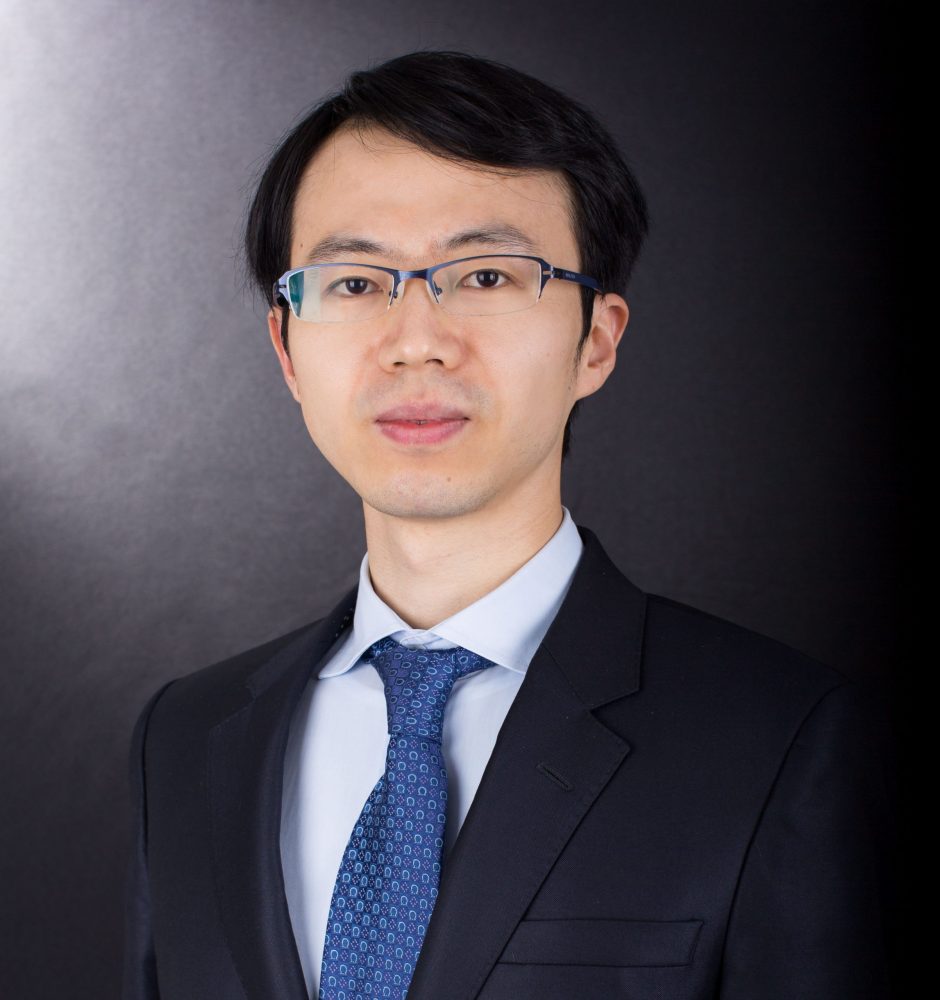
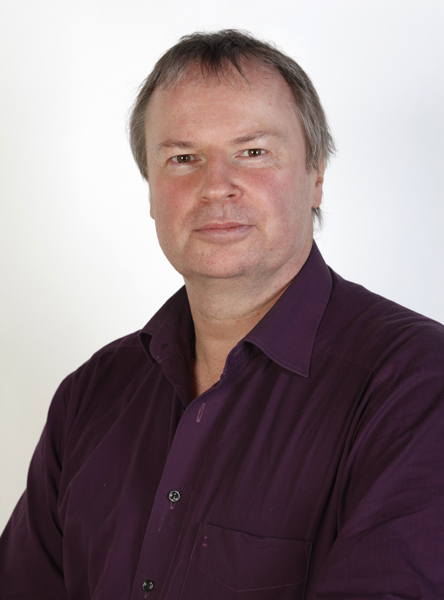
Dr. Mauro Werder is a Lecturer at the Department of Civil, Environmental and Geomatic Engineering at ETH Zurich. His work focuses on glaciology, subglacial hydrology, and numerical modeling, combining computational methods with field measurements. He has developed widely used models such as GlaDS (Glacier Drainage System) and BITE (Bayesian Ice Thickness Estimation), and contributed to projects like SHMIP and 4D-Antarctica. Current Projects: Gladder (2025-2028), DIWING (2023-2026), LEAD (2020-2026), 4D-Antarctica (2019-2022), CORDS (2023-2024) Education: PhD in Glaciology (2009, Swiss National Science Foundation funded) His research spans subglacial drainage systems, sediment transport (SUGSET model), Bayesian inversion techniques, and field experiments involving artificial lakes and R-channels. He actively teaches courses on GPU-based PDE solving, applied glaciology, and reproducible scientific computing. Scientific Awards: Swiss National Science Foundation (SNF) Fellowship for Prospective Researchers (2010-2011) European Union (FP7) Marie Curie International Outgoing Fellowship (2011-2014) He collaborates with institutions like the Swiss Federal Institute for Forest, Snow and Landscape Research (WSL), and contributes to software development through packages like BITEmodel.jl and Parameters.jl. His fieldwork includes experiments on Greenland's Jakobshavn Isbræ and Switzerland's Plaine Morte glacier.
Bruno Alonso is a CNRS Research Director at the Institute of Chemistry of Montpellier (ICGM), a joint research unit of CNRS, University of Montpellier, and the National School of Chemistry of Montpellier (ENSCM). His work focuses on advanced materials chemistry with emphasis on nanostructured hybrid systems and NMR characterization of organic-inorganic interfaces. Education Engineer, National School of Chemistry of Paris (1993) Doctorate in Materials Science, University of Paris VI (1998) CNRS Research Fellow (2001) Accreditation to Supervise Research, University of Orléans (2006) Bachelor of Fine Arts, University of Paris 1-CNED (2017) Research Interests Dr. Alonso's research centers on hybrid organic-inorganic materials with expertise in sol-gel chemistry , nanoscale self-assembly , and advanced NMR spectroscopy . His group develops: Biomimetic nanocomposites using polysaccharides (chitin/cellulose) and oxides Zeolite systems with controlled heteroelement distribution and acidity Multinuclear NMR methods for probing molecular interactions at interfaces Applications span sustainable materials, energy storage, and catalytic systems with strong emphasis on green synthesis approaches. Publication Trends Analysis of recent publications (2021-2025) reveals dominant themes in zeolite chemistry (40% of output) and biomimetic nanomaterials (30%), with growing integration of computational methods (15%). His work increasingly employs machine learning for NMR prediction and solvent-free synthesis techniques , reflecting industry shifts toward sustainable materials. Collaborative publications span 12 countries with consistent focus on energy applications (hydrogen storage, thermal management) and advanced characterization. Research Infrastructure Based at Montpellier's Balard Research Chemistry Center, Dr. Alonso utilizes ICGM's state-of-the-art facilities including high-field NMR spectrometers and materials synthesis laboratories. His group maintains active collaborations with European institutions for X-ray diffraction, computational modeling, and gas-sensing applications.
John Breslin is a Personal Professor in Electronic Engineering at the College of Science and Engineering, University of Galway, serving as Director of the TechInnovate and AgInnovate programmes. Associated with two Taighde Éireann – Research Ireland Centres, he is a Principal Investigator at Insight Centre for Data Analytics (specializing in data analytics) and a Funded Investigator at VistaMilk (Agri-Technology), while also leading the EDIH Data2Sustain project. With an h-index of 50, over 12,000 citations, and 300+ peer-reviewed publications including seminal books on the Social Semantic Web, he ranks among Ireland's most influential researchers in digital technologies. Breslin's research fundamentally bridges Semantic Web technologies, AI-driven data analytics, and practical innovation. His co-creation of the SIOC framework—implemented across 65,000+ websites by entities like Yahoo and Boeing—demonstrates real-world impact in social data interoperability. Current work leverages blockchain and federated learning for sustainable Agri-Technology through VistaMilk, while his TechInnovate programmes translate academic research into commercial ventures across healthcare, smart manufacturing, and energy systems. Analysis of his 15 most recent publications reveals dominant themes in AI-enhanced security (35% of works), blockchain applications for sustainability (27%), and multimodal AI for healthcare (20%). His team pioneers privacy-preserving techniques for IoT and medical devices, neurosymbolic visual reasoning frameworks, and federated learning architectures addressing data heterogeneity—directly supporting his roles in national research infrastructures like Insight and VistaMilk. John has received several prestigious awards: IIA Net Visionary Award (twice) ITAG Outstanding Contribution to the ICT Sector Award Galway Chamber President’s Award Best Irish-Published Book Award (2020 for Old Ireland in Colour) Multiple Best Paper Awards He leads major research initiatives funded by Taighde Éireann – Research Ireland: Insight Centre for Data Analytics (as Principal Investigator) VistaMilk SFI Research Centre (as Funded Investigator) EDIH Data2Sustain (as Principal Investigator) His entrepreneurial programs TechInnovate and AgInnovate have mentored 200+ startups, securing €50M+ in follow-on funding. Breslin co-founded PorterShed (Galway City Innovation District) and serves on Scale Ireland's Steering Group, creating Ireland's most active regional innovation ecosystem outside Dublin. He maintains active industry partnerships with Vodafone, Boeing, and agricultural cooperatives through VistaMilk's testbed facilities.
Dr. Miguel Rico-Ramirez serves as Associate Professor of Radar Hydrology and Hydroinformatics at the University of Bristol's School of Civil, Aerospace and Design Engineering. His research integrates advanced radar technology with hydrological modeling to address critical water resource challenges including flood forecasting, drought management, and precipitation measurement across diverse global contexts from South Korea to Mexico City. Education: Bachelor of Engineering (Eng.) Master of Engineering (M.Eng.) Ph.D. in Engineering, University of Bristol His research program focuses on radar-based precipitation estimation, hydroinformatics, and flood prediction systems. He pioneers deep learning applications for rainfall nowcasting and develops innovative methods for uncertainty quantification in hydrological modeling. Current work emphasizes cosmic-ray neutron sensor validation, satellite-based flood mapping, and seasonal forecast applications for reservoir operations, with strong emphasis on translating research into operational water management solutions. Recent publications (2023-2025) reveal three dominant research thrusts: (1) deep learning frameworks for spatiotemporal rainfall prediction, (2) global validation of precipitation and soil moisture datasets using novel sensor networks, and (3) operational implementation of seasonal forecasts for drought mitigation in South Korea. His work consistently bridges radar meteorology with practical hydrological applications across urban and data-scarce environments. Scientific Awards: No specific awards documented in source materials Dr. Rico-Ramirez supervises postgraduate researchers in radar hydrology and hydroinformatics, with projects spanning flood early warning systems, precipitation nowcasting, and climate adaptation strategies. His research receives funding for international collaborations focused on water security challenges, particularly in drought-prone regions and data-scarce basins like the Nile Delta. Current grants support development of integrated forecasting systems combining global datasets with machine learning for extreme event management. He leads the Radar Hydrology research group within Bristol's Water and Environmental Engineering division, collaborating closely with Professor Dawei Han on hydroinformatics and Dr. Rafael Rosolem on water-climate interactions. The team maintains active partnerships with meteorological agencies and water authorities globally, particularly in flood forecasting system implementation across South Korea and Mexico.
Cynthia D. Rudin is the Gilbert, Louis, and Edward Lehrman Distinguished Professor of Computer Science at Duke University, with joint appointments in the Departments of Electrical and Computer Engineering, Statistical Science, Mathematics, and Biostatistics & Bioinformatics. She directs the Interpretable Machine Learning Lab and has held previous positions at MIT, Columbia, and NYU. Her educational background includes: Undergraduate degree from the University at Buffalo PhD from Princeton University (2004) Research Interests: Dr. Rudin's research focuses on interpretable machine learning and its applications across multiple domains. Her work emphasizes creating machine learning models whose reasoning processes people can understand, which includes algorithms for extremely sparse models, interpretable neural networks, interpretable matching methods for causal inference, and dimension reduction for data visualization. She applies these techniques to critical societal problems in healthcare, criminal justice, materials science, and other domains. Her lab has developed practical code for sparse models such as decision lists, decision trees, and additive models that provably optimize accuracy and sparsity. Dr. Rudin's recent publications (2024-2025) demonstrate a strong focus on interpretable AI applications across diverse fields including healthcare (mortality risk scores, breast cancer prediction), materials science (metamaterials design), and environmental justice (location-based health analysis). Her work consistently emphasizes practical implementations with real-world impact, particularly in high-stakes decision-making domains where model transparency is critical. Scientific Awards: Squirrel AI Award for Artificial Intelligence for the Benefit of Humanity (2022) - often described as the "Nobel Prize of AI" INFORMS Society on Data Mining Prize (2024) Guggenheim Fellowship (2022) Three-time winner of the INFORMS Innovative Applications in Analytics Award (2013, 2016, 2019) Winner of the 2023 John M. Chambers Statistical Software Award for PaCMAP Winner of the 2024 Award for Innovation in Statistical Programming and Analytics Dr. Rudin has advised numerous PhD students and postdocs who have co-authored significant publications with her. Her lab has received substantial funding for projects applying interpretable machine learning to healthcare (seizure prediction in ICU patients), criminal justice (crime series analysis), and energy infrastructure (underground electrical distribution networks). Her work on the Series Finder algorithm has been adapted by the NYPD and has been running live in NYC since 2016. She directs the Interpretable Machine Learning Lab at Duke, which includes the Almost-Matching-Exactly Lab focused on interpretable causal inference. Her team develops practical code implementations for all their research, emphasizing usability and real-world application in critical domains.
Christian Smith is an Associate Professor and Lecturer at the Department of Robotics, Perception and Learning at Kungliga Tekniska Högskolan (KTH Royal Institute of Technology). His research focuses on robotics and applications in human-centered environments like home environments, small workshops, and healthcare facilities, including the development of new robotic systems for research. Teaching Roles: Course Coordinator/Teacher/Examiner for courses such as Introduction to Robotics (DD2410), Research Project in Robotics (DD2411), and Java Programming for Python Programmers (DD1380) Research Themes: Human-Robot Interaction, Behavior Trees, Exoskeletons, Intent Recognition, and Multimodal Perception Awards: No specific scientific awards mentioned in the provided text His KTH profile highlights work on adaptive robotics systems and formalized control strategies. The research portfolio spans from theoretical studies on behavior tree programming to applied work in assistive technologies and teleoperation systems.
Professor Clinton Fookes is a faculty member at the Queensland University of Technology (QUT) within the School of Electrical Engineering & Robotics . His research focuses on leveraging computer vision and artificial intelligence to develop automated systems that understand, anticipate, and interact with human behaviors, with applications in medical diagnostics, autonomous vehicles, defense, and industrial efficiency . Research areas include AI adaptability, multimodal biosignal analysis, and human-machine interaction Collaborates with CSIRO Data61, Defence Science and Technology Group, Orica, Airbus, and Sentient Vision Systems Develops systems for human action detection, infrastructure monitoring, and stress response prediction His work addresses critical challenges in AI deployment, such as environmental adaptability and reducing diagnostic errors in medical and autonomous systems. Recent publications highlight trends in self-supervised learning, zero-shot knowledge transfer, multimodal integration , and 3D reconstruction for healthcare , while exploring ethical AI use in sectors like mining and defense . Professor Fookes emphasizes interdisciplinary collaboration, bridging engineering, medicine, and social sciences to advance AI systems capable of real-world impact. His research agenda includes improving AI memory capabilities and explainability for safer, more reliable automation.
Christos Makris is an Associate Professor in the Department of Computer Engineering and Informatics at the University of Patras, Greece. His academic career spans over two decades with significant contributions to computer science, particularly in data structures, algorithms, and information systems. He maintains active research collaborations and supervises graduate students in his areas of expertise. Dr. Makris's research spans several key areas in computer science with a strong focus on efficient data organization and processing. His work encompasses Data Structures , Information Retrieval , Data Mining , String Management and Processing Algorithms , Computational Geometry , Internet Technologies , Bioinformatics , and Multimedia Databases . His interdisciplinary approach bridges theoretical computer science with practical applications across various domains including web technologies, bioinformatics, and emergency response systems. Analysis of Dr. Makris's publication record reveals a consistent research trajectory focused on efficient algorithms for information management. His work demonstrates evolution from foundational data structure research in the 1990s to more applied work in web technologies, social media analysis, and machine learning applications in recent years. A notable pattern is his ability to adapt core algorithmic techniques to emerging application domains while maintaining theoretical rigor. Dr. Makris maintains an impressive scholarly record with over 3,000 citations, an h-index of 29, and an i10-index of 71 according to Google Scholar metrics. These indicators reflect the significant impact of his research within the computer science community. As an active faculty member, Dr. Makris maintains regular office hours on Tuesdays from 18:00-20:00 and Thursdays from 12:00-14:00. He is accessible via email at makri@ceid.upatras.gr or makri@upatras.gr for academic inquiries and student supervision.
Hailiang Chen serves as Professor in Innovation and Information Management, Assistant Dean (Taught Postgraduate), and Director of the Artificial Intelligence Research Institute at HKU Business School, The University of Hong Kong. His academic journey includes a PhD and MS from Purdue University and a BM from Tsinghua University. Doctoral Degree: Management Information Systems, Purdue University Master Degree: Economics, Purdue University Bachelor Degree: Information Management and Information Systems, Tsinghua University Professor Chen's research spans artificial intelligence, FinTech, social media analytics, and platform economics, with significant contributions to understanding how digital interactions shape financial markets and consumer behavior. His work frequently examines the intersection of technology adoption and economic outcomes, particularly in cryptocurrency markets, live-stream commerce, and venture capital decision-making. His research methodology combines large-scale data analysis with experimental designs to uncover causal relationships in digital ecosystems. His publications in elite journals like Journal of Financial Economics and Management Science demonstrate consistent impact, with multiple ESI Highly Cited Papers. Current projects include Gov-RAG for e-government services and comparative studies of AI search tools. His research has received continuous funding from Hong Kong's Research Grants Council for five consecutive years (2019-2023). Faculty Outstanding Researcher Award, HKU Business School (2022-23) INFORMS ISS Sandra A. Slaughter Early Career Award (2022) Association for Information Systems Early Career Award (2019) Three ESI Highly Cited Papers (Top 1% in field) Professor Chen actively contributes to academic service as Associate Editor for Journal of Management Information Systems and MIS Quarterly , and serves as Program Chair for the International Conference on Smart Finance. His industry collaborations include Alibaba, HSBC, and China Construction Bank, bridging academic research with real-world business applications in AI implementation and digital transformation.
Yanbo Wang is an Associate Professor and Vice Head of the Wind Power Research Programme at AAU Energy, part of Aalborg University's Faculty of Engineering and Science. He leads research in Electric Power Systems and Microgrids, focusing on intelligent energy systems and flexible markets. His work emphasizes stability analysis, control strategies for hybrid AC/DC systems, and renewable energy integration. He supervises multiple PhD projects on topics like multi-port energy routers and wind power converter optimization. Research interests include power electronics, microgrid stability, and energy storage systems. Key projects include the EU-funded 'S3SF: Smart Energy Solutions for Sustainable Future' and machine learning-based control strategies for multi-energy systems. He has authored over 176 publications, with recent work on DC microgrid reliability, converter design, and offshore wind energy systems. His team collaborates internationally to advance grid-friendly technologies and smart energy solutions. Notable contributions include advanced control schemes for retired batteries in DC microgrids and stability assessment methodologies for offshore wind inverters. He advises on six PhD projects and maintains a lab focused on renewable energy systems and power electronics innovation.
Peer Bork is a Professor at the European Molecular Biology Laboratory (EMBL) in Heidelberg, where he serves as Strategic Head of Bioinformatics and co-head of the Structural and Computational Biology Unit. He also holds honorary professorships at the University of Würzburg (Germany) and Fudan University (China). Educational background: PhD in Biochemistry (1990) Habilitation in Theoretical Biophysics (1995) Research interests span bioinformatics , systems biology , and microbiome analysis , focusing on functional prediction, comparative genomics, and data integration. His work explores global patterns in microbial communities, including enterotypes, drug-microbiome interactions, and planetary-scale gene fluxes. Scientific impact includes over 550 publications (70+ in Nature , Science , and Cell ) and groundbreaking discoveries like the human gut enterotypes and microbiome-based cancer biomarkers . Key projects include the SPIRE microbiome resource and the TARA Oceans expedition . Honors and leadership: EMBO member (2000) Nature Creative Mentoring Award (2008) ERC Advanced Investigator Grants (2011, 2015) Leopoldina member (2014) Honorary doctorate (University of Utrecht, 2017) Co-founder of 5 biotech companies Collaborative networks include partnerships with institutions in Berlin (Max-Delbrück-Center), Würzburg (Germany), and Shanghai (China), as well as global initiatives like the TREC expedition for environmental microbiome analysis.
Ruth Reef is an Associate Professor at the School of Earth Atmosphere and Environment, Monash University. She leads the Coastal Research Group, focusing on coastal dynamics, climate change impacts, and environmental DNA applications. Her research emphasizes mangrove and coral reef ecosystems' resilience to sea level rise and human activity. She coordinates courses such as EAE3311 (Oceans and Coasts) and teaches EAE1022 (Earth, Atmosphere and Environment 2). Expertise: Coastal processes, sediment transport, climate adaptation, and ecosystem management. Projects: Includes studies on mangrove restoration in Vietnam, coastal wetland carbon fluxes, and bathymetry innovations via CoastBAT. Her work addresses UN Sustainable Development Goals related to climate action and sustainable ecosystems. Notably, she received the 2021 Award for Exceptional Educational Service to the Faculty of Science.
Pooya Davari is a Professor and Head of the Section for Applied Power Electronic Systems at Aalborg University , Denmark. He leads the EMI/EMC in Power Electronics Research Group and serves as Vice Chair of the Energy Efficiency Mission. His research focuses on electromagnetic interference (EMI) and harmonic mitigation in power electronic systems, with over 200 publications and significant contributions to renewable energy integration. Education: B.Sc. and M.Sc. in Electronic Engineering (2004, 2008), Ph.D. in Power Electronics from Queensland University of Technology (2013) Prior Roles: Lecturer at QUT (2013–2014), Postdoc at AAU (2014) Research Interests: Harmonic and EMI analysis in grid-tied converters High power density converter design Signal processing for converter modeling Reliability of power electronic systems Article Trends: Recent work emphasizes EMI/EMC in renewable energy systems, wide bandgap semiconductors (SiC/GaN), and reliability modeling for EVs and hydrogen production via electrolysis. Sub-fields include converter topologies, grid integration challenges, and AI-driven diagnostics. Scientific Awards: Equinor 2022 Prize (Denmark’s oldest engineering award) IEEE EMC Society Young Professional Award (2020) World’s Top 2% Highly Cited Scientist (Stanford, 2021–2025) Multiple best paper awards (IEEE, Applied Sciences, etc.) Grants & Editorial Roles: Recipient of grants from Innovation Fund Denmark (Supra-EMC project), Horizon Europe (SOLARIS), and industry partnerships. Serves as Area Editor for IEEE Transactions on Transportation Electrification , Associate Editor for IEEE Transactions on Power Electronics , and Editor-in-Chief of Circuit World Journal (2020–2025). Labs & Standards: Coordinator of the EMC Laboratory at Aalborg University. Member of IEC standardization Working Groups 6 and 8 (TC77A), focusing on EMC strategies for power grids.
Prof. Dick den Hertog is a Full Professor at Tilburg University's Department of Econometrics and Operations Research, part of the Tilburg School of Economics and Management (TiSEM). His research focuses on operations research methodologies with applications in humanitarian logistics, supply chain optimization, and robust decision-making under uncertainty. He collaborates with organizations like the UN World Food Programme to enhance operational efficiency in complex environments. Key research areas include robust optimization techniques, supply chain management in developing regions, and the integration of satellite data with machine learning for infrastructure analysis. His work addresses challenges such as food aid distribution, disaster response logistics, and predictive modeling for transportation systems in data-scarce areas. Notable projects include developing analytical tools for the WFP's supply chain planning and creating algorithms for weather-informed road speed prediction. He is affiliated with the Tilburg Sustainability Center and the Operations Research research group, contributing to both academic advancements and real-world impact through optimization solutions.
Nick Koudas is a Professor in the Department of Computer Science at the University of Toronto. His research focuses on large-scale data management, integrating machine learning into data systems, and developing efficient query processing techniques for unstructured and streaming data. He holds a PhD from the University of Toronto, an MSc from the University of Maryland at College Park, and a Bachelor's from the University of Patras in Greece. Research interests include data systems, big data analysis, video query processing, and natural language interfaces for databases. He leads projects like ReDD (Relational Deep Dive), SVQ (Streaming Video Queries), and Reliable Text-to-SQL, aiming to bridge human-readable queries with database execution. His work emphasizes scalability, intelligence, and real-world applicability. Recipient of the University of Toronto's Inventor of the Year Award (2011), he translates research into startups like Sysomos, Aislelabs, and Workorb. His contributions span over 200 publications in top venues such as SIGMOD, VLDB, and ICDE. Courses taught include advanced data systems, database design, and system internals. Current projects explore schema extraction from unstructured data, video query optimization, and cost-effective machine learning pipelines. Collaborations with industry and academic partners drive innovations in both theory and practical applications.