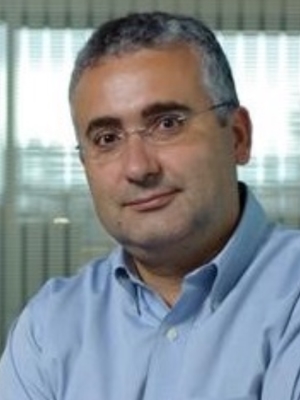
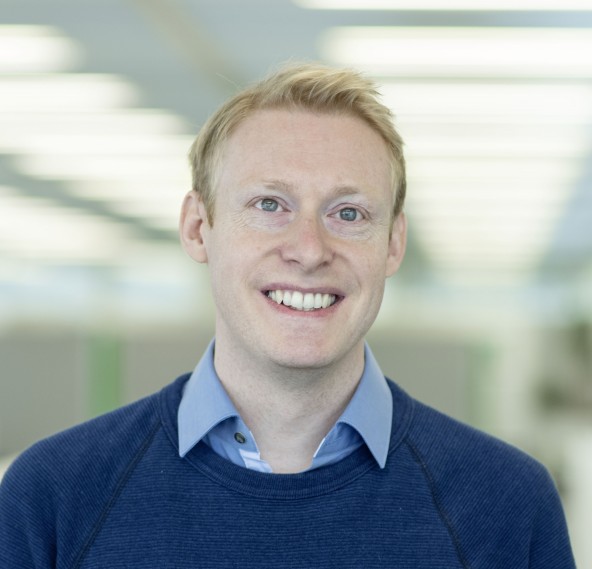
Emilio Frazzoli is a Full Professor at ETH Zurich’s Department of Mechanical and Process Engineering. He leads the Institute for Dynamic Systems and Control and the Center for Sustainable Future Mobility, focusing on autonomous systems, robotics, and socio-technical control frameworks. Current affiliations: ETH Zurich (Dynamic Systems and Control, Sustainable Future Mobility) Research: Autonomous mobility-on-demand, game theory for resource allocation, and safety verification in multi-agent systems His work bridges robotics, control theory, and economics, with projects like the open-source AMoDeus simulation framework for autonomous taxis and karma-based resource allocation systems. Recent publications emphasize trustworthy AI, reproducibility in autonomous vehicle control, and human-robot interaction challenges. Notable projects include nuReality (VR-based pedestrian interaction studies) and CARSI II (context-driven vehicle interfaces).
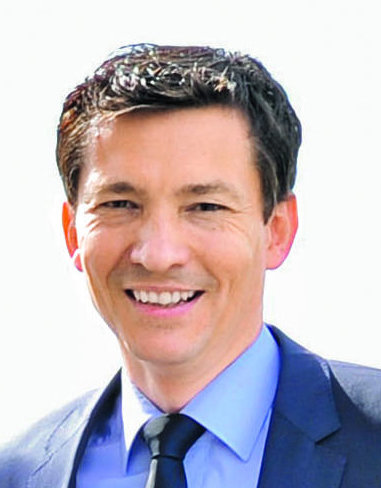
Prof. Dr. Jing Wang is a Full Professor at the Department of Civil, Environmental and Geomatic Engineering at ETH Zürich. His research focuses on air pollution control, nanoparticle transport, and environmental health and safety (EHS) impacts of nanomaterials. He has held roles including Assistant Professor at ETH Zürich (2010–present), Research Assistant Professor at the University of Minnesota (2007–2010), and postdoctoral associate in Particle Technology (2005–2007). Education: Bachelor’s in Engineering (2000) – Tsinghua University, Beijing Master’s in Computer Sciences (2003) – University of Minnesota PhD in Aerospace Engineering (2005) – University of Minnesota Research Interests: Air/water filtration technologies Nanoparticle emission reduction and measurement Multiphase flow mechanics Environmental impacts of nanomaterials Collaborations: Industrial partnerships include 3M, BASF, Boeing, Intel, Samsung, and others in nanoparticle measurement and filtration solutions. Honors: 2011 Smoluchowski Award (Association for Aerosol Research) 2006 ‘Best Dissertation’ Award (University of Minnesota) 2004 Doctoral Dissertation Fellowship Teaching: Courses include Air Pollution Control, Environmental Engineering Seminars, and Excursions for Environmental Engineers. Labs/Teams: Leads the Particle Technology Lab and collaborates with the Institute of Environmental Engineering at ETH Zürich.
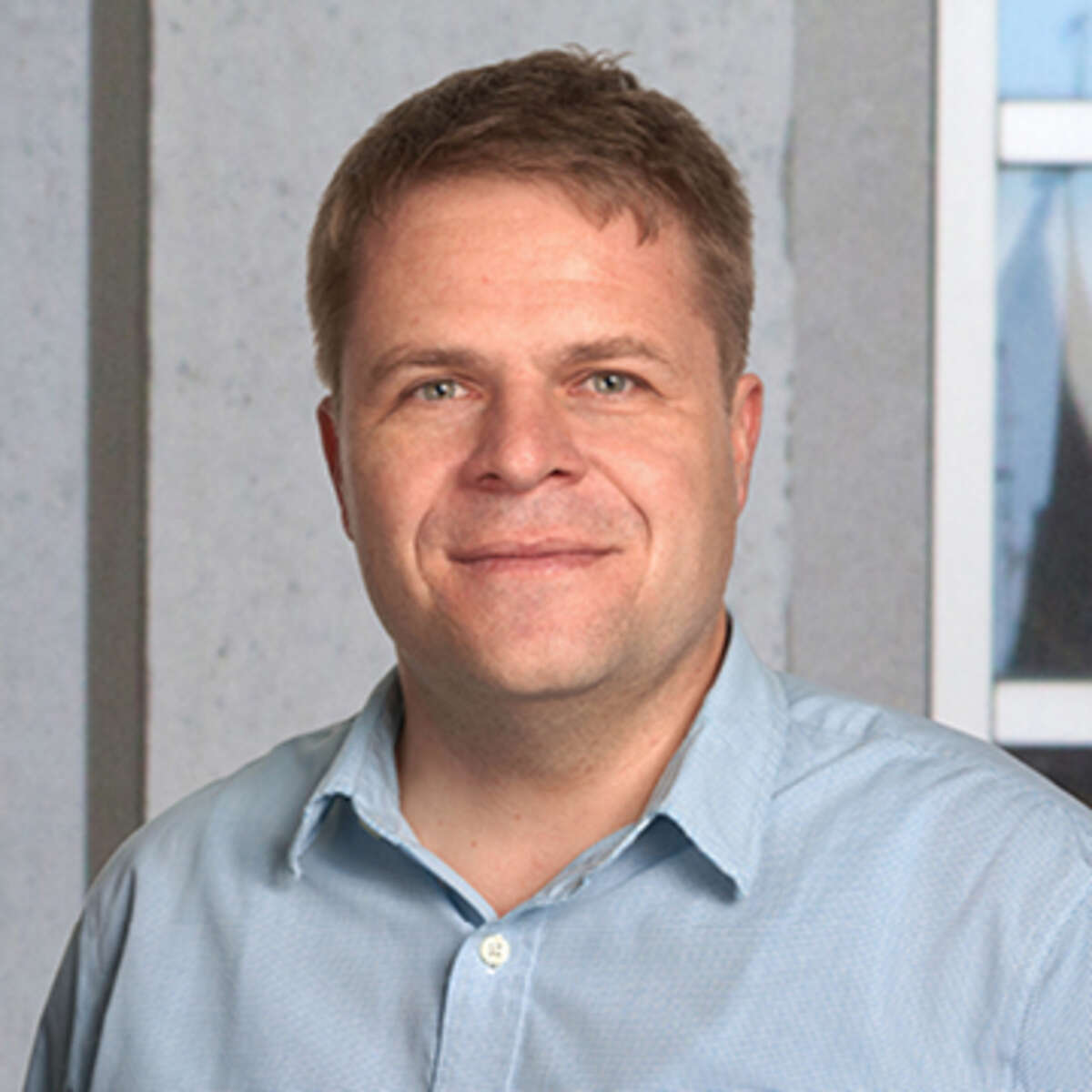
Matthieu Cord is a Professor at Sorbonne University and Scientific Director of valeo.ai, leading research in computer vision, deep learning, and computational cooking. He heads the MLIA team at ISIR Lab, focusing on multimodal models, transformers, and efficient architectures. Research areas include computer vision, large language models with vision, and AI-driven food analytics. Key projects: VISA-DEEP AI chair, Foundation VaViM models, and SmolVLA collaboration with Hugging Face. His recent work examines scalable multimodal models , trajectory prediction , and diffusion-based segmentation , with studies on in-context learning and biased shortcut learning in visual question answering. Articles highlight DeiT variants , fishr for OoD generalization , and STEEX for counterfactual explanations . Scientific awards include IUF Honorary Membership (2009), BMVC 2017 Best Paper, and ICIP 2018 Best Paper. As an advisor, he supervised PhD theses on topics like GAN editing , semantic segmentation , and multimodal retrieval . Current roles involve mentoring the 'Research Band' at MLIA and leading EU-funded initiatives like SCAPE. His work bridges theoretical AI exploration with practical applications in autonomous driving and food technology.
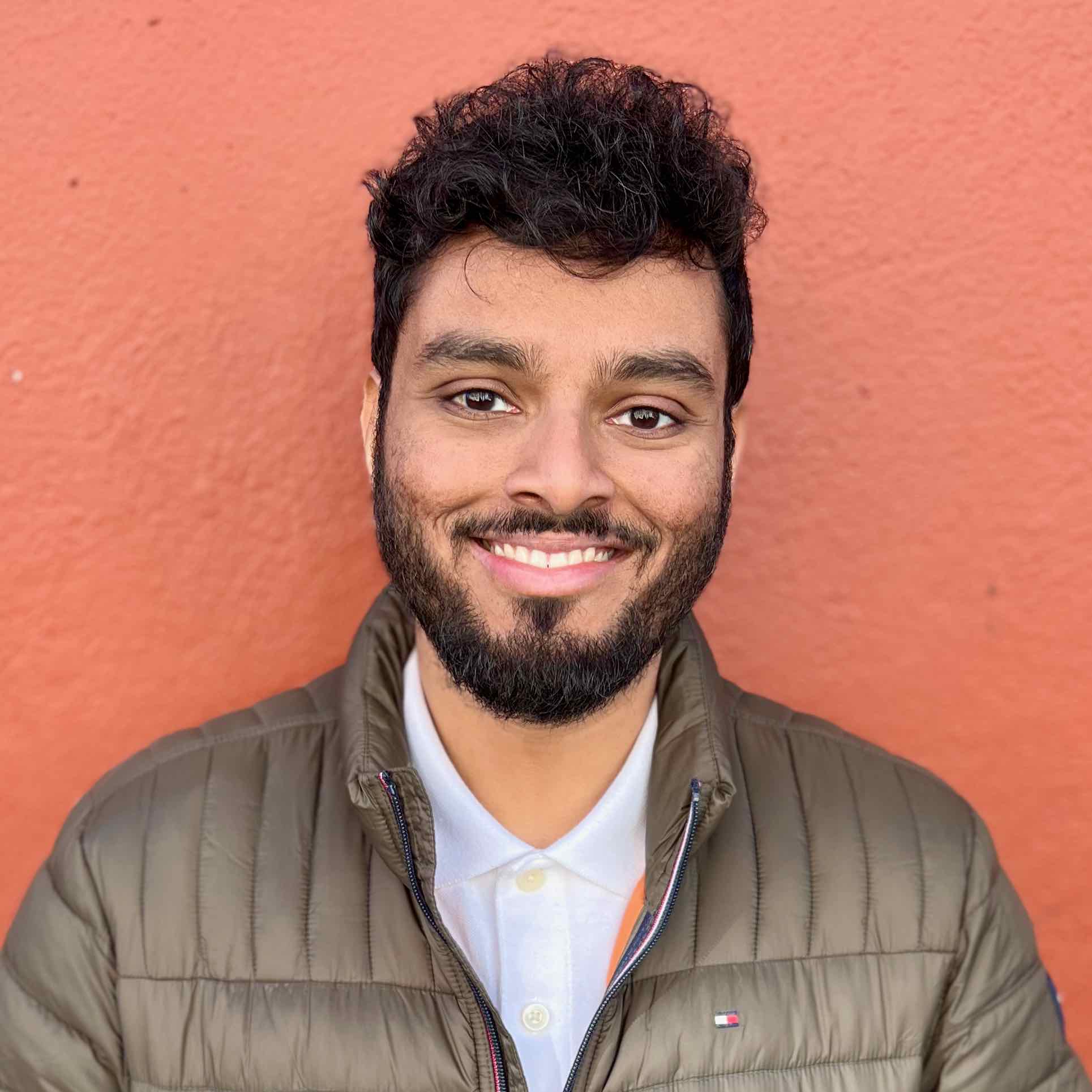
Jan Skaloud serves as an Adjunct Professor at École Polytechnique Fédérale de Lausanne (EPFL), affiliated with the School of Architecture, Civil and Environmental Engineering (ENAC). He holds positions across multiple departments including SSIE (Institute of Earth Surface Dynamics), EDCE (Doctoral Program in Environmental Sciences and Engineering), and leads the Earth Sensing and Observation (ESO) Lab. His office is located at GC C2 397 in the EPFL campus in Lausanne, Switzerland. Dr. Skaloud's research expertise spans satellite positioning, inertial and integrated navigation systems, sensor orientation and calibration, attitude determination, mobile mapping, airborne laser scanning, and Kalman filtering techniques. His work bridges theoretical development with practical applications in UAV navigation, photogrammetry, and remote sensing. He teaches across three EPFL sections and two faculties, demonstrating his interdisciplinary approach to education. His publication record shows consistent contributions to the field, with recent work (2023-2025) focusing on vehicle dynamic model-based navigation for various UAV platforms, including delta-wing and fixed-wing drones. His research demonstrates a clear trajectory toward increasingly sophisticated navigation systems that integrate aerodynamic modeling with traditional sensor fusion approaches. This trend reflects the growing importance of model-based navigation in achieving higher precision and autonomy in UAV operations. 2021: Samuel Gamble Award for career contribution in photogrammetry & sensing (ISPRS) 2020: U.V. Helava Award for best paper in ISPRS Journal (2016-2019) 2017: Best Demo Award at IEEE International Workshop on Metrology & Aerospace 2014: Hansa Luftbild Award for best paper in PFG journal 2012: Karl Kraus Medal for best textbook in Photogrammetry 2009: GNSS Leader to Watch Innovation Award (GPS World) Dr. Skaloud has supervised numerous PhD students whose work focuses on advanced navigation systems, sensor calibration, and UAV applications. His research has received funding for projects involving direct georeferencing, mobile mapping systems, and UAV-based search and rescue operations. The ESO lab he directs serves as a hub for cutting-edge research in Earth observation technologies. The Earth Sensing and Observation Lab under Dr. Skaloud's direction brings together researchers working on navigation systems, sensor integration, and data processing techniques for geospatial applications. The lab maintains strong connections with industry partners and international research organizations, facilitating technology transfer and collaborative research projects.
Konstantinos Karapiperis is a Tenure Track Assistant Professor at EPFL's Laboratory of Multiscale Modeling of Materials (LMD), within the School of Architecture, Civil and Environmental Engineering (ENAC). His research integrates mechanics , multiscale modeling , and data science to study geomaterials and structural materials. PhD in Applied Mechanics (minor in Applied Mathematics), Caltech Postdoctoral Researcher & Lecturer, ETH Zürich (Marie Skłodowska-Curie Fellowship) Research focuses on granular materials , architected materials , and nonlocal modeling using techniques like Level-Set Discrete Element Method (LS-DEM) and machine learning . Recent work explores fracture control via graph neural networks and thermodynamics-informed models. Selected scientific award: Marie Skłodowska-Curie Fellowship Teaches courses in Soil Mechanics and Multiscale Modeling . PhD students include Thomas Henzel and Hrishikesh Gopakumar Menon. His Data-Driven Mechanics Laboratory (LMD) develops predictive tools for granular and structured material behavior.
Giancarlo Ferrari Trecate is an Adjunct Professor at the Swiss Federal Institute of Technology Lausanne (EPFL) , affiliated with the School of Engineering and the SCI-STI-GFT department. He is also involved in teaching and research through the STI-SGM and EDRS-ENS programs. Research Interests : Automatic control, state estimation, system identification, machine learning, distributed control, hybrid systems, microgrids, biochemical networks, voltage and frequency stabilization in AC/DC microgrids. Publications Trends : His recent work focuses on integrating Neural ODEs and Hamiltonian structures for stable control systems, regret minimization in distributed control, and robust state estimation under uncertainty. Applications include autonomous mobility-on-demand , power grid optimization , and secure microgrid control against cyber-attacks. Scientific Awards : No specific awards mentioned in the provided data. Teaching & Advising : He supervises PhD students in mechanical engineering and teaches courses on Multivariable control and Networked control systems . His lab, DECODE , specializes in Dependable Control and Decision systems.
Juergen Schmidhuber is Associate Professor at the Faculty of Informatics of Università della Svizzera italiana and a leading researcher at the Dalle Molle Institute for Artificial Intelligence (IDSIA USI-SUPSI). He is also Chief Scientist at NNAISENSE, a company dedicated to building practical general-purpose AI. His work has profoundly influenced modern artificial intelligence, particularly through the development of Long Short-Term Memory (LSTM) networks in 1991, now deployed across billions of devices for speech recognition, machine translation, and virtual assistants. His research interests span Artificial Intelligence, Deep Learning, Recurrent Neural Networks, Universal AI, Meta-Learning, Algorithmic Information Theory, Artificial Curiosity, Robotics , and Low-Complexity Art . He has pioneered mathematically rigorous frameworks for self-improving AI systems and formal theories of creativity and beauty. His work bridges theoretical foundations with real-world applications in computer vision, natural language processing, and autonomous robotics. The recent articles reflect a consistent trajectory of innovation, combining deep theoretical insights with scalable machine learning architectures. His publications emphasize sequence modeling, universal learning, intrinsic motivation, and computational creativity , demonstrating both foundational contributions and industrial impact. From LSTM to Goedel machines, his work consistently targets the long-term goal of self-improving general AI. Scientific Awards: Numerous awards in AI and machine learning (specific names not listed) Schmidhuber leads a research group at IDSIA, where he mentors students and researchers in advancing the frontiers of AI. His lab has secured significant recognition and industrial collaboration, though specific grants are not detailed. He promotes the 'New AI'—general, sound, and relevant to physics—and continues to explore the convergence of intelligence, computation, and the universe. Labs and Teams: Dalle Molle Institute for Artificial Intelligence (IDSIA USI-SUPSI) NNAISENSE (as Chief Scientist)
Academic Profile: Damir Filipovic is a Full Professor and the Swissquote Chair in Quantitative Finance at the College of Management of Technology (CDM) of École Polytechnique Fédérale de Lausanne (EPFL), Switzerland. He previously held academic positions at the University of Vienna, University of Munich, and Princeton University, and served as Head of the Vienna Institute of Finance. Research Focus: Quantitative finance, risk management, stochastic processes, term structure modeling, volatility risk, and machine learning applications in financial markets. Industry Collaboration: Co-developed the Swiss Solvency Test for insurance capital requirements while consulting for the Swiss Federal Office of Private Insurance. Publications: Contributed extensively to journals like Journal of Financial Economics, Mathematical Finance, and Annals of Applied Probability, with a textbook on Term-Structure Models. Academic Service: Editorial board member of multiple journals and organizer of advanced workshops on systemic risk and financial technology. Recent Research: His work emphasizes machine learning for portfolio risk management, kernel-based yield curve estimation, and robust stochastic modeling. Keynote speaker at international conferences on finance and insurance mathematics, with over 15 recent publications in 2023-2025 addressing high-dimensional financial problems, neural control systems, and causal inference in market data. Education: Ph.D. in Mathematics from ETH Zurich (2000). Graduate of ETH Zurich and University of Vienna. Teaching & Mentorship: Supervises current and former EPFL Ph.D. students in quantitative finance, including Nicolas Camenzind, Joshua Hayes, Andrea Ruglioni, and ten others. Former students like Damien Ackerer and Lotfi Boudabsa now lead research in risk management. Labs & Programs: Directs EPFL's Finance and Technology Programme, leads the Computational Finance Group (CSF) at EPFL, and contributes to Swiss Finance Institute initiatives. Scientific Leadership: Served on EPFL Committee of Academic Evaluation and Doctoral Program Finance committee.
Dr. Alessandro Ottaviano is a Researcher affiliated with the Department of Digital Integrated Circuits and Systems at ETH Zürich. His work focuses on advanced computer architecture and embedded systems, particularly in the domains of RISC-V processors, real-time systems, and heterogeneous computing. He contributes to the design of time-predictable virtual memory solutions, mixed-criticality systems, and energy-efficient hardware-software interfaces. Key research areas include modular processor architectures, hardware monitoring for safety-critical applications, and power management in high-performance computing (HPC) systems. His recent projects involve developing controllers for 2.5D systems-in-package and creating open-source networking solutions for mixed-criticality environments. Ottaviano’s work often emphasizes open-source hardware design and scalable system-level approaches to address challenges in autonomous systems and edge computing. He collaborates on advancements in interrupt handling for virtualized systems, peripheral event linking for IoT devices, and FPGA-based thermal emulation for many-core processors. His research bridges theoretical computer architecture principles with practical implementations in embedded and real-time systems.
Prof. Dr. Soeren Lienkamp is an Assistant Professor at the Institute of Anatomy , Faculty of Medicine , University of Zurich . His work bridges digital education and genetic research , focusing on enhancing medical teaching through innovative formats. Research Interests : Genetics, developmental biology, kidney disease modeling, CRISPR applications, digital medical education, and advanced microscopy. Methodologies : Combines Xenopus tropicalis models, deep learning , and bioengineering to study genetic kidney disorders and improve diagnostic tools. Publication Trends : His recent articles highlight predictable genome editing , 3D imaging technologies , and mechanistic insights into kidney and eye development. Earlier works focus on ciliary function , Wnt signaling , and metabolic stress in renal cells.
Harald C. Gall is a Professor of Software Engineering and Dean of the Faculty of Business, Economics, and Informatics at the University of Zurich (UZH). He leads the Software Evolution and Architecture Lab, focusing on software evolution analysis, mining software repositories, and cloud-based software engineering. His research emphasizes improving software development productivity through data-driven insights. He has held visiting positions at Microsoft Research and the University of Washington. Education: PhD (Dr. techn.) and Master's (Dipl.-Ing.) in Informatics from TU Vienna Research Interests: Software evolution, mining software archives, cloud-based tools, developer productivity, and empirical software engineering. Notable contributions include the Evolizer , ChangeDistiller , and SOFAS systems. Key Contributions: Established the Mining Software Repositories (MSR) research area, program chair for ICSE 2011 and ESEC/FSE 2005, associate editor of leading journals like Empirical Software Engineering and IEEE Software. Awards: Most Influential Paper Award, Test of Time Award, and multiple Best Paper Awards. Recognized for contributions to SE research methodologies and tool development. Professional Activities: ACM SIGSOFT awards chair, board member of Informatics Europe, and executive committee member of CHOOSE (Swiss SIG for OO Systems). Labs/Teams: Director of the Software Evolution and Architecture Lab at UZH, leading projects like SURF-MobileAppsData (SNSF-funded) and DevCloud (Hasler Foundation).
Prof. Alexander Geissler holds the position of Full Professor of Health Care Management at the School of Medicine (Med-HSG) within the University of St. Gallen. His research focuses on health systems research, health economics, and health policy, with particular emphasis on digital transformation in healthcare and patient-reported outcomes. He has contributed extensively to studies on healthcare quality improvement, public reporting systems, and the integration of artificial intelligence in medical diagnostics and screening programs. His work spans topics like optimizing hospital digital maturity (e.g., German DigitalRadar project), analyzing surgical outcomes (robotic vs. open prostatectomies), and evaluating patient empowerment through quality information. He has pioneered methodologies for interpreting patient-reported outcomes (e.g., EQ-5D-3L) and designing clinical dashboards to enhance care delivery. Recent research highlights include investigating AI applications in breast cancer screening and cost-effectiveness of remote patient monitoring post-joint replacement surgery. Geissler’s publications demonstrate a strong focus on healthcare policy implications, such as hospital capacity planning, payment systems for specialized care, and cross-country comparisons of healthcare transparency initiatives. His work frequently bridges academic rigor with practical policy recommendations, particularly in Switzerland and Germany. Notably, he has addressed low-value care reduction, price sensitivity in healthcare demand, and the socio-demographic factors influencing healthcare utilization. While no specific awards are listed, his prolific research output reflects sustained leadership in health systems analysis. His academic contributions are disseminated through the Alexandria Research Platform and international peer-reviewed journals.
Dr. Manuel Carro Dominguez is a Researcher at the Department of Neural Control of Movement, ETH Zürich. His work focuses on understanding the neural mechanisms underlying sleep dynamics, arousal regulation, and their impact on motor performance and cardiovascular function. He specializes in techniques such as auditory stimulation, pupil-based neurofeedback, and EEG/ECG monitoring to explore sleep oscillations, cortical excitability, and their clinical applications. His research bridges neuroscience, biomedical engineering, and sleep medicine, with a particular emphasis on enhancing human physiology through targeted interventions during sleep. Key research interests include: sleep modulation via auditory stimuli, pupilometry as a marker of arousal states, and the development of medical devices for gas sensing and closed-loop biofeedback systems. His studies often integrate multidisciplinary approaches to address translational challenges in neurophysiology and cardiovascular health. Recent publications highlight advancements in auditory stimulation effects on cardiac function, the role of K-complexes in sleep dynamics, and the design of gas sensing technologies for biomedical applications. His work contributes to both fundamental neuroscience and applied biomedical engineering, aiming to improve clinical outcomes through innovative sleep-based interventions.
Professor Sebastian Hiller is a Full Professor at the Biozentrum of the University of Basel, Switzerland, where he leads a research group focused on structural biology and biophysics. His laboratory specializes in using nuclear magnetic resonance (NMR) spectroscopy to elucidate the structures and functions of proteins and their interactions at the atomic level. His research spans several key areas including molecular chaperones and protein folding mechanisms, outer membrane protein biogenesis in bacteria, and kinase signaling pathways. Notably, his group has made significant contributions to understanding how chaperones like trigger factor function, the mechanisms of outer membrane protein assembly through the Bam complex, and dynamic kinase interactions. Their work has direct implications for neurodegenerative diseases and antibiotic development. The Hiller lab's recent publications demonstrate a strong focus on NMR methodology development, protein folding dynamics, and structural mechanisms of antibiotic action. Their research on darobactin's mechanism of action against Gram-negative bacteria represents a significant advance in antibiotic discovery. The group frequently publishes in high-impact journals including Nature, Science, and Nature Communications. ICMRBS Founder's Medal (2018) EMBO Young Investigator (2014) ERC starting grant (2011) SNSF professorship (2010) SNSF scholarship for young researchers (2008) Professor Hiller supervises numerous PhD students and postdoctoral researchers, with many alumni having secured prestigious positions in academia and industry. His laboratory maintains strong collaborations across multiple institutions and has received significant funding through ERC grants and other competitive mechanisms. The Hiller group also operates advanced NMR facilities that serve the broader research community at the University of Basel.
Aravind Rajeswaran is a Research Scientist at Meta AI (FAIR) and Visiting PostDoc/Collaborator at Berkeley AI Research Lab (BAIR) at UC Berkeley's College of Engineering, Department of Electrical Engineering and Computer Sciences. He completed his PhD in Computer Science at the University of Washington under Profs. Sham Kakade and Emo Todorov, with additional collaborations with Sergey Levine and Chelsea Finn, and previously earned his bachelor's degree with the best undergraduate thesis award from IIT Madras working with Balaraman Ravindran. His research focuses on building generalist AI agents that operate in open worlds, combining reinforcement learning, representation learning, and world models. Key projects include Locate 3D for real-world object localization, OpenEQA for embodied question answering with foundation models, VC-1 as an artificial visual cortex for embodied intelligence, and R3M as a universal visual representation for robot manipulation. His work demonstrates how pre-trained visual representations can significantly enhance robotic capabilities with minimal supervision. Rajeswaran's publication record shows consistent high-impact contributions across premier AI conferences including NeurIPS, ICML, CVPR, and RSS from 2018 through 2025, with research spanning reinforcement learning, representation learning, robotics, and computer vision. His work on Decision Transformer demonstrated how sequence modeling frameworks can effectively train reinforcement learning policies. Best Paper Award, Scaling Robot Learning Workshop at ICRA 2022 best undergraduate thesis award from IIT Madras As an educator and mentor, Rajeswaran has guided numerous PhD students who have gone on to positions at Stanford, MIT, CMU, Berkeley, and top AI companies including Meta, DeepMind, and Anthropic. He designed and co-taught the Deep Reinforcement Learning course (CSE599G) at UW in 2018, with materials adopted by courses at MIT and CMU, and served as lead TA for Machine Learning for Big Data (CSE547). His research has been supported through his role as Principal Investigator for the Cortex Team at FAIR.