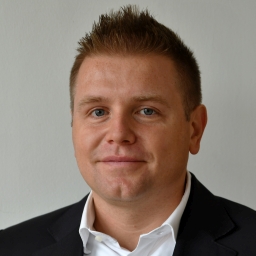
Maciej Zięba is an academic researcher affiliated with the Faculty of Information and Communication Technology at Wrocław University of Science and Technology, specifically within the Department of Artificial Intelligence . His work spans machine learning, deep learning, and computer vision, with a focus on hyperspectral imaging, autonomous systems, and 3D modeling. Recent research includes uncertainty-aware sensor deployment for autonomous vehicles, low-light image enhancement algorithms, and probabilistic regression frameworks for tabular data. He has co-authored publications on flow-based models, hypernetworks, and neural radiance fields (NeRF) applied to 3D face rendering. Contact: maciej.zieba@pwr.edu.pl
Magdalena Szymczyk is a Lecturer in the Department of Biocybernetics and Biomedical Engineering at AGH University of Science and Technology, Faculty of Electrical Engineering, Automatics, Computer Science and Biomedical Engineering. Her work bridges embedded systems, biomedical signal processing, and geophysical data analysis. Research focuses on energy-efficient sensor networks, neural networks for GPR data classification, and mathematical transforms in signal analysis Expertise in parallel computing, real-time systems, and biomedical engineering applications Her publications (2015–2025) demonstrate a trajectory from parallel neural networks and S-transform/GPR methodologies to recent work on MicroPython in embedded systems. Key themes include energy optimization in distributed architectures and AI-driven signal processing across biomedical and geophysical domains. She has authored works on deterministic chaos in simulations, GPU image processing, and cybersecurity in microcontroller systems. Her current research emphasizes embedded systems security, medical signal diagnostics, and computational methods for geological analysis. She utilizes tools like OpenCL for GPU acceleration and MATLAB for parallel computing implementations.
Dr. Andrzej Ożadowicz is a University Professor at the Department of Power Electronics and Automation of Energy Conversion Systems within the Faculty of Electrical Engineering, Automatics, Computer Science and Biomedical Engineering at AGH University of Science and Technology in Kraków, Poland. His office is located in room 510, building C-1, with contact details including phone +48 12 617 50 11 and email ozadow@agh.edu.pl. He holds PhD, DSc, and Engineering degrees, reflecting his dual expertise in academic research and practical engineering applications. His research spans Power Electronics, Building Automation, Smart Grids, and IoT-driven energy systems. Key interests include energy efficiency optimization through digital twins and BIM, distributed energy resource integration , and AI-enhanced demand management . Notably, he pioneers applications of deep reinforcement learning in home energy systems and develops frameworks for Smart Readiness Indicator implementation. His work bridges theoretical innovation with practical case studies in building thermal modeling and dynamic façade systems. Recent publications (2021-2025) reveal three dominant trends: (1) Convergence of digital twin technology with building automation for real-time energy management; (2) Critical analysis of IoT security and interoperability in smart infrastructure; (3) Pedagogical innovations in engineering education through blended learning methodologies post-COVID-19. His scholarly output demonstrates consistent focus on energy transition challenges and smart grid evolution. Professor Ożadowicz actively contributes to the Discipline Council for Automation, Electronics, Electrical Engineering and Space Technologies at AGH. He is instrumental in the AutBudNet initiative —a network of certified laboratories for energy efficiency assessment that implements "learning by doing" principles in building automation education. His work with this consortium emphasizes practical validation of smart grid technologies and demand response systems.
Caglar Oskay is an Associate Professor in the Department of Civil and Environmental Engineering at Vanderbilt University, where he has held academic positions since 2006. He specializes in multiscale computational mechanics, materials modeling, and failure analysis of heterogeneous materials. His research integrates advanced numerical methods such as the Extended Finite Element Method (XFEM), reduced-order homogenization, and variational multiscale enrichment to study composite materials, viscoelastic systems, and polycrystalline structures under extreme conditions. Dr. Oskay has been recognized with awards including the Chancellor Faculty Fellow (2016–2018) and ASCE ExCEEd Fellow (2011). Education: PhD (Civil Engineering, Rensselaer Polytechnic Institute, 2003), M.S. (Civil Engineering, Rensselaer Polytechnic Institute, 2000), M.S. (Applied Mathematics, Rensselaer Polytechnic Institute, 2000), B.S. (Civil Engineering, Middle East Technical University, 1998). Research focuses on predictive computational models for material behavior under mechanical, thermal, and chemical loading. Key areas include fatigue life prediction, damage accumulation in composites, and coupled transport-deformation phenomena. Recent work addresses multiscale modeling of nickel-based superalloys, polyurea-coated composites, and energetic materials under dynamic loading. His contributions span 100+ peer-reviewed publications, including seminal studies in International Journal for Multiscale Computational Engineering and Acta Materialia . His articles emphasize multiscale frameworks for heterogeneous materials, with trends in reduced-order methods, uncertainty quantification, and interdisciplinary applications (e.g., biology, energy systems). Awards highlight his educational and technical leadership. Advising and grants include collaborative projects on composite durability and energetic material simulation. Dr. Oskay leads the Multiscale Computational Mechanics Lab (MCML), advancing computational tools for engineering materials research.
Konrad Kowalczyk is an Associate Professor at AGH University of Science and Technology in Krakow, Poland, where he heads the Signal Processing Group within the Faculty of Computer Science, Electronics and Telecommunications. With extensive international experience from institutions including Queen's University Belfast, Stanford University, and Fraunhofer Institute, he has established himself as a leading researcher in audio and speech signal processing. His academic journey includes B.Eng. and M.Sc. degrees from AGH University (2005), a Ph.D. from Queen's University Belfast (2009), and a Habilitation in ICT from AGH University (2020). B.Eng. and M.Sc. in Electronics and Telecommunications, AGH University of Krakow (2005) Ph.D. in Electronics, Queen's University Belfast, UK (2009) Habilitation (D.Sc.) in Information and Communication Technology, AGH University of Krakow (2020) Kowalczyk's research spans multiple cutting-edge areas in audio processing, with particular focus on speech and audio signal processing enhanced by machine learning techniques. His work integrates deep neural networks with traditional signal processing methods to address challenges in array signal processing , speech enhancement , and speaker recognition . The research group he leads explores innovative applications in distributed signal processing for IoT , acoustic event detection , and spatial audio rendering , bridging theoretical advances with practical implementations. His recent publications demonstrate a clear trend toward integrating deep learning with traditional signal processing techniques, particularly in speaker diarization, source separation, and robust speech recognition. The research increasingly focuses on real-world applications requiring reverberation-robust processing , distributed microphone array systems , and end-to-end neural architectures that can operate in challenging acoustic environments. There's a noticeable shift toward more complex, integrated systems that combine multiple signal processing tasks. Stanislaw Staszic Medal for best graduate of AGH (2005) IEEE Best Student Paper Contest finalist (2007) AES Student Technical Paper Award winner (2008) Best Student Paper Award at IWAENC conference (2014) Best Paper Awards at IEEE SPA conferences (2016, 2019) Polish Ministry of Science Scholarship for Distinguished Young Scientists (2016-2019) Prime Minister Award for outstanding scientific achievements (2020) As Principal Investigator, Kowalczyk leads multiple significant research projects including "Acoustic Intelligence" (2024-2028) funded by National Science Center, and "Deep extraction for robust speech recognition" (2023-2028). He has successfully secured funding from prestigious programs including First TEAM from the Foundation for Polish Science, and EU FP7 projects. His research group actively supervises Ph.D., M.Sc., and B.Eng. students, with strong connections to international institutions including Aalto University and IEEE Signal Processing Society. The research output includes numerous journal publications, conference papers, patents, and software implementations that have advanced the field of audio signal processing. Kowalczyk leads the Signal Processing Group at AGH University, which focuses on developing innovative solutions for speech and audio processing challenges. The group maintains strong collaborations with international institutions including Aalto University (Finland), and participates in European research initiatives. Their work spans theoretical development through practical implementation, with applications ranging from medical voice assistants to distributed acoustic sensor networks.
Bartosz Grzybowski serves as Distinguished Affiliate Professor at the Institute of Organic Chemistry, Polish Academy of Sciences (PAS), leading the Laboratory of Computer-Assisted Synthesis. His work bridges artificial intelligence and experimental organic chemistry to transform synthesis from trial-and-error into algorithmic science. His research focuses on AI-driven synthesis planning , reaction network analysis , and computational prediction of chemical properties . Key contributions include pioneering algorithms for multistep organic synthesis of complex targets, discovery of novel organic reactions through AI, and design of temporally/spatially synchronized reaction networks. His group develops methods for sustainable chemistry, drug analog design, and enzymatic process optimization. Analysis of his 2023-2025 publications reveals dominant trends in retrosynthetic AI (87% of articles), sustainable chemistry applications (63%), and integration of mechanistic understanding with machine learning. Work frequently appears in Nature , Science , and JACS , emphasizing experimental validation of computational predictions. Prof. Grzybowski currently advises three PhD students and collaborates with a multidisciplinary team: Core team : Assoc. Prof. Michał Michalak (Adjunct), Dr. Anna Żądło-Dobrowolska, Dr. Aleksei Koshevarnikov Active grant : NCN SONATA 2020/39/D/ST4/01890 on hazardous chemical degradation (PI: Żądło-Dobrowolska) The Laboratory of Computer-Assisted Synthesis operates as an integrated computational-experimental unit at IBS-IOC PAS. Current projects include blockchain-orchestrated reaction networks, AI-guided catalyst selection, and metabolic-cycle emulation. The group maintains strong industry/academic partnerships for validating algorithms in drug discovery and green chemistry applications.
Marek Miśkowicz serves as a Professor at the Department of Metrology and Electronics within the Faculty of Electrical Engineering, Automatics, Computer Science and Biomedical Engineering at AGH University of Science and Technology in Kraków, Poland. His primary institutional contact is miskow@agh.edu.pl, with physical location in building B-1, room 212. His research spans signal processing, biomedical engineering, and electronics, specializing in event-based sampling methodologies, time-to-digital conversion techniques, and reconstruction of bandlimited signals from nonuniform samples. Key contributions include QRS detection algorithms for ECG monitoring, POCS-based reconstruction frameworks, and event-driven control systems for industrial IoT applications. His work emphasizes resource efficiency in embedded systems and mobile health monitoring through approximate computing and adaptive sampling strategies. Recent publications (2022-2025) demonstrate consistent focus on signal reconstruction from irregular samples, with growing emphasis on spiking neural networks for event classification and industrial IoT optimization. Biomedical applications (particularly ECG analysis) and industrial control systems represent dominant application domains, while methodological innovations center on iterative reconstruction algorithms and temporal accuracy evaluation in noisy environments. No scientific awards were referenced in the source materials. No information regarding student advising or research grants was available in the provided documentation. The source texts contained no details about laboratory facilities, research teams, or collaborative groups associated with Professor Miśkowicz.
Jacob Fish holds the Rosalind and John J. Redfern Jr. Chair in Engineering at Columbia University's Department of Civil Engineering and Engineering Mechanics within the Fu Foundation School of Engineering and Applied Science. His research program focuses on computational mechanics and multiscale modeling with applications across material science and structural engineering. His research interests center on developing advanced computational frameworks for multiscale analysis of heterogeneous materials. Key areas include computational continua, atomistic-to-continuum coupling, fracture mechanics of composites, and thermomechanical modeling of advanced materials. His work bridges theoretical developments with practical engineering applications through reduced-order modeling and data-physics integration. His recent publications demonstrate strong trends in multiscale computational engineering, particularly in homogenization techniques, phase-field fracture modeling, and data-driven approaches for material behavior prediction. The research spans from atomistic simulations to structural-scale analysis with emphasis on computational efficiency and physical fidelity. Fellow, U.S. Association for Computational Mechanics (USACM) Computational Structural Mechanics Award, 2005 Fellow, International Association for Computational Mechanics (IACM), 2002 National Science Foundation Presidential Young Investigator Award, 1992 Walter P. Murphy Fellowship, Northwestern University, 1986 Fish serves as Editor-in-Chief of the International Journal for Multiscale Computational Engineering and has secured numerous research grants focused on multiscale modeling of advanced materials. His collaborative network spans multiple institutions and disciplines, particularly in computational mechanics and material science. His laboratory develops computational frameworks for multiscale analysis with applications in structural engineering, material science, and biomechanics, focusing on efficient algorithms for complex material behavior prediction.
Professor Tomasz Puzyn is affiliated with the University of Gdańsk , where he serves as Head of the Laboratory of Environmental Chemoinformatics within the Faculty of Chemistry and the Department of Environmental Chemistry and Radiochemistry. His research focuses on advancing predictive models for nanomaterial and chemical safety through chemoinformatics, machine learning, and Adverse Outcome Pathways (AOPs). Research Interests: Environmental Chemoinformatics Nanotoxicology QSAR/QSPR Modeling Machine Learning in Risk Assessment Endocrine Disruption Mechanisms Safe-by-Design Nanomaterials Recent Work Trends: Development of in silico New Approach Methods (NAMs) for nanomaterial genotoxicity and endocrine disruption Integration of transcriptomic data with AOPs for predictive toxicology Adsorption mechanisms of PFAS using modified biochar and metal oxides Quantum chemistry applications for environmental fate prediction Machine learning frameworks for drug delivery nanocarriers Harmonization of data reporting for regulatory acceptance Laboratory: Laboratory of Environmental Chemoinformatics Collaborative projects: CompSafeNano, HBM4EU
Somnath Ghosh is the Michael G. Callas Chair Professor at Johns Hopkins University, holding joint appointments in the Departments of Civil & Systems Engineering, Mechanical Engineering, and Materials Science & Engineering. He directs the Computational Mechanics Research Laboratory (CMRL) and founded the Center for Integrated Structure-Materials Modeling and Simulations (CISMMS). His research focuses on multiscale computational mechanics, materials science, and integrated computational materials engineering (ICME). Key areas include additive manufacturing, fatigue and fracture mechanics, machine learning, and uncertainty quantification. Education includes a B.Tech. from IIT Kharagpur, M.S. from Cornell University, and Ph.D. from the University of Michigan. Ghosh has led major initiatives like NASA’s Space Technology Research Institute for Additive Manufacturing (IMQCAM) and the Air Force-funded Center of Excellence in Integrated Materials Modeling (CEIMM). He has authored over 300 peer-reviewed publications, three books, and is a Fellow of multiple societies, including the AAAS, ASME, and TMS. Award highlights include the Theodore von Karman Medal (2025), J.N. Reddy Medal (2024), and Nathan M. Newmark Medal (2013). His work bridges theory and industry applications in aerospace, automotive, and defense sectors. Labs under his leadership (CMRL and CISMMS) develop digital twins and advanced modeling tools for materials qualification and design.
Dr. Ahmed Abdeen Hamed is a former Assistant Professor of Data Science and Artificial Intelligence at Norwich University and a former Research Team Leader in Clinical Data Science. He holds a Ph.D. from the University of Vermont (2014) and has extensive industry experience in pharmaceutical research. His work focuses on computational methods for drug discovery, network analysis, and AI-driven healthcare solutions, particularly in drug repurposing for diseases like COVID-19. He has developed algorithms such as MolecRank and NeoNet, and holds a patent for specificity-based molecule ranking systems. Education: PhD in Data Science (University of Vermont, 2014). Research Interests: Network-based drug discovery, biomedical informatics, AI in healthcare, clinical data science, and combating misinformation using machine learning. His recent work emphasizes leveraging clinical trials and biomedical literature to predict treatment efficacies through computational frameworks. Key Contributions: First inventor on a molecule ranking patent (2021), co-developer of the CovidX algorithm for drug repurposing, and supervisor of PhD students/postdoctoral fellows. Collaborates with Sano teams to advance clinical research through AI. Awards: FastCompany Most Creative (2016) Industry Impact: Contributed to a multi-million dollar grant for a recommendation engine startup. Labs/Teams: Currently part of Sano's research teams, focusing on computational clinical research and interdisciplinary collaborations.
Dr. Bogumiła Hnatkowska serves as Assistant Professor at the Institute of Informatics within the Faculty of Computer Science and Management at Wrocław University of Science and Technology. Her academic career spans software engineering research and education with emphasis on model-driven approaches and quality assurance methodologies. Her research interests include: Software Engineering Analysis and Design of Information Systems Software Development Methodologies Model-Based Software Development Domain-Specific Languages Software Quality Recent publications (2021-2025) reveal concentrated research in model-driven engineering, business rules processing, and ontology integration. Key trends involve textual specification languages for use-cases, automated test generation mechanisms, and formal transformations for ontologies – demonstrating consistent application of theoretical rigor to practical software development challenges across agile and model-based contexts. Scientific Awards: No scientific awards were mentioned in the provided text Dr. Hnatkowska has served as principal investigator for multiple State Committee for Scientific Research grants including UML extensions for multimedia systems (2000), real-time systems analysis (2005), and model-driven database design (2008). Her teaching portfolio includes Software Engineering, Software System Development, and Advanced Programming Techniques courses where she supervises team projects providing students with hands-on development experience. She actively participates in partner programs including Visual Paradigm's Academic Training Partner Program (providing UML/BPMN/agile tools) and IBM Academic Initiative, supporting her research in software engineering methodologies and educational tool development.
Prof. Grzegorz J. Nalepa holds the position of Full Professor at the Faculty of Physics, Astronomy, and Applied Computer Science, Jagiellonian University, Poland. He leads the Jagiellonian Human-Centered Artificial Intelligence Lab and is involved in international projects such as the CHISTERA XPM initiative on explainable AI in predictive maintenance. His academic journey includes a PhD (2004), habilitation (2012), and a philosophy MA (2012). Research focuses on AI, affective computing, context-aware systems, and explainable AI (XAI). He has authored over 200 papers, two monographs, and edited volumes. Key projects include the BIRAFFE2 dataset for emotion-based personalization and the GEIST team's semantic wiki tools. Holds leadership roles in conferences (e.g., ECAI 2023) and serves on editorial boards of journals like Sensors and Intelligent Sensors Section . Awards include the 2018 Outstanding Monograph Prize and multiple AGH-UST Rector's Prizes for scientific achievements. Advises PhD and master students, supervising 36 MSc theses. Active in professional organizations like the Polish Alliance for AI and the IEEE Computational Collective Intelligence TC. His contributions span industrial collaborations, software tools (e.g., InXAI, LUX, KnAC), and international research networks.
Ireneusz Winnicki is a **Full Professor** at the **Military University of Technology**, affiliated with the **Faculty of Civil Engineering, Geodesy and Transport**. His research focuses on **meteorological modeling**, **numerical methods**, **remote sensing**, and **applied mathematics**, with applications in transport safety and environmental monitoring. **Research Interests**: He specializes in advanced numerical techniques for solving nonlinear systems (e.g., Newton’s method), high-order differential equation modeling (Beam–Warming, Lax-Wendroff), and radar-based precipitation intensity analysis. His work integrates atmospheric dynamics, image processing (Laplace contour filters), and parallel computing for weather forecasting and hazard prediction. **Collaborations and Impact**: He has extensive collaborations, notably with **Sławomir Pietrek** (14 joint publications). His research addresses critical challenges like frontogenesis/frontolysis modeling, MODIS satellite data analysis for visibility prediction, and urban development cartography in protected areas. **Awards and Recognition**: No scientific awards are explicitly mentioned in the provided texts. **Advising and Grants**: No advised students or specific grants are listed, though his work suggests involvement in research projects related to meteorological radar systems and numerical modeling.
Jarosław Wąs is a Professor and Head of the Department of Applied Informatics at the Faculty of Electrical Engineering, Automatics, Computer Science and Biomedical Engineering, AGH University of Science and Technology in Kraków, Poland. His academic leadership extends to governance roles including the Senate, Faculty College, and Disciplinary Council for Technical Information Technology and Telecommunications. His research spans Artificial Intelligence, Machine Learning, and Data Mining with core expertise in Rough Sets theory. He develops computational models for crowd simulation and pedestrian dynamics critical for evacuation planning, and applies deep learning to renewable energy forecasting and health trajectory prediction. His work bridges theoretical computer science with practical applications in energy systems, healthcare analytics, and cosmic physics. Analysis of his 2023-2025 publications reveals interdisciplinary convergence: Rough Sets combined with cellular automata for crowd modeling, transformer networks for electronic medical records, and hybrid deep learning approaches for renewable energy forecasting. Key trends include zero-shot learning in healthcare, anomaly detection in cosmic data, and data-driven evacuation simulation with social group dynamics. No scientific awards are mentioned in available sources. Information regarding student advising and research grants is not provided in the source material. No laboratory or research team affiliations are specified in the available documentation.