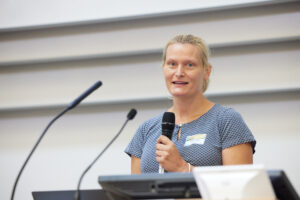
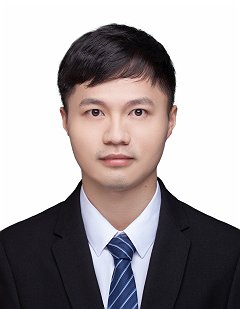
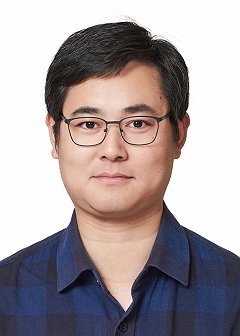
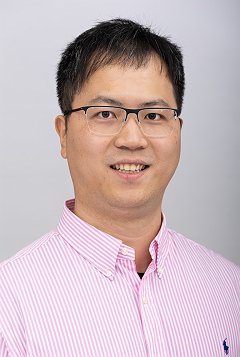
Prof. Dr. Susanne Gerber is a tenured-track Professor (W2) for Clinical Genomics and Bioinformatics at Johannes Gutenberg University Mainz, where she serves as Deputy Director of the Institute of Human Genetics within the University Medical Center. Her academic journey includes a PhD in Theoretical Biophysics from Humboldt University Berlin (2011), MSc in Bioinformatics from Free University Berlin (2007), and BSc from Free University Berlin/MPI for Molecular Genetics (2004). Before her current role, she was Assistant Professor at JGU Mainz (2016-2020) and postdoc at Università della Svizzera italiana (2011-2015). Her research integrates multi-omics approaches (transcriptomics, proteomics, epigenomics) with machine learning to investigate neurodegeneration, resilience mechanisms, and healthy aging. The lab specializes in: Development of novel bioinformatics algorithms for high-dimensional data analysis Third-generation nanopore sequencing applications SNP-SNP association studies for 3D chromatin modeling Cross-omics biomarker discovery for brain disorders Recent publications demonstrate strong focus on meta-analyses of neurodegenerative diseases, computational method development, and glial-neurovascular interactions. Her group maintains active research in miRNA patterns in Alzheimer's/Parkinson's disease and their microbiome interactions. Prof. Gerber leads the Computational Systems Genomics Group with 11+ members, conducting research at the Biomedical Research Center. Her work bridges computational science with clinical applications in human genetics.
Daniele Montanino is an Assistant Professor at the University of Salento, working within the Department of Mathematics and Physics "Ennio De Giorgi" in Lecce, Italy. With an extensive publication record spanning multiple areas of high-energy physics, he has established himself as a significant contributor to the fields of particle physics and astroparticle physics. Montanino's research focuses primarily on theoretical and phenomenological aspects of particle physics, with special emphasis on axion-like particles (ALPs), neutrino physics, and dark matter. His work explores photon-ALP oscillations in extragalactic magnetic fields, the implications of ALPs for gamma-ray astronomy, and global analyses of neutrino oscillation parameters. He has made notable contributions to understanding how ALPs might affect the propagation of very high-energy photons through cosmic distances and how they might contribute to cosmic reionization during the dark ages. His extensive publication record shows consistent research output with 374 publications that have accumulated over 263,597 reads and 30,014 citations. His work spans both theoretical investigations and contributions to major experimental collaborations. KLASH (KLoe magnet for Axion Search) experiment at the Laboratori Nazionali di Frascati CMS Collaboration at the Large Hadron Collider Selena Neutrino Experiment Montanino's research demonstrates strong international collaboration, working with physicists from institutions across Europe and beyond. His work bridges theoretical predictions with experimental searches, contributing to one of the most active frontiers in contemporary particle physics - the search for physics beyond the Standard Model.
Dr. Adélaïde Raguin leads the Computational and Theoretical Biophysics research group within the Institute for Computational Cell Biology at Heinrich Heine University Düsseldorf's Department of Computer Science. She established her independent third-party funded research team in 2021 after postdoctoral work at University of Aberdeen and Heinrich Heine University. Her group develops advanced stochastic simulation methods to investigate mesoscopic biological systems with emphasis on plant polysaccharides, protein synthesis regulation, and cytoskeletal transport. Her primary research interests focus on the dynamics of complex biological polymers , particularly plant cell wall biosynthesis/degradation, starch biogenesis, glycogen granule formation, and protein synthesis regulation. Using computational biophysics approaches, her team bridges theoretical modeling with experimental validation to understand how molecular structure interplays with enzymatic processes in systems like lignocellulose saccharification and starch granule formation. Key methodologies include stochastic simulations of collective transport processes and development of predictive tools for biological systems. The group's publication trends reveal strong focus on plant biomass conversion (40% of recent work), macromolecular dynamics (30%), and translation regulation (20%), with increasing emphasis on software tool development for experimentalists. Recent outputs include the PREDIG web application for saccharification prediction and ExpressInHost for codon optimization. Dr. Raguin actively supervises multiple PhD and Master's students while leading the Stochastic Models of Biological Systems module in the Computer Science Master's program. Her research is supported by major grants from CEPLAS, BioSC, DFG, and BMBF, including the OptiCellu project for sustainable cellulose fiber production and EtransColi for bacterial stress response studies. Her laboratory maintains strong collaborations with experimental groups through the CEPLAS Cluster of Excellence and develops open-source software tools including: ExpressInHost: Codon tuning for recombinant protein expression PREDIG: Web application for plant biomass saccharification modeling Glycogen granule biogenesis simulation tools Whole-translatome protein production models
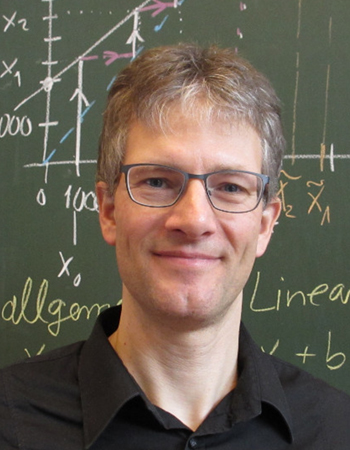
Richard Kempter is a Professor at Charité - Universitätsmedizin Berlin's Institute of Neuroscience, where he leads research in computational neuroscience with a focus on hippocampal circuitry and memory systems. His work bridges experimental neuroscience with theoretical modeling, examining how neural networks support spatial navigation, memory formation, and consolidation processes. His research interests center on the computational principles underlying hippocampal function, particularly in memory consolidation, spatial navigation, and neural coding. Kempter investigates how hippocampal circuits generate sharp wave-ripple events, how grid cells form spatial representations, and how memory traces transform during systems consolidation. His work combines computational modeling with experimental data analysis to develop testable theories about neural mechanisms. Analyzing Kempter's recent publications reveals a strong focus on hippocampal CA3 circuitry, with particular attention to sharp wave-ripple complexes and their role in memory consolidation. His work demonstrates how specific connectivity patterns between pyramidal neuron subtypes enable memory replay, while his computational models explain how grid-like representations emerge in entorhinal cortex. The research spans multiple scales from single-cell properties to network dynamics, with applications to both rodent and human memory systems. Kempter's scientific contributions have appeared in top-tier journals including Nature , Neuron , and PNAS , reflecting the significance of his work in understanding fundamental neural mechanisms. His publications demonstrate consistent innovation in developing computational frameworks that explain experimental observations while generating new testable predictions about memory systems. His research team collaborates extensively across institutions, working with experimental neuroscientists to bridge theoretical models with empirical data. Current projects examine how neural synchrony creates functional filters during rest states, how population sparseness affects memory capacity, and how subtype-specific connectivity enables sequential activation during memory replay events.
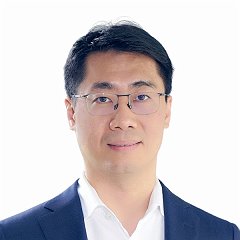
Yang Liu is a Full Professor and University Leadership Forum Chair at the School of Computer Science and Engineering, Nanyang Technological University (NTU) in Singapore. He serves as Programme Director for HP-NTU Digital Manufacturing Corp Lab, Deputy Director of the National Satellite of Excellence of Singapore, and Cluster Director in Cybersecurity at Energy Research Institute @NTU. His research spans Cybersecurity , Software Engineering , and Artificial Intelligence . He leads research in malware modeling and detection, vulnerability analysis using machine learning and program analysis, formal verification of security systems, program specification learning, performance analysis, Android system security, and AI security, robustness, fairness, and explainability. His notable work includes the Process Analysis Toolkit (PAT) for model checking and the Deep-Series tools for deep learning testing. Professor Liu has published extensively in top-tier conferences including ASE, ICSE, FSE, ISSTA, and S&P. His research demonstrates strong trends toward integrating AI/ML techniques with traditional software engineering and security approaches, particularly focusing on large language models for code analysis, vulnerability detection, and program repair. Recent publications show a growing emphasis on blockchain security, smart contract analysis, and addressing security challenges in AI systems. NRF Investigatorship (Class 2020) ACM's Distinguished Speaker Nanyang Research Award (Young Investigator) Microsoft Asia Research Fellowship 20 Year ICFEM Most Influential System Award for PAT Multiple ACM SIGSOFT Distinguished Paper Awards Professor Liu actively advises students and has seen notable student achievements, including Singapore Data Science Consortium research award winners and AISG PhD Fellowship recipients. His research is supported by numerous grants including a $900,000 NTU-NAP grant for Formal Verification on Cloud and a $471,000 grant for Vulnerability Detection in Binary Code. He leads the HP-NTU Digital Manufacturing Corp Lab and contributes to RollsRoyce@NTU Corporate Lab research on complex business systems simulation.
Lina Gong is an Associate Professor at the School of Computer Science and Technology, Nanjing University of Aeronautics and Astronautics, China. She holds a Ph.D. in Computer Software and Theory from China University of Mining and Technology (2020) and completed a research visit at Queen's University's Software Analysis and Intelligence Lab (SAIL) under Prof. Ahmed Hassan (2019-2020). Her research focuses on leveraging machine learning to extract insights from software repositories, with emphasis on: ML-enabled defect prediction techniques Code pre-trained models for vulnerability detection Identifier normalization and issue classification Empirical studies of software quality attributes Her recent publications (2023-2025) demonstrate strong trends in applying transformer architectures to code analysis, with increasing focus on supply chain security and cross-platform UI translation. Key venues include IEEE TSE, ACM TOSEM, and ASE. Scientific recognition includes: National Natural Science Foundation of China (2022-2025) Natural Science Foundation of Jiangsu Province (2022-2025) Key National Laboratory Foundation (2022-2023) Excellent Ph.D. Student Award (CUMT) She actively mentors graduate students (14 advisees: 1 doctoral, 13 master's) and serves on program committees for ASE, APSEC, and SANER. Her research is supported by multiple competitive grants focusing on ML applications in software engineering.
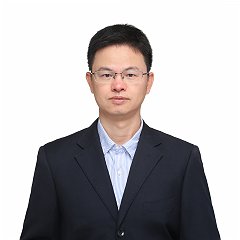
Hui Liu is a Professor in the School of Computer Science and Technology at Beijing Institute of Technology, where he leads research in AI-based software development with a focus on LLM applications. His work spans software refactoring, quality improvement, and maintenance, funded by the National Natural Science Foundation of China and the National Key Research and Development Program of China. PhD from Peking University (2008) Former graduate student at Software Engineering Institute, Peking University Distinguished member of China Computer Federation Secretary-General of CCF Technical Committee on Software Engineering Professor Liu's research centers on LLM-based program generation, evaluation and testing of large language models, software refactoring techniques, and automatic construction of software engineering datasets. His work bridges artificial intelligence and software engineering, with particular emphasis on improving code quality through empirical studies and machine learning techniques. Current projects include code contamination detection, context-aware naming recommendations, and refactoring validation using LLMs. His research has evolved from traditional code smell detection to cutting-edge applications of large language models in software development. Liu's publication record shows a strong trend toward LLM applications in software engineering, with recent work focusing on code review generation, commit message generation, and refactoring validation using large language models. His research combines empirical methods with machine learning approaches, often analyzing large code corpora from open-source projects. The work spans both theoretical foundations and practical tool development, with several contributions merged into Eclipse as part of the open-source community. ACM Distinguished Paper Award (ESEC/FSE 2023) ACM Distinguished Paper Award (ICSE 2022) RE'2021 Best Research Paper Award IET Software Premium Award (2018) New Century Excellent Talents in University (2013) Beijing Higher Education Young Elite Teacher (2013) Professor Liu actively mentors PhD and Master's students, with recent graduates including Waseem Akram (awarded Outstanding Graduate) and several students publishing at top venues. His research is supported by major Chinese funding agencies, and he serves on program committees for leading software engineering conferences including ASE, ICSE, and FSE. He maintains strong industry connections through contributions to Eclipse and studies of open-source ecosystems like Rust. Liu leads a research group focused on AI for software engineering, with active projects on code generation, refactoring, and quality improvement. The group collaborates extensively with international researchers and contributes directly to open-source tools, particularly in the Eclipse ecosystem where multiple refactoring improvements have been merged.
Xiao Yu is a Research Fellow (Assistant Research Professor) at the State Key Laboratory of Blockchain and Data Security, Zhejiang University, Hangzhou, China. Previously, they were a Postdoctoral Researcher at Huawei under Prof. Xin Xia. They hold dual PhD degrees: from Wuhan University's School of Computer Science (December 2020) supervised by Prof. Jin Liu, and from City University of Hong Kong's Department of Computer Science (March 2021) supervised by Prof. Qing Li and Prof. Jacky Wai Keung. Research focuses on three interconnected domains: LLMs Data Governance and Evaluation addressing hallucination phenomena and task-specific LLM evaluation in software engineering; Intelligent Software Engineering leveraging deep learning for code generation, annotation, and maintenance; and Software Security and Reliability investigating vulnerability detection, log anomaly identification, and security bug classification. Their work bridges theoretical advancements with industrial applications, particularly in blockchain and data security contexts. Recent publications demonstrate strong trends in realistic LLM evaluation (RealisticCodeBench), vulnerability detection using semi-supervised learning, and industrial anomaly detection. Key thematic areas include effort-aware defect prediction, code smell detection, and the practical application of large language models in software engineering tasks, with increasing emphasis on data quality and privacy considerations. Xiao Yu actively contributes to the academic community through extensive service roles including journal reviewing for ACM Transactions on Software Engineering and Methodology, IEEE Transactions on Dependable and Secure Computing, and serving on program committees for major conferences like APSEC 2025 and ASE 2025. They have supervised numerous graduate students as evidenced by authorship patterns in publications. Based at Zhejiang University's State Key Laboratory of Blockchain and Data Security, their research operates at the intersection of academic rigor and industrial relevance, with strong collaborations spanning multiple institutions including Huawei, Wuhan University, and City University of Hong Kong.
Jie Liu is a Researcher at the Institute of Software, Chinese Academy of Sciences and a Professor and Doctoral Supervisor at University of Chinese Academy of Sciences. He is also a Member of the Youth Innovation Promotion Association of the Chinese Academy of Sciences and an Executive Committee Member of the System Software Committee of the CCF Computer Society. His research is conducted within the Software Engineering Technology R&D Center. Dr. Liu received his Ph.D. from the University of Science and Technology of China in 2011 and his B.A. from the same institution in 2004. He has progressed through the ranks at the Institute of Software, CAS, starting as an Assistant Research Fellow (2011-2014), then Associate Research Fellow (2014-2024), and currently as a Researcher (since 2024). His research spans Big Data Intelligent Analysis Models and Systems at the intersection of AI, Software Engineering, and System Software. Specifically, his work covers three main areas: Big Data and Machine Learning Systems (statistics and AI algorithm model libraries, data quantitative analysis tools, LLM reasoning optimization, Earth Big Data); Intelligent Software Engineering (code model constraint decoding, data science agents, system log analysis agents); and Knowledge-Enhanced Intelligent Model Construction (knowledge extraction, knowledge graphs, domain AI model design). His research has resulted in innovative approaches to handling complex data analysis challenges across multiple domains. Dr. Liu's research has produced significant outcomes including EarthDataMiner, which supports SDG indicator calculations and won the 2024 Beijing Municipal Science and Technology Progress First Prize. His work on RISC-V software migration technology has been integrated into the Ruiqian tool (https://rvpt.top/), demonstrating practical applications of his research in emerging computing architectures. Beijing Science and Technology Progress Award, First Prize, 2024 2023 Surveying and Mapping Science and Technology Award, Special Prize, 2023 DASFAA Best Paper Runner-up, Second Prize, 2013 Dr. Liu has successfully guided numerous graduate students who have secured positions at major technology companies including Alibaba, ByteDance, Southern Power Grid, and Agricultural Bank of China. He has secured funding through multiple National Natural Science Foundation projects, National Key R&D Program projects, and over ten other research initiatives. His research collaborations span industry leaders like Huawei, JD.com, and TravelSky, as well as academic institutions within the Chinese Academy of Sciences. He teaches graduate courses such as 'Machine Learning Systems' and 'Cloud Computing and Big Data Technology' at University of Chinese Academy of Sciences, and has established a research group focused on developing innovative solutions at the intersection of AI and software engineering with real-world applications in earth sciences, healthcare, and intelligent systems.
Zhiyuan Wan is an Associate Professor in the College of Computer Science and Technology at Zhejiang University, China. His academic career spans multiple prestigious institutions across North America and Asia, with a focus on advancing software engineering practices through empirical research and tool development. Dr. Wan's educational background includes: Ph.D. in Computer Science from Zhejiang University (2014) His postdoctoral journey featured positions at: University of British Columbia, Canada (2019-2020) Singapore Management University (2018) Zhejiang University (2016-2020) Lehigh University, United States (2014-2015) Dr. Wan's research program centers on empirical software engineering with particular expertise in blockchain technologies and software security. His work bridges theoretical insights with practical tool development, focusing on: Smart contract security and vulnerabilities in cryptocurrency ecosystems Code search and recommendation systems for developer productivity Empirical studies of developer practices and challenges Impact of machine learning on software development workflows His approach combines rigorous empirical methods with practical tool building to address real-world challenges faced by software practitioners. Analysis of Dr. Wan's recent publications reveals a strategic evolution toward blockchain security research, beginning around 2020 with studies on smart contract security and expanding to cover NFT ecosystems, Solana blockchain transactions, and cross-chain vulnerabilities. His work consistently applies empirical methods to uncover practical insights while developing tools that directly address identified challenges in software development. Dr. Wan actively contributes to the software engineering community through service on program committees for major conferences including ASE, ICSE, ESEC/FSE, and ISSTA. His academic leadership extends to mentoring relationships with students and collaborators across international institutions, though specific advisees are not documented in the provided materials.
Professor Sven Apel holds the Chair of Software Engineering at Saarland University's Saarland Informatics Campus in Germany. He is also the Director of the Saarbrücken Graduate School of Computer Science. His work focuses on software engineering with an emphasis on automation, human factors, and interdisciplinary approaches. Prof. Apel received his Ph.D. in Computer Science in 2007 from the University of Magdeburg. His academic journey includes: Ph.D. in Computer Science, University of Magdeburg (2007) Emmy-Noether Fellowship of the German Research Foundation Heisenberg Professorship of the German Research Foundation Prof. Apel's research centers on empowering software engineering practice to enter an era of intensive automation. His key research areas include software variability and configuration, AI-based program generation and optimization, socio-technical software analysis, and empirical and neurophysiological methods. He pays special attention to the human factor and interdisciplinary research questions, applying his findings to real-world software systems from both open-source projects and industry collaborations with partners like Siemens AG, Bosch Engineering, and Airbus Helicopters. Analysis of Prof. Apel's recent publications reveals a strong focus on configurable software systems, neurophysiological approaches to understanding programming, and the application of AI techniques to software engineering problems. His work often bridges the gap between theoretical foundations and practical applications, with many studies involving industrial collaborations. There's a noticeable trend toward interdisciplinary research combining software engineering with neuroscience, organizational studies, and machine learning. Prof. Apel has received numerous prestigious awards and honors: ERC Advanced Grant "Brains On Code" (2022) ACM Distinguished Member for "Outstanding Scientific Contributions to Computing" (2018) Multiple Most Influential Paper Awards (SPLC'18, ICPC'22, GPCE'23) Multiple Best Paper Awards (SPLC'11, Modularity'15, AOM'18) Heisenberg Professorship and Emmy-Noether Fellowship from the German Research Foundation Prof. Apel has advised numerous Ph.D., Master's, and Bachelor's students throughout his career. His research has been generously funded by multiple grants including an ERC Advanced Grant (2,500,000 Euro, 2022-2027), several DFG projects (CPEC, Congruence, Pervolution), and previous grants like SafeSPL, FeatureFoundation, and Pythia. His work has practical impact through collaborations with industry partners including Siemens AG, Bosch Engineering, and Airbus Helicopters. Prof. Apel leads research in the Chair of Software Engineering at Saarland University, where his team explores the intersection of software engineering, neuroscience, and artificial intelligence. His "Brains On Code" ERC project specifically investigates how programmers' brains process code using neuroimaging techniques. The research group maintains strong connections with both academic and industry partners, facilitating the transfer of research findings into practical applications.
Lars Grunske is a Professor in the Department of Computer Science at Humboldt University of Berlin, Germany. His academic career spans multiple institutions across Germany, Australia, and internationally, with a strong focus on research and conference participation in software engineering. His educational background includes a PhD in computer science from the University of Potsdam (Hasso-Plattner-Institute for Software Systems Engineering) in 2004. Professor Grunske's research interests center on modeling and verification of systems and software, with particular emphasis on automated analysis techniques. His work primarily focuses on probabilistic and timed model checking and model-based dependability evaluation of complex software intensive systems. He has made significant contributions to software testing, program repair, formal methods, and the application of machine learning techniques to software engineering problems. His publication record shows consistent contributions to top software engineering conferences over the past decade, with recent work exploring the intersection of AI/ML with traditional software engineering challenges. His research demonstrates an evolution from foundational model checking techniques toward more practical applications in software testing and repair. Boeing Postdoctoral Research Fellow Professor Grunske actively mentors through conference activities including chairing mentoring circles at ICSE 2021. He serves on numerous program committees for major software engineering conferences including ASE, ICSE, ESEC/FSE, and others, demonstrating his standing in the academic community. His involvement spans multiple roles from committee member to track chair and award committee positions. He maintains an active research laboratory focused on software verification and testing, as indicated by his departmental affiliation and research website.
Andreas Zeller serves as Professor for Software Engineering at Saarland University and faculty at the CISPA Helmholtz Center for Information Security in Saarbrücken, Germany. His dual appointments position him at the intersection of academic research and practical cybersecurity applications, contributing significantly to both institutions' research profiles. Professor Zeller's research spans multiple dimensions of software quality assurance, with particular expertise in automated debugging techniques, mining software repositories for insights, specification mining, and security testing methodologies. His work consistently bridges theoretical foundations with practical implementation, resulting in tools and frameworks adopted widely in both research and industry contexts. Analysis of his recent publications reveals an evolutionary trajectory from foundational debugging work toward increasingly sophisticated grammar-based testing approaches, with notable integration of machine learning techniques in recent years. His research demonstrates consistent focus on improving software reliability through automated analysis, with growing emphasis on security applications including XML injection testing, GNSS module security, and binary file format vulnerabilities. Recipient of two ERC Advanced Grants (including the S3 project) ACM Fellow ACM SIGSOFT Outstanding Research Award Professor Zeller has successfully secured substantial research funding through competitive mechanisms including ERC grants, enabling his team to pursue ambitious research agendas. His leadership extends to mentoring through his roles as doctoral symposium co-chair and active participation in new faculty development initiatives. He maintains strong engagement with the research community through numerous program committee memberships and conference organization roles. At CISPA Helmholtz Center for Information Security, Zeller contributes to the center's mission through research focused on software security testing and analysis. His work on grammar-based testing and fuzzing directly addresses critical security challenges in modern software systems, with practical applications for improving software resilience against attacks.
Shane McIntosh is an Associate Professor at the David R. Cheriton School of Computer Science, University of Waterloo, where he leads the Software Repository Excavation and Build Engineering Labs (Software REBELs). His academic career focuses on empirical studies of software development processes with particular emphasis on release engineering and software quality. Dr. McIntosh's research centers on mining historical data generated during software development to derive practical insights for building more reliable systems. His work spans release engineering (assembling, verifying, and delivering software releases) and software quality (developing guidelines for reliable software). This research manifests in studies of continuous integration systems, build outcome prediction, defect prediction models, and code review practices. His publication record reveals a consistent focus on empirical software engineering with recent papers examining build system reliability, continuous integration practices, and defect prediction. The research demonstrates strong methodological rigor through replication studies, longitudinal analyses, and large-scale data mining of software repositories. His work bridges theoretical insights with practical applications for software development teams. Dr. McIntosh actively contributes to the software engineering community through substantial service roles including Proceedings Co-chair for ICSE 2022, General Chair for PROMISE 2021-2022, and committee positions across major conferences like ASE, ESEC/FSE, and MSR. His teaching portfolio includes foundational courses such as Introduction to Software Engineering, Software Analytics, and Software Delivery. He directs the Software REBELs lab, which provides a collaborative environment for investigating software development data. The lab's work focuses on extracting meaningful patterns from version control systems, issue trackers, and continuous integration pipelines to improve software engineering practices.
Dr. Huaming Chen is a Senior Lecturer in the School of Electrical and Computer Engineering at The University of Sydney, Australia. His work focuses on trustworthy machine learning systems, software engineering, and software security. With numerous publications in top-tier conferences and journals, Dr. Chen has established himself as a significant contributor to the fields of AI security and software engineering. Dr. Chen's primary research interests lie at the intersection of software engineering and artificial intelligence, with a strong emphasis on trustworthy AI systems. His work spans several key areas including: Software Security for AI-enabled systems Trustworthy and Responsible AI development Computational biology applications Industrial 4.0 implementations Federated learning and privacy-preserving techniques Large language model verification and uncertainty analysis His research addresses critical challenges in ensuring AI systems are secure, reliable, and ethically sound. Dr. Chen's recent publications demonstrate a strong trend toward addressing security and trustworthiness challenges in AI systems. His work spans multiple domains including software security (particularly for AI systems), trustworthy AI development, and applications in computational biology. A significant portion of his recent work focuses on large language models, examining their vulnerabilities, verification methods, and uncertainty analysis. He also maintains active research in federated learning, adversarial machine learning, and software security techniques. Dr. Chen has received several notable awards and recognitions: 2020 IEEE CIS Student Grant for IEEE WORLD CONGRESS ON COMPUTATIONAL INTELLIGENCE (WCCI) 2017 Student and Early Career Travel Fellowship for The 16th International Conference on Bioinformatics (InCoB 2017) 2017 Student Travel Award for 2017 IEEE World Congress on Services Dr. Chen actively supervises multiple research students working on cutting-edge projects related to trustworthy AI and software security. His current students are exploring topics ranging from blockchain-based governance frameworks to open-source AI security and digital twin platforms. He also serves in numerous committee roles at top conferences including area chair for ACM MM, and PC member for ACM CCS, IJCAI, KDD, and many others. His service as a Guest Editor for journals like Computers & Security and as a Grant Reviewer for UKRI demonstrates his standing in the research community. Dr. Chen organizes workshops focused on Trustworthy and Responsible AI, reflecting his commitment to advancing the field. His research group appears to focus on practical applications of AI security techniques, with projects spanning multiple domains including healthcare, finance, and industrial systems. He maintains active collaborations with researchers across multiple institutions, as evidenced by his co-authorship on diverse publications.