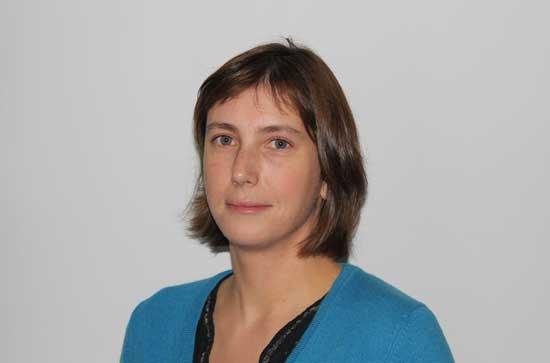
Professor Francis Butler is a Full Professor at University College Dublin's School of Biosystems and Food Engineering, where he has been since 1990. His academic roles include research leadership in food safety, food chain integrity, and microbial risk assessment. He leads the UCD Institute for Food and Health and the UCD Centre for Food Safety as a Principal Investigator. Education: BE, Grad Dip University Teaching & Learning, MBA, and PhD from University College Dublin. Research Focus: His work centers on food safety hazards, quantitative risk assessment, and next-generation sequencing for pathogen identification. Recent projects include Listeria monocytogenes growth modeling, norovirus in oysters, and hepatitis E in pork products. He has secured over €6 million in research grants, including EU-funded projects like FOODINTEGRITY and SIGMACHAIN. Awards & Recognition: European Food Safety Authority Fellowship, Marie Sklodowska-Curie Fellowship, and UCD Teaching Grant. He coordinates international educational programs, including the UCD MSC Food Safety and Risk Analysis. Professional Activities: Member of EFSA advisory committees, editorial boards (e.g., Microbial Risk Analysis ), and international conference chairs. His work bridges academia, industry, and policy to enhance food safety standards globally.
Conor Ryan is a Professor in the Department of Computer Science & Information Systems at the University of Limerick. He is a Science Foundation Ireland-funded Investigator since 2002 and a member of multiple research centres including Lero – the Irish Software Research Centre and the Limerick Digital Cancer Research Centre. His research focuses on Genetic Programming, Grammatical Evolution, and their applications in domains like healthcare analytics, digital circuit design, and financial modeling. He has authored over 250 publications, with recent work emphasizing automated feature selection in medical diagnostics, neural architecture search, and blockchain ecosystems. Teaching includes courses on Foundations of Computer Science and Computer Games Programming. Research interests span evolutionary computation, machine learning, and interdisciplinary applications. Collaborations involve global institutions, reflecting his work's impact across computer science, engineering, and healthcare. His research has addressed challenges in breast cancer diagnosis via genetic algorithms, cryptocurrency volatility prediction using random forests, and automated generation of digital circuits. Ongoing projects explore interpretability in AI, energy-efficient computing, and sustainable transport systems through predictive analytics. Professional memberships include roles in the Centre for Research Training in Foundations of Data Science and the Data-Driven Computer Engineering Research Centre, underscoring his commitment to interdisciplinary innovation.
Dr. Jon Gruda is an Assistant Professor and Lecturer in Organisational Behaviour at Maynooth University's School of Business. He holds a PhD in Management from emlyon Business School (France) and a joint Dr. rer. nat. in Psychology from Goethe University Frankfurt. His research focuses on relational leadership, dark leadership traits, anxiety in the workplace, and personality psychology, with a strong emphasis on integrating machine learning and AI methodologies. Gruda has been recognized with prestigious awards, including selection for the Lindau Nobel Laureates Meeting in Economic Sciences (2020). His interdisciplinary work includes predicting anxiety and personality traits via social media data analysis. He serves as an Associate Editor for journals like Personality and Individual Differences and Frontiers in Psychology . Education PhD in Management, emlyon Business School (2012–2017) Dr. rer. nat. in Psychology, Goethe University Frankfurt (2012–2017) MSc in Affective Neuroscience, Maastricht University (2018) MSc in Management Research, emlyon Business School (2012–2014) Triple MSc in Management, City University London/ESCP Europe (2010–2012) BSc in International Business & Management, University of Groningen (2007–2010) Research Interests Gruda’s work bridges leadership studies, personality psychology, and data science. Key areas include: Dark leadership traits (e.g., narcissism, Machiavellianism) and their organizational impacts Machine learning applications for detecting anxiety and personality traits via social media Cross-cultural studies on leadership perceptions and attachment orientations Impact of physiological/psychosocial factors on leadership effectiveness Publications & Projects Recent projects include predicting state-level health outcomes linked to narcissism and developing algorithms to track anxiety using Twitter data. Over 20 peer-reviewed articles since 2017 highlight his contributions to organizational behavior and computational social science. Awards 7th Lindau Nobel Laureates Meeting on Economic Sciences (2020) Benedictine University Award (Academy of Management, 2020) Wharton Global Faculty Development Program (2020) Grants & Collaborations Gruda leads projects on pro-environmental behavior and collaborates with the National Care Experience Programme on healthcare feedback analysis. Seed funding includes €301,930 for computational text analytics in healthcare. Labs & Teams Interdisciplinary research collaborations span psychology, data science, and public health, with a focus on applying machine learning to organizational challenges.
Dr. Andrew Hines is a Researcher at the School of Computer Science, University College Dublin, specializing in machine learning applications for signal processing in speech, audio, and video domains. His work focuses on Quality of Experience (QoE) modeling, speech quality assessment, and immersive media analysis. He has held leadership roles in European COST Actions like Qualinet and CryptoAction, and previously worked in industry as a Director of Engineering. University: University College Dublin Role: Director of Research, Innovation and Impact Key Collaborations: IEEE (Senior Member), Audio Engineering Society (Ireland) Research interests center on machine learning for QoE optimization, audio-visual integration, and healthcare applications like heart sound classification and stroke rehabilitation. His recent publications explore self-supervised learning, neural speech codecs, and contextual factors in speech/audio quality assessment. Scientific contributions include awards like IEEE Senior Membership, and his work spans both academic research and industrial engineering in finance and aviation sectors. He leads the QxLab research team at UCD and develops open-source platforms such as WARP-Q and AQP for quality metrics.
Michela Bertolotto is a Professor in the School of Computer Science at University College Dublin (UCD). Her research focuses on spatio-temporal data modeling, GIScience, and applications of geospatial technologies in fields like urban planning and health informatics. She leads a research group and has supervised 19 PhD and 8 MSc students. Her work includes innovations in LiDAR-based flood risk visualization, semantic web quality assurance, and open-source spatial data analysis. Bertolotto has held roles including College Lecturer at UCD (2000–2006) and postdoctoral research positions at the University of Maine and University of Genoa. Education: BSc and PhD in Computer Science from the University of Genoa (1993, 1998). Professional achievements include over 100 publications, 24 grants (e.g., Science Foundation Ireland-funded Urban ARK project), and editorial roles at journals like the International Journal of Geographical Information Science. Awards include the UCD President's Research Award (2001) and NATO Postdoc Fellowship (1998–1999). Research interests span map personalization, volunteered geographic information (VGI), and geospatial data quality. Her lab develops tools like the LAMSkyCam (low-cost sky imaging system) and dynamic flood risk viewers. She chairs international conferences and serves on program committees for GIScience events.
Dr. Dongyun Nie is an Assistant Professor at Dublin City University's School of Computing. She holds a PhD in Computer Science with a specialization in Customer Relationship Management. Her core research explores customer lifetime value, forecasting, data mining, and record linkage. Her recent publications demonstrate interdisciplinary work spanning health informatics, sports analytics, and environmental data engineering. Research predominantly focuses on machine learning applications for real-world data challenges including eye-tracking systems, lifelog analytics, and public health data infrastructure. Teaching responsibilities include modules on Machine Learning (CA4109), Enterprise Systems Configuration (CA2049), and Web Design (CA106), integrating research expertise into computing education.
Catherine Mooney is a Professor in the School of Computer Science at University College Dublin (UCD), leading the Life Science Data Analytics Group (LiSDA). Her research focuses on applying machine learning to healthcare challenges, including biomarker development, clinical decision support systems, and addressing ethical and technical barriers in healthcare AI. Education: BSc in [field unspecified] from Trinity College Dublin PhD in Computer Science from UCD Prof Dip University Teaching & Learning from UCD Research Interests: Machine Learning applications in healthcare Biomarker discovery for neurological and metabolic conditions Explainable AI for clinical decision support Promoting diversity and inclusion in STEM education Her work bridges computational methods with medical challenges, emphasizing ethical AI and translational research. Notable Awards: Best Paper Award in Applied Biosciences (2023) UCD Long-Service Award (2022) Best Poster Award at ITiCSE ’20 (2020) Her research has led to impactful tools like LiSDA’s clinical decision support systems for epilepsy and pregnancy care. She also advocates for gender diversity in computing, serving in leadership roles like Vice Principal for EDI in UCD’s College of Science (2022–2024).
Prof. Zena Moore is a renowned academic and clinician serving as Professor and Head of the School of Nursing & Midwifery at RCSI, University of Medicine and Health Sciences. She holds adjunct professorships at Curtin University (Australia), Griffith University (Australia), Cardiff University (UK), Ghent University (Belgium), and Fakeeh College for Medical Sciences (Saudi Arabia). Her research focuses on wound healing, pressure ulcer prevention, and nursing education, with over 300 publications. She leads the Skin Wounds and Trauma (SWaT) Research Centre and chairs multiple international bodies including the European Pressure Ulcer Advisory Panel. Education: PhD in Wound Healing (RCSI), MSc in Leadership in Health Education (RCSI), MSc in Wound Healing (University of Wales), FFNMRCSI, and Diplomas in Management and Nursing. Research Interests: Wound pathophysiology, pressure ulcer risk assessment, technologies for early detection, and healthcare equity. Awards: 2022 Lifetime Achievement Award from World Union of Wound Healing Societies. Her work spans over 50 funded projects, including grants from Science Foundation Ireland and the National Health and Medical Research Council. She has supervised numerous research projects on topics like pressure ulcer prevention algorithms and eHealth interventions.
Upaka Rathnayake is a Professor of Civil Engineering and Principal Investigator at the Mathematical Modelling and Intelligent Systems for Health and Environment (MISHE) research unit at Atlantic Technological University Sligo, Ireland. He has held academic and research roles globally, including in Sri Lanka, Japan, the UK, New Zealand, Australia, and Fiji. His research focuses on water resources management, hydrological modeling, climate analysis, and AI-driven solutions for environmental challenges. He holds a PhD from the University of Strathclyde and advanced certifications from Hokkaido University. Education: PhD in Optimal Management of Urban Sewer Systems (University of Strathclyde, 2013) Professional Memberships: Institution of Engineers Sri Lanka, Engineers New Zealand, International Association of Hydrological Sciences Research interests include: Hydrological modeling and climate change adaptation Multi-objective optimization and soft computing techniques Explainable AI applications in environmental systems Remote sensing and GIS for water resource management Recent articles highlight AI-driven solutions for air quality prediction, soil nutrient analysis, and flood risk assessment. Awards include the 2023 Presidential Award for Scientific Publications and multiple university excellence awards. He actively advises PhD students on projects like urban water systems optimization and climatic trends analysis. Rathnayake is an editorial board member of journals like Scientific Reports and PLoS ONE , contributing to peer review and policy-oriented research. His work bridges data-driven methods with traditional hydrological practices to address global environmental challenges.
Katarina Domijan is an Associate Professor in Statistics at the Department of Mathematics and Statistics, Maynooth University, Ireland. She holds a PhD in Statistics from Trinity College Dublin (2008) and has been affiliated with Maynooth University since 2008, transitioning from Lecturer/Assistant Professor to her current role in 2024. Her academic career includes editorial roles as Associate Editor for The R Journal (2021–present) and the Journal of Computational and Graphical Statistics (2015–2024). Research Interests focus on Bayesian methods for high-dimensional data, particularly in classification problems. She specializes in feature selection and model visualization, with applications spanning agricultural data analysis (e.g., hyperspectral imaging for lactose prediction), medical diagnostics (e.g., sepsis and cancer detection), and space physics (e.g., Saturn Kilometric Radiation classification). Her work bridges theoretical statistics with real-world challenges, including socio-economic studies and forensic science. Key Research Areas Bayesian statistical inference Machine learning for large feature spaces Statistical computing and model interpretability Data visualization and chemometrics Scientific Contributions include leading projects like VistaMilk Phase II (2024–2030, €152,300) and Measuring Carbon Sequestration (2024–2028, €174,788.90). Her 15 most recent publications highlight advancements in ensemble modeling, spatial statistics, and medical diagnostics. Scientific Awards Associate Editor, The R Journal (2021–present) Associate Editor, Journal of Computational and Graphical Statistics (2015–2024) Student Supervision includes PhD and MSc graduates such as Dr. Bruna Wundervald (2024) and Dr. Mark O’Connell (2017). She also collaborates with researchers across disciplines, including Dr. Nadim Akasheh in food hypersensitivity studies.
Prof. Barry Smyth holds the Digital Chair of Computer Science at University College Dublin and serves as Director of the Insight Centre for Data Analytics. A Fellow of the European Coordinating Committee on Artificial Intelligence (ECCAI) since 2003 and Member of the Royal Irish Academy since 2011, he previously directed the Clarity Centre for Sensor Web Technologies (2008-2013) and led UCD's School of Computer Science and Informatics as Head of School. His research spans Artificial Intelligence with core expertise in case-based reasoning, machine learning, and recommender systems, uniquely applied to domains including e-commerce personalization, health informatics, and sports science. Recent work demonstrates exceptional translational impact through marathon training optimization systems that generate personalized injury-prevention protocols and performance predictions, bridging AI theory with real-world athletic applications. Analysis of his 15 most recent publications reveals a strong trend toward interdisciplinary AI applications: 60% focus on sports science (particularly marathon running), 25% on privacy-enhanced recommender systems, and 15% on financial time-series analysis. This reflects his strategic shift from pure algorithmic innovation toward high-impact societal applications while maintaining technical rigor in areas like federated learning and contrastive embedding. Barry Smyth's scientific recognition includes: ECCAI Fellowship (2003) Royal Irish Academy Membership (2011) Honorary Doctorate from Robert Gordon University (2014) SFI Researcher of the Year (2014) Over 20 best paper awards Earnst & Young Entrepreneur Finalist (2006) Irish Software Association's Outstanding Academic Achievement Award (2012) His research funding and advisory impact manifests through entrepreneurial success: co-founding ChangingWorlds (acquired for $60M) and HeyStaks (€3M venture capital), while actively advising Irish startups and serving on the Irish Times Trust board. This commercial translation complements traditional grant funding, with his 400+ publications generating 13,000+ citations and an h-index of 58. Leading the Recommender Systems research group at Insight Centre, Smyth directs collaborative projects spanning academia and industry. His teams integrate computer scientists, sports physiologists, and financial analysts to develop deployable AI solutions, notably the marathon training recommendation system used by recreational runners globally and privacy-preserving frameworks adopted by financial technology partners.
John Byabazaire is a Research Fellow at the School of Computer Science, University College Dublin (UCD). He holds a PhD in Computer Science from UCD (2024), following a BSc (Gulu University, 2013) and MSc (Waterford Institute of Technology, 2018). His research focuses on IoT systems for data collection, remote sensing, AI-driven end-to-end system management, and fog analytics. He has held academic roles including Assistant Lecturer at Gulu University (2018–2019) and teaching roles at UCD since 2019, including Occasional Lecturer and Senior Teaching Assistant. His research spans smart agriculture, data quality in IoT, and education technology. Notable contributions include frameworks for yield mapping in precision agriculture, trust-based data validation in IoT, and machine learning approaches for livestock health monitoring. He has secured grants like the National ICT Initiatives Support Program (Uganda Government, 2019–2020). Teaching includes courses on cloud computing, web development, and distributed systems. His articles emphasize IoT data quality, agricultural analytics, and educational technology innovation. He actively promotes technology adoption in African education and agriculture sectors through collaborative projects.
Aonghus Lawlor is an Assistant Professor/Lecturer in Computer Science at the School of Computer Science, University College Dublin. His roles include coordinating modules such as Software Engineering, Data Structures, Machine Learning, and Final Year Project Foundations. He holds an Orcid identifier: 0000-0002-6160-4639. His research focuses on machine learning applications in medical imaging (e.g., MRI, CT), sports science, and healthcare systems. Notable areas include AI-driven diagnostics, cybersecurity in radiology, and genomics for agricultural optimization. Recent work explores ChatGPT4-vision in MS progression, knee osteoarthritis grading via anomaly detection, and reinforcement learning in exercise prescriptions. Professional activities include committee roles in ACM Recommender Systems and Intelligent User Interfaces, grant assessments, and peer reviewing. He has published 137+ outputs, emphasizing interdisciplinary AI solutions with clinical and agricultural impact. Teaching responsibilities span foundational CS courses to advanced ML and project modules. No formal awards are listed, but his work demonstrates contributions to AI ethics, health informatics, and agricultural genomics.
Liadh Kelly is an Assistant Professor in the Department of Computer Science at Maynooth University's Faculty of Science & Engineering. She supervises PhD students in applied artificial intelligence, focusing on intelligent search, ubiquitous computing, and multimodal information access. She is affiliated with the ADAPT SFI Research Centre, SFI Centre for Research Training in Foundations of Data Science, and Human Health Institute. BSc in Computer Science MSc (Research) in Computer Science PhD in Computer Science Her research explores context-sensitive retrieval and evaluation methodology in AI-driven systems. Key areas include ubiquitous computing for personal data analysis, deep learning classification for mental wellness indicators, and multimodal lifelogging integration. Recent publications focus on urban mental wellbeing classification , contextual cue analysis , and AI-driven health search systems . Articles address smart city applications , consumer health search , and cross-lingual medical retrieval . Professional roles include Doctoral Consortium Chair at ECIR 2023 and Programme Committee member for SIGIR and ICWSM conferences. She leads grants for 4-year PhD studentships with stipend and fee coverage.
John Breslin is a Personal Professor in Electronic Engineering at the College of Science and Engineering, University of Galway, serving as Director of the TechInnovate and AgInnovate programmes. Associated with two Taighde Éireann – Research Ireland Centres, he is a Principal Investigator at Insight Centre for Data Analytics (specializing in data analytics) and a Funded Investigator at VistaMilk (Agri-Technology), while also leading the EDIH Data2Sustain project. With an h-index of 50, over 12,000 citations, and 300+ peer-reviewed publications including seminal books on the Social Semantic Web, he ranks among Ireland's most influential researchers in digital technologies. Breslin's research fundamentally bridges Semantic Web technologies, AI-driven data analytics, and practical innovation. His co-creation of the SIOC framework—implemented across 65,000+ websites by entities like Yahoo and Boeing—demonstrates real-world impact in social data interoperability. Current work leverages blockchain and federated learning for sustainable Agri-Technology through VistaMilk, while his TechInnovate programmes translate academic research into commercial ventures across healthcare, smart manufacturing, and energy systems. Analysis of his 15 most recent publications reveals dominant themes in AI-enhanced security (35% of works), blockchain applications for sustainability (27%), and multimodal AI for healthcare (20%). His team pioneers privacy-preserving techniques for IoT and medical devices, neurosymbolic visual reasoning frameworks, and federated learning architectures addressing data heterogeneity—directly supporting his roles in national research infrastructures like Insight and VistaMilk. John has received several prestigious awards: IIA Net Visionary Award (twice) ITAG Outstanding Contribution to the ICT Sector Award Galway Chamber President’s Award Best Irish-Published Book Award (2020 for Old Ireland in Colour) Multiple Best Paper Awards He leads major research initiatives funded by Taighde Éireann – Research Ireland: Insight Centre for Data Analytics (as Principal Investigator) VistaMilk SFI Research Centre (as Funded Investigator) EDIH Data2Sustain (as Principal Investigator) His entrepreneurial programs TechInnovate and AgInnovate have mentored 200+ startups, securing €50M+ in follow-on funding. Breslin co-founded PorterShed (Galway City Innovation District) and serves on Scale Ireland's Steering Group, creating Ireland's most active regional innovation ecosystem outside Dublin. He maintains active industry partnerships with Vodafone, Boeing, and agricultural cooperatives through VistaMilk's testbed facilities.