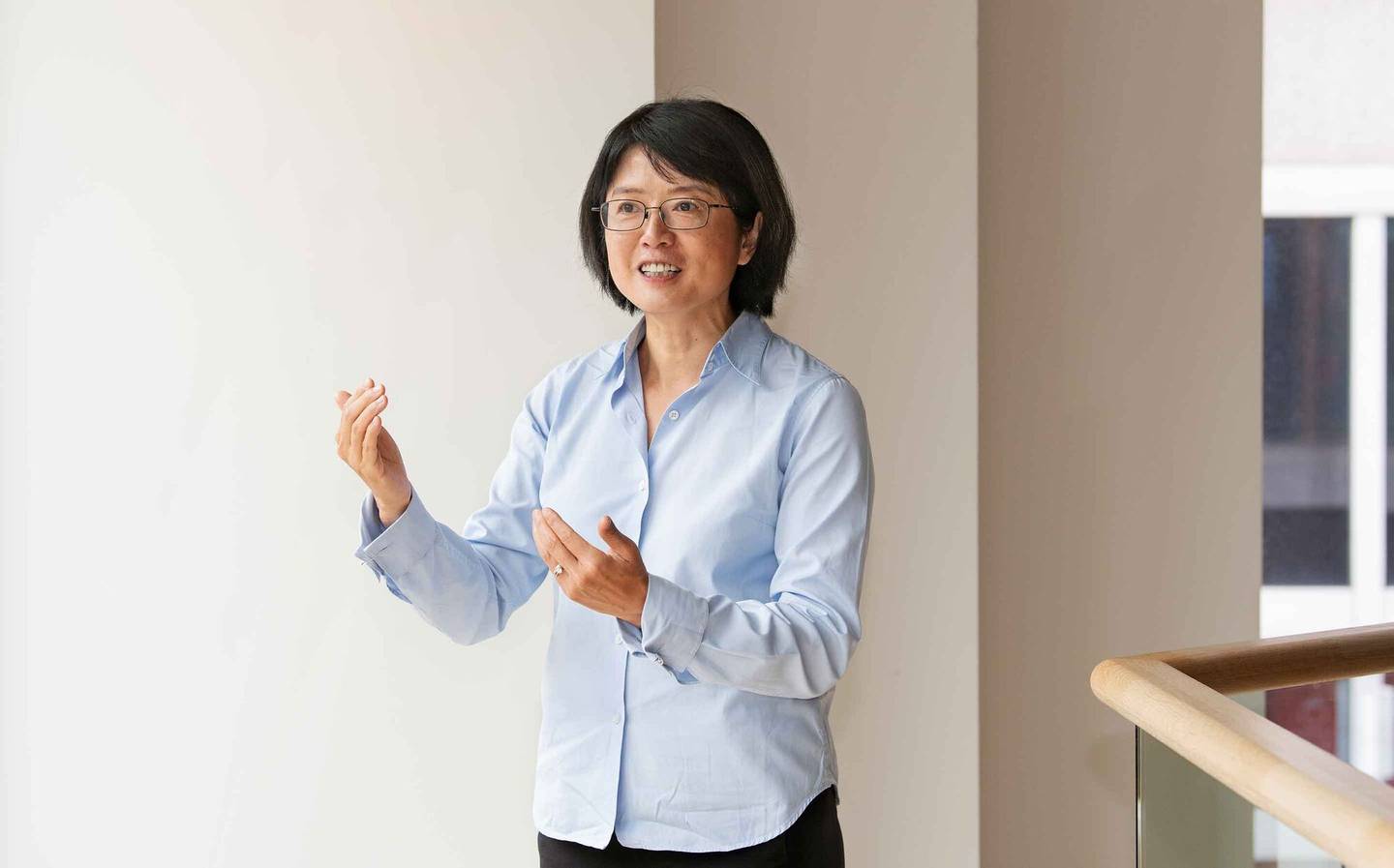
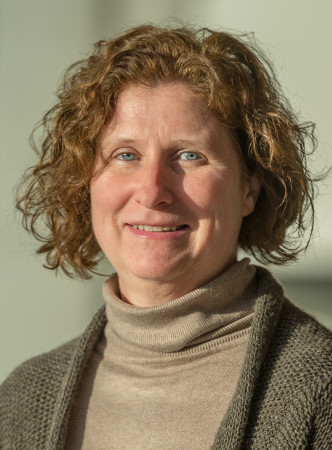
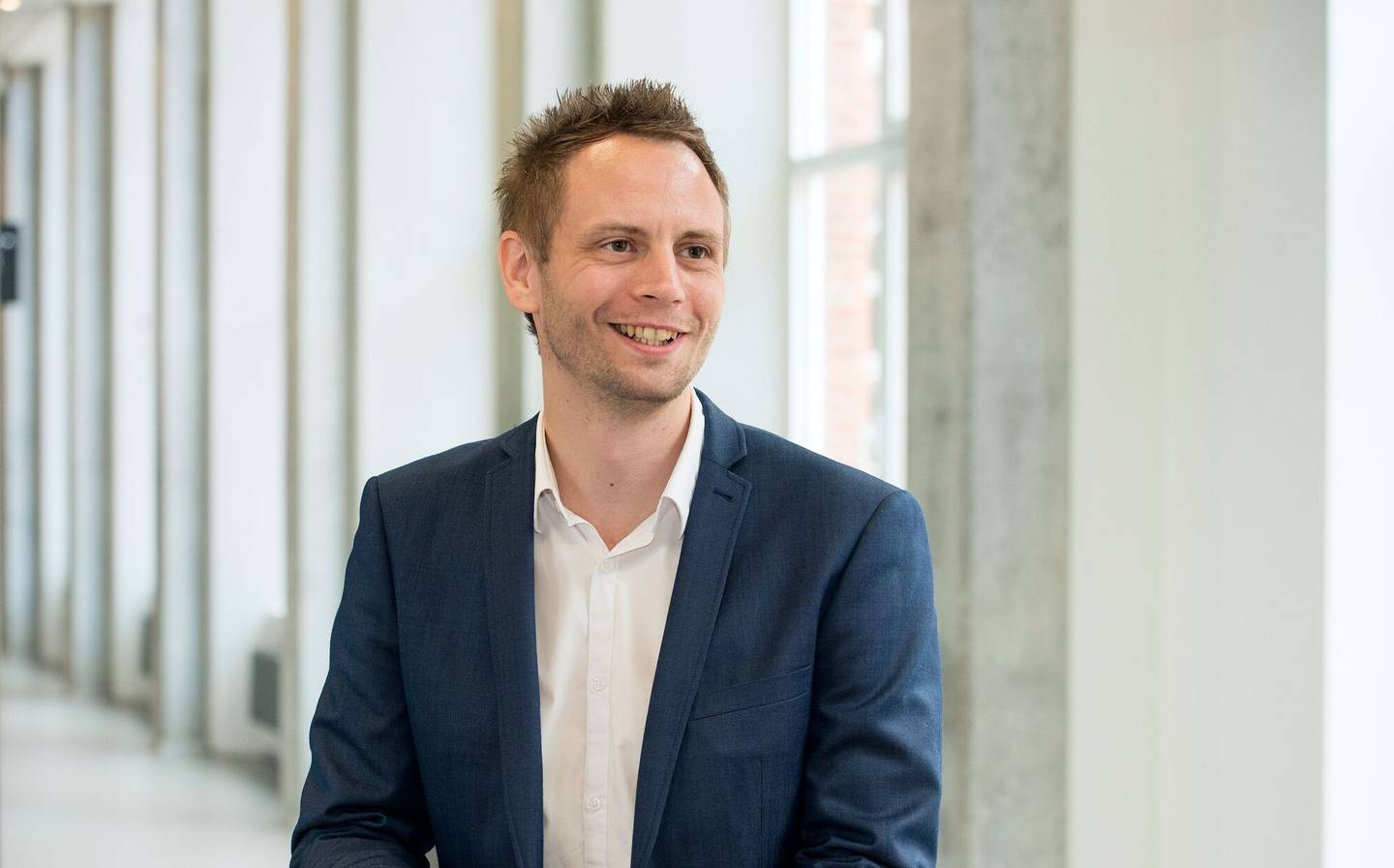
Geert Deconinck is a full professor at KU Leuven , leading the Electrical Energy Systems and Applications (ELECTA) research group within the Department of Electrical Engineering (ESAT). He also serves as scientific leader of the EnergyVille research center's algorithms domain, focusing on smart electrical networks and thermal systems. M.Sc. and Ph.D. from KU Leuven Head of ELECTA since 2012 (10 professors, 8 postdocs, 70+ PhDs) Over 8 million EUR research budget in last 5 years 44 completed PhDs and 10 current advisees IEEE Transactions editorial board member His research spans smart grid architectures , distributed control , and cyber-physical security , with recent focus on EV-grid integration , renewable energy democratization , and multi-carrier energy systems . Current projects include: Smart Charging - E-Mobility meets Renewable Energy Early Detection and Defense Systems for Smart Grids Open-source P2P energy sharing platforms Microgrid control strategies for PV-battery systems Awarded IET Fellow and IEEE Senior Member status, his work combines machine learning with power systems engineering through both theoretical modeling and experimental validation . He has contributed over 575 publications with 9800+ Google Scholar citations.
Frédéric Vrins is a Professor at the Louvain School of Management (LSM) , UCLouvain , affiliated with the Louvain Institute of Data Analysis and Modeling in economics and statistics (LIDAM) and Louvain Finance (LFIN). His work bridges theoretical and applied finance, with a focus on risk modeling, portfolio optimization, and machine learning applications. His research interests include: Quantitative Finance: Derivatives pricing, stochastic processes, and model calibration. Risk Management: Credit concentration risk, recovery rates, and wrong-way risk in financial markets. Portfolio Optimization: Mean-variance strategies, diversification metrics, and robustness under parameter uncertainty. Machine Learning in Finance: Applications to recovery rate prediction and option pricing frameworks. Recent publications highlight trends in: Credit risk modeling for Collateralized Loan Obligations (CLOs) and consumer credit. Machine learning integration in derivatives pricing and portfolio construction. Stochastic methods for Brownian bridges, CDS spreads, and recovery rates. Empirical studies on Loan-to-Value policies and business cycle impacts. Affiliations and locations: Louvain School of Management (LSM) - Building B, Chaussée de Binche 151, 7000 Mons Louvain Finance (LFIN) - Traverse d'Esope 1, 1348 Louvain-la-Neuve Louvain School of Management (LSM) - BATA Building, Chaussée de Binche 151, 7000 Mons
Maarten De Vos is a Professor at the Department of Electrical Engineering (ESAT) , KU Leuven , with dual appointments in the Faculty of Medicine and Faculty of Engineering Science . He leads interdisciplinary research at the intersection of artificial intelligence and biomedical signal processing.
Helen Lu is an Associate Professor of Accounting and AI at Vlerick Business School and a Senior Lecturer at the University of Auckland (FinTech Lead for the Master's in Business Analytics). She holds a PhD in Finance from Massey University, an MBA from London Business School, a Master's in Economics (Macroeconomics) from Peking University, and a Bachelor's in Computer Science Engineering from Northern Jiaotong University. Her research focuses on integrating AI into accounting and finance, including valuation, return predictability, ESG disclosure, executive succession, and FinTech disruptions. Before academia, Lu worked in investment banking at Credit Suisse and Deutsche Bank, specializing in capital raising and cross-border M&A in Asia-Pacific. Her work bridges academic research and industry practice, particularly in leveraging AI to solve complex financial and accounting challenges. She has published in top journals like the Journal of Accounting Research , Journal of Banking and Finance , and Journal of International Money and Finance . Her recent publications emphasize AI-driven valuation methods, ESG disclosure analysis, and the interplay between executive transitions and financial reporting. Her articles often highlight the application of machine learning to traditional finance problems, such as tail risk assessment and anomaly strategy correlations. Lu’s expertise spans multiple domains, with a focus on transforming data-driven technologies into actionable insights for financial decision-making. She actively contributes to academic discourse on sustainability metrics, particularly green asset valuation and corporate governance during crises.
Ruben Snellings is a Professor at the KU Leuven , affiliated with the Institute for Sustainable Metals and Minerals and the Division of Geology . His research focuses on sustainable cementitious materials, mineral carbonation, and valorization of industrial by-products in construction. He actively contributes to RILEM technical committees, including TC 309-MCP and TC 267-TRM, establishing terminology and testing protocols for carbonation-based construction products. Research Highlights Advancing low-carbon binders through co-calcination of waste materials Investigating hydration kinetics and reactivity of supplementary cementitious materials (SCMs) Developing CO2 mineralization techniques for sustainable construction Technical Contributions Co-developing standardized R3 reactivity tests for SCMs Leading interlaboratory validation studies for binder performance Environmental Focus Reducing environmental leaching via carbonation of metallurgical slags Optimizing circular economy approaches for concrete recycling
Piet Desmet is a full professor at KU Leuven's Faculty of Arts, serving as vice rector of KU Leuven, Kulak Kortrijk Campus, and academic director of the Office of the Academic Director, Bruges Campus. He leads multiple research divisions including itec and its Language and Technology subdivision, and is a member of Leuven.AI - KU Leuven Institute for Artificial Intelligence. As general coordinator of itec and academic director of the imec smart education research program, he oversees significant research initiatives spanning multiple campuses. Desmet's research focuses on the intersection of language learning and technology, with particular expertise in Second Language Acquisition and Technology, Computer-assisted Language Learning (including AI-based chatbots), Learning Analytics, and Language Technology and Corpus Linguistics. His work explores intelligent feedback systems, linguistic complexity prediction, adaptive testing, and natural language processing applications for educational contexts. His research spans theoretical linguistic frameworks to practical educational implementations, with a strong emphasis on empirical validation of technological interventions in language learning. Analysis of Desmet's recent publications reveals a strong trajectory toward integrating artificial intelligence with language education, particularly through conversational AI and learning analytics. His work increasingly focuses on chatbot-assisted language learning, adaptive assessment systems powered by large language models, and the application of computational linguistics to educational problems. The publications demonstrate a consistent methodological approach combining theoretical linguistics with empirical educational research, often employing eye-tracking, ERP studies, and learning analytics to evaluate effectiveness. Desmet actively supervises numerous PhD students and leads multiple major research projects including Smart Education at Schools (2025-2026), Enhancing EFL Learners' Speaking Ability through Chatbot-Assisted Dynamic Assessment Powered by LLMs (2024-2028), and the Flanders Ed Tech Hub (2022-2025). His research portfolio demonstrates significant funding success across multiple national and international initiatives focused on educational technology and language learning. As head of itec (an imec research team at KU Leuven), Desmet leads a substantial research ecosystem focused on smart education technologies. The itec team collaborates extensively with Leuven.AI and the KU Leuven Educational Research Institute (LIVO), creating a multidisciplinary environment that bridges computational linguistics, educational psychology, and artificial intelligence. Recent initiatives include the 'AI in Education' online training course and the network for Edtech and Learntech in Flanders.
Ingrid Moerman is a part-time Professor at Ghent University and a staff member at the Internet Technology and Data Science Lab (IDLab), a core research group of imec embedded within Ghent University and the University of Antwerp. She coordinates mobile and wireless networking research and leads a team of over 30 researchers at Ghent University, with extensive involvement in European and national funding initiatives. She received her Electrical Engineering degree (1987) and Ph.D. (1992) from Ghent University. Her research spans collaborative networks, cognitive radio, software-defined radio, IoT, LPWAN, and high-density wireless access, emphasizing experimentally-supported development of next-generation wireless systems with practical implementations in spectrum management and real-time control. Recent publications (2024-2025) reveal a strong pivot toward AI-integrated wireless networking, featuring OFDMA scheduling innovations, Wi-Fi 6/7 interference mitigation, and time-sensitive networking for industrial applications. Key trends include 5G/6G convergence, vehicular communication enhancements, and digital twin frameworks for network observability, reflecting her focus on mission-critical industrial use cases. Her accolades include: 9 Best Paper Awards 2 FWO Prizes (Research Foundation - Flanders) IMEC Prize of Excellence 2001 MSc Thesis Award (as promoter) Best Demo/Exhibit Award at ICT 2013 DARPA Spectrum Collaboration Challenge Prize ($750,000) She has coordinated major EU projects (FP7/H2020: CREW, WiSHFUL, eWINE, ORCA) with industry partners, securing substantial funding for experimental wireless research. Her grant portfolio emphasizes collaborative innovation in spectrum sharing and neutral-host architectures for multi-operator environments. At IDLab, she directs advanced wireless testbeds supporting real-world validation of technologies like openwifi and White Rabbit, with active experimentation in time-sensitive networking and spectrum collaboration for industrial IoT deployments.
Wout Weijtjens is a Research Fellow at Vrije Universiteit Brussel, affiliated with the Acoustics & Vibration Research Group in Applied Mechanics. His research focuses on structural health monitoring (SHM) of offshore wind turbines, fatigue analysis, and vibration-based damage detection using advanced signal processing and machine learning techniques. Current projects include FIRMEST (fatigue assessment of offshore wind turbine substructures) and FOOS (Forced Oscillations in turbines). His research interests span: Operational modal analysis for offshore structures Machine learning applications in SHM Fatigue life prediction under environmental variability Sensor networks for infrastructure monitoring Wind turbine dynamics under harsh conditions Recent publications demonstrate a consistent focus on developing predictive maintenance frameworks through multivariate sensor data analysis, uncertainty quantification in SHM systems, and validation of computational models against full-scale field measurements. Article trends emphasize machine learning integration with physical models for improved fatigue life assessment. Awards and recognitions include: Best Paper Award (2nd place, 2022) Poster Award (2017) Solvay Award (2015) As principal investigator on multiple grants including VLADBC7 and VLADBC9 projects, he supervises PhD candidates in vibration-based SHM and leads experimental validation at OWI-Lab's Large Climate Chamber. His team develops IoT monitoring solutions for civil infrastructure through the SMART TOWERS initiative.
Femke De Backere is a part-time Associate Professor at Ghent University's IDLab research group (Faculty of Engineering and Architecture, Department of Information Technology) and a full-time Senior Scientist at imec. She holds a Bachelor's in Informatics and Master's in Computer Science Engineering from Ghent University, with doctoral research focused on semantic technologies and personalized healthcare systems through collaborations with intensive care units and industry partners. Her research integrates computer science, health psychology, and movement science across three primary domains: (1) developing explainable knowledge models, (2) creating personalized context-aware systems, and (3) designing engagement mechanisms like serious games and gamification. Current projects include digital interventions for cancer survivors, VR-based ecological validity platforms, and physical activity promotion in older adults. Recent publications (2020-2025) demonstrate strong focus areas: 60% address personalized health interventions using machine learning and ontologies; 30% explore virtual reality applications in clinical and behavioral contexts; and 10% examine academic systems development . Longitudinal trends show increasing emphasis on sensor-driven behavioral analytics and adaptive eHealth platforms. She leads significant research initiatives including: GRAY – Ghent University Research for Aging Young (2020-2030) FWO projects on eHealth self-management for cancer survivors and sedentary behavior interruption Interdisciplinary grants for VR-enabled consumer preference studies and physical activity interventions Her lab coordinates doctoral training for 9+ students and collaborates with the eBehaviourChange research unit, focusing on technology-mediated behavior modification across clinical and wellness domains.
Prof. Keikhosro Karimi is a Professor in the Department of Bio-engineering Sciences at Vrije Universiteit Brussel. His research focuses on sustainable biorefinery systems, waste valorization, and biofuel production. Key areas include biomass pretreatment, bioenergy optimization, and circular economy strategies for industrial and agricultural residues. Research Projects STEP-Chem (2025–2029): Technological strategies for a sustainable chemical industry. IPSU 2024: Smart biorefinery concepts for municipal biowaste valorization in Europe. Research Interests Prof. Karimi’s work integrates advanced pretreatment technologies, machine learning optimization, and life cycle assessment to address sustainability challenges in bioenergy systems. He explores innovative approaches for converting lignocellulosic biomass, marine macroalgae, and food industry byproducts into biofuels, biochemicals, and high-value materials. Recent Contributions Recent studies highlight breakthroughs in ultrasound-assisted biomass processing , fish waste biorefining , and blockchain-enabled food waste management . His work emphasizes scalability, economic viability, and environmental impact mitigation in bioprocess design. Grants & Collaborations Active collaborations include EU-funded initiatives and industry partnerships focused on bio-based economies. Ongoing projects aim to harmonize technological, socio-economic, and environmental dimensions of sustainable chemical production.
Kevin De Pauw is a postdoctoral researcher at the Department of Physiotherapy, Human Physiology and Anatomy at Vrije Universiteit Brussel (VUB). He actively contributes to 12 research projects with a focus on robotics, mental fatigue, brain physiology, and sports physiotherapy. Current projects include Brubotics, APEX, and TBrainBoost Collaboration network spans Belgium, Germany, and Netherlands Key research themes: Mental Fatigue (100%), Robotics (100%), and Prosthetics (52%) Research Interests: His work explores the intersection of brain physiology, fatigue mechanisms, and robotics applications in rehabilitation. He develops predictive musculoskeletal simulations and investigates inter-limb asymmetry in athletes. Article Trends: Recent publications show increasing focus on robot-assisted rehabilitation , brain neuroplasticity , and mental fatigue quantification . Research combines AI-driven wearable robotics with neurophysiological monitoring . Student Supervision: He mentors Master's students in topics related to Lower limb asymmetry analysis Adolescent cognition-fitness relationships Exoskeleton interface design Laboratory Affiliation: Member of Brubotics and TBrainBoost teams at VUB, working on sustainable human-centered robotics and neurocirculation enhancement technologies.
Moharram Challenger is a tenure-track Assistant Professor in the Department of Computer Science at the University of Antwerp's Faculty of Sciences. Previously, he served as an assistant professor at Ege University (2017-2018) and as a post-doctoral researcher at the University of Antwerp (2019-2020) working on Flanders Make projects PACo and DTDesign. His academic journey includes R&D leadership roles at UNIT IT Ltd. (2012-2016), post-doctoral research at Wageningen University (2016-2017), and tenure-track faculty positions at IAU-Shabestar University (2005-2009). His research spans Cyber-physical Systems , Multi-agent Systems , and Domain-specific Modeling Languages , with recent publications focusing on quantum machine learning, digital twinning, and IoT optimization. Key projects include ITEA ModelWriter, ITEA Assume, and Flanders Make initiatives. His work demonstrates strong integration of model-driven engineering with emerging technologies like quantum computing and reinforcement learning. Challenger actively contributes to the academic community as a member of IEEE and ACM . His publication record shows consistent output across top venues, with 2025 featuring significant work in quantum-enhanced learning and CPS security. Current research emphasizes practical applications in drone energy modeling, medical diagnostics, and industrial IoT systems. His advising activities focus on cyber-physical systems and agent-based modeling, supported by grants from TUBITAK and Flanders Innovation & Entrepreneurship. Key collaborations include European ITEA projects and partnerships with industrial entities through UNIT IT Ltd. Challenger maintains active development through GitHub repositories related to code refactoring, model-driven engineering, and legacy system modernization, reflecting his commitment to practical software engineering solutions.
Philippe Baecke is a Professor of Business Analytics and Artificial Intelligence at Vlerick Business School, where he also serves as Programme Director for the Master in Business Analytics & AI and two executive programmes. He holds adjunct roles as Lecturer at Trinity Business School, Ireland, and Professor at the University of Namur. He earned his Doctorate in Applied Economics from Ghent University, complemented by an Advanced Master and Master in Applied Economics, both from Ghent University. His research focuses on leveraging big data analytics across marketing, operations, and finance, with specialties in digital marketing, customer relationship management, and network analysis. Notable areas include ad targeting, spatial modeling, and the application of AI in call center optimization and emotion recognition. He advises companies like KBC, ING, and Telenet on data strategy, blending strategic and operational insights. His recent work explores digital transformation trends, cost-effective AI adoption for SMEs, and the integration of human judgment in forecasting systems. He has published extensively in peer-reviewed journals, addressing topics like telecom data monetization, churn detection, and consumer privacy in addressable TV advertising. Baecke’s expertise also extends to vehicle telematics in insurance risk selection and spatial econometrics in customer acquisition modeling. He has collaborated on projects involving Bluetooth tracking in retail environments and the analysis of urbanization effects on customer behavior.
Ronny Bruffaerts serves as a Professor at KU Leuven's Faculty of Medicine within the Department of Neuroscience. He leads the Psychiatry Research Group (ON5 unit) and holds significant institutional roles including membership on the Faculty Council of Medicine, Doctoral Committee for Medicine, and Departmental Council of Neurosciences. His work is integrated with major university institutes including the KU Leuven Brain Institute (LBI) and the Institute for Child and Youth (LC&Y). Primary Affiliation: Psychiatry Research Group, Department of Neuroscience Institute Memberships: KU Leuven Brain Institute, Institute for Child and Youth Governance Roles: Faculty Council, Doctoral Committee, Departmental Council Bruffaerts' research focuses on psychiatric epidemiology with specialization in emergency psychiatry, research methodology, and psychological diagnostics. His work examines mental health patterns in college student populations globally through the World Mental Health International College Student initiative. Key investigations include suicidal behavior trajectories, mental disorder comorbidity, childhood adversity impacts, and LGBTQ+ mental health disparities across diverse cultural contexts. His methodological expertise spans longitudinal modeling, cross-national survey design, and machine learning applications for risk prediction. Analysis of his recent publications reveals dominant research trends in global college student mental health, with emphasis on longitudinal disorder progression, cross-cultural comparisons of mental health service utilization, and innovative applications of machine learning for suicide risk prediction. His work consistently leverages large multicountry datasets from the World Mental Health surveys, demonstrating strong methodological rigor in epidemiological study design. Bruffaerts actively leads multiple major research projects including: Psychische stoornissen bij transplantatiepatiënten (2025-2029) Middelengebruik en -misbruik bij universiteitsstudenten (2023-2027) Evaluatie van Psychiatrische High and Intensive Care in België (2023-2027) Perinatale depressie: Van prevalentie tot preventie (2022-2026) His projects typically involve international collaborations and focus on translating epidemiological findings into clinical practice improvements, particularly regarding mental health monitoring systems and innovative care models. He contributes to mental health infrastructure through development of the public health monitor for mental health (2022-2024) and evaluation of psychiatric high-care models in Belgium. His work bridges population-level epidemiology with clinical implementation, particularly in emergency psychiatry contexts and university mental health services.
Herman Terryn is a Professor at Vrije Universiteit Brussel, specializing in Materials and Chemistry. His primary research focuses on surface analytical techniques, electrochemical reactor design, and corrosion studies of aluminum and magnesium surfaces. He has led over 100 projects and authored 842 publications, demonstrating expertise in coatings, corrosion mechanisms, and material degradation. Expertise: Surface treatments, electrochemical analysis, and corrosion prevention Key Projects: Includes predictive machine learning for corrosion damage and sustainable additive manufacturing His research integrates experimental and computational approaches, such as FEM modeling and sensor-based methodologies. Notable contributions include studies on lithium carbonate inhibitor leaching and hydrogen evolution in EV coolants. Awards: European Corrosion Medal (2014), Fellow CSCP (2019), Franqcui Chair (2016) He supervises PhD students and actively participates in international conferences, showcasing innovations in 3D printing for biomedical applications and corrosion-resistant materials. His work bridges fundamental science with practical engineering solutions, addressing industrial challenges in sustainable materials.