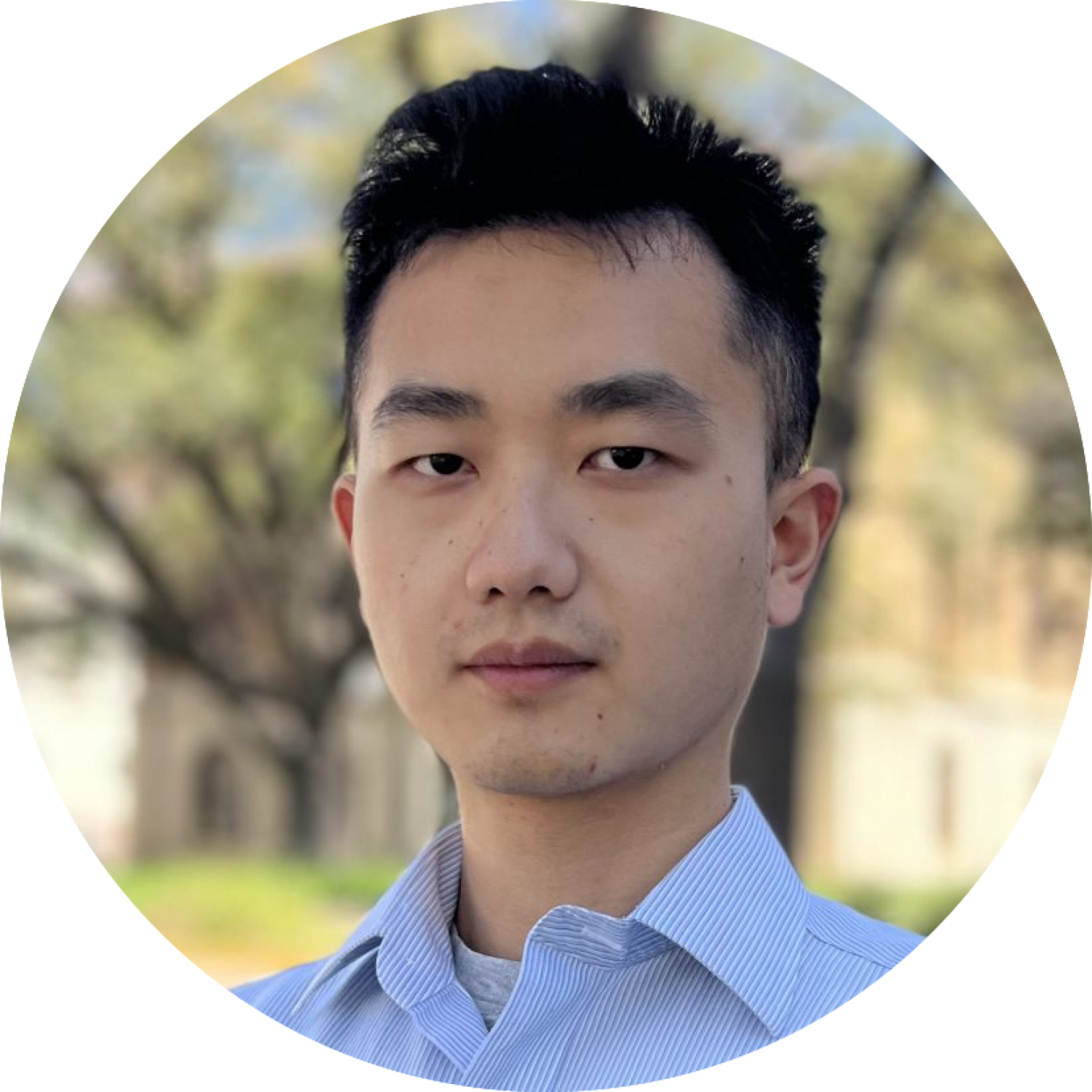
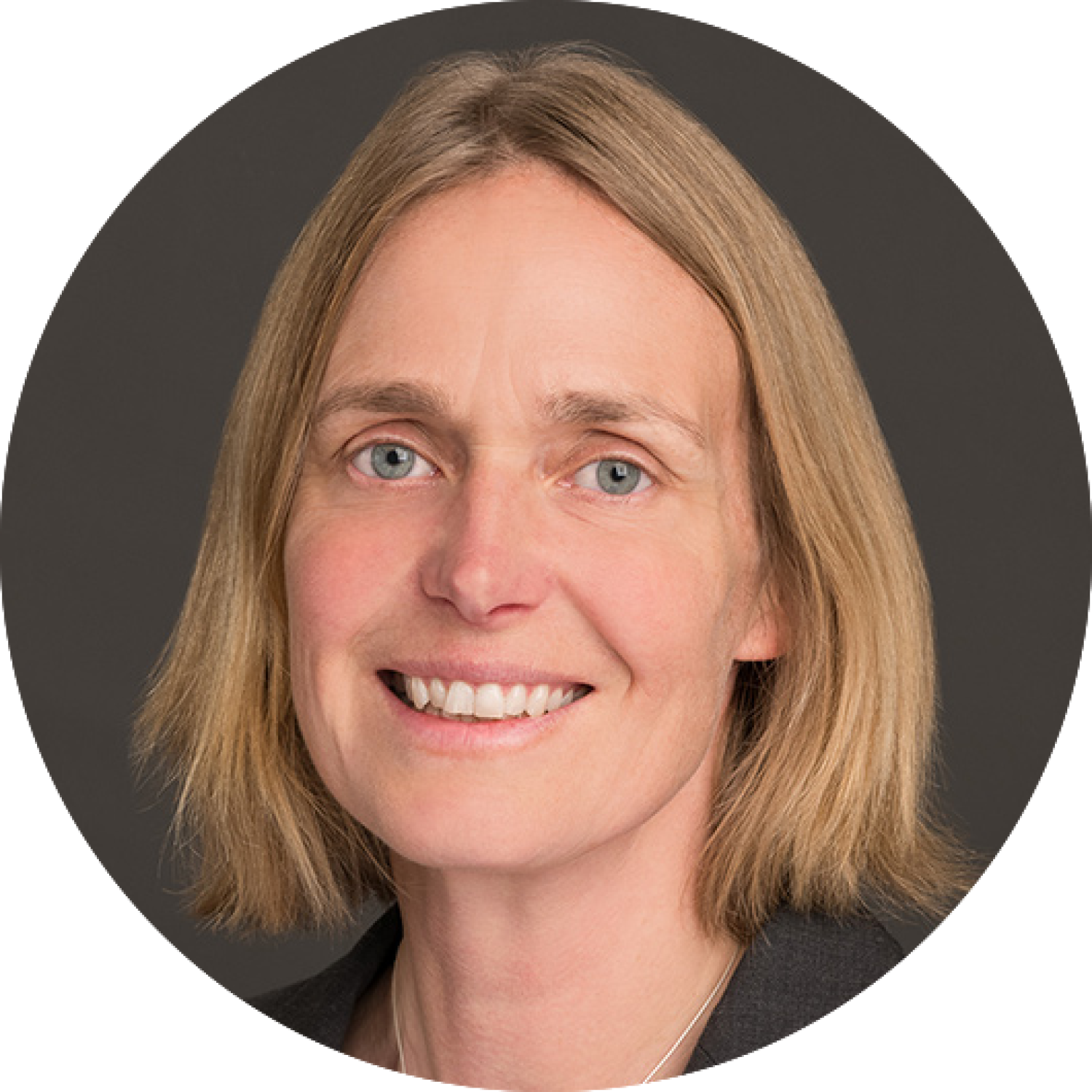
Jetmir Haxhibeqiri is a Postdoctoral Researcher at Ghent University 's Faculty of Engineering and Architecture , Department of Information Technology. His work focuses on Time-Sensitive Networking (TSN) over wireless systems, WiFi optimization, and Industrial IoT solutions. Key projects: IMEC Postdoctoral Fellowship Collaborations: Jeroen Hoebeke (UGent), Ingrid Moerman (UGent), Xianjun Jiao (UGent) Research Interests : Wireless network coordination, SDN integration for heterogeneous networks, low-latency communication, and machine learning applications in network optimization. Specialized in WiFi-LPWAN coexistence , In-Band Network Telemetry , and Cross-Technology Synchronization . Recent Publications : 2025 work on Wi-Fi-UWB synchronization, 2024 studies on coordinated spatial reuse in WiFi 7, and 2022 research on hardware-efficient PTP clock synchronization. Contributions span from theoretical models to practical implementations in industrial environments. Technical Expertise : Network densification strategies, interference management, and performance evaluation of large-scale wireless deployments. Developed simulation frameworks for LoRaWAN and WiFi TSN, with a focus on ns-3 validation. Education : PhD in Industrial Wireless Communication (2019, Ghent University).
Kaiyi Ji is an Assistant Professor in the Department of Computer Science and Engineering at the University at Buffalo, SUNY. He earned his PhD in Electrical and Computer Engineering from Ohio State University in 2021 and completed a postdoctoral fellowship at the University of Michigan. His research focuses on large-scale optimization, machine learning, and foundation models. PhD: Electrical and Computer Engineering, Ohio State University (2021) Postdoc: University of Michigan (2022) BSc: University of Science and Technology of China (2016) Research interests include bilevel optimization, multi-task learning, continual learning, and AI4Science, with applications in robotics and crystal property prediction. Recent work explores efficient algorithms for LLM training and optimization. His publications span top venues like ICLR, ICML, NeurIPS, and IEEE Transactions on Information Theory. He received the CSE Junior Faculty Research Award (2023) and NSF CAREER Award (2025). He advises PhD students and actively participates in departmental service as Associate Chair for Graduate Student Admissions and organizer of academic workshops.
Stavros Demetriadis is a Full Professor at the School of Informatics, Aristotle University of Thessaloniki, Greece. His research focuses on Learning Technologies, including Conversational Agents in Education, Learning Analytics, Computer-Supported Collaborative Learning (CSCL), Computational Thinking, and Massive Open Online Courses (MOOCs). He has led EU-funded projects like colMOOC and developed educational tools such as 'pytolearn' for Python instruction and 'Cubes Coding' (winner of Open Education Challenge 2014 and NUMA Competition 2014). He has supervised 5 completed PhD theses, 4 ongoing PhDs, and over 60 Master’s theses. Academic Appointments: Full Professor (2020–present), Associate Professor (2015–2020), Assistant Professor (2012–2015), Lecturer (2002–2008), Informatics Teacher (1989–2002) Education: PhD in Multimedia Technology in Education (2000), MSc in Electronic Physics (1986), BSc in Physics (1983) His work bridges AI and education, with over 161 publications and an h-index of 27. Recent research explores ChatGPT integration, ethics in Learning Analytics, and AI-driven assessment tools. He has delivered invited talks at institutions like the University of Valladolid (2024) and coordinates the 'Teachers' Fast-paced Distance Training on Tele-education' project. Awards include three international best paper awards and recognition for his 'Cubes Coding' project. Key Research Contributions: Developed frameworks for Conversational Agents in CSCL Innovated Computational Thinking pedagogy through robotics Explored ethics and culture in Learning Analytics adoption Created Python-based MOOCs for non-programmers He has taught courses like Human-Computer Interaction and Learning Analytics, and led short programs on Conversational AI. His collaborations span institutions in Spain, Denmark, and Greece. ORCID: 0000-0002-1561-6372; Google Scholar, Semantic Scholar, and Scopus profiles list his extensive output.
Philipp Haindl is a lecturer at the Department of Computer Science and Security at St. Poelten University of Applied Sciences. His work focuses on software engineering, cybersecurity, and AI integration in education and manufacturing. Software Engineering Cybersecurity Artificial Intelligence DevOps Quality Assurance Research Interests: Dr. Haindl explores software metrics, inter-service security in microservices, and AI tools like ChatGPT in programming education. He investigates quality models and non-functional requirements in DevOps environments. Publications: Recent work includes studies on ChatGPT's impact in software engineering education, systematic reviews of microservice security, and frameworks for human-AI teaming in manufacturing.
Emilia Mendes is a Full Professor in the Department of Electrical and Computer Engineering at Aarhus University . Her research focuses on Empirical Software Engineering , particularly human-centric approaches, evidence-based decision-making, and the application of machine learning and statistical techniques in software development. Current research themes: Human-Centric Software Engineering, Evidence-Based Research, Statistical/Machine-Learning Techniques, and Value-Based Software Engineering. Developed tools for team climate forecasting, capability measurement, and value-based decision-making. Research Trends: Her work bridges software engineering with psychology (personality traits, team dynamics), machine learning (effort estimation, dementia prognosis), and value-based frameworks for decision-making. She emphasizes industrial applications, including agile methodologies, cross-company predictions, and Bayesian network modeling. Scientific Impact & Awards: 10,018 citations, h-index 58. Ranked #32 in Empirical Software Engineering Scholars (Google Scholar). Ranked #20 in Top Computer Science Scientists in Sweden (2023). Top 2% scientist in the world (2019, 2020, 2022; only female in Sweden for SE in 2022. Nine best paper awards at international conferences. Editorial board member: Information and Software Technology , ACM Computing Surveys , former roles at IEEE Transactions on Software Engineering and others. Grants & Leadership: Awarded €11.921.603 in research grants. Held leadership roles as General Chair (EASE 2017), PC Co-Chair (EASE 2012, ESEM 2012), and active participant in 200+ academic events.
Benjamin Lubin is a Clinical Associate Professor in the Information Systems Department at Boston University's Questrom School of Business. He holds office 621A in the Rafik B. Hariri Building at 595 Commonwealth Avenue, Boston, MA 02215. His academic journey began with a Bachelor's degree in Computer Science from Harvard University in 1999, followed by six years working at BBN Technologies, where he contributed to advanced multi-agent modeling, scheduling, and logistics systems. He later returned to Harvard to complete his Ph.D. at the intersection of computer science, game theory, and economics. Dr. Lubin's research spans three primary areas: (1) mechanism design, particularly combinatorial auctions and exchanges that support efficient reallocation of goods with complex participant preferences; (2) application of spectral graph theory to advance social network analysis; and (3) leveraging network science and machine learning to improve healthcare delivery systems. His work demonstrates a consistent pattern of bridging theoretical computer science with practical economic applications, with recent publications showing increasing focus on healthcare applications while maintaining strong contributions to auction theory and network analysis. His research has been supported by significant funding from NIHCM and the Veterans Administration, and he has received prestigious recognition including the Siebel Fellowship and Yahoo Key Technical Challenge award. Dr. Lubin has mentored numerous graduate students including PhD candidates Vatche Ishakian, Marisabel Guevara, and Sarah Zheng, as well as Master's students Benedikt Buenz and Michael Weiss. Siebel Fellowship Yahoo Key Technical Challenge award As an educator, Dr. Lubin teaches several courses including IS 710 (Core MBA Class on Information Systems), IS 716 (Accelerated Part-Time Evening MBA), IS 717 and IS 756 (MSMBA Intensives), and QD601x (Business Experimentation on edX). His teaching materials include innovative approaches like using adventure games to teach web development and creating practical exercises for understanding analytics in business contexts. He has developed several software tools including JOpt for MIP programming, the Iterative Combinatorial Exchange market software, InvEigen for inverse eigenvector problems, SpectralGOF for network model goodness-of-fit testing, and SATS for spectrum auction instance generation.
Barbara Namer is an Adjunct Professor at Friedrich-Alexander University Erlangen-Nuremberg and leads the IZKF-funded "Neuroscience: translational pain research" group at RWTH Aachen University Hospital. Her career spans 20+ years in neurophysiological pain research with clinical translations. Doctor of Medicine (2000-2004), Erlangen-Nuremberg Venia Legendi (Habilitation) in Physiology (2010) Adjunct Professor title (2018) Her research focuses on nociceptor mechanisms in diabetic neuropathy, migraine pathophysiology, and TRPA1 channel dynamics . Computational modeling and human microneurography techniques are central to her work. Key publication trends show expertise in peripheral nerve sensitization , diabetic pain mechanisms , translational pain modeling , and ion channel pharmacology . She has received multiple DGSS and German Neurology Society awards for her pain research. 2019 - DGSS Poster Award 2015 - DGSS Poster Award 2010 - EFIC Grünenthal Grant 2003 & 2018 - German Neurology Society Awards National and international collaborations include research stays in Norway and Sweden, with extensive grant funding from DFG and IZKF projects.
Juan Antonio Añel Cabanelas is a Professor of Earth Physics at the University of Vigo , affiliated with the EPhysLab research group and the Specialized Group on Atmospheric and Ocean Physics of the Royal Spanish Society of Physics . He serves as an Executive Editor for Geoscientific Model Development and an Associate Editor for PLoS Climate . PhD in Physics (2007) from the University of Vigo, thesis: Climatic analysis of the tropopause using radiosonde data Taught courses in Meteorology, Atmospheric Physics, Computational Science, and Renewable Energy at the University of Vigo and international institutions His research focuses on climate change impacts , upper troposphere-lower stratosphere dynamics , renewable energy modeling , and computational reproducibility in climate research . He emphasizes instrumental data recovery and open science , with recent work addressing stratospheric contraction and mercury cycling . Key publications span extreme weather-energy sector interactions , Fortran code quality , and ozone data analysis . He mentors PhD students in Physics and Computer Science, and has collaborated with institutions in Mexico, Portugal, and the private sector. He advocates for free software and has organized workshops on climate intervention and citizen science . His work is funded by public grants from Spain's Government, Xunta de Galicia, and private entities like Naturgy and Acciona, with computing support from Google and Microsoft.
Matteo Dal Peraro is an Associate Professor at École polytechnique fédérale de Lausanne (EPFL) in the School of Life Sciences, where he leads the Laboratory for Biomolecular Modeling (LBM) within the Interfaculty Institute of Bioengineering (IBI). He also holds significant administrative roles as Head of IBI-SV Administration and Co-Director of IBI-STI Administration, demonstrating his leadership across both the School of Life Sciences and School of Engineering. His research bridges computational approaches with experimental validation to understand complex biological systems at multiple scales. His educational background includes a B.S. and M.S. in Physics from the University of Padua (2000), followed by a Ph.D. in Biophysics from the International School for Advanced Studies (SISSA) in Trieste (2004). He then completed postdoctoral training at the University of Pennsylvania under Professor M. L. Klein before joining EPFL as a Tenure Track Assistant Professor in late 2007. Dal Peraro's research focuses on computational biophysics and multiscale modeling of biological systems, with particular emphasis on membrane-protein interactions, nanopore sensing technologies, and structural biology. His work spans fundamental molecular mechanisms to applied educational technologies, demonstrating a commitment to both scientific discovery and knowledge dissemination. He has made significant contributions to understanding protein-membrane interactions, antibiotic resistance mechanisms, mitochondrial disorders, and viral pathogenesis through advanced computational approaches. His publication record shows a strong trend toward integrating augmented and virtual reality technologies with molecular modeling, exemplified by his development of the moleculARweb platform for chemistry and structural biology education. His research spans computational methods development, structural characterization of biomolecules, membrane biophysics, and applications to medically relevant problems including antibiotic resistance and neurodegenerative disorders. This interdisciplinary approach connects fundamental biophysical principles with practical applications in medicine and education. Dal Peraro has mentored numerous doctoral students through EPFL's PhD programs, particularly in Computational and Quantitative Biology. His leadership extends to serving on PhD program committees and directing research groups focused on computational molecular biology. He has established collaborations across multiple disciplines, facilitating integrative approaches to complex biological problems. He leads the Laboratory for Biomolecular Modeling (LBM), which develops and applies computational methods to study biological systems at multiple scales. The lab bridges molecular simulations with experimental validation, creating a synergistic approach to understanding complex biological phenomena. Dal Peraro's team has made significant contributions to membrane biophysics, protein folding, and the development of educational technologies that make structural biology accessible through augmented reality platforms.
David Ardia is a Full Professor in the Department of Decision Sciences at HEC Montréal, promoted to this position on June 1, 2025. Previously, he served as an Associate Professor from June 2020 to May 2025. He holds the Research Professorship in Sentometry and is a member of the Study and Research Group on Decision Analysis (GERAD) and the International Statistical Institute. Ardia is also an elected member of the ISI Louis Bachelier Fellow and serves as Associate Editor for both the International Journal of Forecasting and the Journal of Statistical Software. His educational background includes a Ph.D. in Financial Econometrics from the University of Fribourg, a Master of Applied Sciences in Quantitative Finance from the Swiss Federal Institute of Technology Zurich and University of Zurich, and a Master of Science in Financial Engineering from the University of Neuchâtel. Ardia's research focuses on the intersection of quantitative finance, machine learning, and natural language processing, with particular emphasis on sentometrics (textual sentiment analysis in finance), risk management, and climate finance. His work spans financial econometrics, volatility modeling, and the application of advanced statistical methods to asset allocation and economic forecasting. He has pioneered methods for analyzing climate change concerns in financial markets and has made significant contributions to understanding green versus brown stock performance. His publication record shows a strong trajectory in high-impact finance and statistics journals, with recent work examining Robinhood trading patterns, cryptocurrency markets, climate finance, and innovative methodological approaches to financial time series analysis. His research demonstrates increasing focus on sustainability applications within quantitative finance. Prix de la qualité des données ouvertes 2024 (Canadian Open Data Community) Prix de recherche pour les professeures et professeurs agrégés (HEC Montréal, 2024) Prix pour l'excellence en pédagogie (HEC Montréal, 2022) Best Paper Award at the 38th International Conference of the French Finance Association Best Paper Award 2018-2019 from International Journal of Forecasting eRum 2020 COVID19 contest winner for the COVID-19 Data Hub Ardia actively supervises numerous graduate students, with over 70 mentorship activities documented in the past five years, spanning both thesis supervision and supervised projects. His research is supported by collaborations with institutions including IVADO, the R Consortium, and the University of Lugano. He co-created the influential COVID-19 Data Hub platform, which integrates epidemiological data with policy measures and spatial databases to analyze pandemic impacts. His research group focuses on developing computational tools for financial analysis, particularly through R packages like MSGARCH for Markov-switching GARCH models and sentometrics for textual sentiment analysis. This work bridges academic research with practical applications in financial institutions and policy analysis.
Zhi Li is an Assistant Professor at the University of Colorado Boulder's College of Engineering and Applied Science, Department of Civil, Environmental and Architectural Engineering. He leads the newly established Flood Lab, focusing on flood prediction and monitoring through remote sensing and coupled hydrologic-hydraulic models. Joined CU Boulder in Fall 2025 Former Dean's Postdoc Fellow at Stanford University PhD in Civil Engineering & Environmental Science from University of Oklahoma (2022) His research spans hydrological modeling , extreme events , and AI4Science applications, particularly in deep learning and intelligent agents for flood risk assessment. Li’s work also connects floods with public health and economic systems , aiming to develop the Flood-Agriculture-Climate-Economics-Disease (FACED) framework. Key Themes: High-resolution flood modeling Climate change impacts on hydro-meteorology Remote sensing integration Flood-agriculture interdependencies Global health implications Scientific Awards: Dean's Postdoc Fellow, Stanford Doerr School of Sustainability (2023) Hoving Fellowship, University of Oklahoma (2019) Li’s recent publications emphasize improved precipitation estimation (IMERG V07), Brown Ocean Effect studies, and Fourier neural operators for rapid flood forecasting. His collaborative work with NOAA and NASA focuses on comparing ground-based and spaceborne radar systems for extreme event analysis.
Irina Overeem is an Associate Professor and Deputy Director of the Community Surface Dynamics Modeling System (CSDMS) at the Department of Geological Sciences, University of Colorado Boulder. Her research focuses on Earth surface process modeling, with emphasis on coastal and river geomorphology in remote and polar regions. PhD: Delft University of Technology (2002) MS: Wageningen University (1996) BS: Wageningen University (1993) Her work investigates sediment fluxes in Greenland rivers, Arctic coastal erosion, and floodplain sedimentation through integrated field studies and numerical modeling. She specializes in using CSDMS tools for predictive simulations of water, sediment, and nutrient fluxes across landscapes. Recent publications highlight her contributions to permafrost dynamics, carbon budgets in icy rivers, and FAIR principles for open-source geoscience software. Her research spans from fjord environments to high-mountain erosion dynamics. Science Communication Fellowship (2015) National Oceanographic Partnership Program Award (2010) Outstanding Student Award, Netherlands (1996) Tropenfonds scholarship (1994) She mentors graduate students in sedimentary process modeling, leads CSDMS working groups on coastal dynamics and education, and teaches courses in sedimentary systems modeling, geomorphology, and field methods. Her work combines field measurements with computational approaches in the Cryosphere and Surface Processes Lab.
Dr. Aris Dimeas is a Researcher at the National Technical University of Athens in the Department of Electric Power and Industrial Applications . He holds a diploma and PhD in Electrical and Computer Engineering from NTUA and has extensive experience in power systems operations, renewable energy integration, and smart grid technologies. Specialized in AI applications for power systems Developed control software for demand side management Consultant for PPC (2007-2012) Research Focus : Smart grids and digital twin implementations Renewable energy market dynamics Microgrid optimization and control algorithms Collaborations : Active participant in EU research projects, collaborating with HEDNO and other energy grid operators on electronic meters and intelligent network deployments. Teaching : Instructs courses on electric energy systems, power system analysis, and energy management.
Richard B. Brown is the Dean of the College of Engineering at the University of Utah, a position he has held since 2004. Under his leadership, the College has experienced remarkable growth, with research expenditures increasing from $30 million to $97 million annually and student enrollment more than doubling to over 6,000 students. Brown is also a distinguished professor whose research has significantly advanced miniature technology and sensor development. Dr. Brown earned his bachelor's and master's degrees in electrical engineering from Brigham Young University in 1976, followed by a Ph.D. in electrical engineering from the University of Utah in 1985. After 19 years as a faculty member at the University of Michigan, he returned to Utah as Dean of Engineering. His academic journey reflects a deep commitment to both research excellence and educational innovation. Dr. Brown's research focuses on miniature technology, particularly solid-state chemical sensors and integrated circuits. His pioneering work includes developing miniature ion-selective electrodes, enzymatically- and immunologically-coupled sensors for complex biological molecules, and amperometric sensors for heavy metals and neurochemicals. His research group was first to incorporate both electrical and chemical sensors on silicon brain probes and first to differentiate spoken words from microelectrode arrays on human brains. His work spans high-speed microprocessors to low-power, implantable electronics, with significant commercial applications through multiple startups. Dr. Brown has authored 225 peer-reviewed publications, including one cited over 3,400 times, and holds 21 patents. His research has led to four successful companies: i-SENS (glucose sensors), Sensicore (chemical sensors), Mobius Microsystems (silicon clock generators), and e-SENS (water chemistry sensors). Industry applications include 1.7 million glucometers and 1.4 billion test strips sold annually. Life Fellow of the IEEE Fellow of the National Academy of Inventors Utah Governor's Medal for Excellence in Science and Technology University of Utah's Rosenblatt Prize (2018) Inaugural holder of the H.E. Thomas Presidential Endowed Dean's Chair (2020) As an educator, Dr. Brown has mentored 31 PhD students who have become leaders in their fields. His innovative integrated circuit design curriculum has transformed how this subject is taught worldwide. Under his leadership, diversity in the College has significantly increased, with women students growing from 10% to 20% and Students of Color from 20% to 34% of the student body, with retention rates for these groups exceeding those of their counterparts. His work with industry through departmental advisory boards has led to programs addressing workforce needs, including the Master of Software Development and systems engineering certificate. Dr. Brown has established strong industry connections through industrial advisory boards at both departmental and college levels. This engagement has resulted in programs tailored to industry needs, including a robust electrical power program, the Master of Software Development for career changers, and a systems engineering certificate developed in response to requests from companies like Northrop Grumman, which has 155 current openings for systems engineers. During the pandemic, he led the College in pivoting research to address COVID-19, with over a dozen faculty members focusing on detection, transmission, and prevention.
Paulo Jorge Freitas de Oliveira Novais is a Full Professor of Computer Science at the Department of Informatics, School of Engineering, Universidade do Minho, where he also holds a Habilitation in Computer Science. He leads the Synthetic Intelligence Lab at ALGORITMI Centre and coordinates the research line on Ambient Intelligence for Well-Being and Health Applications. His research spans Intelligent Systems, Machine Learning, Multi-Agent Systems, and their applications in Smart Cities, Health Informatics, and AI Ethics. PhD in Computer Science, Universidade do Minho, 2003 Habilitation in Computer Science, Universidade do Minho, 2011 Research interests include Ambient Intelligence, Ambient Assisted Living, Intelligent Environments, AI and Law, Conflict Resolution, and Explainable AI. His work focuses on enhancing system intelligence and reliability through novel architectures and ethical frameworks. Recent publications highlight applications in wastewater energy prediction, violence detection, student risk modeling, and urban logistics. Awards include multiple Best Paper and IBM Excellence recognitions across 2015–2023, plus a 2022 Career Recognition Award from the Ibero-American Society of Artificial Intelligence. Senior IEEE Member Chair of IEEE Computational Intelligence Chapter, Portugal IFIP TC 12 Artificial Intelligence Working Group Leadership He has supervised 132 PhD and Master’s students and contributed to editorial boards of journals like JAISE and ComSIS . His leadership roles include coordinating LASI – Intelligent Systems Associate Laboratory and serving as former president of APPIA.