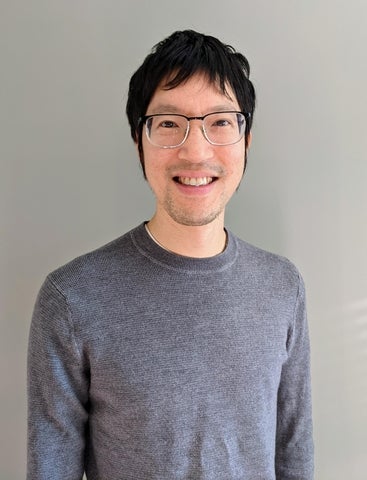
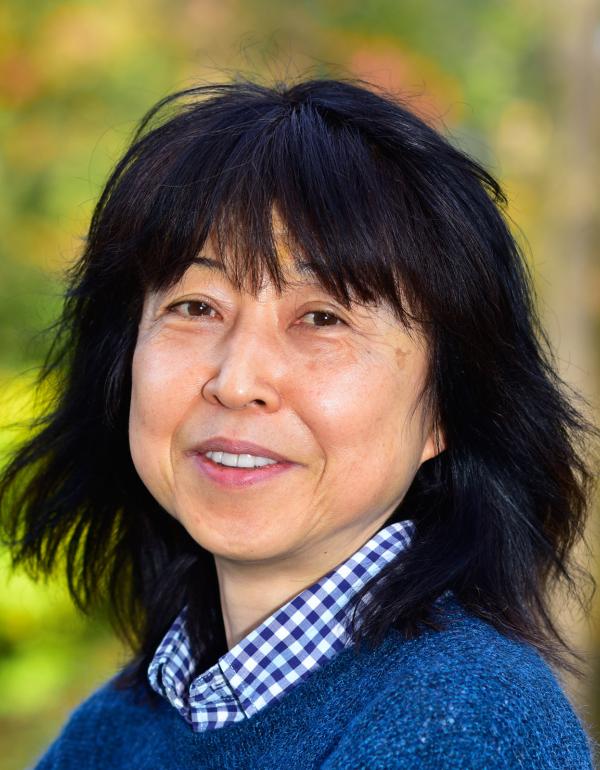
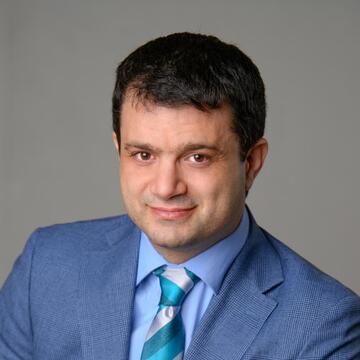
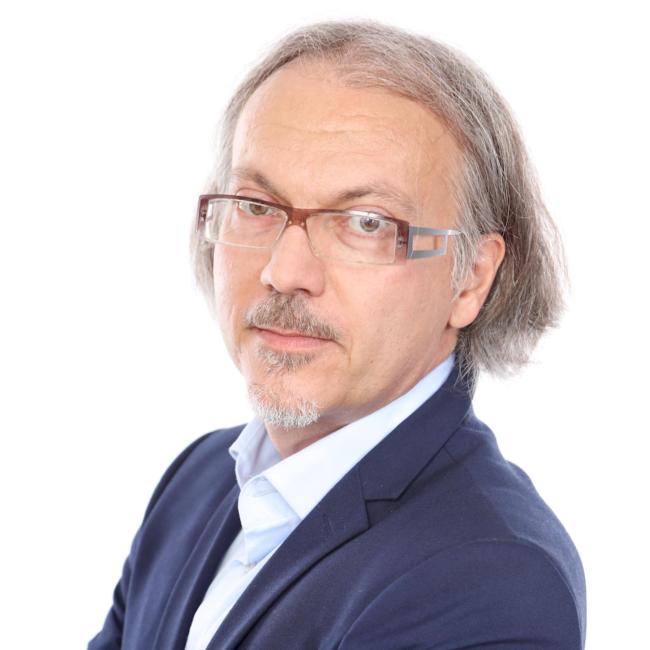
Dr. Samuel Wong is Associate Professor in the Department of Statistics and Actuarial Science at the University of Waterloo. His research develops statistical methods for complex data science problems in protein structure analysis, dynamic systems inference, and materials reliability. Education includes PhD from Harvard Statistics Department (2013). Research addresses challenges in conformational sampling for protein folding, inference for differential equation models, and uncertainty quantification in materials science. Leads development of MAGI software for manifold-constrained Gaussian processes. Publications showcase innovations in Sequential Monte Carlo methods, spatial data fusion, and Bayesian approaches to industrial problems. Recent work focuses on protein structure variability and COVID-19 transmission modeling. Supervises graduate students in Bayesian analysis and computational statistics. Teaches courses including Analysis of Spatial Data and Applied Linear Models.
Rudolf Ramler is an External Lecturer at TU Wien's Faculty of Informatics, Department of Information Systems Engineering. He specializes in software testing methodologies, automated testing frameworks, and software quality assurance. His research focuses on improving testing practices for legacy systems, industrial automation software, and defect prediction in software projects. He teaches the Software Testing course (VU 188.280) in 2025S. His work spans empirical investigations, tool-supported testing, and systematic literature reviews. Ramler has contributed to projects like CDL-SQI (2018–2024), exploring practical approaches for testing industrial automation systems. Research interests include test code readability, automated testing strategies, and value-driven testing frameworks. His publications address challenges in retrofitting tests for legacy code, comparing manual and automated testing efficacy, and developing context-specific defect prediction models. He has collaborated with industry partners to apply academic research to real-world software engineering problems.
Mohammad Dehghani is an Associate Teaching Professor in the Department of Mechanical and Industrial Engineering at Northeastern University, where he also serves as Program Director of the Galante Engineering Business Program. He holds a Ph.D. in Engineering Management from Western New England University (2016), an M.S. in Industrial Engineering from Tarbiat Modares University (2011), and a B.S. in Industrial Engineering from Yazd University (2008). His research focuses on Reinforcement Learning (RL), Simulation Optimization, and Healthcare Operations, with applications in manufacturing, digital twin systems, and UAV routing. He has developed multiple courses in Industrial Engineering and Data Analytics, receiving the 2020 Fostering Engineering Innovation in Education Award and the 2025 DAIS Data Analytics Teaching Award. Education: Ph.D. in Engineering Management, Western New England University, 2016 M.S. in Industrial Engineering, Tarbiat Modares University, 2011 B.S. in Industrial Engineering, Yazd University, 2008 Dehghani’s research bridges AI and operations research, emphasizing practical applications. His work includes developing RL frameworks for manufacturing scheduling and UAV routing, as well as simulation-optimization models for healthcare and pandemic preparedness. He has collaborated on projects addressing supply chain resilience during the COVID-19 pandemic and multi-objective supplier selection processes. His publications span journals like Simulation and conferences such as Winter Simulation Conference (WSC). His honors include the 2015 Best Ph.D. Paper Award at WSC and recognition from the Institute of Industrial and Systems Engineers (IISE). He actively contributes to professional societies, including the American Society of Engineering Management and Institute of Industrial Engineers. His teaching focuses on integrating data analytics and simulation tools into engineering curricula, with courses emphasizing Python integration, simheuristics, and digital twin technology. Dehghani leads initiatives in the Galante Program to enhance engineering-business synergies, preparing students for industry roles through interdisciplinary training. His work emphasizes practical problem-solving, with grants supporting projects in healthcare logistics and sustainable construction in cold climates.
Dr. Kayo Ide is an Associate Professor at the University of Maryland's Department of Atmospheric and Oceanic Science, within the College of Computer, Mathematical, and Natural Sciences. Her research focuses on dynamics of atmosphere and oceans, with expertise in data assimilation, scientific prediction, transport/mixing processes, and climate variability. She contributes to NOAA's operational systems and collaborates with teams like the UFS Coastal Applications Team. Her work emphasizes integrating advanced observational technologies (e.g., satellite data from CrIS, Aeolus) into numerical weather prediction and ocean modeling frameworks. Key projects include optimizing data assimilation algorithms, evaluating new sensor constellations (e.g., CubeSats), and improving forecast initialization techniques. Dr. Ide also develops software tools like the System for Analysis of Wind Collocations (SAWC) to intercompare multi-platform wind observations. Publications highlight innovations in satellite data utilization, ensemble-based methods, and the impact of novel observing systems on operational forecasting. Her research bridges computational methods, environmental science, and applied meteorology, addressing challenges in global climate monitoring and predictive modeling.
Qiang Cui is a Professor of Computational Chemistry at Boston University, specializing in developing and applying advanced computational methods to study complex biomolecular systems. His research focuses on understanding mechanisms of enzymes, biomolecular machines, and bio-material interactions through multi-scale simulations, including quantum mechanical/molecular mechanical (QM/MM) approaches and coarse-grained models. Education: B.S., Chemical Physics, University of Science & Technology of China (1993) Ph.D., Physical Chemistry, Emory University (1997) Postdoctoral Associate, Harvard University (1998-2001) Research Interests: Development of novel computational techniques for simulating complex systems Study of energy transduction in molecular machines (e.g., myosin, DNA repair enzymes) Investigation of biomaterial interfaces and nanotechnology applications Protein allostery and mutational effects using machine learning Labs/Teams: The Cui Group at Boston University advances computational methodologies and collaborates on projects spanning biophysics, material science, and molecular biology.
Mustafa Hajij is an Assistant Professor in the Data Science program at the University of San Francisco. He holds a PhD in Mathematics from Louisiana State University, an MS in Computer Science, and completed postdoctoral training at University of South Florida and Ohio State University. Previously, he served as Assistant Professor at Santa Clara University and as an AI Research Scientist at KLA Corporation. His research develops foundational frameworks for topological deep learning, including cell complex neural networks and geometric learning architectures that operate beyond graph domains. He leads the NSF-funded project 'A Unifying Deep Learning Framework Using Cell Complex Neural Networks' (DMS-2134231, $547,626). Recent publications establish new paradigms for topological representation learning, including combinatorial complexes and simplicial networks, with applications in computational biology, 3D vision, and drug discovery. He organized the ICML Topological Deep Learning Challenges and develops open-source tools like TopoX for topological learning.
Boris Gutman is an Assistant Professor of Biomedical Engineering at Illinois Institute of Technology , affiliated with the Armour College of Engineering . He holds a Ph.D. and B.S. in Biomedical Engineering and Applied Mathematics respectively from the University of California, Los Angeles (UCLA) .
Paul Rosen is an Associate Professor at the University of Utah, affiliated with the Scientific Computing and Imaging Institute and the Kahlert School of Computing. He holds a Ph.D. in Computer Science from Purdue University (2010). Prior to his current role, he was an Assistant/Associate Professor at the University of South Florida (2015–2022) and a Research Assistant Professor at the University of Utah's SCI Institute (2010–2015). Research Focus: Rosen specializes in topology-based visualization techniques, with emphasis on network visualization, uncertainty quantification, and perceptual studies. His work bridges computational methods with human perception, aiming to enhance data understanding through effective visual design. Awards & Recognition: National Science Foundation CAREER Award (2019) Best Paper Awards at PacificVis 2016, IVAPP 2016, and multiple other conferences Honorable Mentions for IEEE VIS and VAST Challenge submissions Leadership: As General Chair of IEEE VIS 2024, Rosen led the planning for this flagship visualization conference, emphasizing community-driven design and in-person collaboration. Education Contributions: His research includes pedagogical innovations, such as predictive modeling for student feedback and peer review analysis in visual literacy courses.
Andreas J. Kassler is a Full Professor of Computer Science at Karlstad University, Sweden, where he has been since 2005. He co-chairs the Distributed Systems and Communication (DISCO) group and focuses on networking, cloud computing, and wireless networks. His research includes software-defined networking, future internet architectures, and network optimization. He has authored/co-authored over 130 peer-reviewed publications, holds 6 patents, and serves on editorial boards of journals like Journal of Internet Engineering . Education : Ph.D. in Computer Science, Universität Ulm (2002) Docent (Habilitation), Karlstad University (2007) M.Sc. in Mathematics/Computer Science, Universität Augsburg (1995) Research Interests : Software Defined Networking (SDN) Programmable Dataplanes Wireless Mesh Networks Time-Sensitive Networking (TSN) Edge Computing Machine Learning for Network Optimization Recent Directions : His work spans TSN scheduling, hybrid P4 solutions for 5G, and explainable AI in energy communities. He explores network resilience, latency optimization, and multi-objective control in microgrids. Service Contributions : Track co-chair for VTC 2015 General chair for Wired/Wireless Internet Communications (WWIC) 2013 Editor-in-Chief of IARIA Journal on Advances in Internet Technology Labs/Teams : Leads DISCO group at Karlstad University. Collaborates with global teams on projects like mmWave backhaul networks and SDN-enabled industrial control systems.
Noel Cressie is a Distinguished Professor of Statistics at the University of Wollongong (UOW), Australia, affiliated with the School of Mathematics and Applied Statistics and the National Institute for Applied Statistics Research Australia (NIASRA). He is also the Director of the Centre for Environmental Informatics (CEI). His academic journey includes a PhD from Princeton University (1975) and a B.Sc. with First Class Honours from the University of Western Australia (1972). His research focuses on spatial and spatio-temporal statistics, Bayesian methods, environmental informatics, and applications in climate science. Notable projects include work on atmospheric CO2 flux inversion (WOMBAT framework), Antarctic environmental research (SAEF initiative), and statistical remote sensing for NASA. He has secured over $20 million in research funding and authored four influential books, including Statistics for Spatial Data . Cressie has received prestigious awards such as the COPSS R.A. Fisher Award (2009), Pitman Medal (2014), and Fellowship of the Australian Academy of Science (2018). He leads interdisciplinary teams addressing global challenges like carbon cycle dynamics and biodiversity modeling. His contributions to statistical methodology and environmental science have been recognized through international collaborations and advisory roles.
Dr. Yu Xiang is an Assistant Professor of Computer Science at the University of Texas at Dallas (UT Dallas), leading the Intelligent Robotics and Vision Lab (IRVL) . He holds a Ph.D. in Electrical and Computer Engineering from the University of Michigan (2016) and prior roles include Senior Research Scientist at NVIDIA (2018–2021) and postdoctoral research at the University of Washington. Research Focus : His work centers on robotics and computer vision , particularly enabling robots to perceive 3D environments, plan actions, and interact autonomously in human-centric spaces. Key areas include unseen object segmentation, 6D pose estimation, manipulation trajectory optimization, and lifelong learning through robot-environment interaction. Key Contributions : Developed datasets like MultigripperGrasp and HO-Cap , and pioneered methods such as DeepIM for 6D pose estimation. His lab’s robot Ramp focuses on tasks like object manipulation and human-robot collaboration. Grants : NSF SMILE grant ($750K), DARPA Perceptually-enabled Task Guidance (co-PI), Sony Research Award (PI). Awards : NVIDIA Academic Grant (2024), Sony Research Award (2022), ECCV Best Paper (2018). Lab Activities : Engages in STEM outreach, including mentoring high school students in the 2024 Summer Bridge Camp. Current projects emphasize self-supervised learning and embodied AI for robotic systems.
Jean-Marc Jezequel is a Professor of Software Engineering at University of Rennes , affiliated with CNRS , Inria , IRISA , and Institut Universitaire de France (IUF) . His research focuses on Model-Driven Engineering , Software Product Lines , Dynamic Adaptation , and Executable Meta-languages . Key Contributions : Pioneering work in aspect-oriented and model-driven approaches for software evolution Foundational research on model transformations (e.g., UMLAUT framework) Advances in testing and validation of distributed systems Research Trends from his recent publications include: Intelligent modeling assistance integrating machine learning Contextual variability modeling for complex systems Runtime model execution for self-adaptive systems Formal methods and constraint resolution for UML validation Collaborations include researchers from Luxembourg, Montreal, Colorado State University, and INRIA.
Joanna C. S. Santos is an Assistant Professor at the University of Notre Dame's Department of Computer Science and Engineering. She leads the Security and Software Engineering research lab (S²E) and focuses on Software Engineering, Security, and Program Analysis. Her work bridges empirical studies with practical tool development. PhD in Computing and Information Sciences (Rochester Institute of Technology) M.Sc. in Software Engineering (Rochester Institute of Technology) B.Sc. in Computer Engineering (Federal University of Sergipe) Her research spans Software Security (vulnerability detection, ReDoS), Code Generation (LLM evaluation, benchmarking), and Program Analysis (taint tracking, call graphs). Recent articles show a strong focus on LLM-generated code quality and quantum computing applications. Scientific Awards : 2023 - Distinguished Reviewer (ESEC/FSE) 2020 - Research Pitch Winner (JOBS @MICRO) 2017 - Best Paper (ICSA) 2014 - CAPES Scholarship 2013 - ERBASE 3rd Place She actively contributes to conference committees (OOPSLA, ICSE, SCAM) and collaborates across institutions. Her lab S²E drives research in secure software development and empirical cybersecurity validation.
Mohamed Sarwat is an Associate Professor at Arizona State University specializing in databases , spatial data management , and recommender systems . His research focuses on GeoSpark —a cluster computing framework for spatial data—and its extensions like GeoSparkViz for visualization and GeoSparkSim for traffic simulation. Key Contributions: LARS* (Location-Aware Recommender System), Horton* (Graph Reachability), Sindbad (GeoSocial Platform), and Riso-Tree (Graph Database Indexing) Research Themes: Integration of spatial/temporal data with machine learning, efficient indexing for big geospatial datasets, and scalable frameworks for mobility data science His work spans collaborations with 23+ co-authors across institutions like University of Minnesota, University of Melbourne, and University of Salzburg. Current projects emphasize GeoTorchAI —a spatiotemporal deep learning system—and mobility data science infrastructure.
Frank Neese is the Director and Managing Director (since 2024) of the Max-Planck-Institut für Kohlenforschung in Mülheim an der Ruhr, Germany, where he leads the Department of Molecular Theory and Spectroscopy. He holds honorary professorships at the University of Bonn (since 2013) and the University of Duisburg-Essen (since 2020), reflecting his strong academic affiliations. His research program bridges theoretical chemistry, quantum mechanics, and spectroscopy with applications in bioinorganic and materials chemistry. Education: Diploma in Biology, University of Konstanz (1993) Ph.D. (Dr. rer. nat.), University of Konstanz (1997) Postdoctoral Research, Stanford University (1997–1999) Habilitation, Universität Konstanz (2001) Frank Neese's research focuses on the development and application of advanced quantum chemical methods for understanding molecular electronic structures, particularly in transition metal complexes and metalloenzymes. His work emphasizes spectroscopic simulations (EPR, XAS, MCD, etc.) and reaction mechanisms in catalysis. He is renowned as the lead developer of the ORCA quantum chemistry software, a widely used tool in computational chemistry. His theoretical frameworks integrate density functional theory, wavefunction-based methods, and multiscale modeling to achieve high accuracy in predicting chemical properties. The 15 most recent publications highlight a consistent trajectory in electronic structure theory, with strong emphasis on spectroscopy, transition metal chemistry, and method development. Key themes include double-hybrid functionals, spin-state energetics, spin-orbit coupling, and QM/MM modeling of biological systems. The interdisciplinary nature of his work spans chemistry, biochemistry, and materials science, often targeting challenges in catalysis and energy conversion. Scientific Awards: Gottfried Wilhelm Leibniz Prize (2023) Humboldt Research Award ISACS Award Fellow of the Royal Society of Chemistry Member of the North Rhine-Westphalian Academy of Sciences Member of the Leopoldina Neese has secured extensive third-party funding for his research, enabling a large, interdisciplinary team of scientists and students. He actively mentors PhD and postdoctoral researchers, fostering the next generation of theoretical chemists. His leadership extends to official functions in scientific societies and editorial roles in major chemistry journals. The ORCA development team, which he heads, is a central hub for innovation in computational chemistry software. He leads a vibrant research group focused on method development and applications in molecular spectroscopy and reactivity. The team collaborates internationally and organizes the ORCA User Meeting, fostering a global community of users and developers in quantum chemistry.