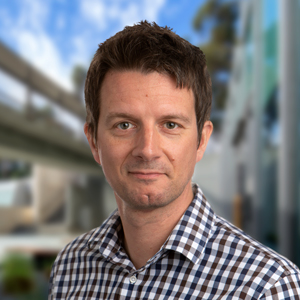
Kristian G. Andersen is a Professor in the Department of Immunology and Microbiology at Scripps Research, with joint appointments in the Department of Integrative Structural and Computational Biology and the Skaggs Graduate School of Chemical and Biological Sciences. He directs the Infectious Disease Genomics program at the Scripps Research Translational Institute. His research focuses on understanding host-pathogen interactions, particularly the emergence, evolution, and spread of viruses like SARS-CoV-2, Ebola, Zika, and Lassa. Andersen earned his PhD in Immunology from the University of Cambridge and completed postdoctoral work at Harvard University and the Broad Institute under Pardis Sabeti. He has pioneered large-scale international collaborations using genomic sequencing, computational biology, and fieldwork to study viral outbreaks. His lab integrates computational methods with experimental biology to track viral evolution and improve outbreak responses. Recent work has included identifying the Wuhan market as the early epicenter of the SARS-CoV-2 pandemic, analyzing mpox outbreaks in West Africa, and developing wastewater surveillance systems for infectious diseases. Andersen has advised on pandemic preparedness initiatives, including the CDC-funded California COVIDNet and SEARCH programs. His team collaborates globally through networks like the Viral Hemorrhagic Fever Consortium and the West African Research Network for Infectious Diseases.
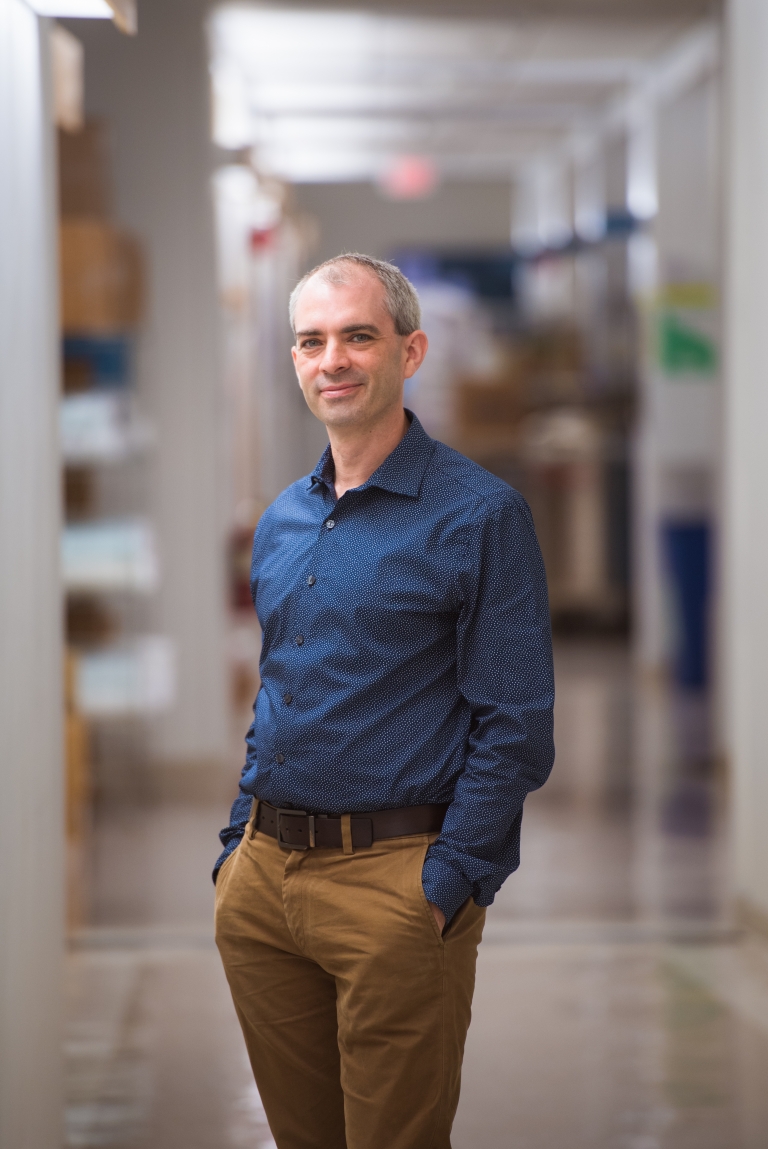
Aaron Shugar is a Professor and current Bader Chair in Art Conservation at Queen’s University. With a background in archaeometallurgy and conservation science, he specializes in non-destructive analysis techniques for cultural heritage, including X-ray fluorescence (XRF), Raman spectroscopy, and hyperspectral imaging. His work bridges art history, material degradation, and technological innovation. Honours H.B.A. in Anthropology and Law & Society from York University M.S. in Archaeological Materials from the University of Sheffield Ph.D. in Archaeometallurgy from University College London His research focuses on historic artist’s pigments , ancient metallurgy , and technical history of artifacts , with particular interest in degradation pathways and manufacturing processes. Recent publications highlight trends in AI integration with XRF analysis and preservation of modern materials in art conservation. Bader Chair in Art Conservation Mellon Foundation Professor in Conservation Science Aaron co-directed the Archaeometallurgy Laboratory at Lehigh University, served as a guest scientist at NIST, and remains a research associate at the Smithsonian Institution. He actively contributes to TEFAF’s Scientific Vetting Committee and acts as a forensic materials expert for the Court of Arbitration for Art.
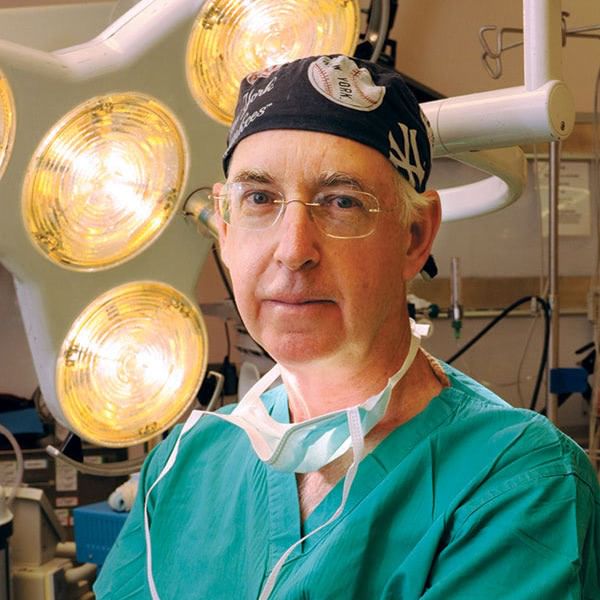
David W. Roberts is an Adjunct Professor of Engineering and holds dual professorships in Surgery (Neurosurgery) and Neurology at the Geisel School of Medicine at Dartmouth College. He specializes in stereotactic and functional neurosurgery, cancer neurosurgery, and intraoperative imaging technologies. His work focuses on advancing image-guidance systems and computational modeling for neurosurgical applications. Education includes an AB from Princeton University (1972), MD from Dartmouth Medical School (1975), and MA from Oxford University (1978). He is actively involved in professional organizations such as the American Academy of Neurological Surgery and serves on editorial boards for journals like Stereotactic and Functional Neurosurgery . His research emphasizes improving glioma resection through fluorescence imaging and real-time surgical guidance. Notable projects include preoperative image updating for tumor resection and quantitative analysis of protoporphyrin IX in gliomas. Recent publications (2011–2012) explore technical advancements in fluorescence-guided surgery and correlations between imaging biomarkers and histopathological malignancy. Roberts has been instrumental in clinical trials evaluating 5-aminolevulinic acid (5-ALA) for glioblastoma treatment and contributed to FDA-approved imaging technologies for surgical guidance. His work bridges engineering innovations with clinical neurosurgical practice, enhancing precision in tumor resection and patient outcomes.
Maurizio Ramanzin is a Full Professor at the University of Padova , affiliated with the School of Animal Science and Department of Agronomy, Animals, Food and Natural Resources (DAFNAE) . His research focuses on Agricultural Sustainability , Environmental Impact Assessment , and Precision Livestock Farming . Academic Field : AGR/19 Email : maurizio.ramanzin@unipd.it Address : Agripolis - Viale dell'università, 16 - Legnaro (Padova) – ITALY His work explores the interactions between livestock systems and ecosystem services in mountainous regions, with emphasis on: Grazing Management and biodiversity conservation Life Cycle Assessment (LCA) of dairy and beef systems Climate Change Adaptation in Alpine ungulates Animal Welfare in small-scale farms Technological Tools (GPS, NIRS) for monitoring grazing behavior Key trends in his recent publications include: Quantifying environmental drivers of wolf predation on livestock Developing low-cost biologging systems for dairy cows Analyzing social-ecological trade-offs in mountain agriculture Assessing microbial dynamics in alpine soils
Dr. Alison McCarthy is an Associate Professor in Irrigation and Cropping Systems at the Centre for Agricultural Engineering , University of Southern Queensland . With a background in mechatronic engineering, she specializes in developing automated irrigation systems and machine vision technologies for cotton and dairy pasture management. Education: BEng (2006) and PhD (2010) from University of Southern Queensland Research Interests: Irrigation control systems Machine vision for soil and plant sensing Automation in agriculture Recent Publications highlight her work in nitrogen management, autonomous irrigation frameworks, and pest detection systems. These contributions align with her expertise in AI-driven agricultural solutions and sensor integration. Scientific Awards: 2024 Australian Future Cotton Leader 2021 WatSave Young Professionals Award 2018 Cotton Seed Distributors Researcher of the Year 2015 Queensland Young Tall Poppy Science Award 2014 Science and Innovation Award for Young Professionals Research Affiliations: Centre for Agricultural Engineering (CAE) Association of Australian Cotton Scientists (Full Member)
Shad Roundy is an Associate Professor at the University of Utah , holding dual appointments in the Department of Mechanical Engineering and Department of Electrical and Computer Engineering within the College of Engineering . He directs the Integrated Self-Powered Sensing Lab , focusing on energy harvesting, wireless power transfer, and ubiquitous sensing systems. PhD in Mechanical Engineering, University of California, Berkeley (2003) Senior Lecturer, Australian National University (postdoctoral) His research bridges mechanical design , smart materials , and sensor networks , with significant contributions to: Self-powered biomedical implants Wearable health-monitoring devices Underground agricultural sensor networks MEMS sensor development His 15 most recent publications demonstrate interdisciplinary work spanning wireless power transfer for soil sensors, flexoelectric materials, and disease severity assessment via wearables. Articles emphasize energy efficiency , novel transducer designs , and environmental sensor applications . Scientific recognition includes: NSF CAREER Award for magnetoelectric implant powering Associate Editor, Smart Materials and Structures and International Journal of Precision Engineering and Manufacturing-Green Technology Research funded by National Science Foundation , NASA , and industry partners through the ASSIST Engineering Research Center . Publications highlight collaborations across biomedical, agricultural, and wearable technology domains.
Loic Binan is an Assistant Professor in the Department of Human Genetics at McGill University, with additional affiliations as an Associate Member in the Department of Biomedical Engineering and the Integrated Program in Neuroscience. His research focuses on developing cutting-edge technologies to investigate how gene networks control the self-organization of cells into complex 3D tissues during development and in disease conditions. Dr. Binan's research interests span multiple interdisciplinary fields, with particular emphasis on cancer metastasis , where he investigates the genetic mechanisms allowing cells to reversibly transition between epithelial and mesenchymal phenotypes. His work also explores isoforms and non-coding regions , developing technologies to understand alternative splicing in neurodegenerative diseases, and examining how past cell-cell interactions shape present transcriptional activity during development. His laboratory employs a diverse array of techniques including CRISPR gene editing, spatial transcriptomics, single-cell RNA sequencing, advanced microscopy, and computational methods for image analysis. The recent publications reveal a strong trend toward integrating high-throughput genetic screening with spatial transcriptomics to map gene regulatory networks across both cancer biology and neuroscience contexts. Dr. Binan leads the Binan Lab at the Lady Davis Institute for Medical Research, where his team develops precision gene editing tools such as Cas9 and Cas12 for high-throughput screens, creates novel imaging tools to collect spatial context data, and builds computational tools to analyze these complex new data types. His research primarily focuses on cancer and neurodegenerative diseases, with particular attention to brain development and tumor microenvironments.
Iain Cheeseman is a Professor of Biology at the Massachusetts Institute of Technology and a Member of the Whitehead Institute, where he holds the Margaret and Herman Sokol Chair in Biomedical Research. He became a Member of Whitehead Institute and assistant professor at MIT in 2007, was promoted to full professor in 2018, and became the Herman and Margaret Sokol Professor of Whitehead in 2020. Since 2022, he has served as associate department head for MIT Biology. Dr. Cheeseman completed his undergraduate training at Duke University and earned his doctorate in molecular and cell biology in 2002 from the University of California, Berkeley, working in the labs of David Drubin and Georjana Barnes. He conducted postdoctoral research at the Ludwig Institute for Cancer Research in San Diego and UC San Diego under Arshad Desai. The Cheeseman Lab focuses on understanding the molecular machinery involved in chromosome segregation and cell division, with particular emphasis on the kinetochore—a complex structure of over 100 proteins that connects chromosomes to the cellular machinery powering their movement. His research has transformed how scientists view the kinetochore as a molecular machine. Current work explores how cellular processes and their molecular machinery are rewired across different contexts including between cell types, during development, depending on cell state, in disease, and across evolution. Analysis of his recent publications reveals a consistent focus on mitotic regulation, protein variants, and kinetochore function. His work has increasingly examined translational isoforms, alternative splicing, and the precise regulatory mechanisms controlling protein production during cell division. This research has implications for understanding fundamental biological processes and potentially improving cancer therapies. Fellow of the American Society for Cell Biology (2023) MIT Undergraduate Research Opportunities Program Outstanding Mentor - Faculty (2019) Keith R. Porter Fellow (2013) American Society for Cell Biology Early Career Life Scientist Award (2012) R.R. Bensley Award for Cell Biology from the American Association of Anatomists (2011) Human Frontiers Science Program Young Investigator Award (2010-2013) Searle Scholar Award (2009-2012) New Investigator Grant, Massachusetts Life Sciences Center (2008-2011) Smith Family Award for Excellence in Biomedical Research (2007) Dr. Cheeseman is deeply committed to mentoring the next generation of scientists and increasing diversity in science. He serves on the ASCB's Women in Cell Biology Committee and is a Board Member and Treasurer for ASAPbio, a non-profit promoting innovations in life science communication. His lab employs diverse experimental approaches including cultured human cells and large-scale cell biological studies using optical pooled screening to analyze single-cell traits across millions of cells.
Luigi Bruno is an Associate Professor of Machine Design at the Department of Mechanical, Energy and Management Engineering (DIMEG), University of Calabria. He has held this position since 2014, following 12 years as an Assistant Professor at the same institution and Visiting Professorships at IIT Gandhinagar (2012), University of Alabama at Birmingham (2013-2017), and Free University of Bozen-Bolzano (2021). 1999 : Master's in Mechanical Engineering, University of Calabria (110/110 cum laude) 2003 : PhD in Mechanical Engineering, University of Pisa His research interests span: Experimental Mechanics : Pioneering speckle interferometry for micro-displacement measurement and residual stress analysis. Materials Science : Elastic characterization of anisotropic materials, biomedical applications of soft substrates, and 3D-printed composites. Biomedical Engineering : Mechanical behavior of biological tissues, ocular biomechanics, and dental implant material testing. Recent research trends focus on: Integrating artificial muscles into rehabilitation devices Advancing full-field optical measurement via microCT/DVC Optimizing 3D printed polymer adhesion for industrial components Exploring neuronal biomechanics on soft surfaces Scientific contributions include: CS2007A00010 patent for dual-focus speckle interferometers Deputy Editor of Optics and Lasers in Engineering (2019-present) Guest Editor for special issues on optical methods in experimental mechanics and nanobiotechnology Academic leadership extends to coordinating Mechanical Engineering committees (2021-present), serving on editorial boards, and organizing international conferences like AIAS National Conference (2018). He has secured multiple MIUR research grants and industry collaborations with Alfagomma, 3DNA, and Ferrovie della Calabria. His laboratory, Mechanics of Materials and Structures , supports both research and teaching activities with advanced optical measurement systems and computational tools for mechanical design.
Barbara Grochowicz serves as a Lecturer in the Department of Drive Automation and Robotics at Opole University of Technology. She maintains active teaching duties during the 2024/2025 academic year, conducting consultations on Tuesdays (10:10-10:55 and 12:30-13:15) in building P1, room 111/120. Her research centers on robotics and automation systems, with specialized focus on drive mechanisms and control engineering. These fields are critical for advancing industrial automation, robotic mobility systems, and precision motion control applications across manufacturing and engineering sectors. Her work bridges theoretical control principles with practical robotic implementations. Contact details include phone: 77 449 8028 and email: b.grochowicz@po.edu.pl. She participates in standard university teaching activities through the Employee's schedule and PO Knowledge Base profile.
Christopher Grainge is a Conjoint Associate Professor at the University of Newcastle's School of Medicine and Public Health, and a Staff Specialist in Respiratory and General Medicine at John Hunter Hospital. Previously, he served as a Consultant Physician and Senior Lecturer at the University of Southampton. His extensive clinical background includes service in the Royal Navy, specializing in diving and remote medicine, and deployments to Antarctica and Southern Iraq. Dr. Grainge maintains active research collaborations with institutions worldwide, focusing on respiratory medicine. Dr. Grainge completed his undergraduate training at Imperial College, University of London, with an intercalated BSc. He earned his PhD from the University of Southampton in 2011, with research published in the New England Journal of Medicine. His thesis examined the effect of repeated bronchoconstriction on airways in asthma. He also holds membership in the Royal College of Physicians and was awarded the Diploma in the Medical Care of Catastrophes, specializing in remote and refugee medicine. Dr. Grainge's research focuses on the role of mechanical forces in asthma pathophysiology, environmental dusts in lung disease development, and platelet antagonists' effects on allergen challenge. His work demonstrates that mechanical forces play a crucial role in determining long-term changes in human airways. He leads investigations into how environmental exposure to inhaled particles leads to conditions like constrictive bronchiolitis, and explores novel therapeutic pathways for asthma through platelet activation inhibition. His research has significant clinical implications for difficult asthma and interstitial lung disease management. Dr. Grainge's recent publications reflect strong trends in interstitial lung disease research, particularly idiopathic pulmonary fibrosis, and asthma mechanisms. His work increasingly incorporates advanced technologies like artificial intelligence for disease stratification and deep learning for predicting disease progression. Collaborative research with international teams examines biomarkers for disease progression and novel treatment approaches for fibrotic lung diseases, with a particular focus on quantitative CT analysis and patient-reported outcome measures. Leatherdale Prize for Clinical Teaching: Finalist (2013) Military and Civilian Health Partnership Awards Winner (2011) University of Southampton Translational Medicine Research Prize (2011) Michael Arthur Clinical Research Prize (2014) British Lung Foundation Travel Fellowship (2011) Gilbert Blane Medal (2010) Colt Foundation Prize: Finalist (2010) Asthma UK Travel Fellowship (2009) Dr. Grainge has received significant research funding from the British Lung Foundation, the Southampton Marine and Maritime Institute, the Institute for Life Sciences, and the Gerald Kerkut Foundation. His projects investigate the effects of physical and environmental stress on lung disease, mechanisms underlying lung disease development following environmental particle exposure, and potential therapies. He has collaborated extensively with research teams across Australia, the UK, the Netherlands, and South Africa, contributing to the training of numerous students and junior researchers through his supervision and mentorship roles. Dr. Grainge collaborates extensively with the Respiratory Research group at the University of Southampton, the Asthma and COPD Research Group at the University of Groningen in the Netherlands, and the Microbiome group at the South Australia Medical Research Institute. His current work at the Hunter Medical Research Institute (HMRI) focuses on mechanical forces within airways and their impact on acute and long-term lung changes in patients with airway diseases. He is also involved in the Australian IPF Registry, contributing to multicenter studies on idiopathic pulmonary fibrosis progression and treatment outcomes.
Prof. Will Raven is a Professor of Physics at Smith College, where he joined the Department of Physics in 2013. He has mentored over 70 undergraduate researchers, published 8 peer-reviewed articles since 2020, and secured five NSF grants, including the NSF CAREER award. His research focuses on high-precision spectroscopy of neutral light atoms to test quantum electrodynamics (QED) and contribute to nuclear structure theory. Ph.D., University of Wisconsin–Madison B.S., Clarkson University Prof. Raven’s research group explores fundamental atomic physics, testing the Standard Model by measuring properties of beryllium, boron, nitrogen, and oxygen atoms. He designed a course, PHY242 Research in High Precision Spectroscopy, accessible to first-year students without calculus or physics prerequisites. His work combines experimental techniques with educational innovation, emphasizing accessible research opportunities. His recent publications (2025–2020) span precision spectroscopy of light atoms, hyperfine structure analysis, and laser stabilization methods. These articles represent fields such as Atomic Physics, Quantum Mechanics, and Optical Physics. American Physical Society 2025 Prize for a Faculty Member for Research in an Undergraduate Institution NSF CAREER award Smith College Student Government Association’s teaching award (twice) Prof. Raven has secured NSF grants for his research, including RUI grants for experimental projects and MRI grants for instrumentation. He leads the Raven Lab, an experimental group dedicated to undergraduate research training and fundamental atomic physics studies.
The Atomic Quantum Optics Group at ICFO, Barcelona , led by Morgan W. Mitchell , investigates quantum phenomena at the interface of light and matter. The group develops advanced sensing technologies with applications in biomedicine, space science, and fundamental physics. Research focuses on ultra-cold atoms, high-coherence photons, and entanglement, aiming to understand and utilize atomic coherence for quantum technologies. Their work includes pushing sensitivity limits in magnetic field detection, quantum thermometry, and miniaturized quantum devices. Recent publications highlight advancements in cavity-enhanced spin detection , anomalous noise in SERF magnetometry , and spread-spectrum magnetic sensing . These studies span quantum optics, atomic physics, and applied quantum technologies. Scientific awards include mentoring students like Joanna Zielinska and Carlos Abellan , who won the UPC Thesis Prize. The group actively trains PhD students, postdocs, and visiting researchers in quantum technologies.
Professor Michael D. Jenkinson holds the Sir John Fisher / RCS England Chair of Surgical Trials at the University of Liverpool , where he is also Professor of Neurosurgery. His work focuses on meningioma management, brain metastases, and interventional clinical trials, with funding from MRC, Brain Tumour Charity, and NIHR. PhD in Neuroscience (Imaging and Biology of Oligodendroglial Tumours) Consultant Neurosurgeon at The Walton Centre (2010–present) Chief Investigator on NIHR-funded trials: ROAM, STOP 'EM, SPRING, ReStart Research Interests: Meningioma growth modeling and personalized monitoring Seizure prophylaxis in neurosurgery Surgical trials methodology Quality of life assessments in neuro-oncology Leadership Roles: Chair, SBNS Academic Committee Chair, EORTC Meningioma Committee Member, NIHR HTA Prioritisation Committee Co-Investigator on PROSSPER and FUTURE GB trials
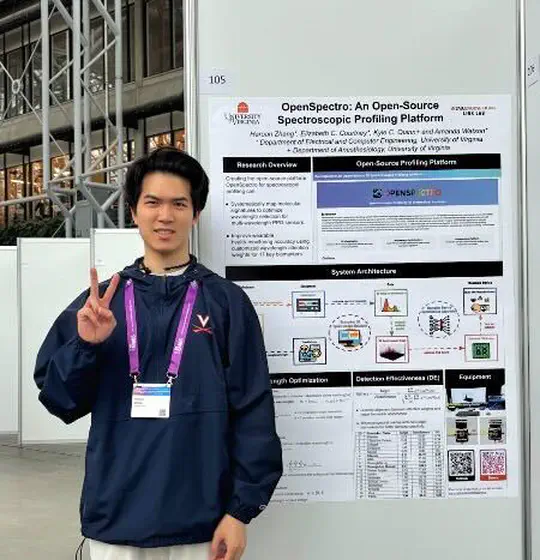
Amanda Watson is an Assistant Professor in Electrical and Computer Engineering at the University of Virginia, with joint appointments in Computer Science. She leads the Watson Research Lab within the UVA Link Lab, a multidisciplinary center for Cyber-Physical Systems (CPS) and Internet of Medical Things (IoMT) research. Her work bridges wearable technology with healthcare and athletic performance applications, focusing on noninvasive monitoring, physiological signal analysis, and safety-critical medical devices. She is also the cofounder and CEO of Luminosity Wearables, commercializing a noninvasive continuous glucose monitor. Education: PhD in Computer Science (2020) - College of William & Mary MSc in Computer Science (2016) - College of William & Mary Bachelors in Computer Science and Mathematics (2014) - Drury University Her research spans multiple domains including: Wearable spectroscopy for nutrition and skin health Machine learning for drug overdose and fall risk detection Biomechanical monitoring in sports medicine Wearable support for visual and neurological impairments IoMT device integration and analytics Recent publications (2024-2025) show strong emphasis on calibration-free physiological monitoring systems, with technical contributions in spectral analysis , multi-wavelength sensing , and rapid prototyping for healthcare wearables. Applications range from maternal health to gerontological social isolation detection. Lab and Team: The Watson Research Lab at UVA develops wearable solutions for clinical and athletic contexts, with ongoing collaborations in the PRECISE Center at University of Pennsylvania and LENS lab at William & Mary alumni network. She works with multidisciplinary teams including engineers, clinicians, and data scientists.