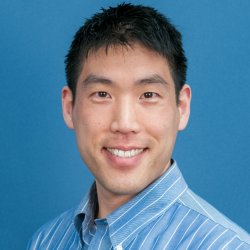
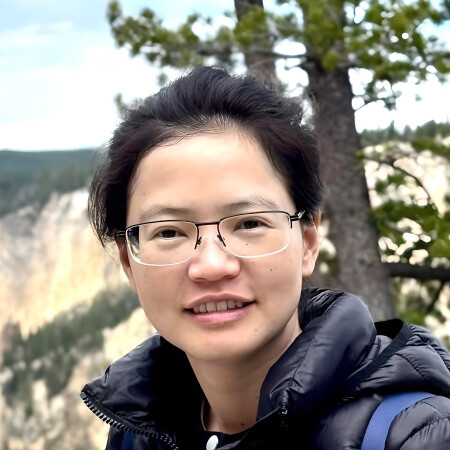
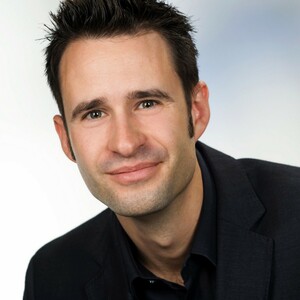
Prof. Zheshen Zhang is a Professor in the Department of Electrical and Computer Engineering at the University of Michigan College of Engineering . He leads the Quantum Engineering Lab , focusing on harnessing quantum mechanical resources like entanglement to advance sensing, communication, and computing systems. Academic Rank: Professor Institution: University of Michigan School: College of Engineering Department: Electrical and Computer Engineering Research Interests: His work spans quantum engineering, emphasizing: Quantum computing architectures using continuous-variable cluster states Quantum communication via entanglement-assisted protocols Quantum sensing for precision metrology and dark matter detection Hybrid photonic circuits with Scandium Aluminum Nitride and Silicon Nitride Application of machine learning to quantum information processing Publications Trends: Recent articles highlight: Advances in integrated photonics for scalable quantum devices Development of entanglement-enhanced sensors for covert and precision applications Exploration of exceptional points in optical cavities for metrology Quantum network prototypes enabling open-access quantum computing Machine learning integration with quantum data acquisition
Prof. Dr. Ioachim Pupeza serves as Group Leader in the Department of Spectroscopy/Imaging at the Leibniz Institute of Photonic Technology (Leibniz-IPHT) in Jena, Germany. His research focuses on advanced optical measurement techniques, particularly in the field of field-resolved spectroscopy and precision optical measurements. Dr. Pupeza's research interests center around optical spectroscopy with a particular emphasis on field-resolved techniques that capture the complete electric field waveform of light-matter interactions. His work spans infrared spectroscopy , molecular fingerprinting , ultrafast laser technology , and precision optical measurements . He has made significant contributions to electro-optic sampling techniques, which enable characterization of electric-field waveforms across the terahertz to visible spectral range. His research also extends to mid-infrared light generation , terahertz spintronic emitters , and cavity-enhanced spectroscopy , with applications ranging from fundamental physics to medical diagnostics. Analysis of Dr. Pupeza's recent publications reveals a strong trend toward increasingly sophisticated field-resolved spectroscopy techniques with applications in both fundamental science and practical diagnostics. His work has evolved from basic measurement techniques to applications in cancer detection through molecular fingerprinting of biofluids. A consistent theme across his publications is the pursuit of higher precision, broader bandwidth, and improved sensitivity in optical measurements, often achieving attosecond-level precision. His research bridges physics, engineering, and medical applications, demonstrating how fundamental optical advances can translate to real-world diagnostic tools. Dr. Pupeza leads the research group "Field-Resolved Optical Precision Measurement Methods" at Leibniz-IPHT, which appears to collaborate extensively with other research institutions and groups. His work involves sophisticated laser systems including high-power Yb:YAG thin-disk oscillators, femtosecond enhancement cavities, and dual-oscillator systems for precision measurements. The group's research has implications for molecular spectroscopy, medical diagnostics, and fundamental studies of light-matter interactions at the most fundamental time scales.
Taskin Padir is a Professor in the Department of Electrical and Computer Engineering at Northeastern University and concurrently serves as an Amazon Scholar. He holds a PhD and MS from Purdue University and a BS from Middle East Technical University. His research focuses on experiential robotics, human-robot teaming, and embodied AI, with leadership roles in the Robotics and Intelligent Vehicles Research Laboratory (RIVeR Lab) and the Institute for Experiential Robotics. Padir has led projects for DARPA, NASA, and industry partners, advancing autonomous systems for extreme environments and human-robot collaboration. Education: PhD, Electrical and Computer Engineering, Purdue University (2004) MS, Electrical and Computer Engineering, Purdue University (1997) BS, Electrical and Electronic Engineering, Middle East Technical University (1993) Research Interests: Shared autonomy and human-in-the-loop robotics Embodied artificial intelligence Human-robot teaming in extreme environments (e.g., space, disaster zones) Collaborative robotics for industrial applications His work bridges robotics, AI, and real-world challenges, with recent projects addressing seafood processing automation, robotic navigation in unstructured terrains, and spectroscopy-based environmental monitoring. Awards: Recipient of the 2024 Faculty Research Team Award, 2023 Impact Award, and 2022 Amazon Scholar distinction. His research has been funded by NSF, DARPA, NASA, and industry collaborators like Amazon Robotics and Intel. Labs: Director of the RIVeR Lab and Institute for Experiential Robotics, fostering interdisciplinary research in autonomous systems and intelligent vehicles. Current projects include CRISP (Co-worker Robots for Seafood Processing) and PROSPECT (robotic spectroscopy tools).
Mark MacLachlan is a distinguished Professor and currently serves as the Dean of the Faculty of Science at the University of British Columbia (UBC). He leads a vibrant research group in the Department of Chemistry focused on supramolecular materials, with expertise spanning organic, inorganic, and polymer chemistry. His work bridges fundamental molecular design with practical applications in energy, electronics, and sustainable materials. Dr. MacLachlan's research interests center on supramolecular chemistry and materials science, with emphasis on nanomaterials, porous structures, and cellulose-based systems. His group develops novel organic and inorganic molecules and materials with applications in electronics, photonics, catalysis, and environmental technologies. Key research areas include mesoporous materials for optics and catalysis, supramolecular chemistry with macrocycles, structurally interesting molecules, and self-assembled systems including gels. His work often addresses environmental challenges and alternative energy applications such as solar energy conversion and hydrogen fuel cells. Analysis of his recent publications reveals a strong focus on cellulose nanocrystals and their applications in photonic materials, energy storage, and responsive systems. His work integrates supramolecular chemistry with platinum-based systems for molecular machines and recognition. The research demonstrates interdisciplinary approaches combining chemistry, materials science, and nanotechnology to create functional materials with precisely controlled properties. Fellow of the Royal Society of Chemistry (UK) (2016) Tier 1 Canada Research Chair in Supramolecular Materials (2015-2029) Elected Fellow of the Royal Society of Canada (FRSC) (2014) Rutherford Memorial Medal (Royal Society of Canada) (2013) Killam Award for Excellence in Graduate Student Mentorship (UBC) (2013) NSERC Steacie Memorial Fellowship (2012-14) Dr. MacLachlan has mentored numerous graduate students and postdoctoral researchers, fostering a collaborative research environment that spans multiple disciplines. His group employs a wide range of characterization techniques including electron microscopy, spectroscopy, and X-ray crystallography. The MacLachlan research group maintains active collaborations with institutions worldwide, including the WPI Nano Life Science Institute at Kanazawa University where he serves as a Visiting Professor. The MacLachlan group operates state-of-the-art facilities for synthesizing and characterizing novel materials, with particular expertise in chiral nematic structures, mesoporous materials, and supramolecular assemblies. Their work on cellulose nanocrystals has led to innovative applications in photonic materials, energy storage devices, and responsive systems.
Dr. Youngchan Kim is a Lecturer in Quantum Biology at the University of Surrey , serving as Director of the Quantum Biology Doctoral Training Centre (QB-DTC). He is affiliated with multiple departments including the School of Biosciences, Advanced Technology Institute, and Quantum Sciences Group. PhD in Physics (2011), Korea Advanced Institute of Science and Technology MSc in Physics (2008), KAIST BSc in Physics (2006), Chung-Ang University Graduate Certificate in Learning and Teaching (2022), Advance HE His research focuses on quantum phenomena in biological systems at physiological temperatures, particularly using femtosecond optical spectroscopy and genetically engineered fluorescent proteins to explore evolutionary adaptations and develop quantum-bio-inspired technologies like room-temperature single-photon sources. The 15 most recent publications span quantum biology, biophotonics, and optical spectroscopy, with particular emphasis on quantum coherence in biological systems , terahertz birefringence , fluorescent protein dynamics , and biomedical imaging innovations . These works demonstrate his interdisciplinary approach bridging physics, biology, and medical applications. As QB-DTC Director, he leads transdisciplinary initiatives fostering collaboration between quantum physics and biosciences. His technical expertise includes time-correlated single-photon counting , common-path interferometry , and ultrafast fluorescence depolarization techniques.
Dr. Chathura Bandutunga is a Research Fellow at the Centre for Gravitational Astrophysics within the Research School of Physics at the Australian National University (ANU). His research focuses on advanced optical techniques for precision measurement, with significant contributions to gravitational wave detection technology, molecular spectroscopy, and space exploration instrumentation. Dr. Bandutunga's research expertise spans digital interferometry, fiber optic sensors, and precision optical measurement systems. His work has pioneered digitally enhanced interferometric techniques that have enabled new capabilities in molecular dispersion spectroscopy, gravitational wave detection, and optical frequency referencing. He has developed innovative methods for phase noise suppression, common-mode noise rejection, and thermal-noise-limited optical measurements that operate at the boundaries of physical possibility. His publication record demonstrates consistent innovation in optical measurement technology, with recent work advancing fiber optic gyroscopes, frequency comb technology, and applications for interstellar propulsion systems like the Breakthrough Starshot program. His research bridges fundamental optical physics with practical applications in both terrestrial scientific instrumentation and space-based technologies. Dr. Bandutunga is actively involved in the Centre for Gravitational Astrophysics at ANU, contributing to Australia's participation in international gravitational wave research collaborations. His technical leadership in precision optical measurement systems directly supports next-generation gravitational wave detectors and related technologies requiring unprecedented measurement stability.
Dr. Alexandre Mermillod-Blondin is a Principal Investigator heading a DFG-funded project on 'Micromachining with few-cycle pulses' at the Max Born Institute. His research focuses on fundamental laser-matter interactions and direct laser writing of 3D micro-optical systems in transparent materials. Key investigations include plasma formation mechanisms in dielectrics, relaxation dynamics, and applications in photonic device fabrication. His group utilizes phase-contrast microscopy and time-resolved techniques to characterize ultrafast processes.
Bo Lu is a Professor of Biostatistics and Statistics at The Ohio State University. His research focuses on advancing early detection technologies for forest pathogens and pests using spectroscopy, machine learning, and metabolomics. He specializes in understanding plant defense mechanisms against invasive species and climate-driven disease dynamics. Key research areas include: Non-invasive disease diagnostics via FT-IR/Raman spectroscopy Machine learning applications in plant health monitoring Molecular basis of plant-pathogen interactions Environmental risk modeling for emerging forest diseases Notable projects include developing early detection systems for ash dieback, beech leaf disease, and soybean cyst nematode infestations. His work integrates statistical modeling with biochemical analysis to improve forest biosecurity strategies globally. He advocates for international collaboration in addressing the global forest health crisis through improved diagnostic frameworks and resistance breeding programs.
Lukas Seitner is a researcher at the Technical University of Munich (TUM), affiliated with the School of Computation, Information and Technology and the Department of Electrical Engineering. He operates within the Associate Professorship of Computational Photonics led by Prof. Christian Jirauschek, focusing on advanced modeling of quantum cascade devices and terahertz photonics systems. His research spans quantum cascade lasers (QCLs), terahertz frequency combs, optical solitons, and computational photonics. Seitner has developed sophisticated simulation frameworks including Maxwell-Bloch and density matrix approaches to study nonlinear dynamics in optoelectronic devices. Key contributions involve passive mode-locking mechanisms in THz QCLs, graphene-integrated saturable absorbers for pulse generation, and backscattering effects in ring-cavity soliton formation. His work bridges theoretical modeling with practical device engineering for next-generation terahertz sources. As an educator, Seitner serves as assistant lecturer for multiple courses including Computational Photonics Laboratory (5 PR), Partial Differential Equations for Electrical Engineering (4 VI), and Simulation of Quantum Devices (4 VI). He actively participates in doctoral candidate seminars and specialized courses on quantum engineering, demonstrating strong commitment to academic training in photonics and quantum device physics. His teaching integrates cutting-edge research concepts into practical computational exercises. Seitner maintains active collaboration within the EU Project QOMBS and contributes to TUM's Computational Photonics group research infrastructure. His technical expertise encompasses numerical methods for partial differential equations, semiconductor device simulation, and nonlinear optical modeling. Current projects focus on optimizing THz comb sources for spectroscopic applications and extending quantum walk models for novel frequency comb generation mechanisms.
Jun Ye is a Chinese-American physicist affiliated with JILA, the National Institute of Standards and Technology (NIST), and the University of Colorado Boulder. He holds the academic rank of Research Professor and has made groundbreaking contributions to atomic, molecular, and optical (AMO) physics, particularly in precision measurement and quantum control of atomic and molecular systems. Education: BS in Physics (Shanghai Jiao Tong University, 1989), MS in Quantum Optics (University of New Mexico, 1991), PhD in Physics (University of Colorado Boulder, 1997) under Nobel laureate John L. Hall. His research spans ultracold atoms, ultracold molecules, and laser-based precision measurement, including the development of the 3D quantum gas clock with 2.5 × 10⁻¹⁹ frequency precision. He explores applications in gravitational field sensing, dark matter detection, quantum simulations, and fundamental physics tests. Recent work includes thorium nuclear clocks, topological optical lattice clocks, and spin dynamics in ultracold polar molecules. Jun Ye's publications (e.g., 2025 articles) focus on atomic clocks, quantum sensing, and precision metrology, with keywords like quantum physics, atomic physics, and optical engineering. His subfields include frequency combs, spin squeezing, superexchange interactions, and many-body quantum systems. Scientific Awards: Department of Commerce Gold Medal (multiple years), Breakthrough Prize in Fundamental Physics (2022), National Academy of Sciences (2011), Norman F. Ramsey Prize (2019), and numerous fellowships. Patents: Four U.S. patents for frequency combs and laser technology. He leads research at JILA, collaborating with institutions like Caltech and MIT, and has been featured in documentaries such as The Most Unknown (2018). His work bridges experimental physics, quantum information science, and applied photonics.
Mengke Liu is an Assistant Professor in the Department of Physics at the School of Natural Sciences and Mathematics, University of Texas at Dallas. They lead the Liu Quantum Matter Lab, focusing on experimental studies of quantum materials through advanced techniques like ultra-low temperature scanning tunneling microscopy (STM) and 2D transport measurements. Their research aims to uncover novel quantum phenomena and advance quantum technologies. Their research interests span quantum materials , with particular emphasis on topological insulators , strongly correlated electron systems , 2D semiconductors , and magnetic heterostructures . The lab explores fundamental interactions in exotic materials such as MnBi2Te4, Fe3GeTe2, and NbSe2 monolayers, combining experimental precision with theoretical insights. Recent publications highlight investigations into Dirac mass gaps , Kondo effects , and charge density waves in van der Waals systems. Their work demonstrates technical mastery in molecular beam epitaxy (MBE) and nanojunction fabrication , with recurring themes of defect control and quantum confinement shaping material properties. The Liu Quantum Matter Lab actively mentors students and maintains a collaborative environment with access to state-of-the-art cryogenic and high-field instrumentation. They offer postdoctoral opportunities focused on experimental innovation in quantum material characterization.
Dr. Fabian Schmid is a Researcher affiliated with the Institute for Quantum Electronics at ETH Zürich, working within the Professorship for Experimental Quantum Information . His research focuses on quantum control, precision spectroscopy, and optical frequency comb technologies. Key applications include molecular ion manipulation, laser cooling techniques, and advanced spectroscopic methods for atomic and molecular systems. His work bridges quantum physics and optics, with contributions to ultra-stable laser systems, low-repetition-rate frequency combs, and high-resolution spectroscopic measurements. Recent efforts target applications in trapped ion systems and new boson constraints via calcium isotope studies. Schmid's experimental setups often involve precision engineering of optical components and cavity-stabilized laser systems. Notable experimental achievements include demonstrating quantum control over single molecular ions (H₂⁺) and developing number-resolved detection methods for Coulomb crystals. His research also explores synergies between dual-species laser cooling and cavity-based technologies. While currently holding no listed academic awards, Schmid's contributions are evident through his prolific publishing record in top-tier physics journals. His lab work integrates cutting-edge quantum optics with atomic physics to advance fundamental understanding and precision measurement capabilities.
Muharrem Bayraktar is an Assistant Professor at the MESA+ Institute for Nanotechnology at the University of Twente, specializing in XUV Optics. His research focuses on extreme ultraviolet (EUV) optics, plasma spectroscopy, and adaptive optical systems. He leads projects involving EUV source metrology, piezoelectric thin film actuators, and laser-driven plasma diagnostics. Research Interests: Bayraktar’s work centers on developing advanced EUV light sources for nanolithography applications. He investigates plasma physics in tin-based EUV emitters, optimizing thin film materials for adaptive optics, and improving spectral characterization techniques. His group explores piezoelectric thin films for precision wafer tables and multilayer mirror systems to enhance EUV beam control. Awards: 3rd Place in Simon Stevin Fellow Contest (2016) Best poster award (2018) Best poster award (2019) Advising & Activities: Supervises research on EUV source development and piezoelectric actuators. Engages in international collaborations on plasma diagnostics and adaptive optics. Active in presenting at conferences on topics like ‘EUV Source Metrology’ and ‘Nanolithography Systems’. Labs/Teams: Leads the XUV Optics team within MESA+, collaborating with industry partners on EUV lithography systems and advanced optical components.
Thorsten Schumm - Academic Overview Thorsten Schumm is an Associate Professor at Vienna University of Technology (TU Wien), leading the Quantum Metrology research group within the Atomic Institute. He is a key member of the Erwin Schrödinger Center for Quantum Science & Technology (ESQ) and the Vienna Center for Quantum Science and Technology (VCQ). His research focuses on developing novel quantum measurement techniques, particularly nuclear clocks using thorium-229 isotopes and matter-wave interferometry with collective many-body states. Key Affiliations & Roles Associate Professor, TU Wien (since 201X) ERC Synergy Grant recipient (2019) for the 'Thorium Nuclear Clock' project Principal Investigator for EU-funded MoSaiQC network (2019) and AQUclock project (2022) Research Interests His work bridges quantum metrology with nuclear physics , precision spectroscopy , and many-body quantum systems . He pioneers the development of nuclear clocks—next-generation timekeeping devices using nuclear transitions instead of electronic transitions for unprecedented accuracy. Recent breakthroughs include direct measurement of the thorium-229 isomer energy and advances in laser-driven nuclear excitation techniques. Notable Achievements 2019 ERC Synergy Grant: Enabled global collaboration toward the world's most precise atomic clock 2022 AQUclock project: TU Wien collaboration with Austrian authorities to build state-of-the-art atomic infrastructure 2019: First experimental determination of thorium-229 isomer energy published in Nature Academic Leadership He has mentored 5 PhD students and hosted 5 postdoctoral researchers. His group actively participates in the Vienna Graduate Program on Complex Quantum Systems (COQUS), training the next generation of quantum scientists.
Dr. Anna Baldycheva is a Senior Lecturer in Electronic Engineering at the University of Exeter, within the College of Engineering, Mathematics and Physical Sciences. She leads the interdisciplinary STEMM Laboratory, focusing on applied R&D in smart materials, photonics, AI, and IoT. With prior research experience at MIT, Trinity College Dublin, and Tyndall National Institute, she has established herself as an internationally recognized innovator and entrepreneur in emerging technologies. PhD in Electronic and Electrical Engineering, Trinity College Dublin (2008–2012) BSc (Hons) in Physics, St. Petersburg State University (2003–2008) Postgraduate Certificate in Academic Practice, University of Exeter (2016–2017) Postgraduate Certificate in Technology Management, Smurfit Business School (2009–2010) Her research spans Nano-Engineering, Opto-Electronics, Photonics, AI, and IoT , with a strong emphasis on real-world applications. She pioneers work in fluid opto-electronics , graphene nanocoatings , and AI-driven emotion recognition and early cancer detection . Her lab develops smart composite materials for flexible electronics, e-textiles, and structural applications, integrating machine learning into healthcare, education, and communications systems. The recent publications highlight a strong trend toward applied interdisciplinary innovation , combining materials science with AI and photonics for healthcare diagnostics, energy-efficient computing, and educational technology. Her work frequently bridges fundamental physics with commercialization potential, as seen in spin-out technologies like GSurf and the Electronic-Nose for lung cancer detection. Fellow, Royal Microscopical Society (RMS) Fellow, Higher Education Academy (FHEA) Expert, Future and Emerging Technologies, European Commission Featured in Forbes and Forbes Tech Council Editor-in-Chief, InSTEMM Journal Associate Editor, Nature Scientific Reports and Discover Nano Trustee, Royal Microscopical Society Founder, STEMM Global Scientific Society Founder, It’s Her! Women in STEMM Initiative Dr. Baldycheva actively supervises PhD students and has secured industrial collaborations with organizations such as Qinetiq and Lumentum. She leads multiple outreach initiatives, including STEMM Junior for underprivileged children, and serves on the committee for the Jocelyn Bell Brunel PhD Scholarship. She has raised significant research funding through national and international grants, though specific grant names are not listed. She leads the STEMM Laboratory , a multidisciplinary research group with divisions in Smart Composite Materials, Machine Learning & AI, and Opto-Electronics & Photonics. The lab emphasizes industry collaboration and technology transfer, having produced a university spin-out (GSurf) and multiple media-highlighted innovations.