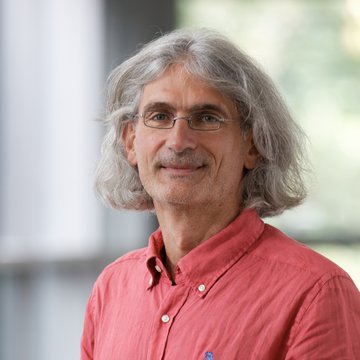
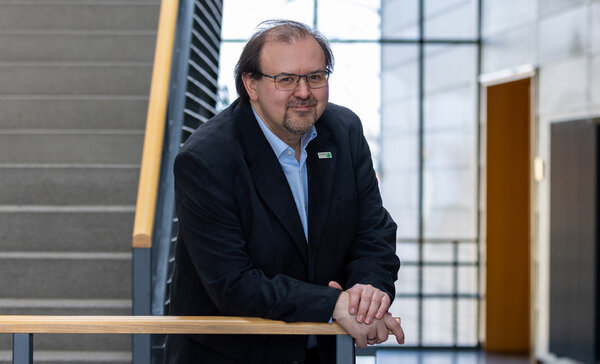
Dr. Benjamin Pope is an Honorary Associate Professor at the University of Queensland's School of Mathematics and Physics. His affiliations include the Research Centre in Creative Arts and Human Flourishing at UQ and a former NASA Sagan Fellowship at NYU. He holds a DPhil from the University of Oxford and an MSc/BSc from the University of Sydney. His research spans exoplanet detection , JWST instrumentation , radio astronomy , and computational astrophysics . Key areas include: Differentiable modeling for exoplanet transit analysis Low-frequency radio signatures of star-planet interactions Radiocarbon applications in solar activity tracing High-contrast imaging with space telescopes He has received significant recognition, including: ARC DECRA Fellowship NASA Sagan Fellowship Dr. Pope leads projects like the JWST Aperture Masking Interferometer and TOLIMAN space telescope development. He is not currently accepting students.
Charles Bienvenue is an Assistant Professor in the Department of Mechanical Engineering at Polytechnique Montréal. His academic credentials include a PhD in Biomedical Engineering and a Bachelor's degree in Engineering Physics, both from Polytechnique Montréal. His research expertise spans multiple domains: Nuclear engineering and reactor design/operation Applied mathematics and mathematical physics Mathematical modeling of physical systems Nuclear and particle physics Medical physics applications Professor Bienvenue's primary research interests focus on nuclear reactor physics, applications of ionizing radiation in medical physics, and modeling the transport of neutral and charged particles using finite element methods. His work has significant implications for radiation therapy planning and nuclear reactor safety analysis. His research aligns with Polytechnique Montréal's centers of excellence in Modeling and Artificial Intelligence, as well as Energy, Water and Resources, and Human Health. As an educator, he teaches ENE6101: Static Physics of Reactors, drawing on his extensive knowledge of nuclear engineering principles. His active publication record demonstrates ongoing research productivity with multiple publications in high-impact journals including Nuclear Science and Engineering, Journal of Computational Physics, and Physical Review Applied. Professor Bienvenue's research methodology emphasizes deterministic algorithms for high-accuracy particle transport simulations, with particular attention to coupled photon-electron-positron systems. His work bridges theoretical nuclear physics with practical medical applications, particularly in radiation therapy planning.
Dr. Michael Weber serves as Head of the High-resolution Spectroscopy and Polarimetry department at the Leibniz Institute for Astrophysics Potsdam (AIP), where he leads research in astronomical instrumentation and data analysis. His work bridges observational astrophysics and engineering, focusing on spectroscopic and polarimetric techniques for studying celestial objects. He maintains active collaborations across AIP's Stellar Physics, Solar Physics, and Telescope Control divisions. Weber's research centers on high-resolution spectroscopy and polarimetry, with applications in stellar activity mapping, exoplanet detection, and solar physics. He specializes in designing and operating instruments like the Potsdam Echelle Polarimetric and Spectroscopic Instrument (PEPSI), emphasizing time-domain studies of stellar surfaces and magnetic phenomena. His methodology integrates observational data with instrument development to address fundamental questions in stellar evolution. Analysis of his 11 recent publications (2020-2025) reveals three dominant research threads: (1) Doppler imaging of stellar surfaces (e.g., XX Trianguli, λ Andromedae) to map magnetic activity cycles, (2) instrumentation development for robotic observatories like STELLA and VPNEP surveys, and (3) analysis of stellar phenomena including Betelgeuse's dimming event. These works consistently combine observational astronomy with cutting-edge spectrograph engineering. As department head, Weber oversees the High-resolution Spectroscopy and Polarimetry group within AIP's Development of Research Technology division. His team operates critical instrumentation for solar and stellar observations, including the Solar Disk Integration Polarimeter and STELLA robotic observatory systems. The department maintains close ties with University of Potsdam through the Astrophysics Network, facilitating instrument development and data analysis pipelines for national and international collaborations.
Andreas Gollwitzer is Professor of Electrical Engineering and Technical Computer Science at HFU Furtwangen University since October 2009, specializing in digital systems and measurement technology. His work bridges theoretical research with practical instrumentation development across multiple engineering domains. His academic credentials include: Diplom-Ingenieur (FH) from FH Amberg-Weiden (1999) Diplom-Ingenieur from Fernuniversität Hagen (2003) Doktor-Ingenieur from Universität Bayreuth (2009) Professor Gollwitzer's research spans digital signal processing , microcontroller programming , and precision measurement systems , with strong emphasis on sensor technology and analog-digital hybrid systems . His experimental approach integrates optical, microwave, and electrochemical methodologies for advanced instrumentation, particularly in interferometry and high-frequency measurement applications. His 2008-2010 publications reveal a consistent focus on calibration-free measurement techniques and real-time sensor systems , demonstrating interdisciplinary work connecting electrical engineering with materials science and physical chemistry. Key themes include interferometric precision, microwave-based process monitoring, and impedance modeling for chemical sensors. As an active IEEE member, he regularly presents at international conferences including IEEE Frequency Control Symposium and OPTO, with expertise covering both theoretical modeling and hardware implementation of measurement systems.
Stefan Alaric Schäffer is an Assistant Professor at the Niels Bohr Institute, University of Copenhagen, specializing in Quantum Information Science & Technology. His research focuses on quantum optics, atomic physics, and quantum metrology with particular emphasis on strontium-based systems. His primary research interests include superradiant lasers, atomic clocks, atom interferometry, and quantum sensing technologies. Schäffer's work bridges theoretical quantum physics with practical applications in precision measurement and quantum technologies. His recent publications demonstrate significant contributions to the field of quantum metrology, particularly in developing more stable atomic clocks and quantum sensors. His research has been published in high-impact journals including Nature, Nature Communications, and Physical Review series, with several papers receiving substantial citations. Schäffer has also been actively involved in major collaborative efforts such as the Terrestrial Very-Long-Baseline Atom Interferometry workshop and the Cold Atoms in Space initiative, demonstrating his leadership in the quantum sensing community. Previously, he held positions as a DNRF Postdoctoral fellow at the University of Amsterdam (2020-2022) and as a Guest researcher at the National Institute of Standards and Technology (NIST) (2017-2018), building his expertise in atomic physics and quantum technologies.
Thomas R. Moses is Professor of Physics at Knox College, where he has conducted research and taught since 1992. His experimental work focuses on soft condensed matter systems, particularly liquid crystal phase transitions and surface phenomena. Education: Ph.D. in Physics, University of California, Berkeley (1993) M.A. in Physics, University of California, Berkeley (1990) B.S. in Physics and Mathematics, Stanford University, Phi Beta Kappa (1987) Research Focus: Professor Moses investigates molecular ordering near surfaces and critical fluctuations during isotropic-nematic/smectic transitions in liquid crystals. His laboratory employs evanescent-wave ellipsometry , magnetic birefringence , and light scattering techniques to characterize length/energy scale changes. Current projects examine alkyl cyanobiphenyl systems and develop advanced optical instrumentation. Publication Trends: His 15-year publication record (1998-2015) shows dual emphasis on fundamental liquid crystal research and physics education innovation. Approximately 60% of publications involve undergraduate co-authors, with recurring themes in phase transition characterization (45%), optical instrumentation (30%), and undergraduate lab development (25%). Scientific Recognition: Phi Beta Kappa (undergraduate honor, 1987) National Science Foundation grant (1993) Research Corporation grant (1992) Student Mentorship: Professor Moses maintains an active undergraduate research group where students contribute to publications and instrument development. His mentorship style combines rigorous expectations with immediate feedback, as evidenced by student testimonials describing his role in 'instilling a deep love for science.' Summer ASSET fellowships provide intensive electronics and controller-building experiences. Research Infrastructure: While no formal lab name is specified, his group operates experimental setups for liquid crystal characterization including custom-built interferometers and birefringence measurement systems. Equipment development remains integral to his approach, enabling precise investigation of surface ordering phenomena.
Jacob Dunningham is a Professor of Physics at the University of Sussex within the School of Mathematical and Physical Sciences, Department of Physics & Astronomy. He holds multiple leadership positions including Executive Director of the South East Physics Network (SEPnet), Deputy Director of the Sussex Centre for Quantum Technologies, and Departmental Head of Research and Knowledge Exchange. Previously, he served as Head of the Department of Physics & Astronomy from 2018-2020. Professor Dunningham's research focuses on quantum information, quantum optics, Bose-Einstein condensation, and metrology, with particular emphasis on how fundamental quantum physics can be exploited in practical schemes and new technologies. His work bridges theoretical quantum physics with practical applications in quantum sensing and quantum technologies. His recent publications reveal a strong trend toward quantum sensing networks, atom interferometry, and quantum-enhanced measurement techniques with applications in precision measurement, gravitational physics, and fundamental constant verification. His research increasingly incorporates practical implementations of quantum protocols for real-world applications. Scientific recognition includes: Fellow of the Institute of Physics Darden Junior Research Fellowship at Merton College Oxford EPSRC Advanced Research Fellowship Professor Dunningham has been the main supervisor for 14 PhD students and has secured substantial research funding from organizations including the Royal Society, DSTL, STFC, and EPSRC. His teaching responsibilities include Atomic Physics, Skills in Physics, and 'Quarks to the Cosmos' courses. He leads research within the Sussex Centre for Quantum Technologies, focusing on developing quantum-enhanced sensors, quantum communication protocols, and fundamental investigations of quantum phenomena with practical applications. His work often involves collaborative projects with national and international partners across academia and defense sectors.
Randy Babbitt serves as a Research Professor in the Department of Physics within Montana State University's College of Letters & Science. He maintains key affiliations as a Faculty Affiliate of the Spectrum Lab, Affiliate/User of the Montana Nanotechnology Facility (MONT), and member of the Optical Technology Center (OpTec), driving translational research from academic labs to Montana industry partners. His educational foundation includes a B.S. from Stanford University (1982) and a Ph.D. from Harvard University (1987). B.S., Stanford University (1982) Ph.D., Harvard University (1987) Babbitt's research program integrates digital holography, lidar systems, polarimetry, and microwave photonics to solve challenges in remote sensing and materials characterization. His work on spatial-spectral holography enables breakthroughs in microwave signal processing, while investigations into levitated particles and compressive sensing expand fundamental understanding of optical manipulation. This research directly supports defense applications through partnerships with entities like the Office of Naval Research and Air Force Research Lab. Analysis of his 2014-2022 publications reveals a consistent trajectory toward advanced imaging systems, with increasing emphasis on FMCW lidar techniques, nano-scale material characterization, and dual-beam interferometry. His work demonstrates strong interdisciplinary collaboration, particularly through the Spectrum Lab, with applications spanning defense, atmospheric sensing, and nonlinear optical material development. His scientific recognition includes: Meritorious Technology/Science Award (2008) Award for Excellence as Mentor of Recipient (2014) Babbitt secures substantial research funding for projects including Polarimetric Imaging Lidar (US Air Force Research Lab), Coherent/Enhanced Active Imaging Through Fog (Office of Naval Research), and GOALI: Nanostructure-enabled QPM Counter-Propagating Optical Parametric Oscillator (NSF). He actively mentors students through Spectrum Lab projects and engages in K-12 outreach, having delivered guest lectures at Morning Star Elementary and contributed to the Montana Science and Engineering Festival. As a core faculty affiliate of the Spectrum Lab, Babbitt contributes to its tripartite mission of advancing MSU-grown photonic technologies, establishing university-corporate partnerships with Montana companies like Bridger Photonics and S2 Corporation, and providing hands-on R&D experiences for students in team-oriented, time-critical projects.