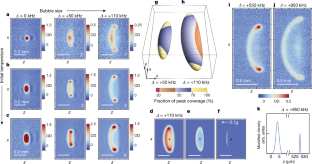
Smitha Vishveshwara is a Professor in the Department of Physics at the University of Illinois at Urbana-Champaign. She holds affiliations with the university’s Materials Research Laboratory and Beckman Institute. Her interdisciplinary work bridges quantum condensed matter theory, biophysics, and artistic expression. PhD in Theoretical Physics (University of California, Santa Barbara, 2002) Postdoctoral Researcher (2002–2005) in the Department of Physics at UIUC Her research focuses on quantum systems, including: Strongly correlated systems in low dimensions (Luttinger liquids, induced superconductivity in nanotubes) Topological order and Majorana fermions in superconductors Quench dynamics in spin chains and optical lattices Microgravity Bose-Einstein condensates and quantum bubbles Biophysics applications (protein networks via percolation theory) Gravitational parallels in quantum Hall systems Recent publications reveal trends in quantum Hall interferometry, Majorana detection schemes, and microgravity condensate dynamics. Awards include the NSF CAREER Award, Simons Fellowship, and APS Fellowship. She teaches courses like “Where the Arts Meets Physics” and has co-created art-science projects such as Quantum Voyages and Quantum Rhapsodies .
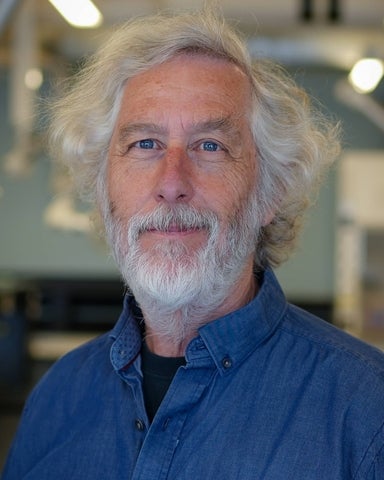
Carlos Argüelles-Delgado is an Assistant Professor of Physics at Harvard University's Department of Physics within the Faculty of Arts and Sciences. His research focuses on neutrino physics and astroparticle physics, particularly using data from the IceCube Neutrino Observatory. He explores properties of neutrinos, including potential Beyond Standard Model effects, and contributes to the development of the IceCube-Gen2 upgrade. His work includes analyzing high-energy neutrinos, studying cosmic origins, and advancing detector capabilities. Education: Ph.D. in Physics from the University of Wisconsin at Madison (2015), M.Sc. in Physics from Pontificia Universidad Católica del Perú (2012), and B.Sc. in Physics from the same institution (2008). Research Interests: Neutrino oscillations, dark matter annihilation signatures, sterile neutrinos, and astrophysical neutrino flavor measurements. He develops novel analysis techniques, such as Bayesian methods and Monte Carlo simulations, and collaborates on global neutrino data projects. Awards: 2021 Sloan Research Fellow, 2021 IUPAP Young Scientist Prize, and 2020 IceCube Collaboration Impact Award. His contributions include advancing diversity initiatives and software tools for neutrino data analysis. Teaching: Taught Electricity and Magnetism at Harvard, and previously taught physics at the undergraduate and high school levels. Active in outreach, including mentoring students and organizing workshops like the IceDUNE Workshop (2021). Labs/Teams: Leads analyses in the IceCube Collaboration’s Beyond the Standard Model Working Group and participates in the IceCube-Gen2 project. Collaborates with Janet Conrad’s group at MIT and the Wisconsin IceCube Particle Astrophysics Center.
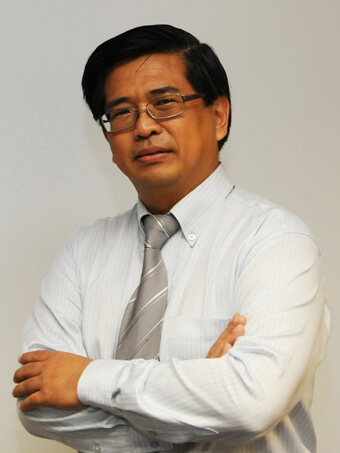
David Cory is a Professor and Canada Excellence Research Chair Laureate in Quantum Information Processing at the University of Waterloo's Department of Chemistry. He is affiliated with the Institute for Quantum Computing and the Waterloo Institute for Nanotechnology. His research focuses on quantum information science, neutron interferometry, structured light applications, and spin systems. Cory's work bridges quantum physics, materials science, and biomedical imaging, with contributions to quantum control, entanglement, and advanced neutron beam technologies. He has pioneered methods for generating structured neutrons and developing quantum measurement devices, including phase grating neutron interferometers. Scientifically, Cory has advanced quantum simulations of mesoscopic systems, explored thermal state structures in quantum models, and applied structured light for biomedical diagnostics. His recent articles highlight innovations in neutron Airy beam generation, robust micro-macro entanglement, and psychophysical studies of light perception. Awards include the Canada Excellence Research Chair, recognizing his leadership in quantum technologies. Awards: Canada Excellence Research Chair Laureate in Quantum Information Processing Labs/Teams: Institute for Quantum Computing, Waterloo Institute for Nanotechnology
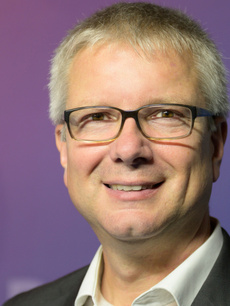
Daniel Braun is a Professor at the University of Tübingen, affiliated with the Faculty of Mathematics and Natural Sciences and the Department of Physics. He holds the Theoretical Physics (Braun Chair) and has been active in academia since October 1, 2013. Email: daniel.braun@uni-tuebingen.de Research Interests: His work bridges quantum optics, metrology, and gravitational physics. He explores quantum-enhanced measurement techniques, nonlinear optical phenomena in curved spacetime, and mechanical systems for fundamental tests of physics. Institutional Affiliation: Institute for Theoretical Physics (ITP) Recent Publications (2025-2024): Focus on quantum-limited interferometry, machine learning applications in quantum channels, gravitational effects in particle accelerators, and nonlinear soliton dynamics in relativistic settings. Scientific Awards: No specific awards mentioned in the provided data.
Jose D'Incao is an Associate Research Professor at the University of Colorado Boulder and an Associate Fellow at JILA, a joint institute of the National Institute of Standards and Technology (NIST) and the University of Colorado. His research focuses on ultracold atomic systems, particularly the study of few-body correlations in atomic systems at ultracold temperatures, including Efimov physics and quantum dynamics in Bose-Einstein condensates. His work addresses fundamental challenges in atomic, molecular, and nuclear physics, with applications to quantum control and novel phases of matter. His research interests include the theoretical analysis of three-body recombination processes, universal few-body physics in spinor condensates, and the interplay between coherence and dissipation in ultracold gases. He has contributed to understanding the generalized Efimov effect in one and two dimensions and explored dynamics in systems such as hybrid ion-atom mixtures and optical lattices. Key projects include studies of Efimov states via Feshbach resonances, light-assisted collisions in optical tweezers, and precision measurements of many-body interactions in microgravity. His work often involves collaboration with experimental groups to bridge theoretical predictions with advancements in cold atom technologies. Jose D'Incao has received funding from the National Science Foundation (NSF) and the Binational Science Foundation (BSF) for projects exploring universality in few-body systems and coherent control of Efimov physics. His research has implications for precision metrology, quantum simulation, and the development of novel quantum technologies.
Prof. Julia Hearts is a Professor at the Technical University of Munich (TUM) , affiliated with the School of Natural Sciences . Her research focuses on biomedical imaging , particularly advancing X-ray computed tomography through phase-contrast and dark-field radiography for clinical and biological applications. Developing spectral detection techniques to enhance diagnostic accuracy Quantitative imaging for element-specific parameter extraction Utilizing synchrotron radiation and standard X-ray tubes Her recent publications demonstrate expertise in dark-field radiography for lung and breast imaging, phase-contrast tomography for tissue characterization, and multi-spectral X-ray analysis for material decomposition. Collaborative work spans oncology , pulmonology , and materials science . Contact: julia.herzen@tum.de
Jongseok Lim is an Advanced Research Fellow in the Department of Physics at Imperial College London, affiliated with the Faculty of Natural Sciences. His research focuses on ultracold molecular physics and quantum optics, with applications in quantum science and precision measurement of fundamental symmetries. Lim is associated with the Quantum Engineering and Technology Hub, the Quantum Optics and Laser Science Group, and the Centre for Cold Matter. His work explores cutting-edge topics such as laser cooling of molecules, atom interferometry, and quantum control techniques. Lim’s studies often intersect with experimental quantum technologies, aiming to advance fundamental physics understanding and precision measurement capabilities. Key research areas include quantum computing systems, Berry-phase quantum gates, and novel approaches to measuring the electron’s electric dipole moment. His group develops advanced spectroscopic methods and cryogenic systems for manipulating ultracold molecules. Lim’s publications (2008–2025) demonstrate expertise in ultracold physics, quantum optics, and precision measurement, with a focus on experimental techniques and their applications to fundamental physics problems.
Professor John G Rarity serves as Professor of Optical Communication Systems within the School of Electrical, Electronic and Mechanical Engineering at the University of Bristol, where he leads research at QET Labs and the Bristol Quantum Information Institute. His work spans quantum communication, photonics, and quantum information systems with significant contributions to quantum cryptography and sensing. Research focuses on quantum communication networks , quantum cryptography , and quantum sensing applications . His fingerprint reveals dominant expertise in Quantum Dot Physics (100%), Photonics Physics (94%), Photonic Crystal Material Science (60%), and Quantum Cryptography (48%). Current work emphasizes entanglement distribution, counterfactual communication protocols, and quantum-enhanced sensing for environmental monitoring. Recent publications (2025) demonstrate leadership in multi-node quantum networks, deterministic teleportation, and methane sensing via quantum techniques. His 438 research outputs show consistent focus on practical quantum systems integration, particularly in overcoming classical-quantum channel coexistence challenges in fiber networks. Principal Investigator for 75 projects including active EPSRC grants EP/N00762X/1, EP/R022054/1, and EP/R023018/1 Supervised 36 research students Developed quantum communication systems for CubeSat deployment Pioneered quantum sensing applications for greenhouse gas detection Rarity actively collaborates across international quantum research networks, with recent work involving hollow-core fiber quantum channels, NV-center quantum sensors, and photonic integrated circuits for scalable quantum systems. His lab maintains strong industry partnerships with BT Research and optical communications firms.
David J. Wineland is an American physicist and Nobel laureate in Physics (2012), currently serving as the Knight Research Professor at the University of Oregon's Department of Physics. He is also affiliated with the Ion Storage Group at the National Institute of Standards and Technology (NIST). His research focuses on quantum physics, particularly the laser cooling of trapped ions, quantum computing, and the development of optical atomic clocks. Wineland's contributions include pioneering work on quantum state control, quantum teleportation, and quantum logic spectroscopy. Wineland earned his bachelor's degree from UC Berkeley (1965), and his PhD from Harvard University (1970), under Norman Foster Ramsey Jr. He joined NIST in 1975, where he founded the ion storage group. In 2018, he moved to the University of Oregon while maintaining a consulting role at NIST. His research interests span quantum systems, including trapped ion qubits, precision measurement techniques, and the application of quantum mechanics to real-world technologies. He has received numerous accolades, including the National Medal of Science (2007), the IRI Medal (2020), and the Schawlow Prize (2001). Wineland’s work has advanced fields such as quantum information science and atomic clocks, with his group demonstrating foundational experiments in quantum entanglement and superposition. Collaborations include the Boulder Atomic Clock Network and studies on ultralight dark matter using trapped ions.
CHUNG Keng Yeow serves as an Associate Professor (Educator Track) at the National University of Singapore, specializing in experimental atomic physics and quantum gravity research with expertise in ultra-precise measurement systems. Educational background: PhD, Stanford University, USA (2001) His research program pioneers the application of laser-cooled atoms and Bose-Einstein condensates for quantum sensing, with core focus on developing atom interferometers to probe quantum gravity effects and test fundamental symmetries. Key investigations include Lorentz invariance in gravity/electrodynamics and isotropy of post-Newtonian gravity through precision atom-interferometric techniques. Publication analysis reveals a sustained 10-year trajectory (1999-2009) advancing atom interferometry from foundational gravitational acceleration measurements toward cutting-edge tests of quantum gravity phenomenology, consistently published in premier journals including Nature and Physical Review Letters with high-impact collaborations. Scientific recognition: Viewpoint selection in Physics (2009) for groundbreaking work on Lorentz invariance tests Current research operations include laboratory development of quantum measurement systems, though specific team structures and grant details remain undisclosed in available sources. No student advising information is publicly documented.
Tegoeh Tjahjowidodo is a Senior Lecturer at the Faculty of Industrial Engineering Sciences , KU Leuven , affiliated with the Department of Mechanical Engineering and the Manufacturing Processes and Systems (MaPS) unit at Campus De Nayer. He serves as Head of Education for Electromechanics programs and leads Subdivision 17 at the campus. Research Areas: Additive Manufacturing (Wire-Arc Additive Manufacturing), Process Monitoring, Control Systems, Laser Micromanufacturing, Wear Analysis, Robotics, and Condition Monitoring. Publication Trends: Focus on in-situ monitoring of laser micromanufacturing, machine learning for abrasive belt grinding, WAAM parameter optimization , and multi-sensor fusion for process control. Scientific Contributions: Co-promotor for MultiTRIBO (tribology), Promotor for WAAM structural integrity and pedicle screw surgical simulators . Active in international collaborations (e.g., 25th International Symposium on Laser Precision Microfabrication, Spain 2024).
Luigi Bruno is an Associate Professor of Machine Design at the Department of Mechanical, Energy and Management Engineering (DIMEG), University of Calabria. He has held this position since 2014, following 12 years as an Assistant Professor at the same institution and Visiting Professorships at IIT Gandhinagar (2012), University of Alabama at Birmingham (2013-2017), and Free University of Bozen-Bolzano (2021). 1999 : Master's in Mechanical Engineering, University of Calabria (110/110 cum laude) 2003 : PhD in Mechanical Engineering, University of Pisa His research interests span: Experimental Mechanics : Pioneering speckle interferometry for micro-displacement measurement and residual stress analysis. Materials Science : Elastic characterization of anisotropic materials, biomedical applications of soft substrates, and 3D-printed composites. Biomedical Engineering : Mechanical behavior of biological tissues, ocular biomechanics, and dental implant material testing. Recent research trends focus on: Integrating artificial muscles into rehabilitation devices Advancing full-field optical measurement via microCT/DVC Optimizing 3D printed polymer adhesion for industrial components Exploring neuronal biomechanics on soft surfaces Scientific contributions include: CS2007A00010 patent for dual-focus speckle interferometers Deputy Editor of Optics and Lasers in Engineering (2019-present) Guest Editor for special issues on optical methods in experimental mechanics and nanobiotechnology Academic leadership extends to coordinating Mechanical Engineering committees (2021-present), serving on editorial boards, and organizing international conferences like AIAS National Conference (2018). He has secured multiple MIUR research grants and industry collaborations with Alfagomma, 3DNA, and Ferrovie della Calabria. His laboratory, Mechanics of Materials and Structures , supports both research and teaching activities with advanced optical measurement systems and computational tools for mechanical design.
Heidi Ottevaere is a Professor at the Faculty of Engineering of the Vrije Universiteit Brussel (VUB) since October 1, 2009. She serves as the head of the Instrumentation and Metrology platform at the Photonics Innovation Center and leads the 'biophotonics' research unit of the Brussels Photonics Team (B-PHOT), which is chaired by Prof. Hugo Thienpont. Her work focuses on the design, fabrication, and characterization of photonic components and systems for diverse applications in medical diagnostics, environmental monitoring, and industrial processes. Dr. Ottevaere earned her Electrotechnical Engineering degree with majors in Photonics from Vrije Universiteit Brussel in 1997 and completed her PhD in Applied Sciences at the same institution in 2003. Her doctoral research focused on 'Refractive microlenses and micro-optical structures for multi-parameter sensing: a touch of micro-photonics.' Professor Ottevaere's research spans multiple cutting-edge areas of photonics with particular emphasis on biophotonics, micro-optics, and optical metrology . Her work bridges fundamental science with practical applications, developing novel photonic components and systems that address real-world challenges. She has pioneered research in miniaturized optical systems for medical diagnostics, environmental monitoring, and industrial applications. Her current research focuses on advancing lab-on-a-chip technologies, microfluidic optical sensors, and novel optical fiber systems for biomedical applications. She has developed microminiaturized, integrated plastic detection units for absorbance and laser-induced fluorescence measurements in microfluidic channels, enabling portable, robust, and disposable diagnostic systems. Her recent publications demonstrate a strong trend toward integrated optical sensing systems with applications in medical diagnostics and environmental monitoring. There's a clear progression from fundamental optical component design to complete system integration, with increasing emphasis on artificial intelligence for data analysis and computational imaging techniques. Her work bridges photonics with biomedical engineering, materials science, and data science, reflecting the interdisciplinary nature of modern photonics research. Dr. Ottevaere has been recognized with several prestigious awards: Best Application award (2008) Educational award - Bronze (2019) MOC09 Contribution Award Winners (2009) As an educator and mentor, Professor Ottevaere has promoted 9 PhD students and supervised numerous master's theses. She has secured substantial research funding from diverse sources including the Fund for Scientific Research Flanders (FWO), the Institute for the Promotion of Innovation by Science and Technology in Flanders (IWT), and multiple European Framework Programs. Her current portfolio includes projects on miniaturized biosensors for drinking water screening, precision manufacturing, and photonics education initiatives in Uzbekistan. She has coordinated multiple strategic research and networking projects with regional, national, and international funding bodies. Professor Ottevaere leads the biophotonics research unit within the Brussels Photonics Team (B-PHOT), one of Europe's leading photonics research groups. Her team includes researchers working on optical metrology, micro-optics fabrication, and biophotonic applications. She collaborates extensively with industry partners including Melexis, Umicore, and Anteryon, as well as academic institutions across Europe through various EU-funded projects. She has been instrumental in developing the interuniversity engineering curriculum 'Master in Photonics' which received the EC Erasmus Mundus quality label in 2006, and continues to be the driving force behind photonics education at VUB.
Prof. Hansjörg Kutterer is a Professor and Dean at the KIT-Department of Civil Engineering, Geo and Environmental Sciences at Karlsruhe Institute of Technology (KIT). His primary affiliation is with KIT's Department of Civil Engineering, Geo and Environmental Sciences. He leads geodetic research initiatives focusing on Earth observation systems, atmospheric modeling, and geophysical data analysis. His research emphasizes advanced applications of GNSS, InSAR, and satellite gravimetry for monitoring climate-related phenomena such as water vapor dynamics, terrestrial water storage changes, and ground motion patterns. Key projects include developing machine learning-enhanced models for tropospheric delay corrections and integrated water vapor estimation in the Upper Rhine Graben region. Prof. Kutterer actively contributes to international geodetic frameworks like the Global Geodetic Observing System (GGOS), particularly through DA-CH regional collaborations. His work bridges geodetic methodologies with interdisciplinary challenges in climate science and environmental engineering. He oversees departmental operations as Dean, fostering innovation in geospatial education and infrastructure. His technical expertise spans geodetic deformation analysis, statistical robust estimation, and the integration of geophysical models with observational data.
Jungeun (Jenny) Won is an Assistant Professor of Research in the Department of Biomedical Engineering at the School of Engineering and Applied Sciences, University at Buffalo. Her research focuses on optical imaging , biomedical device development , medical image analysis , and artificial intelligence in OCT . She leads the Translational Biophotonics Laboratory , where she develops advanced OCT techniques for medical applications such as diabetic retinopathy , otitis media , and biofilm analysis . Contact: 215J Bonner Hall, Buffalo NY 14260, jungeunw@buffalo.edu Related Links: CV PDF , Google Scholar , Lab Website Her recent work involves high-resolution OCT for longitudinal studies on retinal degeneration, VISTA OCTA for blood flow analysis, and 3D motion correction algorithms to enhance image quality. She also explores multimodal imaging combining OCT with Raman spectroscopy for bacterial differentiation and microplasma-based therapies for ear infections.