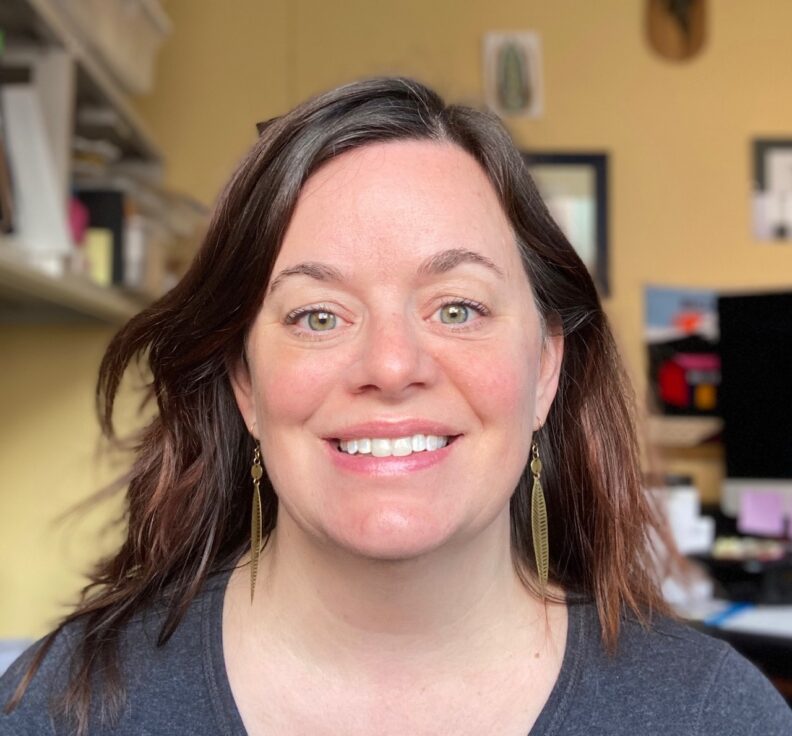
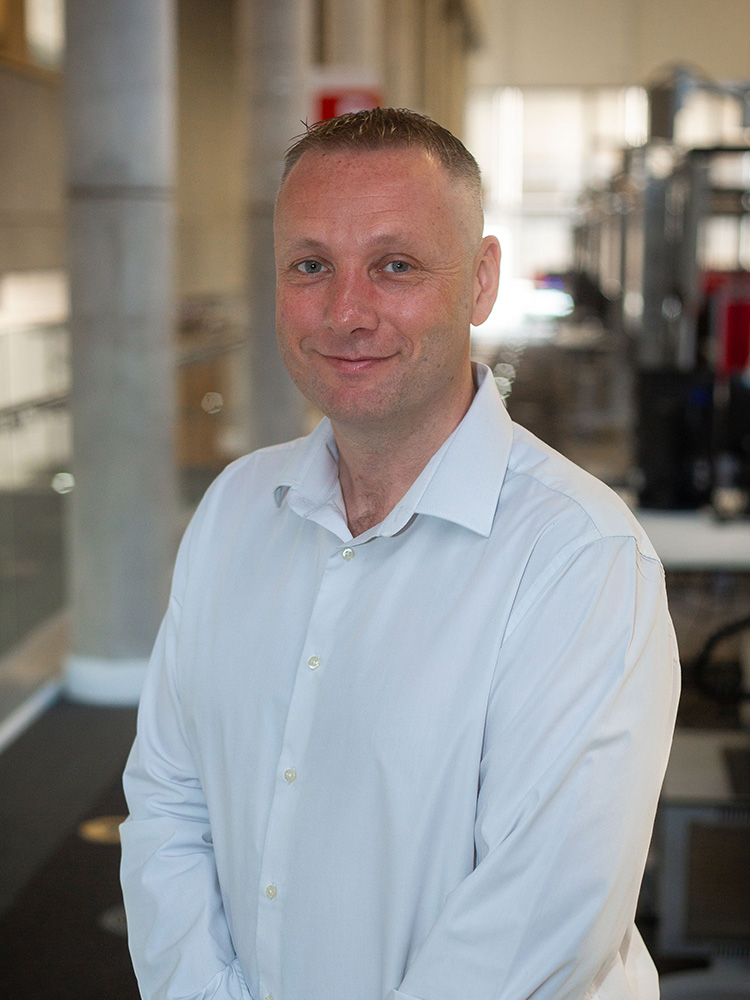
Jeanette Gowen Cook is a Professor and Chair of the Department of Biochemistry & Biophysics at the UNC School of Medicine, with a secondary appointment in the Department of Pharmacology. Her research focuses on cell cycle regulation , particularly the molecular mechanisms governing DNA replication and genome stability in human cells. Techniques: Human cell culture, live cell imaging, RNA interference, recombinant DNA technology, protein interaction studies. Collaborations: Active partnerships with cell cycle and DNA metabolism labs at UNC and beyond. Her lab investigates how disruptions in cell cycle control contribute to cancer and developmental disorders. They employ quantitative single-cell analysis and pharmacological inhibition to dissect pathways like APC/C regulation and USP37-MCM interactions . Notably, her work on CDK4/6 inhibitors has implications for cancer therapy. Scientific Trends: Recent publications highlight cross-disciplinary approaches in genomics , epigenetics , and computational biology , addressing topics such as chromatin environment effects and ubiquitination in cell cycle control . The Cook Lab integrates these findings to develop therapeutic strategies for cancer and regenerative medicine, emphasizing precise DNA replication and cell cycle exit mechanisms .
Friedhelm Christoph Hummel is a Full Professor and Defitech Chair of Clinical Neuroengineering at the Swiss Federal Institute of Technology EPFL, where he leads the Hummel Lab within the Brain Mind Institute and Neuro X Institute. His research spans neuroscience, neuroengineering, and neurorehabilitation with a focus on developing neurotechnological interventions for neurological disorders. He maintains dual institutional affiliations with EPFL's Campus Biotech in Geneva and the Clinique Romande de Réadaptation in Sion. Professor Hummel's research interests center on stroke recovery, healthy aging, motor control and learning, cognitive control, neuroplasticity, non-invasive brain stimulation techniques, and structural and functional neuroimaging. His work integrates knowledge from basic, systems, clinical, and computational neuroscience with engineering principles to develop novel methods for clinical application in patients with neuropsychiatric disorders. A key focus is the development of personalized, neurotechnological interventions tailored to individuals to enhance functional recovery of sensorimotor and cognitive functions following neurological disorders such as stroke, traumatic brain injury, or neurodegenerative conditions. His recent publications reveal a strong emphasis on transcranial temporal interference stimulation (TTIS) as a groundbreaking approach for non-invasive deep brain neuromodulation, with applications extending beyond movement disorders. His research demonstrates how non-invasive brain stimulation can improve motor skill learning, spatial navigation, and cognitive functions in both healthy participants and patient populations. The work integrates advanced brain imaging techniques, computational modeling, and robotics to develop precision neurorehabilitation approaches. Professor Hummel was awarded the prestigious 2024 Fürst Donnersmarck Research Prize for Neurorehabilitation, recognizing his transformative research published in Nature Neuroscience (2023) that demonstrated how non-invasive brain stimulation can improve motor skill learning in humans for the first time. This work particularly highlighted the ability to target deep brain structures like the striatum using transcranial temporal interference stimulation. He supervises numerous PhD students both current and past, including Cadet De Fontenay Paul, Di Ponzio Michele, Jones Rebecca, Losacco Simona, Lugli Beatrice, Paul Thomas, Ploumitsakou Maria, Protani Andrea, Skarvelaki Stavroula, Windel Fabienne, Beanato Elena, Bevilacqua Michele, Bigoni Claudia, Brügger Julia, Cadic-Melchior Andéol, Draaisma Laurijn, Durand-Ruel Manon, Evangelista Giorgia, Maceira Elvira Pablo, Salamanca Giron Roberto, and Vassiliadis Pierre. His research is supported by multiple grants and collaborative projects including the DiSCoVeR project examining cognitive control video games paired with tDCS for depression treatment. The Hummel Lab is a dynamic research environment focused on translating neuroscientific discoveries into clinical applications. The lab combines virtual reality, non-invasive brain stimulation, advanced brain imaging techniques, and computational approaches to develop personalized therapies. Recent work includes groundbreaking research on spatial navigation in healthy participants using virtual reality and transcranial temporal interference stimulation, with implications for addressing dementia in aging populations without medication or surgery.
Leticia Goñi Mateos is a Researcher at the University of Navarra, affiliated with the School of Medicine and Department of Preventive Medicine and Public Health. Her work bridges nutritional science, genomics, and public health. PhD in Food, Physiology and Health (University of Navarra, 2017) European Master in Food, Nutrition and Metabolism Graduate in Human Nutrition and Dietetics (University of Navarra) Her research focuses on nutrigenetics , epigenetics , and precision nutrition , particularly examining how genetic, microbiota, and lifestyle factors influence obesity , metabolic syndrome , and cardiovascular disease . Recent work includes dietary assessment tools, microbiota-based weight loss models, and molecular mechanisms of dietary interventions. Publications span clinical nutrition , epidemiology , and metabolic research , emphasizing Mediterranean diet , Paleolithic diet , and polyphenols . She actively contributes to understanding dietary biomarkers and their interactions with genetic profiles. She participates in research projects like PREDIMAR and SUKALMENA, with extensive involvement in national/European studies and over 40 peer-reviewed publications.
Kate Hayward is an Honorary Associate Professor at the School of Health and Rehabilitation Sciences within the Faculty of Health, Medicine and Behavioural Sciences at the University of Queensland . Her expertise spans physiotherapy, rehabilitation science, and neuroscience, with a focus on stroke rehabilitation and motor recovery. She holds a PhD in rehabilitation science from the University of Queensland and a postdoctoral background in neuroscience from the University of British Columbia and The Florey Melbourne. Qualifications : Bachelor (Honours) in Physiotherapy (James Cook University), Postgraduate Diploma in Research Commercialisation (University of Queensland), Doctor of Philosophy (University of Queensland) Kate’s research investigates the biological and therapy-induced potential for motor recovery post-stroke, particularly in upper limb function. She emphasizes precision rehabilitation through her work on Dose-Finding Clinical Trials (SPIRIT-DEFINE, CONSORT-DEFINE) and patient-centered approaches to recovery. Her recent publications highlight advancements in observational studies, behavioral interventions, and mechanistic frameworks for stroke rehabilitation. Her work frequently addresses clinical trial design, including control intervention standards and dose frameworks for aphasia and motor recovery. She also explores factors influencing patient decision-making during rehabilitation and the feasibility of home-based and enriched environments for stroke survivors. Kate contributes to international consensus guidelines and collaborates with multidisciplinary teams to optimize post-stroke outcomes. Supervision : Available for supervision. Completed supervision of two PhD candidates in upper limb rehabilitation and enriched environments for stroke patients (2019-2021). Labs & Affiliations : Associated with SMART Arm Pty Ltd , focusing on technology-driven rehabilitation solutions.
Ryan Cooke is a Professor (Research) and Royal Society University Research Fellow at The Ogden Centre for Fundamental Physics, Department of Physics, Durham University. Previously, he was a Morrison and Hubble Research Fellow at the University of California, Santa Cruz (2012-2016) and a Junior Research Fellow at Peterhouse, Cambridge (2011-2012). He completed his PhD at the Institute of Astronomy, University of Cambridge (2008-2011) under Prof. Max Pettini and Prof. Donald Lynden-Bell, with undergraduate degrees from the University of Sydney and Queensland University of Technology. His research focuses on Big Bang nucleosynthesis, cosmology, and fundamental physics, particularly studying the earliest stars and chemical evolution in the universe. Cooke specializes in analyzing extremely metal-poor systems to understand Population III stars and the primordial chemical composition. His work spans observational cosmology, spectroscopy of distant galaxies, and precision measurements of light element abundances. Analysis of Cooke's recent publications reveals a strong focus on metal-poor gas systems across cosmic time, with particular emphasis on damped Lyman-alpha systems, circumgalactic medium studies, and precision measurements of primordial element abundances. His research increasingly incorporates advanced data analysis techniques and instrumental development for next-generation telescopes like the Extremely Large Telescope. Royal Society University Research Fellow Morrison and Hubble Research Fellow Junior Research Fellow at Peterhouse, Cambridge Cooke actively supervises graduate students, with Aldric Wong listed among his current supervisees. His research is supported through prestigious fellowships and collaborations with major observatories including Keck Observatory. He contributes significantly to instrumental development through projects like PypeIt, a Python spectroscopic data reduction pipeline. As part of the MAGG (MUSE Analysis of Gas around Galaxies) survey team and involved in the KBSS (Keck Baryonic Structure Survey) collaboration, Cooke works with international teams to study galaxy formation and evolution through integral field spectroscopy. His current research at Durham's Ogden Centre for Fundamental Physics continues to push the boundaries of our understanding of the early universe's chemical evolution.
Jingxian Wang is an NUS Presidential Young Professor in the Department of Computer Science at the National University of Singapore (NUS). He leads research in next-generation wireless systems, satellite networks, and AI-driven applications. Previously, he was a Research Scientist at Microsoft Research in Redmond, where he initiated the Smart Surface for 6G and Space project. He holds a Ph.D. from Carnegie Mellon University. His research spans wireless communication, backscatter technology, RFID systems, and soft robotics, with emphasis on low-latency networks and energy-efficient solutions. Work includes satellite traffic engineering, AI-enhanced LoRa reception, and wireless actuation for electronics-free robots. Publications demonstrate consistent focus on wireless innovation, with trends toward satellite networks (2025), generative AI in communication (2024), and soft robotics (2023). Earlier work established foundations in RFID and material sensing. Awards & Honors: ACM SIGMOBILE Doctoral Dissertation Award Microsoft Research Fellowship Emerging Rockstar in IEEE Pervasive Computing Best Paper Awards (UbiComp, IPSN, IJCAI) Research Highlights in ACM Communications (3×) and SIGMOBILE Team & Advising: He leads PhD students (Jinfan Liu, Kin Whye Chew, Jiahao Xu) and post-docs (Yijie Li, Zehua Sun), supported by initiatives like Microsoft's Accelerating Foundation Models program. The lab focuses on wireless systems, AI, and satellite networks.
Andrew Cook serves as an Assistant Professor in the Department of Radiation Oncology at Rush Medical College, which is part of Rush University Medical Center in Chicago, Illinois. His clinical and academic work is based at University Radiation Medicine located at 1520 W. Harrison St. Dr. Cook specializes in radiation therapy and cancer treatment methodologies. His research interests focus on advanced radiation techniques for oncological applications, precision radiation delivery systems, and therapeutic approaches to various cancer types. As a medical professional in radiation oncology, he contributes to both clinical patient care and academic medical education within the cancer treatment field. Contact information shows he can be reached at phone number (312) 942-5751 or via fax at (312) 942-2339 for professional inquiries related to radiation oncology services and academic matters.
Dr. Lucy Cook is an Honorary Clinical Senior Lecturer in the Department of Immunology and Inflammation at the Faculty of Medicine, Imperial College London. She also serves as a Consultant Haematologist at Hammersmith Hospital & St Mary's Hospitals, London (Imperial College Healthcare NHS Trust), specializing in the management of patients with lymphoproliferative disorders. Her educational background includes a PhD from Imperial College Healthcare Charity (2010-2013), an MB BS from St Mary's Hospital Medical School (1995-2001), and a First Class BSc (Hons) from St Mary's Hospital Medical School (1997-1998). Professional Certifications: FRCPath, Royal College Pathologists (2009-present) MRCP, Royal College of Physicians, London (2004-present) Dr. Cook's research primarily focuses on HTLV-1 and associated adult T-cell leukemia/lymphoma (ATL). She leads a national clinical service and HTLV diagnostic molecular lab. Her specific research interests include understanding which HTLV carriers develop leukemia/lymphoma, whether we can predict and intervene prior to disease development, and why not all carriers transform to malignancy. Her scholarly work spans immunology, virology, oncology, and hematology, with a particular emphasis on lymphoproliferative disorders. Dr. Cook's recent publications demonstrate a strong focus on HTLV-1 pathogenesis, diagnostic approaches, and treatment strategies for adult T-cell leukemia/lymphoma, with emerging work on precision immunotherapies like CAR-iNKT cells and non-invasive monitoring techniques using liquid biopsy. Scientific Awards and Recognitions: No specific awards mentioned in the available information Dr. Cook is actively involved in clinical practice and research related to hematology, with a special focus on the intersection of virology and oncology. She contributes to both patient care through her consultant role and academic advancement through her position at Imperial College London, with particular emphasis on translating research findings into improved clinical outcomes for patients with HTLV-1 associated conditions.
Ruchi Sharma is a Research Fellow at the University of Oregon's Knight Campus, working in Marian Hettiaratchi's laboratory since September 2024. Her research focuses on advancing drug delivery technologies and biomaterial-cell interactions through interdisciplinary engineering approaches. Her academic background includes: PhD in Biomedical Engineering, University of Victoria (2022) Master's degree in Biotechnology, Taiwan Bachelor's degree in Life Science and MBA in Marketing and Finance, India Dr. Sharma specializes in microfluidic platforms for precision microparticle production, particularly drug-loaded microspheres, and develops 3D bioprinted neural tissue models to innovate Parkinson's disease therapies. Her work bridges biomaterials science, regenerative medicine, and microengineering to solve challenges in targeted therapeutic delivery. Within the Hettiaratchi Lab, she investigates biomaterial-cell interactions to optimize drug delivery vehicles, combining neural engineering principles with translational medical applications. Her research has significant implications for neurodegenerative disease treatment and regenerative cell therapies. Outside academia, Dr. Sharma maintains a balance between scientific rigor and personal life through cooking and family time.
Richard A C Cooke serves as a Professor in the Department of Agricultural and Biological Engineering and the Lemann Center for Brazilian Studies at the University of Illinois Urbana-Champaign. His research bridges agricultural engineering and environmental science, focusing on developing practical solutions for water quality improvement in agricultural landscapes through innovative drainage and treatment systems. Professor Cooke's research centers on bioreactor technology and subsurface drainage engineering, with particular expertise in denitrifying woodchip bioreactors, phosphorus management, and nutrient removal systems. His work integrates field-scale implementation with computational modeling to address critical challenges in agricultural water management, including tile drainage optimization, emerging contaminant removal, and sustainable infrastructure design. Current projects emphasize renewable energy integration, designer biochar applications, and multi-pollutant treatment systems that balance environmental protection with agricultural productivity. Analysis of Professor Cooke's publication record reveals a strong trajectory toward integrated treatment solutions, with increasing focus on simultaneous nutrient and contaminant removal, renewable energy applications, and transition from laboratory validation to field implementation. His recent work demonstrates sophisticated integration of geospatial tools like QGIS with hydraulic modeling to solve complex drainage design challenges. Scientific recognition includes: Fulbright Scholar Award (2020) Professor Cooke's collaborative network spans international institutions, with significant work through the Lemann Center for Brazilian Studies addressing tropical agricultural water challenges. His research program addresses critical gaps between laboratory findings and field application, particularly in phosphorus sorption media performance and bioreactor scalability. While specific grant details aren't provided in source materials, his extensive publication record and Fulbright recognition indicate substantial research funding support for his work in agricultural water quality engineering.
Karen Sanguinet is an Associate Professor in the Department of Crop and Soil Sciences at Washington State University (WSU), within the College of Agricultural, Human, and Natural Resource Sciences (CAHNRS). She holds a Ph.D. in Plant Biology from the University of California-Berkeley and a B.S. in Horticulture and Genetics from the University of Wisconsin-Madison. Her research focuses on plant root development, abiotic stress responses, and crop improvement, with a particular emphasis on understanding root architecture and environmental interactions in model plants like Arabidopsis and Brachypodium, as well as crops such as wheat and rice. Her lab employs interdisciplinary approaches, including genetics, genomics, and physiology, to study root growth modulation under cold, drought, and nutrient limitations. Recently, her work has expanded to investigate microplastic interactions with plant roots and soil health. Key projects include characterizing the BUZZ gene in root hair development and exploring metal lactates as biostimulants. Dr. Sanguinet has collaborated on over 30 peer-reviewed articles, with notable contributions to understanding root architecture, lignin biosynthesis, and stress tolerance mechanisms. Her research is supported by grants focusing on sustainable agriculture, soil microbiome dynamics, and climate-resilient crop varieties. She mentors a diverse team of graduate students, postdocs, and undergraduates, emphasizing outreach through programs like GENE-ius Day and Big Brothers Big Sisters. Laboratory activities are centered at WSU's Cook Agronomy Farm and Spillman Farm, where field trials and greenhouse experiments are conducted. Ongoing efforts include improving pennycress as a winter cover crop and developing drought-resistant wheat genotypes for the Pacific Northwest.
WANG Rencheng is an Associate Professor of Accounting and Programme Director of the PhD in Accounting Programme at the School of Accountancy, Singapore Management University (SMU). He holds the Lee Kong Chian Fellowship for Research Excellence. Previously, he taught at the University of Queensland and the University of Melbourne, and earned his PhD from the Hong Kong University of Science and Technology. His research focuses on the intersection of accounting and finance, particularly corporate disclosure, capital markets, labor markets, audit quality, and sustainability reporting. Education: PhD in Accounting, Hong Kong University of Science and Technology Master of Accounting, University of Michigan BBA and BS, Shanghai University of Finance and Economics Research Interests: WANG explores voluntary disclosure mechanisms, labor market dynamics, and their implications for corporate governance and financial reporting quality. His work examines how institutional investors, digitalization, and executive compensation influence reporting practices. He also investigates audit quality, information asymmetry, and the role of media in shaping financial transparency. Awards and Recognition: Lee Kong Chian Fellowship for Research Excellence (2019–2021, 2021–2023) SMU School of Accountancy Research Award: Most Outstanding Researcher (2021, 2023) Best Paper Award at AFAANZ Annual Conference (2016, 2020, 2023) AAA/Deloitte/J. Michael Cook Doctoral Consortium Participant (2012) Advising and Grants: WANG advises PhD students YU Lei and LIU Weiqi. He serves on the AAA Annual Meeting Financial Accounting and Reporting Section Co-Coordinator, SMU School of Accountancy PhD Program Committee, and the Early Career Researchers Support Network (ECRSN). His research has been supported by grants related to corporate governance and financial reporting innovation. Labs and Teams: His research lab focuses on interdisciplinary studies combining accounting with behavioral finance, legal frameworks, and digital technologies. Collaborative projects involve global partnerships to address modern challenges in financial transparency and audit practices.
Alzayat Saleh is a Postdoctoral Research Fellow at James Cook University specializing in deep learning applications for aquaculture and marine sciences. His research focuses on developing novel methods for underwater fish detection, segmentation, tracking, and biomedical image analysis. He has published 15 articles in prestigious journals/conferences with over 200 citations, and received awards like the Australian Research Training Program Scholarship and Food Agility HDR Top-Up Scholarship. Research Interests: Deep learning frameworks for underwater visual analysis Applications in aquaculture automation and environmental robotics Self-supervised learning for annotation-poor datasets Biomedical image analysis using deep learning techniques Article Trends: His work bridges computer vision advancements with real-world challenges in agriculture and marine biology. Recent efforts emphasize lightweight networks for real-time applications, self-supervised methods to reduce annotation dependency, and robotic systems for sustainable farming practices. Key contributions include FieldNet for shadow removal, WeedCLR for long-tailed datasets, and MFLD-net for aquatic morphometry. Awards: Australian Research Training Program Scholarship Food Agility HDR Top-Up Scholarship Collaborations: Actively engages in cross-disciplinary projects with industry partners and academic institutions to advance AI-driven solutions for environmental and agricultural challenges.
Dmitry Konovalov is a Senior Lecturer at James Cook University (JCU), focusing on Deep Learning applications in Australian industries. His research emphasizes AI-driven solutions for environmental monitoring (e.g., Great Barrier Reef), aquaculture, and animal health. He led a project applying AI to the Northern Australian Beef Industry and won 2nd place in NASA's 2022 Mars Spectrometry Challenge. Research Interests: Computer Vision with Convolutional Neural Networks (CNNs) AI for environmental monitoring, aquaculture, and veterinary science Bioelectrical impedance analysis and medical imaging Plasma physics and electron transport modeling Key Contributions: Developed the DeepWeeds dataset for weed species identification (2019) Published widely on turtle health monitoring, fishery parameter optimization, and whale recognition Contributed to algorithms for partition analysis and electron-impact ionization modeling Grants/Projects: Project: Applying AI to Business Management Advice (2018–2019) Collaborated on NASA's Mars Spectrometry Challenge Received funding for underwater imaging and fisheries analytics Labs/Teams: Works with JCU's School of Information Technology, collaborating with marine biologists and environmental scientists on interdisciplinary projects.
Andrew Cook is a Senior Lecturer in Mechanical Engineering at the University of Sunderland. As Programme Leader for the BEng (Hons) Mechanical Engineering program, he leads modules such as EAT247 (Design Methods and Applications), EAT241 (Engineering Placement), EDA104 (Design Principles), and ENGM111 (Product Orientated Manufacturing). His research focuses on advanced manufacturing methodologies including Industry 4.0 integration, precision engineering, and stress analysis across sectors like aerospace, automotive, and pharmaceuticals. With over two decades of industry experience in design and manufacturing, he bridges academic theory with practical industrial applications. Teaching emphasizes hands-on engineering principles and placement opportunities to prepare students for modern manufacturing challenges. His expertise spans bespoke project design for oil & gas, defense, and medical industries, reflecting his commitment to innovation in mechanical engineering education.