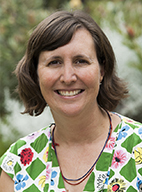
Dr. Anna Hopkins is a Senior Lecturer in conservation biology and molecular ecology at Edith Cowan University's School of Science. She is the Course Coordinator for postgraduate Environmental Science programs and has held academic positions since 2016. Her research focuses on soil microbial ecology, forest pathogens, eDNA applications, and climate change impacts. She has taught courses including Plant Pathology, Genetics, and Soil Processes. Education: PhD (University of Tasmania, 2007), Diploma of Modern Languages (UWA, 2002), BSc (Hons) (UWA, 2002) Her research interests include mycorrhizal-plant interactions, soil fungal responses to disturbances, and regenerative agriculture. Notable awards include the 2010 New Zealand Zonta Women in Science Award and the 2017 ECU Athena Swan Award. Recent articles highlight her work on soil microbial dynamics, invasive species management, and eDNA applications in ecology. She has led projects funded by organizations like the Australian Coal Association and WWF Australia, focusing on biodiversity restoration and ecosystem health. Awards: Multiple international and teaching awards, including recognition for poster presentations and research excellence. Advising & Grants: Supervises 5 PhD/MSc students and leads grants totaling over $1M in projects like eDNA tracking and Gilbert’s Potoroo conservation. Professional roles include Deputy Coordinator of the IUFRO Working Party on Forest Nurseries and Vice President of the Australasian Mycological Society.
Clinical Associate Professor Keith Ong is affiliated with the University of Sydney’s Northern Clinical School, specifically within the Department of Clinical Ophthalmology & Eye Health. His clinical specialty is Ophthalmology, with a focus on corneal endothelial health, glaucoma surgery outcomes, and cataract surgical techniques. His research addresses critical areas such as postoperative ocular toxicity, intraocular lens calculations, and infection control in eye surgeries. Dr. Ong’s publications (2011–2023) consistently explore topics like corneal endothelial changes post-trabeculectomy, refractive error management post-cataract surgery, and antibiotic prophylaxis strategies. Recent work emphasizes optimizing surgical techniques to reduce complications, such as BAK-induced corneal toxicity and IOL power calculation accuracy in LASIK patients. His work demonstrates a focus on improving surgical safety and precision, with studies evaluating alternative antibiotic delivery methods and laser therapy impacts. No awards or grants are explicitly noted in the provided text, but his contributions to clinical practice and surgical protocols are evident through his publication record.
Dr. Feras Dayoub is a Senior Lecturer at the School of Computer and Mathematical Sciences (Faculty of Sciences, Engineering and Technology) at the University of Adelaide , specializing in Embodied AI and Robotic Vision within the Australian Institute for Machine Learning (AIML) . He co-directs the CROSSING French-Australian laboratory for human-autonomous agent teaming and holds an Adjunct position at the Queensland University of Technology (QUT) , serving as an Associate Investigator at its Centre for Robotics . Previously, he was a Chief Investigator at the ARC Centre of Excellence for Robotic Vision . His research focuses on advancing reliable deployment of computer vision and machine learning on mobile robots in real-world environments. Applied projects include agricultural automation , environmental conservation , and autonomous infrastructure monitoring . He has published extensively on topics like object detection , domain adaptation , 3D representation learning , and vision-language navigation , with a particular emphasis on robustness in dynamic and partially observed environments. Dr. Dayoub is also an educator specializing in programming , computer vision , and robotic perception . He contributes to open-source robotics research through tools like AARK (Autonomous Racing Toolkit) and has led teams developing solutions for precision agriculture (e.g., Deepfruits fruit detection system) and environmental monitoring (e.g., Crown-Of-Thorns starfish detection ). Key Collaborations : CROSSING Lab, QUT Centre for Robotics Research Themes : Embodied AI, Robust Perception, Domain Adaptation
Associate Professor Arnold Lining Ju is a biomedical engineer at the University of Sydney's School of Biomedical Engineering, affiliated with multiple institutes including the Heart Research Institute and Sydney Nano Institute. He holds academic positions in both the Faculty of Engineering and Faculty of Medicine & Health. Education: BSc from Peking University, PhD from Georgia Tech and Emory University (USA). Honors include Snow Fellowship, Heart Foundation Future Leader Fellowship, and multiple awards for cardiovascular research innovation. Research focuses on mechanobiology and biomechanics of thrombosis, developing microfluidic devices and organ-on-chip systems. Key projects include AI-driven single-cell nanotools, 3D biofabrication, and anti-thrombotic peptide design. Leads interdisciplinary teams and collaborates internationally with institutions like Harvard and University of Texas. Teaching roles include coordinating advanced cellular biomechanics courses and supervising PhD/Masters students in biomedical engineering and physiology. Over 50 peer-reviewed publications, with contributions to Nature Materials, Nature Communications, and other top journals.
Associate Professor Jenni Ilomaki holds a position at Monash University's Centre for Medicine Use and Safety. With expertise in clinical pharmacy, epidemiology, and public health, she leads a research group analyzing administrative claims data. Her work spans collaborations with governmental and non-governmental organizations globally, yielding over 150 peer-reviewed publications and $4 million in grants. She previously served as Chair of ASCEPT's Pharmacoepidemiology Special Interest Group and currently serves as Science Lead for the Monash Addiction Research Centre and Executive Editor of the British Journal of Clinical Pharmacology. Education includes a Bachelor of Science (Pharmacy) from the University of Kuopio (1999) and Master of Science (Pharmacy) from the University of Kuopio (2004). She completed a PhD in alcohol epidemiology at the University of Eastern Finland (2011) and a postdoc at the University of South Australia (2011-2014). Notable recognitions include Young Epidemiologist of the Year (2011) and the Ronald D. Mann Best Paper Award (2021). Key research focuses on quality use of medicines, medicine safety, large population studies, and innovative epidemiological methods. Major projects include developing clinical decision support tools for cardiovascular prevention, analyzing preventable hospitalizations in aged care, and investigating psychotropic medication trends in youth. Her work contributes to UN Sustainable Development Goals related to health equity and non-communicable disease reduction. Recent publications emphasize drug repurposing (e.g., SGLT2 inhibitors), opioid prescribing patterns, hip fracture outcomes, and dementia detection algorithms. She chairs multinational studies on stroke and myocardial infarction cost burdens, demonstrating interdisciplinary impact across pharmacology, epidemiology, and health economics.
Professor Ruth Zadoks is a faculty member at the Sydney School of Veterinary Science, University of Sydney. She holds academic positions in the Sydney Institute of Agriculture and Sydney Southeast Asia Centre, and is involved with the Sydney Infectious Diseases Institute. Her research focuses on antimicrobial resistance, zoonotic diseases, bovine health, and One Health principles. Notable projects include investigations into Japanese encephalitis transmission dynamics, antibiotic use in East African livestock, and molecular epidemiology of Group B Streptococcus. Recent grants include studies on microbial spillover in aquaculture and precision feeding in broiler chickens. Her work integrates veterinary and public health perspectives, addressing issues like anthrax impacts in rural Africa, tilapia-borne zoonoses, and diagnostic innovations for bovine mastitis. Over 118 peer-reviewed publications highlight her contributions to aquatic pathogen genomics, food safety, and livestock disease ecology. Recent grants (2024): - Revealing microbial spillover drivers in aquaculture (SSEAC Incubator) - Sustainable Precision Feeding in Broiler Chickens (AgriFutures) - ASEAN Antimicrobial Resistance Network (DFAT-funded) Labs/Teams: Affiliated with Sydney Infectious Diseases Institute and collaborates across interdisciplinary One Health networks.
Professor Kristopher Kilian is Director of the Laboratory for Advanced Biomaterials & Matrix Engineering (LAB&ME) with a joint position across the School of Chemistry and the School of Materials Science & Engineering in the Faculty of Science at UNSW Sydney. He serves as co-Director of the Australian Centre for NanoMedicine (ACN) and is a member of the Adult Cancer Program in the Prince of Wales Clinical School. His interdisciplinary research focuses on unraveling 'matrix structure-cell function' relationships through innovative biomaterial design. After completing his PhD at the University of New South Wales, Kilian pursued NIH postdoctoral training at the University of Chicago before faculty positions at the University of Illinois at Urbana-Champaign (2011-2018). He returned to UNSW in 2018 as a Scientia Fellow, establishing his current leadership roles. Research Focus: Design of model extracellular matrices and dynamic hydrogels for cell and tissue engineering Fundamental studies in cell plasticity and matrix-directed cell fate Development of synthetic tumor microenvironments for drug testing iPSC-derived organoid bioengineering 4D biofabrication techniques Tissue engineering approaches for lab-grown meat applications His extensive publication record demonstrates consistent focus on hydrogel mechanics, dynamic biomaterials, and the role of physical cues in directing cell behavior. Recent work emphasizes mechanochemistry, spatial control of cell differentiation, and the development of sophisticated tumor models that replicate the complexity of cancer microenvironments. Scientific Recognition: Cornforth Medal (2008) NIH Ruth L. Kirchstein Award (2008) Kavli Fellow (2014) NSF CAREER Award (2015) Australian Research Council Future Fellowship (2018) Eureka Prize finalist (2023) Kilian's research program bridges fundamental cell biology with translational applications, particularly in cancer modeling and regenerative medicine. His laboratory develops innovative biomaterial platforms that enable precise control over cellular microenvironments, facilitating discoveries in cell plasticity and tissue engineering. The group's work on dynamic hydrogels and mechanochemical systems represents a significant contribution to the field of biomaterials science. As Director of LAB&ME, Kilian leads a multidisciplinary team that integrates nano- and micro-fabrication techniques with synthetic chemistry to create biomimetic materials. The laboratory's approach centers on the concept that cell state and fate are governed by inherent cell plasticity within specific multivariate signaling contexts.
Dr. Jessica Grieger is a Research Fellow at the University of Adelaide, affiliated with the Adelaide Medical School under the Faculty of Health and Medical Sciences. Her research focuses on maternal diet, metabolic health, and reproductive outcomes, with a particular emphasis on gestational diabetes, fertility, and developmental origins of disease. Her research program includes systematic reviews and meta-analyses on gestational diabetes prevention, intervention components, and the impact of preconception diet on fertility. She has contributed to high-impact studies in journals like Communications Medicine and Human Reproduction Update . Dr. Grieger's scientific work has been recognized through her NHMRC Externally-Funded Research Fellow position, and her findings have informed clinical guidelines and public health strategies. She supervises honors and higher degree research students in dietary analysis, qualitative methods, and metabolic syndrome studies. Her collaborations span institutions like the Australian Pathogen Genomics Program and involve developing genomic tools for pathogen tracking. She also explores telomere biology in offspring and the implementation of precision medicine approaches for maternal health.
Bithin Datta is a Senior Lecturer in the Discipline of Civil Engineering at James Cook University (Australia), part of the College of Science and Engineering and the Division of Tropical Environments and Societies. He is affiliated with TropWATER (Centre for Tropical Waters and Aquatic Ecosystem Research), the Economic Geology Research Unit (EGRU) at JCU, and the CRC-for Contamination Assessment and Remediation of the Environment (CRC-CARE) at the University of Newcastle. Previously, he held Professor and Senior Professor positions at IIT Kanpur, India (1995-2009), and served as Head of the Civil Engineering Department and Head of the Postgraduate Environmental Engineering and Management Program. He has held Visiting Professorships at Dalhousie University (Canada), Denmark Technical University (Copenhagen), and the Asian Institute of Technology (Bangkok). Education: B.Tech (Hons) in Civil Engineering from IIT Kharagpur (India), Master’s degree in Civil Engineering (first rank in specialization), and a PhD in Civil Engineering from Purdue University (USA), specializing in Hydraulics and Systems Engineering. He is a Fellow of Engineers Australia (FIEAust). Research interests include water resources systems management, groundwater and surface water modeling, reservoir operation optimization, saltwater intrusion control, AI-driven environmental predictions, and ecological flow assessment. His work integrates simulation-optimization frameworks, machine learning (e.g., ANFIS, SVM), and hydraulic engineering principles to address contamination, climate change, and infrastructure challenges in tropical and coastal regions. His publications (178+ entries) focus on computational tools for groundwater contamination source identification, sustainable aquifer management, and reservoir environmental impacts. Notable projects include a $629,000 CRC-CARE-funded initiative for contamination monitoring networks and AI-based drought prediction models in tropical Queensland. Advising: Coordinated the Master of Engineering (Water Resources Management) at JCU and supervised over 30+ Master’s and 19 Ph.D. students across IIT Kanpur, JCU, and the University of South Australia. His research has been ranked #1 globally by ScholarGPS in Groundwater Pollution, Surrogate Models (AI/ML), and Saltwater Intrusion management. Labs/Teams: Core member of TropWATER, EGRU, and CRC-CARE, leading interdisciplinary projects on tropical water systems and geochemical contamination modeling in mine sites.
Associate Professor Zihuai Lin leads the IoT in Healthcare and Radar Imaging group at the University of Sydney's School of Electrical and Computer Engineering. He holds a PhD from Chalmers University of Technology and has prior experience at Ericsson Research and Aalborg University. His research focuses on IoT, 5G/6G systems, healthcare AI, TeraHertz communications, radar imaging, and wireless signal processing. Education: PhD in Electrical Engineering, Chalmers University of Technology, Sweden (2006) Postdoctoral work at Ericsson Research, Sweden Associate Professor, Aalborg University, Denmark (pre-Sydney role) Research Interests: IoT wireless sensing and healthcare applications 6G/THz communications and radar imaging Artificial Intelligence in signal analysis and network optimization MIMO/OFDMA systems and resource allocation Current Projects: 6G/THz communications and holographic MIMO Edge AI for healthcare IoT (eGate system) Ultra-low latency techniques for short-packet 5G Millimeter-wave power transfer and safety protocols Awards: 2021 IoT Awards Health Category Finalist (eGate system) Nominated for 2022 iTnews Best Health Project Advising & Labs: Supervising 8 PhD students in AI-driven healthcare, federated learning, and quantum imaging Led 10+ completed PhD projects in 5G/6G and wireless systems Affiliated with the Center of IoT and Telecommunication (CIoTT) and Sydney Nano Institute
Professor Dingxuan Zhou is a distinguished academic serving as Professor and Head of School of Mathematics and Statistics at The University of Sydney, joining the institution on August 29, 2022. He is also a member of The Net Zero Institute and has held significant editorial positions, including editor-in-chief of the journal "Analysis and Application" of "Mathematical Foundations of Computing" and serving on the editorial boards of over ten international journals. Educational Background: BSc in Mathematics from Zhejiang University, China (1988) PhD in Mathematics from Zhejiang University, China (1991) Professor Zhou's research spans learning theory, neural networks, wavelet analysis, and approximation theory, with his current focus on the theory of deep learning. His work aligns with the Faculty of Science Research Strengths in Complex Systems, Precision and Digital Health, Data and Decisions, and National Security. His research demonstrates a consistent progression from foundational mathematical theory to cutting-edge applications in machine learning and artificial intelligence, with particular emphasis on understanding the theoretical underpinnings of neural networks and deep learning systems. His extensive publication record reveals a strong trend toward distributed learning frameworks, approximation theory for neural networks, and the mathematical foundations of deep learning. Recent work focuses on federated learning, transformers, physics-informed neural networks, and the theoretical analysis of over-parameterized networks, reflecting the evolving landscape of machine learning research with increasing emphasis on theoretical guarantees and practical applications. Scientific Awards: Humboldt Research Fellowship (1993) Fund for Distinguished Young Scholars from the National Science Foundation of China (2005) Highly-cited Researcher by Thomson Reuters/Clarivate Analytics (2014-17) World's Top 2% Scientist by Stanford University (2021, 2022, 2023) Professor Zhou has demonstrated exceptional leadership in research and mentorship, having conducted over 40 research grants as Principal Investigator, supervised more than 20 PhD students, and co-organized over 20 international conferences. His collaborative approach is evident in his extensive co-authorship network across multiple institutions globally. He has also served in significant administrative roles including Head of Department of Mathematics (2006-12), Associate Dean of School of Data Science (2018-22), and Director of the Liu Bie Ju Centre for Mathematical Sciences (2019-22) at City University of Hong Kong.
Professor Luke Connal is a full professor at the Research School of Chemistry at the Australian National University (ANU), where he leads the Connal Group. He joined ANU in 2017 after serving as a Senior Lecturer at the University of Melbourne. Currently, he holds an ARC mid-career industry fellowship and serves as the chair of the Royal Australian Chemical Institute (RACI) polymer division. Professor Connal is also an associate editor for the Royal Society of Chemistry journal "Molecular Systems Design and Engineering" and co-founder of two spin-out companies focused on polymer technologies. Professor Connal received his Bachelor of Chemical Engineering and PhD in polymer chemistry from the University of Melbourne, Australia. Following his doctoral studies, he completed a post-doctoral position with Professor Frank Caruso at the University of Melbourne, developing new techniques for the self-assembly of polymers. He then held a joint Sir Keith Murdoch postdoctoral Fellowship and Australian Linkage International Fellowship at the University of California, Santa Barbara, working with Professor Craig Hawker. Professor Connal's research focuses on the development of molecular design concepts to create new materials for diverse applications, including artificial skin and tissues, sustainable polymers and surfactants, additive manufacturing electronics, and water harvesting. His core competencies center around advanced polymer design, self-assembly, and catalysis . His group explores four main research themes: Catalysis, Functional Materials and Interfaces, Soft Matter, and Supramolecular Chemistry . They develop innovative materials such as enzyme-inspired polymer catalysts, smart polymers for 3D printing, and polymer electrolytes for energy storage applications. Analysis of Professor Connal's recent publications reveals a strong focus on developing biomimetic materials and responsive polymers. His work bridges fundamental polymer chemistry with practical applications in environmental remediation, healthcare, and sustainable technologies. A notable trend is the increasing emphasis on CO2 capture technologies through enzyme-inspired catalysts and hydrogel systems. His group has also made significant contributions to 3D printing of functional materials , particularly self-healing gels and pH-responsive polymers. The research demonstrates a consistent trajectory toward creating smart, responsive materials with applications addressing global challenges in sustainability and healthcare. David Syme Research Prize (2020) Grimwade Prize in Industrial Chemistry (2019) Professor Connal actively supervises multiple PhD students including Lilian Boton, Jason Buchanan, Sandra Jestin, Saif Rahaman, Peidong Shen, Ming Li Tan, Moki Thanusing, and Jekaterina Viktorova. His current research is supported by several significant grants including projects on sustainable and compostable plastic alternatives, multimaterial 3D printed antenna arrays, developing vitrimers as next-generation reusable plastics, multi-material 3D printing, and smart materials for atmospheric water management. These projects demonstrate his commitment to translating fundamental polymer research into practical solutions for environmental and technological challenges. The Connal Group at ANU operates at the intersection of polymer chemistry and materials science, developing innovative solutions across multiple domains. Their laboratory work focuses on creating new polymers with applications spanning artificial skin development, sustainable packaging alternatives, atmospheric water harvesting, and advanced electronics. The group's unique approach combines biomimicry principles with cutting-edge polymer synthesis techniques to create materials with precisely controlled properties. Current projects include developing strong and self-healing polymer materials for biological applications, expanding 3D printing capabilities for functional materials, creating fully recyclable or compostable plastics, and designing thermoresponsive polymer desiccants for sustainable water harvesting.
Professor Michael Berk is a NHMRC Level 3 Research Fellow and Alfred Deakin Professor of Psychiatry at Deakin University and Barwon Health. He serves as Director of the Institute for Mental and Physical Health and Clinical Translation (IMPACT) and holds Honorary Professorial Research Fellow positions at the Florey Institute for Neuroscience and Mental Health, Orygen Youth Health, and Monash University's School of Public Health and Preventive Medicine. Education: Bachelor of Medicine & Bachelor of Surgery (University of Witwatersrand) Research Interests focus on novel therapy development for psychiatric disorders, particularly mood disorders , schizophrenia , and chronic fatigue syndrome . His work spans biomarker research , drug safety , internet-based therapies , and early intervention strategies. Recent publications highlight advances in machine learning applications for depression management, genomic risk prediction , and pharmacoepigenomic studies of ketamine. Scientific Awards: NHMRC Level 3 Research Fellow Thompson Reuters ISI Highly Cited Researcher (2015-2023) Alfred Deakin Chair of Psychiatry As a supervisor , he guides doctoral research in areas including bipolar disorder treatment , biomarker analysis , machine learning in ECT , and novel neurostimulation techniques . His grants cover projects like: MRFF Survivorship Care Grant (2025-2028) NHMRC Synergy Grants for schizophrenia research (2025-2029) US Department of Defense PTSD treatment trial (2023-2027) MRFF Innovative Therapies for Mental Illness Grant (2022-2027) He leads the IMPACT Institute and collaborates with institutions including the Florey Institute , Monash University , and Melbourne University . His professional activities include editorial roles at Australian & New Zealand Journal of Psychiatry and The Lancet Psychiatry , along with leadership positions in the International Society for Bipolar Disorders .
Pilar Blancafort is an Associate Professor at The University of Western Australia (UWA), holding positions in the School of Human Sciences and UWA Medical School. She is affiliated with the UWA Centre for Medical Research and collaborates with the Harry Perkins Institute of Medical Research. Her research focuses on epigenetic manipulation in cancer models, particularly breast and ovarian cancers, leveraging CRISPR/Cas9 and genome engineering technologies to develop precision medicine tools. She has co-led projects such as the Lionheart FX Automated High-Content Microscope initiative and actively investigates therapeutic reprogramming of cellular signaling pathways to improve cancer treatment outcomes. Blancafort’s research expertise includes genome engineering, cancer epigenetics, and women’s cancers. She collaborates internationally and has contributed to over 70 publications, 14 datasets, and 43 grants. Her work aligns with UN Sustainable Development Goals, emphasizing global health and innovation in medical research. Key areas of exploration involve reactivating tumor suppressors, silencing oncogenic drivers, and enhancing immune responses through CRISPR-based systems. Her studies on the PI3K-AKT-mTOR pathway and novel oncogenes further underscore her commitment to advancing targeted therapies. Blancafort has supervised 11 students and leads multiple grants, including projects on metastatic breast cancer therapies and ovarian cancer reprogramming. Her lab at the UWA Centre for Medical Research explores translational strategies for epigenome editing in cancer, with a focus on clinical applicability. Recent work highlights lipid nanoparticle delivery systems for CRISPR/dCas9 and synthetic epigenetic approaches to reverse mesenchymal-epithelial transitions in breast cancer.
Dr. Faith Kwa is a Senior Lecturer and Course Director for the seven Bachelor of Health Science degrees at Swinburne University of Technology's School of Health Sciences. Her teaching interests include Research Methods, Pathology, and Molecular Biology. She leads the Drug Discovery for Chronic Diseases Laboratory and has been recognized as one of Australia's leading educators, receiving the 2024 citation for Outstanding Contributions to Student Learning by the Australian Awards for University Teaching. Her educational background includes: Doctor of Philosophy from The University of Melbourne, Australia Graduate Certificate in Tertiary Teaching and Learning from RMIT University, Australia Bachelor of Biomedical Science from The University of Melbourne, Australia Bachelor of Science (Honours - First Class) from The University of Melbourne, Australia Fellow of the Higher Education Academy, United Kingdom (2020-present) Dr. Kwa is a molecular biologist whose research focuses on drug discovery for chronic diseases, particularly in the areas of epigenetic medicine, molecular mechanisms of action, and chronic disease prevention and management. Her laboratory has made significant contributions to understanding treatment strategies for leukemia, posterior eye diseases, and Friedreich's ataxia using natural compounds with epigenetic properties. She has made novel observations regarding low doses of epigenetic modifiers in combination therapies that potentiate cytotoxicity in leukemia cells resistant to conventional chemotherapeutic drugs. Her work with sulforaphane (a broccoli-derived compound) has shown therapeutic benefits across multiple disease models, particularly for neurodegenerative and ocular conditions. Analysis of her recent publications reveals a strong focus on neurodegenerative disorders (particularly Friedreich's ataxia), ophthalmic diseases, and molecular approaches to disease treatment. Her work consistently bridges basic science with clinical applications, often examining epigenetic mechanisms and oxidative stress pathways. A recurring theme across her research is the therapeutic potential of natural compounds like sulforaphane, which appears in multiple disease contexts from mitochondrial myopathies to posterior eye diseases. Her scientific recognition includes: 2024 citation for Outstanding Contributions to Student Learning by the Australian Awards for University Teaching 2023 Vice-chancellor's Award for Teaching Excellence (Higher Education - Individual) 2023 School of Health Science Teaching Excellence Award Fellow of the Higher Education Academy in the UK 18 other teaching accolades throughout her academic career Dr. Kwa supervises PhD and Master's students in areas related to molecular mechanisms of disease and therapeutic interventions. She has coordinated and taught eleven different subjects with student numbers ranging from 20 to over 300. As a Chief Investigator, she has secured various learning and teaching grants from Australian universities. Currently, she holds funding for 'Pre-clinical investigations on sulforaphane to advance the cure for Friedreich's ataxia' from the University of Melbourne (2022-2025). She is passionate about developing pedagogical methods to enhance teaching and learning environments and has received positive student feedback throughout her career. Dr. Kwa leads the Drug Discovery for Chronic Diseases Laboratory, where her team investigates potential treatments for various chronic disorders. She also serves as the Swinburne Women Academic Network Leader in the Career Development Team, where she develops programs supporting women academics in progressing their careers. Her laboratory work utilizes pre-clinical disease models to evaluate therapeutic approaches, with a particular emphasis on targeted therapies with superior efficacy for treating human diseases.