Associate Professor Binghao Li leads the MIoT & IPIN Lab at the School of Minerals and Energy Resources Engineering, University of New South Wales, Sydney. He holds a PhD in Spatial Information Systems from UNSW and advanced degrees in Civil and Electrical/Mechanical Engineering from Tsinghua University and Beijing Jiaotong University. Expertise in indoor/outdoor positioning systems Pioneering mine IoT applications Leader in pedestrian navigation research His research spans indoor positioning technologies, satellite navigation, and mining IoT solutions. Key grant projects include: 2021 CRC-P grant ($2m) for underground mine LoRa networks 2020 ARC Research Hub ($5m) for connected sensors 2018 Digital Grid Seed Funding for indoor navigation 2015-2019 ARC Linkage grants for positioning systems Award highlights: 2019 Best Paper & Presentation Awards 2010 VC's Post-Doctoral Fellowship 2004-2005 student research awards He supervises research in indoor positioning and mine IoT, and teaches courses including ENGG1000 Engineering Design and MINE8710 Mine Slope Stability.
Professor Wen Hu is a distinguished academic at the School of Computer Science and Engineering at the University of New South Wales (UNSW), where he holds a professorship focusing on cutting-edge research in cyber-physical systems and the Internet of Things (IoT). With extensive experience in both academia and industry, Professor Hu has established himself as a leading researcher in sensor network systems, low-power communications, security, and compressive sensing. His work bridges theoretical research with practical applications, as evidenced by his active commercialization efforts through roles as Chief Technology Officer at Parking Spotz and former Chief Scientist at WBS Tech. Professor Hu's research interests span multiple domains within cyber-physical systems and IoT. His work particularly focuses on low-power wireless communications , sensor network security , compressive sensing techniques , and novel applications of IoT technologies . His research group explores how these technologies can be applied to solve real-world problems in areas such as smart buildings, environmental monitoring, and human-computer interaction. The research integrates hardware design, communication protocols, security mechanisms, and data analytics to create efficient and robust IoT systems. Professor Hu's publication record demonstrates a consistent focus on advancing the state-of-the-art in wireless sensor networks and IoT. His recent work shows increasing integration of machine learning techniques with traditional sensor systems, exploring applications in areas ranging from healthcare monitoring to agricultural technology. There's a clear trend toward more sophisticated signal processing approaches, particularly using mmWave technology and visible light communications, while maintaining the core focus on energy efficiency and security that has characterized his earlier work. CSIRO Office of Chief Executive (OCE) Julius Career Award (2012-2015) Professor Hu has successfully secured multiple research grants from the Australian Research Council, CSIRO, and industry partners, enabling his team to pursue ambitious research projects with both theoretical significance and practical applications. His editorial leadership as Editor-in-Chief of ACM TOSN and organizational roles in major conferences like CPS-IoT Week 2020 and ACM/IEEE IPSN 2023 demonstrate his significant contributions to the research community. As a senior member of both ACM and IEEE, he actively mentors students and early-career researchers while fostering collaborations across academia and industry. Professor Hu leads a vibrant research group at UNSW that combines theoretical research with practical implementation. His team works closely with industry partners to ensure research relevance and facilitate technology transfer. The group maintains strong connections with international research communities and participates in collaborative projects that address global challenges in IoT and cyber-physical systems.
Andrew Martin is a Professorial Research Fellow at the University of Queensland's School of Health and Rehabilitation Sciences, where he leads the UQ’s cLinical Trials cApability (ULTRA) program. He holds an honorary position at the NHMRC Clinical Trials Centre, University of Sydney, following senior roles in pharmaceutical biostatistics at Pfizer and Roche. His research focuses on innovative clinical trial methodologies, biostatistics, and oncology, particularly prostate cancer, gastrointestinal cancers, and neonatal interventions. Research interests span: Clinical Trial Design : Developing accelerated protocols for cancer and neonatal studies. Cancer Therapeutics : PSMA-targeted radioligand therapy (e.g., TheraP, ENZAMET trials), regorafenib in gastric cancer (INTEGRATE trials), and biomarker-driven treatment strategies. Precision Medicine : Utilizing lipidomics, ctDNA, and genomic biomarkers (e.g., HSD3B1) for personalized oncology. Neonatal Health : Optimizing outcomes for very-low-birthweight infants (e.g., LIFT trial on lactoferrin supplementation). Martin has secured extensive grant funding, including: NHMRC grants: $14.3M (Category 1) and $131.8M (Category 3). Key projects: P3BEP Trial ($1.36M), PROMs healthcare systems ($1.17M), ENZAMET prostate cancer study, and industry-funded trials (ENZARAD, INTEGRATE series totaling >$120M). He directs the ULTRA program, enhancing clinical trial infrastructure, and collaborates internationally through ANZUP Cancer Trials Group. Education and studentships are not detailed. No scientific awards are mentioned.
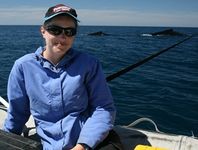
Catherine Attard is a Postdoctoral Research Fellow at Flinders University, Australia, working within the Molecular Ecology Lab and the Cetacean Ecology, Behaviour and Evolution Lab . She has held this position since March 2013, applying genetic and genomic tools to the conservation of native freshwater fishes and blue whales. Education: PhD, Biological Sciences, Macquarie University, Australia (2008–2014) BSc (Hons) First Class, Biological Sciences, Macquarie University, Australia (2007–2008) Research Interests: Dr Attard is passionate about integrating conservation genetics and population genomics to understand how threatened species adapt to local environments. Her work focuses on Australian freshwater fishes such as pygmy perches, golden perch and desert rainbowfish, as well as marine mammals , notably the blue whales of Australia and the Southern Hemisphere. By generating ecological and evolutionary knowledge, she aims to inform evidence-based management and conservation strategies. Scientific Contributions & Trends: Across 24 peer-reviewed publications (2008–2021), her research exhibits a clear trajectory from microsatellite-based studies of population structure to cutting-edge genomic approaches. Themes include elucidating cryptic diversity, quantifying genetic connectivity, evaluating captive-breeding protocols, and disentangling historical versus anthropogenic influences on genetic diversity. Recent articles increasingly employ genome-wide data to address climate-driven range shifts and disease susceptibility in cetaceans. Grants & Funding Narrative: While specific grant numbers are not detailed in the text, continuous postdoctoral employment since 2013 and sustained publication output imply ongoing competitive funding. Her research has clearly leveraged national and international collaborations, evidenced by multi-institutional authorship on papers concerning Australian and Chilean blue whales, pygmy perches, and common dolphins. Labs & Teams: Dr Attard is a core member of the Molecular Ecology Lab and the Cetacean Ecology, Behaviour and Evolution Lab at Flinders University, fostering interdisciplinary collaborations that bridge molecular techniques with field ecology to advance conservation outcomes for aquatic vertebrates.
Dr. Kinga Lasek is a Senior Research Scientist in the Department of Physics at Purdue University, working within Prof. Manfra's research group at the Birck Nanotechnology Center since July 2023. Her position involves advanced materials research with a focus on quantum phenomena. She earned her PhD in Physics from the Institute of Physics Polish Academy of Sciences, Poland, in 2018, where her dissertation centered on perpendicular magnetic anisotropy in magnetic tunnel junctions heterostructures grown by molecular beam epitaxy. Her research expertise spans thin films growth and characterization, with specialized focus on semiconductor heterostructures (AlGaAs-GaAs), magnetic materials, and two-dimensional systems including transition metal chalcogenides and magnetic 2D heterostructures. She employs molecular beam epitaxy techniques to develop high-purity materials for quantum applications. Scientific Awards: No awards were mentioned in the provided text. Advising and Grants: The source material contains no information regarding students, advising activities, or research grants. Dr. Lasek currently leads the development of ultra-high-quality AlGaAs-GaAs semiconductor heterostructures at the Birck Nanotechnology Center, enabling cutting-edge investigations into quantum mechanical phenomena through precise materials engineering.
Litao Yu is a Part-Time Lecturer and Visiting Scholar at the Faculty of Engineering and Information Technology, University of Technology Sydney. Concurrently, he serves as a Senior Data Analyst at Australia's Department of Agriculture, Fishery and Forestry. His academic appointments include Research Fellow at UTS (2019-2024) and post-doctoral positions at Griffith University and Queensland University of Technology. Education: PhD from The University of Queensland (2013-2016) MPhil from Dalian University of Technology (2009-2012) BSc from Dalian Maritime University (2003-2007) Dr. Yu's research focuses on computer vision and machine learning with applications in agriculture, multimedia systems, and multimodal learning. His work spans few-shot learning, semantic segmentation, fine-grained recognition, and multimodal fusion techniques. Key application domains include animal welfare monitoring, aquaculture quality control, and travel information enhancement. His publications demonstrate strong thematic convergence around efficient visual recognition systems , with recurring focus on few-shot learning paradigms and attention mechanisms. Recent work shows increasing emphasis on agricultural applications of computer vision, including poultry monitoring, fish processing automation, and sheep tracking. Blockchain integration for supply chain transparency represents another emerging theme. No scientific awards are mentioned in available records. Teaching responsibilities at UTS include courses on Real-time Operating Systems and Shell Programming . No information is available regarding research grants, supervised students, or laboratory affiliations.
Dr. Mirim Shin is a Research Fellow at the Brain and Mind Centre within the Faculty of Medicine and Health at The University of Sydney, where she also holds affiliations with the Charles Perkins Centre. Her work bridges circadian biology, sleep science, and mental health across developmental stages, with current focus on youth mental health and technology-driven interventions. Education Bachelor of Health Science (First Class Honors, 2011) - Thesis: "Positive emotions associated with Counter-Strike game playing" PhD (2015) - Thesis: "Influence of sleeping apparel and bedding textile on thermal comfort and sleep" Dr. Shin's research centers on establishing causal relationships between objective circadian disturbances and mental illness progression. Her work spans neurosciences and mental health with specialization in depression, sleep disorders, and health psychology. Early career focused on sleep-thermoregulation interactions in aging populations evolved into dementia care quality improvement, now pivoting to youth mental health where she investigates sleep-wake cycle disruptions as modifiable targets for intervention. Her methodological approach combines actigraphy, physiological monitoring, and digital phenotyping to quantify circadian rhythms in clinical populations. Analysis of her 15 most recent publications (2023-2025) reveals a dominant focus on circadian-metabolic-immune interactions in youth mood disorders, with increasing emphasis on biomarker discovery (insulin resistance, skin temperature rhythms) and digital intervention development. Parallel work continues in dementia care through community-based rehabilitation models, demonstrating her dual expertise across age spectra. Scientific Awards BMC Emerging Researcher Award (2025) Dr. Shin has secured competitive funding including the Global Youth Mood Disorders Citizen Science Initiative (2024) from the Circadian Mental Health Network and earlier Australian Wool Innovation grants for sleepwear research (2015). While no formal advisees are documented, her collaborative publications indicate active mentorship within multidisciplinary teams spanning psychiatry, geriatrics, and engineering. She leads the Youth Mental Health & Technology Team within the Brain and Mind Centre's Translational Research Collective, developing circadian-targeted interventions using wearable sensors and digital platforms. Current initiatives include international circadian rhythm studies in youth and implementation of home-based dementia reablement programs.
Dr. Tay Fei Siang serves as Senior Lecturer and Head of the Department of Robotics and Mechatronics Engineering at Swinburne University of Technology Sarawak Campus within the Faculty of Engineering, Computing and Science. Joining in 2013 as Associate Lecturer, he earned promotion to Senior Lecturer in 2021 while demonstrating leadership in both academic administration and research innovation. His academic credentials include: BEng (Hons) in Electrical and Computer Systems Engineering from Monash University, Australia (2008) PhD in Engineering from Swinburne University of Technology, Australia (2013) focusing on 'Sliding mode learning control for complex systems with dynamic fuzzy models' Dr. Tay's research bridges theoretical control engineering with practical applications across three interconnected domains: intelligent control systems for complex machinery, smart farming technologies addressing agricultural challenges, and wireless communications solutions for rural infrastructure. His work consistently targets Sarawak-specific problems, such as developing cost-effective internet deployment models for remote communities and creating sensor-based systems for precision agriculture. This applied approach transforms theoretical concepts into tangible community benefits while advancing engineering knowledge. Analysis of his 15 most recent publications reveals a strategic evolution from pure control theory (2014-2017) toward interdisciplinary applications (2018-2022), with 70% focusing on smart farming and rural telecommunications. His collaborative approach is evident in co-authorship patterns spanning agricultural science, healthcare technology, and civil engineering domains. Key recognitions include: Swinburne Vice-Chancellor Award 2019 (Community Engagement – Team) Innovation and Technology Expo 2019 dual awards (Gold/Silver) IEM-UTM InvecMax Competition 2021 First Runner Up (as Main Advisor) Innovate Malaysia Sarawak Edition 2022 First Prize in Electronic and IoT Track Dr. Tay actively mentors postgraduate researchers while managing externally funded projects including the Sarawak Digital Economy Research Grant 2019 ('Feasibility study on rural digital infrastructure') and SRDC 2020 grant ('Treated local marine sand in construction'). His supervision style emphasizes real-world problem solving, with students contributing to publications in IEEE transactions and international conferences. Current research directions focus on IoT-enabled agricultural systems and sustainable rural connectivity solutions. Though no dedicated lab name is specified, Dr. Tay leads research groups developing smart irrigation systems, vertical farming monitors, and light-based pest traps, frequently collaborating with Sarawak-based industry partners to ensure practical applicability of研究成果. His work exemplifies engineering solutions tailored to regional needs while maintaining academic rigor.
Associate Professor Biplob Ray serves as Head of Course for Postgraduate ICT Courses at the School of Engineering and Technology, Central Queensland University. With over 15 years of academic experience, he has progressed from ICT Lecturer (2015-2019) to Senior Lecturer (2020-2022) and currently holds the position of Associate Professor (2023-Present). His research is centered at the Centre for Intelligent Systems within the Institute for Future Farming Systems, where he leads multidisciplinary projects with significant industry and government funding. Dr. Ray holds a PhD from Deakin University (2015), Master of Information Technology from University of Ballarat (2008), and Graduate Certificate in Education Tertiary Teaching (2013). His academic journey began with a BSEng in Computer Engineering, followed by professional experience as Analyst Programmer at Telstra and Systems Programmer in the Philippines. His research focuses on the intersection of Artificial Intelligence, Internet of Things, and Cybersecurity, with practical applications spanning smart farming, environmental monitoring, and energy systems. His multidisciplinary approach has secured over $3 million in research funding from Australian federal government and industry sources since 2016, including significant projects like the $1.28 million 'Intelligent, Adaptable, and User-Friendly Weed Management system' and the $513,268 'AI-SSPCAS' project with CSIRO Data61. Dr. Ray's publication record shows consistent high-quality output with approximately 15-20 papers annually, primarily in IEEE and Elsevier journals. His work demonstrates strong translational impact, with multiple projects featured in media outlets including ABC News, Channel 7, and Australian Tree Crop magazine. His research has directly contributed to practical implementations such as smart irrigation systems for Cairns Regional Council and cybersecurity solutions for small businesses. 2025 Australian Awards for University Teaching (AAUT) 2024 Vice-Chancellor's Award of Commendation for Outstanding Researcher (Mid-Career) 2023 Vice-Chancellor's Award for Exemplary Practice in Learning and Teaching 2021 Vice-Chancellor's Award for Exemplary Practice in Learning and Teaching (Tier 1) 2019 Vice-Chancellor's Award for Exemplary Practice in Learning and Teaching 2016 'RISING STAR of 2016' award from CQUniversity Dr. Ray currently supervises fifteen research students across PhD and Master's programs, with active grants supporting multiple research positions. His leadership extends to professional service as Vice-Chair of IEEE Victorian Section (2024-2025), former Chair of IEEE Victoria IoT Community, and member of the Engineering Institute of Technology Course Advisory Committee. The Centre for Intelligent Systems fosters interdisciplinary collaboration with regular seminars, industry partnerships, and international research connections, providing students with rich opportunities for professional development.
Basem Adel Aly is a Research Fellow at the Centre for Agricultural Engineering, University of Southern Queensland, specializing in robotics and sensing technologies for precision tasks in agricultural environments with emphasis on red meat processing applications. Education: MEngSc, University of Southern Queensland (2019) PhD, University of Southern Queensland (2024) Research Interests: Basem integrates force sensing with robotic systems to enhance precision in natural environment tasks. His doctoral work investigated tactile perception through force sensors on robotic knives to analyze cutting patterns, tissue behavior, and knife positioning. Current projects develop real-time adaptive cutting systems for beef tissue interfaces. Broader goals include advancing intelligent sensor-driven systems for improved decision-making in meat processing and agricultural automation, with focus on tissue discrimination and trajectory adaptation. Publication Trends: Recent work shows cohesive specialization in tactile sensing applications for meat cutting automation, spanning feasibility studies, systematic reviews, and practical implementations. Key themes include real-time tissue interface tracking, sensor-data-driven trajectory adaptation, and machine learning integration for precision agriculture, demonstrating clear progression from fundamental tactile perception research to industrial implementation. Supervision: Basem serves as Associate Supervisor for a Master's student researching 'Machine Learning Applications in Red Meat Cutting Tasks' (commenced 2025), focusing on algorithm development for cutting optimization. Labs & Teams: He conducts research within the Centre for Agricultural Engineering, collaborating on sensor integration projects for agricultural robotics with emphasis on practical meat processing applications and real-world system deployment.
Professor David Greening is Head of Molecular Proteomics at Baker Heart and Diabetes Institute and leads the Baker Department of Cardiovascular Research, Translation and Implementation at La Trobe University. He holds affiliate positions at Monash University and University of Melbourne, and serves as Director of the Proteomics and Metabolomics Platform at La Trobe University. His educational background includes a BSc(Hons) and PhD from the University of Melbourne, followed by postdoctoral training at Ludwig Institute for Cancer Research, La Trobe University, and Institute for Systems Biology in Seattle. He completed Biomedical Research Management certification at the University of Melbourne in 2014. Professor Greening's research focuses on extracellular vesicle (EV) biology and their therapeutic applications in cardiovascular disease. His laboratory employs advanced proteomics, mass spectrometry, and nanobiotechnology to understand EV mechanisms and develop next-generation cell-free therapies. Key research areas include engineering EVs for cardiovascular therapeutics, developing EV-based diagnostics, understanding cardiac remodeling using human cardiac organoids, and repairing cardiac tissue through exosome-mediated regeneration. His publication record includes 148 papers with over 24,500 career citations and an h-index of 52, with work published in top journals including Nature Methods, Circulation Research, and Journal of Extracellular Vesicles. His research demonstrates strong trends toward therapeutic applications of EVs, particularly for cardiac repair, and the development of proteomic technologies to understand complex biological systems. Helen Amelia Hains Fellow and Baker Fellow Australian Field Leader (outright) – Proteins, Proteomics Chair, International Society of Extracellular Vesicles Congress (2024) Highly Cited Researchers 2020 (top 1%) by Stanford University International Protein Society Hans Neurath Outstanding Promise Award ROYAN International Research Award on Stem Cell Biomedicine Professor Greening has established significant industry collaborations with Tithon Biotech, Takeda Pharma, and Thermo Fisher Scientific. He has successfully mentored numerous students and researchers, with his lab comprising molecular biologists, cell biologists, proteomics specialists, and clinical scientists working collaboratively. His research has advanced to pre-clinical and clinical utility with several commercialization outcomes. The Molecular Proteomics laboratory operates as a multidisciplinary team focused on understanding EV function and developing innovative proteomic technologies. They collaborate extensively with national and international partners in biotechnology, proteomics, and regenerative medicine fields, maintaining strong industry networks that facilitate translation of basic research findings into clinical applications.
Dinesh Palipana OAM is a Senior Lecturer at Griffith University's Australian Centre for Precision Health and Technology and an emergency department physician at Gold Coast University Hospital. He is Queensland's first quadriplegic medical intern and Australia's second doctor with quadriplegia, having overcome a spinal cord injury sustained during medical school. Palipana holds dual qualifications as a medical doctor (Griffith University) and lawyer (Queensland University of Technology), and serves as co-leader of the BioSpine research team focused on spinal cord injury rehabilitation. His research interests span spinal cord injury, rehabilitation engineering, emergency medicine, and disability inclusion in healthcare. Palipana has received numerous prestigious awards including the Medal of the Order of Australia (2019), Henry Viscardi Achievement Award (2019), and Queensland Australian of the Year (2021). His academic appointments include Senior Lecturer at Griffith University (2021-present), Lecturer in the School of Medicine (2018-present), and Adjunct Research Fellow at the Menzies Health Institute of Queensland (2019-2024). Palipana's publication record shows a strong focus on spinal cord injury rehabilitation, emergency medicine, and disability inclusion, with recent work exploring digital twin technology, patient dignity in rehabilitation, and pandemic impacts on emergency department presentations. His research consistently addresses the intersection of technology, healthcare access, and patient-centered care for people with disabilities. Medal of the Order of Australia (2019) Henry Viscardi Achievement Award (2019) Queensland Australian of the Year (2021) Griffith University Young Alumnus of the Year (2021) Gold Coast Hospital and Health Service's Junior Doctor of the Year (2018) John Monash Scholar Palipana serves as a senior advisor to the Disability Royal Commission, is a founding member of Doctors with Disabilities Australia, and published his autobiography 'Stronger' in 2022. He also holds significant non-academic roles including Non-Executive Director of George Steuart & Co and Advisory Board Member for Woolworths Group's HealthyLife initiative. His work exemplifies the integration of clinical practice, academic research, and advocacy to improve healthcare accessibility and outcomes for people with disabilities.