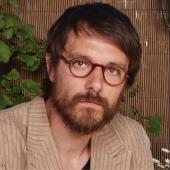
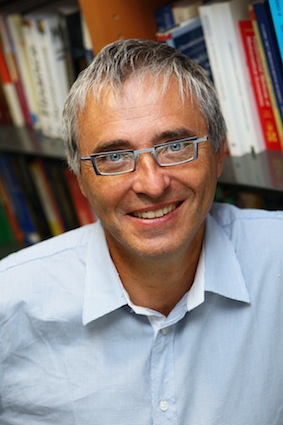
Hugues Chenet is an Associate Professor at IÉSEG School of Management, specializing in Strategy and Sustainability. He holds a Ph.D. in Internal Geophysics from University of Paris VII and maintains affiliations with University College London as Honorary Senior Research Fellow. His professional trajectory includes roles at Ecole Polytechnique Paris and Japan FSA Financial Research Center. Research focuses on climate finance, sustainability transitions, and ecological economics, examining intersections between financial systems and planetary boundaries. Recent work explores biodiversity loss impacts on financial stability and climate investment challenges in developing economies. Awards include recognition from the European Institute for Advanced Studies in Management (2024) for advancing climate finance discourse. Publications demonstrate consistent focus on systemic financial reforms required for ecological sustainability.
Professor Ellie Lee is a leading academic in the School of Social Policy, Sociology and Social Research at the University of Kent, where she serves as Director of the Centre for Parenting Culture Studies. Her work focuses on abortion policy, family policy, and the sociological analysis of health and risk. She joined Kent in 2004 after roles at Southampton University, including a PhD in the Centre for Women’s Studies. Her research explores how societal issues like infant feeding, alcohol consumption in pregnancy, and IVF assessments become framed as policy concerns. Key projects include ESRC-funded studies on 'neuroparenting' and medicalization. Lee frequently engages with media and policy discussions, critiquing the moralization of parenting practices. Teaching includes modules on reproductive health and social policy at undergraduate and postgraduate levels. She advises students on topics such as abortion law, parenting culture, and health policy. Her contributions span over 70 publications, including books like Parenting Culture Studies (2014) and Abortion, Motherhood, and Mental Health (2003). She co-founded the Centre for Parenting Culture Studies in 2010 to analyze societal constructions of parenting as a 'social problem.'
Christian Gollier is currently Director of the Toulouse School of Economics (TSE) at the University of Toulouse, where he has been a Professor of economics since 1992. He holds an ERC Advanced Grant for "Evaluation and management of collective long-term risks" and is recognized as one of the world's leading specialists in climate change economics. His research spans multiple domains with primary focus on: Decision Theory under Uncertainty (precautionary principle, dynamic choice, behavioral economics) Finance Theory (portfolio choice, asset pricing) Environmental Economics (long term discounting, sustainable development) Insurance Economics and Cost-Benefit Analysis Corporate social responsibility with emphasis on long-term sustainable effects Gollier has published approximately 100 articles in top-tier economic journals (Google Scholar h-index: 41) and authored 7 books including "The Economics of Risk and Time" (MIT Press, winner of the 2001 Paul A. Samuelson Award) and "Pricing the Planet's Future" (Princeton UP, 2012). His scholarly output demonstrates consistent progression from theoretical risk analysis toward increasingly policy-relevant climate economics research. Among his numerous distinctions: Fellow of the Econometric Society (2012) Erik Kempe Award (2011) Senior member of the Institut Universitaire de France (2009) ERC Advanced Grant recipient (2008) Paul A. Samuelson Award (2001) Lead Author for IPCC Reports (2007 and 2013) Gollier has served as Associate Editor for major journals including the Geneva Papers on Risk and Insurance Theory, Journal of Risk and Uncertainty, and Management Science. He maintains significant industry connections as board member of La Mondiale (top-ten French life insurer) and chairman of the Observatory of European Saving Advisory Council. His influential work on discount rates for public policy evaluation has shaped economic approaches to climate change mitigation worldwide.
Shashi Yadav is a Lecturer at the Law Department of Northumbria University. He holds a PhD from the University of Surrey (2021–present), an LLM from Central European University (2020–2021), and an LLB (Hons) from the University of Petroleum and Energy Studies (2008–2013). His research focuses on climate law, energy regulation, and public interest litigation in India, with particular emphasis on environmental justice and sustainable development goals. Yadav collaborates internationally, examining regulatory challenges in fracking, shale gas, and oil/gas sector governance. His work contributes to UN Sustainable Development Goals related to climate action and responsible consumption. Recent studies analyze procedural justice in shale gas regulation, water security gaps in fracking practices, and the role of Indian judiciary in balancing corporate interests with public environmental rights. His publications blend legal theory with policy analysis, drawing insights from comparative energy law frameworks.
Michael Brogan is an Associate Professor in the Department of Government, Politics and Law at Rider University , New Jersey. His research focuses on comparative voting behavior , campaign finance , public budgeting , and environmental politics , with methodological expertise in quantitative modeling and applied statistics . He has taught courses on American politics , congressional politics , and environmental policy . Ph.D. in Public Policy/American Government from The Graduate Center, The City University of New York (2009) MPA with Peace Corps scholarship (Rutgers University, 2001) BA in Political Science (University of Delaware, 1996) His research explores how economic perceptions and political institutions shape budget forecasting errors and electoral outcomes, particularly in U.S. and U.K. contexts. His work bridges political economy and applied statistics , with a focus on energy policy , corruption , and fiscal accountability . Recent publications analyze corruption dynamics , budget forecasting , and energy infrastructure risks . He is an active member of the American Political Science Association and International Political Science Association , and has received multiple Rider University research fellowships . His community engagement includes expert testimony on renewable energy and pipeline safety .
Associate Professor Nick Osbaldiston is a sociologist affiliated with James Cook University (JCU) since 2015, working in the College of Arts, Society and Education. He also serves as a research fellow at the Cairns Institute. His research focuses on lifestyle migration, internal migration, social theory, coastal sociology, higher education labor dynamics, and climate change adaptation. Notable publications include Understanding Lifestyle Migration (2014) and The Social Structures of Global Academia (2019). He has held roles at the University of Melbourne, Monash University, and Federation University. Research interests include migration patterns, coastal communities, and academia's social structures. Current projects explore post-COVID migration trends and a cultural sociology of coasts (projected 2026). He supervises students in sociology, geography, and planning. Awards include the JCU Rising Star Award (2017) and Inclusive Practice Award (2019). Teaching spans sociology, social theory, qualitative and quantitative methods, and demography. He contributed to textbooks like Exploring Sociology in the Antipodes (2024). Editorial roles include Australian Planner and American Journal of Cultural Sociology .
Dr. Christian Dorninger is a researcher at the Institute for Social Ecology , part of the Department of Economic and Social Sciences at the University of Natural Resources and Life Sciences, Vienna (BOKU) . He holds a doctorate in Sustainability from Leuphana University Lüneburg and has held postdoctoral and visiting scholar positions at institutions including the Konrad Lorenz Institute and the University of Maryland. His current research focuses on socio-ecological metabolism, climate justice, and transformative sustainability pathways. His educational background includes a Mag. in International Development and a BA in Sociology from the University of Vienna, and an M.Sc. in Social and Human Ecology from Alpen-Adria University Klagenfurt. His interdisciplinary training supports his work at the nexus of environmental sociology, ecological economics, and sustainability science. Dorninger’s research centers on structural drivers of environmental degradation , including ecologically unequal exchange, global supply chains, and the social dimensions of climate policy. He investigates how industrialization, globalization, and consumption patterns impact resource use and emissions, with a particular focus on urban and national-level footprints. His work emphasizes transformative change , exploring leverage points in food and energy systems, the role of time use in sustainability, and the potential for circular and regenerative economies. His 15 most recent publications reveal a strong trend toward interdisciplinary sustainability science , integrating political economy, ecological modeling, and social theory. Key themes include imperial appropriation in the global economy, socio-ecological niche construction, and the integration of precautionary principles in pandemic response. His research consistently addresses global environmental justice and systemic inequality. Dorninger is an active contributor to scientific discourse, serving as a reviewer for leading journals such as Nature Sustainability , Global Environmental Change , and Ecological Economics . He is involved in several externally funded research projects, including those focused on regionalized energy transitions, carbon footprinting for Austrian states, and circular economy strategies for Vienna. He is engaged in knowledge transfer through policy-oriented reports and public outreach, including contributions to initiatives like the APCC Special Report on climate-friendly living structures. He collaborates with interdisciplinary teams across BOKU and European institutions, contributing to large-scale research efforts on sustainable development and climate justice.
Antoinette Hildering is an Associate Professor at Nyenrode Business University’s Expertise Center for Entrepreneurship, Governance & Stewardship. Specializing in international and European law, her research focuses on water law, sustainable development, and the human right to water. She teaches courses on international law and integrates ecological, economic, and social sustainability into her work. Her academic career includes roles at Erasmus University Rotterdam, the University of Amsterdam, and Utrecht University, alongside practical experience in development organizations and the International Criminal Tribunal for the former Yugoslavia. She authored International Law, Sustainable Development and Water Management (2004) and contributes to publications on transboundary water governance and legal frameworks. She also runs Hildering MC2 - Mediation Consultancy Coaching and serves in leadership roles for NGOs. Her research emphasizes balancing ecological, economic, and social aspects of water management, advocating for legal frameworks that ensure equitable utilization. Notable works include analyses of the UN Watercourses Convention, indigenous water rights, and Mediterranean Sea pollution. She emphasizes ‘Guardianship over Water’ as a governance model, fostering responsible leadership at Nyenrode.
Judith Jones is an Associate Professor at the ANU College of Law, specializing in environmental law, legal history, and risk regulation. She holds a BSc from the University of Sydney and a LLB from the University of New South Wales. Her research focuses on regulatory design in conditions of scientific uncertainty, the historical evolution of environmental law in Australia, and sustainable land-use practices. Judith has served on federal advisory bodies for gene technology regulation and currently participates in the ANU Institutional Biosafety Committee. Her teaching includes courses on Foundations of Australian Law, Environmental Law, and Biodiversity Law and Policy. She emphasizes self-directed learning and integrates interdisciplinary perspectives, particularly in teaching law to non-lawyers. Judith’s work bridges legal frameworks with environmental science, addressing challenges such as climate change, soil conservation, and irrigation development in northern Australia. Key research initiatives include the Resilience Initiative for Food and Agriculture (RIFA), the Zero Carbon Energy for the Asia-Pacific Initiative (ZCEAP), and projects on water resource assessments. She has contributed to policy analysis on citizen suits in environmental litigation and historical studies of soil conservation legislation.
Jack Pezzey is an Honorary Associate Professor at the Fenner School of Environment and Society, Australian National University (ANU). He holds a BA in Mathematics from Cambridge, an MSc in Economics from the University of London, and a PhD in Economics from the University of Bristol, focusing on sustainability and environmental policies. His research spans sustainability economics, climate policy, and the comparison of carbon tax versus emissions trading systems. Pezzey has advised on climate policy, contributed to over 46 publications, and supervised numerous students. He is a founding member of the Economics and Environment Network at ANU and has received awards in the UK, USA, and Australia. Education: BA (Applied Mathematics and Theoretical Physics), University of Cambridge, 1976 MSc (Economics), University of London, 1983 PhD (Economics), University of Bristol, 1994 Research Focus: Global sustainability under environmental constraints Climate policy design (carbon pricing vs. emissions trading) Economic analysis of sustainability metrics like adjusted net savings Key Contributions: Advocated for carbon tax thresholds to improve policy efficacy Explored inequities in solar PV distribution Highlighted uncertainties in climate cost estimation Grants & Collaborations: Economics of Sustainability Hub (ANU, 2007–2011) Energy Transitions Research (ANU, 2012–2015) Labs/Teams: Fenner School's interdisciplinary teams on environmental policy and sustainability.
Luiz Gaspar Costa is a researcher affiliated with the Faculty of Law, specializing in data protection, privacy law, and legal frameworks for emerging technologies. His work spans comparative legal analysis, particularly focusing on Brazilian and European contexts. Education: Doctorate in Law (Faculty of Law) Master of Laws, Université Paris 1 Panthéon-Sorbonne (2008-2009) Bachelor of Laws, Pontifícia Universidade Católica de São Paulo (1994-1998) His research explores intersections between privacy, ambient intelligence, and data security. Publications include books and peer-reviewed articles on Convention 108, legal standards, and the precautionary principle in digital contexts. Recent articles (2012-2016) address virtuality in ambient intelligence, Brazilian data protection law, and regulatory challenges for RFID technology. Themes emphasize legal adaptation to technological advancements. Activities include invited talks at the International Conference of Data Protection and Privacy Commissioners (2015, 2016) and contributions to legal discourse on digital privacy.
Neil Perry is an Associate Professor and Research Lecturer in Corporate Social Responsibility & Sustainability at the School of Business, Western Sydney University. He holds a Doctor of Philosophy from La Trobe University. His research focuses on sustainable development, environmental economics, and housing policy, with notable contributions to biodiversity conservation, urban equity, and cooperative housing models. Perry has authored over 29 publications and led 9 research projects, including the Cumberland Plain Conservation Plan and studies on housing cooperatives. His work aligns with UN Sustainable Development Goals, particularly addressing climate action, reduced inequalities, and sustainable cities. Perry has received the Excellence in Research Leadership & Development Prize (2024) and contributed to policy briefs like A Way Home and Double or Nothing? . He collaborates extensively on regional growth strategies, cost-benefit analysis frameworks, and environmental impact assessments. Perry's research integrates economic theory with practical policy solutions, emphasizing participatory approaches to urban challenges. He has engaged with media on topics ranging from native vegetation protection to kangaroo harvest management, demonstrating commitment to public discourse on sustainability issues.
Sonia Elise Rolland is a Professor of Law at Northeastern University School of Law. She holds degrees from Institut d'Études Politiques de Paris (BA), Université Paris-10 (MA), University of Michigan (JD), and Cambridge University (PhD). Her work focuses on legal frameworks for sustainable development, international economic law, and the intersection of transnational legal regimes. Her research spans public international law, international economic law, and development, with a particular emphasis on environmental law and energy regulation. She has contributed to journals such as the Journal of International Economic Law , Harvard International Law Journal , and European Journal of International Law . Rolland’s publications, including her books Emerging Powers in International Economic Law (2019) and Development at the WTO (2012), highlight her expertise in trade law, sustainable development, and international economic governance. Her 2002 article on the precautionary principle influenced the United Nations International Law Commission’s resolution. 2020: Northeastern University’s Award for Excellence in Research and Creative Innovation She has served as visiting professor at Columbia University School of Law and Georgetown University, and she clerked at the International Court of Justice. Currently, she is a member of the American Society of International Law’s executive council and editor of ASIL Insights .
Jing Ai is a Professor of Finance, Risk Management and Insurance at the Shidler College of Business, University of Hawaii at Manoa, where she holds the First Insurance Company Distinguished Professorship. She serves as Director of the Ph.D. Program and Faculty Advisor for the Insurance & Risk Management Track. Her academic credentials include a PhD in Risk Management and MS in Information, Risk, and Operations Management from the University of Texas at Austin (2008), and a BS in Finance from Tsinghua University (2003). Research Focus: Professor Ai's interdisciplinary research spans insurance markets, behavioral economics, regulatory frameworks, and quantitative risk modeling. Key areas include: Behavioral dynamics in insurance decision-making Enterprise risk management optimization techniques Advanced fraud detection methodologies Longevity risk and retirement solutions Cyber risk contagion modeling Efficiency in insurance operations Her work integrates actuarial science, finance, and behavioral economics to address contemporary challenges in risk transfer mechanisms. Publication Analysis: Her 15 most recent publications (2009-2022) demonstrate consistent focus on insurance market efficiency, behavioral anomalies in risk-taking, and innovative risk quantification methods. Dominant themes include fraud detection systems (healthcare, financial), behavioral contract design, enterprise risk interdependencies, and specialized risk transfer solutions (cyber, weather, longevity). Methodologies range from theoretical modeling to empirical data analysis using advanced statistical techniques. Awards & Honors: Most Outstanding Journal Article Award - Society of Actuaries (2016) Spencer L. Kimball Writing Award - NAIC (2015) Shidler Faculty Fellow (2012-2014) Shirley M. Lee Research Award (2011) Hagen Family Foundation Award (2009) Academic Leadership: As Ph.D. Program Director, she oversees graduate research development in finance and risk management. Advises students in the Insurance & Risk Management specialization, developing curriculum that bridges theoretical frameworks and industry applications. Teaches core courses including Principles of Insurance, Enterprise Risk Management, and Insurance/Risk Management graduate seminars.
Zahra Meghani is an Associate Professor of Philosophy at the University of Rhode Island, where she teaches and conducts research in the Department of Philosophy. Her work spans multiple interdisciplinary fields connecting ethics, social and political philosophy, and feminist theory with practical issues in public health, biotechnology, and migration. Dr. Meghani earned her Ph.D. from Michigan State University in 2006. Her academic journey has focused on bridging theoretical philosophical frameworks with real-world ethical challenges, particularly those affecting vulnerable populations. Her research interests center on Ethics, Social and Political Philosophy, and Feminist Theory, with specializations in Feminist Epistemology and Feminist Philosophy of Science. She also explores the philosophical dimensions of technology, particularly in relation to biotechnology and public health. Her work often addresses issues of justice, power dynamics, and the ethical implications of scientific and technological developments. Analysis of Dr. Meghani's publication record reveals a consistent focus on the ethical dimensions of emerging biotechnologies, particularly gene drives and genetically engineered organisms, and their implications for public health and environmental governance. She has also made significant contributions to understanding the ethical challenges faced by migrant women workers, examining the intersection of immigration policy, labor rights, and gender justice. Her work demonstrates a commitment to connecting philosophical theory with practical ethical concerns in global health, biotechnology regulation, and social justice. Dr. Meghani has served as editor for important scholarly works, including "Women Migrant Workers: Ethical, Political and Legal Problems" (2015) and "Michael Ryan's Writings on Medical Ethics" (2009), demonstrating her leadership in bringing together interdisciplinary perspectives on complex ethical issues. Her work suggests active engagement with students and colleagues through advising and collaborative research, particularly in the areas of bioethics, feminist philosophy, and the ethics of technology. While specific grant information is not provided in the available materials, her extensive publication record indicates sustained research activity in her areas of expertise.