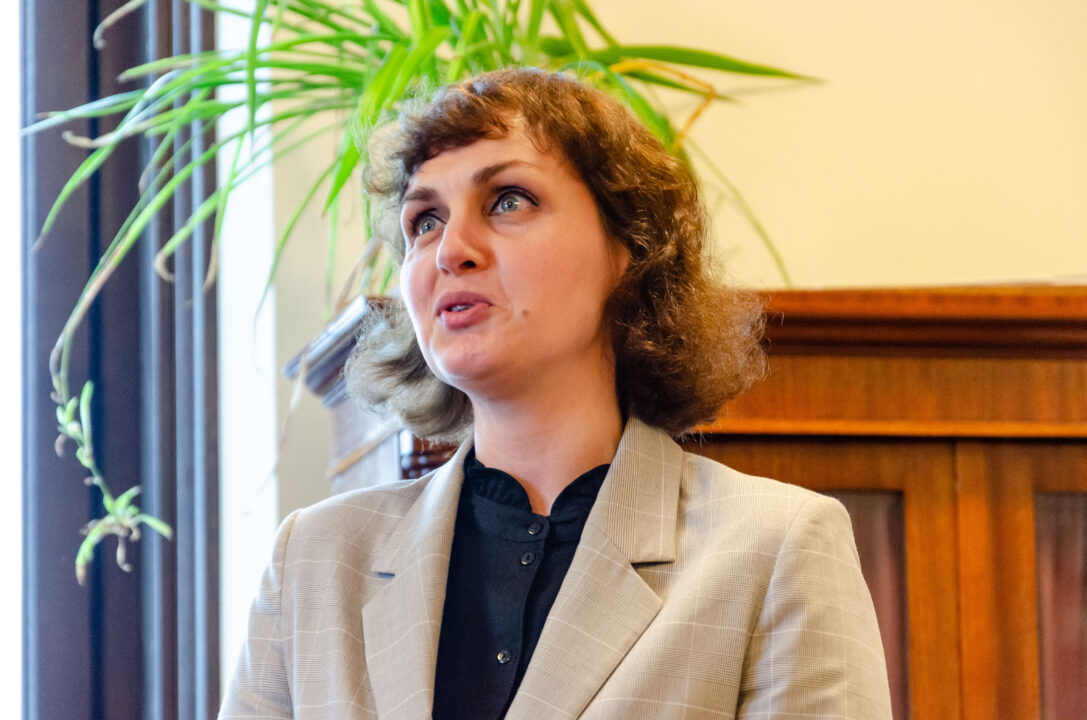
Götz Gresser is a Professor at the Institute for Textile and Fiber Technologies (ITFT) , affiliated with the University of Stuttgart . He serves as Principal Investigator in the Integrative Computational Design and Construction for Architecture (IntCDC) cluster and Director of the German Institutes for Textile and Fiber Research Denkendorf (DITF) . His work spans technical textiles, fiber-reinforced composites, and adaptive architectural systems. Experience in textile value chain research Focus on coreless filament winding and bio-inspired compliant mechanisms Developed adaptive façades with integrated photovoltaics (FlectoSol, Flexafold) Contributed to planetary sunshade concepts for climate mitigation Research Trends : His recent publications emphasize coreless filament winding for lightweight structures pneumatically actuated adaptive systems integration of sensors and feedback in composite manufacturing space-based applications of fiber composites digital fabrication workflows sustainable material systems
Sean Ahlquist is an Associate Professor of Architecture at the University of Michigan's Taubman College of Architecture and Urban Planning, where he serves as Director of the Master of Science in Digital Material Technologies (DMT) program. He leads the Lab for Socio-material Architectures and is a member of the Cluster in Computational Media and Interactive Systems, connecting architecture with material science, computer science, and performing arts technology. His research centers on developing malleable, sensory-responsive environments that foster social behavior for individuals with disabilities, particularly children with autism spectrum disorder. This work, inspired by his autistic daughter Ara, employs industrial knitting technologies and involves collaborations across disciplines including materials science, civil engineering, kinesiology, psychiatry, and behavioral science. His installations have been featured at the Venice Architecture Biennale, Lincoln Center's Big Umbrella Festival, and various educational and therapeutic settings. Ahlquist's publications and projects explore themes of inclusive design, computational material systems, and neurodiverse spatial experiences. His work demonstrates how architecture can leverage computational design and material technologies to create more inclusive spaces for underserved communities. ACADIA Innovative Research Award of Excellence (2020) Featured in ARCHITECT Magazine as Game Changer (2022) Recipient of U-M Sustainability Catalyst Grants (2024) Ahlquist teaches across all academic programs at Taubman College, from undergraduate to PhD levels. His students engage in multi-year collaborations with the Ann Arbor Center for Independent Living (AACIL), developing design methodologies that integrate disability theory with technical material fabrication skills. His work with the local Ann Arbor community includes partnerships with public schools, children's museums, and disability organizations to create inclusive environments that address real-world challenges.
Agnieszka Jędrzejewska is a researcher at the Department of Structural Engineering , Faculty of Civil Engineering , Silesian University of Technology , Poland. She specializes in the analysis of cracking in concrete structures due to thermal, shrinkage, and imposed strains, with a focus on sustainability and robustness of cement-based materials. Research Interests : Thermal cracking, early-age concrete behavior, sustainable materials (e.g., self-healing concrete, 3D-printed mortar), numerical modeling, crack prevention techniques. Awards : Recipient of the Scientific Award of the 4th Division of the Polish Academy of Sciences (2024) for her series of works on 'Cracking of Special Structures Under the Action of Imposed Deformations.' Her recent publications highlight interdisciplinary approaches to improving concrete sustainability (e.g., alccofine 1203, GGBS, kaolin) and advancing computational models for crack prediction. She contributes to standardization efforts (e.g., prEN 1992-1-1) and collaborates on international projects (e.g., RILEM TC 287-CCS, COST TU1404).
Manan Arya is an Assistant Professor of Aeronautics and Astronautics at Stanford University, leading the Morphing Space Structures Laboratory. His research focuses on shape-adaptive structures for space and terrestrial applications, including deployable spacecraft systems, morphing robots, and composite materials. Prior to Stanford, he worked at NASA's Jet Propulsion Laboratory, developing breakthrough designs for space structures like deployable reflectarrays and solar arrays. He holds a PhD from Caltech and has published over 20 papers and 5 patents. Education: PhD, Space Engineering, California Institute of Technology (2016) Masters, Space Engineering, California Institute of Technology (2012) BASc, Engineering Science, University of Toronto (2011) Research Interests: Deployable space structures for compact stowage and in-space deployment Morphing robots and variable-geometry terrestrial systems Composite materials for lightweight structures Algorithmic generation of morphing structure geometries Publications: Focus on deployable mechanisms, starshade technologies, and lunar radio telescopes Recent works include analysis of elastic hinges, lunar crater telescope modeling, and origami-inspired structures Awards/Grants: 5 US patents granted Advising & Teaching: Advises multiple PhD and master's students in aerospace engineering Teaches courses on spacecraft design, structural stability, and aeronautics fundamentals Labs/Teams: Director of the Morphing Space Structures Lab at Stanford Collaborates with NASA JPL and Caltech on space structure projects
Prof. John P. Dear is a Professor of Mechanical Engineering at Imperial College London's Faculty of Engineering, leading the Composites, Adhesives and Soft Solids (CASS) Group. He holds affiliations with the Mechanics of Materials Division and the Composites Centre. With a 35-year academic career, he specializes in structural integrity, manufacturing effects, and material behavior under extreme conditions. His research spans polymers, composites, and blast-resistant materials, with over 400 publications and 66 supervised PhDs. Education: St John's College and Cavendish Laboratory, Cambridge University (BSc and PhD in Materials Science), followed by a Hertha Ayrton Research Fellowship at Girton College, Cambridge. Research interests include composite materials, blast performance of laminated glass, creep life assessment, and high-strain rate material properties. His work integrates experimental and computational methods, with notable contributions to lightweight materials and failure criteria modeling. Awards include Fellowship of the Royal Academy of Engineering (2023), FREng, CEng, FIMechE, CPhys, and FInstP. He secured grants from EPSRC, ONR, and the European Commission, focusing on defense, aerospace, and medical applications. Labs/Teams: Heads the CASS Group (8 academics) and collaborates on projects like structural applications of composites and additive manufacturing. Public talks include a Royal Society Discussion Meeting lecture (2021) and a 2013 Imperial College lecture on 'Materials at their limit.'
Dr. Junyi Lee is a Researcher in the Department of Mechanical Engineering at Imperial College London, affiliated with the Metal Forming and Materials Modelling research group. His work focuses on developing lightweight aerospace materials and structural systems through advanced modeling and testing. He holds an MEng (Hons) in Mechanical Engineering from Imperial College London. Research Interests: Dr. Lee specializes in aluminum foam sandwich structures, investigating their mechanical properties, energy absorption, and applications in aerospace and automotive industries. His research integrates experimental characterization with computational modeling to optimize material design and manufacturing processes. Key areas include microstructural analysis of alloys, crystal plasticity modeling, and thermal-mechanical behavior of advanced materials. Key Contributions: His studies span auxetic metamaterials, in-situ diffraction experiments, and static recrystallization processes. He collaborates widely, contributing to projects like the 6 PhD Studentships in EAF recycled steels. His work addresses challenges in additive manufacturing, hot stamping, and vibration isolation using periodic structures. Advising & Grants: While no advisees are listed, he participates in funding initiatives like the EAF recycled steel studentships. His lab focuses on material innovation, combining experimental and numerical approaches to advance lightweight structural materials.
Sergio Pellegrino is the Joyce and Kent Kresa Professor of Aerospace and Civil Engineering at California Institute of Technology and a Jet Propulsion Laboratory Senior Research Scientist. He co-directs the Space-Based Solar Power Project and directs the Graduate Aerospace Laboratories. His research spans structural mechanics, deployable space structures, and composite materials. Aerospace & Civil Engineering Professor JPL Senior Research Scientist Co-Director, Space-Based Solar Power Project Director, Graduate Aerospace Laboratories His work focuses on lightweight deployable structures for space applications, including ultra-thin composites, deployment kinematics, and stability analysis. Key projects involve the Space Solar Power Demonstrator and modular telescope assembly. Publications emphasize dynamics, failure modeling, and novel packaging concepts. Recent research trends include multi-configuration rigidity theory, vibration damping in coiled structures, and scalable mesh reflector antennas. His Google Scholar articles (2022-2025) cover topics like bistable structures, thin-shell deployment, and fiber Bragg grating sensors, reflecting expertise in aerospace structural innovation. AIAA Best Paper Award Torroja Medal Co-Director of Caltech's Space-Based Solar Power Project Professor Pellegrino has advised numerous graduate students and leads a research group focused on in-space assembly technologies, constitutive modeling, and experimental validation. The Space Structures Lab under his direction supports projects like AAReST (Autonomous Assembly of a Reconfigurable Space Telescope) and DOLCE (Deployable On-Orbit Ultra-Light Composite Experiment).
Professor Yan Zhuge is a leading academic in Structural Engineering at the University of South Australia's STEM unit. His research specializes in sustainable construction materials and advanced structural systems, with focus areas including fiber-reinforced polymers (FRP), concrete technology, and waste recycling in construction. He collaborates globally on experimental mechanics and material innovation projects. Zhuge's research explores alkali-silica reaction mitigation using industrial byproducts, development of lightweight cementitious composites, and performance enhancement of FRP-reinforced structures. His work consistently integrates nanotechnology, circular economy principles, and advanced material characterization techniques. Recent publications (2023-2025) demonstrate strong trends in sustainable material development, including alum sludge recycling, FRP-ultra high performance concrete hybrids, and corrosion-resistant composites. Collaborative works frequently address structural behavior under complex loading conditions and life-cycle optimization of construction materials. No awards, grants, or specific lab/team details are documented in the provided sources.
Danny Van Hemelrijck is a Full Professor in Mechanics of Materials and Constructions at Vrije Universiteit Brussel, Belgium. His research focuses on composite materials, acoustic emissions, and sustainable advanced manufacturing, with a strong emphasis on structural integrity and hydrogen storage materials. Over his career, he has led numerous applied and fundamental research projects, including initiatives on fatigue optimization for Additive Manufacturing, thermoplastic hydrogen tanks, and medical composite applications. Key Projects: FWOSBO62 (Additive Manufacturing), BRGRD87 (Hydrogen Tanks), BRGPROV18 (Medical Composites), SRP94 (Circular Construction Systems). Collaborations: Active in European Structural Integrity Society, editorial roles in journals like Sensors and Developments in the Built Environment . His recent work examines thermoplastic composites, fracture mechanics, and acoustic emission analysis, reflecting trends in sustainable materials and advanced structural testing. Projects highlight collaborations with institutions such as KU Leuven and ETH Zurich, focusing on lightweight structures and eco-friendly manufacturing.
Diego Giovanni Manfredi is an Associate Professor at the Department of Applied Science and Technology (DISAT), Polytechnic University of Turin, and a member of the Interdepartmental Center IAM@PoliTo – Integrated Additive Manufacturing. His research and teaching focus on advanced materials and manufacturing technologies, particularly metallic additive manufacturing and high-performance aluminum alloys. His educational background and formal training are not explicitly listed in the provided text, but his current role and research leadership suggest a PhD in materials science or a related engineering field. Manfredi's research interests include aluminum alloys , metal matrix composites , metallic additive manufacturing (especially laser powder bed fusion and directed energy deposition), and materials characterization using scanning electron microscopy. He investigates microstructural control, heat treatment strategies, and process optimization for lightweight structural materials, particularly for mobility applications. His work bridges fundamental materials science with industrial applications. The recent publications highlight a strong trend in additive manufacturing of metals , with a focus on aluminum , copper , stainless steel , and titanium alloys . Research themes include process optimization, microstructural evolution, post-processing (especially heat treatment), and functional applications such as thermal energy storage and environmental sensing. There is also interdisciplinary work in biohybrid systems, as seen in the bacterial reactive glove study. Scientific Disciplinary Sector: IMAT-01/A - Materials Science and Technology ERC Sectors: PE8_8 (Materials Engineering), PE8_9 (Production Technology) SDG Goal: 9 – Industry, Innovation, and Infrastructure Manfredi actively supervises PhD students and teaches across various programs, including Materials Science and Technology, Aerospace Engineering, Civil Engineering, and Design. He leads multiple research projects funded by national (PRIN), EU Horizon Europe, and regional sources. His research team includes members of the Additive Manufacturing and Metallic Materials groups at DISAT, utilizing specialized laboratories such as the Metallographic Preparation Laboratory and the FESEM Laboratory. Future work is likely to continue advancing lightweight alloy development, process integration, and multifunctional material applications.
James Forbes is Professor of Practice in Automotive Engineering at Clemson University's College of Engineering, Computing and Applied Sciences. With 32+ years at Ford Motor Company, his expertise spans vehicle attribute engineering, systems engineering, and human-centered design. He focuses on integrating structured engineering approaches with practical automotive solutions. Education B.S. and M.S. in Mechanical Engineering from Worcester Polytechnic Institute. Research Focus Key research domains include: Automotive human-machine interface design and usability metrics Noise-vibration-harshness (NVH) reduction techniques Optical metrology for component testing Systems engineering in product development Lightweighting and acoustic optimization Publication Trends His publications demonstrate evolving focus from optical metrology (1990s) to contemporary HMI research (2017-2020). Recent work emphasizes usability quantification and interface design, while earlier contributions centered on powertrain diagnostics, holographic testing, and noise reduction. Consistent themes include empirical validation and automotive application focus. Awards & Recognition No scientific awards mentioned in source materials. Professional Network Extensive industry experience at Ford Motor Company across technical roles, though no current labs or teams specified at Clemson.
Marco Petrolo is an Associate Professor at the Department of Mechanical and Aerospace Engineering, Polytechnic University of Turin, Italy. His research focuses on aeroelasticity, composite structures, finite element analysis, and multiscale modeling, with a particular emphasis on structural theories and virtual manufacturing. Scientific Branch: IIND-01/D - Aerospace Structures and Design (Area 0009 - Industrial and Information Engineering) ERC Sectors: Aerospace Engineering, Computational Engineering, Lightweight Construction, Materials Engineering Marco's research interests span aeroelasticity, composite structures, variable kinematics finite elements, and machine learning applications in structural mechanics. He actively contributes to the development of multi-fidelity and multi-field computational tools for aerospace material analysis. His recent publications highlight advancements in composite wing optimization, damage analysis using 3D Hashin criteria, and curing process simulations. Themes include multiscale modeling, finite element techniques, and uncertainty quantification in composite manufacturing. Scientific Awards : Fulbright Visiting Student Research (2010) Effective Member, ASME (2023-), ASC (2019-), AIAA (2018-), AIDAA (2018-) Associate Editor, AEROTECHNICS MISSILI & SPAZIO (2023-), Editorial Board Member, MECHANICS OF ADVANCED MATERIALS AND STRUCTURES (2021-), and others Marco supervises PhD students and participates in organizing international conferences such as ICAS and AIAA Scitech. He leads national and EU-funded projects like DAMA and ASSESS, focusing on acoustic metamaterials and smart composite monitoring.
Ludmila Prikazchikova is a Lecturer in Applied Mathematics at Keele University's School of Computer Science and Mathematics. She holds an MSc in Applied Mathematics from Saratov State University and a PhD from the University of Salford focused on dispersion of elastic waves in pre-stressed compressible layers. Her research explores wave propagation phenomena, asymptotic methods for elastic structures, and non-local elasticity theory, with applications in nano-material modeling and composite structures. She develops mathematical frameworks for analyzing dynamic behavior of inhomogeneous materials and fluid-structure interactions. Publications primarily focus on elastic wave dynamics in complex material systems, featuring advanced asymptotic techniques and non-local continuum formulations. Recent articles analyze vibration behavior in layered composites, seismic metasurfaces, and fluid-loaded structures. Teaching: Dynamics and Differential Equations courses Administrative: Deputy Director of Recruitment for Mathematics
Zelalem Demissie is an Assistant Professor in the Department of Geology at Wichita State University, part of the Fairmount College of Liberal Arts and Sciences. He holds a Ph.D. in Geology from Oklahoma State University (2018), and M.S. and B.S. degrees in Geology and Geophysics from Addis Ababa University (2005 and 2000). His research focuses on active deformation processes, including natural hazards like earthquakes, landslides, and induced seismicity, as well as anthropogenic impacts. Key areas include the East African Rift System, East African Orogeny, and the application of geophysical methods (gravity, magnetic, InSAR) to understand crustal dynamics. He also integrates machine learning and GIS technologies for environmental risk assessment, such as drought forecasting in Kansas and flood susceptibility mapping. Demissie’s work emphasizes interdisciplinary collaboration, particularly in transdisciplinary research teams addressing community resilience to disasters. His recent studies highlight the role of pre-existing structures in rift evolution, magma-assisted rifting mechanisms, and the mitigation of geohazards through advanced analytical techniques. His research outputs span geophysical investigations, tectonic modeling, and applied environmental studies, with a focus on bridging geoscience and technological solutions for societal challenges.